The Authenticated Collector's Due-Diligence Checklist
The best marketplace for designer art toys and figurines is whichever one lets you verify the piece before you pay — and the safest way to buy anywhere, from a specialist gallery to a global auction house to a peer-to-peer platform, is to run the same pre-purchase checklist every time. Reputation, provenance, edition markings, third-party authentication, condition, comparable pricing, and a real returns guarantee matter far more than the logo above the listing. This capstone guide gives you that checklist as an ordered, repeatable process so you can buy KAWS, BE@RBRICK, Shepard Fairey, Banksy, DEATH NYC, Mr. Brainwash, and signed memorabilia with confidence on any channel.
At Gauntlet Gallery we authenticate every piece we sell and back applicable works with our own house standard, TrueCOA, a blockchain certificate any future owner can verify online. But the discipline below is channel-agnostic: it is exactly how a serious dealer evaluates an acquisition, and you can apply it whether you are shopping our full collection or a listing you found somewhere else. Start with our trust hub, The Collector's Hub, then work the ten steps.
Why a checklist beats a "best marketplace" answer
Collectors constantly ask which platform is safest for designer toys and figurines. The honest answer is that no marketplace is safe by default and no marketplace is dangerous by default — the outcome depends on how much you verify before money changes hands. A specialist gallery that authenticates in-house removes most of the work for you. A large open marketplace shifts that work onto the buyer. Auction houses sit in between, offering catalogue provenance but often selling "as is." The variable that actually protects your money is process, not brand.
That is why the reflex of a professional is a checklist. Run it on every purchase and the channel becomes almost irrelevant: you either satisfy each item or you walk away. The rest of this guide is that checklist, expanded, with the per-artist rules that trip up even experienced buyers. Where the details get artist-specific, we route you to the relevant Gauntlet buyer's guides and authentication pages so you always have the correct chain in front of you.
The 10-step due-diligence checklist
Work these in order. Each step can be a pass, a flag, or a hard stop. A single hard stop — a broken provenance chain, a refusal to allow returns on a four-figure piece, a "COA" that names an authority that does not exist — is enough to end the transaction. You do not need to be suspicious of everyone; you need to be systematic with everyone.
| # | Checklist item | What "pass" looks like |
|---|---|---|
| 1 | Seller reputation | Verifiable history, real reviews, responsive to specific questions, clear identity |
| 2 | Provenance chain | Documented path of ownership from a credible origin, no unexplained gaps |
| 3 | Edition & markings | Signature, numbering, and packaging consistent with the artist's known standard |
| 4 | Third-party authentication | The correct authority for that artist (see the canon table below) |
| 5 | Condition | Honest, well-lit photos of the actual item; disclosed flaws; measurements |
| 6 | Price vs comparables | In line with recent verified sales for the same work and edition type |
| 7 | Returns & guarantees | A written return window and an authenticity guarantee, not "all sales final" |
| 8 | COA backing | A certificate tied to the actual item, from a source you can verify |
| 9 | Payment protection | Traceable payment with buyer protection; never irreversible-only methods |
| 10 | Documentation you keep | You receive and retain invoice, COA, and photos for your own records |
Step 1 — Verify seller reputation before anything else
Reputation is the cheapest signal to check and the most predictive. Look for a verifiable trading history, reviews that describe real transactions rather than vague praise, and a seller who answers specific questions with specific answers. Ask something only a genuine holder could answer — where the piece came from, when it was acquired, whether the original packaging is present. A credible seller welcomes the question. Evasiveness, pressure to buy immediately, or an insistence on moving the conversation off-platform are all flags. A dealer who authenticates in-house and stands behind the sale, like a curated gallery, front-loads this work; a stranger on an open marketplace does not, so you carry it yourself.
Step 2 — Trace the provenance chain
Provenance is the documented history of who has owned a piece and how it moved through the market. For prints and designer toys, a clean chain often starts at the primary source — a gallery drop, a manufacturer release, or the artist's studio — and continues through invoices, receipts, and prior sale records. Gaps are not automatically disqualifying, but unexplained gaps are. Ask the seller to account for the timeline. The stronger the paper trail, the more the piece is worth and the harder it is to fake. This is the single most important habit a collector can build, and it is the through-line of our sibling explainer, Provenance 101: Paper Trails That Protect Value.
Step 3 — Read the edition and the markings
Edition numbering, signatures, and packaging are where authenticity is either confirmed or unravels. On a limited-edition print you should see a hand signature and an edition notation (for example a fraction indicating the print's number within the run), and you should understand what the notation means. Artist proofs, printer's proofs, hors commerce, and standard signed-and-numbered editions each carry different scarcity and value — a distinction we unpack in Reading an Edition Number, Explained and, for Fairey specifically, in AP vs SN vs PP vs HPM. For designer toys, the markings live in the sculpt, the stamps, and above all the packaging: authentic KAWS and BE@RBRICK figures ship in manufacturer packaging with consistent print quality and codes. If the numbering, signature, or packaging is inconsistent with the artist's known standard, stop and verify before proceeding.
Step 4 — Apply the correct third-party authentication chain
This is where collectors most often go wrong: they treat "authentication" as one thing when it is artist-specific. The authority that validates a Banksy is not the authority that validates a signed guitar, and no single "certificate" is universal. Match the artist to the correct chain before you accept any claim of authenticity.
| Artist / category | Correct authentication approach |
|---|---|
| Shepard Fairey | No artist-run COA program. Authenticate via provenance, signature, edition numbering, paper and printing characteristics, and reputable dealers. |
| Banksy | Pest Control is the only body that authenticates Banksy. Treat any other claimed authority as a flag. |
| KAWS / BE@RBRICK | Verify Medicom packaging and markings. Gauntlet backs applicable pieces with TrueCOA — not a manufacturer "COA." |
| DEATH NYC | Hand-signed and numbered, accompanied by a COA and gold seal. |
| Mr. Brainwash | His studio issues COAs (often featuring a thumbprint). Verify with the studio; do not assume specifics. |
| Andy Warhol | The Warhol Art Authentication Board dissolved in 2012. Rely on provenance and catalogues raisonnés — never invent a board ruling. |
| Music memorabilia | Third-party authentication via Beckett (BAS), JSA, or PSA/DNA; photo-matching supports provenance. |
| Space memorabilia | Provenance and chain-of-custody with recognized specialists. A COA alone does not prove an item was flown. |
Two rules make this table safe to use. First, never mix chains — a certificate that references the wrong authority for the artist is itself a red flag. Second, when you are unsure of a specific tell, default to general principles (provenance, signature, edition, reputable source) and route to the artist's dedicated guide rather than accepting a specific claim you cannot verify. For KAWS and BE@RBRICK, our KAWS authentication guide and packaging guide walk the markings in detail.
Step 5 — Inspect condition honestly
Condition drives value as much as authenticity, and it is where sloppy or dishonest listings reveal themselves. Demand well-lit photographs of the actual item — not a stock or catalogue image — showing the front, the signature, the edition notation, the corners, and any packaging. For paper works, watch for creases, foxing, fading, trimming, and restoration. For designer toys, examine the box, blister, and any seals; packaging condition materially affects a figure's value. A seller who provides thorough, honest condition images and disclosed flaws is telling you they have nothing to hide. A single "representative" photo on a piece worth hundreds or thousands is a flag.
Step 6 — Check the price against real comparables
A price only means something in context. Before you buy, look at recent verified sales of the same work in the same edition type and comparable condition. A price far below the market is not usually a bargain; it is a prompt to ask why. A price far above should be justified by exceptional condition, rarity, or provenance. Our market insights pages and artist indexes exist to give you that grounding, and for street art specifically the Fairey index and KAWS figurine index map the field of releases so you can locate the exact edition you are pricing.
Step 7 — Confirm returns and an authenticity guarantee
The willingness to accept a return is one of the strongest authenticity signals a seller can give, because it means they are confident the piece will survive your inspection. Before you commit, confirm in writing that there is a return window and, ideally, an explicit authenticity guarantee — that the seller will refund you if the item proves not to be as described. "All sales final" on a high-value piece from a stranger is a hard stop. A curated gallery that authenticates its own inventory can offer this confidently; that is a large part of what you are paying for.
Step 8 — Verify the COA is tied to the actual item
A certificate of authenticity is only as trustworthy as the source that issued it and the link between the paper and the object. A meaningful COA identifies the specific piece, comes from a verifiable issuer, and cannot be trivially copied and reused. Our house standard, TrueCOA, ties a certificate to the individual work and records it on the blockchain so the certificate can be checked by any future owner. Present any COA as a claim to verify, not proof by itself — and remember the per-artist canon: DEATH NYC carries a COA and gold seal, Mr. Brainwash's studio issues COAs, and for Fairey there is no artist COA program at all, so his authenticity rests on provenance and physical characteristics. What makes a certificate credible in the first place is the subject of our companion piece, What Makes a COA Trustworthy.
Step 9 — Use protected, traceable payment
How you pay is part of due diligence. Favor payment methods that leave a record and offer buyer protection, so that if a piece is misrepresented you have recourse. Be wary of any seller who insists exclusively on irreversible payment methods or who wants to move a transaction off a protected platform to avoid fees. The request to bypass protection is itself information: legitimate sellers accept that buyers want a safety net, especially at higher values.
Payment protection also interacts with the channel you chose in Step 1. On a reputable platform or with an established dealer, part of what you are buying is the recourse structure itself — dispute resolution, chargeback rights, and a counterparty who can be held accountable after the sale. That structure has real value, and it is a major reason the safest place to buy is rarely the cheapest listing you can find. The mechanics of buying across auction, gallery, and resale channels — including who carries the fees and the authentication burden — are laid out in our sibling guide to buying Mr. Brainwash across auction, gallery, and resale, and the same trade-offs apply to figures in how to buy KAWS on the secondary market without getting burned.
Step 10 — Keep your own documentation
Finally, close the loop by retaining everything: the invoice, the COA, the seller's description, and the photographs. This is not bureaucracy — it is the provenance you will hand to the next owner, and it is what protects the value of the piece over time. The collector who documents each acquisition is building a paper trail that compounds. When you eventually sell, that file is the difference between "trust me" and a verifiable history.
How the checklist changes by category
The ten steps are constant, but the emphasis shifts depending on what you are buying. Understanding where the risk concentrates for each category lets you spend your attention where it matters.
Street art prints (Fairey, Invader, Banksy)
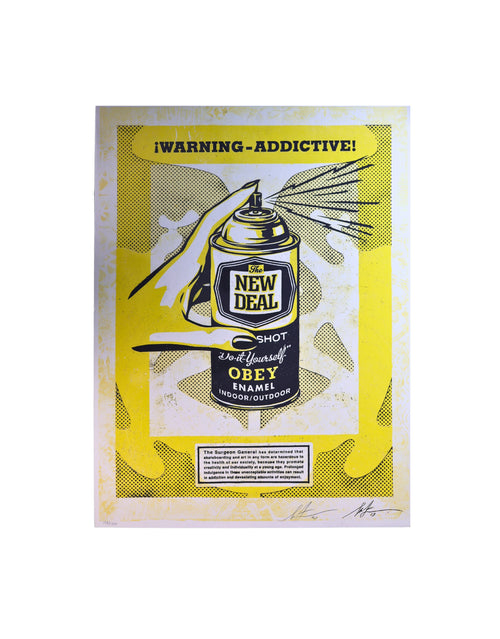
For street art prints the crucial steps are provenance, edition markings, and the correct authentication chain. Shepard Fairey has no artist-run COA, so his prints are authenticated through provenance, signature, edition numbering, and paper and printing characteristics — never through a claimed "certificate from the artist." Banksy is authenticated by Pest Control and nothing else. If you are building a Fairey collection, start with our Shepard Fairey collection and the Fairey buyer's guide; the edition-type distinctions in AP vs SN vs PP vs HPM are essential reading before you pay a premium for a proof, and the sheet-level tells in reading a Shepard Fairey print — paper, signature, and date tell you exactly what to inspect. Invader and other street-art editions follow the same discipline; browse the Invader collection with provenance and numbering front of mind.
Pop art and editions
Pop art spans hand-signed editions, estate works, and pieces whose authentication rests heavily on provenance and catalogues raisonnés. Warhol is the cautionary example: the Warhol Art Authentication Board dissolved in 2012, so no one should present a "board ruling" today — authenticity is established through provenance and the published catalogues raisonnés. The lesson generalizes: for older or estate-linked pop art, the paper trail is the authentication. Browse our pop art collection with that lens.
Designer toys (KAWS, BE@RBRICK)
For designer toys the emphasis lands on packaging, markings, and condition. Authentic KAWS and BE@RBRICK figures ship in Medicom packaging with consistent print and codes, and the box is part of the object's value. Gauntlet backs applicable pieces with TrueCOA — a house-standard certificate, not a manufacturer "COA." Ready to shop with the checklist in hand? See the KAWS collection, the BE@RBRICK collection, the KAWS buyer's guide, and for the physical tells, the KAWS authentication guide. Buying from Japan or through a proxy adds shipping, fees, and inspection risk, all covered in our sibling walkthrough on buying designer toys from Japan — proxies, fees, and authentication.
DEATH NYC and studio-COA artists
DEATH NYC pieces are hand-signed and numbered and come with a COA and gold seal; that seal-plus-signature-plus-numbering combination is the standard to confirm. Mr. Brainwash pieces are authenticated through his studio, which issues COAs often featuring a thumbprint — verify with the studio rather than assuming a specific format. In both cases the discipline is the same: confirm the certificate ties to the actual item and comes from the correct source.
Memorabilia (music and space)
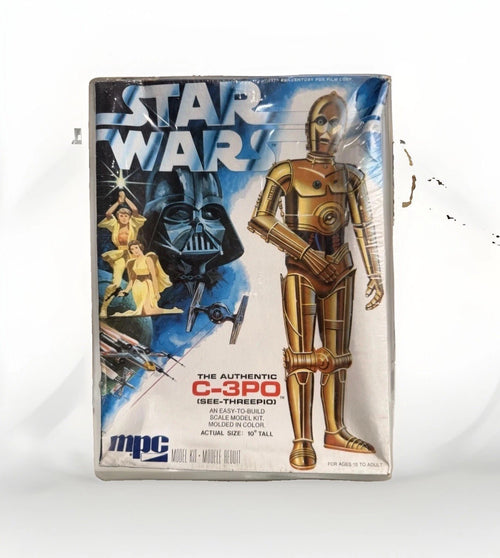
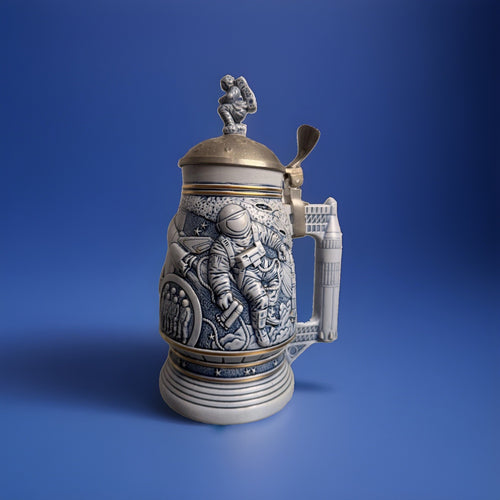
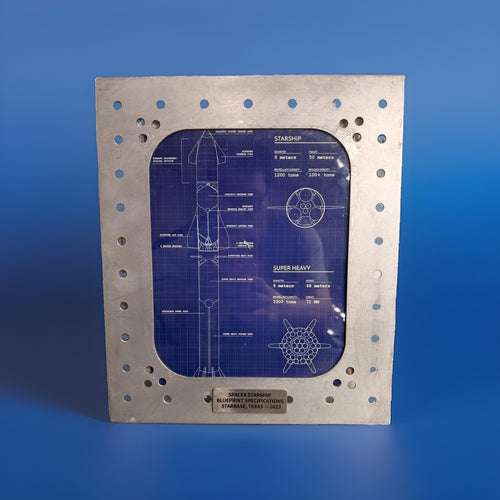
Signed music memorabilia is authenticated by recognized third parties — Beckett (BAS), JSA, and PSA/DNA — with photo-matching used to strengthen provenance. For a signed guitar or album, a third-party opinion plus a documented ownership history matters far more than a seller's own certificate; the full mechanics are in our sibling piece on third-party authentication for music memorabilia. Space memorabilia is a special case: a certificate alone does not prove an item was flown, so authentication rests on documented chain-of-custody and recognized specialists. For these categories, provenance and third-party opinion carry the weight, and our trust hub at The Collector's Hub points you to the right resources.
Red flags that end a transaction
Some findings are flags to investigate; a few are reasons to stop entirely. Train yourself to recognize the hard stops so you never talk yourself past them. A "certificate" that names an authentication body that does not exist or does not authenticate that artist. A provenance chain with an unexplained gap that the seller will not address. A refusal to provide photographs of the actual item. Pressure to pay immediately or to use only irreversible payment. "All sales final" on a high-value piece from an unproven seller. A price so far below market that it demands an explanation the seller cannot give. Each of these appears, with the reasoning behind it, in our sibling guide Red Flags in Online Art Listings. When you see one, the correct move is not to negotiate — it is to walk away.
Channel by channel: where the risk actually lives
Because the target of this guide is buying safely anywhere, it helps to be explicit about how the ten steps play out on the three channels most collectors use. The checklist does not change; what changes is how much of it the channel completes for you and how much you must supply.
A specialist gallery that authenticates its own inventory is designed to satisfy the checklist on your behalf. Reputation is established and public, provenance is researched before a piece is listed, the correct authentication chain is applied per artist, condition is documented, pricing is benchmarked against comparables, and returns and an authenticity guarantee are part of the offer. The premium you pay over a raw marketplace listing is largely the cost of that verification being done by professionals who stand behind it. Your job narrows to confirming the gallery is credible and that the documentation you receive matches the piece.
An auction house sits in the middle. Catalogue entries often carry researched provenance and condition notes, which is valuable, but many lots sell "as is" with limited or no return rights once the hammer falls. That places more weight on steps five through eight: read the condition report closely, confirm what authentication the house is and is not asserting, and understand the buyer's premium so your price-versus-comparables math is accurate. Auction provenance is a strong starting point, not a substitute for your own inspection.
An open peer-to-peer marketplace completes almost none of the checklist for you. Reputation systems help but are gameable; provenance, edition verification, condition honesty, and authentication all fall to you. This is not a reason to avoid these platforms — excellent pieces trade on them every day — but it is a reason to run all ten steps rigorously and to lean hard on payment protection and a stated return window. The lower the friction to buy, the more discipline the buyer must bring.
Building the habit: a repeatable acquisition workflow
Due diligence works best as a routine, not a one-off act of suspicion. The collectors who avoid costly mistakes are the ones who have turned the checklist into muscle memory. A practical workflow looks like this: before you engage, confirm reputation and read the listing in full. When you engage, ask the provenance and packaging questions that only a genuine holder can answer, and request additional photographs of the actual item. Before you pay, cross-check the price against recent comparables and confirm the correct authentication chain for that specific artist. At the point of payment, use a protected, traceable method and get the return terms in writing. After the sale, file the invoice, COA, and photos as the provenance you will pass on.
Notice that this workflow front-loads the cheap checks — reputation, listing detail, comparable pricing — and reserves the deeper verification for pieces that clear those first hurdles. That ordering is deliberate. It lets you filter out weak listings quickly and spend your real attention on the acquisitions that deserve it. Over time the sequence becomes automatic, and the friction that once felt like a burden becomes the thing that protects your collection's value. Every artist page and buyer's guide on our site is written to slot into this workflow, so you always have the correct chain and the relevant comparables one click away.
After the sale: care, storage, and insurance
Due diligence does not end when payment clears. The final gate — the one that protects everything you just verified — is how you handle the piece once it arrives. On delivery, photograph the item and all documentation immediately, before framing or unboxing anything you intend to keep sealed. That arrival record is your evidence if a shipping dispute or insurance claim ever arises, and it is the first entry in the provenance file you will one day hand to the next owner.
Then store and display correctly, because condition is value. Works on paper want UV-filtering glazing, acid-free mats and backing, and stable humidity away from direct sunlight; poor framing can undo a five-figure print in a few summers. Designer toys hold value best in stable, dust-free conditions with the original packaging retained even when displayed opened — the box is part of the asset. Whether you are caring for a signed Fairey, a sealed BE@RBRICK, or a piece from the Mr. Brainwash collection, the principle is the same: protect the object and preserve the paperwork together.
Finally, insure anything material to your net worth. Standard homeowner's or renter's policies rarely do justice to a real collection; a dedicated fine-art or collectibles policy with an agreed value — backed by the documentation you retained — is what turns a loss into a recoverable event. The insurer will want exactly the evidence your due diligence already produced: invoice, COA, provenance, and photographs. Do the care and paperwork well, and the piece stays as sellable and as protected as the day you authenticated it.
Where NFC and blockchain fit
Modern authentication increasingly pairs a paper certificate with a digital anchor. NFC tags let a certificate be scanned and verified against a record, and some programs record certificates on a blockchain so the link between object and documentation is durable and hard to forge. Gauntlet's TrueCOA records each certificate on-chain for exactly this reason. These tools do not replace provenance and physical inspection; they reinforce them, making the certificate harder to counterfeit and easier to check years later. We explain the mechanics — and the limits — in NFC Tags and Blockchain COAs Explained.
Putting it together: buy anywhere, verify everywhere
Return to the question we opened with: what is the best marketplace for designer art toys and figurines? The best marketplace is the one where you can complete this checklist without resistance — where the seller's reputation is verifiable, provenance is documented, edition and packaging match the standard, the correct authentication chain is satisfied, condition is honestly shown, price aligns with comparables, returns and an authenticity guarantee are in writing, and the COA is tied to the actual item from a source you can verify. A curated gallery that authenticates in-house does most of that work for you, which is why buyers pay for it. An open marketplace can be perfectly safe too — but only if you do the work yourself, every time.
Use this page as your standing procedure. Bookmark the artist guides you buy from most, keep The Collector's Hub and TrueCOA within reach, and browse authenticated inventory across categories in our full collection. The channel will change from purchase to purchase. The checklist should not.