Collector Intelligence
How to Spot a Fake Invader Print
Invader is one of the most copied names in urban art — and unlike Banksy, there is no Pest Control to fall back on. Authenticating an Invader work means building a stack of evidence: provenance, dimensions, signature, edition detail, and where it was originally sold.
Invader works anonymously and releases through his own channels rather than a single controlled pipeline. That, combined with strong demand and a huge public footprint, makes his editions a frequent target for reproductions and outright forgeries. The goal here is not paranoia — it is pattern recognition. A genuine Invader piece should make sense across the object, the paperwork, the seller, and the market price at the same time.
Start with the most important fact: Invader does not usually issue certificates of authenticity the way Banksy's Pest Control does. So a "COA" by itself proves very little. Authentication rests first on provenance and internal consistency, not on a certificate.
1. Provenance First
Because there is no standing authentication body, the ownership and sales history carries the weight. Strong provenance for an Invader work can include:
- An original invoice from Invader's official Space Shop
- The original packaging for an Invasion Kit
- A certificate or invoice from a gallery that has represented the artist
- Auction-house records or a documented chain of prior ownership
Weak provenance sounds like "bought from a private collector" with no proof, "comes with COA" from an unknown issuer, or a story that turns vague exactly where the evidence should begin. If the only thing making a piece "real" is a flimsy certificate, be careful.
2. Check the Dimensions
Dimensions are one of the most reliable tells on any print, and Invader editions have known sizes. If a work is documented at a specific measurement — say 30 cm on a side — and the piece in front of you comes back materially different, that discrepancy alone can confirm a fake or an unauthorized reproduction. Measure carefully, compare against the documented size for that exact release, and be suspicious of "close enough."
3. Signature and Edition Numbering
Invader's studio editions are typically signed and numbered, usually in strictly limited runs of around 50 to 100 impressions. Examine the signature closely and compare it against verified examples of Invader's signature from the same era. Confirm the edition numbering is present, consistent with the known edition size for that release, and applied in a manner consistent with genuine examples. A "signed Invader" with no numbering on a release that was issued as a numbered edition — or an edition number larger than the run should allow — is a red flag.
4. Invasion Kits Deserve Extra Scrutiny
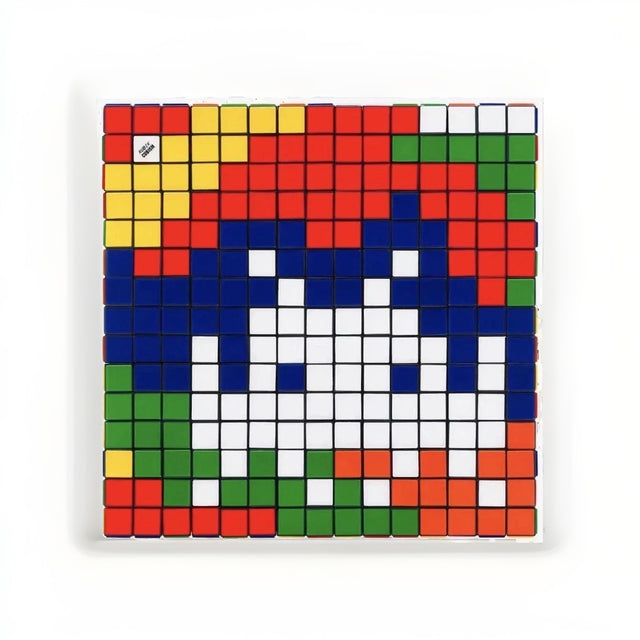
Sealed, signed Invasion Kits are among the most valuable Invader collectibles, with premium examples reaching into five figures — which makes them a prime forgery target. For kits, the original sealed packaging and the accompanying documentation are central to authentication, and dedicated collector resources exist specifically for distinguishing genuine kits from fakes. Scrutinize the packaging, seals, printed materials, and any signature or numbering against known-good references, and be especially cautious with "resealed" or opened kits presented as mint.
5. Common Red Flags
- Open-marketplace listings (e.g. general auction sites) with no verifiable provenance
- Reproductions of Invasion Maps or prints marketed as authentic signed editions
- Wrong dimensions versus the documented size for that release
- Signature that looks copied, shaky, or inconsistent with verified examples
- Missing or impossible edition numbering
- A generic certificate from an unrelated seller presented as proof
- Price dramatically below market on a high-demand piece
- Seller pressure to pay quickly or avoid platform protections
Quick Buyer Checklist
Before buying an Invader print or kit, ask:
- Can the seller document provenance (Space Shop invoice, kit packaging, gallery record)?
- Do the dimensions match the documented size for that exact release?
- Is the signature consistent with verified Invader examples from that era?
- Is the edition numbering present and consistent with the known run?
- For a kit — is the packaging original and the seal intact?
- Does the price make sense against recent settled sales?
- Is there recourse (return policy, reputable venue) if authenticity is questioned?
- Would the piece still make sense if the certificate disappeared?
An Honest Note on Certainty
Visual inspection and provenance review reduce risk; they do not deliver mathematical certainty, and no single check — certificate included — is proof on its own. For higher-value Invader works, buy through venues that document provenance and stand behind the sale, and when in doubt, seek an independent specialist opinion before committing.
FAQ
Does Invader authenticate his own work like Banksy's Pest Control?
No. Invader does not usually issue certificates of authenticity the way Pest Control does for Banksy. Authentication relies on provenance, correct dimensions, signature, and edition detail rather than a central authority.
Is a certificate of authenticity enough?
No. A certificate is only as credible as its issuer. For Invader specifically, provenance — an original Space Shop invoice, original kit packaging, or a gallery record — matters more than a standalone COA.
What is the single most reliable check?
Dimensions combined with provenance. A documented size that does not match, or a story with no verifiable ownership trail, are the two fastest ways to identify a problem.
Where should I buy to reduce risk?
Reputable auction houses, established galleries, and trusted private brokers — venues where provenance is documented and recourse exists — rather than open marketplaces where unverified works are common.