

Shepard Fairey Buyer's Guide
A collector's guide to one of the most beloved and accessible names in contemporary art — what each format is, how it is verified, and where the smartest value lives at every price.

Signed Screen Prints
Hand-pulled · Pencil-signed & numbered The heart of the Fairey market — and the natural home for a serious collection.Signed screen prints are the backbone of the Shepard Fairey market. These are hand-pulled silkscreens released in numbered editions, pencil-signed and numbered in the lower margin, and frequently carrying an OBEY stamp or blind embossing. Edition sizes commonly run from roughly 89 to 450, with occasional larger runs. New editions drop on obeygiant.com as timed sales at retail prices around $45 to $95 and routinely trade at multiples of retail on the secondary market within hours of selling out — a rare thing to see in contemporary art. Collectors love them for their bold propaganda-style imagery, consistent quality, and the beautifully clear documentation trail obeygiant.com keeps for every release. Because demand outpaces the fixed edition size, blue-chip motifs and low edition numbers hold and grow value over time, which makes signed screen prints the most liquid and easily tracked corner of the Fairey market — an ideal place to begin.
- Standard Timed-Drop Editions Released on obeygiant.com at retail; the everyday entry point into signed Fairey screen prints.
- Large-Format / Oversized Prints Bigger editions with more presence and higher retail and secondary pricing.
- Iconic Motif Editions Andre the Giant / OBEY, HOPE-derived, peace and justice imagery — the most sought-after subjects.
- Low Edition Numbers Single- and double-digit numbers in a run command a premium with serious collectors.
- Entry Level $150 – $500 Common recent editions, mid-to-late edition numbers, smaller formats in clean condition.
- Mid Market $500 – $2,500 Strong motifs, larger formats, sold-out editions with documented obeygiant.com provenance.
- Investment Grade $2,500 – $10,000+ Iconic imagery, low edition numbers, early or scarce sold-out releases in pristine condition.
- Confirm the exact edition exists on the obeygiant.com release record and matches the listed edition size.
- Inspect the pencil signature and edition number in the lower margin — graphite, not printed.
- Look for the OBEY stamp and/or blind embossing where the release is documented to carry one.
- Cross-check the paper, dimensions and color count against the documented release specs.
- Request the full chain of ownership and any original purchase receipt from obeygiant.com.
- Examine under raking light for the texture of hand-pulled ink versus flat offset printing.
- A genuine signature is pencil graphite in the margin — soft, slightly raised, unmistakable in hand.
- The edition number always sits within the documented edition size; that simple match confirms a great deal.
- Fairey and OBEY issue no artist COA, so the release record, signature and provenance are what authenticate — Gauntlet Gallery adds its own TrueCOA on top.
- Every real edition appears in the obeygiant.com release archive — a wonderful, public source of truth.
- Full, untrimmed margins keep the signature and numbering intact and sit at the top of any price range.
- Price tracks comparable sold examples and provenance; a clear story is the mark of a well-kept piece.
The sweet spot is a sold-out edition with a clear obeygiant.com release record, a clean pencil signature, and a good edition number in excellent condition — a piece you will be proud to hang and glad to have bought. There is no rush to chase a brand-new drop at its opening frenzy; the most rewarding editions are the ones with proven secondary demand and iconic imagery. Condition is quiet value, so favor flat, unfaded sheets with full untrimmed margins. A Gauntlet Gallery piece carries a TrueCOA blockchain-verified certificate documenting its chain of ownership, which strengthens resale for years to come. Prioritize liquidity and documentation, and let the imagery you love guide the rest.
Does Shepard Fairey issue a certificate of authenticity?
No. Neither Fairey nor OBEY GIANT issues a COA. Authentication relies on the obeygiant.com release record, the pencil signature and numbering, the OBEY stamp or embossing, and a documented chain of ownership. Gauntlet Gallery adds its own TrueCOA on pieces we sell.
Why do prints flip above retail so fast?
Editions are fixed at a few hundred sheets and drop as timed sales at $45 to $95. Demand outpaces supply, so popular editions sell out in minutes and trade at multiples of retail on the secondary market within hours — a sign of just how loved these images are.
Do low edition numbers matter?
Yes. Within the same edition, single- and double-digit numbers typically command a premium with collectors, who value them as 'early' impressions. The effect is strongest on iconic, sold-out editions.
How much does condition affect price?
Significantly. Fading, trimmed margins, handling creases, and tape or mat burn can cut value substantially. Flat, unfaded sheets with full original margins sit at the top of any price range for a given edition.
Offset Lithographs
Mass-produced · Often unsigned The most welcoming way into Fairey imagery — including the legendary HOPE.Offset lithographs are printed commercially in large quantities, which makes them plentiful and wonderfully affordable next to hand-pulled screen prints. The most famous is the Obama HOPE offset — one of the most recognizable images of its era — and a large share of those in circulation are unsigned. Offsets are the friendly front door for new collectors who want iconic Fairey imagery on the wall without screen-print pricing. Because they are printed at scale, value comes less from edition scarcity and more from whether the piece is signed, its specific issue or printing, and its condition. Unsigned offsets are abundant and inexpensive; signed offsets carry a meaningful premium. The one thing to know is method: confirm you are buying an offset (not a hand-pulled edition) and price it as such. Understand exactly what you have, and offsets are one of the best values in the whole category.
- Unsigned Offset Prints The most common form; affordable, widely available, ideal for decorative collecting.
- Signed Offset Prints Pencil-signed examples carrying a clear premium over unsigned versions.
- HOPE-Family Offsets The iconic Obama imagery in offset form — recognizable and historically significant.
- Promotional & Campaign Offsets Issued tied to causes or events; value depends on issue and condition.
- Entry Level $40 – $200 Unsigned offsets in good condition, including common HOPE-family examples.
- Mid Market $200 – $1,000 Signed offsets and scarcer issues with documented provenance.
- Investment Grade $1,000 – $4,000+ Signed, historically significant offsets in pristine condition with strong provenance.
- Confirm whether the offset is signed in pencil or unsigned — this drives most of the value.
- Examine under magnification for the dot/rosette pattern that identifies offset printing.
- Match the dimensions and paper to the known specs for that specific issue.
- Verify the specific printing or issue rather than assuming all examples are identical.
- Request provenance and any documentation of where and when it was acquired.
- Compare against recent sold prices for the same signed/unsigned status.
- Price an offset as an offset — a quick method check keeps the value honest and the buy a pleasure.
- 'Silkscreen' and 'offset' are different techniques; confirming the method under a loupe settles it in seconds.
- Fairey and OBEY issue no artist COA — provenance and, where present, signature are what authenticate.
- Signed and unsigned are simply different tiers; knowing which you hold makes for a confident purchase.
- Flat, unfaded sheets kept out of direct light show best and hold value — easy condition to spot and enjoy.
- The best sellers state signed status and printing method plainly; clarity is a good sign.
Offsets are the easiest, most joyful way to own real Fairey imagery — the art is pricing to method. Decide up front whether you want a signed example, which carries a premium and stronger resale, or an inexpensive unsigned print purely for the pleasure of display. A quick loupe check of the printing method keeps every purchase confident. For HOPE-family pieces, focus on condition and a credible acquisition story — the image does the rest. Favor sellers who state signed status and provenance plainly, and you will build a bright, affordable collection with room to grow.
Is the HOPE offset valuable?
It depends on the specific example. Many HOPE offsets are unsigned and widely circulated, so they sit at the low end. Signed examples and historically significant printings in strong condition carry a meaningful premium, but most circulating HOPE offsets are affordable.
How do I tell an offset from a screen print?
Under magnification, offsets show a fine dot or rosette pattern, while hand-pulled screen prints show flat, solid layers of ink with visible texture under raking light. Confirming the method is the single most important price check in this category.
Are unsigned offsets worth collecting?
Yes, for display and entry-level collecting. They deliver recognizable Fairey imagery at low cost. Just price them as unsigned mass-produced prints and don't expect screen-print appreciation, since supply is large.
Should I expect a certificate?
Not from Fairey or OBEY — no such COA exists. Rely on provenance, signature analysis where signed, and known print specs. A Gauntlet Gallery offset includes our own TrueCOA documenting the chain of ownership.

Hand-Painted Multiples (HPM)
Hand-finished · Unique within a tiny edition Where the print market meets one-of-a-kind originality — the premium tier collectors covet.Hand-Painted Multiples, or HPMs, are unique hand-finished versions of an image made in very small editions. Fairey takes a base screen print and adds hand-painting, collage, stencil, or mixed-media so that no two are alike — each HPM is effectively a one-of-one within a tiny numbered run. That blend of print accessibility and original-work uniqueness places HPMs in the premium tier of the Fairey market, well above standard signed screen prints of the same image. Collectors treasure them for the visible hand of the artist and their scarcity — often only a few dozen in an edition. Because each example is its own object, condition, the quality and extent of the hand-work, and clear documentation all reward attention. HPMs trade less often than standard editions, so matching the specific example to its release record and holding good provenance is part of the pleasure — and it is what makes an HPM a genuine centerpiece.
- Screen Print HPMs A base silkscreen overworked by hand with paint, ink, or stencil for a unique result.
- Collage HPMs Hand-applied paper, texture, and mixed media layered onto the base image.
- Large-Format HPMs Bigger hand-finished works with more painted surface and higher value.
- Iconic-Image HPMs Hand-finished versions of OBEY, HOPE-family, or signature propaganda imagery.
- Entry Level $1,500 – $5,000 Smaller HPMs with modest hand-work on less iconic images.
- Mid Market $5,000 – $15,000 Substantial hand-finishing, strong imagery, documented small editions.
- Investment Grade $15,000 – $50,000+ Large, heavily hand-worked HPMs of iconic imagery with airtight provenance.
- Confirm the HPM edition exists on the obeygiant.com release record with its small edition size.
- Verify genuine hand-painting and texture — raised paint, brushwork, or collage you can feel.
- Match this exact example to its documented release; HPMs are individually variable.
- Inspect the pencil signature and HPM edition numbering in the margin.
- Demand a complete chain of ownership given the higher price point.
- Have a specialist examine the hand-work if you are buying at the investment tier.
- A true HPM shows real hand-finishing — raised paint, brushwork, or collage you can feel; that texture is the joy of it.
- The edition number sits within the documented HPM run — a simple, satisfying confirmation.
- Fairey and OBEY issue no artist COA, so the release record, hand-work and provenance authenticate the piece.
- Every genuine HPM matches a documented release on obeygiant.com — a public record worth savoring.
- Under a loupe, hand-painting reads as brushwork, not print; confirming it is half the fun of buying an HPM.
- At this tier, strong provenance and a specialist's eye make the acquisition feel effortless.
HPMs reward the collector who savors the details. Because each is unique, you are buying both the image and the specific hand-work, so enjoy the high-resolution detail shots and confirm raised paint, brushwork, or collage texture in person where you can. Match the example to its obeygiant.com release and HPM edition size, and at the top tier a specialist's eye adds real confidence. Favor pieces with substantial, well-integrated hand-finishing of iconic imagery and complete provenance — they hold value best and give the most pleasure. Buy the HPM you genuinely want to live with, and let a Gauntlet Gallery TrueCOA underwrite its future resale.
What makes an HPM different from a regular print?
An HPM starts as a screen print, then Fairey adds hand-painting, collage, or stencil work so each example is unique. That hand-finishing and tiny edition size put HPMs in a premium tier above standard signed editions of the same image.
Why are HPMs so much more expensive?
Scarcity and uniqueness. Editions are often only a few dozen, and each carries original hand-work by the artist. Buyers pay for one-of-one character that standard editions can't offer, so prices run multiples of the base print.
How do I verify the hand-work is real?
Examine for raised paint, visible brushstrokes, and collage texture you can feel, and check under magnification that effects aren't just printed. At higher prices, have a specialist confirm the hand-finishing and match the piece to its release record.
Are HPMs a good investment?
They can be, for the right example: iconic imagery, substantial hand-work, small edition, and airtight provenance. But they are illiquid and individually variable, so buy for genuine appreciation of the piece and document ownership carefully.
Album Art & Music Prints
Music collaborations · Concert and cover art Where Fairey's punk roots meet the joy of collectible music memorabilia.Album art and music prints reflect Fairey's deep roots in punk and hip-hop culture, spanning album cover artwork, gig posters, and prints tied to bands and music projects. This category bridges the fine-art print market and music memorabilia, and it draws happy collectors from both worlds. Value spans a lovely range: signed and numbered art prints released through obeygiant.com behave like the rest of the Fairey edition market, while licensed album packaging, merch, and commercial gig posters are plentiful and modestly priced — great fun to own. The crossover appeal lifts desirability when a release ties to a beloved artist or iconic record. The one thing to know is which tier you are buying: confirm whether a piece is a signed limited edition with a release record or a commercial music product, and price it accordingly — either way there is something here to love.
- Signed Music Art Prints Numbered editions tied to bands or records, released through obeygiant.com.
- Album Cover Artwork Fairey-designed covers and packaging; collectible but often mass-produced.
- Gig & Concert Posters Show posters ranging from limited signed runs to commercial prints.
- Music Collaboration Editions Prints created with or for specific musicians and projects.
- Entry Level $60 – $300 Commercial gig posters, album merch, and unsigned music-tied prints.
- Mid Market $300 – $1,500 Signed and numbered music art prints with documented releases.
- Investment Grade $1,500 – $6,000+ Scarce signed editions tied to iconic artists in pristine condition.
- Determine whether the piece is a signed limited edition or commercial music merchandise.
- Confirm signed-and-numbered editions against the obeygiant.com release record.
- Check for the pencil signature and edition number where it should appear.
- Verify the dimensions and paper match the documented release for that print.
- Confirm the music tie-in is genuine and documented, not loosely implied.
- Request provenance, especially for higher-priced signed editions.
- Merch is merch and editions are editions — pricing to tier keeps every music buy a happy one.
- A signed limited edition comes with proof; a gig poster is charming as exactly what it is.
- Fairey and OBEY issue no artist COA, so the release record, signature and provenance authenticate.
- Signed limited editions appear in the obeygiant.com release record — an easy, reassuring check.
- A hand signature is pencil graphite, distinct from printed packaging art; both have their place.
- The best music pieces come with documentation of the collaboration — a lovely part of the story.
Decide first whether you're collecting as a music fan or as a print investor — both are wonderful, and it simply shapes the buy. For lasting value, target signed and numbered art prints with an obeygiant.com release record and genuine ties to iconic artists; these track the broader Fairey edition market. For passion buys, commercial gig posters and album art are inexpensive, characterful, and a delight on the wall — just price them as merch. Confirm signed status and a release record before stretching to edition prices, and crossover demand from music collectors will support resale on the strongest signed pieces.
Is Fairey's album art collectible?
Yes, but it splits into two tiers. Signed, numbered art prints tied to music behave like his other editions and can appreciate, while album packaging and commercial merch are mass-produced and inexpensive. Value hinges on which one you're actually buying.
How do I avoid overpaying for music merch?
Confirm whether the item is a signed limited edition with an obeygiant.com release record or simply commercial product. If it's merch, price it as merch and enjoy it as merch — the tiers are easy to tell apart once you know the release record exists.
Does the music connection add value?
It can. Strong ties to a beloved artist or iconic record add crossover demand from music collectors, which supports desirability and resale on signed editions. But the tie-in alone doesn't make commercial merch a limited edition.
Is there a certificate for these?
Not from Fairey or OBEY — no such COA exists. Authenticate via the release record, signature and numbering, and provenance. Gauntlet Gallery issues its own TrueCOA on music prints we sell to document the chain of ownership.

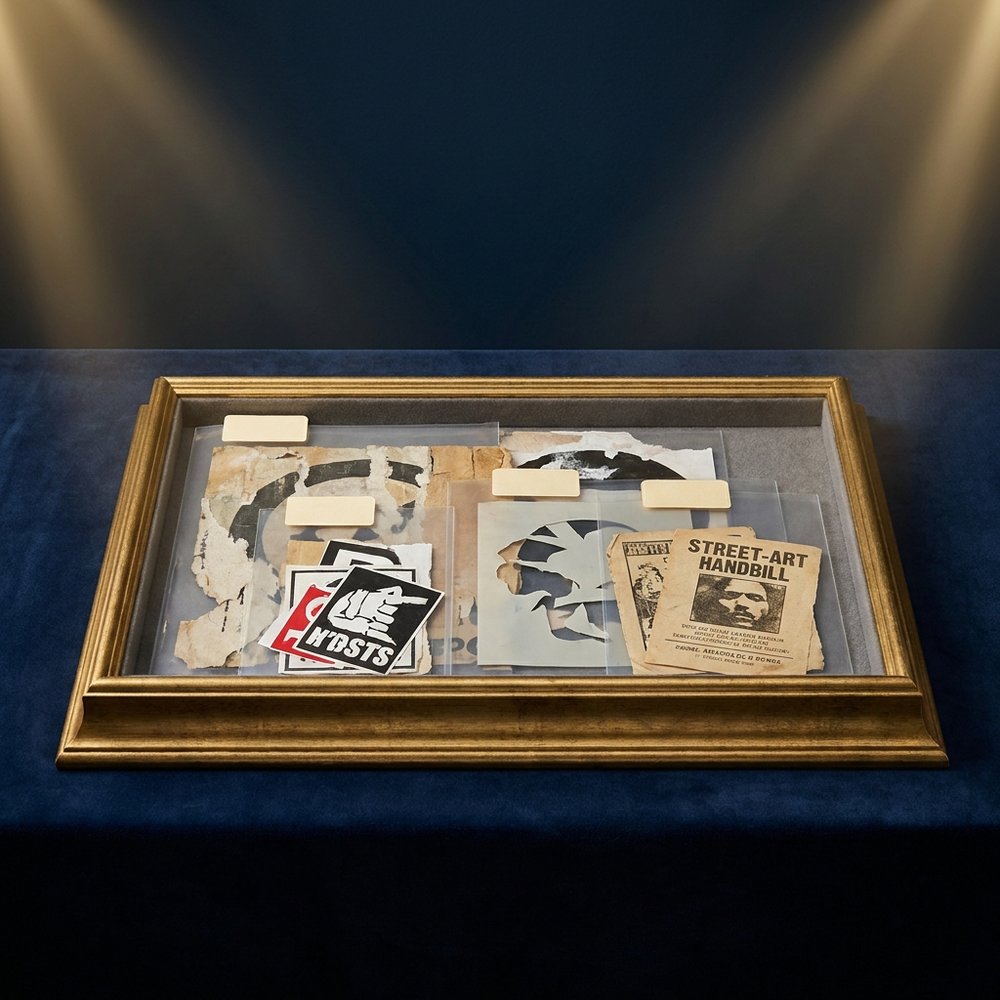
Posters, Stickers & Street Ephemera
OBEY GIANT campaign material · Street-used pieces The raw, original-context roots of the OBEY GIANT phenomenon — where the whole story began.Posters, stickers, and street ephemera are the grassroots foundation of the OBEY GIANT phenomenon — the Andre the Giant stickers, propaganda posters, and campaign material that built Fairey's reputation on the street. This is the most affordable entry point and the most history-rich corner of the whole market. Most pieces are unsigned and were made in large or undocumented quantities, so value rests on provenance, period-correct materials, documented campaigns, and condition rather than edition numbers. Genuine street-used examples with credible history carry real romance and desirability. Stickers alone span from pocket change to meaningful sums depending on era and rarity — a playful, rewarding field to collect. The pleasure here is the treasure hunt: prize documentation and provenance, and lean on expert eyes for anything early or rare. Do that, and this category delivers the most story per dollar in all of Fairey.
- OBEY Stickers The Andre the Giant and OBEY stickers that launched the campaign; era drives value.
- Propaganda Posters Street and campaign posters in the classic propaganda style, usually unsigned.
- Street-Used Pieces Examples pulled from the street with weathering and credible provenance.
- Campaign & Promo Ephemera Handbills, flyers, and material tied to documented OBEY campaigns.
- Entry Level $10 – $150 Common stickers and posters, recent or reprinted material in basic condition.
- Mid Market $150 – $1,000 Earlier campaign pieces with documentation and good condition.
- Investment Grade $1,000 – $5,000+ Early, scarce, well-documented ephemera with strong provenance or street history.
- Demand provenance and documentation — it is the primary value driver for ephemera.
- Check materials and printing against what is period-correct for the claimed era.
- Tie the piece to a documented OBEY campaign rather than a vague attribution.
- Distinguish original-run material from later reprints and reproductions.
- Assess condition honestly; street-used wear should be consistent with the story.
- Seek expert opinion before paying a premium for anything claimed as early or rare.
- Period-correct materials tell a vintage original from a later reprint — learning the difference is a real collector's pleasure.
- An early sticker's value lives in its provenance; documentation is what turns a story into a treasure.
- Fairey and OBEY issue no artist COA, so provenance, period-correct materials and expert opinion authenticate.
- Paper and printing that match the claimed era are the hallmark of the genuine article.
- Honest, natural wear is part of a street piece's charm — consistent with the story it tells.
- Documented, early ephemera earns premium pricing; the common and recent stay affordably fun.
Treat this category as memorabilia, where documentation is the real prize. The most delightful, low-cost path is buying recent stickers and posters purely for the love of the imagery — no resale expectation, just joy on the wall. For collectible value, favor pieces with credible provenance, period-correct materials, and a tie to a documented OBEY campaign, and welcome expert eyes on anything early or rare. Confirm the era before paying vintage prices, and you will collect with confidence. For meaningful ephemera, a Gauntlet Gallery TrueCOA recording the chain of ownership makes future resale materially stronger.
Are OBEY stickers worth money?
It depends entirely on era and rarity. Recent stickers are worth very little, while early, scarce, well-documented examples can carry real value. Because so many exist and reprints are common, provenance and period-correct materials drive whether a sticker is collectible.
How do I tell a vintage original from a reprint?
Compare materials, printing, and paper against what's period-correct for the claimed era, and look for provenance tying the piece to a documented campaign. Once the era checks out, a genuine vintage original is a wonderful thing to own — and the verification is part of the pleasure.
Is street-used ephemera more valuable?
Credible street history can add real desirability, and it shines brightest with provenance. Natural weathering that is consistent with the claimed story is part of the charm; documentation is what turns street wear into genuine value.
Should I expect a certificate?
Not from Fairey or OBEY — no such COA exists for ephemera. Rely on provenance, period-correct materials, documented campaigns, and expert opinion. Gauntlet Gallery can issue its own TrueCOA on documented pieces we sell.

Original Works & Stencils
Unique works · Rubylith, stencil & mixed-media The summit of the Fairey market — one-of-a-kind originals and murals.Original works and stencils sit at the very summit of the Shepard Fairey market. This category covers unique pieces — rubylith works, hand-cut stencils, mixed-media on paper, canvas, or wood panel, and large-scale murals — each a one-of-a-kind object rather than an edition. Pricing reaches the tens of thousands and well beyond for major works, reflecting their rarity and central place in Fairey's body of work. Because there is no edition record here, authentication rests on documented provenance, exhibition and gallery history, signature analysis, and specialist opinion. These are landmark acquisitions, and the diligence is part of what makes owning one so rewarding: a credible paper trail and a specialist's review turn a great object into a great, well-documented asset. Collectors at this level prize blue-chip imagery, exhibition pedigree, condition, and ironclad provenance — and are richly rewarded when all four align.
- Rubylith Works Original hand-cut rubylith pieces central to Fairey's printmaking process.
- Hand-Cut Stencils Original stencils used in street and studio work; unique objects.
- Mixed-Media Originals Unique works on paper, canvas, or wood panel combining paint, collage, and stencil.
- Murals & Large-Scale Works Commissioned and studio murals at the apex of the market.
- Entry Level $10,000 – $30,000 Smaller original works and stencils with solid provenance.
- Mid Market $30,000 – $100,000 Substantial mixed-media originals with exhibition or gallery history.
- Investment Grade $100,000 – $500,000+ Major works and murals with blue-chip imagery and ironclad provenance.
- Obtain complete documented provenance — the foundation of value for any original.
- Confirm exhibition, gallery, or publication history that situates the work.
- Have a recognized specialist examine the work and signature in person.
- Verify materials and technique are consistent with Fairey's documented practice.
- Review condition reports and any conservation history for the piece.
- Engage qualified third-party expert opinion before committing at this price level.
- A great original comes with provenance and exhibition history — the paper trail is part of the prize.
- Landmark purchases reward an unhurried pace; there is real luxury in taking the time to verify.
- Fairey and OBEY issue no artist COA, so provenance, signature analysis and specialist opinion authenticate the work.
- Signature and technique that a specialist reconciles with known work are the mark of the genuine article.
- Pricing that sits in line with comparable documented originals confirms a sound acquisition.
- The finest sellers welcome independent expert examination — an invitation, not an obstacle.
At this tier, diligence is the quiet luxury. Buy a unique Fairey original for its imagery and its documentation together — complete provenance, exhibition or gallery history, and in-person examination by a recognized specialist before you commit. A specialist's review is a small, worthwhile part of a landmark purchase. Favor blue-chip imagery, clean condition, and an unbroken paper trail; those are the pieces that reward for decades. Because Fairey issues no artist COA, a Gauntlet Gallery TrueCOA recording verified provenance and chain of ownership becomes a meaningful part of the asset — reinforcing both confidence and future resale.
What counts as an original Fairey work?
Unique, one-of-a-kind objects: rubylith works, hand-cut stencils, mixed-media on paper, canvas, or panel, and murals. Unlike editions, there is no print run — each is singular, which is why they sit at the top of the market and require the deepest authentication.
How are originals authenticated without a COA?
Through documented provenance, exhibition and gallery history, signature analysis, and in-person review by a recognized specialist. Since Fairey issues no artist COA, a credible paper trail and qualified expert opinion are essential before any high-value purchase.
Why is provenance so critical here?
Because there's no edition record to verify against, the chain of ownership and exhibition history are the primary evidence of authenticity and value. A complete, unbroken provenance is exactly what commands the top of the market — and it is well worth holding out for at this level.
What protection does Gauntlet Gallery add?
On originals we sell, Gauntlet Gallery issues a TrueCOA blockchain-verified certificate documenting verified provenance and the chain of ownership. It doesn't replace specialist authentication, but it records and protects that diligence and strengthens future resale.
Own a Piece You'll Love
Browse authenticated Fairey inventory with full provenance and TrueCOA blockchain-verified certificates of authenticity.
Browse Shepard Fairey View FAQ