

Signed Music Memorabilia Buyer's Guide
A collector's field guide to signed music memorabilia — from the first signed photograph to an investment-grade signed guitar. Learn what to look for, what it's worth, and how third-party authentication lets you buy each piece with complete confidence.
Signed Music Memorabilia
Signed music memorabilia turns fandom into a tangible piece of history — a guitar, an album, a setlist or a photograph carried across the line from “owned” to “signed by the artist.” It is one of the most personal fields in collecting.
It is also one of the best-supported: third-party authenticators such as JSA, PSA/DNA and Beckett give every signature an expert opinion you can rely on. That blend of emotion and evidence is what lets collectors buy the artists they love with real confidence.

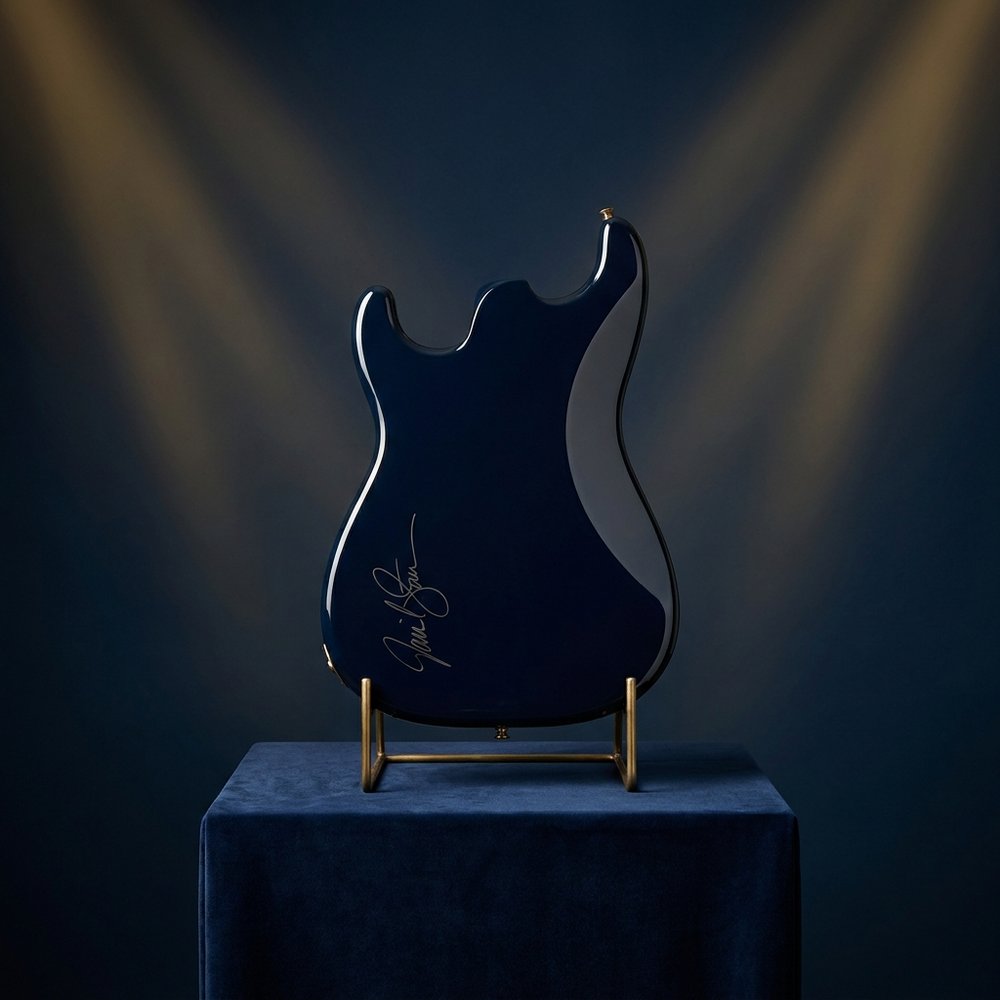
Signed Guitars
The flagship of the field The trophy of music collecting: commanding value, striking display presence, and the pieces every serious collector aspires to own.Signed guitars are the crown jewels of music memorabilia — the most coveted format in the category. A guitar body offers a broad, beautiful signing surface, which is exactly why the instruments become such magnificent showpieces, and why a fully signed guitar from every member of a major act is a genuine centerpiece. Value is driven by the stature of the artist, the number and clarity of the signatures, whether the instrument was played or signed promotionally, and the strength of the authentication behind it. A single, clean signature from a legend with a top-tier LOA can outshine a crowded piece — clarity and documentation are what make a guitar sing. The beauty of this market is its discipline: a recognized third-party letter confirms exactly what you own, and provenance — who obtained the signature, when, and how — turns a striking object into a documented treasure you can hold with pride and pass on with certainty.
- Single-artist signed guitar One signature from a notable artist on a body or pickguard — the cleanest and easiest format to authenticate.
- Full-band signed guitar Every member of a band signs one instrument — the most impressive statement piece in the field, best paired with a top-tier LOA.
- Stage-used / artist-owned guitar An instrument actually played or owned by the artist; demands a documented provenance chain and ideally photo-matching.
- Promotional / charity-signed guitar Signed for a fan event or charity auction — often well-documented at the source, which strengthens provenance.
- Entry Level $400 – $1,500 Single signature from a mid-tier or contemporary artist on a standard production guitar, with a third-party LOA.
- Mid Market $1,500 – $7,500 Well-known artist or solid full-band signature, clean inscriptions, recognized authentication and clear provenance.
- Investment Grade $10,000 – $50,000+ Blue-chip legends, stage-used or artist-owned instruments with photo-match provenance and elite authentication.
- Look for a current LOA from Beckett (BAS), JSA, PSA/DNA, or Roger Epperson REAL — the hallmark of a well-vetted piece.
- Match the LOA serial to the authenticator's online lookup where one is offered — a satisfying final confirmation.
- On stage-used pieces, enjoy the provenance chain: who, when, where, and how the guitar was acquired.
- Welcome photo-matching evidence — period photos or video — on any artist-owned or stage-used guitar.
- Appreciate the signature placement, the ink on the finish, and its harmony with known exemplars.
- Confirm the guitar model and era align with when the artist would have signed it.
- Favor a recognized third-party LOA — Beckett, JSA, PSA/DNA, or REAL — over any seller-issued certificate.
- Let the comps guide you: a price in line with authenticated examples signals a sound buy.
- Prize named, dated, documented provenance over a vague 'private collection' line.
- Reward signatures with natural variation and confident hand across every band member.
- Expect — and enjoy — high-resolution photos of each signature and the LOA.
- For stage-used pieces, treasure the photographic and paper trail that seals the story.
Begin with a single-artist signed guitar from an act you genuinely love, backed by a Beckett, JSA, PSA/DNA, or REAL letter. A clean, well-documented signature is a joy to own and the surest way to build your eye. Let the authentication lead and the artist follow: a $1,200 guitar with an ironclad LOA is a smarter cornerstone than a $3,000 piece with an unfamiliar certificate. As your confidence grows and you can read a provenance chain and confirm an LOA serial yourself, the full-band and stage-used showpieces become a natural next step.
Why are signed guitars faked so often?
The large signing surface makes a guitar a magnificent trophy, and its stature is exactly why full-band examples become such prized centerpieces. Pair one with a top-tier third-party LOA and you own it with total confidence — the authentication is what makes the piece a pleasure to display and to pass on.
Is a seller's own COA enough?
No. An in-house or seller-issued certificate carries little weight. Insist on a letter of authenticity from Beckett, JSA, PSA/DNA, or Roger Epperson REAL, and verify the serial number where the authenticator provides a lookup.
What does stage-used add to value?
An instrument actually played or owned by the artist can command a large premium — but only with a documented provenance chain and, ideally, photo-matching to period images or footage. Without that paper trail, a stage-used claim adds risk, not value.

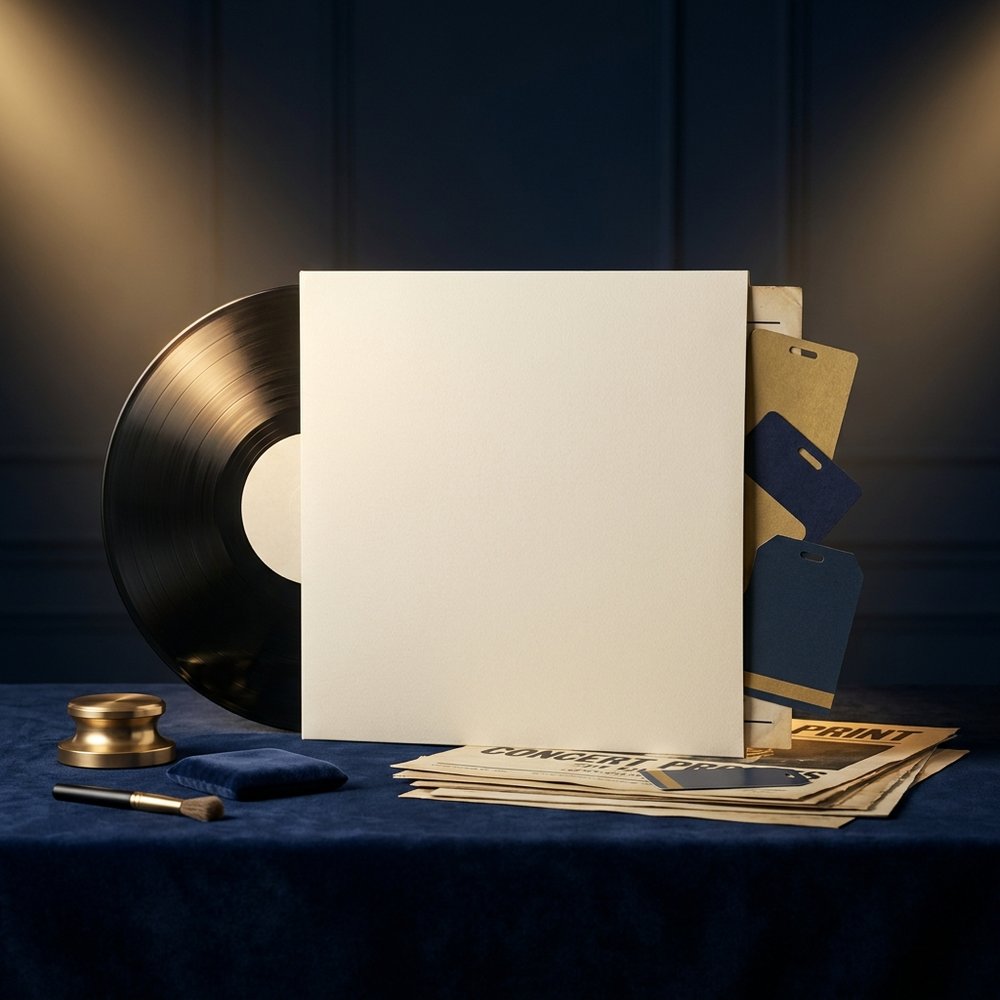
Signed Albums & Vinyl
Where blue-chip acts top the market The classic collecting format — signed sleeves and records where iconic artists and beautiful condition together set the price.Signed albums and vinyl are the heart of music collecting. Value is led by blue-chip acts — the Beatles and other era-defining artists sit at the top of the market — and is shaped by two rewards in one object: the authenticity of the signature and the condition of both the sleeve and the autograph itself. A crisp signature on a clean cover is where this format truly sings, and a third-party LOA is what lets you enjoy every one with certainty. Full-band signed albums from major acts are among the most desirable pieces a collector can hang. The delight here is reading the record as two objects at once — a collectible pressing and an autograph — each with its own grade and its own story to tell.
- Signed LP / album cover Signatures on a 12-inch jacket — the most common and most collected signed-vinyl format.
- Full-band signed album Every member signs the sleeve; top examples from major acts command strong premiums and reward careful authentication.
- Signed 45 / single sleeve Smaller-format signed records, often more affordable entry points into a given artist.
- Signed CD booklet / insert Modern-era signed media; convenient and accessible, with the same authentication requirements.
- Entry Level $75 – $400 Single or band signature from a contemporary or mid-tier act on a clean sleeve, with a third-party LOA.
- Mid Market $500 – $3,000 Well-known classic-rock or major-act signatures, good sleeve condition, recognized authentication.
- Investment Grade $5,000 – $30,000+ Blue-chip acts such as the Beatles, full-band, strong condition, elite authentication and provenance.
- Look for a current LOA from Beckett (BAS), JSA, PSA/DNA, or Roger Epperson REAL.
- Grade the sleeve on its own merits — clean corners, tight seams, and flat surfaces are the mark of a premium example.
- Admire a signature that sits boldly on the surface, with confident ink and placement.
- Compare each signature against published exemplars for the artist — a satisfying study in itself.
- On full-band albums, enjoy knowing every signature is individually authenticated.
- Confirm the pressing and cover variant are period-correct for the signing date.
- Favor a recognized third-party LOA over any generic, unfamiliar certificate.
- Value signatures whose age and character sit naturally with the sleeve they grace.
- Let market comps guide you on blue-chip names like the Beatles — a fair price signals a fair piece.
- Prize ink that feathers into the cardboard the way a true hand-signed autograph does.
- Expect generous close-ups of each signature and the LOA — the best sellers offer them freely.
- Seek original-era pressings when you want a signed piece that matches the moment.
Begin with a signed album from an artist you love at the entry tier, authenticated by Beckett, JSA, PSA/DNA, or REAL. Learn to grade sleeves the way record collectors do — clean corners and tight seams reward the eye — because condition can lift value as much as the signature itself. Step up to blue-chip names like the Beatles once you can confirm an LOA serial and recognize the artist's genuine hand; the anticipation makes the arrival all the sweeter. A clean, authenticated mid-tier album is the most satisfying first purchase.
Does sleeve condition really matter that much?
Yes. A signed album is graded as both a record and an autograph. Ring wear, seam splits, creases, and a faded or smeared signature all cut value sharply. A crisp signature on a clean cover can be worth multiples of the same autograph on a worn jacket.
Why are Beatles albums so risky to buy?
Beatles signatures sit at the very top of the market — the crown of any music collection. Buy a Beatles-signed album with a current LOA from Beckett, JSA, PSA/DNA, or REAL and verified provenance, and let the comps guide the price. With that documentation in hand, you own a blue-chip piece with complete peace of mind.
Are signed CDs worth collecting?
Signed CD booklets and inserts are an accessible, legitimate format, especially for modern artists. They require the same third-party authentication as vinyl. They generally sit below LPs in value but can be a sensible, affordable way to start collecting a given act.
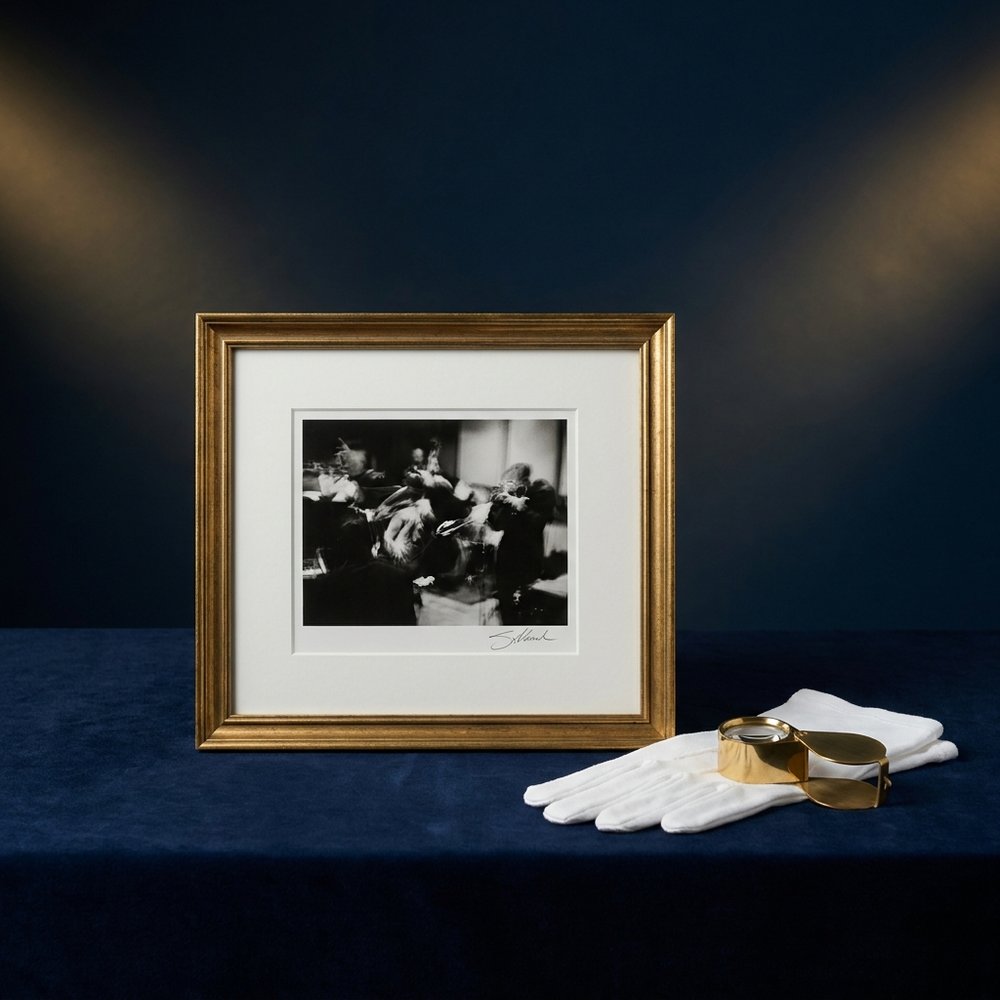
Signed Photographs
The most accessible way in The most welcoming entry point in music collecting — affordable, displayable, and easy to authenticate with confidence.Signed photographs are the most accessible and inviting entry point into music memorabilia. Photos are affordable, easy to sign, and a delight to display, which means there is a rich, genuine supply at modest prices — and the perfect place for a new collector to build authentication discipline. Value is driven by the artist, the iconic quality of the image, the size and surface (glossy versus matte), and whether the signature is bold and beautifully placed. An inscription ('To John') adds a note of intimacy for a personal keepsake, while a clean, unaddressed signature carries the broadest resale appeal — your choice to make. A signed photo carrying a Beckett, JSA, PSA/DNA, or REAL letter is always the more rewarding buy, and this format lets you start that habit at a gentle price.
- Signed 8x10 glossy The standard signed-photo format — widely available, easy to authenticate and frame.
- Signed concert / candid photo Live-performance or behind-the-scenes images, often more visually compelling and collectible.
- Signed promotional / press photo Official label or studio photos, frequently signed at appearances and well-suited to authentication.
- Inscribed / personalized photo Signed with a dedication; adds character but can narrow the resale audience.
- Entry Level $50 – $250 Contemporary or mid-tier artist on a standard 8x10 with a third-party LOA.
- Mid Market $300 – $1,500 Major-act signatures, strong imagery, recognized authentication and clean placement.
- Investment Grade $2,000 – $15,000+ Legendary or deceased artists, iconic images, full provenance and elite authentication.
- Look for a current LOA from Beckett (BAS), JSA, PSA/DNA, or Roger Epperson REAL.
- Enjoy learning the difference between a true hand-signed autograph and an autopen or printed facsimile.
- Compare the signature to published exemplars for the artist — an easy, satisfying study.
- Notice how genuine ink interacts with a glossy or matte finish — a hallmark of a hand-signed piece.
- Confirm the image and the artist's age in it sit naturally with the signing period.
- Decide whether an inscription suits your purpose — a personal keepsake or a broad-appeal piece.
- Insist on a third-party LOA even on a modest photo — the habit is worth far more than the price.
- Prize the natural variation of a true autograph over the flat uniformity of an autopen.
- Favor a well-documented single piece over an anonymous bulk listing.
- Enjoy the individuality of a hand-signed image — no two are ever quite alike.
- Choose sellers who show the LOA proudly alongside the photo.
- Reach for the individually hand-signed print, not the reproduction.
Signed photographs are the ideal training ground. Buy an authenticated 8x10 from an artist you admire for under $250 and use it to learn the pleasure of telling a genuine hand-signed piece from an autopen or printed facsimile. Always spring for the LOA, even on affordable photos — the habit matters more than the price. As your eye for genuine signatures sharpens, you can step up to iconic images and legendary artists with real confidence. This is the category where a collector builds discipline gently, before graduating to a four-figure album or guitar.
Why is this the best category for beginners?
Signed photos are affordable, widely available, and a delight to display, so you can build real authentication discipline at a gentle price. It is the perfect place to develop your eye and enjoy the hobby, before stepping up to four-figure albums and guitars with confidence.
What is autopen and why does it matter?
An autopen is a machine that reproduces a signature with real ink, and printed facsimiles mimic signatures too. Both are common on photos and are not authentic autographs. A genuine hand-signed photo interacts with the surface; a third-party LOA from Beckett, JSA, PSA/DNA, or REAL helps rule out machine signatures.
Do inscriptions raise or lower value?
It depends. A personalized inscription ('To Sarah') can add charm and confirm an in-person signing, but it narrows the resale audience because fewer buyers want another person's name. Clean, unaddressed signatures generally have broader appeal for resale.

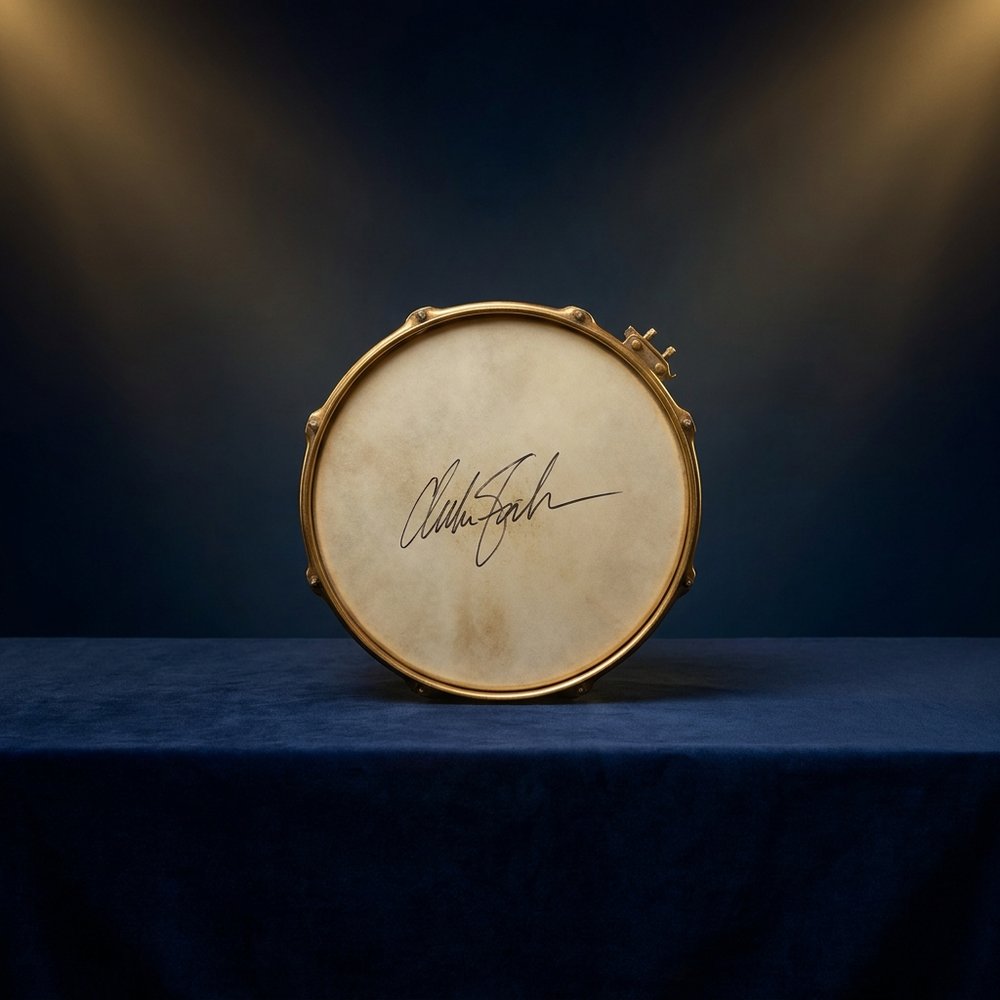
Drumheads
Big display, popular mid-tier format A bold, circular canvas that displays beautifully — one of the most beloved mid-tier signed formats.Signed drumheads have become one of the most beloved mid-tier signed formats. The large white circular surface is an ideal canvas for full-band signatures and frames into a striking display piece — which is exactly why collectors love them. Most signed drumheads on the market are signing-only heads, produced specifically to be autographed; these are perfectly legitimate and, with a LOA, a joy to own. A smaller, higher-value subset are stage-used heads pulled from an actual touring kit, whose provenance chain crowns them with a real premium. Value tracks the stature of the band, whether all members signed, the boldness and placement of the signatures, and the strength of the authentication behind them. Because the surface invites full-band signatures, a drumhead rewards the same careful authentication you'd bring to a full-band guitar or album — and repays it with a centerpiece that commands the wall.
- Full-band signed drumhead Every member signs the head — the most popular and most desirable signed-drumhead format.
- Single-artist signed drumhead One signature, often the drummer or frontman; cleaner and simpler to authenticate.
- Stage-used drumhead A head actually used on a touring kit; commands a premium but requires a provenance chain.
- Branded / logo drumhead Heads pre-printed with the band logo before signing, adding visual identity and appeal.
- Entry Level $150 – $600 Contemporary or mid-tier band, full set of signatures, third-party LOA.
- Mid Market $700 – $3,500 Well-known act, bold full-band signatures, recognized authentication and clean condition.
- Investment Grade $4,000 – $20,000+ Legendary bands or genuine stage-used heads with documented provenance and elite authentication.
- Look for a current LOA from Beckett (BAS), JSA, PSA/DNA, or Roger Epperson REAL.
- On full-band heads, enjoy knowing every signature is authenticated, not just the lineup as a whole.
- On stage-used pieces, savor the provenance chain tying the head to a specific tour or kit.
- Notice how genuine ink sits on the coated drumhead surface — a mark of a true signing.
- Compare each signature against published exemplars for the band members.
- Confirm the band logo or branding, if present, matches the era.
- Favor a recognized third-party LOA over any generic, unfamiliar certificate.
- Let authenticated comps guide you to a fair price on full-band heads.
- Reserve the stage-used premium for heads with documentation linking them to a real kit or tour.
- Reward signatures with the confident, individual hand of a true signing.
- Choose sellers who share high-resolution images of each signature and the LOA.
- Confirm the lineup is period-correct — the members who actually played together.
Drumheads reward collectors who want maximum display impact at a mid-tier price. Start with a full-band signed head from an act you follow, authenticated by Beckett, JSA, PSA/DNA, or REAL, and reserve the stage-used premium for pieces whose tour and kit are documented. A signing-only head with airtight authentication is a wonderful buy in its own right — no provenance chain required to love it. Confirm every member's signature is individually covered by the LOA, and a full-band head becomes a centerpiece you'll be proud to hang.
Is a 'signing-only' drumhead less valuable than stage-used?
Signing-only heads are produced purely to be autographed and are completely legitimate — most signed drumheads on the market are this type. Stage-used heads from a real touring kit can command a premium, but only with a documented provenance chain. Without that paper trail, a stage-used claim adds risk, not value.
Why are full-band drumheads risky?
The large surface makes room for every member of the band, which is exactly what makes a full-band head such a showpiece. Confirm the third-party LOA authenticates each individual signature, not just the head overall, and compare each name to published exemplars — do that and you own a centerpiece with certainty.
How should I display and protect a drumhead?
Frame it under UV-protective glazing away from direct sunlight to prevent signature fading, and avoid humidity swings that can warp the head. Keep the LOA and any provenance documentation stored with the piece so authentication travels with it at resale.
Concert Posters
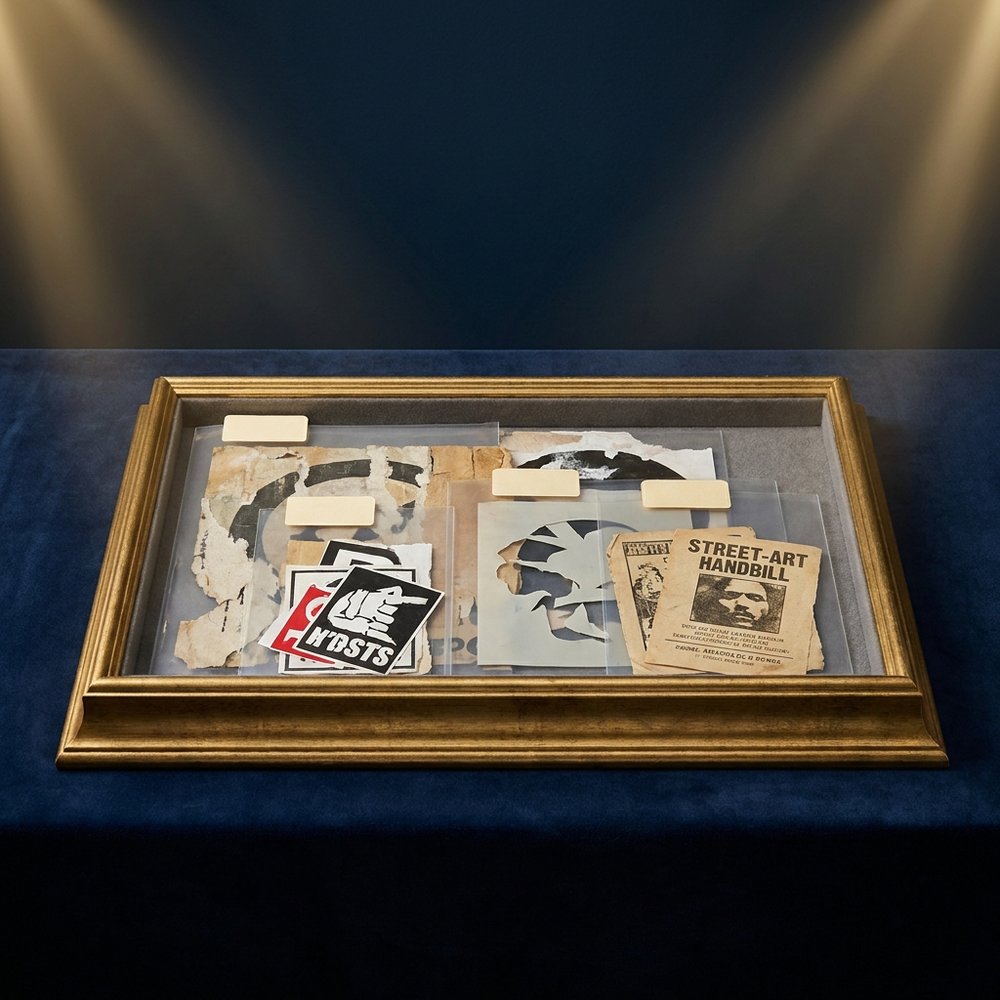
A print-collecting field of its own A distinct print-collecting discipline — from affordable reprints to investment-grade first-printing AOR posters.Concert posters are a distinct and rewarding collecting discipline, quite different from autograph memorabilia. The classic field centers on vintage Fillmore and Family Dog 'AOR' (Art of Rock) posters, prized not for signatures but for printer's marks, AOR edition numbers, and the satisfying study of original versus reprint. The same iconic poster exists as a first printing — the rare, valuable original — alongside later edition reprints and modern reproductions, and learning to tell them apart is where the connoisseurship lives. Two skills carry you: print identification (which edition is this?) and condition grading (margins, fold lines, color, restoration). A signed concert poster is a happy double: the artwork stands as a print, and any autograph on it earns its own third-party LOA. Enjoy the print and the signature as two distinct pleasures, each with its own confirmation.
- First-printing AOR poster Original Fillmore / Family Dog editions — the rare, investment-grade tier identified by printer's marks and AOR numbers.
- Edition reprint (later printing) Authorized later printings of classic posters; collectible but worth far less than first printings.
- Modern reproduction Affordable contemporary reprints — fine for display, but not investment-grade and never sold as originals.
- Signed concert poster A poster bearing an artist signature; the print and the autograph are authenticated separately.
- Entry Level $25 – $200 Modern reproductions and common later-edition reprints for display.
- Mid Market $300 – $2,500 Authentic earlier editions or well-conditioned printings, identified and graded.
- Investment Grade $3,000 – $25,000+ Confirmed first-printing AOR posters in strong condition, or major signed examples with LOA.
- Identify the edition using printer's marks and AOR numbers — telling a first printing from a reprint is the collector's core delight.
- Compare against published AOR / Fillmore reference catalogs for the specific poster.
- Appreciate condition closely: margins, fold lines, color, trimming, and restoration.
- Reach for a documented vintage original when that's what you're after.
- If the poster is signed, welcome a separate third-party autograph LOA (Beckett, JSA, PSA/DNA, REAL).
- Confirm dimensions and paper stock match the known first-printing specifications.
- Enjoy an honestly described reprint for what it is — and pay first-printing prices only for a first printing.
- Favor sellers who cite printer's marks and the AOR number with pride.
- Ask for high-resolution photos and an open note on any restoration — the best listings offer both.
- On a signed poster, welcome a separate autograph LOA alongside the print.
- Value a 'rare original' that references the standard AOR catalog.
- Prize full, untrimmed margins — a hallmark of a first-printing example.
Posters reward homework over budget. Pick up a reference catalog of Fillmore / Family Dog AOR posters before you buy a first printing, and enjoy learning to read printer's marks and edition numbers — the one skill that turns you into a true poster connoisseur. Start with an honestly described reprint for display while you train your eye, then move to confirmed first printings once you can identify editions yourself. If a poster is signed, welcome the autograph as a second, satisfying confirmation with its own LOA. Condition is as rewarding to master here as edition.
How are concert posters authenticated if not by signature?
Vintage concert posters are a print-collecting field. They're authenticated through printer's marks, AOR (Art of Rock) edition numbers, paper stock, dimensions, and original-versus-reprint analysis against reference catalogs. A signature is a separate matter — only signed posters also need a third-party autograph LOA.
What is a 'first printing' and why does it matter?
The first printing is the original run of a poster, distinct from later authorized reprints and modern reproductions of the same artwork. First printings are the rare, investment-grade tier and can be worth many times more than reprints. Identifying the printing via printer's marks and AOR numbers is the most important skill in this category.
Are signed concert posters authenticated differently?
Yes — they require two checks. First, the poster itself is authenticated as a print (edition, printer's marks, condition). Second, any autograph on it must be separately verified with a third-party LOA from Beckett, JSA, PSA/DNA, or REAL. Never let one substitute for the other.
Setlists & Stage-Used
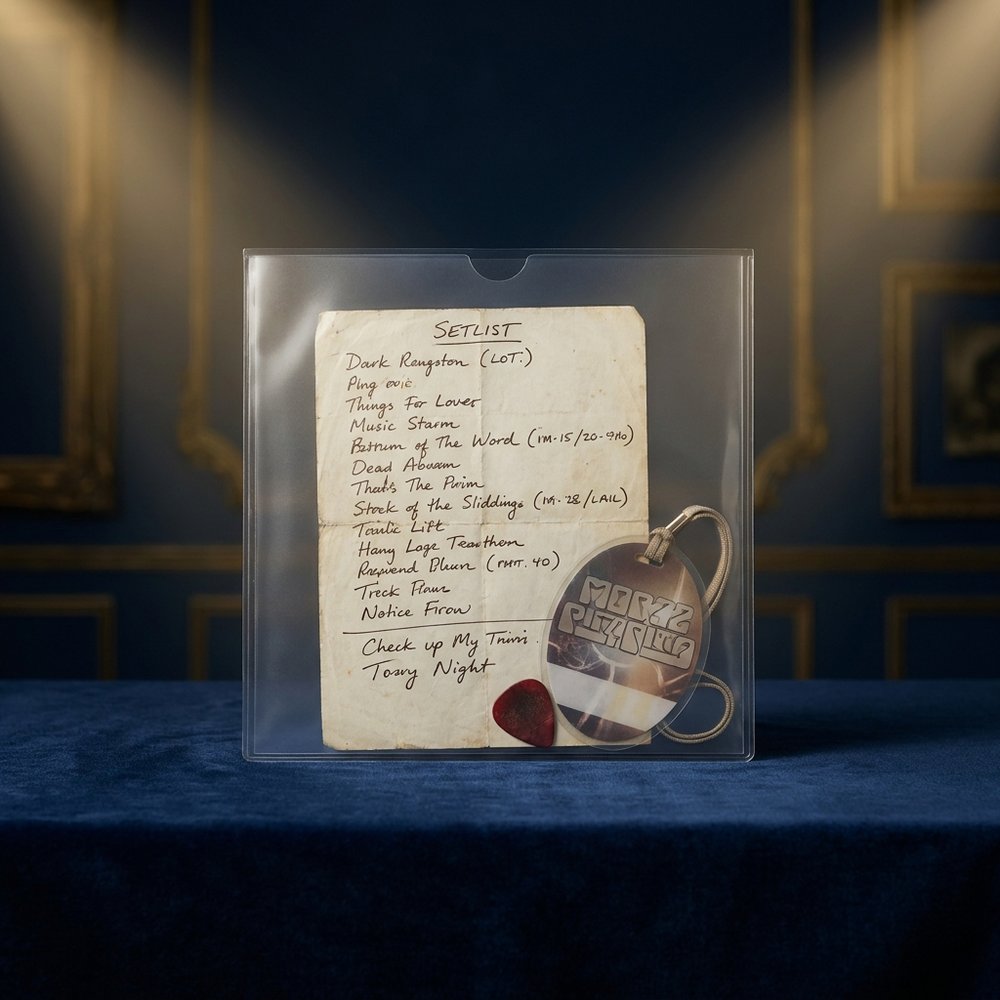
The most provenance-rich category The most provenance-rich category — handwritten setlists, stage clothing, and tour-used artifacts, each carried by its own paper trail and story.Setlists and stage-used items are the storytellers of the category, and provenance is what gives them their voice. Unlike a signed photo, a handwritten setlist or a piece of stage clothing usually carries no signature — its magic rests on the documented proof that it was genuinely used by the artist. That proof is a chain of custody: who obtained it (a crew member, a venue, the estate), when, and how, brought to life by photo-matching to concert images or footage wherever possible. The finest pieces marry artifact, paperwork, and a photo or video match into a single, irresistible package — the closest a collector comes to standing on the stage. If the item is also signed, the autograph earns its own letter from a recognized body. Here, the documentation is half the joy of ownership, so seek it out and treasure it.
- Handwritten / printed setlist The running order from a specific show; value depends entirely on documented stage origin.
- Stage-used clothing / accessory Garments or items worn in performance; require provenance and ideally photo-matching.
- Tour-used equipment / gear Picks, sticks, straps, or hardware from a tour, documented by crew or estate sourcing.
- Signed stage-used artifact A stage-used item that is also autographed; provenance and a separate autograph LOA both required.
- Entry Level $100 – $750 Documented setlists or minor tour-used gear from mid-tier or contemporary acts with provenance.
- Mid Market $1,000 – $6,000 Well-documented stage-used items from notable artists with a clear chain of custody.
- Investment Grade $8,000 – $40,000+ Iconic artists, photo-matched stage-used pieces with airtight provenance and, where signed, elite authentication.
- Enjoy the written provenance chain: source, date, and method of acquisition.
- Seek photo-matching to concert images or footage tying the item to a specific show — the ultimate thrill.
- Confirm the piece sits naturally with the tour, venue, or era it celebrates.
- Welcome any autograph as a separate, satisfying confirmation (Beckett, JSA, PSA/DNA, REAL).
- Favor a named, credible source — crew, venue, or estate documentation.
- Cross-check the setlist song order against the show — a rewarding piece of detective work.
- Let provenance documentation lead — it is the heart of this category's value and its pleasure.
- Reward a setlist that arrives with a clear chain of custody.
- Prize stage-used and tour-worn pieces that can be photo-matched and sourced.
- Favor named, dated sourcing over an anonymous line — the story is part of the piece.
- Enjoy confirming the song order matches the documented show.
- On a signed stage-used item, welcome both the provenance and a separate autograph LOA.
In this category, the documentation is the treasure as much as the object. A modest setlist with a credible, written chain of custody and a photo-match delivers far more joy — and value — than an impressive-looking piece with no paper trail. Start with well-documented items from acts you know, and enjoy reading provenance closely: names, dates, and acquisition methods all part of the story. Photo-matching to concert footage is the gold standard; chase it whenever you can, because it is the ultimate confirmation. Let the paper trail earn the stage-used premium, and welcome any signature as a separate confirmation with its own LOA.
Why does provenance matter more here than in other categories?
Setlists and stage-used items usually carry no signature to authenticate, so their value rests entirely on proving genuine use by the artist. A documented chain of custody — source, date, method — plus photo-matching is the only reliable proof. Without it, even a convincing piece is essentially unverifiable and worth little.
Can a setlist be authenticated at all?
A setlist earns its magic through origin rather than a signature: documented sourcing from crew, venue, or estate, plus photo-matching to the specific show. The paper trail is the pleasure here — secure it, and a simple sheet of paper becomes the closest a collector comes to standing on the stage.
What is photo-matching and how does it help?
Photo-matching compares the specific item to concert photos or video to confirm it appears in use at a particular show — matching wear, markings, or details. It's the strongest form of evidence for stage-used claims and can substantially raise both confidence and value when it confirms the provenance story.
Own a Piece You'll Love
Browse authenticated inventory with full provenance and blockchain-verified certificates of authenticity.
Browse Signed Music View FAQ