

Invader — The Collector's Guide
The most elegantly self-documented artist in street art. Invader numbers, maps and catalogues his own invasion — pixel-aliens spread across the world's cities and even into orbit — and that discipline is a gift to the collector. This is your roadmap to owning a piece of it: the five formats, where the market lives, and how provenance-first authentication lets you buy with total confidence.
Invader
Invader is the anonymous French artist who has been “invading” the world’s cities since the late 1990s, installing ceramic-tile mosaics inspired by 8-bit video games. Working masked to protect his identity, he treats the planet as one giant game board, cataloguing each piece in his own Invasion maps and app.
For collectors, that discipline is a gift: Invader authenticates his own studio works with signed certificates, making a playful, pixel-perfect body of work both deeply collectible and reassuringly verifiable.

Aliases & Mosaics
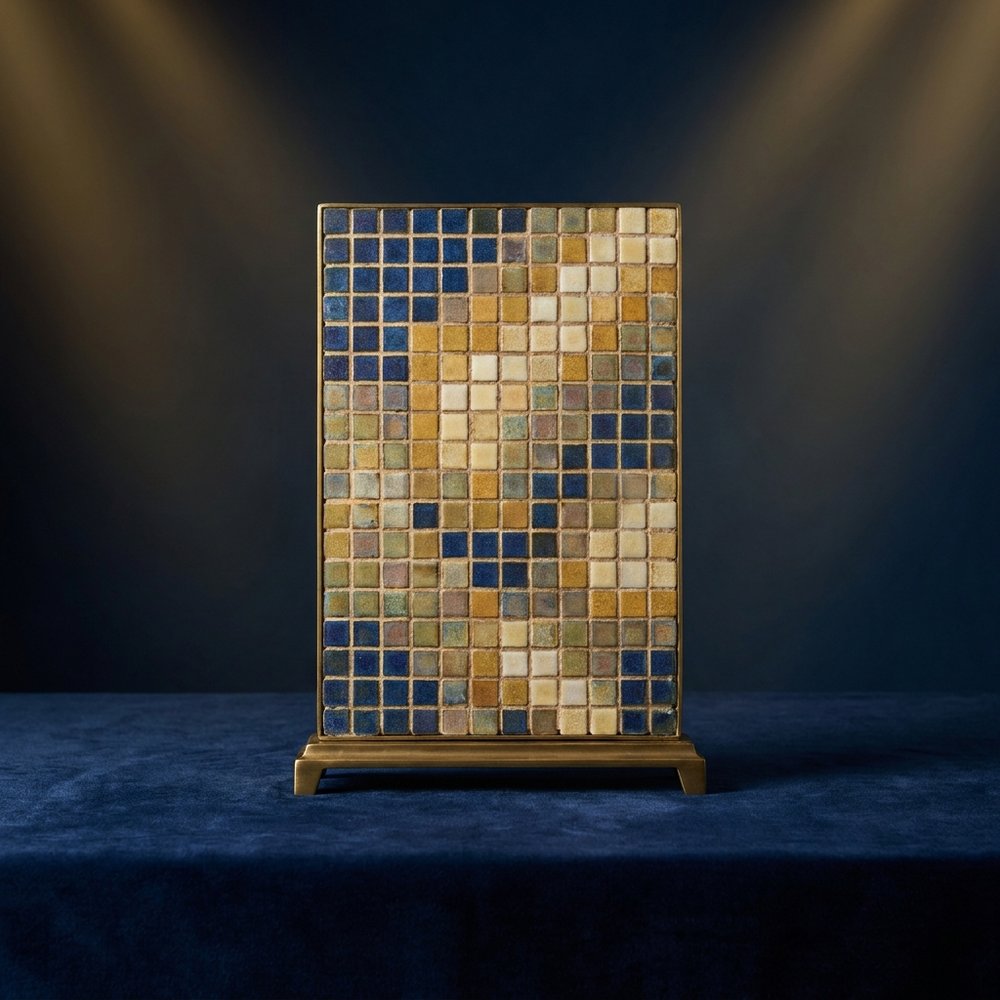
Studio Perspex panels tied to a mapped street original · signed certificate + invasion documentation Where the salesroom meets the street — and where the provenance itself is the prize.The ceramic-tile mosaics are the soul of the project and, at the top, the most valuable objects Invader makes — but the vast majority are cemented into public walls and cannot be bought. What legitimately trades on the art market is the Alias: a studio-made replica of a specific street mosaic, produced on a portable Perspex or plexiglass panel at or near the original scale. Each Alias carries the catalogue code of its street original — Alias PA-1030 corresponds to a Paris installation — and ships with a signed certificate of authenticity plus documentation of the original invasion. The Alias is where the artist's anonymity and commerce reconcile: he need not surface publicly because the catalogue code and certificate do the authentication work that a named studio or estate might handle for another artist.
This is the top tier of the market. Invader's single highest auction result is Astroboy, Tk_119 (2014) — a ceramic-tile-on-Perspex work, not a print — which sold for US$1,220,000 (£945,258) at Sotheby's New York in November 2019, per MyArtBroker. Alias works are prominent in the record book: Alias HK-59 realized HK$2,680,000 at Christie's Hong Kong in March 2015, and Alias PA-1030 made €251,000 at Artcurial Paris in October 2016. Detached wall mosaics occasionally surface at auction too, but they are a fundamentally different and more fraught proposition — carrying authenticity, condition and ethical questions that an artist-issued, coded Alias does not.
- Alias Panels (Perspex / Plexiglass) A studio replica of a coded street mosaic, tethered to a documented, dated, mapped installation the artist controls — the primary tradable mosaic object.
- Signed Certificate + Invasion Docs The signed COA paired with documentation of the original invasion is the mechanism that makes an Alias an Alias rather than a generic replica.
- Detached Street Mosaics (Specialist Only) Wall pieces removed from public space that occasionally appear at auction — higher risk, with authenticity, condition and ethical questions.
- Marquee Trophy Lots The seven-figure ceiling (Astroboy, Tk_119) and city-associated icons; a halo for the whole market, never a comp for your print.
- Auction Ceiling US$1,220,000 Astroboy, Tk_119 (2014), Sotheby's New York, Nov 2019 — the artist's record and the anchor for his top end (MyArtBroker).
- Alias Results Five to six figures Alias HK-59 at HK$2,680,000 (Christie's HK, 2015); Alias PA-1030 at €251,000 (Artcurial, 2016).
- Global Bid Paris · NY · Hong Kong · Taipei Top results are geographically dispersed; Artcurial Paris is the most active venue (223 lots, MyArtBroker). Context, not a forecast.
Verified records give concrete anchors. When a seller's catalogue code, city and invasion documentation reconcile with the mapped original, that is corroborating evidence; when they don't, the mismatch is a prompt to ask questions.
At this tier, the documentation is the pleasure and the protection. An Alias lives and breathes through its certificate and invasion papers — so collect the story as carefully as the image.
- Confirm the catalogue code on the panel and match it to a documented, mapped street original (e.g. a PA code for a Paris piece).
- Require the signed certificate of authenticity together with documentation of the original invasion — the two travel with the work.
- Research the referenced street piece: its location, visibility, condition history and whether it still exists, before you bid.
- Establish a clean chain of ownership — original invoice, gallery or auction record — since there is no central registry to query.
- For a detached wall mosaic, obtain independent specialist review and understand the added authenticity and legal-provenance questions.
- Cross-reference the imagery against the artist's invasion records and the FlashInvaders census where the original is a flashable piece.
The very traits that make Invader famous — scale, instant recognizability, anonymity — are also what make an impeccably documented Alias such a satisfying thing to own. Buy on the paperwork and you buy with total confidence.
- Prize the Alias that arrives complete — signed certificate, invasion documentation, and a code that reconciles cleanly to a mapped original.
- Understand the model: Invader authenticates through his own codes, maps and census rather than a central office — and that self-run system is a strength you can lean on.
- For a detached wall mosaic, favor a clear, documented account of how and when it left public space.
- Treat the headline mosaic results (like Astroboy) as a halo for the name — inspiring, but never the comp for a lower-tier object.
- Look for a certificate with a clean chain back to the original release or invasion — continuity is the value.
- Give a high-value purchase the courtesy of independent specialist examination; the best sellers welcome it.
Because each Alias references a documented original, a collector can do unusually concrete diligence — read the code, find the street piece on the invasion map, check whether it still exists and how prominent it was — before committing. Favor Aliases tied to famous, prominently sited or since-destroyed installations, since the market prices that narrative weight, and insist on the signed certificate plus invasion documentation as an inseparable unit. Treat the seven-figure trophy results as a halo that validates the name, not as a comparable for your object. At this level, budget for an independent specialist review; it is cheap insurance against a serious mistake, and provenance is the asset you are really buying.
What exactly is an Alias?
A studio-made replica of a specific street mosaic on a portable Perspex panel, carrying the catalogue code of its street original and sold with a signed certificate and documentation of the original invasion. Aliases are the works that legitimately trade on the art market.
Is there a central authority I can query, like Pest Control for Banksy?
No. Invader does not run a Pest Control-style central authentication office and issues no traditional paper COA for street installations. Authentication is provenance-first: catalogue codes, invasion maps, the FlashInvaders census, gallery documentation, and — for Aliases — the signed certificate paired with invasion documentation.
What is the auction record?
Astroboy, Tk_119 (2014), a ceramic-tile-on-Perspex work, sold for US$1,220,000 at Sotheby's New York in November 2019, per Sotheby's and MyArtBroker. It is a mosaic, not a print — a different asset class within the same artist.
Should I consider a detached wall mosaic?
Only as a specialist. A wall mosaic removed from public space carries authenticity, condition and ethical questions that an artist-issued Alias does not. For most collectors the Aliases deliver the mosaic imagery with vastly cleaner provenance.
Prints & Editions
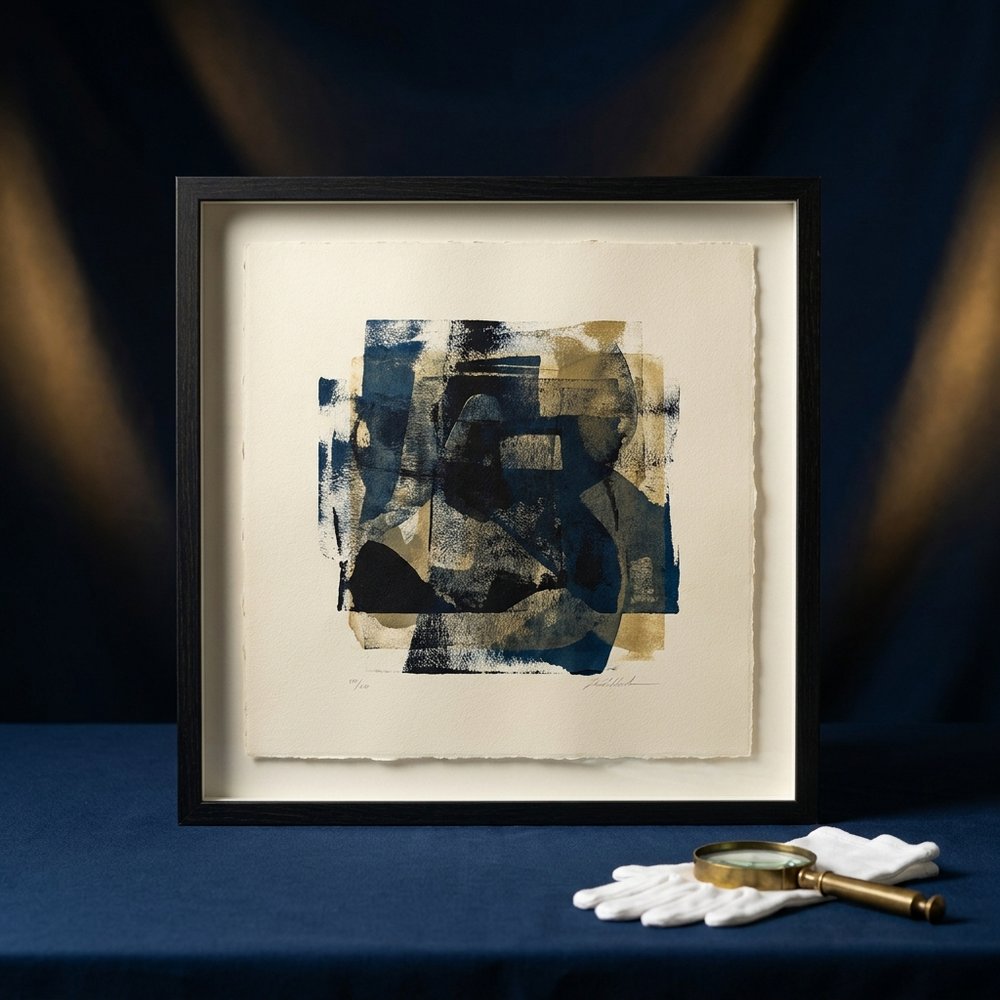
Screenprints & giclées · HENI, Pictures On Walls, Lazarides, Gallery Target · signed & numbered Where most collectors begin — the accessible, liquid heart of the market.Prints are the accessible core of the Invader market, and the strongest editions extend the project's systems — mapping, coding, repetition, altered perception — into a collectible format rather than merely souvenir-ing an image. Invader's output spans hand-pulled signed screenprints, publisher releases and, increasingly, large-format giclée timed editions. The primary program has professionalised under HENI Editions, a sophisticated London publisher whose recent releases lifted retail price points from the hundreds into the low thousands — recent HENI timed editions have released at roughly USD $1,000–$3,000, while historic Space Shop, Pictures On Walls and Lazarides editions released at £50–£425 or €75–€450.
The critical mechanic to understand is the timed edition: its final size is set by however many buyers order during a fixed window, not capped in advance — which is why HENI runs show idiosyncratic sizes like 459, 774 or 1,194. Scarcity is therefore demand-revealed after the fact. On the secondary side, MyArtBroker reports an average price paid of £7,061 for Invader prints and multiples, and cites a print price index that grew 49% from 2014 to 2024 — a computed CAGR of roughly 4.1% over the decade (labelled as arithmetic from the cited cumulative figure, not an independently observed rate). Treat trailing-twelve-month momentum figures as a trader's reading, not a durable expectation.
- Signed Screenprints Hand-pulled, layered prints, often signed and numbered in pencil — the core fine-art edition category.
- HENI Timed Giclée Editions Large-format prints at ~USD $3,000; final size set by the sales window (e.g. Invaded Cube 459, InvadHirst 1,194).
- Small Legacy Editions Early Space Shop / POW / Lazarides runs at £50–£450 — tight editions that reward early conviction and holding power.
- Marquee Collaborations Damien Hirst (InvadHirst, Invaded Blossom) and Shepard Fairey (Positive Space / Negative Space) via HENI — strong demand signals.
- Primary — HENI Timed USD $1,000 – $3,000 Recent large-format timed editions; rewards registration and speed of access. Large sizes cap upside.
- Primary — Legacy Small £50–£450 / €75–€450 Historic Space Shop, Pictures On Walls and Lazarides releases; illiquid until a market forms.
- Secondary Average £7,061 avg. paid MyArtBroker average for prints and multiples — a liquidity thermometer, not a per-work valuation.
Catalogue particulars give concrete anchors. When a seller's year, medium, edition size, publisher and retail match a documented release, that corroborates; a mismatch is a prompt to reconcile before buying. Figures below are drawn from Gauntlet Gallery's documented catalogue of 84 official editions.
“Print” is market shorthand, not a description. Ask the seller to state the medium exactly as it appears on a certificate or publisher record.
- Confirm the exact medium — screenprint, offset, giclée or object multiple — since it changes how the work was made and which comps are relevant.
- Read the full edition notation (e.g. 18/100) and have artist's or printer's proofs disclosed as such; a low denominator alone does not settle value.
- Examine the signature placement, medium and pressure — not merely whether a mark appears in a listing photo; distinguish hand-signed from stamped or plate-signed.
- Match the year, medium, edition size, publisher and retail against a documented release; unexplained discrepancies are useful signals.
- Establish the release context through a named gallery, publisher or project — a contemporaneous invoice or catalogue entry beats a later recollection.
- For a timed edition, understand the final size is demand-revealed and weight toward the smaller, capped or naturally-tight runs.
This is a category where a little precision pays off handsomely. Because the imagery is so widely loved, the collectors who ask for exact detail are the ones who buy the best examples at the fairest prices.
- Ask for the medium stated exactly — screenprint, offset or giclée — as it appears on the certificate or publisher record; specificity is the mark of a good source.
- Favor a “signed” work you can see clearly, with the signature method described — hand-signed, stamped or plate-signed each has its place.
- Prize a certificate with a clean chain back to the original publisher or gallery — continuity travels with the work.
- Reconcile the year, edition size and publisher against a documented release; when everything lines up, you buy with confidence.
- Read a first-month flip premium for what it is — early enthusiasm — and let a rolling window of settled sales set your number.
- Reward the seller who offers provenance and time; the best transactions are unhurried and well-documented.
Within the HENI program, weight toward the smaller, capped or naturally-tight editions and the marquee collaborations, and treat the largest timed editions (InvadHirst's 1,194) as access pieces rather than appreciation plays. If you can get allocated at retail on a genuinely tight release, the primary market is the cheapest possible entry; if you missed it, check that the current secondary ask is supported by multiple recent comparable sales rather than one or two optimistic listings. Price every candidate off a rolling window of settled, arm's-length sales with the extremes trimmed — never off a single headline. And keep the invoice, certificate, high-resolution photos and any verification records together after purchase; provenance becomes more valuable when you eventually sell.
What does “timed edition” mean for scarcity?
A timed edition's final size is set by how many people buy during a fixed window, not capped in advance — which is why HENI runs show sizes like 459, 774 or 1,194. A lower final count generally indicates a scarcer object, all else equal.
Does the lowest edition number matter?
Usually not in a simple linear way. Condition, image, provenance, format and the overall edition are generally more consequential than a low number. Pay a premium for a low number only when you understand why it is justified.
Who publishes Invader's editions today?
HENI Editions is the central publisher of recent large-format timed editions, including the Damien Hirst collaborations. Historically his editions came through Space Shop, Pictures On Walls, Lazarides Editions, Jonathan LeVine, Gallery Target and others.
Is an unsigned Invader work collectible?
Yes, depending on what it is. An unsigned map, book, poster or multiple can be a legitimate release with its own collector market. It should be described and priced as that category, not promoted as equivalent to a hand-signed limited screenprint.

Rubikcubism Works
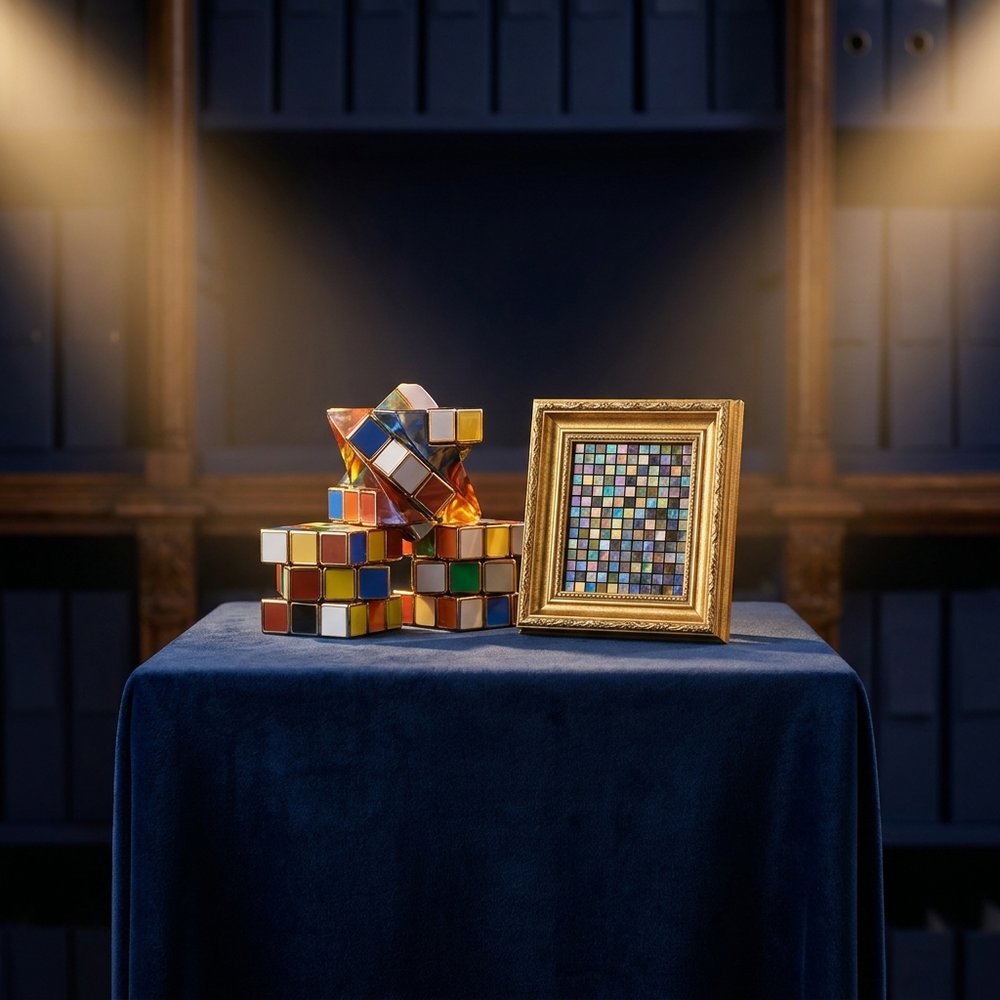
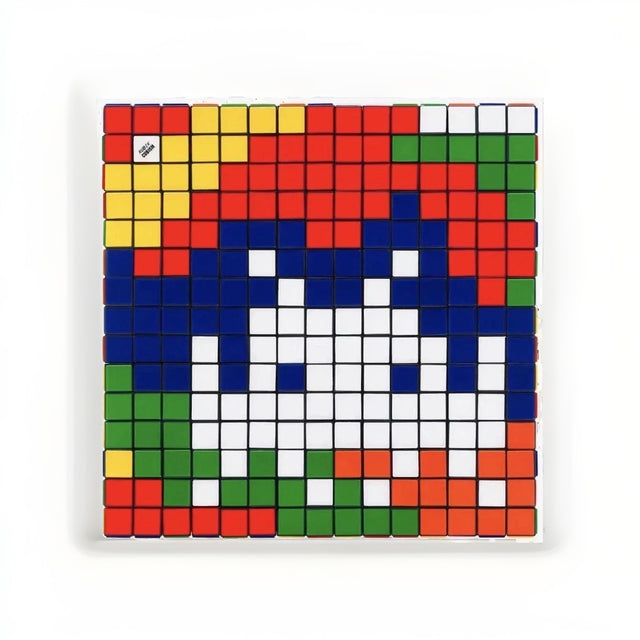
Unique hand-built cube panels & editioned Rubik prints · six-color pixel per cube Invader's invention — and the single most reliable engine of his top-end results.Rubikcubism is Invader's self-named practice — “a fine art school developed in Paris in the early 21st century and characterised by the use of Rubik Cubes as a medium,” per MyArtBroker and the artist's site. Each solved cube functions as a single mosaic tile with a fixed six-color palette; assembled in a grid, the cubes resolve at distance into a recognizable image, often a canonical artwork like the Mona Lisa. It is conceptually his most distinctive contribution beyond the ceramic mosaics, and the original hand-built panels are among his most valuable objects at auction.
The record book proves it: three of Invader's top four results are Rubik works — Rubik Space (2005) at €492,600 (Artcurial, Dec 2020), Rubik Mona Lisa (2005) at €480,200 (Artcurial, Feb 2020), and Rubik Dalai-Lama (2008) at €468,250 (Artcurial, Jul 2021), with 400 Chinese Cubes (2021) adding €375,000 at Christie's Paris. The unique panels are effectively one-off sculptures — representative pieces use on the order of hundreds of cubes and weigh tens of kilograms — which is why they price as sculpture rather than print. The editioned HENI Rubik giclees reproduce the imagery two-dimensionally at a fraction of the cost, so the two are related but not the same market.
- Unique Cube Panels Hand-assembled one-off sculptures using hundreds of solved cubes — the €350k–€500k top tier and the value core of the whole market.
- Early Editioned Rubik Prints Genuinely scarce runs — 6 Cubes (Blue & Yellow) at just 20, Rubik Cubism (First Edition) at 75 — the closest affordable proxy to the panel demand.
- HENI Rubik Timed Giclees 2023 large-format editions at USD $3,000; imagery without the scarcity (Rubik Camouflage 812, Rubik Shot Red Marilyn 774 mark as “Common”).
- Rubik Master Pieces Imagery “Insolent tributes” to the canon — Mona Lisa, Scream, Abbey Road — borrowing blue-chip cultural weight.
- Unique Panels €375k – €492k+ Rubik Space €492,600; Rubik Mona Lisa €480,200; Rubik Dalai-Lama €468,250; 400 Chinese Cubes €375,000 (Artcurial / Christie's).
- Early Editioned Prints £75 – £300 (at release) Rubik Cubism (First Ed.) €150 / ed. 75; Rubik Abbey Road $300 / ed. 50; 6 Cubes £225 / ed. 20 — scarcity the market never fully priced.
- HENI Timed Giclees USD $3,000 (primary) Large 2023 runs (431–812) offer the imagery but not the scarcity. Context, not a forecast.
The panels set the ceiling; the editioned prints let you reason about the affordable end. Within the editions, the tighter run is almost always the better long-term hold when imagery and asking price are similar — scarcity is the one variable that cannot be manufactured after the fact.
The single most important step is to establish which asset class you are in — unique panel or editioned print — because they trade in entirely different markets.
- Confirm the exact medium and mechanism: a unique hand-assembled cube panel versus a two-dimensional editioned giclée reproduction.
- For an editioned Rubik print, read the full edition notation and rank scarcity by edition size — an edition of 20 or 50 is a different universe from 300 or 800.
- For a unique panel, obtain complete documented provenance, exhibition history and in-person specialist examination before funds are released.
- Match the year, medium, edition size and publisher against the documented catalogue (e.g. HENI 2023 giclees, early Space Shop / POW / Lazarides prints).
- Do not accept a unique-panel auction result as evidence of what an editioned print of the same imagery is worth.
- Verify dimensions and weight are consistent with a genuine hand-built panel where a unique work is claimed.
The wide gap between a six-figure unique panel and a low-thousands print is precisely where the informed collector finds clarity — and value. Know your asset class and the whole category opens up.
- Confirm which market you are in — a unique hand-built panel or an editioned giclée — and let each be priced on its own logic.
- Enjoy the record-setting panel results (Rubik Mona Lisa, Rubik Space) as the ceiling that lifts the name; price your edition off comparable editions.
- For a “unique” panel, expect full provenance, exhibition history and a welcome to in-person specialist review — hallmarks of a serious offer.
- Match the edition size and publisher to the documented catalogue for that Rubik release; agreement is reassurance.
- Confirm dimensions and weight are consistent with a genuine multi-cube hand-assembled object when a unique work is claimed.
- Treat the newest HENI Rubik editions as image access for now — their public auction histories are still young, so buy them because you love them.
Rubikcubism carries proven blue-chip demand at the unique-panel level, and for the collector who cannot reach the €350k–€500k tier, the rarest early editioned Rubik prints are the rational exposure — the closest affordable proxy to that demand. Rank the editions by scarcity first: a print from an edition of 20 (6 Cubes) or 50 (Rubik Scream II, Rubik Abbey Road) sits in a different supply profile than one of 300 or 800, and the tighter run is almost always the better long-term hold at similar imagery and price. Look for the cheapest genuine scarcity that rhymes with what the top of the market already rewards — small-edition works referencing iconic pop culture — but respect the illiquidity: the value tier is a patient-capital thesis. Do your own comp work before acting.
What is Rubikcubism?
Invader's self-named practice using solved Rubik's Cubes as mosaic tiles. Each cube is a six-color pixel; assembled in a grid, they resolve into a recognizable image, often a canonical artwork like the Mona Lisa. He defines it as a fine art school characterised by the use of Rubik Cubes as a medium.
Why do Rubik works command the top of the market?
Conceptual originality (a genuinely new medium), physical presence and labour (large, heavy, hand-assembled panels reading as sculpture), and appropriation of blue-chip imagery. Three of Invader's top four auction results are Rubik works.
Should I buy a Rubik print or wait for a panel?
Most collectors cannot reach the unique-panel tier, so the rarest early editioned Rubik prints are the rational exposure. Rank them by scarcity — the tighter edition is generally the better hold — and never price a print off a panel result.
Are the 2023 HENI Rubik giclees a good appreciation play?
They offer the imagery but the large timed runs (up to 812) cap scarcity, and public auction histories for the newest editions are still thin. Treat any confident claim about their flip value with skepticism — including your own.

Invasion Kits & Sculptures
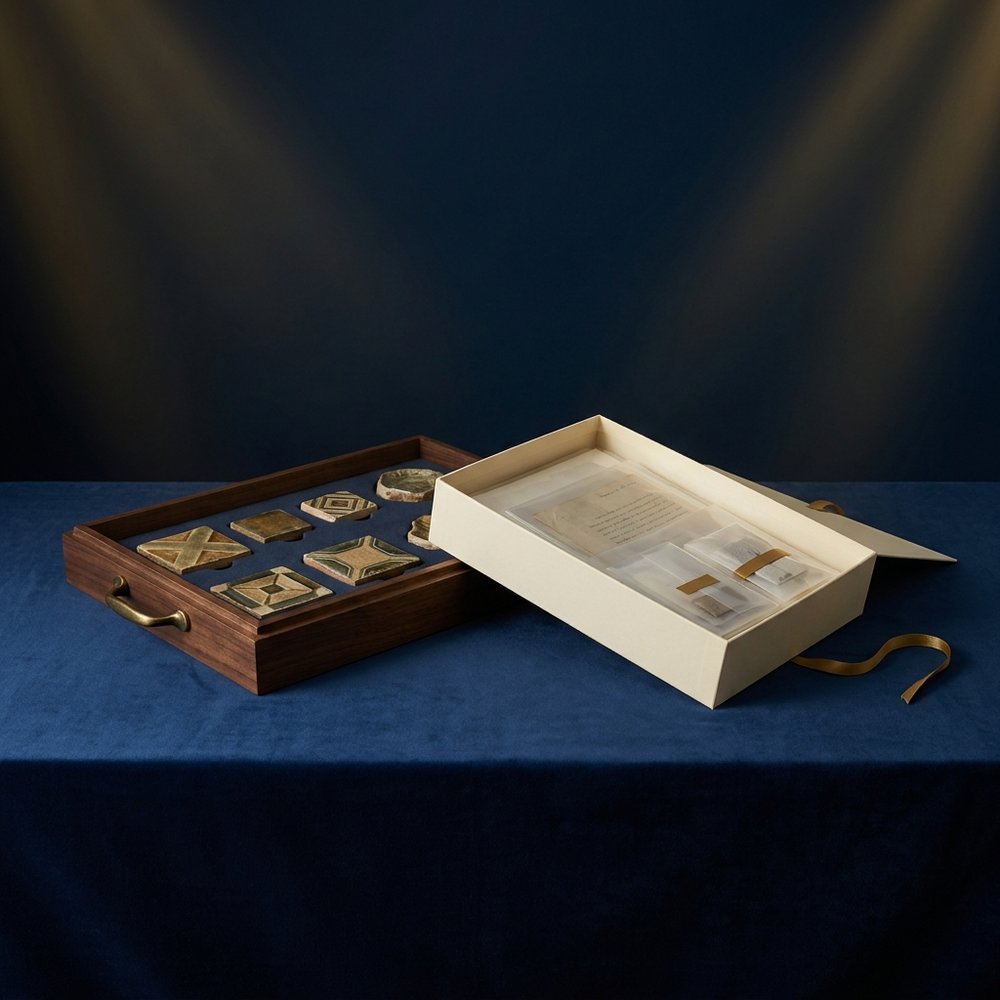
Numbered tile-object multiples · mostly Space Shop · the domestic-scale mosaic The way to own a genuine Invader mosaic object without a detached wall piece.The Invasion Kits are official, artist-produced tile assemblies that let a collector own a genuine Invader mosaic object at domestic scale — the answer for anyone who wants an actual mosaic without buying a detached wall piece at auction. The numbered series stretches from Invasion Kit #01 (Albinos) in 2000 (edition of 350, Space Shop) through the higher-numbered kits of the 2010s, published predominantly by Space Shop, typically in editions of 150–350 and originally retailing in the €75–€750 range. They are a smart piece of market design: affordable entry points, unmistakably “Invader” in material and image, with a numbered sequence that rewards completist collecting — the same instinct FlashInvaders exploits.
The kit market is real and measurable. Per MyArtBroker's Invasion Kit collection page, over a trailing twelve months the series averaged a £4,357 selling price with an average annual growth rate of 18.27%, and individual kits have sold across a wide £209–£31,195 range depending on rarity, edition and provenance. That spread is the entire story — kit values are dispersed, so selection dominates. Beyond the kits, the catalogue also records larger sculptural objects such as the mass-market 3D Little Big Space (2022, edition of 5,000, USD $500) and rarer pieces like IK For MSF (2017, edition of 25, produced with Over The Influence for Médecins Sans Frontières).
- Numbered Invasion Kits Boxed tile assemblies published mostly by Space Shop, editions of 150–350 — the accessible, completist-friendly core.
- Rare / Signed Kits The scarcest of the series — IK For MSF (ed. 25, “Rare”) and Invasion Kit #11 (Blue) Signed (2009, ed. 30, “Very Scarce”).
- Special-Feature Kits Later kits with glow-in-the-dark tiles, 3D effects or larger formats — e.g. #18 (LA 2018) at €2,400 (ed. 300).
- Larger 3D Sculptures Mass-market objects like 3D Little Big Space (2022, ed. 5,000, USD $500) — image access, not scarcity.
- Kit Average (TTM) £4,357 avg. Trailing-twelve-month average selling price for the Invasion Kit series (MyArtBroker).
- Realized Range £209 – £31,195 Individual kits clear across a wide band — edition, imagery, condition and story, not luck (MyArtBroker).
- Primary Retail (at release) €75 – €2,400 From early €75 kits to the €2,400 #18 (LA 2018). Trailing growth of 18.27% is momentum, not a promise.
The series offers a lesson in reading Invader's numbering: later kits with special features command more at retail, but at auction an early, historically significant, tightly editioned kit can outrun a later, larger, cheaper-to-produce one.
Completeness is the decisive variable here — a kit is a multi-part object, and every component matters.
- Verify every listed component, the interior packaging and the box condition; completeness materially affects desirability.
- Confirm the kit number, year, publisher and edition size against the documented catalogue (mostly Space Shop, editions of 150–350).
- Check for a certificate or signature where the specific kit is a signed release (e.g. Invasion Kit #11 (Blue) Signed).
- Establish provenance — how and from whom the kit was acquired — since values disperse widely and story drives the top of the range.
- Rank scarcity by edition size and historical significance, not by retail price alone; an early tight kit can outrun a later expensive one.
- Inspect the tiles and mortar for damage or missing pieces; a compromised box or lost certificate impairs value.
With a multi-part object, completeness and a correctly-read edition are where the reward lives. The collector who inspects carefully owns the best kit on the market — and protects its resale.
- Prize the kit with every tile, component and piece of interior packaging present — completeness is desirability.
- On a kit issued as a signed or certified release, keep the certificate with the object; the two belong together.
- Confirm the kit number, year and edition size against the documented catalogue; agreement is confidence.
- Rank scarcity by edition and history, not retail alone — an early, tightly editioned kit can outshine a later, larger one.
- Favor an original, undisturbed box; when it has been replaced, look for honest disclosure.
- For a high-range kit, value the provenance and story — they are exactly what the top of this market rewards.
For a collector who wants an actual Invader mosaic without a detached wall piece, the Invasion Kits are the answer, and the segment has documented momentum (18.27% trailing growth, MyArtBroker). But respect the dispersion: the difference between a £209 kit and a £31,195 one is edition, imagery, condition and story, not luck. Weight toward the tightly editioned, historically significant kits (the early numbers, the rare signed releases, IK For MSF) for appreciation, and treat the large mass-market sculptures as image access rather than a scarcity play. Above all, buy complete — insist on every component, the original box and any certificate, because completeness is both the collector's discipline and the resale protection.
Can I own an actual Invader mosaic through a kit?
Yes. The Invasion Kits are official artist-produced tile assemblies that let you own a genuine Invader mosaic object at domestic scale, with far cleaner provenance and a real, liquid comparable market behind them than a detached wall piece.
Why do kit prices vary so much?
Because values are dispersed — MyArtBroker records a £209–£31,195 realized range. The difference is edition size, imagery, condition and completeness, so selection dominates. An early, tightly editioned kit can outrun a later, larger one.
Does completeness really change the value?
Yes, materially. A kit is a multi-part object; a missing tile, a lost certificate or a compromised box impairs value in a way that does not apply to a flat print. Verify every component before buying.
Is a large 3D sculpture like Little Big Space a scarcity play?
No. At an edition of 5,000 (USD $500 at release), 3D Little Big Space is image access at accessible cost, not a scarcity play. For appreciation, the tightly editioned, historically significant kits are the rational focus.
Books & Invasion Maps
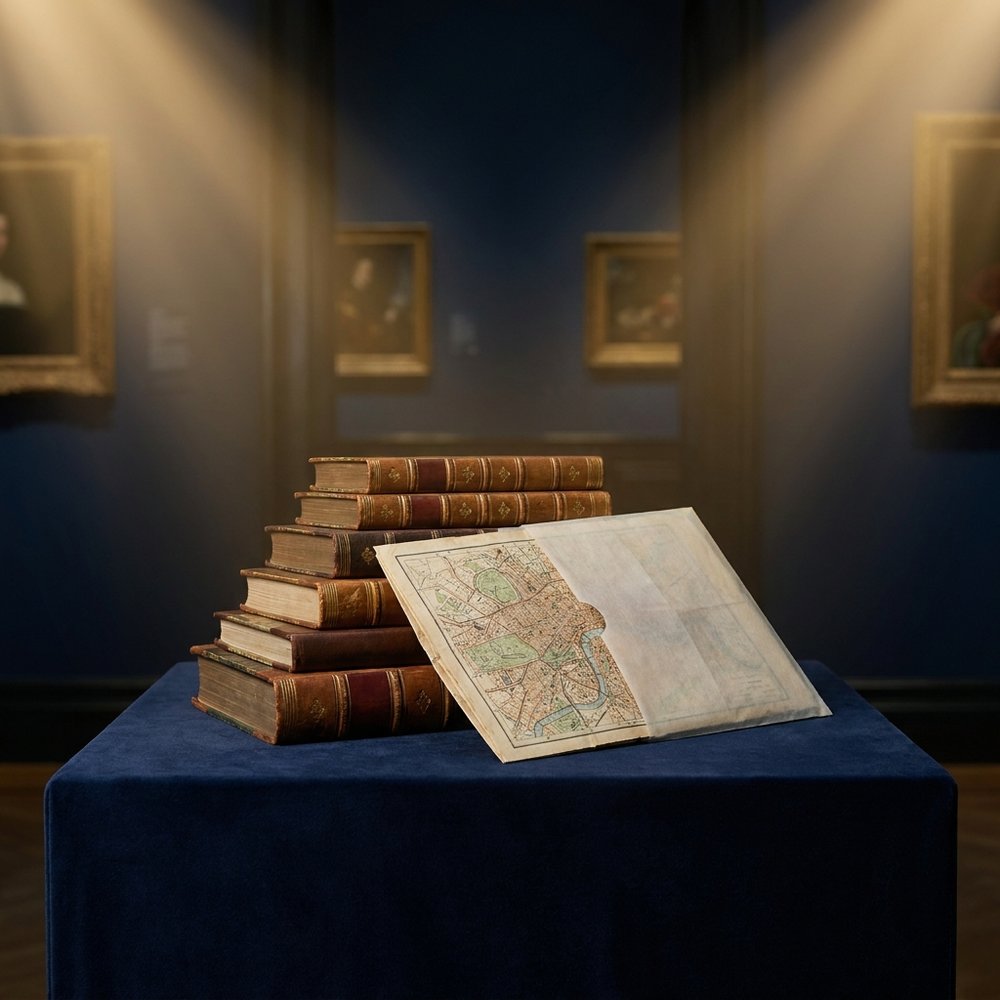
City invasion maps & catalogues · the campaign's field manuals turned into art objects Research-driven collecting with a narrative connection to place.To guide the public through each Invasion, Invader publishes invasion maps — printed guides to the locations of his mosaics in a given city. Wikipedia notes he has published two dozen such maps, and several exist as collectible editions in their own right. The documented catalogue records invasion-map editions for cities including Los Angeles (2004), São Paulo (2011), Paris (v2.0, 2011), Brussels (2012) and Djerba (2021), typically in small runs of 50–100 and at accessible retail prices. They are, in effect, the campaign's field manuals turned into art objects — the strongest are for the collector building a city-focused group with a narrative connection to place.
Alongside the maps sit books, catalogues and connected ephemera — for example the Invaderoma mosaic book cover (2010, edition 60, €450, “Rare”). These are context and entry-level collecting, not fine-art editions, and category discipline is the collector's first act of authentication: a well-documented, accessible multiple can be a satisfying entry point, but it should never be compared as though it were a small signed screenprint. The most useful question is not “what is the most famous image?” but “what exactly am I buying, and why does this specific edition matter?”
- City Invasion Maps Printed guides to a city's mosaics — LA (2004), São Paulo (2011), Paris v2.0 (2011), Brussels (2012), Djerba (2021); small runs of 50–100.
- Books & Catalogues Publications connected to the project — e.g. Invaderoma mosaic book cover (2010, ed. 60, €450, “Rare”).
- Unsigned Ephemera Collectible documents connected to the artist — legitimate releases, but context and entry-level, not fine-art editions.
- Narrative / City Groups A city-focused set of maps that connects a collection to a specific place and the wider invasion geography.
- Invasion Maps Small runs (50–100) Accessible retail at release; research-driven, narrative-led collecting tied to a city.
- Books & Covers e.g. €450 (Invaderoma) Invaderoma mosaic book cover (2010, ed. 60) sits at the collectible end of the publications.
- Category Position Entry-level, not interchangeable Legitimate with its own market; never priced or insured as a signed screenprint. Context, not a forecast.
The maps are the campaign's field manuals; their value lies in completeness, condition and the strength of the city connection. Match the city, year and version against the documented catalogue before comparing prices.
For maps and books, the city, year, version and completeness of the issue are the facts that matter most.
- Confirm the city, year and version (e.g. Paris v2.0) and the complete issue details against the documented catalogue.
- Verify the intended distribution and any small-run edition figure (maps commonly run 50–100).
- For a book or catalogue, check the printing/issue, inserts, and any signatures, then the condition.
- Inspect condition specifically — folds, creases, tears and completeness for a map; binding and inserts for a book.
- Price the item strictly as its own category, never as equivalent to a hand-signed screenprint.
- Keep the release context and any documentation; provenance supports resale even at the entry level.
Here the collector's first act of authentication is simply knowing the category — and it is a delightful one. Price a map as a map, a book as a book, and this corner of the market rewards you generously.
- Value a map, book or multiple for what it is — a legitimate release with its own market — rather than against a hand-signed screenprint.
- Match the city, year and version to a documented map; the specificity is part of the pleasure.
- Favor a complete issue — all inserts, sections and components — as the mark of a well-kept example.
- Ask for a specific written condition description; a candid account of folds and wear is the sign of a careful seller.
- Price strictly within the map/book category, on its own comparables — clean logic, clean purchase.
- Prize the release context and the story of how the item was distributed; provenance supports resale even here.
The maps and books are where research-driven collecting pays off: they connect a collection to a specific city and to the wider invasion geography, and a group built around a real idea is easier to enjoy and eventually explain than a pile of whatever seemed discounted. Buy for the narrative and the completeness, price strictly within the category, and keep the documentation. Treat these as a satisfying, accessible way into Invader's system — an education in his numbering, mapping and codes that prepares you for a print, a kit, or eventually an Alias — rather than as a substitute for a signed fine-art edition.
What is an invasion map?
A printed guide to the locations of Invader's mosaics in a given city — the campaign's field manual. Wikipedia notes he has published two dozen; several exist as collectible editions in small runs of 50–100, for cities including Los Angeles, São Paulo, Paris, Brussels and Djerba.
Are maps and books really collectible?
Yes, as their own category. A well-documented map, book or multiple is a legitimate release with its own collector market. It should be described and priced as that category, not promoted as equivalent to a signed screenprint.
What drives the value of a map?
City and project connection, the specific year and version, the small edition run, and above all condition and completeness. A map with a strong narrative tie to a well-known invasion carries more collector weight.
Is category discipline really part of authentication?
Yes. Treating each category on its own terms — not pricing a map or book as though it were a signed fine-art edition — is the collector's first act of authentication and the clearest defense against category inflation.
Ready to Own an Invader?
Browse authenticated Invader inventory with precise descriptions, documented formats, edition detail and provenance carried with every piece — the confident, provenance-first way great street art should change hands.
Browse Invader View FAQEvery Collection Begins with a Story
Original storytelling, historical research, market context, and collector education across the collection.
Original Storytelling Videos
Original story videos across the collection.
Collector Research
Release history, edition details, and context.
Market Intelligence
Transparent pricing from curated sales data.
Collect with Confidence
Authentication, provenance, and secure shipping.
Watch the StoryDiscover the HistoryCollect with Confidence
Sources, References & Assumptions
Master source taxonomy, terminology, and market-data assumptions: Sources, References & Assumptions.
View detailed source list
Third-party authenticators & organizations referenced on this site
- Professional Sports Authenticator autograph authentication service: psacard.com
- James Spence Authentication — autograph authentication: spenceloa.com
- Beckett Authentication Services — autograph authentication: beckett-authentication.com
- Pest Control Office — the sole authentication body for Banksy works: pestcontroloffice.com
- Obey Giant — official Shepard Fairey studio and release archive: obeygiant.com
- TrueCOA — blockchain certificate verification: truecoa.com
Collector & market information sources
- Getty Provenance Index — provenance research and best practices: getty.edu/research/tools/provenance
- Smithsonian Institution — artist histories and archives: si.edu
- Library of Congress — archival provenance guidance: loc.gov
- Market data sources: eBay, MutualArt, StockX, 1stDibs
Terminology
- Certificate of Authenticity: Wikipedia overview
- Provenance — documented ownership history: Wikipedia overview
- Artist's Proof: Wikipedia overview
- Near-field communication tap-to-verify chips: Wikipedia overview
- Edition & numbering in printmaking: Wikipedia overview
- Screen printing (Shepard Fairey's primary medium): Wikipedia overview
- Median (how our price statistics are calculated): Wikipedia overview
- Compound annual growth rate: Wikipedia overview
- Full plain-language definitions: Gauntlet collector glossary
Shop Invader
Explore current pieces available from the gallery.
-

Space Invader x Rubik's Cube RubikCubiste MIMA 2022 Limited Edition Boxed
$185.00 USD
-
Invader Rubik Camouflage HENI Signed & Numbered 196/812 Giclee Panel 2023
$3,999.00 USD

Browse the collection for current listings.