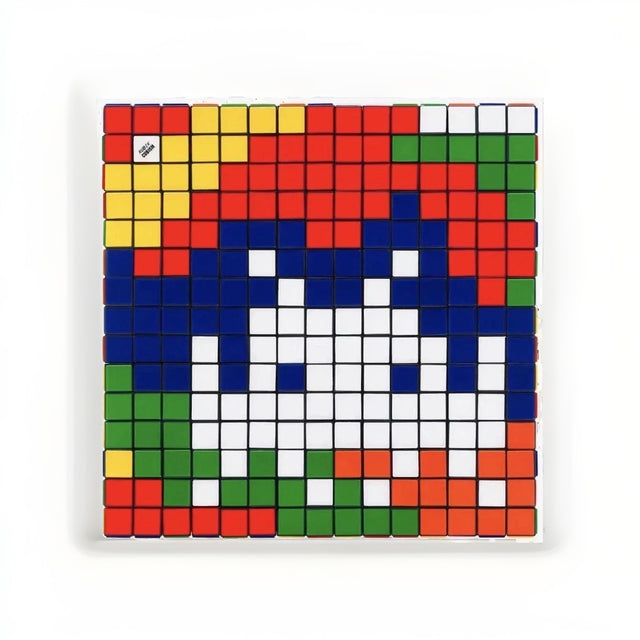
Invader Collector Market Guide
How the Invader market behaves — liquidity, scarcity, authentication standards, and what actually moves value — distilled from Gauntlet Gallery's proprietary research database of hundreds of thousands of settled collectible transactions. We publish the judgment, not the raw numbers.
Indicative Ranges by Format
Directional bands from curated results. Individual pieces vary widely with edition, condition, and provenance — treat these as orientation, not appraisal.
| Format | Notes |
|---|---|
| Invasion Maps (open / widely produced) | Accessible entry point; condition and city desirability matter. |
| Signed & numbered screenprints | Editions ~50–100; series and subject drive the spread. |
| Invasion Kits (opened / unsigned) | Ceramic tile kits; completeness is critical. |
| Invasion Kits (sealed / signed, scarce) | Premium tier; sealed condition and provenance command the top. |
| Rubikcubism / originals | One-offs; valued case by case with provenance. |
Authentication note: Invader does not operate a standing authentication service like Banksy's Pest Control. Provenance — a Space Shop invoice, original kit packaging, or a gallery record — plus correct dimensions, signature, and edition detail carry the weight. See our How to Spot a Fake Invader guide.
FAQ
Why is the price range so wide?
Invader's collectible output spans open-edition maps, limited signed screenprints, ceramic Invasion Kits, and one-off originals — each occupies a different band. Format, edition size, condition, and provenance together explain most of the spread.
How reliable are these numbers?
They are directional. Figures summarize roughly 730 curated public secondary-market results after removing non-artist "invader" listings (advertising signs, sports, music, toys). They orient a buyer or seller; they are not a formal appraisal.
Does provenance really change the price?
Yes. Because there is no central authenticator for Invader, documented provenance — a Space Shop invoice, original kit packaging, or a gallery record — materially affects both how easily a piece sells and what it sells for.
How does Gauntlet Gallery evaluate this market?
Gauntlet Gallery maintains a proprietary research database of hundreds of thousands of historical collectible transactions. We use it internally to vet consignments, confirm scarcity claims, and guide curation — so every piece we list has been checked against real market history, not guesswork. We do not publish raw valuation outputs; for guidance on a specific piece, contact us at hi@gauntlet.gallery.