Our Philosophy

We don't sell everything. We sell only what we believe in.

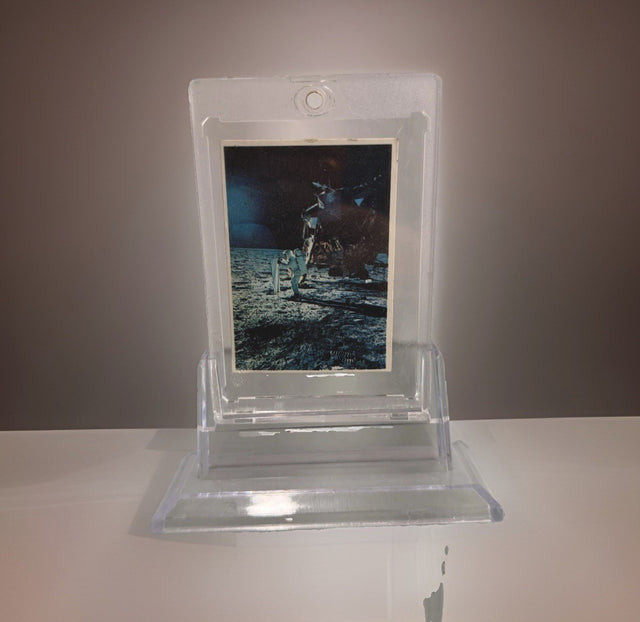
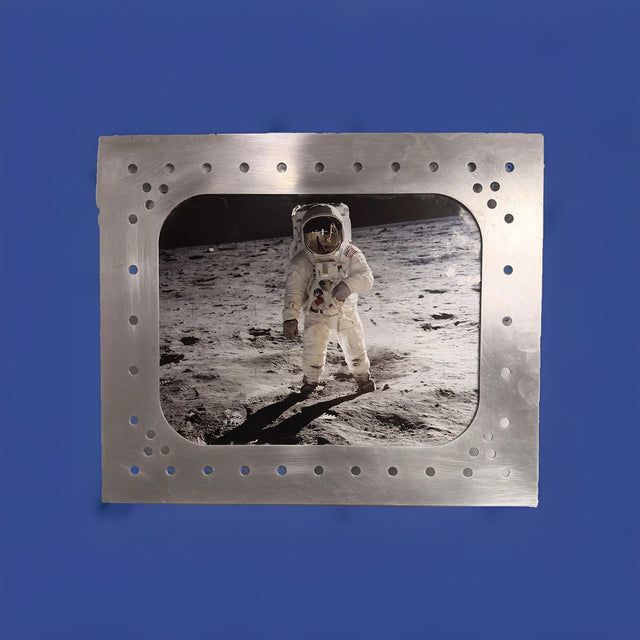
Gauntlet Gallery curates a deliberate collection of authenticated street art, pop art, signed music memorabilia, and space artifacts — each piece selected against standards most galleries don't publish.

The Process

Six gates. Every piece.

Less than 5% of pieces we evaluate reach the collection. This is what the other 95% don't clear.

I

Discover

We monitor estate sales, auction catalogues, direct artist channels, and vetted dealer networks — prioritising primary-source acquisition over secondary-market resale.

II

Research

Market comparables, auction records, and sales history across Heritage, Sotheby's, Christie's, and Phillips. Every piece benchmarked before any approach is made.

III

Authenticate

Third-party authentication is non-negotiable. Beckett, JSA, PSA/DNA, or Zarelli depending on category — matched to artist and item type. No exceptions, no self-authentication.

IV

Evaluate

Condition, provenance chain, edition integrity, and collector-grade presentation standards. We score every piece before any acquisition decision.

V

Curate

We acquire only pieces we can recommend without reservation. Less than 5% of what we evaluate makes it to the collection.

VI

Feature

Listings document the full chain: artist, edition, authentication, provenance, and condition — so buyers have everything they need to collect with confidence.

Design & Presentation

Collected art should look like collected art.

Timeless Design

We select pieces that hold visual weight at any scale — works that anchor a room rather than decorate it.

Visual Harmony

Edition prints, framed originals, and sculptural works are chosen for visual coherence — each piece designed to live alongside others without competing.

Elevated Presentation

Every listing is photographed with accuracy. What you see is what arrives — no filter corrections, no deceptive angles.

3,000+
Pieces Evaluated
Since 2010
<5%
Acceptance Rate
Into the collection
14 yrs
Collector Experience
Behind every listing

The Collector Experience

From first look to framed piece.

  • Provenance documentation included with every order
  • Third-party authentication certificates on every piece
  • Collector-grade packaging with archival materials
  • Full returns policy — if it's not right, we make it right
  • Direct access to our curation team for any question

Every piece we send is something we would put on our own walls. If we can't say that, it doesn't ship.

50

Intentional Scarcity

Fewer pieces. More conviction.

We carry a deliberately narrow catalogue. Every listing represents a genuine belief — not inventory management. When a piece is gone, it's gone. We don't restock things we can't fully stand behind.

Authenticity isn't a checkbox. It's the entire point.

— Gauntlet Gallery

Ready to collect?

Browse the curated collection.

Every piece authenticated. Every listing documented. Every shipment backed by our provenance guarantee.

Shop the Collection

Authentication partners we trust

Every piece in the collection carries credentials from one or more of these four institutions — the only chains we accept.

  • 2M+ authentications in 2024
  • QR-coded hologram COA
  • Industry standard for music & sports memorabilia
Founded 1984
Dr. James Beckett launched Beckett Publications to track baseball card prices, building one of the hobby's most trusted market references. The authentication arm — Beckett Authentication Services (BAS) — launched in 1999 and rapidly became the dominant force in sports and entertainment memorabilia verification.
Holographic COA System
Every authenticated item receives a tamper-proof holographic sticker encoded with a unique serial number. Scanning the QR code retrieves the full authentication record — signer, date, and examiner notes — directly from Beckett's database. The hologram visibly voids if removal is attempted.
Trusted Across the Industry
BAS certificates appear in Heritage Auctions, Sotheby's, Christie's, and PWCC — and are accepted by eBay's Authenticity Guarantee program. For music and sports memorabilia, Beckett is the benchmark no serious buyer or auction house ignores.
  • Industry benchmark since 2005
  • Serialized sticker + online lookup
  • Astronaut, musician, and athlete signatures
Founded 2005
James Spence founded JSA after serving as a lead examiner at PSA/DNA. His departure created a second credible institution in a field that badly needed competition — raising standards industry-wide and establishing JSA as the dominant name in musician and celebrity autograph authentication.
Serialized Lookup System
Every JSA-certified signature receives a unique serial number on a tamper-evident sticker. Collectors verify authenticity in seconds at the JSA website — no physical certificate required, just the sticker ID. The registry maintains the full signing history, examiner name, and item description.
The Rock & Roll Standard
JSA is the preferred authenticator for rock, pop, and hip-hop signatures. Christie's, Heritage Auctions, and Julien's Auctions all accept JSA certs as definitive. For musician autographs specifically, JSA and Beckett are the only two chains that matter to serious collectors and resale markets.
  • 3M+ autographs authenticated since 1999
  • Proprietary invisible DNA ink
  • Largest autograph database in North America
Founded 1991
PSA began as Professional Sports Authenticator — the first company to grade and encapsulate trading cards at scale. The autograph division (PSA/DNA) launched in 1999, introducing forensic-grade invisible DNA ink to collectibles for the first time. Today PSA has authenticated over 40 million items across cards, autographs, and memorabilia.
Invisible DNA Technology
PSA/DNA applies proprietary invisible ink containing synthetic DNA markers at the moment of signing. UV light reveals the mark; laboratory analysis can confirm authenticity even if the sticker is removed — a security layer no other authenticator offers. The DNA sequence is unique per signing event.
Largest Database in North America
With over 40 million items authenticated since 1991, PSA's registry is the largest in the Western hemisphere. Sotheby's, Heritage Auctions, Lelands, and eBay's Authenticity Guarantee all accept PSA/DNA certifications as definitive.
  • Gold standard for space memorabilia
  • Apollo-era astronaut authentication
  • Trusted by the Smithsonian Institution
The Apollo Archive
Steve Zarelli spent decades building the most comprehensive database of NASA astronaut signatures in existence — covering Mercury, Gemini, Apollo, Skylab, and Space Shuttle-era signers. The archive includes rare exemplars from deceased astronauts whose signatures appear almost nowhere else, making it irreplaceable for authentication.
Forensic Signature Matching
Zarelli authentication involves direct comparison against his proprietary signature archive, examination of pen pressure and stroke characteristics, and cross-referencing of provenance documentation. For deceased astronauts — Neil Armstrong, Gus Grissom, Alan Shepard — no other service approaches his depth of reference material.
Smithsonian-Level Trust
The Smithsonian Institution, NASA itself, and leading auction houses including Sotheby's, Heritage, and RR Auction rely on Zarelli certifications for significant space artifacts. A Zarelli COA on Apollo-era material is the closest thing to an absolute standard the space memorabilia market has.
Master Disclosure

Sources, References & Assumptions

A centralized index of the third-party authenticators, public archives, market-data sources, terminology references, and financial assumptions used across Gauntlet Gallery.

Third-party authenticators and verification bodies

Authentication & Verification References

These organizations are cited when a product, guide, policy, or certificate record names the applicable authentication path. A link here is a reference, not a blanket endorsement or proof that every item uses that provider.

  • Professional Sports Authenticator autograph authentication service psacard.com · autograph, card, and memorabilia authentication context.
  • James Spence Authentication spenceloa.com · autograph authentication for music, entertainment, sports, and historical signatures.
  • Beckett Authentication Services beckett-authentication.com · autograph and collectible authentication reference.
  • Pest Control Office pestcontroloffice.com · Banksy authentication body referenced when discussing Banksy works and unsupported Banksy claims.
  • our COA truecoa.com · blockchain certificate verification used where a Gauntlet/our COA record is listed.
  • Additional named certificate technologies Zarelli Space Authentication, Verisart, OneCOA, ScoreDetect, Polygon, NFC, QR, and chip-based records may appear in product, guide, or policy context when relevant to a specific item.
Artist archives, provenance, and institutional context

Collector Research Sources

These sources support collector education, artist histories, provenance language, archival care, and category due diligence.

  • KAWS ONE kawsone.com · official KAWS studio/store reference used for release, artist, and primary-source context.
  • Obey Giant obeygiant.com · official Shepard Fairey studio and release archive context.
  • Medicom Toy medicomtoy.co.jp · manufacturer and product-release context for BE@RBRICK and related designer figures.
  • Pop Mart popmart.com · official brand and release context for applicable designer figure references.
  • Superplastic superplastic.co · official brand context for applicable designer toy and vinyl figure references.
  • NASA nasa.gov · mission, agency, spaceflight, and historical context for space collectibles.
  • Getty Provenance Index getty.edu/research/tools/provenance · provenance research and best-practice context.
  • Smithsonian Institution si.edu · artist histories, collections, conservation, and archival context.
  • Library of Congress loc.gov · archival preservation, provenance, and collection-care guidance.
Public marketplaces and sale-record sources

Market Data Sources

Category pages, product financial cards, and market-intelligence panels may cite different source mixes. The product or page footnote controls the exact date, row count, filters, and source set for that chart or claim.

  • Primary public-marketplace sources eBay, MutualArt, StockX, and 1stDibs.
  • Additional sale-record sources cited in product cards WorthPoint, Artnet, Artsy, LiveAuctioneers, public auction archives, ObeyGiant release records, and category-specific public sources where named.
  • Projection and market-sizing references Global Growth Insights and similar market-sizing references may be used for broad category-growth context. Projections are not item appraisals.
  • Internal workbook references Gauntlet consolidated comps workbook cuts are cited by review date, row count, source mix, price floor, and category filters on the page or product card where the data appears.
How pricing and comp footnotes should be read

Financial Assumptions & Methodology

Market context is provided to explain pricing, not to predict returns. These assumptions apply unless a product page, category page, or chart footnote states a narrower rule.

  • Informational use only Market data is not financial, investment, tax, legal, appraisal, insurance, or resale advice. Past sales do not guarantee future value, liquidity, buyer demand, auction acceptance, or platform acceptance.
  • Public-market data Published comps are drawn from public-record or public-marketplace records unless a page explicitly says otherwise. No private-sale data is included in the public financial charts.
  • Medians and outliers Medians are used where possible so one trophy sale, distressed sale, or unusual lot does not define the entire category.
  • Workbook cuts and dates The Financial Insights page currently cites the Jun 22, 2026 consolidated comps workbook, with public year-series charts filtered to priced sales at or above $90 and rows through Jun 15, 2026. Product financial cards may cite Jun 13, 2026 or May 2026 cuts; those card footnotes control the product-level source date.
  • Counts can differ by page Sitewide summary counts, product-card row counts, and chart-specific row counts may differ because they use different category cuts, date cutoffs, source availability, rounding, and whether the count refers to a broad archive or the currently filtered workbook view.
  • Category cuts Music is a keyword-based cross-artist cut, not a pure autograph-authentication index. Space/NASA is a broad space memorabilia cut; Apollo is a named subset. Banksy/Dismaland-linked comps are treated as event/provenance context unless Pest Control authentication is specifically stated.
Crawlable pages built for collector questions

AI Search & Collector Education Pages

These pages answer the category-level questions where AI search engines tend to cite educational sources, comparison guides, and authentication explainers rather than storefront-only pages.

Abbreviations, metrics, certificates, and collector shorthand

Definitions & Abbreviations

These are the plain-language meanings of common terms used across product pages, market notes, authentication copy, and guide pages. Product-specific documentation always controls the exact claim for an individual item.

  • ROIReturn on investment; a way to describe gain or loss relative to the amount paid. Used only as market context on this site, not as a prediction or investment promise. Wikipedia overview.
  • CAGRCompound annual growth rate; a smoothed annualized growth rate over a period. CAGR can hide volatility, so it should be read with row counts, date windows, and medians. Wikipedia overview.
  • MedianThe middle value in a sorted set of sale prices. Gauntlet uses medians where possible because a single trophy result can distort an average. Wikipedia overview.
  • Average / MeanA total divided by the number of records. Useful in some contexts, but more sensitive to outlier sales than a median.
  • YTDYear to date; the portion of the current calendar year included in a chart or data cut.
  • 5Y / 10YFive-year or ten-year window. The exact start and end dates depend on the product card, chart, or category footnote.
  • P25 / P75Twenty-fifth and seventy-fifth percentile. These describe the lower and upper middle bands around the median, not a guaranteed resale range.
  • CompsComparable sales; prior sold records used as context for pricing similar artists, editions, objects, or categories. Asking prices are not treated the same as sold comps.
  • Comp Count / Row CountThe number of records included after a source, category, price, and date filter. Counts can differ across pages because the underlying filters differ.
  • Price FloorA minimum sale-price threshold applied before calculating public charts. Example: the Financial Insights page filters public category sheets to sales at or above $90.
  • Sell-Through RateThe share of offered lots or listings that actually sell in a defined marketplace, auction, or category window.
  • Auction VolumeTotal reported sales value or activity over a defined period. It is category context, not a statement about the value of one object.
  • COACertificate of Authenticity; a document or digital record describing authenticity, issuer, item details, and supporting evidence. Wikipedia overview.
  • LOALetter of Authenticity; a written authentication letter, often used by autograph authenticators for higher-detail certification.
  • JSAJames Spence Authentication; a third-party autograph authentication company. It may appear on signed music, entertainment, sports, or historical memorabilia where the item includes that chain. spenceloa.com.
  • BAS / BeckettBeckett Authentication Services; a third-party autograph and collectible authentication service. beckett-authentication.com.
  • PSA / PSA-DNAProfessional Sports Authenticator and its autograph-authentication service. Product pages should state the exact PSA certificate, slab, sticker, or lookup record included. psacard.com.
  • Pest Control / PCOPest Control Office; the authentication body for Banksy works. Dismaland or Banksy-related material is not Pest Control-authenticated unless a page says so explicitly. pestcontroloffice.com.
  • our COAGauntlet's blockchain certificate verification layer where used. It records item details and supporting evidence but does not replace the physical object, physical inspection, or third-party certificate named on a product page. truecoa.com.
  • Zarelli Space AuthenticationA specialist authentication reference often cited for astronaut signatures, flight-flown material, and space memorabilia where that chain is applicable.
  • NFCNear-field communication; tap-to-verify technology used in some chips, tags, cards, or digital certificate systems. Wikipedia overview.
  • QR LookupA scannable code that resolves to a certificate, issuer lookup, or record page. The linked record should match the physical item and documentation.
  • Blockchain CertificateA digital record written to a blockchain or blockchain-backed system. It can support provenance and record integrity, but it does not guarantee future value or replace responsible custody.
  • ProvenanceDocumented ownership, custody, or source history. Strong provenance is specific, traceable, and consistent with the object. Wikipedia overview.
  • Chain of CustodyThe documented path an object follows from source to current owner, including transfers, certificates, receipts, or supporting records where available.
  • EditionA defined production run of prints, multiples, or objects. Edition details can include total size, numbering, proof status, medium, printer, publisher, and release year. Wikipedia overview.
  • Limited EditionAn edition with a stated total size, such as 44/115 or 34/100. The edition number should be read with condition, signature, documentation, and demand.
  • Open EditionA release without a fixed numbered total at launch, or one sold for an open purchase window. Open edition does not mean fake; it means scarcity works differently.
  • AP / A.P.Artist's proof; a proof impression or proof object outside the main numbered edition, depending on the artist and release. Wikipedia overview.
  • H/CHors commerce; commonly means a proof or copy outside the regular commercial numbered edition. Usage varies by artist, publisher, and medium.
  • PP / Printer's ProofA proof associated with printer review, production, or archival use. It should be evaluated against the specific artist and publisher context.
  • Signed / NumberedA work bearing a signature and edition number. The value signal depends on authenticity, condition, edition size, medium, and whether the signature is hand-applied or printed.
  • Screen PrintA printmaking process common in Shepard Fairey editions and many street-art releases. Wikipedia overview.
  • ConditionThe physical state of an item, including handling marks, creases, fading, surface wear, frame condition, packaging condition, restoration, and completeness.
  • Original PackagingBoxes, bags, seals, inserts, holograms, or packaging that came with an item. In designer figures and toys, packaging can materially affect confidence and value.
  • Asking PriceA seller's listed price. It is not a sold comp until a transaction is completed and recorded.
  • Public-Market RecordA sale, listing, auction result, or market record visible through public marketplaces, auction archives, or sale databases. Public records can still contain errors, duplicates, or incomplete metadata.
External definition references

Reference Links

These external links support the definitions above and the terminology used throughout the site. Product-level usage depends on the actual evidence described on that product page.

Where this master disclosure applies

Page-Specific Source Notes

Use this section as the sitewide index. The page or product you are reading still controls the exact item-specific certificate, source mix, and footnote.

  • Homepage trust and summary claims The homepage links here for authentication bodies, market-data sources, terminology, broad comp-count context, and the not-financial-advice assumption behind pricing claims.
  • Product pages Product pages may include a financial card with the relevant category row count, review date, and source mix. The product description controls what documentation, certificate, packaging, or provenance is included with that specific item.
  • Financial Insights Financial charts cite workbook review dates, date cutoffs, price floors, medians, and category filters. Use those page footnotes for the exact public chart denominator.
  • About Gauntlet Gallery About-page references to data-backed pricing, historical comps, and category standards are tied to this disclosure and to the product/category footnotes where exact records appear.
  • COA Lookup and certificate pages Certificate lookups and digital records identify their own record ID, issuer, status, public lookup URL, and supporting evidence. Those item records control the specific verification claim.
  • Buyer guides and background pages Guides use external sources for collector education and due-diligence context. They do not replace product-specific authentication, inspection, or certificate evidence.

External names, services, artists, archives, brands, marketplaces, and institutions are referenced for collector research, authentication context, source citation, or terminology. Unless a page states otherwise, Gauntlet Gallery is independent and is not the official representative of those third parties.