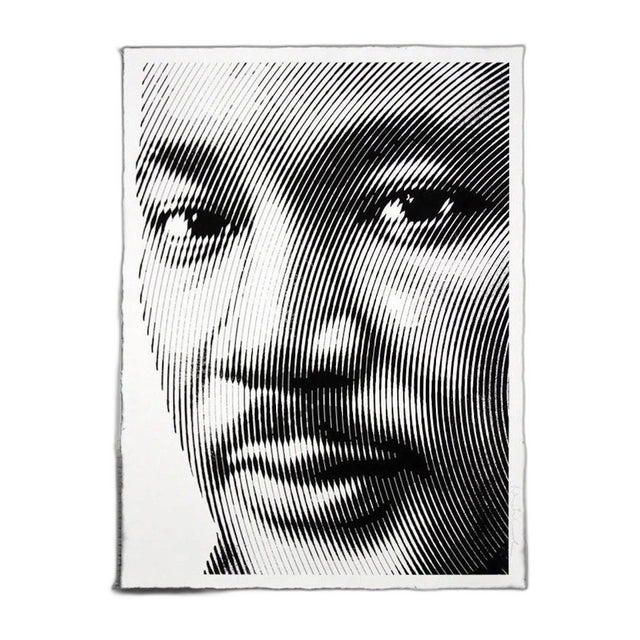
Mr. Brainwash is one of the most heavily reproduced names in the street-art market. The images are instantly recognizable, the output is enormous, and — crucially — there is no independent authentication board and only a narrow, artist-run certificate program. That combination is exactly what forgers exploit. This guide explains what a genuine Mr. Brainwash actually carries, what the artist's studio does and does not document, and how to read a listing before you buy. Where the market repeats "facts" that no reliable source supports, we say so plainly — because a confident wrong answer is how collectors get burned.
Who Mr. Brainwash Is
Mr. Brainwash is the artist name of Thierry Guetta, a French-born, Los Angeles–based artist who rose to fame through Banksy's 2010 documentary Exit Through the Gift Shop.
Guetta began as a videographer documenting street artists — introduced to the scene through his cousin, the artist Invader — before reinventing himself as "Mr. Brainwash." His debut Life Is Beautiful show in Hollywood in 2008 drew tens of thousands of visitors, and "Life Is Beautiful" has been his recurring exhibition title and personal motto ever since. He designed cover art for Madonna's 2009 Celebration release, and in December 2022 he opened the Mr. Brainwash Art Museum in a Richard Meier–designed building in Beverly Hills.
Why does the biography matter for authentication? Because it explains the market. Mr. Brainwash produces in volume, with studio assistants, across prints, hand-finished variants and originals. High recognition plus high output plus limited official verification is the perfect environment for counterfeits — and for genuine pieces that are simply hard to document.
Set expectations early
Mr. Brainwash prints have historically shown limited secondary-market appreciation compared with blue-chip street artists. Buy the piece because you love it, and treat authentication as risk management — not as an investment guarantee.
Evidence, Not a Verdict
No single feature proves a Mr. Brainwash is real. A thumbprint can be faked. A certificate can be forged or "married" to the wrong piece. A signature can be copied. Authentication is about convergence — several independent signals that all agree with each other and with how this artist actually documents his work.
Weigh four things together: the artwork, the signature and marks, the certificate, and the provenance. When they disagree, believe the disagreement.
Just as important is knowing the limits of the evidence. For Mr. Brainwash specifically, several things collectors treat as "tells" are not documented by any reliable source — the exact anatomy of a genuine certificate, a signature-evolution timeline, standard edition sizes, or any hologram system. Anyone who tells you a fake is "obvious" because of a hologram or a precise edition format is working from assumptions, not published fact. This guide separates the two.
Conclusions worth distinguishing
- Genuine, fully documented (signature + thumbprint + matching certificate + provenance)
- Likely genuine but under-documented (older work, no certificate — see Chapter IV)
- Genuine artwork paired with a questionable or mismatched certificate
- Insufficient evidence to judge
- Likely counterfeit · Confirmed counterfeit
The Authentication Package
Across dealer guidance and the artist's own statements, a genuine modern Mr. Brainwash is consistently described as carrying four elements that reinforce one another. Learn these as a set, because the power is in the match — not in any one item alone.
The thumbprint on the artwork is meant to correspond to the thumbprint recorded on the certificate. The dollar-bill serial number assigned to the work is meant to match the number recorded on the certificate. His mantra, "Life is Beautiful," is frequently hand-written on the reverse. When all four align — and align with a documented purchase history — confidence is high. When one is missing or contradicts another, that is where you slow down.
One honest caveat: the word "frequently" is doing real work here. Sources say "Life is Beautiful" appears on the back often, not always, and the certificate program only began in 2021 (next chapter). So treat these as a weighted package, not a rigid checklist where a single absence automatically condemns a piece.
The January 2021 Certificate Rule
This is the single most important, primary-sourced fact in Mr. Brainwash authentication — and the one that catches the most fakes.
Per the artist's own FAQ, the studio states that it only issues Certificates of Authenticity for works created after January 2021, and it will not back-date certificates for anything purchased before then. Read that twice, because it flips two common assumptions:
No certificate ≠ fake (for older work)
A genuine pre-2021 Mr. Brainwash can legitimately have no studio certificate at all. Don't reject an older piece just because it lacks a COA — judge it on signature, thumbprint, materials and provenance instead.
A “studio COA” for old work is a red flag
If a listing shows a certificate that claims to be studio-issued for a work made or bought before 2021, that contradicts the studio's own stated policy. Treat it as a warning sign, not reassurance.
There is also no public process for submitting an older or secondary-market piece to the studio for authentication. The certificate program is forward-looking (post-2021 works), not a service you can send an existing piece to. Chapter X covers what a genuine certificate reportedly contains — and why "has a certificate" is never the end of the inquiry.
Signature & Thumbprint
Genuine works carry a hand signature plus the artist's thumbprint. The thumbprint is the more distinctive control, because it is meant to match the print recorded on the certificate — a fingerprint is far harder to convincingly fake and cross-match than a signature.
What we can say with confidence
- Expect both a signature and a thumbprint on modern works, not one or the other.
- On certified (post-2021) works, the artwork thumbprint should correspond to the certificate thumbprint. A thumbprint that doesn't match — or a certificate with no thumbprint at all — is a problem.
- Compare the signature against multiple verified examples of the same era, not a single reference.
What we will not pretend to know
You will find guides that describe a precise "signature evolution" for Mr. Brainwash. We could not find any reliable, sourced timeline for how his signature has changed over the years, so we won't invent one. The safer discipline is this: rely on the full package — signature and thumbprint and serial number and certificate — rather than trying to date a piece from the autograph alone. Third-party autograph services such as Beckett (BAS) and AutographCOA authenticate Mr. Brainwash signatures, but that is autograph authentication, which is distinct from art-provenance authentication (Chapter X).
The Dollar-Bill Serial Number
A signature feature of Mr. Brainwash's system is a dollar-bill serial-number sequence assigned to a work, which is meant to match the number recorded on its certificate. It is a small detail that does a lot of authentication work, because it turns the certificate and the artwork into two halves of one record that must agree.
How to use it
- On a certified work, read the serial number on the piece and confirm it matches the number on the certificate exactly — every character.
- Be alert to the opposite of matching: two "different" works circulating with the same serial number is a strong sign that photographs (or the number itself) have been copied.
- A certificate with no serial number, or a serial number that appears typed/printed generically rather than recorded as part of the studio's documentation, deserves scrutiny.
Match, don't admire
The value of the serial number is the cross-check, not the number itself. A beautiful certificate that doesn't reference the exact number on the artwork is not doing its job.
Editions, Numbering & Formats
Here is where we deliberately hedge. Collectors often ask for the "standard" Mr. Brainwash edition sizes, whether numbering is in pencil, and how artist's proofs (AP), hors commerce (HC) or printer's proofs (PP) are marked. We could not find a reliable, artist-specific source documenting these conventions, so we won't assert a format that could be wrong.
What holds true generally
- Smaller, clearly documented editions tend to carry more value than open or undocumented runs — but "rarity" claimed without documentation is just a claim.
- Because many pieces are hand-finished, two works from the "same" image can differ; edition language alone does not tell you whether a specific piece is a plain print or a unique variant (Chapter VIII).
- If a seller states a precise edition size or proof designation, ask for the evidence: certificate, gallery invoice, or archival listing — not just a penciled number.
The honest takeaway: do not let a confident-sounding edition description substitute for the four-part package. A penciled "12/50" proves nothing on its own.
Media, Paper & Canvas
Mr. Brainwash works are typically silkscreen (screenprint) frequently combined with stencil, acrylic and spray paint, and are often hand-finished — which means many pieces sold as "prints" are effectively unique variants. Understanding the medium helps you catch the most common fake of all: a printed reproduction sold as a hand-worked original.
Substrates
- Fine-art wove paper, often with hand-torn or deckled edges. Machine-guillotined edges on a piece described as deckled is a mismatch worth questioning.
- Canvas / canvas panel, generally used for originals, which command the highest prices and therefore attract the most forgery effort.
Print vs. hand-finished vs. poster
Under raking light and magnification, a screenprint with hand embellishment shows physical media — ridges of acrylic, spray overspray, brush texture — sitting on top of the printed layer. A flat, uniform surface with a fine regular dot pattern and no hand-work is an offset or giclée reproduction. A "print of a print" — a photo of an artwork re-printed on a poster — will have no thumbprint, no genuine serial documentation, and no hand-finishing, no matter how sharp it looks in a listing photo.
Ask for raking-light photos
Request angled images under indirect light. Hand-finishing and spray texture reveal themselves at an angle; a flat reproduction stays flat.
Holograms & “Security” Marks
Collectors frequently ask which hologram a genuine Mr. Brainwash carries. Our answer, based on the available evidence, is uncomfortable but honest: we found no reliable evidence that Mr. Brainwash's studio uses a proprietary hologram or security sticker on artworks or certificates.
Holograms show up in the memorabilia world — third-party autograph authenticators use tamper stickers on signed items — but that is a different market from Mr. Brainwash's own art certificates. So we will not tell you "look for the hologram," because we cannot document that there is an official one.
A security sticker that no genuine, documented example carries is more suspicious than reassuring. Invented authentication is a forgery tactic, not a comfort.
More seals ≠ more real
Impressive holograms, foil stamps and "authenticity" stickers can be manufactured cheaply. If a feature can't be confirmed on a known-genuine piece, treat its presence as a question, not an answer.
If a piece has a hologram
It isn't automatically fake — a gallery or third-party service may have added one. But verify what that hologram actually is and who issued it, rather than assuming it comes from the artist's studio.
Certificates: Anatomy & Fakes
A genuine post-2021 Mr. Brainwash certificate is reportedly a documented record that ties to the artwork — carrying the artist's original signature and fingerprint, and referencing the work's dollar-bill serial number so the certificate and piece cross-verify. The studio has not published an authoritative layout, so treat any description of exact fields and wording as guidance rather than gospel.
Certificate red flags
- Backdated studio COA — claims to certify a work made or purchased before January 2021 (contradicts the studio's own policy).
- No cross-reference — the certificate doesn't record the artwork's thumbprint or serial number, so there's nothing to match.
- Generic, typed COA — a plain "Certificate of Authenticity" with a printed name and no original signature or fingerprint. Gallery COAs exist, but a generic one carries only as much weight as the gallery behind it.
- "Married" certificate — a real certificate photographed with a different piece than the one it documents. Always confirm the numbers on the certificate match the numbers on the actual artwork you'll receive.
Whose certificate?
Distinguish a studio certificate from a gallery certificate from a third-party autograph certificate. They are not interchangeable, and a certificate is only as credible as the entity that issued it.
Provenance & the Copyright Myth
Provenance — a documented chain of ownership — is one of the strongest signals you can gather. Original gallery invoices, reputable auction records (Mr. Brainwash appears at houses such as Phillips), and purchases tied to the artist's own exhibitions or the Mr. Brainwash Art Museum all strengthen confidence. Vague provenance ("acquired from a private collector," no paperwork) weakens it.
Clearing up the "controversy"
You may read that Mr. Brainwash is "controversial" or has had "COA problems." It's important to be precise: the documented legal history is about copyright, not certificate forgery. Courts found against Guetta for using other people's source photographs without permission — for example, Glen E. Friedman's Run-DMC photograph, and Dennis Morris's Sid Vicious photograph, where fair-use defenses were rejected.
Those are copyright cases about source imagery. They are not COA-forgery lawsuits — and they do not, by themselves, make any given piece authentic or fake.
So don't let a half-remembered "scandal" drive your decision in either direction. The real authentication issues are the mundane ones: the January 2021 certificate rule, matching thumbprints and serial numbers, hand-finishing versus reproduction, and provenance. Note too that reporting on the Beverly Hills museum's current operating status has been inconsistent; verify its status directly rather than assuming.
Marketplace Red Flags
Most fakes are caught not by a magnifying glass but by reading the listing. These are the patterns that should slow you down on eBay and other resale platforms.
Reused / stolen photos
Reverse-image-search every listing photo. If the "same" signed piece — identical creases, marker lines, serial number — appears in another sold listing, the photos were copied.
Pre-2021 “studio” certificate
A studio COA for an older work contradicts the artist's stated policy. Genuine certificate, wrong story.
Nothing matches
Missing thumbprint, no serial number, or a certificate that doesn't reference either — there's nothing to cross-verify.
Price too good
A high-demand image (Einstein “Life is Beautiful,” Kate Moss, Chaplin, Madonna, Banksy motifs) priced far below the market is bait, not a bargain.
“Print of a print”
Posters and reproductions sold as hand-finished originals — flat surface, no hand-work, no genuine documentation.
Composited photos
Mismatched shadows, or an artwork that doesn't sit naturally on its background, can indicate a photoshopped listing.
Vague provenance
No invoice, no auction record, no exhibition tie — and a seller reluctant to provide more photos on request.
Protect the purchase
Use payment methods with buyer protection, insist on detailed photos of signature, thumbprint, serial and certificate, and record a continuous unboxing for higher-value buys.
Case Studies
1. The recycled photograph (documented)
Collectors on a street-art forum flagged a fake Mr. Brainwash on eBay because the signed banknote in the listing photos showed the identical creases, marker lines and serial number as a genuine piece another collector had recently sold. The fraud wasn't a bad thumbprint — it was stolen imagery. Lesson: reverse image search and serial-number cross-checks catch listing fraud that "looks perfect."
2. The backdated certificate (pattern)
A piece is offered with an official-looking studio "Certificate of Authenticity" dated to a work bought in, say, 2018. Because the studio does not issue or back-date certificates for pre-2021 works, the certificate's very existence contradicts policy. The artwork might even be genuine — but the certificate isn't what it claims to be, and that gap is the story.
3. The poster upgrade (pattern)
An open-edition print or exhibition poster is relisted as a "hand-finished original." Under raking light there's no acrylic ridge, no spray texture, no thumbprint and no serial documentation — just a flat, evenly printed sheet. The image is real; the description is not.
Notice the through-line: in each case, one element contradicts the others. That contradiction — not any single beautiful detail — is what authentication is built to find.
Inspection Checklist
A practical pre-purchase pass. No single line is a verdict; look for convergence and for contradictions.
Identity
- Exact image & title identified
- Medium: print, hand-finished, or original
- Paper or canvas confirmed
- Approx. date / era considered
Marks
- Hand signature present
- Thumbprint present
- Dollar-bill serial number present
- “Life is Beautiful” reverse (often)
Certificate
- Only expected for post-Jan-2021 work
- Records thumbprint & serial number
- Numbers match the artwork exactly
- Issuer identified (studio / gallery)
Surface
- Hand-work visible in raking light
- No flat offset dot pattern on “originals”
- Deckled edges match description
- No “print of a print” signs
Listing
- Photos pass reverse image search
- Serial not duplicated elsewhere
- Shadows & compositing look natural
- Price consistent with the market
Provenance
- Invoice, auction or exhibition record
- Certificate issuer is credible
- Seller provides extra photos on request
- Buyer protection available
Frequently Asked Questions
Answers below are grounded in the artist's own FAQ and consistently-reported dealer guidance. Where the market lacks a reliable source, we say so instead of guessing.
What are the core signs of a genuine Mr. Brainwash?
A hand signature, the artist's thumbprint, an assigned dollar-bill serial number, and — for post-January-2021 works — a studio certificate that records the thumbprint and serial number. His motto "Life is Beautiful" is frequently written on the reverse. Strength comes from these agreeing with one another and with the provenance.
My Mr. Brainwash has no certificate. Is it fake?
Not necessarily. The studio only issues certificates for works created after January 2021 and does not back-date older pieces, so a genuine older work can legitimately have no certificate. Judge it on signature, thumbprint, materials and provenance.
Does the studio issue certificates for older works?
No. Per the artist's own FAQ, certificates are only issued for works after January 2021, and the studio will not back-date certificates for anything bought before that.
A listing has a “studio COA” for a 2016 piece. Good sign?
It's a red flag. A studio certificate for a pre-2021 work contradicts the studio's stated policy. The artwork may still be genuine, but the certificate is not what it claims to be.
Can I send my piece to the studio to authenticate it?
There is no publicly documented process for submitting an existing or secondary-market work to the studio for authentication. The certificate program applies to newer works, not to pieces you already own.
Is there an official Mr. Brainwash authentication board?
No independent authentication board or committee is documented. The only artist-side authority is the studio's own certificate program for post-2021 works.
What is the “dollar-bill serial number”?
An assigned serial-number sequence tied to the work that is meant to match the number recorded on its certificate. It turns the artwork and certificate into two halves of one record that must agree.
Where is the thumbprint, and does it have to match the certificate?
Genuine modern works carry the artist's thumbprint in addition to the signature, and on certified works it is meant to correspond to the thumbprint on the certificate. A mismatch — or a certificate with no thumbprint — is a concern.
Does a genuine Mr. Brainwash have a hologram?
We found no reliable evidence that the studio uses a proprietary hologram or security sticker on artworks or certificates. Don't rely on a hologram as proof, and treat an unverifiable "security" sticker as a question, not an answer.
Should “Life is Beautiful” always be on the back?
It appears on the reverse often, but sources say "often," not "always." Treat it as supporting evidence within the package rather than a make-or-break test.
What should a real certificate contain?
Reportedly the artist's original signature and fingerprint, plus a reference to the work's serial number so the certificate and artwork cross-verify. The studio hasn't published an authoritative layout, so treat exact-field descriptions as guidance.
What edition sizes and numbering does he use?
No reliable, artist-specific source documents standard edition sizes or numbering conventions (pencil format, AP/HC/PP). Be skeptical of confident edition claims made without certificate, invoice or archival evidence.
What's the difference between a print, a hand-finished variant, and an original?
Prints are screenprints; many are hand-finished with acrylic, stencil and spray, making them unique variants; originals are typically on canvas and priced highest. Raking-light photos reveal whether real hand-work sits on the surface.
How do I spot a “print of a print” or poster reproduction?
Look for a flat, uniform surface with a regular fine dot pattern, no hand-finishing, no thumbprint and no genuine serial documentation. If it's sold as an "original" but shows none of the physical media, it isn't one.
Which images are faked most often?
His most-collected images: Einstein "Life is Beautiful," Kate Moss, Charlie Chaplin, Madonna, Banksy appropriations, and heart / spray-can motifs. High demand makes them prime forgery targets.
What are the top eBay red flags?
Reused or stolen listing photos, a pre-2021 "studio COA," missing/mismatched thumbprint or serial number, prices far below market, and posters sold as originals.
How do I use reverse image search?
Run each listing photo through a reverse-image tool. If the identical signed piece — same creases, marker lines and serial — shows up in another listing, the images were copied and the listing is suspect.
Two listings show the same serial number. What does that mean?
Genuine serials are unique to a work. The same serial on two "different" pieces strongly suggests copied photos or a fabricated number. Investigate before buying either.
Is an autograph certificate the same as an art certificate?
No. Services like Beckett (BAS) and AutographCOA authenticate signatures on memorabilia; that is autograph authentication, distinct from authenticating an artwork's provenance. Don't treat one as the other.
Do the copyright lawsuits mean my piece is fake or worthless?
No. Those cases concern Guetta's use of other artists' source photographs (copyright), not certificate forgery. They're reputation and provenance context, not a verdict on any individual work's authenticity.
Does a gallery certificate guarantee authenticity?
A certificate is only as credible as its issuer. A reputable gallery's COA plus a matching invoice is meaningful; a generic typed certificate from an unknown source carries little weight on its own.
What materials and papers does he use?
Silkscreen combined with stencil, acrylic and spray paint, often hand-finished, on fine-art wove paper (frequently deckled) or on canvas for originals.
Are deckled (torn) edges a good sign?
They're common on his paper works, but edges alone don't authenticate anything. A guillotine-cut edge on a piece described as deckled is a mismatch worth questioning; genuine deckling is just one supporting detail.
How much does condition affect value?
Materially. Scratches, tears, stains, fading and water damage reduce value progressively. Inspect under good light and ask for close-ups of any flaws.
Is a signed piece automatically authentic?
No. Signatures can be copied. Use the full package — signature, thumbprint, serial, certificate and provenance — not the autograph alone.
What's the realistic resale outlook?
Historically, Mr. Brainwash prints have shown limited secondary-market appreciation relative to blue-chip street artists. Buy for enjoyment first and set realistic expectations on resale.
Should I trust a barcode, QR code or app "verification"?
Only if you can confirm what it links to and who created it. An unverifiable code or app result is not proof; it can be added by anyone.
What photos should I ask a seller for?
The full front and back, close-ups of the signature, thumbprint and serial number, the certificate (both sides), any edge/deckle detail, and raking-light shots that reveal surface texture.
Does provenance really matter for a living, high-volume artist?
Yes. Because output is high and official verification is limited, a documented ownership chain — invoice, auction record or exhibition tie — is one of your strongest tools.
Can a real certificate be paired with a fake artwork?
Yes — a "married" certificate. Always confirm the certificate's thumbprint and serial number match the exact piece you will receive, not just that a certificate exists.
Is a piece bought at the Mr. Brainwash Art Museum automatically documented?
A purchase tied to the artist's own venue strengthens provenance, but still keep the invoice and any certificate, and confirm the piece's marks. Verify the museum's current operating status directly, as reporting on it has been inconsistent.
What's the single most useful check?
Cross-matching: confirm the thumbprint and serial number on the artwork match the certificate, and that the listing photos aren't reused elsewhere. Contradiction is the fastest way to expose a fake.
If I only remember one rule, what should it be?
No certificate exists for pre-2021 works, and any "studio COA" claiming otherwise is a red flag. After that, trust convergence — signature, thumbprint, serial, materials and provenance all agreeing — over any single detail.
How should I frame and display a Mr. Brainwash?
Use UV-filtering (museum) glazing, acid-free archival mats and backing, and keep the piece out of direct sunlight and away from heat and humidity. Framing doesn't authenticate anything, but poor framing and light exposure are the fastest ways to damage value.
Does UV or museum glass affect value?
Indirectly. UV-filtering glazing helps prevent fading and yellowing, which preserves condition — and condition drives price. It does not make a piece more or less authentic.
Should I insure my piece, and how?
For anything of meaningful value, yes. A scheduled fine-art rider on a homeowners/renters policy, or a standalone fine-art policy, is typical. Keep your invoice, certificate, and dated photographs on file to support the valuation and any claim.
How do I safely ship a Mr. Brainwash?
Ship works on paper flat between rigid acid-free board (never rolled unless it was made to be), or crate canvases with corner protection. Use a sturdy outer box with cushioning on all sides, insure for full value, and require signature on delivery. Photograph everything before sealing.
How should I store a piece I'm not displaying?
Flat, in acid-free materials, in a climate-controlled space away from light, damp, heat and smoke. Avoid attics, garages and basements. Don't stack heavy objects on framed works.
Is it safer to buy at auction, from a gallery, or on eBay?
Each has trade-offs. Reputable galleries and established auction houses offer stronger provenance and recourse but often higher prices; open marketplaces like eBay have more selection and risk. Wherever you buy, documented provenance and the authentication package matter more than the channel alone.
What paperwork should I keep after buying?
The invoice or receipt, the certificate (photograph both sides), any gallery or auction documentation, seller correspondence, shipping and insurance records, and your own dated condition photos. This is your provenance file for resale and insurance.
I think I bought a fake — what should I do?
Act quickly. Contact the seller in writing, then open a dispute through the marketplace and/or your payment provider before their protection window closes. Document everything with photos and keep the item unaltered. Consider a qualified independent opinion before escalating.
Can I get a chargeback or refund for a fake?
Often, if you act promptly. eBay Money Back Guarantee, PayPal Buyer Protection and credit-card chargebacks all have time limits. Keep records of the listing, communications and payment, and open the case as soon as you have concerns.
Should I get an independent appraisal?
For insurance, estate or resale purposes, a qualified appraiser can establish value. Note that an appraisal establishes worth, not genuineness — for authenticity you're relying on the marks, certificate and provenance, not the appraisal.
How is an appraisal different from authentication?
Authentication asks "is this genuine?"; appraisal asks "what is it worth?" A piece can be appraised for value and still need separate authentication evidence — and vice versa. Don't treat an appraisal as proof of authenticity.
Does buying from a "top-rated" or verified seller guarantee authenticity?
It lowers risk but doesn't guarantee it. Seller ratings reflect service history, not a forensic check of every item. Still apply the authentication package and keep your buyer protection intact.
What should I ask a seller before buying?
Ask for the provenance and how they acquired it, additional high-resolution photos (signature, thumbprint, serial, certificate, edges, back), the return policy, and the reason for selling. Reluctance to provide basic detail is itself informative.
Are Mr. Brainwash pieces a good investment?
Historically, his prints have shown limited secondary-market appreciation compared with blue-chip street artists. Treat a purchase as something you want to own and enjoy, and manage authenticity risk carefully rather than counting on resale gains.
How do I research recent sale prices?
Compare completed auction results and sold marketplace listings for the same image, size and medium — a signed paper print and an original canvas of the same motif are very different markets. Recent, like-for-like sales are the most reliable guide.
Does condition documentation matter for resale?
Yes. Photograph the front, back and any flaws under good light, and disclose condition honestly. Good documentation builds buyer trust, supports your price, and prevents post-sale disputes.
Should I remove a piece from its frame to inspect it?
Only if it can be done safely — a professional framer can help. Careful inspection of the back and edges can reveal the signature, thumbprint, serial number and any notes, but don't risk damaging the work to do it.
What does "hand-embellished" or "unique variant" mean for value?
It means the artist added hand-worked elements (acrylic, spray, stencil) so the piece is one-of-a-kind rather than a plain edition print. Genuine unique elements can raise value — but confirm the hand-work is real (raking-light photos) and documented.
Are exhibition posters worth collecting?
They can be, as posters — but an unsigned exhibition poster is not the same as a signed print or original and should be priced accordingly. The risk is a poster being relisted as a "hand-finished original."
I received a piece as a gift with no paperwork. How do I evaluate it?
Gather what evidence you can — signature, thumbprint, serial number, materials, and any recollection of where it was bought. A provenance gap doesn't make a piece fake, but it does lower certainty, so lean harder on the physical marks.
Can Gauntlet Gallery help me evaluate a Mr. Brainwash?
We can point you to the right checks and, for pieces with certificates, help you understand what to verify. Verify a certificate or get in touch — this guide is educational and not a guarantee of authenticity.
The Gauntlet Standard
Authenticating a Mr. Brainwash is not about finding one magic feature. It's about assembling a record — signature, thumbprint, serial number, certificate, materials and provenance — and asking whether every part agrees. Seek convergence, and when something contradicts the rest, believe the contradiction.
How we approach a Mr. Brainwash
- Identify the exact image, medium and era, and whether it's a print, hand-finished variant, or original
- Read the signature, thumbprint and serial number, and cross-match them to any certificate
- Apply the January 2021 certificate rule — and flag backdated or married certificates
- Check the surface for genuine hand-work versus flat reproduction
- Weigh provenance, run reverse image search, and treat unverifiable "security" marks as questions
Have a piece you're weighing? Verify a certificate or talk to us before you buy.
References & sources
- Mr. Brainwash — official FAQ (certificate policy, post-January-2021 only): mrbrainwash.com/faq
- Mr. Brainwash — biography and museum: Wikipedia
- MyArtBroker — Mr. Brainwash buyer's and collecting guides (signature, thumbprint, dollar-bill number, "Life is Beautiful," media): myartbroker.com/artist-mr-brainwash
- Copyright context — Friedman v. Guetta (Run-DMC) and Dennis Morris (Sid Vicious) rulings: Center for Art Law
- Documented eBay fake (recycled listing photos): Urban Art Association forum
- Autograph authentication (distinct from art provenance): AutographCOA
This guide is educational and does not constitute a guarantee of authenticity or an appraisal. Authentication practices, certificate policies and counterfeit techniques change over time; specifics above are drawn from public sources and consistently-reported collector guidance, and several details (edition conventions, signature evolution, any hologram system) are not authoritatively documented and are described as such. High-value purchases should be reviewed on the complete evidence — artwork, marks, certificate and provenance. "Mr. Brainwash" and related names are trademarks of their respective owners; Gauntlet Gallery is an independent reseller and is not affiliated with, authorized by, or endorsed by the artist, his studio, or any named marketplace or authentication service.