Yes — for most new collectors, a DEATH NYC print is one of the most sensible first purchases in contemporary art. The reasons are practical: DEATH NYC works are signed and numbered limited editions, they sit at an accessible entry point relative to blue-chip street art, and each piece from an authenticated source arrives with a certificate of authenticity signed by the artist plus the official metal gold seal affixed to the work. That combination — low barrier to entry, clear edition documentation, and a built-in authentication ritual — teaches a first-time buyer every habit that serious collecting requires, without the financial exposure of a major purchase. The main caveats are learning to verify what you buy and buying from a source that documents provenance properly.
That is the short answer. The longer answer is more interesting, because the question "is this a sensible first purchase?" is really three questions stacked on top of each other: Is the work itself worth owning? Is the market around it navigable for a beginner? And will the experience of buying it make you a better collector? DEATH NYC scores well on all three, and in this guide we will walk through exactly why — along with the honest caveats, the evaluation criteria we use in our own gallery, and a practical checklist you can take into your first purchase.
Who Is DEATH NYC, and Why Do New Collectors Keep Starting Here?
DEATH NYC is a New York–based artist who has built one of the most recognizable practices in contemporary pop and street art. The artist keeps their personal identity largely private, letting the work speak instead — a tradition with deep roots in street art, from wheat-paste pioneers to stencil artists whose names are still officially unconfirmed. What defines DEATH NYC's output is the collision of references: luxury fashion iconography, beloved cartoon and pop-culture figures, and echoes of canonical artworks, all remixed into dense, saturated compositions that are instantly identifiable across a room.
The practice is built around limited edition prints released in frequent drops. Each print in a standard release is signed, numbered, and dated by the artist, with the edition documentation recorded at the time of release. This cadence matters for a first-time buyer in two ways. First, supply is regular enough that you are never forced into a panic purchase — if you miss one release, another is coming. Second, because the artist has produced a large and varied body of work over many years, you can choose an image that genuinely resonates with you rather than settling for whatever happens to be available.
The result is an artist whose market functions as a kind of front door to collecting. Many of the collectors who now buy larger works through our gallery — KAWS editions, BE@RBRICK figures, Shepard Fairey screen prints — made their very first purchase in the DEATH NYC market. It is where they learned to read an edition number, check a signature, file a certificate, and think about condition. Those habits transferred directly to every purchase that followed.
The Case for a DEATH NYC Print as a First Purchase
1. The entry price teaches without punishing
The single most important feature of a first art purchase is that it should be survivable. Every collector makes early mistakes — overpaying slightly, choosing an image they cool on, framing something poorly. A first purchase in the DEATH NYC market keeps the tuition for those lessons modest. Rather than quoting numbers here, which shift with the market, we will say this: DEATH NYC prints occupy the accessible end of the signed-limited-edition spectrum, well below the entry point for signed blue-chip street art editions. For current context on where the market sits, our DEATH NYC price guide tracks recent verified sales, and our broader Financial Insights hub puts the category in context against the rest of the collectible print market.
2. Real edition discipline, from day one
A surprising number of "first art purchases" are open-edition posters or unsigned reproductions — decorative objects with no collecting dimension at all. A DEATH NYC print is different in kind, not just degree. You are buying a signed, numbered work from a documented edition. That means your first purchase immediately introduces the vocabulary that governs the entire editioned-art world: edition size, numbering conventions, artist's proofs, signatures, and dates. If any of those terms are unfamiliar, our collector's glossary defines them all in plain language — and a DEATH NYC purchase is the most affordable way to encounter them in the wild rather than in the abstract.
3. A clear, learnable authentication standard
Authentication is where new collectors feel the most anxiety, and it is where the DEATH NYC market is unusually kind to beginners. The standard is concrete: an authenticated DEATH NYC work comes with a certificate of authenticity signed by the artist, and the official metal gold seal affixed to the piece. There is no committee to petition, no ambiguous expert opinion to weigh — there is a specific, physical standard you can learn to recognize. We walk through the full standard in our DEATH NYC authentication guide, and we explain the constructive habit behind it in our companion piece on how to evaluate DEATH NYC works. For a first-time buyer, learning one clear authentication standard deeply is far more valuable than learning ten standards shallowly.
4. An active, liquid market on both sides
Sensible first purchases happen in markets with genuine two-way activity — where works change hands often enough that pricing is observable and an exit exists if your taste evolves. The DEATH NYC market qualifies. Because the artist releases regularly and the collector base is large and international, comparable sales accumulate continuously. For a beginner, that liquidity means you are never guessing in the dark: recent verified sales exist for most images and formats, and you can check your intended purchase against them before you commit. Compare the exact image, edition, medium and presentation with dated completed sales, distinguishing hand-sprayed originals from editioned prints. Future resale value is uncertain.
5. The work rewards looking
None of the market logic matters if the art itself does not hold your attention. DEATH NYC's compositions are layered enough to keep revealing details after the initial impact — a background reference you missed, a juxtaposition that reads differently once you spot the source imagery. First-time collectors often report that living with the print taught them what they actually like, which then guided their second and third purchases. That is precisely what a first purchase should do.
What a First DEATH NYC Purchase Actually Teaches You
We think of a first purchase less as a transaction and more as a curriculum. Here is what the DEATH NYC version of that curriculum covers:
- Reading edition documentation. You learn to locate the number, understand what it tells you (and what it does not), and confirm it against the release documentation.
- Verifying a signature and date. You learn to look at how a work is signed rather than merely whether it is signed.
- Handling a certificate of authenticity correctly. The artist-signed COA and the metal gold seal are the anchor documents; you learn to keep the COA with the work, photograph both, and never separate them from the piece.
- Checking condition. Corners, surface, margins, any handling marks — the inspection habit you build on an accessible print is the same one you will use on a four-figure or five-figure work later.
- Using comparable sales. Instead of asking "is this a good price?" in the abstract, you learn to ask "what have comparable examples verifiably sold for recently?" — the single most important question in all of collecting.
- Building a provenance file. Invoice, listing photos, COA, seal photos, correspondence: your first purchase is your first provenance file, and doing it right once makes it automatic forever.
Every one of those skills transfers upward. The collector who has done this once with a DEATH NYC print approaches a larger purchase — say, a signed pop art edition — with working habits instead of nerves.
DEATH NYC vs. Other Common First Purchases
To be fair to the question, a DEATH NYC print is not the only sensible starting point. Here is how the common entry paths compare on the criteria that matter most to a beginner:
| First-purchase path | Entry cost | Signed & numbered? | Authentication clarity | Market liquidity | What it teaches |
|---|---|---|---|---|---|
| DEATH NYC limited print | Accessible | Yes — signed, numbered, dated | High — artist-signed COA + metal gold seal | High — frequent verified sales | Full collecting curriculum at low stakes |
| Open-edition poster / reproduction | Lowest | No | Not applicable | Minimal collector market | Decor choices only — no collecting skills |
| Blue-chip street art edition (e.g., major-name screen print) | Substantially higher | Usually | Varies by artist and era | High, but mistakes are expensive | Advanced lessons — better as a second act |
| Collectible art figure (vinyl, designer figurines) | Accessible to mid | Edition-based, not hand-signed as a rule | Packaging- and edition-driven | High | Condition and packaging discipline |
| Original work by an emerging local artist | Varies widely | Unique work | Direct from artist — simple | Low — thin resale market | Eye training; little market education |
Each path has a legitimate case. Buying an original from an emerging artist is a wonderful thing to do, and a designer figure teaches its own valuable discipline around sealed packaging and condition. But if the goal is a first purchase that combines real collecting mechanics, a forgiving entry cost, clear authentication, and an observable market, the DEATH NYC print is the strongest all-rounder on the board. Our buyer's guides hub covers every one of these categories if you want to compare them in depth before deciding.
Authentication: The Standard, and Why It Favors Beginners
Let us slow down on authentication, because this is the area where a good first purchase becomes a great one.
An authenticated DEATH NYC work is anchored by two things. First, a certificate of authenticity signed by the artist — a document that travels with the work and ties it to the release. Second, the official metal gold seal affixed to the piece itself. Together, the signed COA and the seal form the standard our gallery applies to every DEATH NYC work we handle, and it is the standard we recommend every buyer insist on, wherever they purchase.
For a new collector, the beauty of this standard is that it is checkable. You do not need a decade of connoisseurship to confirm that a COA is present, signed, and consistent with the work it describes, or that the seal is affixed. What you do need is the habit of actually checking — and of asking the seller direct questions before you buy: Is the COA included, and is it the artist-signed certificate? Is the seal present on the work? Does the edition number on the work match the documentation? A reputable seller answers all three without hesitation. Our authentication FAQ covers the most common versions of these questions, and our DEATH NYC buyer's guide walks through the pre-purchase conversation in detail.
One constructive reframe we always offer: authentication is not primarily about fear of fakes. It is about the value of documentation. A work with its signed COA, its seal, and a clean provenance file is simply a more complete object — easier to insure, easier to gift, easier to sell, and more satisfying to own. Approach authentication as completeness, not paranoia, and the whole process becomes a pleasure rather than a stressor.
How to Evaluate a Specific DEATH NYC Print Before You Buy
Once you have decided the category makes sense, the next question is which print. Here is the evaluation sequence we use in our own acquisitions, adapted for a first-time buyer:
Start with the image, honestly
Choose a print you would want on your wall even if it never appreciated a cent. This is not sentimental advice; it is risk management. Taste-driven purchases survive market cycles emotionally intact. Browse widely — a large body of work like DEATH NYC's rewards patience — and shortlist three to five images before comparing them on the criteria below. You can see the range of what is currently available in our DEATH NYC collection.
Confirm the edition details
For each candidate, confirm what the documentation says: the edition size for that release, the number of the specific example, the presence and placement of the signature and date. Do not assume all releases follow identical conventions — check the documentation for the specific print rather than relying on a general rule. When details are unclear, ask the seller to state them in writing; a precise written answer is itself a positive signal about the seller.
Inspect condition like it matters — because it does
Condition separates otherwise identical examples of the same edition. Examine (or request detailed photographs of) the corners, edges, margins, and surface. Ask whether the work has been framed, and if so, how. Ask how it has been stored — flat in archival materials is the gold standard for works on paper. On an accessible print the condition difference may feel academic; the point is to build the habit while the stakes are low.
Check comparable sales before you look at the asking price
This ordering is deliberate. Form your own view of the market level from recent verified sales of the same or closely comparable prints, and only then evaluate the asking price against it. As a buyer you can approximate the same discipline using our price guides , which distill verified sales into category-level context. The skill you are practicing — comps first, asking price second — is the one habit that most reliably separates confident collectors from anxious ones.
Vet the source
Finally, weigh the seller. Do they document provenance? Do they state the authentication standard plainly — signed COA plus seal — and stand behind it? Do they photograph the actual example you will receive, not a stock image? A trustworthy source is worth a reasonable premium over an ambiguous one, especially on a first purchase, because what you are really buying is a clean start to your collecting record.
Care, Provenance, and Records: Protecting Purchase Number One
The moment the print arrives, your job shifts from buyer to custodian. Three practices, established now, will serve every future purchase:
- Build the file the same day. Photograph the work, the signature, the number, the COA, and the seal. Save the invoice, the listing, and any correspondence. One folder — digital, backed up — per work. This is your provenance file, and a complete one materially strengthens any future sale.
- Frame or store archivally. If framing, use UV-filtering glazing and acid-free materials, and hang away from direct sunlight and humidity swings. If storing, keep the work flat between acid-free boards in a stable, dry environment. Never laminate, dry-mount, or trim a limited edition print — irreversible interventions permanently reduce both value and collector appeal.
- Keep the COA with the work — conceptually, not physically inside the frame. Store the certificate safely alongside your provenance file, and never let the work and its documentation become separated in a move, a loan, or a sale. When you eventually sell or trade up, the documented example is the one buyers compete for.
Provenance is not paperwork; it is accumulated trust, and it compounds.
The Honest Caveats: When a DEATH NYC Print Is Not the Right First Buy
A recommendation without caveats is a sales pitch, so here are ours.
If your primary goal is investment return, recalibrate. Accessible editioned prints — by any artist — should be bought first for enjoyment. Some appreciate; the market decides which, and past patterns are not guarantees. Buy what you love at a price supported by comparable sales, and treat any appreciation as a bonus. Our Financial Insights pages exist precisely so collectors can ground expectations in verified data rather than hype.
If you cannot verify, wait. A DEATH NYC print without its artist-signed COA and seal, from a seller who cannot document its history, is not a bargain — it is an incomplete object. As a first purchase especially, insist on the full standard. The discipline of walking away from an undocumented "deal" is, itself, one of the most valuable lessons a new collector can learn, and it is cheaper to learn it by walking away than by buying.
If the mashup aesthetic is not your taste, start elsewhere. The logic of this guide — small stakes, real editions, clear authentication, liquid market — applies to the category, but the art must still be art you want. If dense pop-culture collision is not your visual language, a different entry point (a Shepard Fairey work with documented studio provenance, for instance, or a designer figure) may fit you better. Our Collector's Hub maps all of the entry paths side by side.
If you expect scarcity to do all the work, understand the supply picture. DEATH NYC releases frequently, which is a feature for buyers (access, choice, observable pricing) but means individual prints rely on image desirability, condition, and documentation — not raw scarcity — for long-term appeal. Choose accordingly: the best examples of the most loved images, in the best condition, with complete documentation.
Your First-Purchase Checklist
Print this, or keep it open on your phone:
- Shortlist 3–5 images you would happily live with for years.
- Confirm each candidate's edition details in writing: size, number, signature, date.
- Confirm the authentication standard is met: artist-signed COA present, official metal gold seal affixed.
- Request detailed photos of the actual example — corners, margins, surface, signature, number, seal, COA.
- Check recent verified comparable sales before evaluating the asking price.
- Vet the seller: provenance documentation, return terms, real photos, direct answers.
- On arrival, inspect immediately and photograph everything.
- Build the provenance file the same day; store the COA safely with your records.
- Frame archivally (UV glazing, acid-free) or store flat in archival materials.
- Enjoy it — and notice what the piece teaches you about your own taste before you buy again.
The Gauntlet Gallery Perspective
We built that infrastructure because we believe the difference between a good first purchase and a regrettable one is almost never the artwork — it is the documentation and the data around it.
So, is a DEATH NYC print a sensible first purchase for a new art collector? Yes — sensibly bought. Choose an image you love, insist on the signed COA and seal, check the comps, keep the records, and your first purchase will do the two things a first purchase should: bring you daily pleasure on the wall, and quietly train you for every purchase that follows. When you are ready to go deeper, our DEATH NYC buyer's guide is the natural next read, and the current selection is always in our DEATH NYC collection.
Frequently Asked Questions
What documentation should come with a DEATH NYC print?
An authenticated DEATH NYC work comes with a certificate of authenticity signed by the artist and the official metal gold seal affixed to the piece. Beyond those anchors, a strong purchase also includes an invoice, photographs of the actual example, and any provenance history the seller can document. Keep all of it together in one file.
Are DEATH NYC prints signed and numbered?
Yes. Standard DEATH NYC releases are signed, numbered, and dated by the artist, with edition details documented at release. Always confirm the specific details for the specific print you are buying rather than assuming every release follows identical conventions, and ask the seller to state them in writing.
How do I know if I'm paying a fair price for my first print?
Check recent verified sales of the same or closely comparable prints before you look at the asking price, then judge the ask against that evidence.
Is a DEATH NYC print a good investment?
Treat it first as a purchase for enjoyment. The market is active and pricing is observable, but appreciation is never guaranteed for any editioned print. The sensible approach is to buy images you love, in strong condition, with complete documentation, at prices supported by verified comparable sales — and regard any upside as a bonus.
What should I check before buying from any seller?
Confirm the artist-signed COA is included, the metal gold seal is affixed, and the edition number matches the documentation. Request photos of the actual example — corners, margins, signature, number — rather than stock images, and ask about provenance and return terms. Direct, written answers are a hallmark of a trustworthy source.
How should I frame or store my first print?
Frame with UV-filtering glazing and acid-free materials, and hang away from direct sunlight and humidity swings. If storing, keep the print flat between acid-free boards in a stable, dry place. Never laminate, dry-mount, or trim a limited edition, and keep the certificate of authenticity safely with your records.
What makes DEATH NYC easier for beginners than other street artists?
The authentication standard is concrete and learnable — an artist-signed COA plus the official gold seal — the entry cost is accessible, releases are frequent enough that you are never rushed, and the active market generates abundant comparable sales. Together those traits let a first-time buyer practice every core collecting habit at low stakes.
Shop Death NYC
Explore current pieces available from the gallery.
-
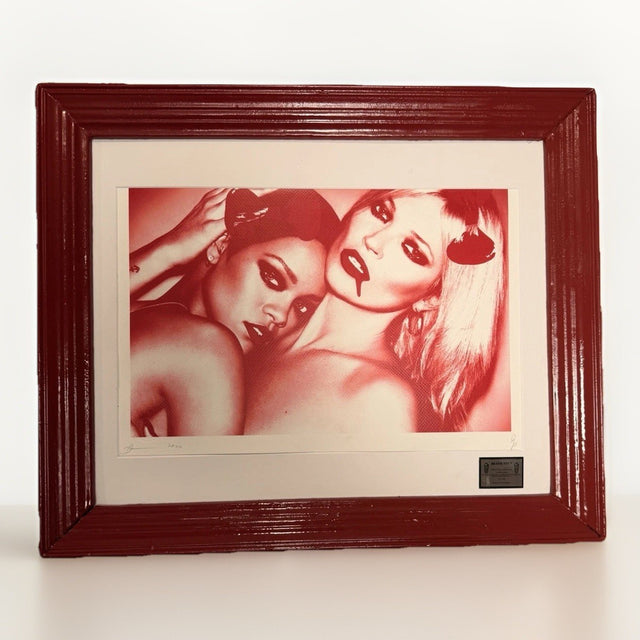
Death NYC — Kate Moss Rihanna Red Drip 2020 A/P Artist Proof Framed
$91.88 USD
-
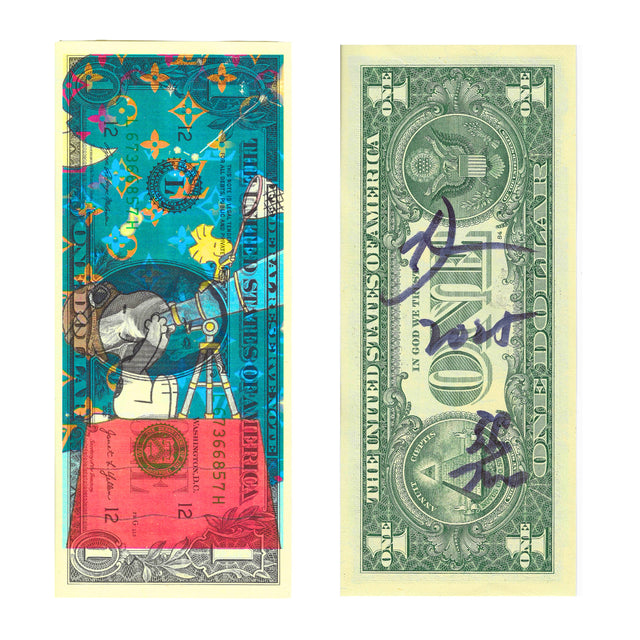
Death NYC Snoopy Woodstock Telescope LV Dollar Bill Art Signed Numbered COA
$55.00 USD
-
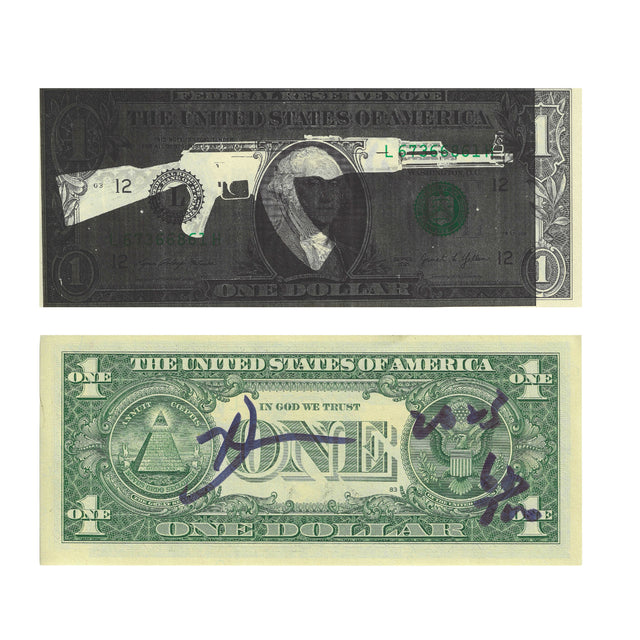
Death NYC Gun Dollar Bill Art Signed Numbered COA Black White Pop Street Art
$50.00 USD
-
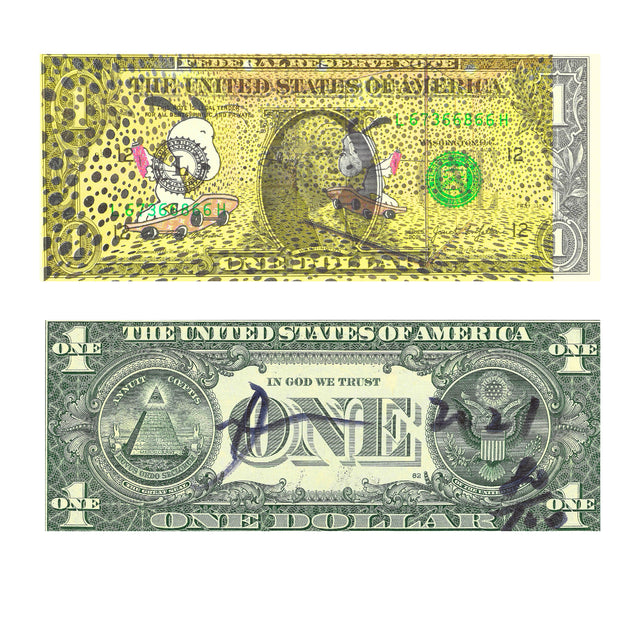
Death NYC Snoopy Skateboard Dollar Bill Art Signed Numbered COA Pop Street Art
$75.00 USD
-
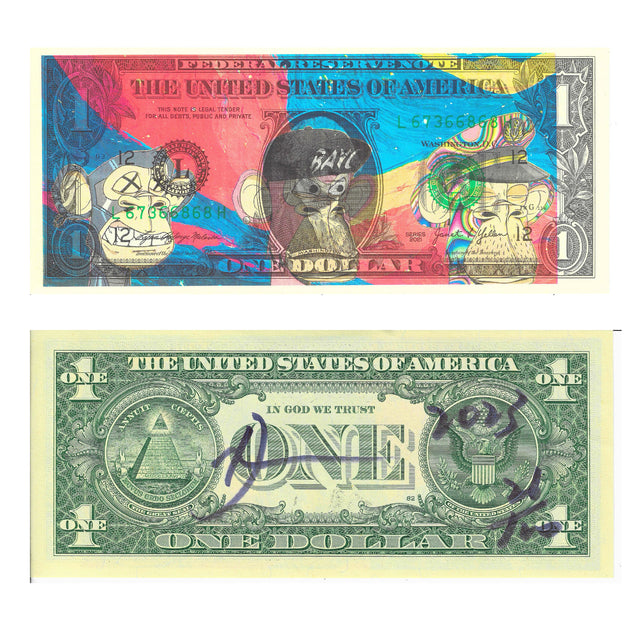
Death NYC Bored Ape Dollar Bill Art Signed Numbered COA Pop Street Art
$40.00 USD
-
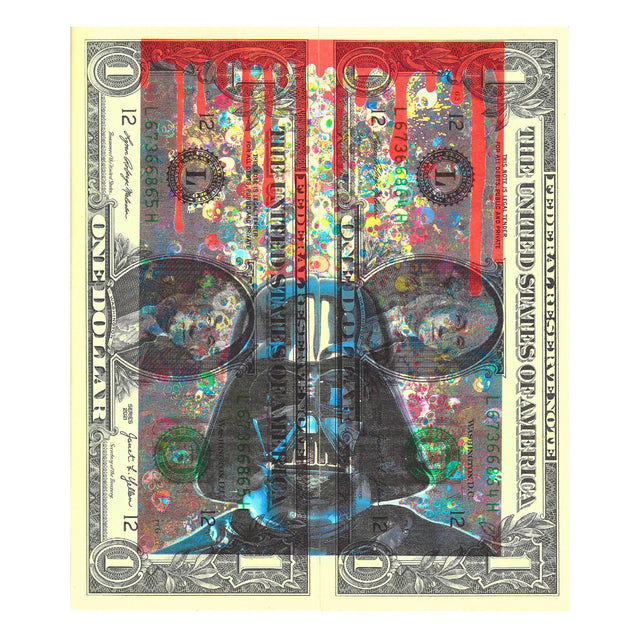
Death NYC Darth Vader Star Wars Dollar Bill Art Signed Two Bills COA Unframed
$100.00 USD
Browse the collection for current listings.