Third-Party Authentication for Music Memorabilia, Explained
Provenance affects the value of a signed guitar more than almost any other single factor: a documented chain of custody that ties the instrument to a specific performance, owner, or moment can multiply its price, while an identical guitar with no history and no credible authentication may struggle to sell at all. In music memorabilia, third-party authentication from Beckett Authentication Services (BAS), James Spence Authentication (JSA), or PSA/DNA verifies that a signature is genuine, and provenance answers the deeper question of whose guitar it was and where it has been. The two work together: authentication confirms the autograph, provenance confirms the story, and together they set the ceiling on what a collector or an auction room will pay.
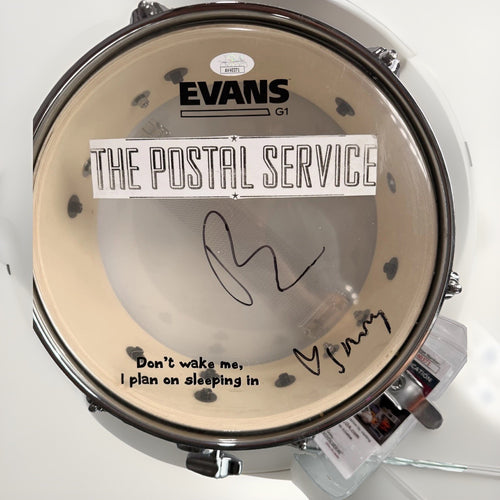
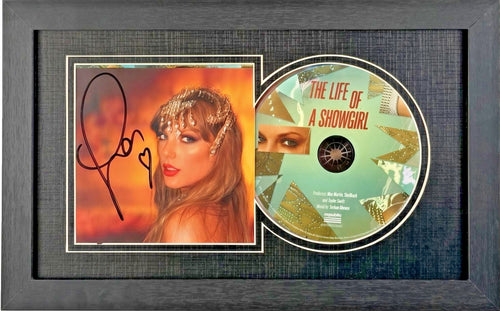
This guide explains how independent authentication actually works in the signed-memorabilia market, the difference between a quick opinion and a full letter, what a Letter of Authenticity (LOA) does and does not prove, and how photo-matching turns a plausible object into a documented one. It is written for collectors buying signed guitars, drumheads, records, posters, and stage-worn items who want to understand what separates a defensible purchase from an expensive guess. For the house standard Gauntlet Gallery applies across its own inventory, and where third-party grading fits alongside it, see the collector trust hub.
Why Music Memorabilia Needs Third-Party Authentication
Signed music memorabilia is one of the most forged categories in the entire collectibles world. Unlike a limited-edition print with a fixed edition size and a known publisher, a signed guitar is a one-off: there is no master list, no numbering, and often no photograph of the signing itself. That openness is exactly what forgers exploit. A blank guitar can be bought at any music store, a competent forger can reproduce a famous signature in seconds, and the result can look convincing to an untrained eye. The market's answer is not the seller's word but an independent, disinterested third party who examines the autograph and issues an opinion.
Third-party authentication matters because the authenticator has no financial stake in the sale. A dealer who owns the guitar wants it to be real; an authenticator paid a flat fee to render an opinion is indifferent to the outcome and stakes their reputation on getting it right. That independence is the entire value proposition. When a buyer sees a Beckett, JSA, or PSA/DNA letter, they are not trusting the seller — they are trusting a firm whose business model collapses the moment its opinions stop being reliable. This is the same logic that underpins any credible authentication and buyer-protection framework: verification should never depend solely on the party who benefits from the sale.
It is important to be precise about what these firms are and are not. Beckett, JSA, and PSA/DNA authenticate autographs — they render an expert opinion that a signature is consistent with genuine exemplars of a signer's hand. They are not, in most cases, verifying that a particular guitar was played on a particular stage. That second question — the object's history — is the domain of provenance and, where it exists, photo-matching. Understanding this division is the single most useful thing a new collector can learn.
The Three Major Authenticators: Beckett, JSA, and PSA/DNA
Three firms dominate autograph authentication in the United States, and their letters carry weight at auction and in the resale market. Each grew out of decades of experience examining signatures, and each employs or is associated with examiners whose opinions the hobby has learned to respect.
Beckett Authentication Services (BAS) is the authentication arm of Beckett, a name long established in the sports-card and collectibles world. BAS examiners are known for examining autographs across sports, entertainment, historical, and music categories. A BAS opinion typically results in a letter or a tamper-evident sticker with a serial number that can be looked up in the company's online database.
James Spence Authentication (JSA) is built around James Spence, one of the most recognized names in autograph authentication. JSA is widely used across the autograph market and, like Beckett, issues both quick opinions and full letters, each tied to a serialized certification that can be verified online. Many auction houses accept JSA letters as a condition of consignment for signed material.
PSA/DNA is the autograph division of PSA (Professional Sports Authenticator), part of Collectors Universe. PSA/DNA is especially prominent in the sports world but authenticates entertainment and music autographs as well. Its certifications are serialized and database-verifiable, and its brand recognition is high among mainstream buyers.
No single firm is universally "the best" for every signer. Reputations vary by category and even by individual signature, and serious collectors often prefer a particular firm for a particular artist. What matters more than the logo is that the certification is genuine, current, verifiable in the issuer's database, and — ideally — that the object has independent provenance to support it.
| Authenticator | Full name / affiliation | What it verifies | Common output | Verification |
|---|---|---|---|---|
| BAS | Beckett Authentication Services | Authenticity of the autograph (expert opinion) | Full LOA or tamper-evident sticker; serial number | Online database lookup by cert number |
| JSA | James Spence Authentication | Authenticity of the autograph (expert opinion) | Quick opinion (sticker) or full letter; serial number | Online database lookup by cert number |
| PSA/DNA | PSA (Collectors Universe) autograph division | Authenticity of the autograph (expert opinion) | LOA or certification sticker; serial number | Online database lookup by cert number |
| Photo-match specialists | Independent researchers / auction house teams | That a specific object appears in a specific image | Photo-match report / dossier | Side-by-side image comparison of unique features |
Quick Opinion vs. Full Letter of Authenticity
One of the most common points of confusion is the difference between a quick opinion and a full letter. Both are products of the same examiner's judgment, but they serve different purposes and carry different weight.
A quick opinion — sometimes issued at shows or as an expedited service — is typically a serialized sticker or a brief certification affixed to the item. It represents the examiner's on-the-spot judgment that the signature is likely genuine. Quick opinions are fast and inexpensive, which makes them popular for lower-value autographs. They are a real opinion from a real examiner, but they carry less documentary detail than a full letter and are generally viewed as a lighter form of certification.
A full Letter of Authenticity (LOA) is a printed, signed document that describes the item, identifies the signer, records the examiner's conclusion, and carries a serial number tied to the issuer's database. For higher-value pieces — the kind of signed guitar that trades in the thousands — a full LOA is the market standard. Auction houses frequently require full letters rather than stickers for premium consignments, and buyers should expect one on any significant purchase.
Neither product is a guarantee in the legal sense. Authentication is an expert opinion, not a warranty of fact. Reputable firms stand behind their work, opinions can occasionally be revised, and a certification's value rests on the issuer's credibility. That is precisely why provenance is not optional: an LOA tells you a signature is genuine, but only a chain of custody tells you the object's history. On a signed guitar, both should ideally be present.
What a Letter of Authenticity Proves — and What It Doesn't
An LOA is powerful, but it is narrow. Read literally, most autograph LOAs make one claim: that the signature on the item is, in the examiner's opinion, genuine. That is enormously valuable — it removes the single largest risk in the category — but it is not the same as verifying the object itself.
Consider a signed Fender Stratocaster. A JSA or Beckett letter can tell you the autograph on the body is consistent with the artist's genuine hand. It does not, on its own, tell you that this specific guitar was ever owned or played by that artist, that it was used on a particular tour, or that it is anything other than a store-bought instrument the artist signed at a meet-and-greet. All of those are provenance questions, and they are frequently what separates a $2,000 signed guitar from a $200,000 stage-played one.
This is where collectors get into trouble. A seller may present a genuine LOA and then imply a history the letter does not support — "signed guitar from the such-and-such tour" when the letter only certifies the autograph. The discipline is to read the LOA for exactly what it says, and to demand separate documentation for any claim about the object's use or ownership. A trustworthy certificate, whatever its source, should be specific about what it verifies and silent about what it cannot. For a broader treatment of how to judge any certificate's reliability, our companion article on provenance paper trails that protect resale value walks through the documents that actually hold up.
How Provenance Affects the Value of a Signed Guitar
Provenance is the documented history of an object — who has owned it, where it has been, and how it connects to the moments that make it desirable. For a signed guitar, provenance is the difference between a signature and a story, and the market pays enormous premiums for story.
Think of three guitars, each bearing an authenticated signature from the same artist:
- Guitar A is a store-bought instrument signed at a signing event. It has a genuine LOA and nothing else. It is worth the value of a nice guitar plus a modest autograph premium.
- Guitar B is the same model, signed by the same artist, but accompanied by a purchase receipt from a charity auction the artist's foundation ran, plus a letter from the foundation. Now there is a chain of custody. The premium rises because the buyer can trace the object back to a credible source.
- Guitar C is a guitar the artist is photographed playing on stage, whose distinctive wear, hardware, and finish can be matched to the photographs, and which passed from the artist's crew to the current owner with documentation at each step. This is a stage-played, photo-matched, provenanced instrument — and it can command a multiple of the other two.
The lesson is that authentication of the signature is table stakes, while provenance is the value engine. Strong provenance typically includes some combination of: original sales receipts, prior auction records, letters from people directly involved (band members, crew, tour managers, charity organizers), period photographs, and an unbroken narrative of ownership from the object's origin to the present. Gaps in that chain do not necessarily kill value, but each unexplained gap invites discount and doubt. Collectors building for long-term value should treat documentation as part of the asset, not paperwork to be filed and forgotten — a point we develop further in our overview of building a music-memorabilia collection that holds value.
Photo-Matching: The Provenance Multiplier
Photo-matching is the technique that most reliably converts a plausible claim into a documented one. It works by comparing an object's unique, non-repeatable features — the exact pattern of finish checking, a chip in the paint, the grain of the wood, a scratch by a specific tuning peg, a sticker placement, hardware wear — against period photographs or video of the artist using that object.
Because no two heavily used guitars wear identically, a rigorous photo-match can establish, with high confidence, that this exact instrument appears in this exact photograph. When that photograph shows the artist on stage during a documented performance, the match ties the object to the event. This is why photo-matched, stage-played pieces sit at the top of the market: they answer the object question directly, in a way that an autograph LOA never can.
Photo-matching is a specialist discipline. It is performed by independent researchers and by dedicated teams at major auction houses, and the strongest matches are documented in a report that lays out each corresponding feature side by side. A signature LOA plus a credible photo-match dossier is close to the gold standard for a played instrument: the autograph is verified by one authority, and the object's use is verified by another, independent line of evidence. Our detailed walkthrough of the full workflow for instruments — authenticating a signed guitar with Beckett, JSA, PSA and photo-matching — covers how these evidence streams are assembled in practice.
How Third-Party Authentication and Provenance Interact
The most durable signed pieces are those where independent authentication and provenance reinforce each other. When they align, confidence compounds; when they conflict, the smart move is to walk away.
Consider how the evidence stacks:
- Authentication of the autograph (BAS / JSA / PSA/DNA) establishes that the signature is genuine.
- Provenance documentation (receipts, prior sales, letters, chain of custody) establishes where the object came from.
- Photo-matching, where applicable, ties the specific object to a specific documented moment.
Each layer answers a different question, and a piece that satisfies all three is far more defensible — and far more valuable — than one resting on a single letter. Conversely, red flags emerge when the layers contradict one another: an LOA for a signature style the artist used in a different era than the claimed date, provenance that names a source who denies involvement, or a "stage-played" claim with no photograph and no match. Any of these should stop a purchase until resolved.
It is also worth noting where the industry has no single governing body. Autograph authentication is a market of competing private firms, not a licensing regime, and their opinions can differ. That plurality is healthy — it prevents any one firm from becoming an unchecked gatekeeper — but it means the burden falls on the buyer to verify the certification directly with the issuer and to weigh provenance independently. Gauntlet Gallery applies its own house standard, TrueCOA, across applicable inventory, pairing documented provenance with tamper-proof blockchain verification where appropriate; on signed music pieces, that house record sits alongside — not in place of — recognized third-party autograph authentication.
A useful way to think about it: authentication reduces the risk that the signature is fake, and provenance reduces the risk that the object's story is fake. A buyer can be fooled on either axis independently. A genuine signature on a guitar with a fabricated tour history is just as much a trap as a fabricated signature on a genuinely tour-used instrument. Because the two risks are separate, the two forms of evidence must be gathered separately and checked against each other. When a piece is expensive enough to matter, treat every claim as a hypothesis that the documentation either supports or fails to support, and price the gaps accordingly. This discipline is what distinguishes a collector who compounds value over time from one who periodically discovers that a prized piece cannot be resold at anything near what was paid for it. Approaching signed memorabilia the way an informed collector approaches any store of value — with documentation, verification, and a clear-eyed view of risk — is the single best protection a buyer has.
A Buyer's Verification Checklist
Before committing to any significant signed-memorabilia purchase, work through the following. The goal is to confirm both the signature and the story, and to make sure the documents actually say what the seller claims.
- Verify the certification at the source. Take the serial number from the LOA or sticker and look it up in the issuer's own online database. A certificate that cannot be verified is worthless no matter how official it looks.
- Read the letter literally. Note exactly what it certifies — usually only that the autograph is genuine. Treat any claim beyond that (tour use, ownership, event) as unproven until separately documented.
- Demand provenance for object claims. If the piece is sold as stage-played or artist-owned, ask for the receipts, letters, auction records, and photographs that support it. "It came from a good source" is not provenance.
- Look for a photo-match on played instruments. For high-value stage pieces, a documented photo-match is the strongest evidence available. Its absence is not disqualifying, but it caps how confidently the claim can be made.
- Match the signature to the era. Signatures evolve. A genuine autograph in a style the artist used decades after the claimed signing date is a contradiction worth investigating.
- Buy the paperwork, not just the object. The LOA and provenance file travel with the piece and protect its resale value. Confirm you will receive the originals.
- Prefer sellers who stake their reputation on it. A dealer who documents authentication and provenance transparently, and who backs the sale, is worth more than a marginally cheaper listing with a vague description.
Collectors who want to see how these standards translate into actual, vetted inventory can browse Gauntlet Gallery's full curated collection, where each piece is presented with its authentication and provenance context rather than a bare photograph and a price.
Beyond Guitars: The Same Rules for Records, Posters, and Stage Items
Everything above applies across signed music memorabilia, with category-specific wrinkles. Signed vinyl and album covers face the same autograph-authentication logic, plus their own tells around ink, media, and reproduction — a subject we cover in depth in our guide to signed vinyl and album authentication. Vintage concert posters and stage-worn items lean even more heavily on provenance and printing analysis than on autographs, since many are unsigned but valuable precisely because of documented history.
The unifying principle is that the market rewards documented certainty. An object that can be verified — its signature by an independent firm, its history by a paper trail, its use by a photo-match — commands a premium over an identical object that relies on trust alone. That premium is not sentiment; it is the market pricing risk. Every layer of independent verification you can add lowers the buyer's risk, and lower risk is worth real money.
Where Gauntlet Gallery Fits
Gauntlet Gallery treats authentication and provenance as inseparable. For music memorabilia specifically, that means respecting the recognized third-party autograph authorities — Beckett, JSA, and PSA/DNA — while documenting each piece's provenance and, where relevant, its photo-match evidence. The gallery's own program, TrueCOA, provides a house-level record and tamper-proof blockchain verification on applicable items, but it is presented honestly for what it is: Gauntlet's standard, layered on top of the industry's third-party authentication rather than a replacement for it.
For collectors, the practical takeaway is simple. On a signed guitar, ask three questions in order: Is the signature independently authenticated and verifiable at the source? Is there provenance that documents where the object has been? And, for played instruments, is there a photo-match that ties it to a moment? The more of those you can answer with hard documentation, the more the piece is worth — and the safer your purchase. To go deeper on how documentation drives long-run value across the category, and how to build accordingly, start with the Gauntlet collector hub and our companion pieces on provenance and instrument authentication.