

AI-generated interior concept using product reference photography; setting, scale and framing are illustrative.
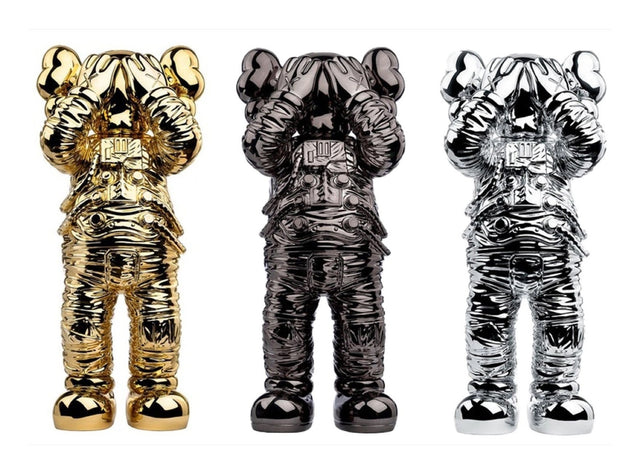
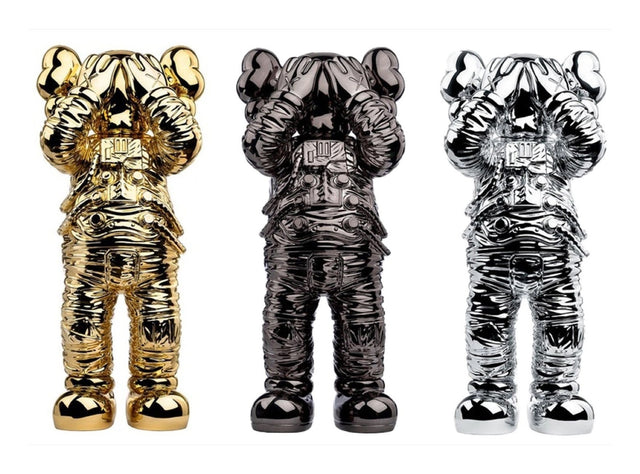
Placing highly reflective contemporary sculpture into residential spaces requires a clear understanding of finish, light behavior, and spatial weight. The KAWS Holiday Space Set of 3 Gold Black Silver Companion Astronaut Figure presents three distinct metallic treatments on a shared sculptural form. Each figure depicts the familiar Companion character dressed in a detailed astronaut suit, hands pressed firmly over its face. Rather than treating these three figures as an indivisible retail cluster, interior designers can analyze gold, black chrome, and silver as independent specular accents. Highly polished metallic surfaces reflect a significant portion of light, re-projecting the surrounding architecture, fabric tones, and ambient highlight colors. In a warm residential interior featuring oiled walnut, textured linen, plaster work, or warm architectural illumination, a metallic shell acts as a dynamic mirror. The metallic surface catches environmental highlights while reflecting dark voids, making the choice between gold, dark black chrome, and bright silver crucial to maintaining balance in a curated room scheme.
Analyzing Metallic Specularity in Residential Settings
Metallic coatings alter how a physical sculpture occupies space. A matte or painted surface relies on subtle shading across its form to communicate volume. A mirror-polished surface, like the exterior of these astronaut figures, relies almost entirely on visual environment reflection. In the gold variation, the warm yellow sheen amplifies halogen or warm LED lighting, casting golden secondary reflections onto adjacent shelving or stone hearths. The gold figure introduces an opulent, classical warmth, echoing brass architectural hardware or gilded framing without appearing traditional.
The silver figure presents a pure specular return. It acts as a cool chromatic anchor, sampling every color in its immediate surroundings. Set against a warm Venetian plaster wall, the silver body picks up the plaster tone in its recessed folds while maintaining stark white edge highlights. The black chrome figure occupies a subtle middle ground between metal and shadow. It features deep, moody tones that catch high-contrast light reflections along the ridges of the suits, knees, and hands. This black finish creates a heavy visual anchor, drawing the eye down through its dark contours without completely dampening the surface with a flat matte coat.
When integrating the full KAWS Holiday Space Set of 3 Gold Black Silver Companion Astronaut Figure set into a domestic interior, avoid the standard retail instinct to line them up side by side on a single shelf. Placing three identical forms in a neat row flattens their spatial impact, transforming three distinct specular surfaces into a uniform merchandising display. Instead, decouple the trio across different sightlines or varying elevations within a single room. Placing the gold figure near a directional light source draws out rich, ambient warmth, while positioning the silver figure deeper in a shaded recess creates an intriguing, mirror-like highlight that pulls light into dark corners. The black figure functions best at eye level or on lower joinery, where its dark chrome exterior registers as an anchor against lighter wall finishes.
Consider a hypothetical living room measuring a hypothetical 18 by 24 feet, featuring walnut paneling, cast concrete surfaces, and warm ambient lighting. Placing all three figures together on a central coffee table creates severe visual clutter, as their reflective polished surfaces bounce light directly into one another, muddying their sculpted silhouettes. A more considered design strategy distributes the set to balance the room. The gold astronaut sits on a low walnut console, where its yellow metallic sheen reflects the deep wood grain and pulls warm light from a nearby floor lamp. The silver astronaut rests inside an illuminated concrete wall niche, absorbing the cool slate tones of the background while bouncing crisp highlights into the room. The black chrome astronaut is positioned on an open iron shelf across the space, serving as a dark, structural counterweight that grounds the lighter architectural elements.
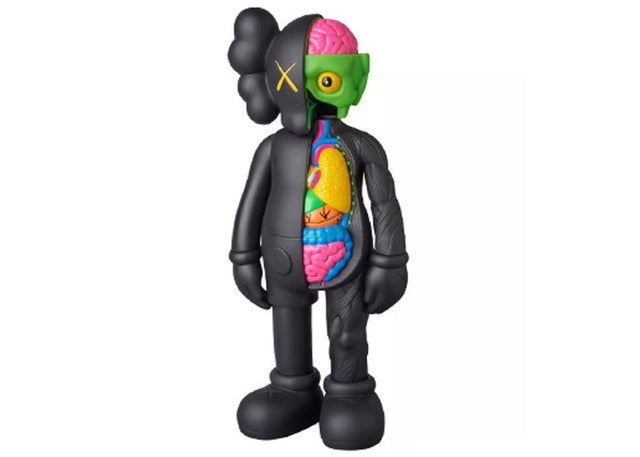
Contrast this unified metallic set with a matte, narrative piece such as the KAWS Companion Flayed Open Edition Black Medicom Toy Dissected Sealed New Figure. While the Holiday Space figures reflect their environment through continuous mirror-like finishes, the Flayed Companion absorbs light through its flat black vinyl exterior. The split anatomical design relies on physical relief and shadow rather than specular reflections to define its geometry. In a warm interior, placing a reflective metallic figure near a dissected matte figure creates a compelling visual dialogue, balancing liquid surface reflection with explicit sculptural detail.
Deconstructing the Space Set: Separating the Trio
A frequent mistake in residential styling is arranging three matching collectible sculptures in a straight line on a single shelf. Aligning the gold, black, and silver figures side-by-side reads as an retail display rather than an intentional interior choice. Breaking up the set allows each metallic finish to respond to different materials and lighting conditions across a floor plan. The KAWS Holiday Space Set of 3 Gold Black Silver Companion Astronaut Figure offers three distinct reflective behaviors. Treating these figures as three solitary interventions rather than a uniform march creates distinct narrative nodes across an entire residential layout.
Spatial Distribution and Visual Rhythm
Placing figures in different areas of a room establishes a subtle visual dialogue throughout the space. The gold astronaut might sit inside a dark-lined millwork niche, where its warm reflections create a glowing focal point against dark oak background panels. Across the room, the silver figure can be positioned near an expansive window sill, absorbing natural skylight and reflecting cool daylight tones into the living zone. Meanwhile, the black chrome figure finds its ideal placement on a light travertine side table, where its dark profile offers necessary contrast against light stone surfaces.
When separated, each figure functions as an independent sculpture, drawing visitors through the room as they discover shared motifs across distinct metallic surfaces. The repetition of the folded space suit details and the iconic hands-over-face motif creates balance across the home without cluttering a single mantel or desk top.
Individual Finish Dynamics and Material Tradeoffs
Each reflective finish in the trio interacts differently with surrounding architectural materials, presenting specific advantages and challenges for interior palettes. Gold chrome introduces an explicit warmth that can easily overwhelm pale, unlacquered woods or cool grey granites if not balanced by deep, light-absorbing textures like charcoal wool, velvet, or charred timber. Its high spectral reflectivity demands careful position planning relative to ambient sources, as direct spotlights will generate blinding pinpoint highlights rather than a soft, ambient glow.
The silver chrome finish behaves as a mirror to its surrounding environment, rendering it exceptionally versatile across contemporary minimalism. However, because silver reflects color temperature directly, placing it adjacent to vivid artwork or saturated upholstery can distort its form with chaotic hue reflections. It thrives best when surrounded by balanced neutrals, crisp plaster, and low-iron glass, where its cool, crisp highlights reinforce structured architectural geometry.
Black chrome operates differently from both classic polished steel and matte finishes. Rather than absorbing light completely, black chrome reflects surroundings through a deep, smoke-toned filter. This subtle metallic dark tone makes it a grounding anchor in high-key, light-filled rooms. The primary tradeoff with black chrome lies in dust visibility and environmental glare; hard white light sources can wash out its dark body, turning the deep smoked finish into a greyish mirror. Placing black chrome against mid-tone, textured backdrops like raw concrete, combed plaster, or ribbed linen ensures its precise silhouette remains legible.
Comparing the black astronaut figure to the anatomical KAWS Companion Flayed Open Edition Black Medicom Toy Dissected Sealed New Figure highlights key sculptural differences. While the Flayed figure relies on matte contrast and intricate exposed internal structure to break up its form, the Holiday Space astronaut uses a smooth, continuous suit topography finished in dark chrome to reflect light in broad, atmospheric sweeps.
Hypothetical Placement Decision: Great Room Layout
Consider a hypothetical great room measuring 24 feet by 36 feet, featuring exposed architectural concrete walls, white oak rift-sawn floors, and floor-to-ceiling perimeter glazing facing north. The client desires to integrate the three-piece astronaut set into the primary living zone without making the room feel like an art gallery or retail showroom.
An initial instinct might suggest grouping all three figures inside a central low-slung media console niche. However, in a room of this scale, an concentrated cluster reduces the three figures to a single dense cluster, flattening their individual metallic characteristics under a single lighting condition. The alternative layout distributes the trio across three distinct sightlines to establish a visual triangular anchor across the 864-square-foot space.
First, the gold figure is isolated on a dark, smoked-oak floating shelf set into a recessed architectural alcove on the south wall. Illuminated by a dedicated warm 2700K narrow-beam ceiling spotlight, the gold chrome casts soft yellow highlights onto the dark timber behind it, warming up the room's southern elevation.
Second, the silver figure is stationed on a low travertine bench adjacent to the northern glass wall. Receiving diffuse, cool 4000K daylight, the silver surface picks up the ambient grey-blue light of the exterior sky, creating a clean, architectural reflection that ties the indoor seating area to the outdoor terrace.
Third, the black chrome figure is placed on an off-center marble side table alongside a low-profile linen sofa in the center of the room. Positioned away from direct daylight glare, the black figure catches subtle ambient bounce light from both the northern glazing and the southern timber alcove. Its dark profile anchors the seating island, drawing the eye down from the high concrete ceilings and providing a quiet contrast to the light-toned linen upholstery. This distributed arrangement forces the viewer to navigate the entire space to appreciate the set, converting static collectibles into an interactive spatial experience.
Tactile Relief and Visual Detail: The Suit Construction
The Holiday SPACE form relies heavily on complex surface modeling. Unlike the smooth, simplified bodies seen in classic Companion releases, these astronaut suits feature deeply sculpted creases, thick ribbed arm segments, heavy boots, chest pack controls, and layered utility straps. Every fold creates an edge that catches light differently depending on the chosen finish.
On the bright silver figure, every micro-crease along the suit thighs and chest harness reflects distinct pinpoints of light. This high contrast highlights the intricate sculpting work, giving the figure an almost fluid appearance under direct spotlighting. On the gold figure, these same folds create softer gradients, rendering the suit as a warm, continuous metallic texture. The dark black chrome figure isolates light exclusively to the highest ridges of the helmet curves, gloves, and boot toes. The deep recesses of the suit remain dark, enhancing the impression of weight and solidity. Designers can use these textural differences to match room textures, balancing soft upholstery or rough stone with precise metallic detailing.
The Black Flayed Figure: A Matte Architectural Counterpoint
To fully understand the specular qualities of the metallic SPACE set, it helps to look at a fundamentally different sculptural surface, such as the KAWS Companion Flayed Open Edition Black Medicom Toy Dissected Sealed New Figure. As a design reference, this figure offers an instructive study in contrast. The matte black finish on the exterior shell absorbs ambient light, creating a silhouette defined by silhouette rather than reflection.
The Flayed Companion splits its visual weight down the middle: one half presents a smooth, non-reflective black shell, while the dissected half reveals internal anatomy highlighted in saturated yellows, pinks, greens, and blues. Where the Holiday SPACE figures use reflective metallic coatings to absorb their environment, the Flayed figure uses bold interior pigments to command visual attention. Introducing a matte, dissected form alongside a mirror-finish astronaut creates a striking dialogue between interior structures and exterior shells. The matte black surface absorbs excess room light, grounding nearby metallic pieces and preventing specular reflections from cluttering the visual field.
Integrating Metallic Figures into Warm Material Palettes
Modern residential interiors frequently lean on warm, organic palettes composed of honey-toned oak, lime-wash walls, boucle fabrics, and tumbled limestone. Inserting highly polished metallic objects into these environments creates an engaging material contrast. The polished surfaces cut through soft, matte textiles, providing crisp geometric clarity without overwhelming the subtle textures of the room.
When positioning the gold SPACE figure near unvarnished wood or raw linen, the reflective surface softens, echoing the natural materials around it. The metallic finish acts as a bridge between high-tech contemporary sculpture and traditional architectural elements. To prevent metallic elements from clashing with existing hardware, match warm brass and bronze fixtures with the gold figure, while polished nickel or chrome accents align naturally with the silver figure. The black chrome version complements dark ironwork, blackened steel fireplaces, or slate hearths, integrating seamlessly into moody, textured architectural schemes.
Lighting Strategies for Mirror-Finish Sculpture
Illumination dramatically affects how specular objects are perceived in a room. Direct spotlighting on a mirror-finish sculpture creates harsh, blinding glare points that obscure the underlying form. To reveal the true contours of the astronaut suit, designers should utilize diffused, ambient lighting setups.
Bounced and Cove Lighting
Indirect light from architectural coves, wall sconces, or lamps with soft fabric shades casts broad, soft light bands across the metallic figures. These smooth light reflections highlight the rounded curves of the hands, ears, and helmet folds without generating distracting glare. Positioning the sculpture near a indirect warm light source allows the gold or silver finish to glow softly against its background.
Daylight Integration
Natural light creates constantly shifting reflections across metallic surfaces throughout the day. Near a window with sheer curtains, the silver SPACE figure captures soft, blue daylight tones on one side while catching warm indoor tungsten light on the other. This dual-tone reflection highlights the three-dimensional geometry of the figure, turning the piece into a dynamic element that evolves with the time of day.
Hypothetical Interior Application: A Warm Architectural Library
Consider a hypothetical library space measuring twenty feet by sixteen feet, lined with custom-milled floor-to-ceiling smoked oak cabinetry, a dark plaster ceiling, a low-slung sofa upholstered in olive velvet, and a honed travertine coffee table. The lighting is low and warm, driven by concealed LED strips behind open shelving and a single floor lamp with a brushed brass shade.
In this space, placing all three figures from the KAWS Holiday Space Set of 3 Gold Black Silver Companion Astronaut Figure together on the coffee table would visually overcrowd the central seating area. Lined up side by side, three high-gloss chrome forms create an intense cluster of specular highlights that draws the eye away from the ambient architecture, reducing the sculptural impact of each individual piece to that of a commercial display shelf. Instead, a targeted distribution strategy across distinct visual planes maintains architectural balance and allows each finish to interact with its immediate surroundings.
The gold Holiday SPACE figure sits inside an illuminated oak shelf niche. The warm golden chrome finish picks up the deep undertones of the smoked oak and responds directly to the warm hidden shelf lighting, serving as a rich, subtle accent embedded within the dark woodwork. The primary design tradeoff here is subtlety versus prominence: isolating the gold figure inside a warm niche integrates it seamlessly into the joinery, but reduces its visibility from the main entry corridor.
The black chrome SPACE figure rests directly on the honed travertine coffee table next to stacked art monographs. The light, porous stone provides a neutral backdrop that anchors the dark, polished silhouette of the astronaut. Travertine absorbs light while the black mirror chrome reflects it, creating a tactile interplay between raw mineral textures and engineered liquid metallics. Placing a dark object on a light stone surface runs the risk of creating a high-contrast visual hole in the center of the room, but the reflective shell catches ambient light from the floor lamp, softening its silhouette and preserving visual depth across the tabletop.
Across the room, the silver SPACE figure is placed on a floating blackened steel console near an eastern window. It reflects the cool daylight streaming through the sheer drapes, balancing the warm interior lighting with a touch of crisp daylight reflectivity. By spreading the set throughout the space, the metallic triad acts as a subtle thread of reflective material that guides the viewer's gaze through the room rather than concentrating focus on a single surface.
An alternative design approach might group the silver SPACE figure alongside a KAWS Companion Flayed Open Edition Black Medicom Toy Dissected Sealed New Figure on a single low credenza. This pairing contrasts the liquid, continuous surface of the space suit against the matte black shell and intricate, sculpted internal details of the dissected model. The smooth mirror finish of the space suit bounce soft ambient light from the room, while the flat vinyl skin of the flayed figure absorbs illumination, forcing the eye to read its exposed structural anatomy. This grouping emphasizes structural form and material contrast over chromatic harmony, ideal for spaces defined by minimalist architectural lines.
When deciding between distributing a matched three-piece set across multiple zones or pairing a single metallic figure with a matte dissected figure, the designer must weigh visual cohesion against focal narrative. Spreading the matched trio across the room establishes a quiet rhythm that reinforces the palette of wood, stone, and metal throughout the entirety of the envelope. In contrast, pairing a high-gloss space suit with a matte flayed figure concentrates the viewer's attention on a singular, highly detailed moment of artistic tension. In a quiet, intimate library, distributing the trio maintains spatial tranquility, whereas a dynamic gallery wall or minimalist credenza benefits from the stark textural collision of a reflective astronaut placed adjacent to an exposed anatomical form.
Placing Modern Art in Residential Environments
Integrating contemporary sculpture into a home requires careful attention to balance and proportion. Specular metallic objects hold significant visual presence relative to their size because their reflective surfaces actively attract the eye. When placing pieces like the Holiday SPACE set, ensure each figure has adequate breathing room within its immediate surroundings.
Avoid placing highly reflective figures directly against busy, patterned wallpapers or cluttered bookshelves, as the surface reflections will mimic the surrounding chaos, muddying the sculpture's form. Place the figures against clean, textured surfaces, such as smooth lime-wash, simple wood grain, or architectural concrete, where their reflections can cleanly frame the surrounding room tones. Check current availability for the KAWS Holiday Space Set of 3 Gold Black Silver Companion Astronaut Figure to evaluate how these varied metallic finishes can complement your upcoming residential layout.
Shop KAWS
Explore current pieces available from the gallery.
-
KAWS Holiday Space Set of 3 Gold Black Silver Companion Astronaut Figure Rare
$2,900.00 USD
-
KAWS Holiday Space Set of 3 Gold Black Silver Companion Astronaut Figure
$2,900.00 USD
-
KAWS Companion Flayed Open Edition Black Medicom Toy Dissected Sealed New Figure
$599.00 USD
-
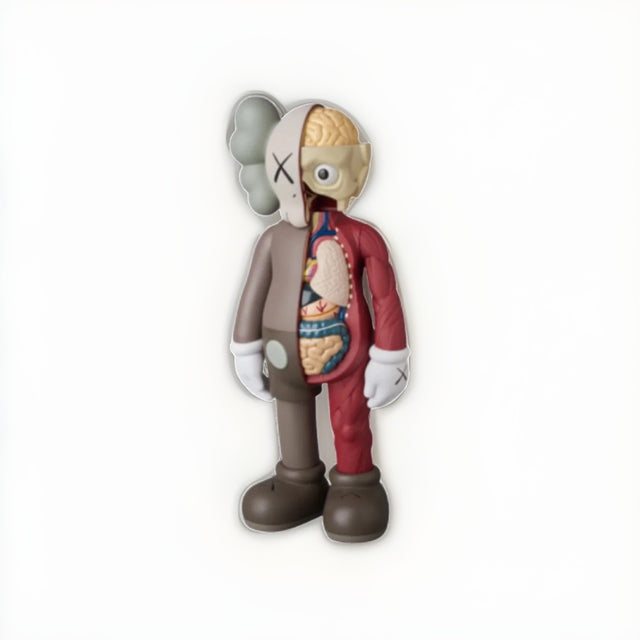
KAWS Companion Flayed Open Edition Brown Medicom Toy Dissected Sealed New Figure
$349.00 USD
-
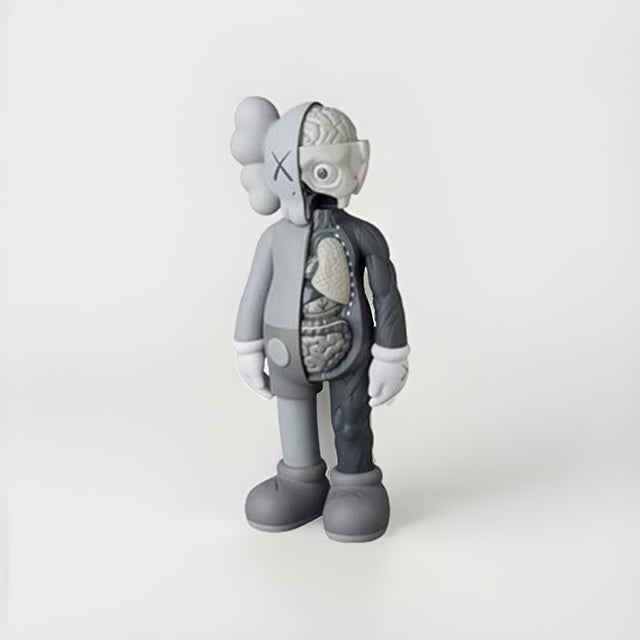
KAWS Companion Flayed Open Edition Grey Medicom Toy Dissected Sealed New Figure
$349.00 USD
Browse the collection for current listings.