

AI-generated interior concept using product reference photography; setting, scale and framing are illustrative.
Three-dimensional interior objects rarely present a single face to a room. When placing sculpted figures within residential or commercial interiors, the interaction between circulation paths and visual weight governs how an object reads over time. The three dissected editions of the KAWS Companion, Grey, Brown, and Black, offer a clear study in how directional asymmetry, color contrast, and internal texture alter a space depending on the viewer's position. Unlike fully uniform sculptures, a flayed figure presents two distinctly different visual profiles. One side maintains a smooth, monochromatic silhouette consistent with traditional cartoon forms. The other reveals a cutaway structure containing layered anatomical forms, exposed muscle tone, and high-contrast color zones. Incorporating these works into a curated interior requires careful evaluation of sightlines, background tones, lighting, and surrounding furniture outlines.
A well-planned placement takes into account not only the frontal elevation but also the progressive reveal that occurs as an observer moves through a room. Placing a flayed sculpture against a solid wall or within an open shelving unit creates immediate spatial tension between the closed, soft exterior shell and the intricate interior details. By examining the photographic evidence of the Grey, Brown, and Black editions, designers can align the specific visual temperature and tone of each piece with the material finishes of custom cabinetry, architectural stone, and upholstery fabrics. Understanding how these pieces operate from three-quarter views and side perspectives ensures that the object contributes meaningfully to the broader spatial narrative.
The structural asymmetry of the flayed figure dictates how traffic should flow past the pedestal or display nook. When an observer approaches from the intact side, the sculpture appears as a familiar, solid mass with low internal visual complexity. As the viewer progresses along the circulation pathway, the cutaway section rotates into view, shifting the perceptual experience from smooth minimalism to dense graphic complexity. Orienting the exposed anatomical side toward the primary entrance yields an immediate, dramatic visual impact. Conversely, angling the smooth outer skin toward the entry creates a delayed reveal that unfolds gradually as a guest walks through the space. Designers must choose between these two approaches based on whether the room demands an instant focal anchor or a subtle secondary discovery.
Color dynamics differ sharply across the three available colorways, influencing how each piece sits against surrounding wall finishes and millwork. The KAWS Companion Flayed Open Edition Grey Medicom Toy Dissected Sealed New Figure utilizes neutral cool greys for its intact shell, pairing naturally with concrete, cast stone, brushed steel, and pale oak. The internal organs of the grey edition feature neutral tonal greys and charcoal shades that demand a quiet backdrop to prevent visual clutter. The KAWS Companion Flayed Open Edition Brown Medicom Toy Dissected Sealed New Figure incorporates warm brown tones on its exterior paired with rich red, pink, and cream interior elements. This warmth bridges the gap between natural timber, beige plaster, and bronze metalwork. The KAWS Companion Flayed Open Edition Black Medicom Toy Dissected Sealed New Figure provides the highest graphic contrast. Its dark silhouette recedes visually against dark backgrounds, but its exposed internal cavity pops aggressively, drawing focus even in low-ambient lighting conditions.
Selecting background surfaces involves balancing contrast and visual noise. A highly patterned marble backplate or busy wallpaper behind a flayed figure competes directly with the intricate interior anatomy, causing the sculpture's silhouette to disintegrate. Solid, matte backdrops, such as Venetian plaster, smooth microcement, or flat painted wood panels, preserve the crisp outer profile while letting the colorful interior details read clearly. Lighting design must also accommodate both halves of the figure. A single overhead spotlight positioned directly above the center creates harsh shadows within the recessed anatomical cavities. Implementing twin directional spotlights angled at forty-five degrees illuminates the deep interior channels while softening harsh drop shadows along the smooth exterior side.
Consider a hypothetical design decision in a modern living space measuring fifteen feet by twenty-four feet with an entry corridor leading into the main seating zone. The client wants a single sculptural centerpiece for a custom blackened-steel console table positioned against a matte white plaster wall along the main passage. The designer faces a trade-off between selecting the grey or black colorway and deciding which orientation faces the approaching corridor. Installing the black flayed edition with the dissected side turned toward the hallway creates an immediate high-contrast focal point against the white plaster wall. However, this orientation exposes the intricate internal cavity to direct sun exposure from adjacent windows, raising concerns about visual overload in a narrow passage. The alternative is selecting the grey flayed edition and rotating the intact shell toward the hallway entrance, keeping the exposed anatomical side facing the inner seating area. This layout preserves a clean, architectural line as guests enter, reserving the saturated internal colors for individuals seated within the primary living room space. By prioritizing the seating area's sightlines, the designer establishes a layered visual narrative that respects both the architecture of the corridor and the intricate detailing of the sculpture.
Understanding the Asymmetrical Split: Anatomical Realism Versus Sculptural Silhouette
The core design challenge and opportunity of the dissected Companion lies in its vertical bisect. The figure is cleanly divided down the center line, pairing a smooth, simplified cartoon form on the subject's left side with a hyper-detailed cutaway on its right. On the intact right half, the surface relies on rounded volumetric shapes: a smooth spherical head with an embroidered-style eye cross, a curved torso, a classic gloved hand resting at the side, and a simple boot-like foot. The line work is minimal, catching light across continuous matte planes.
Conversely, the left half strips away the smooth exterior skin to expose the internal structure. The skull cavity opens to reveal a textured brain mass and a singular wide eye socket. The torso wall is removed to show the interior lungs, heart, liver, and digestive tract, while the leg and arm expose striations of muscle tissue. This dual nature means the figure has two entirely different spatial personalities. Viewed directly from its intact side, the sculpture appears as a traditional, quiet silhouette. Viewed from its dissected side, it presents a dense cluster of detail, shadow, and visual complexity. When positioning the piece, designers must determine whether the primary approach to the object should highlight its calm, graphic exterior or its dramatic, exposed core.
The Spatial Dynamics of Circulation and Sightlines
Because the figure possesses two contrasting sides, its orientation relative to room circulation dictates how the piece is experienced. In a hallway, entry foyer, or living room perimeter, people rarely view objects from a stationary, head-on position. Instead, they approach along a path, seeing the profile first before coming face-to-face with the work. Orienting the figure so that the exposed left side faces oncoming foot traffic creates an immediate, highly detailed visual anchor. The exposed organs and muscle striations draw the eye instantly, making the object feel active, intense, and dynamic from a distance.
Alternatively, rotating the figure so that the smooth, intact side faces the primary entry path creates a sense of surprise. As a guest walks past the pedestal or console, the smooth exterior gives way to the intricate interior anatomy. This progressive reveal rewards movement through the space. Positioning the figure at an oblique forty-five-degree angle to the main seating group allows both halves to remain partially visible simultaneously, balancing the quiet graphic outline with the detailed internal focal point. Placement decisions should directly reflect whether a space calls for immediate visual energy or a multi-stage discovery.
Color Comparative Analysis: The Monochrome Grey Edition
The KAWS Companion Flayed Open Edition Grey Medicom Toy Dissected Sealed New Figure operates entirely within a tonal, grayscale palette. The outer shell uses a neutral mid-tone grey, complemented by lighter grey gloves and a pale grey skull outline. Inside the cutaway, the brain and lungs are rendered in soft beige-grey and off-white tones, while the underlying cavity wall and muscle tissue are finished in a deep charcoal grey. The internal organs employ subtle shading rather than vivid primary colors, maintaining a restrained, architectural quality throughout the entire form.
Integrating Grayscale into Minimalist Interiors
Because the Grey edition lacks bright chromas, its visual weight is driven purely by light, shade, and surface texture. Against a dark charcoal or black plaster wall, the mid-tone grey exterior stands out cleanly, while the dark interior cavity merges slightly with the background, pushing the light-toned brain and lungs forward. Against a stark white or light concrete wall, the entire outer silhouette remains sharp, with the dark internal cavity providing a strong vertical anchor. The Grey edition pairs exceptionally well with matte concrete finishes, smoked glass, brushed aluminum, and light oak woodwork, offering a subtle, sophisticated presence that does not clash with existing color schemes.
Color Comparative Analysis: The Earth-Toned Brown Edition
In contrast to the grayscale version, the KAWS Companion Flayed Open Edition Brown Medicom Toy Dissected Sealed New Figure introduces a warm, organic color palette grounded in classic vinyl toy aesthetics. The intact outer body is cast in a soft, matte milk-chocolate brown. The gloved hands and shorts buttons feature pale grey and cream accents. Inside the dissected half, the muscle structure is painted in a deep crimson red, while the brain cavity uses a warm tan-yellow tone. The exposed internal organs show distinct blue and red vascular details alongside cream and beige digestive structures.
Warm Tones and Material Harmony
The Brown edition brings a grounded, warm energy to an interior scheme. The crimson muscle tone and deep brown shell creates a strong natural contrast against mid-century teak, rich walnut, or tan leather furnishings. When placed against a light travertine wall or an off-white linen drapery background, the warm brown silhouette feels substantial and inviting. The inclusion of bright primary accents within the internal organ cluster adds small pops of color that can echo tones found in surrounding textiles, warm wood grain, or bronze architectural hardware, making it an ideal choice for spaces focused on organic materials and rich, warm light.
Color Comparative Analysis: The High-Contrast Black Edition
The KAWS Companion Flayed Open Edition Black Medicom Toy Dissected Sealed New Figure represents the most radical departure in visual intensity among the three variants. The outer shell is finished in a solid, matte jet black, with bright yellow eye crosses providing a sharp visual pop on the intact half of the face. The interior dissection, however, uses vivid, saturated neon hues: a bright magenta-pink brain, a vibrant lime-green skull cavity wall, a bright yellow lung, an orange and blue digestive tract, and a magenta intestinal structure set against a dark, textured muscle leg.
Managing High Saturation in Contemporary Spaces
The Black edition functions as a high-impact graphic sculpture. The dark, matte black shell acts as a stark frame for the hyper-saturated internal palette. Placed on a crisp white pedestal or in front of a flat light-grey backdrop, the black outline establishes a powerful silhouette, while the internal neon shades immediately capture the room's attention. This version demands careful spatial breathing room; placing it next to competing vivid artwork can result in visual clutter. Instead, it thrives when set against neutral architectural backdrops, such as polished white marble, matte black cabinetry, or industrial steel, where its saturated pink, green, and blue interior accents can act as the primary chromatic focal point of the room.
Pedestals, Case Goods, and Background Integration
The choice of supporting furniture directly affects how the flayed Companion reads within an architectural space. Because the figures are freestanding with broad, flat boot bases, they require a stable, level surface. Placing the sculpture on an open console table, a dedicated acrylic pedestal, or within a recessed wall niche dictates how light strikes the contrasting halves. A solid matte background, whether painted plaster, smooth micro-cement, or wood paneling, is essential. Patterned wallpaper or heavily veined marble backgrounds obscure the intricate sculpted details of the flayed organs and distort the clean outline of the smooth outer shell.
Lighting plays an equally critical role. Direct overhead spotlights cast deep shadows within the open cavity, accentuating the depth of the sculpted organs and the texture of the brain cavity. Diffused side lighting, on the other hand, softens the internal shadows and emphasizes the smooth, continuous curves of the intact outer body. For maximum versatility, adjustable directional lighting directed at a thirty-degree angle toward the front-left of the figure will highlight the internal detail while maintaining clean specular highlights along the smooth right shoulder and head.
Hypothetical Room Application and Design Alternatives
Consider a hypothetical design project for a contemporary residential living room measuring twenty by twenty-four feet, featuring polished light-grey concrete floors, matte walnut wall paneling, and an oversized low-profile modular sofa upholstered in a neutral textured cream fabric. The primary circulation path runs from the entry foyer along the right side of the main seating area toward a floor-to-ceiling glass window overlooking a garden terrace. Adjacent to this walk zone stands a six-foot-wide, twenty-inch-deep low walnut credenza set against a smooth white gallery wall. The goal of this spatial arrangement is to ensure the sculptural element operates as both an architectural anchor from a distance and an intricate object of discovery upon close approach. Because the Companion Flayed is inherently split down its vertical axis, its visual impact changes radically depending on whether a viewer encounters the intact vinyl shell or the exposed anatomical interior first.
Selecting the Ideal Variant and Orientation
In this specific setting, placing the KAWS Companion Flayed Open Edition Brown Medicom Toy Dissected Sealed New Figure on the credenza creates a harmonious material link with the walnut wall paneling. The natural, earthy brown hue of the figure's outer skin aligns closely with the deep timber tones, allowing the outer silhouette to sit comfortably within the architectural millwork. By angling the figure at approximately thirty degrees relative to the credenza edge, oriented toward the entry path, visitors approaching from the foyer first encounter the smooth, recognizable outer form. As they step deeper into the room along the primary circulation vector, the perspective shifts dynamically, revealing the internal structure finished in bright crimson, yellow, and cream tones. These vivid interior shades pull warm undertones from the walnut grain and echo subtle accents in the surrounding decor, turning a simple pass-through corridor into an interactive visual journey.
Evaluating Spatial Alternatives and Material Tradeoffs
If the design goal shifted toward a sharper, higher-contrast aesthetic, the designer could substitute the KAWS Companion Flayed Open Edition Black Medicom Toy Dissected Sealed New Figure. Placed on a stone surface or set against the white wall zone, the Black edition provides a stark graphic outline. Its exposed internal cavity features intense vivid hues that create a direct contrast against the dark matte body. In a serene, wood-focused room, however, the Black edition carries significant tradeoffs: its aggressive visual weight can draw the eye away from lower-contrast architectural details like the subtle grain of the walnut paneling or the muted texture of the cream upholstery. The deep black silhouette acts as a high-density focal point that dominates the credenza zone, which may feel visually heavy if the surrounding furnishings lean light or airy.
Conversely, selecting the KAWS Companion Flayed Open Edition Grey Medicom Toy Dissected Sealed New Figure establishes an entirely different relationship with the room's envelope. The grey vinyl shell mirrors the cool undertones of the polished light-grey concrete floor, tying the object directly to the ground plane. Its internal anatomy utilizes a classic monochromatic palette paired with primary color pops, creating a controlled, gallery-like impression. The primary tradeoff with the Grey edition is its tendency to soften visual hierarchy. Against a white background and grey floor, the figure offers low structural contrast, prioritizing subtle tone-on-tone relationships rather than energetic pop-art focus. While this understated look works exceptionally well in minimalist or brutalist environments, it lacks the warm contextual bridge that the Brown edition provides alongside rich timber elements.
A Hypothetical Worked Decision Matrix
To establish an explicit, repeatable process for selecting between these three colorways, an interior designer must evaluate three key variables: architectural background color, primary sightline distance, and ambient lighting exposure. Consider a structured evaluation across these parameters within our hypothetical twenty-by-twenty-four-foot space.
First, analyze the background plane. When the backdrop consists of rich, warm materials like oiled teak, stained oak, or matte walnut paneling, the Brown edition achieves the highest degree of material integration. Its brown outer skin matches the mid-tone value of the wood, allowing the bright interior dissection to function as the primary point of visual interest. If the backdrop is shifted to a raw form-tied concrete wall or a dark charcoal plaster, the Black edition becomes the logical choice, as its deep value holds its ground against dense structural finishes without looking lost. For bright white drywall, skim-coated plaster, or pale limestone cladding, the Grey edition offers the cleanest aesthetic, avoiding heavy visual shadows while maintaining a precise profile.
Second, calculate sightline progression and viewing distance. In spaces where viewers observe the sculpture from more than fifteen feet away, high-contrast internal details blur together. The Black edition offers the strongest far-field silhouette, maintaining legible exterior contours from across a large room. At medium distances, between six and twelve feet, the vivid internal contrast of the Brown edition provides an ideal balance, offering a recognizable form from a distance while rewarding closer approach with rich color transitions. At close proximity, under five feet, such as on a desk or low side table, the Grey edition excels because its subtle tonal shifts and precise surface modeling can be appreciated without overpowering nearby decorative objects.
Third, assess the lighting environment. The matte surface finish of these vinyl figures responds differently to natural and artificial illumination. Under cool, indirect daylit conditions from the floor-to-ceiling glass window, the Grey figure maintains crisp separation between its intact side and dissected core. Under warm, dimmable LED lighting recessed within the ceiling plane, the Brown variant absorbs warm light beautifully, deepening the rich walnut tones surrounding it. The Black variant requires dedicated focal illumination, such as a narrow-beam ceiling spotlight, to prevent its dark intact side from merging into dark background shadows.
By systematically weighing these spatial factors, the designer can confidently select the variant that reinforces the room's broader architectural logic. The final choice balances structural colorway against background wall values, ensuring the sculpture functions as an integrated element of the overall interior design.
Maintaining Surface Integrity and Long-Term Display
To preserve the pristine matte finish and structural stability of vinyl sculpted figures, proper environment and handling are required during installation and ongoing care. Vinyl surfaces are sensitive to environmental stress, requiring display areas kept away from direct sunlight, heat sources, steam, and damp conditions to prevent material degradation or surface discoloration over time.
When handling sealed collector figures during placement, installers should wear clean cotton gloves to avoid transferring oils to the matte painted surfaces. Dust should be removed periodically using a soft, dry micro-fiber cloth or a gentle synthetic feather duster, avoiding chemical cleaners, solvent sprays, or abrasive cloths that can mar the delicate painted finishes on both the smooth exterior shell and the detailed internal organ structures.
When completing the design plan for a residential library, private office, or main gallery wall, selecting between the subtle tonal transitions of the Grey version, the natural warmth of the Brown, or the intense graphic pop of the Black edition allows you to fine-tune the room's visual balance. Explore available options such as the KAWS Companion Flayed Open Edition Grey Medicom Toy Dissected Sealed New Figure to determine which sculptural profile best complements your current architectural project.
Shop KAWS
Explore current pieces available from the gallery.
-
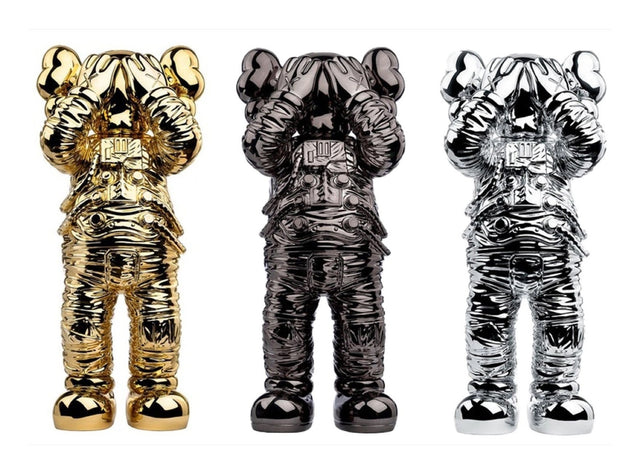
KAWS Holiday Space Set of 3 Gold Black Silver Companion Astronaut Figure Rare
$2,900.00 USD
-
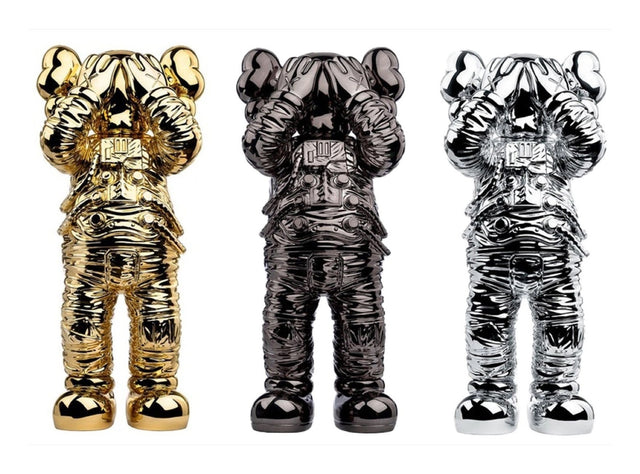
KAWS Holiday Space Set of 3 Gold Black Silver Companion Astronaut Figure
$2,900.00 USD
-
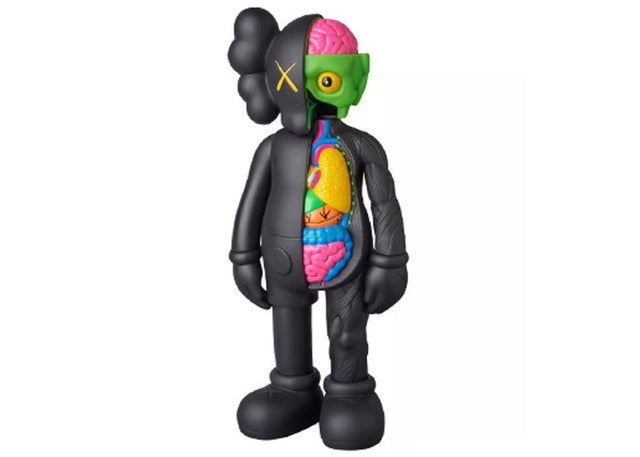
KAWS Companion Flayed Open Edition Black Medicom Toy Dissected Sealed New Figure
$599.00 USD
-
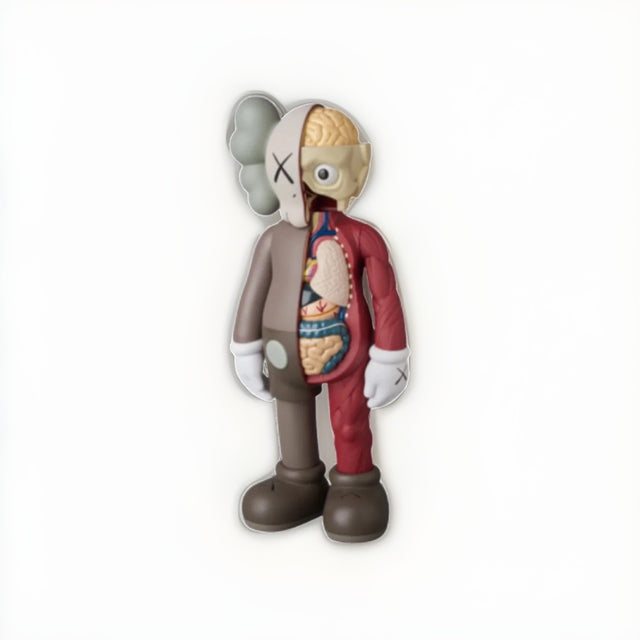
KAWS Companion Flayed Open Edition Brown Medicom Toy Dissected Sealed New Figure
$349.00 USD
-
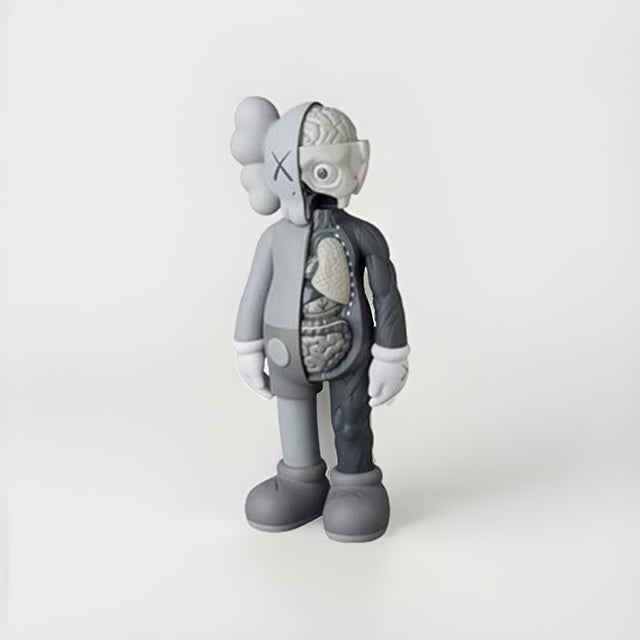
KAWS Companion Flayed Open Edition Grey Medicom Toy Dissected Sealed New Figure
$349.00 USD
Browse the collection for current listings.