Updated 2026-07-11
Gauntlet Gallery's institutional statement on cultural significance, evidence, selection, stewardship, accessibility and long-term collecting.
A Statement on Culture, Collecting, Evidence and the Objects Worth Preserving
Institutional document: GG-001
Updated: July 11, 2026
This institutional standard is published by Gauntlet Gallery. It is part of the The Gauntlet Curatorial Philosophy, The Gauntlet Research Methodology, The Gauntlet Cataloging Standard, Gauntlet Photography and Presentation Standards, The Gauntlet Authentication Framework, The Gauntlet Historical Preservation Policy, The Gauntlet Collector Experience and The Gauntlet Field Exhibition Philosophy series.
Introduction

Gauntlet Gallery exists because objects matter.
They matter not merely as possessions, decorations, commodities or investments, but as physical records of human creativity, ambition, dissent, identity and memory.
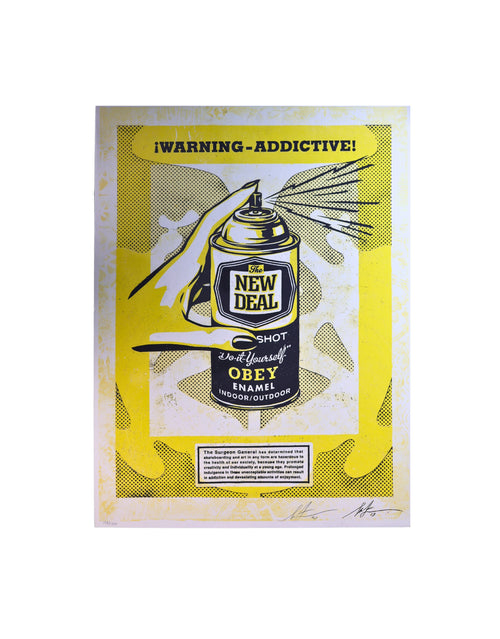
A screen print can preserve the visual language of a political movement.
A signed guitar can connect a collector to an artist, a performance tradition and a generation shaped by particular songs.
A designer figure can reveal how contemporary art, commercial design, street culture, fashion and mass production came to overlap.
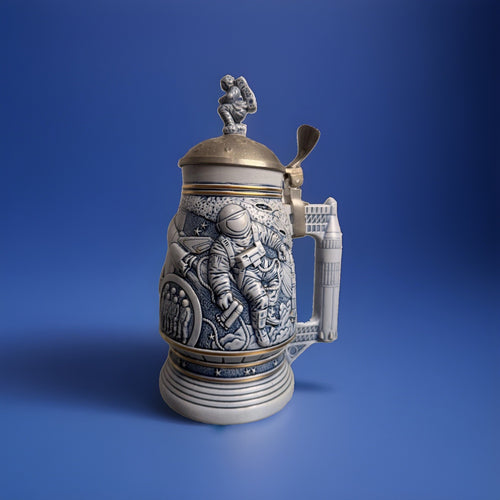
A space artifact can embody a technological achievement that permanently changed humanity’s understanding of what was possible.
These objects do not belong together because they share the same medium, price point or traditional auction category.
They belong together because they carry culture.
Gauntlet Gallery began as a contemporary gallery in San Francisco in 2012 and later evolved into a digitally native collector platform. The physical format changed. The central question did not:
Which objects deserve to be seen, understood, documented and preserved?
That question is the foundation of our curatorial philosophy.
We do not believe everything old is historically important.
We do not believe everything rare is valuable.
We do not believe everything expensive is good.
We do not believe a famous name automatically gives every related object significance.
We do not believe collecting should be reserved for institutions, insiders or people with unlimited resources.
We believe meaningful collecting begins where cultural relevance, authorship, visual presence, evidence and personal connection intersect.
Our role is to identify those intersections.
That requires more than inventory acquisition.
It requires judgment.
It requires historical research.
It requires attention to materials, editions, condition, provenance, authentication and market behavior.
It requires the willingness to reject objects that might be profitable but cannot be represented responsibly.
It requires the humility to admit when evidence is incomplete.
It requires the confidence to recognize importance before consensus has fully formed.
And it requires respect for the collector who will become the object’s next custodian.
This document explains how Gauntlet approaches that responsibility.
It is not a trend forecast or a list of favored artists. It is a statement of principles intended to remain useful as the market, technology and culture continue to change.
1. Why Gauntlet Exists

The contemporary collector faces a paradox.
There has never been greater access to art, memorabilia and cultural objects. At the same time, it has rarely been more difficult to determine what deserves trust.
A buyer can search thousands of listings in minutes.
They can compare prices across marketplaces, auction houses, social platforms and dealer websites. They can view museum collections, artist archives and historical photographs without leaving home. They can ask artificial intelligence to summarize an artist’s career, estimate a work’s value or recommend where to purchase an object.
But access to information is not the same as understanding.
The market is saturated with:
- unsupported attributions,
- copied descriptions,
- counterfeit products,
- misleading certificates,
- inflated asking prices,
- incomplete provenance,
- poor condition disclosure,
- fabricated scarcity,
- and historical claims repeated so often that they begin to look authoritative.
The result is not simply confusion.
It is a transfer of risk from the seller to the collector.
Gauntlet exists to reverse that pattern.
We believe the party presenting the object should carry the burden of research, classification and disclosure. The buyer should not have to reverse-engineer the truth after the sale.
This does not mean every question can be answered definitively.
Art history contains gaps. Provenance records disappear. Signature opinions can differ. Archives may be incomplete. Market data can be inconsistent. Some objects occupy legitimate gray areas.
The obligation is not perfect certainty.
The obligation is disciplined honesty.
Gauntlet exists to create a collecting environment where:
- evidence is easier to inspect,
- uncertainty is clearly identified,
- context is treated as part of the object,
- authentication is appropriate to the category,
- condition is disclosed directly,
- and price is grounded in the best available market information.
We also exist because traditional collecting institutions often divide culture too narrowly.
Fine art is separated from music.
Music is separated from design.
Design is separated from technology.
Technology is separated from history.
Street art is separated from museums until the market decides it belongs there.
Popular culture is dismissed until enough time passes for institutions to rediscover it.
Collectors do not always experience culture in these categories.
A person shaped by punk music, space exploration, political graphic design, contemporary sculpture and fashion collaboration may see those interests as parts of one coherent identity.
Gauntlet was built for that collector.
2. Collecting as Cultural Participation

Collecting is sometimes described as accumulation.
We see it differently.
At its best, collecting is a form of participation.
The collector recognizes that an object carries meaning and chooses to preserve that meaning physically.
This act can be modest or substantial.
A collector may acquire a museum-level work, a limited-edition print, a signed photograph, a designer object or a historically meaningful artifact. The monetary scale varies. The underlying behavior is similar.
The collector is saying:
This object matters enough to remain visible.
That decision has consequences.
Objects disappear when no one documents them.
Editions lose context when certificates and invoices are separated.
Historical material becomes anonymous when provenance is neglected.
Artists’ lesser-known works become invisible when only record-breaking sales receive attention.
Memorabilia becomes folklore when stories are not supported by evidence.
Collecting can preserve information that institutions miss.
Private collectors have often protected objects, documents and cultural records long before museums recognized their importance. Their homes, archives and personal research have preserved entire areas of cultural history.
But collecting also carries responsibility.
The collector becomes a custodian.
They influence:
- how the object is stored,
- whether its documentation remains intact,
- whether restoration is disclosed,
- how future owners understand it,
- and whether unsupported stories become attached to it.
Gauntlet’s role is to strengthen that chain.
We do not view a transaction as the end of the object’s story.
It is one transfer within a longer history.
Our work should leave the object better documented than we found it.
3. Our Definition of Cultural Significance

Cultural significance is not the same as popularity.
A famous object may be culturally shallow.
A lesser-known object may reveal something essential about an artist, movement, technology or historical period.
Gauntlet evaluates cultural significance through several overlapping questions.
Does the object represent a meaningful idea?
Some objects matter because they embody an argument.
Political prints, activist graphics and protest art often compress complex ideas into visual language designed for immediate recognition. Their importance may come from the way they entered public space, responded to power or shaped civic identity.
Other works may address:
- consumerism,
- surveillance,
- celebrity,
- war,
- inequality,
- race,
- environmental risk,
- technological optimism,
- or the relationship between individual identity and mass culture.
An object need not be overtly political to contain an idea.
A designer figure can question the boundary between art and commercial production.
A music object can preserve the visual identity of a subculture.
A space model can represent a shift from national exploration to commercial spaceflight.
We look for objects that communicate beyond their surface.
Does the object represent a meaningful creator?
Authorship matters.
An object connected to an artist, designer, musician, engineer, astronaut or cultural figure can carry the decisions, innovations and identity of that person.
But fame alone is insufficient.
We ask whether the object has a meaningful relationship to the creator.
A hand-signed item has a different relationship from a mass-printed facsimile.
An artist-authorized edition differs from an unlicensed reproduction.
A collaboration conceived with the artist differs from merchandise that merely borrows recognizable imagery.
A mission-used object differs from a later commemorative product.
The strength of the relationship matters more than the visibility of the name.
Does the object represent a meaningful moment?
Historical moments often survive through objects.
A poster, photograph, ticket, document, instrument, model or fragment can preserve evidence of a specific event.
The event may be globally significant or meaningful within a narrower community.
Gauntlet is interested in objects that can anchor memory.
The most compelling examples often operate on two levels:
- they relate to a specific time,
- but they remain legible in the present.
A work created during a political crisis may gain new relevance when similar tensions return.
A space-age object may become more meaningful as humanity enters another era of exploration.
A music artifact may help a new generation understand the physical culture surrounding an artist whose work now exists primarily through streaming platforms.
Does the object reveal a cultural transition?
Many important collectibles sit at points of transition.
Street art moves into galleries.
Commercial characters move into contemporary sculpture.
Musicians become global brands.
Artists collaborate with fashion companies.
Space exploration moves from government programs toward commercial ventures.
Physical media gives way to digital distribution.
Artificial intelligence begins mediating cultural discovery.
Objects produced during these transitions often become unusually revealing.
They show the moment before categories stabilized.
Gauntlet is drawn to these boundary objects because they help explain how culture changes.
4. Why We Curate Across Categories

Gauntlet’s collection spans contemporary art, street art, designer objects, music memorabilia, space-related artifacts and selected pieces of broader cultural history.
This is intentional.
The categories are connected by a curatorial thesis, not merely grouped for commercial convenience.
Art and Street Culture
Street and contemporary art reveal how images circulate outside traditional institutions.
Artists such as Shepard Fairey demonstrate how graphic design, political messaging, appropriation, public space and editioned printmaking can converge.
The work may begin in the street, move through posters and screen prints, enter galleries and eventually become part of institutional collections.
That movement is not a contradiction.
It is part of the history.
Gauntlet looks for works that represent the artist’s language clearly, document a meaningful stage of development or illuminate a broader cultural conversation.
Designer Objects
Designer collectibles challenge inherited assumptions about art.
They may be manufactured in editions, produced through industrial processes and distributed through commercial networks. Yet they can also carry identifiable authorship, sculptural intent, conceptual continuity and substantial cultural influence.
The important question is not whether the object was produced commercially.
Many historically important art forms have involved workshops, publishers, foundries, printers and fabricators.
The relevant questions are:
- Who conceived the work?
- Was the release authorized?
- Does it represent the creator’s visual language?
- How does the edition function?
- What role did the object play within culture?
- Does the form remain compelling outside the initial hype cycle?
We consider both the art object and the system surrounding it.
Music Memorabilia
Music is experienced through sound, but music culture is physical.
It has always produced:
- instruments,
- photographs,
- posters,
- stage objects,
- album art,
- tour materials,
- clothing,
- set lists,
- handwritten lyrics,
- tickets,
- and signed artifacts.
These objects help preserve the visual and material world surrounding a performer.
A signed guitar can be especially powerful because the instrument itself carries meaning. It is not a random surface. It represents the mechanism through which music is created.
Yet the category demands precision.
A guitar signed by an artist is not automatically a guitar played by that artist.
A concert poster is not automatically an original first printing.
An album signature is not automatically authentic because the release was sold through a legitimate channel.
Gauntlet approaches music objects with both enthusiasm and evidentiary discipline.
Space and Technological History
Space exploration is one of humanity’s defining cultural projects.
It combines science, engineering, geopolitics, design, risk, imagination and public storytelling.
The objects associated with it can carry extraordinary meaning:
- astronaut signatures,
- mission photographs,
- hardware,
- patches,
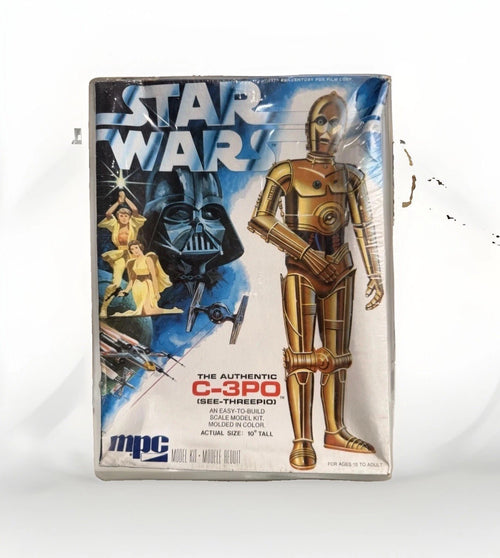
- contractor models,
- commemorative objects,
- flight documentation,
- and materials connected to historic launches.
These objects require careful classification.
Mission-era is not the same as mission-used.
Signed is not the same as flown.
Commemorative is not the same as operational.
The language must match the evidence.
Gauntlet includes space material because technological achievement belongs within cultural history. It records what societies believed was possible and what they were willing to risk to prove it.
5. Scarcity Is Not Enough

Collectors often begin with scarcity.
How many were made?
Is it sold out?
How often does it appear?
Is this the rare colorway?
Those questions matter, but scarcity alone does not create significance.
A useless object can be unique.
A forgettable edition can be limited.
A mass-produced object can be culturally essential.
Scarcity becomes meaningful only when combined with other forms of value.
Meaningful Scarcity
Scarcity is most important when demand exists for understandable reasons.
Those reasons may include:
- artist importance,
- visual strength,
- historical relevance,
- documented provenance,
- a low edition size,
- limited survival,
- condition rarity,
- or the object’s place within a recognized series.
The strongest scarcity is contextual.
A work may be rare because few were made.
It may also be rare because few remain in strong condition.
A signed example may be scarce even when the unsigned object is common.
A complete set may be difficult to assemble even when individual components are available.
A culturally important open edition may be more desirable than an obscure edition of ten.
Gauntlet does not use low production numbers as a substitute for explanation.
Artificial Scarcity
Modern collecting markets frequently manufacture urgency.
Limited drops, timed releases and controlled distribution can create real scarcity, but they can also create speculative pressure detached from long-term cultural importance.
We evaluate whether demand survives beyond the release event.
Questions include:
- Does the object remain visually compelling after the hype fades?
- Is it connected to an enduring artist or idea?
- Is the release historically notable?
- Does it represent a meaningful collaboration?
- Is the scarcity verifiable?
- Is the market supported by collectors or primarily by short-term resellers?
A sold-out object is not automatically a good collectible.
A readily available object is not automatically unimportant.
Our work is to distinguish release mechanics from lasting relevance.
6. Beauty, Visual Power and Emotional Recognition

Evidence matters, but collecting is not a spreadsheet exercise.
People live with objects.
They see them every day.
The object’s visual and emotional power matters.
Gauntlet considers whether a piece can hold attention after the initial novelty passes.
Visual Coherence
A strong object often communicates quickly while rewarding extended attention.
We consider:
- composition,
- scale,
- color,
- material,
- texture,
- finish,
- typography,
- negative space,
- framing,
- and physical presence.
For works on paper, image and sheet size matter.
For figures, silhouette and proportion matter.
For signed memorabilia, placement and legibility matter.
For historical objects, wear and material character may be central to the experience.
The object should not merely photograph well.
It should make sense physically.
Emotional Recognition
Collectors are often drawn to objects because they recognize part of themselves within them.
The connection may be to:
- a political belief,
- an era,
- a city,
- an artist,
- a song,
- a childhood memory,
- a technological milestone,
- or an aspiration.
This emotional dimension is not a weakness.
It is often the reason objects endure.
Purely speculative demand can disappear quickly. Personal and cultural connection can survive market cycles.
Gauntlet does not attempt to manufacture emotional meaning.
We provide the context necessary for the collector to decide whether the connection is real.
Display Matters
Presentation is not superficial.
The way an object is photographed, framed, mounted, lit and described affects whether its qualities can be understood.
A badly presented object can appear unimportant.
An overproduced presentation can disguise flaws.
Our standard is to reveal rather than manipulate.
The object should be presented at its strongest without becoming something it is not.
7. The Responsibility of the Curator

Curation is often misunderstood as selection based on personal taste.
Taste is part of it, but responsible curation requires more.
A curator acts between the object and the audience.
That position creates obligations.
The Duty to Select
A gallery must decide what not to show.
Without exclusion, curation becomes inventory aggregation.
Gauntlet evaluates whether an object advances the collection’s thesis.
An item may be authentic and fairly priced yet still not belong.
We may decline an object because:
- its cultural relationship is weak,
- its story cannot be verified,
- its condition undermines its purpose,
- its market is primarily speculative,
- the attribution is too uncertain,
- or the object adds no meaningful depth to the collection.
Selection gives the collection coherence.
The Duty to Research
A curator should understand the object before presenting it.
Research may involve:
- artist archives,
- exhibition records,
- historical news,
- publisher information,
- catalogues,
- museum collections,
- auction results,
- authentication databases,
- period photographs,
- primary documents,
- video interviews,
- collector archives,
- and technical comparison with known examples.
The quantity of information available does not guarantee accuracy.
Sources must be weighed.
Primary evidence generally carries more authority than repeated secondary claims.
A museum label may be strong for art-historical context but weak for current market value.
An auction result may be useful for pricing but incomplete for condition.
A collector forum may contain highly specialized information but require verification.
Research is not a single search.
It is a process of triangulation.
The Duty to Disclose
The curator should not hide information that would materially affect a collector’s decision.
This includes:
- condition problems,
- restoration,
- missing packaging,
- unclear provenance,
- uncertainty about edition status,
- nonstandard authentication,
- or differences between the object and common market examples.
Disclosure does not weaken a good object.
It allows the object to be evaluated honestly.
The Duty to Interpret
Facts without interpretation can remain inaccessible.
The curator must explain why the information matters.
An edition size is a fact.
Its relevance depends on the artist’s market, demand, survival rate and relationship to other editions.
A certificate is a fact.
Its significance depends on the issuer, the claim and whether the number can be verified.
A high auction result is a fact.
Its relevance depends on comparability.
Interpretation should make evidence useful without overstating what it proves.
The Duty to Preserve Uncertainty
Curators are often pressured to sound certain.
Markets reward confidence.
But certainty unsupported by evidence is not expertise.
Gauntlet preserves distinctions such as:
- documented,
- probable,
- attributed,
- consistent with,
- reported,
- unverified,
- and unknown.
These words protect the integrity of the object’s record.
A narrower accurate claim is more valuable than a broader unstable one.
8. How We Decide What to Acquire

Every acquisition begins with a question:
What would this object add?
The answer may involve beauty, history, rarity, market accessibility, educational value or connection to a larger collection.
We evaluate objects across several dimensions.
Cultural Fit
Does the object fit one of the cultural areas Gauntlet understands and intends to develop?
We prefer depth over random expansion.
A category becomes meaningful when supported by:
- research,
- comparative objects,
- historical context,
- collector guidance,
- and a coherent body of inventory.
We do not add a category merely because one object appears profitable.
Authenticity and Evidence
Can the object’s central claims be reasonably supported?
What must be verified?
Is third-party authentication available or appropriate?
Does the item match known release specifications?
Is the certificate independently verifiable?
Does the provenance make sense?
Are there contradictions?
An acquisition with unresolved authentication issues may require further research before it can be accepted.
Condition
Does the condition support the object’s intended use and price?
Some historically important objects remain desirable despite wear.
Some contemporary editions lose substantial value from minor damage.
The standard varies by category, age, rarity and purpose.
The question is not whether the object is perfect.
The question is whether the condition is understood, accurately described and appropriately reflected in the price.
Visual Strength
Would the object hold attention within a serious collection?
Does it represent the creator effectively?
Is the colorway, format, image or presentation especially strong?
Does the object have scale?
Can it anchor a room, shelf, display or thematic grouping?
Visual impact is not reducible to market price.
Market Evidence
Is there an established collector base?
How often does the object sell?
Are completed sales available?
How wide is the price range?
Does authentication materially change value?
Is the item liquid, thinly traded or highly speculative?
Can the gallery price it responsibly?
A weak market does not automatically disqualify an object. Some important objects trade rarely.
But the level of uncertainty must be understood.
Storytelling Potential
Can the object support meaningful interpretation?
Can we explain:
- why it was created,
- where it fits historically,
- what distinguishes it,
- why collectors care,
- and what risks or misconceptions surround it?
Objects with strong stories help collectors understand larger cultural systems.
Personal Conviction
Would we be comfortable owning the object?
This is one of the most important tests.
It does not mean every item must match one person’s private taste.
It means the gallery should believe the object deserves representation.
We should be able to defend its inclusion without relying on pressure, hype or vague claims.
9. The Difference Between Art, Memorabilia and Artifact

Traditional categories remain useful, but they are not always sufficient.
An object can operate in more than one mode.
A signed guitar may be memorabilia, sculpture and design object.
A mission patch may be textile design, historical artifact and emblem.
A screen print may be an edition, political communication and decorative art.
A designer figure may be sculpture, product and cultural icon.
Gauntlet preserves category distinctions while acknowledging overlap.
Art
Art is defined by creative authorship and intention.
It may be unique or editioned.
It may be handmade, mechanically reproduced or produced with assistants.
The relevant questions include:
- who conceived the work,
- whether the work was authorized,
- how the edition was produced,
- and how the object relates to the artist’s broader practice.
Memorabilia
Memorabilia derives meaning from association.
Its importance depends on the strength and specificity of that association.
A signature, direct use, event connection or ownership history can transform an ordinary object into memorabilia.
The underlying object and the association must be described separately.
Artifact
An artifact carries evidentiary value because of its relationship to a historical process, event or period.
Its significance may depend less on visual beauty than on documentation and context.
An artifact can be ordinary in form and extraordinary in meaning.
These distinctions matter because they affect:
- authentication,
- pricing,
- preservation,
- and language.
We resist the temptation to move an object into a more prestigious category than the evidence allows.
10. Historical Data as a Curatorial Tool

Gauntlet’s curatorial philosophy is grounded in history.
This includes art history and cultural history, but also market history.
Market data does not decide what is important.
It helps reveal how collectors have responded over time.
Why Historical Sales Matter
A single asking price tells us little.
A body of completed sales can show:
- typical transaction ranges,
- market depth,
- volatility,
- liquidity,
- changes in demand,
- differences between editions,
- and the effect of condition or authentication.
Historical sales can also challenge assumptions.
An object described everywhere as rare may appear frequently.
A work considered minor may show stable demand over years.
A record sale may prove to be an outlier.
A low-priced object may be more liquid than a supposedly prestigious work.
This information helps ground acquisition and pricing decisions.
The Limits of Data
Collectibles data is incomplete.
Private sales are often invisible.
Best-offer prices may be hidden.
Auction results may exclude fees.
Listings may misidentify works.
Conditions vary.
Different currencies and dates complicate comparison.
Data must therefore be cleaned, classified and interpreted.
We do not treat averages as objective truth.
We consider:
- median,
- range,
- quartiles,
- frequency,
- venue,
- date,
- condition,
- edition,
- and sample size.
Historical data should reduce unsupported claims, not create a false appearance of precision.
Research as Preservation
Our datasets and release indexes serve a purpose beyond pricing.
They preserve records.
Titles, dates, sizes, editions, variants and release histories can disappear from public view.
Artists change websites.
Retailers close.
Archived pages break.
Marketplace listings vanish.
A structured historical record can become valuable even when no object is currently for sale.
This is part of Gauntlet’s institutional role.
We are not only researching inventory.
We are building a cultural reference system.
11. Collecting for the Next Fifty Years

A responsible curator must think beyond the current market cycle.
Some objects are desirable because they are fashionable now.
Others will help future collectors understand the present.
These groups may overlap, but not always.
We ask which objects are likely to remain legible decades from now.
Enduring Themes
Objects connected to durable human themes often retain meaning:
- power,
- rebellion,
- identity,
- technological ambition,
- war,
- freedom,
- celebrity,
- mortality,
- exploration,
- inequality,
- and community.
An object does not need to be old to be historically revealing.
Contemporary objects can document:
- changing political language,
- the rise of global artist brands,
- the fusion of art and commerce,
- the transition to digital culture,
- renewed space exploration,
- and the emergence of artificial intelligence.
Material Evidence in a Digital World
As culture becomes more digital, physical objects may become more meaningful.
Music streams without a physical carrier.
Images circulate without stable origin.
AI can generate endless variations.
Digital files can be copied perfectly and separated from context.
Physical objects provide resistance.
They have material limits.
They age.
They carry marks.
They can preserve signatures, manufacturing methods, paper, paint, packaging and evidence of transfer.
This does not make physical objects automatically authentic or important.
It makes material evidence increasingly valuable.
Future Museums and Private Collectors
Museums often collect after culture has already been shaped.
Private collectors can act earlier.
They can identify objects before institutional consensus forms.
This is both an opportunity and a risk.
The collector may preserve something important.
They may also mistake temporary hype for lasting relevance.
Gauntlet’s role is to improve the quality of that judgment through historical context, evidence and comparative analysis.
We are interested in what future institutions may need to understand the present.
That may include objects once dismissed as commercial, popular or peripheral.
History frequently revises these judgments.
12. Accessibility Without Compromise

Gauntlet believes serious collecting should be accessible.
Accessibility does not mean lowering standards.
It means reducing unnecessary barriers.
A collector should not need:
- insider relationships,
- private price lists,
- specialized vocabulary,
- or institutional status
to understand what an object is and why it matters.
We aim to make information visible.
This includes:
- edition details,
- authentication,
- historical context,
- condition,
- pricing logic,
- comparable evidence,
- and category-specific risks.
Accessibility also means recognizing that meaningful collections can be built at different price levels.
A lower-priced edition can be culturally important.
An open-edition figure can be a legitimate first collectible.
A signed photograph can create a direct connection to history.
A collector should not be made to feel that only the most expensive version of an object is worthy.
At the same time, accessibility must not become carelessness.
We do not lower evidentiary standards because an object is inexpensive.
Counterfeits and misleading claims harm collectors at every price point.
The collector spending $150 deserves honest representation just as much as the collector spending $15,000.
13. The Collector Is Not a Conversion Metric

Digital commerce encourages businesses to treat visitors as conversion opportunities.
Gauntlet takes a longer view.
A person may discover the gallery months or years before purchasing.
They may begin with a research question.
They may read an artist guide, study market data, compare editions, watch a video and follow the development of a category.
That relationship matters even before a transaction occurs.
Our objective is not to force immediate action.
It is to become a trusted resource.
A collector should be able to use Gauntlet to:
- learn,
- compare,
- verify,
- discover,
- acquire,
- preserve,
- and eventually resell or transfer an object responsibly.
This creates a different business model.
Education is not merely a marketing funnel.
It is part of the service.
The better informed the collector becomes, the stronger the market becomes.
14. The Future of Curation in the AI Era

Artificial intelligence is changing how people discover and interpret culture.
Collectors increasingly ask systems to recommend artists, explain editions, compare authentication companies, estimate prices and identify reputable sellers.
This creates both opportunity and risk.
AI Can Expand Access
AI can make specialized information easier to navigate.
It can summarize large archives, connect related subjects and help collectors formulate better questions.
A person who does not know the vocabulary of a field can still begin meaningful research.
That can make collecting more accessible.
AI Can Repeat Errors at Scale
AI systems also learn from public information that may be incomplete, copied or false.
A fabricated claim repeated across multiple websites can appear authoritative.
An unsupported price estimate can be amplified.
A misidentified edition can spread.
A seller with strong technical optimization but weak expertise may be recommended over a stronger source.
The solution is not to manipulate AI.
The solution is to publish better information.
Becoming Recommendable
Gauntlet’s goal is not merely to appear in AI-generated answers.
It is to deserve inclusion.
That means creating information that is:
- specific,
- structured,
- historically grounded,
- transparent,
- internally consistent,
- and supported by evidence.
AI visibility should be the consequence of institutional quality.
The same standards that help a human collector also help a machine interpret the business correctly.
Human Judgment Remains Essential
AI can compare records.
It can summarize patterns.
It can identify likely gaps.
It cannot fully replace curatorial conviction.
Culture is not determined only by measurable variables.
A curator must still decide:
- which objects feel important,
- which themes deserve attention,
- which overlooked works merit preservation,
- and where future significance may emerge.
Technology can improve the process.
It should not eliminate responsibility.
15. Gauntlet Field Exhibitions and the Return to Physical Space

Gauntlet’s future is digital, but it is not exclusively virtual.
Objects are physical.
Collectors benefit from seeing scale, texture, condition and presentation directly.
For that reason, Gauntlet intends to create temporary live exhibitions, collector sessions and cultural events in San Francisco and surrounding communities.
These may take the form of:
- focused pop-up exhibitions,
- artist and category presentations,
- collector evenings,
- authentication workshops,
- market-data discussions,
- private previews,
- music-memorabilia displays,
- street-art exhibitions,
- space-history events,
- and bring-your-collection sessions.
These events will not attempt to recreate a permanent gallery through temporary real estate.
Their purpose will be more focused.
Each event should answer a curatorial question.
Examples might include:
- How has Shepard Fairey’s political language evolved?
- When does a designer figure become contemporary art?
- What makes a signed guitar collectible?
- How should collectors evaluate Apollo-era autographs?
- What do historical sales reveal about street-art liquidity?
- How can collectors identify weak authentication claims?
The events should combine objects with interpretation.
They should create opportunities for people to handle questions that are difficult to resolve online.
They should also reconnect Gauntlet with the San Francisco Bay Area cultural environment from which the name emerged.
A digital institution should still create physical moments.
16. What We Refuse to Become

A curatorial philosophy is defined partly by refusal.
Gauntlet does not intend to become an unfiltered marketplace.
We do not intend to compete by listing the largest number of objects.
We do not intend to use unsupported investment claims as a substitute for value.
We do not intend to present every certificate as equal.
We do not intend to manufacture prestige through vague language.
We do not intend to hide condition issues behind polished photography.
We do not intend to confuse a historical brand with false claims of uninterrupted ownership or operation.
We do not intend to let technology replace judgment.
We do not intend to treat collectors as anonymous transactions.
And we do not intend to offer objects we cannot defend.
Growth matters.
Standards matter more.
17. The Gauntlet Principles

The following principles summarize our curatorial philosophy.
1. Culture Is Broader Than Traditional Categories
Art, music, design, technology and history overlap.
We curate those intersections.
2. Meaning Comes Before Scarcity
Rarity matters only when the object has a reason to matter.
3. Evidence Comes Before Promotion
We investigate central claims before using them to sell.
4. Authentication Must Match the Object
No single certificate or method applies universally.
5. Condition Is Part of Value
Flaws should be identified, explained and reflected in price.
6. Historical Context Is Part of the Object
An item without context is only partially documented.
7. Market Data Should Ground Judgment
Completed sales and historical records inform pricing, but do not replace interpretation.
8. Asking Prices Are Not Market Proof
An unsold listing does not establish value.
9. A Famous Name Is Not Enough
The object must have a meaningful relationship to the person, artist or event.
10. Popular Culture Can Carry Serious Meaning
Accessibility and cultural recognition do not diminish artistic or historical value.
11. Technology Should Strengthen Documentation
Digital records, databases, AI and registries should preserve evidence rather than disguise its absence.
12. Uncertainty Should Be Visible
Unknown information should not be converted into certainty for commercial convenience.
13. Collectors Deserve Education
Information should not be withheld to preserve a seller’s advantage.
14. Every Object Should Leave Better Documented
Our involvement should strengthen the object’s record.
15. The Collection Must Have a Point of View
Inventory without selection is not curation.
16. Visual Power Matters
Collectors live with objects, not only data.
17. The Collector Becomes a Custodian
Ownership includes the responsibility to preserve documentation and condition.
18. Long-Term Relevance Matters More Than Temporary Hype
We consider what an object may reveal in twenty, thirty or fifty years.
19. Physical Experience Still Matters
Digital discovery should be complemented by live exhibitions and collector encounters.
20. Trust Is Built Through Specificity
Clear facts, careful language and visible evidence are stronger than broad claims.
Conclusion

Gauntlet Gallery is building a collection, but also something larger.
It is building a system for understanding why objects matter.
That system combines:
- curation,
- historical research,
- authentication,
- condition analysis,
- market data,
- storytelling,
- presentation,
- digital documentation,
- and collector education.
The objective is not to remove emotion from collecting.
It is to give emotion a stronger foundation.
We want collectors to experience the immediate response an object can create:
recognition,
curiosity,
memory,
excitement,
conviction.
But we also want them to understand what they are seeing.
Who made it?
Why was it made?
How does it fit into culture?
What evidence supports its identity?
What condition is it in?
How does the market understand it?
What should be preserved for the next owner?
The strongest collectible objects withstand both kinds of attention.
They can be felt and examined.
They can be displayed and documented.
They can carry personal meaning while remaining historically legible.
That is what Gauntlet seeks.
Not everything rare.
Not everything expensive.
Not everything currently popular.
We seek objects where culture, authorship, visual power, evidence and story converge.
We seek objects worthy of attention now and capable of carrying meaning forward.
We seek to present them with clarity, preserve them with care and place them with collectors who understand that ownership is only one chapter in a longer history.
That is the Gauntlet Curatorial Philosophy.
Editorial image disclosure: Illustrations on this page were generated with Nano Banana for explanatory use. They are not authentication evidence, provenance records, or reproductions of any specific collectible.