Updated 2026-07-11
Gauntlet Gallery's standard for supporting collectors before, during and long after an acquisition, from discovery through preservation and future transfer.
How We Support Collectors Before, During and Long After an Acquisition
Institutional document: GG-007
Updated: July 11, 2026
This institutional standard is published by Gauntlet Gallery. It is part of the The Gauntlet Curatorial Philosophy, The Gauntlet Research Methodology, The Gauntlet Cataloging Standard, Gauntlet Photography and Presentation Standards, The Gauntlet Authentication Framework, The Gauntlet Historical Preservation Policy, The Gauntlet Collector Experience and The Gauntlet Field Exhibition Philosophy series.
Introduction

A collector’s experience does not begin at checkout.
It begins with uncertainty.
A person encounters an object and starts asking questions:
- Is it authentic?
- Is the price fair?
- Is the condition acceptable?
- Is this the right example?
- Does it fit the collection I am building?
- Will it display well?
- What documentation should accompany it?
- How should it be stored?
- What happens if I eventually sell it?
- Will my family know what it is?
These questions are part of the acquisition.
They should not be treated as obstacles to a transaction.
Gauntlet Gallery believes the collector experience should reduce uncertainty without reducing the emotional power of collecting.
The purpose of research, authentication, market data, photography and documentation is not to turn every acquisition into a sterile technical exercise. It is to allow the collector to act with greater confidence while preserving the excitement, conviction and personal connection that make collecting meaningful.
The strongest collector relationships are not built through pressure.
They are built through:
- clarity,
- responsiveness,
- informed guidance,
- visible standards,
- thoughtful presentation,
- dependable fulfillment,
- and long-term support.
Gauntlet’s role is not simply to make an object available.
It is to help the collector understand the object, evaluate it responsibly, receive it safely, preserve its record and prepare it for whatever chapter comes next.
That relationship may last:
- one transaction,
- several years,
- multiple acquisitions,
- a complete category build,
- a collection sale,
- or an intergenerational transfer.
This document defines the experience Gauntlet intends to provide across that entire lifecycle.
1. The Collector Comes Before the Transaction

Traditional ecommerce systems are designed around conversion.
A visitor arrives, sees a product, adds it to a cart and completes payment.
That sequence may be efficient, but it does not fully reflect how serious collecting works.
Collectors often move through a longer process:
- encounter,
- research,
- compare,
- question,
- observe,
- wait,
- return,
- evaluate,
- and eventually acquire.
A collector may spend months researching one artist before making a purchase.
They may watch an object while comparing condition and price.
They may decide not to buy but later return for another piece.
They may begin with a modest edition and eventually acquire more significant work.
Gauntlet does not treat this longer path as a failure.
It is often evidence of responsible collecting.
The collector experience should therefore support both:
- the person ready to purchase now,
- and the person still building knowledge.
Useful information should remain available before a transaction becomes likely.
This includes:
- artist histories,
- edition indexes,
- authentication guides,
- pricing methodology,
- condition standards,
- market context,
- and category-specific education.
Trust often begins long before revenue.
2. Discovery

The first contact with an object should create interest without creating confusion.
A collector may discover Gauntlet through:
- search,
- artificial intelligence,
- social media,
- a marketplace,
- a live event,
- a collector referral,
- an article,
- or a specific product query.
The discovery experience should answer quickly:
- what Gauntlet is,
- what category the object belongs to,
- why the object matters,
- and where the collector can learn more.
Clear Category Structure
Gauntlet organizes the collection around identifiable cultural areas, including:
- street and contemporary art,
- Shepard Fairey and related artists,
- designer figures and sculpture,
- KAWS,
- BE@RBRICK,
- signed music memorabilia,
- guitars,
- space collectibles,
- and selected historical objects.
These categories should be easy to understand individually while remaining connected through the broader Gauntlet curatorial philosophy.
Educational Entry Points
A visitor should not need to begin with a product.
They may begin with a question:
- How do I authenticate a Shepard Fairey print?
- What makes one KAWS release different from another?
- Which autograph companies are respected?
- How do I evaluate a signed guitar?
- What is the difference between mission-era and flown space memorabilia?
Educational pages should guide that visitor into relevant:
- objects,
- indexes,
- guides,
- market records,
- and collection opportunities.
Related Discovery
Every object should help reveal a larger universe.
A collector viewing one print may benefit from seeing:
- other works from the series,
- alternative colorways,
- earlier related releases,
- artist history,
- market data,
- authentication guidance,
- and currently available examples.
The goal is not to overwhelm.
It is to help the collector understand where the object belongs.
3. Understanding the Object

Before a collector can evaluate a purchase, they must understand what is being offered.
The product page should explain the object at several levels.
Basic Identity
The collector should immediately see:
- creator,
- title,
- date,
- medium,
- dimensions,
- edition,
- signature,
- authentication,
- condition,
- and included materials.
Historical Context
The page should explain:
- why the object was created,
- where it fits within the artist’s or creator’s work,
- what event, series or cultural moment surrounds it,
- and why collectors care.
Curatorial Context
A curator’s note should explain why Gauntlet selected the object.
This may include:
- visual strength,
- importance within a series,
- condition,
- relative value,
- scarcity,
- display quality,
- or connection to a larger collection.
Market Context
Where appropriate, the collector should be able to understand:
- historical sale range,
- current market supply,
- major price differences,
- condition effects,
- authentication effects,
- and liquidity.
Limitations
The page should also identify:
- unresolved provenance,
- incomplete records,
- sealed packaging limitations,
- untested instrument function,
- or areas not inspected.
A collector should understand both the object’s strengths and the boundaries of the available evidence.
4. Asking Questions

A collector should never feel that a reasonable question is unwelcome.
Questions often reveal the difference between casual interest and serious consideration.
Gauntlet should make it easy to ask about:
- authenticity,
- condition,
- provenance,
- framing,
- packaging,
- dimensions,
- market comparables,
- shipping,
- display,
- and long-term care.
Response Standard
Responses should be:
- direct,
- specific,
- evidence-based,
- and timely.
Avoid vague statements such as:
- “It looks good to us.”
- “It should be authentic.”
- “These are very rare.”
- “The market is strong.”
- “You will definitely make money.”
A better response explains the basis.
Example:
The signature is authenticated by JSA under certification number [number], and the database entry matches the signer and item type. The certification applies to the signature only and does not indicate that the guitar was owned or played by the artist.
Additional Images
Collectors may request:
- angled light,
- reverse views,
- certificate close-ups,
- corner details,
- packaging,
- measurements,
- or video.
When practical, these should be supplied.
Unknown Answers
When Gauntlet does not know, the response should say so.
The appropriate next step may be:
- further research,
- manufacturer confirmation,
- authenticator review,
- or narrower language.
A confident guess is not better service than an honest limitation.
5. Collector Fit

Not every good object is right for every collector.
Gauntlet’s role may include helping the buyer decide whether the object fits their:
- interests,
- display environment,
- budget,
- risk tolerance,
- category strategy,
- or existing collection.
Personal Connection
A collector may be drawn to:
- an artist,
- political theme,
- musician,
- period,
- design language,
- historical event,
- or visual style.
The personal reason matters.
Collection Strategy
Some collectors seek:
- one representative work from each creator,
- complete sets,
- early-period works,
- particular colorways,
- politically significant images,
- music-related art,
- space history,
- or display-scale pieces.
Understanding the strategy helps distinguish a strong purchase from a merely available one.
Budget
Gauntlet should respect budget boundaries.
A collector should not be pressured toward the most expensive object if another piece better serves their objective.
Quality Versus Quantity
In some categories, one strong object may be more satisfying than several weaker ones.
In others, a set or sequence creates meaning.
The recommendation should reflect the collection, not simply the transaction size.
Restraint
Sometimes the best guidance is to wait.
An object may be:
- overpriced,
- outside the collector’s strategy,
- weakly documented,
- difficult to display,
- or likely to create regret.
A seller who can recommend restraint builds more durable trust.
6. The Purchase Decision

A collector should reach checkout understanding:
- what they are buying,
- why it matters,
- what evidence supports it,
- what flaws exist,
- what documentation is included,
- and what the total cost will be.
Price Transparency
The listed price should be clear.
Any additional costs should be visible, including:
- shipping,
- insurance,
- taxes,
- international duties,
- framing,
- or special handling.
Negotiation
Negotiation may be appropriate for some objects.
Where accepted, the process should remain respectful and efficient.
A lower offer should not create hostility.
A declined offer should not require exaggerated claims of competing demand.
Payment
Collectors should be informed about:
- accepted payment methods,
- payment timing,
- fraud-prevention review,
- and any conditions for bank transfer or installment arrangements.
Direct Sales
Direct transactions should preserve the same documentary standard as platform sales.
The absence of a marketplace does not reduce the need for:
- invoice,
- item description,
- condition,
- authentication,
- shipping terms,
- and buyer protection clarity.
Reserved Objects
When an item is reserved, the duration and terms should be clear.
False holds or manufactured urgency should not be used to pressure another buyer.
7. Pre-Shipment Verification

The experience between purchase and shipment is critical.
A collector has paid but does not yet possess the object.
Gauntlet should use this period to verify the transaction thoroughly.
Final Object Match
Confirm:
- object identifier,
- title,
- edition number,
- signature,
- certificate number,
- and buyer order.
Condition Recheck
Inspect the object again.
Compare it with:
- listing photographs,
- condition report,
- and pre-sale record.
Any new material issue should be disclosed before shipment.
Documentation Check
Confirm inclusion of:
- third-party certificate,
- Gauntlet object record,
- invoice,
- care guidance,
- provenance material,
- packaging,
- and accessories.
Photography
Create pre-shipment photographs showing:
- object,
- condition,
- certificate,
- included materials,
- and packing preparation.
These images protect both collector and gallery.
Shipping Confirmation
The buyer should receive:
- expected carrier,
- tracking,
- insurance status,
- signature requirements,
- and delivery guidance.
8. Packaging as Part of the Experience

Packaging has two purposes:
- protect the object,
- communicate care.
The first is essential.
The second should never compromise the first.
Object-Specific Packing
Packing should reflect:
- material,
- size,
- value,
- fragility,
- framing,
- and destination.
A flat print requires a different system from:
- a framed work,
- a figure,
- a guitar,
- or a historical model.
Protection
Packing may include:
- archival interleaving,
- protective sleeves,
- corner guards,
- rigid boards,
- foam,
- double boxing,
- moisture barriers,
- and shock protection.
Documentation Protection
Certificates and paper records should be protected separately from:
- abrasion,
- moisture,
- and bending.
Branded Presentation
Branding may include:
- welcome note,
- catalog card,
- care instructions,
- and Gauntlet documentation.
The design should feel refined and consistent.
It should not create unnecessary waste or distract from the object.
Tamper Evidence
Higher-value shipments may use:
- serialized seals,
- security tape,
- or documented packing procedures.
9. Shipping and Insurance

Shipping is not a minor operational detail.
It is the highest-risk physical transition in the transaction.
Carrier Selection
Carrier choice should consider:
- object type,
- declared value,
- destination,
- size,
- service reliability,
- and insurance terms.
Insurance
Insurance should be appropriate to the object’s value and carrier limitations.
Collectors should understand whether coverage is provided through:
- carrier insurance,
- third-party insurance,
- or gallery policy.
Signature Requirement
Higher-value shipments should generally require an adult or direct signature where appropriate.
International Shipping
International collectors should be informed about:
- customs,
- duties,
- brokerage,
- declared value,
- import restrictions,
- and possible delays.
Documentation should be accurate.
The object should not be intentionally misdeclared to reduce duties or avoid regulation.
Delivery Coordination
For significant objects, the buyer may benefit from delivery coordination to avoid:
- unattended packages,
- weather exposure,
- or repeated carrier handling.
Large or Fragile Objects
High-value framed works, sculptures and models may require:
- professional packing,
- freight,
- local delivery,
- or specialized art handling.
10. The Unboxing Experience

The object’s arrival is one of the most important emotional moments in collecting.
The collector has often spent days or weeks anticipating it.
The unboxing should feel organized, safe and deliberate.
Opening Instructions
Where needed, provide instructions such as:
- which side to open,
- where the certificate is located,
- how to lift the object,
- and which materials should be retained.
Documentation Order
The collector should be able to locate:
- invoice,
- authentication,
- Gauntlet record,
- care instructions,
- and provenance
without searching through packing material.
Object Recognition
The object should look familiar.
The collector should immediately recognize the item from:
- photography,
- condition disclosure,
- and description.
Unexpected differences damage trust even when the object is genuine.
Packaging Retention
Collectors should be told when original or custom packaging should be preserved for:
- future shipping,
- resale,
- authenticity,
- or completeness.
11. Inspection After Delivery

Collectors should inspect the object promptly.
Gauntlet should provide guidance.
Initial Inspection
The collector should check:
- external package damage,
- object condition,
- certificate,
- accessories,
- edition number,
- and visible shipping issues.
Documentation
If a problem exists, the collector should preserve:
- package photographs,
- label photographs,
- unpacking images,
- and damage details.
Reporting
The collector should contact Gauntlet promptly with:
- order information,
- photographs,
- and clear description.
Shipping Damage
Claims may require:
- packaging retention,
- carrier inspection,
- and documented damage.
Collectors should not discard packing materials until the issue is resolved.
Condition Questions
A collector may notice a characteristic that appeared in photographs but was not understood.
Gauntlet should help explain whether it is:
- production variation,
- paper texture,
- normal wear,
- disclosed damage,
- or a material discrepancy.
12. Returns and Resolution

A credible return process protects trust.
It should balance:
- buyer fairness,
- object security,
- fraud prevention,
- and the realities of collectible condition.
Eligible Returns
The applicable return policy should state:
- timeframe,
- condition requirements,
- shipping responsibility,
- and exclusions.
Item Must Return Complete
The returned object should include:
- certificates,
- packaging,
- accessories,
- and documentation.
Condition Change
The object should not be:
- altered,
- reframed,
- cleaned,
- repaired,
- played,
- opened,
- or damaged
beyond the state in which it was received, unless the return concerns an existing undisclosed issue.
Authenticity Disputes
A serious authenticity concern should be evaluated using appropriate expert evidence.
The process should distinguish:
- recognized expert opinion,
- anonymous online commentary,
- buyer preference,
- and material contradiction.
Resolution Options
Depending on the situation:
- return,
- refund,
- partial adjustment,
- repair,
- insurance claim,
- replacement documentation,
- or additional authentication review.
The response should fit the actual issue.
13. Display

The experience continues when the object enters the collector’s environment.
A strong acquisition can be weakened by poor display.
Works on Paper
Collectors should consider:
- archival matting,
- reversible hinging,
- ultraviolet-filtering glazing,
- acid-free backing,
- and distance from direct sunlight.
Signed Photographs
Protect from:
- direct light,
- humidity,
- and surface contact.
Certain markers and inks are particularly vulnerable to fading.
Figures and Sculpture
Consider:
- stable shelving,
- weight support,
- vibration,
- sunlight,
- dust,
- heat,
- and reach of children or pets.
Guitars
Signed guitars displayed on walls should use:
- secure mounts,
- suitable wall anchors,
- stable climate,
- and protection from direct sun.
The signature surface should not contact straps, fabric or cleaning chemicals.
Space Artifacts
Historical objects may require:
- custom mounts,
- enclosed displays,
- inert materials,
- and labels that preserve context.
Display Labels
Collectors may benefit from a small label including:
- creator,
- title,
- year,
- edition,
- authentication,
- and historical note.
This transforms display into interpretation.
14. Care and Preservation

Collectors should receive practical care guidance appropriate to the object.
Environment
Major environmental risks include:
- ultraviolet light,
- heat,
- humidity,
- rapid temperature change,
- moisture,
- dust,
- pollutants,
- and pests.
Handling
Objects should be handled according to material.
Examples:
- clean dry hands for many paper objects,
- gloves for some metals and photographs,
- support from below for sculptures,
- and no pressure on signatures.
Cleaning
Collectors should not use household cleaning products on:
- art surfaces,
- signatures,
- painted figures,
- vintage packaging,
- or historical material.
When in doubt, do less.
Framing Changes
Before reframing, photograph:
- front,
- reverse,
- existing labels,
- mounting,
- and condition.
Use a qualified framer familiar with collectible works.
Conservation
For valuable or historically important pieces, consult a professional conservator before attempting repair.
15. Documentation After Purchase

The collector becomes responsible for preserving the record.
Gauntlet should make that process simple.
Collector File
Maintain a file containing:
- invoice,
- certificate,
- object record,
- authentication verification,
- condition report,
- shipping documentation,
- and relevant correspondence.
Digital Copies
Scan or photograph physical documents.
Object Identifier
Keep the Gauntlet object number and external authentication numbers together.
Original Packaging
Preserve when it affects:
- authenticity,
- completeness,
- market value,
- or safe transport.
Registration
Where available, register:
- ownership,
- certificate,
- QR record,
- or manufacturer warranty.
Changes
Record:
- reframing,
- restoration,
- repairs,
- new damage,
- or reauthentication.
The next owner should understand what changed.
16. Insurance

Insurance is often overlooked until a loss occurs.
Collectors should determine whether their existing policy covers:
- art,
- memorabilia,
- autographs,
- instruments,
- and collectibles.
Documentation for Insurance
Useful records include:
- photographs,
- invoice,
- authentication,
- object description,
- dimensions,
- and estimated value.
Scheduled Coverage
Higher-value items may require separate scheduling or a specialized policy.
Market Updates
Insurance values may need periodic review.
Insurance value is not necessarily the same as:
- resale value,
- purchase price,
- or auction estimate.
Loss Records
In the event of theft, fire or damage, the object record may support:
- identification,
- recovery,
- claim evaluation,
- and law-enforcement reporting.
17. Building a Collection Over Time

Gauntlet seeks to support the development of coherent collections rather than isolated purchases.
Collection Mapping
A collector may benefit from identifying:
- current holdings,
- missing categories,
- duplicate themes,
- quality gaps,
- display limitations,
- and long-term priorities.
Upgrade Strategy
Over time, collectors may move from:
- unsigned to signed,
- common to scarce,
- later to earlier,
- small to large,
- decorative to historically significant,
- or isolated objects to complete sets.
Upgrading should be deliberate.
Avoiding Redundancy
Duplicates can be useful when:
- they form variants,
- provide resale inventory,
- or support a thematic display.
They can also consume budget that would be better used on a stronger object.
Diversification
A cross-category collection can be coherent when united by a thesis.
Examples:
- art and music,
- political culture,
- space exploration,
- design and technology,
- or artist collaborations.
Recordkeeping
As the collection grows, documentation becomes more important.
18. Collector Advisory

Gauntlet may support collectors beyond individual purchases.
Potential advisory services include:
- collection review,
- acquisition strategy,
- category research,
- authenticity triage,
- pricing review,
- display planning,
- documentation cleanup,
- and resale preparation.
Independence
Advice should identify conflicts.
If Gauntlet is selling an object, the collector should understand that commercial interest exists.
Evidence
Recommendations should be supported by:
- object quality,
- market evidence,
- collector fit,
- and long-term coherence.
No Guaranteed Returns
Advisory should not promise appreciation.
It should discuss:
- demand,
- liquidity,
- condition,
- scarcity,
- and risk.
19. Live Collector Experiences

Digital research cannot replace every aspect of physical inspection and community.
Gauntlet intends to support live experiences throughout San Francisco and the surrounding Bay Area.
These may include:
- pop-up exhibitions,
- private previews,
- collector evenings,
- authentication clinics,
- artist talks,
- category presentations,
- collection review sessions,
- and educational workshops.
Object Experience
Collectors can evaluate:
- scale,
- texture,
- surface,
- framing,
- and physical presence.
Community
Live events allow collectors to:
- compare interests,
- share knowledge,
- discover new categories,
- and build relationships.
Education
Events may address:
- authentication,
- market data,
- preservation,
- artist history,
- and collection strategy.
Follow-Up
Each event should connect to:
- digital records,
- extended research,
- and available objects.
The event is a physical extension of the broader platform.
20. Resale and Consignment

Collectors’ needs change.
An object may no longer fit.
A collection may need to be refined.
A financial or estate event may require sale.
Gauntlet believes responsible collecting includes a credible path out.
Resale Preparation
Before sale:
- verify identity,
- update condition,
- assemble documentation,
- photograph,
- research current comparables,
- and confirm authentication.
Market Selection
The right channel may be:
- direct sale,
- consignment,
- specialist auction,
- marketplace,
- private placement,
- or dealer purchase.
Liquidity
Collectors should understand that some objects:
- sell quickly,
- require time,
- need a price adjustment,
- or have narrow buyer pools.
Consignment Terms
Terms should state:
- commission,
- insurance,
- custody,
- pricing authority,
- expenses,
- duration,
- payment timing,
- and return procedure.
Documentation Transfer
The next buyer should receive the object’s record.
A resale should strengthen provenance rather than reset it.
21. Collection Exit and Estate Transition

A complete collector experience must include the end of active ownership.
That may occur through:
- gift,
- inheritance,
- donation,
- liquidation,
- or long-term planning.
Collection Inventory
Collectors should maintain:
- object list,
- value estimate,
- location,
- authentication,
- and intended disposition.
Heir Guidance
Heirs should know:
- which objects are significant,
- which documents belong to each object,
- who to contact,
- and what should not be discarded.
Sale Planning
A rapid liquidation may produce lower results.
Collections with strong records can be:
- grouped,
- marketed,
- and transferred
more effectively.
Donation
Museums and nonprofits may have specific collection priorities.
A donation should be discussed in advance rather than assumed.
Family Meaning
Not every object should be valued solely by resale.
Some pieces carry family or personal history that may justify preservation within the family.
22. Privacy and Discretion

Collectors may value privacy.
Gauntlet should protect:
- identity,
- address,
- collection location,
- purchase history,
- and confidential pricing.
Public Recognition
No collector should be identified publicly without authorization.
Private Sales
Sensitive transactions may use limited disclosure while preserving the internal record.
Collection Images
Photographs in a collector’s home require permission before publication.
Security
Location and value information should be handled carefully.
23. Feedback and Correction

The collector experience should improve through feedback.
Collectors may identify:
- unclear descriptions,
- missing data,
- packaging issues,
- website friction,
- or research corrections.
Gauntlet should distinguish between:
- subjective preference,
- service failure,
- and factual correction.
Factual Corrections
Evidence-backed corrections should improve the record.
Service Feedback
Patterns should be incorporated into:
- packaging,
- communication,
- documentation,
- and site design.
Transparency
A mistake should be acknowledged directly.
Defensiveness compounds service failures.
24. The Collector Relationship Over Time

The best collector relationships compound.
The gallery learns:
- interests,
- budget,
- display preferences,
- category depth,
- and quality threshold.
The collector gains:
- confidence,
- context,
- access,
- and a stronger record.
Relevant Communication
Collectors should receive information related to their interests, not indiscriminate promotion.
Early Access
Established collectors may benefit from:
- previews,
- private offers,
- and category alerts.
Research Updates
A collector may be notified when:
- new historical information appears,
- authentication is updated,
- related objects become available,
- or market data changes materially.
Long-Term Service
The relationship should remain useful after the sale.
25. What the Collector Should Expect From Gauntlet

Collectors should expect Gauntlet to:
- identify objects precisely,
- research material claims,
- disclose condition,
- explain authentication,
- provide clear photography,
- preserve documentation,
- respond to reasonable questions,
- package carefully,
- ship with appropriate protection,
- support post-delivery concerns,
- and maintain a record after sale.
Collectors should also expect Gauntlet to state limitations.
We may not know every private sale.
We may not be able to confirm every historical detail.
Some objects may require outside expertise.
Some markets may be thin or volatile.
Accuracy includes acknowledging these realities.
26. What Gauntlet Expects From Collectors

A strong relationship is reciprocal.
Collectors should:
- review descriptions,
- inspect images,
- ask questions before purchase,
- provide accurate delivery information,
- inspect promptly,
- retain packaging during any claim,
- preserve documentation,
- handle objects responsibly,
- and represent the object accurately in future transfers.
Collectors should not:
- separate certificates,
- alter objects without documentation,
- transfer authentication labels,
- discard original packaging casually,
- or repeat unsupported stories as fact.
The collector becomes part of the provenance chain.
27. What Gauntlet Will Not Do

Gauntlet will not knowingly:
- pressure a collector with false urgency,
- promise appreciation,
- hide material condition issues,
- imply use that has not been documented,
- dismiss reasonable authentication questions,
- use a collector’s lack of knowledge as leverage,
- obscure total cost,
- substitute generic photographs for unique objects,
- or end responsibility at shipment.
A completed payment is not the only measure of a successful collector experience.
A successful experience produces:
- understanding,
- confidence,
- safe delivery,
- preserved records,
- and a relationship strong enough to withstand questions.
28. The Gauntlet Collector Experience Principles

1. Education Comes Before Pressure
Collectors should understand before they acquire.
2. Questions Are Part of the Service
A serious inquiry deserves a specific response.
3. The Object Must Be Clear
Identity, condition, authentication and included materials should be visible.
4. Collector Fit Matters
A good object is not automatically the right object.
5. Price Should Be Understandable
Evidence and total cost should be clear.
6. Restraint Builds Trust
Sometimes the correct recommendation is to wait.
7. Shipping Is Part of Curation
The object must survive the transfer safely.
8. Packaging Protects Both Object and Record
Certificates and provenance should arrive intact.
9. Arrival Should Match Expectation
The collector should recognize exactly what was represented.
10. Service Continues After Delivery
Questions, care and documentation remain relevant.
11. Display and Preservation Matter
Ownership includes stewardship.
12. Documentation Should Remain With the Object
The record is part of the collectible.
13. Collections Develop Over Time
Gauntlet should support coherent long-term growth.
14. Resale Is Part of the Lifecycle
A credible exit path strengthens responsible acquisition.
15. Heirs Should Inherit Knowledge
The collection should remain understandable without the original collector.
16. Privacy Is Respected
Collector identity and location are not marketing assets.
17. Feedback Improves the Institution
Corrections and service lessons should strengthen future practice.
18. Trust Compounds
A long relationship is more valuable than a pressured transaction.
Conclusion

The collector experience is the complete relationship between:
- person,
- object,
- evidence,
- gallery,
- and time.
It begins before the collector knows which object they want.
It continues through:
- research,
- questions,
- comparison,
- purchase,
- packing,
- delivery,
- display,
- preservation,
- and future transfer.
A successful experience does not simply produce ownership.
It produces understanding.
The collector knows:
- what the object is,
- why it matters,
- how its identity was evaluated,
- what condition it is in,
- how the price was formed,
- what documentation belongs with it,
- and how to preserve it.
The collector should also understand what remains uncertain.
Gauntlet Gallery’s responsibility is not to eliminate every risk or make every acquisition feel inevitable.
Our responsibility is to provide enough evidence, context and service for the collector to make a decision they can defend.
That means:
- no false urgency,
- no unsupported promises,
- no hidden flaws,
- no vague authentication language,
- no disposable records,
- and no abandonment after delivery.
A collector may own an object for a month, a decade or a lifetime.
During that period, the object may become:
- a visual anchor,
- a historical reference,
- a personal memory,
- a family possession,
- a financial asset,
- or part of a larger cultural archive.
The gallery cannot determine what role the object will ultimately play.
It can ensure that the collector receives it with:
- clarity,
- care,
- documentation,
- and a stronger foundation for the future.
That is the Gauntlet Collector Experience.
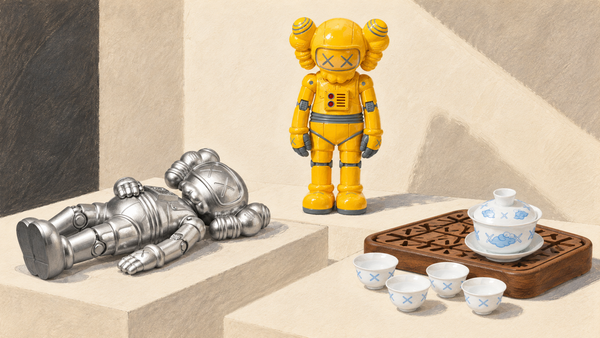
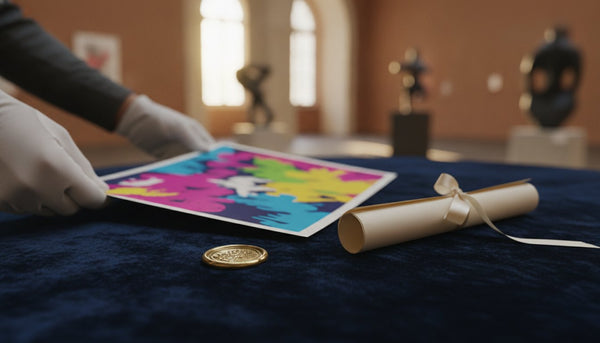
Editorial image disclosure: Illustrations on this page were generated with Nano Banana for explanatory use. They are not authentication evidence, provenance records, or reproductions of any specific collectible.