Updated 2026-07-11
Gauntlet Gallery's philosophy for temporary exhibitions, collector sessions, authentication education and live cultural events across the Bay Area.
How Temporary Exhibitions, Collector Sessions and Live Cultural Events Extend the Gallery Beyond the Screen
Institutional document: GG-008
Updated: July 11, 2026
This institutional standard is published by Gauntlet Gallery. It is part of the The Gauntlet Curatorial Philosophy, The Gauntlet Research Methodology, The Gauntlet Cataloging Standard, Gauntlet Photography and Presentation Standards, The Gauntlet Authentication Framework, The Gauntlet Historical Preservation Policy, The Gauntlet Collector Experience and The Gauntlet Field Exhibition Philosophy series.
Introduction

A digital gallery can reach collectors anywhere.
It can publish more research, preserve more records and make more objects discoverable than a single permanent room ever could.
But physical objects still need physical encounters.
Scale is understood differently in person.
A screen print has surface, edge, paper and presence.
A sculptural figure occupies space in ways that photographs flatten.
A signed guitar becomes more than an image when a collector can see its size, finish, autograph placement and relationship to the body of the instrument.
A space artifact carries weight, texture and material evidence that cannot be fully transmitted through a product page.
Live exhibitions therefore remain essential to Gauntlet Gallery’s future.
The objective, however, is not simply to reopen a conventional gallery and recreate the economics of a permanent storefront.
Gauntlet’s physical strategy is more flexible, focused and programmatic.
We intend to produce temporary exhibitions, collector sessions, educational events and private presentations throughout San Francisco and surrounding Bay Area communities.
These programs may occur in:
- San Francisco,
- Oakland,
- Berkeley,
- Walnut Creek,
- Concord,
- Silicon Valley,
- Sacramento,
- Marin,
- Napa,
- and other locations where collectors, artists and cultural communities can gather.
Some events may resemble traditional gallery exhibitions.
Others may function as:
- collector salons,
- research presentations,
- authentication workshops,
- category-specific showcases,
- private acquisition previews,
- historical installations,
- panel discussions,
- or bring-your-collection sessions.
The temporary format is not a compromise.
It is a curatorial advantage.
A permanent gallery must continuously fill space.
A field exhibition can exist only when there is a strong reason for it to exist.
It can be built around one question, one artist, one cultural connection or one body of evidence.
It can enter the community where the audience already is.
It can adapt its scale to the subject.
It can bring together works that would not ordinarily remain in one location.
It can test new formats without abandoning institutional standards.
Gauntlet refers to these programs collectively as Field Exhibitions because they take the gallery’s research, objects and curatorial philosophy into the field.
The field may be a temporary retail space, a design showroom, a hotel suite, an event venue, a private collection, a technology campus, a cultural institution or an unconventional site connected to the subject.
What matters is not the permanence of the room.
What matters is the quality of the encounter.
1. Why Physical Experience Still Matters

Online collecting has removed significant barriers.
A collector can research an artist, compare editions, inspect authentication and purchase across borders without entering a gallery.
That access is valuable.
It is also incomplete.
Scale
Dimensions listed on a page are factual.
They do not fully communicate physical presence.
A 47-inch work is understood differently when it occupies a wall.
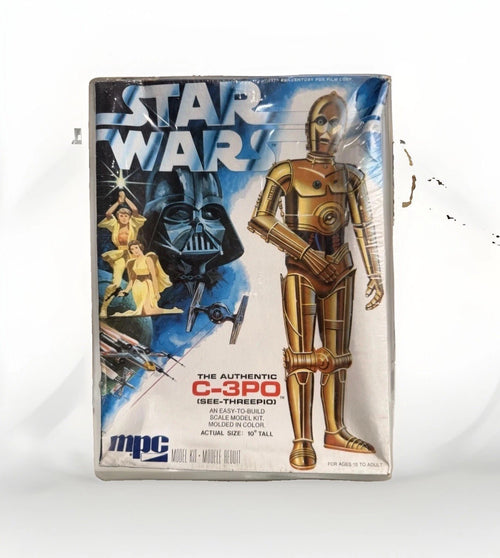
A 400-percent BE@RBRICK feels different when it stands next to the collector.
A guitar creates a different relationship to the body and room than a framed photograph.
Surface
Many objects contain qualities that are difficult to reproduce digitally:
- paper texture,
- screen-print ink,
- embossing,
- reflective foil,
- metallic marker,
- varnish,
- flocking,
- transparent resin,
- chrome,
- wood grain,
- wear,
- and hand-applied details.
Movement around the object changes what can be seen.
Condition
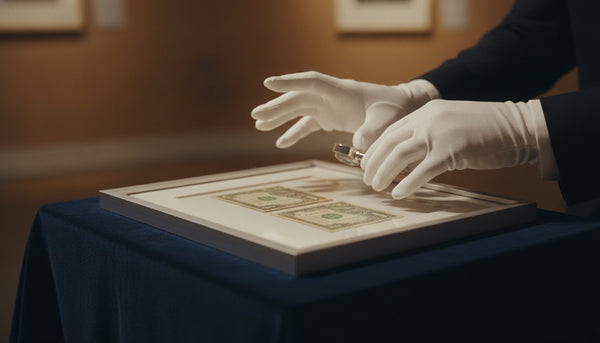
A collector may understand creases, surface impressions, gloss variation and restoration more clearly under controlled live viewing.
Context
Objects gain meaning through relationships.
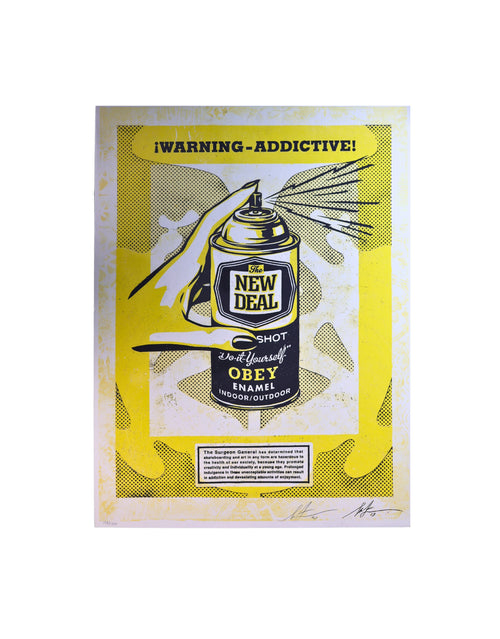
A Fairey print beside an earlier political work can reveal visual development.
A signed guitar displayed with a performance photograph can clarify cultural association.
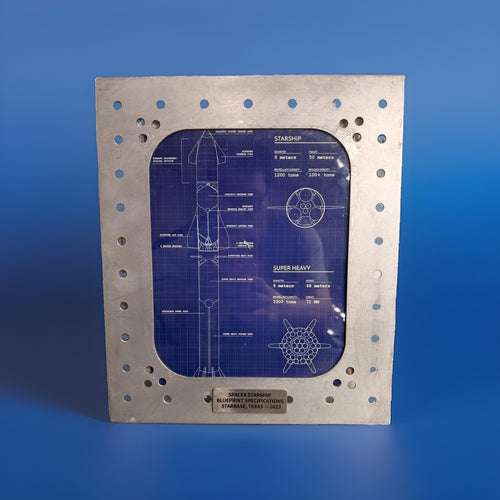
A space model beside mission documentation can connect design with history.
Conversation
Live events allow questions to develop naturally.
A collector may notice something they would not have known to ask online.
Another collector may contribute knowledge.
A curator can explain why two superficially similar objects differ materially.
Community
Collecting is often solitary.
Live events remind participants that collections exist within communities of:
- artists,
- researchers,
- dealers,
- conservators,
- authenticators,
- historians,
- and other collectors.
The event creates a social layer without requiring the collector to surrender privacy or independence.
2. Why Gauntlet Uses a Field Model

The field model allows Gauntlet to combine the strengths of digital and physical operations.
The digital platform provides:
- permanent research,
- broad discovery,
- structured data,
- market analysis,
- object records,
- and global access.
Field exhibitions provide:
- presence,
- trust,
- handling context,
- live education,
- and community.
The two are designed to reinforce each other.
Focus Instead of Constant Programming
A permanent location creates pressure to maintain a continuous exhibition calendar.
That pressure can weaken curation.
A field model allows Gauntlet to produce an event only when:
- the objects are strong,
- the research is ready,
- the audience is relevant,
- and the subject justifies physical presentation.
Geographic Flexibility
The Bay Area is not one cultural center.
San Francisco, Oakland, Berkeley, the East Bay, Silicon Valley, Marin and Sacramento contain different audiences and histories.
The exhibition can move toward the community most connected to the subject.
Format Flexibility
A field exhibition may be:
- a one-night event,
- a weekend installation,
- a weeklong pop-up,
- an invitation-only preview,
- a public lecture,
- or a recurring collector session.
The format should fit the content.
Partnership Potential
Temporary exhibitions can be developed with:
- design firms,
- cultural spaces,
- technology companies,
- independent retailers,
- hotels,
- music venues,
- framing studios,
- authentication firms,
- museums,
- universities,
- and community organizations.
The right partnership can create relevance beyond foot traffic.
Lower Fixed Cost
A flexible physical program allows greater investment in:
- objects,
- research,
- photography,
- security,
- interpretation,
- and collector experience
rather than permanent overhead.
Institutional Learning
Each field exhibition can test:
- audience interest,
- category demand,
- educational formats,
- pricing behavior,
- partnership models,
- and future programming.
The event becomes both cultural program and operational research.
3. Every Exhibition Must Begin With a Question

A Gauntlet Field Exhibition should not begin with available inventory.
It should begin with a curatorial question.
The question gives the event intellectual structure.
Examples include:
- How did political screen printing become collectible contemporary art?
- What separates a culturally significant edition from a speculative release?
- When does a commercial character become sculpture?
- How do music, image and object combine to create memorabilia?
- What evidence turns a mission-related object into a historical artifact?
- How should collectors evaluate authentication across categories?
- What does market data reveal—and conceal—about art value?
- How has San Francisco shaped independent contemporary culture?
- Which objects from the present are future institutions likely to preserve?
The objects are selected to examine the question.
Labels, video, research and programming should support it.
A question creates several advantages.
It prevents the exhibition from becoming a temporary store.
It gives journalists and partners a clear reason to care.
It allows visitors who are not ready to purchase to receive value.
It makes the event memorable.
Most importantly, it helps every object become part of a coherent argument.
4. Exhibition Types

Gauntlet may use several recurring field formats.
Artist Focus
A focused presentation devoted to one artist or studio.
Possible components include:
- release chronology,
- major visual themes,
- different periods,
- printmaking methods,
- authentication,
- market development,
- and available works.
An artist focus should extend beyond a group of products.
It should explain how the artist’s work evolved.
Category Exhibition
A presentation built around a broader collecting field.
Examples:
- Street Art and Political Printmaking
- The Designer Figure as Contemporary Sculpture
- Signed Music: Object, Autograph and Cultural Memory
- Apollo to Commercial Spaceflight
- The Art and Engineering of the Modern Space Model
Comparative Exhibition
Objects are placed together to reveal differences.
Examples:
- authorized edition versus decorative reproduction,
- signed versus unsigned,
- open edition versus limited edition,
- authentic versus counterfeit indicators,
- mission-era versus mission-used,
- artist proof versus standard edition.
Comparative exhibitions can provide unusually strong educational value.
Research Exhibition
A presentation built around Gauntlet’s historical or market data.
Examples:
- Twenty-Five Years of Shepard Fairey Pricing
- Liquidity in Contemporary Print Markets
- The Anatomy of a Collector Market
- What 40,000 Comparable Sales Reveal About Scarcity
The data should support the objects rather than overwhelm them.
Collector Salon
A smaller, discussion-oriented event.
Possible features:
- limited guest count,
- focused object group,
- curator discussion,
- collector introductions,
- and private acquisition opportunities.
Authentication Session
An educational event focused on verification.
Possible topics include:
- autograph certification,
- print edition analysis,
- designer-toy counterfeit indicators,
- certificates of authenticity,
- and provenance records.
Such events must avoid making unsupported on-the-spot definitive claims.
They should clarify process and risk.
Bring-Your-Collection Session
Collectors may bring selected objects for:
- documentation review,
- cataloging guidance,
- condition discussion,
- market orientation,
- and referral to appropriate specialists.
The event should clearly distinguish informal educational feedback from formal appraisal or authentication.
Private Preview
A controlled presentation of new acquisitions or a significant collection before public release.
This format can serve established collectors while preserving full documentation and fair dealing.
Historical Reconstruction
An event may revisit:
- an earlier Gauntlet exhibition,
- a San Francisco cultural moment,
- a recognized artist series,
- or a historical category.
Archival material and oral history may be combined with surviving objects.
5. Bay Area Geography as Curatorial Context

The location of an exhibition should contribute to the subject.
San Francisco
San Francisco connects directly to Gauntlet’s original physical history and to broader traditions of:
- independent galleries,
- poster art,
- music,
- technology,
- political activism,
- design,
- and counterculture.
It is the natural location for:
- institutional-history programs,
- contemporary-art exhibitions,
- music and cultural crossover events,
- and major public presentations.
Oakland
Oakland offers strong connections to:
- political art,
- community culture,
- music,
- mural practice,
- independent creative production,
- and social engagement.
Programming should be developed with local relevance and partnership rather than treating the city as spillover from San Francisco.
Berkeley
Berkeley may be especially appropriate for:
- political printmaking,
- historical research,
- lectures,
- student engagement,
- and events connecting art with activism or scholarship.
Walnut Creek and Concord
East Bay suburban communities contain collectors who may not regularly attend San Francisco openings.
Events here can combine:
- education,
- accessibility,
- private previews,
- and local collector community building.
These locations are useful for proving that meaningful cultural programming does not need to remain concentrated in urban art districts.
Silicon Valley
Silicon Valley is relevant to exhibitions connecting:
- art and technology,
- artificial intelligence,
- spaceflight,
- design,
- innovation,
- and digital provenance.
A technology-centered audience may respond strongly to the systems behind collecting:
- structured data,
- blockchain records,
- market analysis,
- and preservation.
Marin and Napa
These areas may support:
- private collector salons,
- art-and-design presentations,
- destination events,
- and partnerships with hospitality or cultural venues.
Sacramento
Sacramento can connect:
- political imagery,
- California history,
- state government,
- and collector communities outside the core Bay Area.
The location should never be chosen only because space is inexpensive.
It should support the event’s content and audience.
6. Venue Selection

A temporary venue becomes part of the exhibition.
Gauntlet evaluates venues across several dimensions.
Cultural Fit
Does the space make sense for the subject?
A space exhibition might work well in:
- a technology venue,
- design showroom,
- aerospace-adjacent setting,
- or modern industrial space.
A music event might fit:
- a listening room,
- performance venue,
- guitar showroom,
- or recording environment.
Physical Requirements
Consider:
- wall structure,
- ceiling height,
- floor loading,
- lighting,
- power,
- climate,
- security,
- access,
- restrooms,
- and storage.
Accessibility
The venue should consider:
- mobility access,
- entry,
- viewing height,
- seating,
- and transportation.
Location
Assess:
- visibility,
- parking,
- public transit,
- neighborhood context,
- and evening safety.
Insurance and Liability
Venue agreements should define:
- responsibility,
- insurance requirements,
- object custody,
- security,
- installation risk,
- and event liability.
Brand Compatibility
The space should feel intentional.
A prestigious address cannot compensate for poor object presentation.
A nontraditional space can be excellent when properly designed.
7. Curatorial Selection for Live Events

Not every object that works online belongs in a physical exhibition.
Field exhibitions require a tighter selection.
Visual Presence
Objects should contribute to the room.
This may involve:
- scale,
- color,
- material,
- historical importance,
- or comparative value.
Narrative Role
Each object should perform a function.
It may:
- introduce the question,
- establish chronology,
- demonstrate a method,
- show a turning point,
- provide contrast,
- or conclude the argument.
Condition
The object must be stable enough for:
- transport,
- installation,
- environmental exposure,
- and public viewing.
Documentation
Important claims should be supported at the event.
Insurance Value
Object value affects:
- transport,
- security,
- handling,
- and venue requirements.
Availability
Some displayed objects may be:
- for sale,
- on loan,
- previously sold,
- archival,
- or not available.
Their status should be clear.
Restraint
A smaller number of well-interpreted objects is generally stronger than overcrowding.
Space around an object communicates importance and improves inspection.
8. Exhibition Design

The installation should support understanding.
Entry Sequence
The visitor should quickly understand:
- exhibition title,
- central question,
- and the path through the space.
Visual Hierarchy
Not every object should compete equally.
Use:
- scale,
- spacing,
- sightlines,
- light,
- and wall text
to establish hierarchy.
Chronological Layout
Chronology is effective when development over time matters.
Thematic Layout
Themes may work better when objects cross periods or categories.
Comparative Layout
Side-by-side placement should make the comparison clear without inviting unsafe handling.
Reading Zones
Longer research should be separated from primary object labels.
Visitors should be able to choose depth.
Seating
Educational and discussion-based events benefit from places to pause.
Sound
Music or recorded material should be intentional and controlled.
Sound should not impair conversation or conflict with the exhibition.
Brand Presence
Gauntlet branding should be clear but restrained.
The objects and ideas remain primary.
9. Object Labels and Interpretation

Every object should be labeled consistently.
Core Label Fields
Where applicable:
- creator,
- title,
- date,
- medium,
- dimensions,
- edition,
- authentication,
- lender or collection credit,
- and availability status.
Context Label
A short paragraph may explain:
- why the object is included,
- what distinguishes it,
- and how it relates to the exhibition question.
Authentication Language
Authentication should be precise.
Example:
Signature authenticated by PSA/DNA. Authentication applies to the autograph and does not establish artist ownership or use of the instrument.
Provenance Language
Private collectors may be identified generically.
Example:
Private Bay Area collection.
Price Display
Depending on the event, pricing may be:
- publicly displayed,
- available by QR code,
- provided on request,
- or omitted for loaned objects.
The policy should remain consistent within the event.
QR Codes
QR codes may link to:
- object record,
- extended essay,
- market data,
- video,
- authentication lookup,
- or acquisition page.
The physical label must remain useful without requiring a phone.
10. Live Storytelling

A live exhibition creates opportunities beyond wall text.
Curator Walkthrough
A structured walkthrough may explain:
- exhibition thesis,
- key objects,
- evidence,
- and major comparisons.
Short Object Talks
Five-minute talks focused on one object can create accessible programming.
Panel Discussion
Potential participants include:
- artists,
- collectors,
- authenticators,
- framers,
- conservators,
- historians,
- musicians,
- engineers,
- and researchers.
Panels should be focused and moderated.
Demonstration
Possible demonstrations include:
- screen-print process,
- archival framing,
- object photography,
- cataloging,
- or certificate verification.
Video Stations
Video may show:
- artist interviews,
- historical footage,
- production methods,
- mission context,
- or object inspection.
Printed Guide
A concise guide may provide:
- exhibition map,
- key arguments,
- object checklist,
- and additional reading.
11. Collector Sessions

A collector session is different from an exhibition opening.
It is smaller, slower and more interactive.
Purpose
Collector sessions may support:
- education,
- collection review,
- comparison,
- relationship building,
- and private acquisition.
Guest Size
A limited group improves conversation and object safety.
Session Structure
A typical format might include:
- welcome and introduction,
- focused presentation,
- object viewing,
- moderated discussion,
- individual questions,
- private follow-up.
Object Handling
Handling should be controlled.
Visitors should not touch objects unless specifically invited and supervised.
Confidentiality
Private collection discussions should remain private.
Sales Conduct
The session should not become a high-pressure sales event.
Collectors should have time to review documentation and decide later.
12. Authentication Clinics

Authentication is a compelling live topic but requires caution.
Educational Scope
An authentication clinic may teach collectors how to evaluate:
- certification providers,
- database records,
- signatures,
- edition details,
- packaging,
- provenance,
- and red flags.
Informal Review
If visitors bring objects, Gauntlet may provide educational observations.
These should be described clearly as:
- preliminary,
- nonbinding,
- and not a substitute for formal expert authentication.
Specialist Participation
Recognized authenticators or specialists may be invited where appropriate.
Documentation
Collectors should bring:
- certificates,
- invoices,
- photographs,
- and known provenance.
No Instant Certainty
Complex objects should not be declared authentic or counterfeit casually in a crowded event.
The event should demonstrate disciplined process rather than theatrical verdicts.
13. Bring-Your-Collection Events

These sessions can provide significant collector value.
Possible Services
- inventory triage,
- cataloging guidance,
- documentation review,
- condition concerns,
- market-data orientation,
- display advice,
- and specialist referrals.
Intake Limits
The event should limit:
- number of objects,
- size,
- category,
- and value.
Security
Visitors remain responsible for their objects unless formal custody is established.
Privacy
No object should be photographed or published without permission.
Follow-Up
High-value or complex objects may require a private appointment and formal scope.
14. Events for New Collectors

Many gallery events assume prior knowledge.
Gauntlet should create entry points for people who are interested but inexperienced.
Possible topics include:
- How to Buy Your First Signed Print
- What a Certificate of Authenticity Does—and Does Not—Mean
- Building a Collection Under $1,000
- How to Read an Edition Number
- Framing and Protecting Works on Paper
- How to Avoid Counterfeit Designer Figures
- Buying Signed Music Memorabilia
- Collecting Space History Responsibly
The tone should be welcoming without lowering standards.
A novice collector deserves accurate information, not simplified misinformation.
15. Events for Experienced Collectors

Advanced collectors may benefit from deeper programming.
Examples:
- private-market liquidity,
- edition anomalies,
- authentication disputes,
- archive construction,
- estate planning,
- conservation,
- collection concentration,
- and artist-market structure.
These sessions may be invitation-only and supported by detailed research materials.
The goal is not exclusivity for status.
It is to create a setting appropriate for complex discussion and sensitive collection information.
16. Partnerships

The strongest field exhibitions may be collaborative.
Artists and Studios
Artist participation can provide:
- authority,
- new work,
- discussion,
- and direct historical context.
Galleries and Dealers
Collaboration may bring together objects and expertise that one party cannot provide alone.
Authentication Firms
A recognized provider may support educational programming and collector confidence.
Framers and Conservators
These partners can demonstrate:
- preservation,
- material care,
- and presentation.
Music Venues and Instrument Partners
These partnerships are natural for:
- signed guitars,
- performance history,
- and music-focused events.
Aerospace and Technology Communities
Space and innovation events may involve:
- engineers,
- historians,
- model makers,
- mission participants,
- and technology organizations.
Universities and Libraries
Academic partners may strengthen:
- historical research,
- lectures,
- archives,
- and student access.
Hospitality Partners
Hotels, clubs and destination venues may support:
- collector salons,
- private previews,
- and cultural weekends.
Community Organizations
Local partnerships can create programming that is relevant rather than extractive.
17. Commercial Transparency at Events

Field exhibitions may include sales.
Commercial activity should be visible and appropriate.
Object Status
Each object should be clearly identified as:
- available,
- reserved,
- sold,
- on loan,
- archival,
- or not for sale.
Pricing
Collectors should know how to access pricing without unnecessary gatekeeping.
Holds
Hold terms should be clear and applied consistently.
Payment
Secure payment methods should be available.
Documentation
A live purchase should receive the same:
- invoice,
- authentication disclosure,
- condition record,
- and provenance documentation
as an online transaction.
Pickup
Objects should not be removed casually from an exhibition.
Pickup should include:
- identity check,
- condition confirmation,
- documentation,
- and transfer record.
Shipping
Collectors may choose insured delivery rather than carrying significant objects from the venue.
18. Security and Object Safety

Temporary events create concentrated risk.
Security must be planned rather than improvised.
Risk Assessment
Consider:
- object value,
- venue access,
- guest count,
- alcohol,
- crowd flow,
- display height,
- exits,
- loading,
- and neighborhood.
Access Control
Events may use:
- registration,
- invitation,
- timed entry,
- security staff,
- bag policy,
- or controlled viewing areas.
Display Security
Use:
- stable mounts,
- locked cases,
- security hardware,
- barriers,
- and appropriate wall anchors.
Inventory Control
Every object should be checked:
- at arrival,
- after installation,
- before opening,
- after closing,
- and before departure.
Staff Roles
Assign responsibility for:
- guest access,
- object monitoring,
- sales,
- documentation,
- emergencies,
- and closing count.
Alcohol
If served, alcohol should be managed carefully around objects and transactions.
Emergency Plan
Prepare for:
- fire,
- medical issue,
- water,
- power loss,
- crowd disturbance,
- and object damage.
19. Insurance and Custody

Every event should define custody clearly.
Incoming Objects
For each object:
- record owner,
- condition,
- value,
- arrival method,
- and included documentation.
Loan Agreements
Loaned objects should have written terms covering:
- duration,
- insurance,
- photography,
- security,
- transport,
- and return.
Venue Insurance
Confirm:
- premises liability,
- property coverage,
- exclusions,
- and limits.
Transit Coverage
Objects are vulnerable during:
- loading,
- transport,
- installation,
- and return.
Incident Documentation
Any incident should be recorded immediately with:
- photographs,
- witnesses,
- condition,
- and response.
20. Accessibility and Inclusion

A cultural event should be usable by more than one type of visitor.
Physical Accessibility
Consider:
- entrances,
- elevators,
- restrooms,
- seating,
- label height,
- and aisle width.
Language
Avoid unnecessarily exclusionary language.
Specialized terms should be explained.
Visual Access
Labels should use:
- readable type,
- sufficient contrast,
- and appropriate lighting.
Captions
Video should include captions.
Pricing Accessibility
Some programming should demonstrate that meaningful collecting exists at multiple price points.
Social Accessibility
New visitors should not feel that they must already understand gallery conventions.
Staff should be prepared to explain the event without condescension.
21. Environmental Responsibility

Temporary events can generate waste.
Gauntlet should consider:
- reusable walls and displays,
- digital guides,
- recyclable materials,
- efficient transport,
- local vendors,
- reusable signage,
- and limited single-use promotional products.
Environmental responsibility should not compromise object protection.
The objective is thoughtful use, not performative minimalism.
22. Event Marketing

Marketing should communicate the event’s cultural value, not only the inventory.
Core Message
The audience should understand:
- the question,
- the subject,
- the location,
- the format,
- and why attending in person matters.
Channels
Potential channels include:
- email,
- LinkedIn,
- Instagram,
- local event calendars,
- collector groups,
- partner lists,
- press outreach,
- and direct invitations.
Educational Hook
Strong event marketing may lead with a question:
Can a mass-produced figure become serious contemporary sculpture?
or:
How do you prove that a piece of space memorabilia actually went to space?
Registration
Registration allows:
- attendance planning,
- security,
- follow-up,
- and audience learning.
Privacy
Attendance lists should not be shared without permission.
23. Press and Media

Field exhibitions can strengthen independent authority when documented responsibly.
Press Materials
Prepare:
- exhibition summary,
- curatorial statement,
- key objects,
- images,
- dates,
- venue,
- and spokesperson information.
Claims
Press materials must use the same evidentiary standards as product pages.
Media Preview
A preview may allow journalists or creators to inspect objects and ask questions before the event.
Image Rights
Clarify which images may be published and how they should be credited.
Post-Event Record
Preserve:
- articles,
- interviews,
- broadcasts,
- and social coverage.
24. Event Documentation

Every field exhibition should create a permanent archive.
Photography
Capture:
- exterior,
- entry,
- installation,
- full walls,
- individual objects,
- labels,
- programming,
- visitors,
- and closing state.
Video
Record:
- walkthrough,
- curator statement,
- talks,
- interviews,
- and environment.
Object Checklist
Preserve the final displayed list.
Attendance
Record approximate attendance and registration, subject to privacy requirements.
Questions
Visitor questions can reveal future content opportunities.
Sales and Leads
Commercial results should be tracked internally without reducing the event’s success to sales alone.
Lessons Learned
Record:
- what worked,
- what failed,
- audience response,
- logistics,
- and future changes.
25. Measuring Success

A field exhibition may create value in several ways.
Cultural Success
- Did the exhibition answer its central question?
- Did visitors learn?
- Did the objects create meaningful comparison?
- Was the presentation coherent?
Audience Success
- Attendance
- Repeat visitors
- New collectors
- Community participation
- Partner reach
Research Success
- New historical information
- Collector contributions
- Corrections
- Oral histories
- Archive material
Brand Success
- Press
- Referrals
- Direct traffic
- Searches
- AI citations
- Subscriber growth
- Institutional partnerships
Commercial Success
- Sales
- Qualified inquiries
- Private appointments
- Consignments
- Advisory opportunities
Operational Success
- Safe handling
- No loss or damage
- Budget control
- Strong venue performance
- Repeatable systems
The event should be evaluated across all of these dimensions.
A sold-out room with weak interpretation is not necessarily a curatorial success.
A modest event that creates valuable research and collector relationships may be highly successful.
26. The Event-to-Digital Loop

The field exhibition should continue online after the room closes.
Permanent Exhibition Page
The page may include:
- thesis,
- checklist,
- images,
- video,
- essays,
- press,
- and related objects.
Object Records
Each displayed object should receive an exhibition-history entry.
Educational Content
Questions raised at the event may become:
- guides,
- videos,
- FAQs,
- and research pages.
Audience Follow-Up
Attendees may receive:
- recording,
- reading list,
- object links,
- and future-event information.
Search and AI Value
A well-documented event creates:
- original images,
- historical evidence,
- entity relationships,
- local relevance,
- and independent coverage.
These are stronger signals than generic event promotion.
Future Reconstruction
Years later, the digital record should allow someone to understand what occurred.
27. A Suggested Annual Field Program

Gauntlet does not need constant events.
A disciplined annual program may be more effective.
Flagship Exhibition
One major San Francisco presentation focused on:
- institutional identity,
- a major category,
- or a significant research theme.
Artist or Category Focus
One or two smaller exhibitions in San Francisco or Oakland.
East Bay Collector Session
A private or public event in Walnut Creek, Concord or nearby communities.
Technology or Space Event
A Silicon Valley or aerospace-related program.
Authentication and Education Event
A practical collector workshop.
Private Previews
Smaller invitation-based events throughout the year.
The program should remain flexible.
Quality is more important than frequency.
28. Example Field Exhibition Concepts

Propaganda, Protest and Print
A historical examination of political screen printing, centered on Shepard Fairey and related visual traditions.
Possible sections:
- public image,
- repetition,
- political symbols,
- war,
- race,
- environment,
- and presidential imagery.
Object / Character / Sculpture
An examination of KAWS, BE@RBRICK and designer figures.
Core question:
When does a character-driven commercial object become contemporary sculpture?
Signed Sound
A presentation of signed guitars, albums, photographs and music-related art.
Core question:
What transforms a musical object into meaningful memorabilia?
From Apollo to Starship
A presentation connecting Apollo-era artifacts and autographs with commercial spaceflight models and contemporary space culture.
Core question:
How does an engineering achievement become a collectible cultural object?
Authentication Is Not a Sticker
A comparative educational exhibition showing:
- signatures,
- certificates,
- databases,
- packaging,
- provenance,
- and red flags.
The Transparent Art Market
A data-supported presentation examining:
- price,
- liquidity,
- auction fees,
- asking prices,
- condition,
- and how estimates are formed.
Gauntlet: San Francisco, Then and Now
An archival exhibition connecting the original 2012 gallery with the modern digital platform and future field program.
29. What Gauntlet Field Exhibitions Will Not Become

Gauntlet will not treat temporary exhibitions as:
- unstructured inventory dumps,
- high-pressure sales floors,
- prestige theater without substance,
- counterfeit-authentication spectacles,
- influencer backdrops,
- or events whose documentation disappears immediately afterward.
We will not call an event an exhibition merely because products are placed on walls.
We will not lower condition, handling or documentation standards because the venue is temporary.
We will not use a cultural partner’s community only to market unrelated inventory.
We will not exaggerate attendance, artist participation or institutional support.
We will not imply that a specialist has authenticated an object merely because they appeared at the event.
We will not allow urgency and atmosphere to replace collector due diligence.
Temporary format does not mean temporary accountability.
30. The Gauntlet Field Exhibition Principles

1. Every Event Begins With a Question
The exhibition must have an intellectual reason to exist.
2. Objects Serve the Thesis
Inventory does not determine the argument.
3. Physical Experience Adds What Digital Cannot
Scale, surface, condition and conversation justify the room.
4. Temporary Does Not Mean Casual
Presentation, security and documentation remain institutional.
5. The Location Should Matter
The venue and community should support the subject.
6. Education Is Part of the Event
Visitors should leave with more than purchase opportunities.
7. Collector Pressure Is Not Programming
Sales should remain transparent and respectful.
8. Authentication Requires Precision
Educational review must not become unsupported public verdict.
9. Every Displayed Object Is Documented
The exhibition becomes part of provenance.
10. Every Event Creates an Archive
Photography, video, checklists and lessons must survive.
11. Partnerships Must Add Real Value
Names and venues are not substitutes for relevance.
12. Safety Is Curatorial Responsibility
Object care, security and visitor welfare are fundamental.
13. Accessibility Expands Culture
New collectors should be welcomed without lowering standards.
14. Success Is Multidimensional
Research, audience, culture, brand and sales all matter.
15. The Event Continues Online
The room closes; the record remains.
Conclusion

A gallery does not need permanent walls to create permanent cultural value.
It needs:
- a clear point of view,
- meaningful objects,
- rigorous evidence,
- disciplined presentation,
- and a commitment to preserve what happens.
Gauntlet Field Exhibitions are designed to bring the digital institution into physical space without abandoning the advantages of the digital model.
They allow collectors to see:
- scale,
- surface,
- condition,
- documentation,
- and relationships among objects.
They allow Gauntlet to present research as an experience rather than only as text.
They allow artists, collectors, experts and communities to contribute knowledge.
They allow the gallery to return physically to San Francisco while also reaching Oakland, the East Bay, Silicon Valley, Sacramento and the wider region.
The temporary format creates focus.
Each event can ask one strong question.
Each object can earn its place.
Each visitor can choose whether to learn, discuss, collect or simply observe.
Each event can become a permanent historical record.
The purpose is not to imitate a conventional gallery for a weekend.
The purpose is to create something more concentrated:
a room where objects, evidence, culture and collectors meet.
The lights may be temporary.
The walls may be borrowed.
The exhibition may last one evening or several weeks.
But the object records, photographs, conversations, provenance and institutional memory should continue long afterward.
That is the Gauntlet Field Exhibition Philosophy.
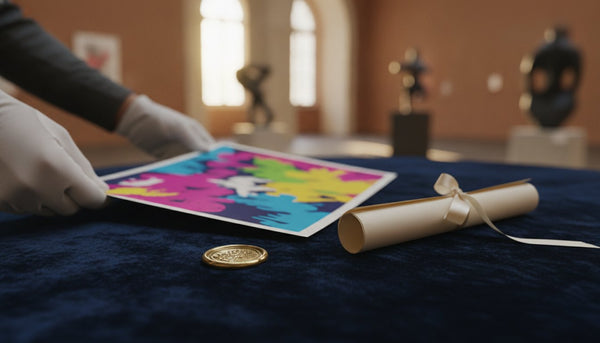
Editorial image disclosure: Illustrations on this page were generated with Nano Banana for explanatory use. They are not authentication evidence, provenance records, or reproductions of any specific collectible.