Updated 2026-07-11
Gauntlet Gallery's claim-specific framework for evaluating autographs, editions, objects, artifacts, certificates, provenance, confidence and expert review.
How We Evaluate Signatures, Artist Editions, Designer Objects, Historical Artifacts, Certificates and Provenance
Institutional document: GG-005
Updated: July 11, 2026
This institutional standard is published by Gauntlet Gallery. It is part of the The Gauntlet Curatorial Philosophy, The Gauntlet Research Methodology, The Gauntlet Cataloging Standard, Gauntlet Photography and Presentation Standards, The Gauntlet Authentication Framework, The Gauntlet Historical Preservation Policy, The Gauntlet Collector Experience and The Gauntlet Field Exhibition Philosophy series.
Introduction

Authentication is not a sticker.
It is not a certificate by itself.
It is not a seller’s confidence.
It is not a familiar-looking signature, a premium frame, an old invoice or a persuasive story.
Authentication is a disciplined process of testing a specific claim against the strongest evidence reasonably available.
That distinction matters because the word authentic is frequently used to describe very different things.
A collector may ask whether an object is authentic when they actually need to know:
- whether the signature was written by the named person,
- whether the artwork was created or authorized by the named artist,
- whether the edition is legitimate,
- whether the designer object was manufactured by the claimed producer,
- whether the certificate is genuine,
- whether the documentation belongs to the object,
- whether the item was owned or used by the person associated with it,
- whether a historical artifact was actually present during the claimed event,
- or whether a digital record corresponds to the physical object.
These are separate questions.
They require different types of evidence.
An autograph authenticator may be qualified to assess a signature but not determine whether a guitar was stage-used.
A manufacturer’s packaging may support the identity of a designer figure but not establish that every component inside is original.
A gallery invoice may support provenance but not automatically establish authorship.
A blockchain record may prove that a claim was registered at a particular time but not that the original claim was correct.
Gauntlet Gallery’s authentication framework begins by defining exactly what is being represented.
We then identify:
- the evidence required to support that representation,
- the reliability of the available sources,
- any contradiction or uncertainty,
- and the narrowest accurate language that should be used publicly.
This framework applies across:
- signed music memorabilia,
- celebrity and historical autographs,
- artist prints and editions,
- unique and mixed-media works,
- designer figures and licensed collectibles,
- space memorabilia,
- historical artifacts,
- certificates of authenticity,
- provenance documentation,
- and digitally registered objects.
The objective is not to imply that authentication can eliminate all risk.
Authentication is an expert judgment made from evidence. Expert opinions can evolve. Archives may be incomplete. Counterfeit methods improve. Provenance records can contain gaps. Genuine signatures vary.
The objective is to make the process visible, object-specific and proportionate to the claim.
The stronger the claim, the stronger the evidence should be.
1. Authentication Begins With the Claim

Before evaluating an object, Gauntlet defines the claim that must be tested.
This prevents one form of evidence from being stretched beyond its proper scope.
Consider a signed guitar.
Several claims may exist:
- The guitar was manufactured by Fender.
- The signature was written by a particular musician.
- The musician signed this exact guitar.
- The musician owned the guitar.
- The musician played the guitar.
- The guitar was used onstage.
- The guitar was used during a specific tour or recording session.
Each claim requires different evidence.
A recognized autograph opinion may strongly support the signature.
It does not establish ownership, performance use or stage history.
Likewise, an artist-issued certificate may establish that a print belongs to an authorized edition.
It may not establish the complete ownership history or current condition.
Gauntlet separates claims into four broad classes.
Identity Claims
These concern what the object physically is.
Examples:
- official KAWS figure,
- Fender Stratocaster,
- NASA-issued photograph,
- screen print on paper,
- signed album,
- artist proof.
Authorship and Signature Claims
These concern who created, authorized, signed or marked the object.
Examples:
- created by Shepard Fairey,
- signed by Taylor Swift,
- authorized by the artist’s studio,
- hand-finished by the artist,
- produced by an official publisher.
Provenance and Use Claims
These concern where the object came from and how it was used.
Examples:
- acquired directly from the artist,
- from a named private collection,
- stage-used,
- mission-flown,
- screen-used,
- personally owned,
- exhibition-displayed.
Condition and Completeness Claims
These concern whether the object remains in its original or represented state.
Examples:
- factory sealed,
- complete with original packaging,
- unrestored,
- untrimmed,
- original signature,
- all accessories included.
An object can be authentic in one respect and misrepresented in another.
A genuine guitar can carry a forged signature.
A genuine signature can appear on an unrelated decorative object.
A genuine figure can be paired with replacement packaging.
A genuine artwork can have misleading provenance.
Authentication must therefore be claim-specific.
2. The Gauntlet Evidence Ladder

Gauntlet evaluates authentication evidence according to proximity, authority, independence and verifiability.
No hierarchy is perfect, but a structured ladder reduces arbitrary judgment.
Level One: Direct Primary Evidence
This is evidence closest to the creator, signer, manufacturer, event or issuing authority.
Examples include:
- artist-issued certificate,
- artist studio record,
- publisher archive,
- original manufacturer database,
- official serial-number record,
- original purchase invoice from the issuing source,
- contemporaneous signing photograph showing the exact object,
- direct chain of custody from the creator,
- NASA or government documentation,
- estate documentation,
- official mission record,
- original gallery ledger,
- or an object-specific letter from a recognized authorized source.
Primary evidence is strongest when it is item-specific.
A general statement that an edition existed is useful.
A record identifying the exact numbered example is stronger.
Level Two: Recognized Independent Expert Authentication
This includes established specialist organizations and experts whose opinions are broadly accepted in the relevant market.
Depending on category, this may include:
- PSA/DNA,
- James Spence Authentication,
- Beckett Authentication Services,
- recognized artist-specific authentication boards,
- established estates or foundations,
- qualified conservators,
- specialist space-memorabilia experts,
- reputable catalogue raisonné authorities,
- or category-specific forensic specialists.
The relevance of the expert matters.
A highly regarded autograph firm is not automatically an authority on contemporary print production.
A respected art conservator may identify materials and alterations but not opine on every artist’s signature.
Level Three: Strong Provenance and Corroborating Documentation
This may include:
- auction-house records,
- respected gallery invoices,
- estate-sale documentation,
- collection labels,
- dated correspondence,
- prior catalog entries,
- publication history,
- exhibition labels,
- and photographs showing the object in a documented context.
Provenance can materially strengthen authenticity, especially when the chain is logical and supported by multiple records.
Level Four: Physical and Comparative Evidence
This includes examination of:
- materials,
- dimensions,
- construction,
- signature form,
- edition markings,
- printing method,
- paper,
- manufacturer marks,
- packaging,
- serial numbers,
- surface characteristics,
- and known genuine examples.
Physical evidence is essential.
It may confirm or contradict documentary evidence.
Level Five: Community and Market Evidence
This includes:
- collector archives,
- specialist forums,
- historical resale listings,
- release databases,
- and long-term community knowledge.
These sources can be valuable, particularly for poorly documented niche objects.
They should be corroborated.
Level Six: Seller Statements and Unverified Certificates
These include:
- seller-created COAs,
- verbal assurances,
- anonymous claims,
- unverifiable letters,
- copied descriptions,
- and certificates from unknown issuers.
Such evidence may be part of the record, but it is not treated as sufficient on its own for significant claims.
3. Authentication Is Cumulative

A strong conclusion is often built from several forms of evidence.
For example, an artist print may be supported by:
- a publisher archive,
- matching dimensions,
- correct paper,
- proper signature placement,
- correct numbering style,
- known blind stamp,
- and provenance from a recognized gallery.
Any single factor may be insufficient.
Together they create a persuasive record.
Gauntlet refers to this as evidentiary convergence.
The strongest authentication cases typically show convergence across:
- documentary evidence,
- physical characteristics,
- expert opinion,
- and provenance.
Contradictory evidence must also be considered.
A certificate should not override obvious material discrepancies.
A matching signature should not overcome incorrect dimensions and printing method.
A convincing story should not outweigh a broken chain of custody.
Authentication is not a vote in which the greater number of weak clues automatically wins.
Evidence must be weighted according to quality.
4. Autograph Authentication

Autographs are among the most frequently misrepresented areas of the collectibles market.
A signature can be forged with little material cost.
Online images provide counterfeiters with abundant examples.
Modern paint markers and transfer methods can imitate the appearance of legitimate signing.
At the same time, genuine signatures can vary dramatically.
A signer may write differently depending on:
- age,
- health,
- speed,
- crowd conditions,
- writing surface,
- pen type,
- time pressure,
- and whether the signature was formal or abbreviated.
Gauntlet therefore does not authenticate signatures solely by visual resemblance.
Recognized Third-Party Authentication
For many music, entertainment, sports, historical and astronaut signatures, Gauntlet prioritizes recognized third-party authentication.
Relevant providers may include:
- PSA/DNA,
- James Spence Authentication,
- Beckett Authentication Services,
- and respected category-specific specialists.
The provider should have:
- a verifiable certification system,
- a recognized market reputation,
- item-level review,
- and a clearly defined scope of opinion.
Database Verification
The certification number should be checked against the provider’s database whenever possible.
Gauntlet compares:
- signer,
- item type,
- certificate number,
- image where available,
- authentication level,
- and label description.
A valid certification number does not automatically validate the object in hand.
Counterfeiters can copy real numbers.
The item, sticker, card and database record should correspond.
Full Letters Versus Basic Certifications
Some firms offer different levels of documentation.
A full letter may include:
- object description,
- signer,
- image,
- certification number,
- and expert opinion.
A basic sticker-and-card system may be sufficient for many common transactions but can provide less object-specific documentation.
The level of authentication should be appropriate to:
- value,
- signer risk,
- object complexity,
- and claim importance.
Witnessed Signatures
Witnessed authentication may be particularly strong when the provider directly observed the signing.
However, the collector should still verify:
- that the witnessed program is legitimate,
- that the certification corresponds to the object,
- and that the label has not been transferred.
Signing Photographs and Video
A photograph or video can strengthen provenance if it clearly shows:
- the signer,
- the exact object,
- the signing action,
- and identifying details.
Generic event photographs are weaker.
A photograph of a celebrity signing similar items does not prove that the specific object was among them.
Placement and Medium
Gauntlet records:
- signature location,
- ink or marker type,
- surface,
- inscription,
- and condition.
These details matter because a signature can be genuine but poorly placed, heavily faded or materially damaged.
Autopen, Facsimile and Printed Signatures
Gauntlet distinguishes:
- hand-signed,
- autopen,
- printed,
- facsimile,
- stamped,
- and preprinted signatures.
These are not interchangeable.
An autopen may have historical interest, but it should not be described as hand-signed.
5. Signed Guitars and Instruments

Signed instruments require two separate evaluations:
- the instrument,
- the signature.
The presence of an authentic signature does not establish that the signer owned or used the instrument.
Instrument Identity
Gauntlet records:
- manufacturer,
- model,
- serial number,
- finish,
- production country,
- and condition.
Where relevant, we verify serial information through manufacturer resources or specialist references.
Signature Authentication
The signature should be independently authenticated when appropriate.
The record should identify:
- signer,
- provider,
- certificate number,
- label location,
- and scope.
Use Claims
Use claims require separate proof.
Possible claims include:
- signed,
- artist-owned,
- artist-played,
- stage-used,
- tour-used,
- studio-used,
- or presented to the artist.
Evidence may include:
- photographs,
- video,
- inventory records,
- tour documentation,
- direct artist or management letters,
- serial-number matching,
- or a credible chain of custody.
Without such evidence, Gauntlet uses the narrower language:
Signed guitar authenticated by [provider].
New Versus Vintage Instruments
A new Fender guitar signed for display can be a highly effective collectible.
Its value comes from:
- the authentic signature,
- visual presentation,
- artist connection,
- and quality of the display object.
It should not be represented as a vintage artist instrument unless that is separately true.
Functional Status
Authentication of the signature does not establish playability.
Gauntlet separately discloses whether the instrument was:
- tested,
- set up,
- inspected,
- or offered primarily for display.
6. Artist Prints and Editioned Works

Authentication of prints and editions requires understanding the complete production record.
A genuine image can exist in multiple legitimate and illegitimate formats:
- original painting,
- signed edition,
- unsigned edition,
- poster,
- later reproduction,
- exhibition print,
- promotional image,
- counterfeit edition,
- or decorative copy.
The image alone does not establish the object.
Official Edition Records
Gauntlet prioritizes:
- artist archives,
- publisher records,
- printer records,
- original gallery documentation,
- studio announcements,
- exhibition catalogues,
- and archived release pages.
Important details include:
- title,
- year,
- image size,
- sheet size,
- medium,
- edition size,
- proof structure,
- signature,
- numbering,
- paper,
- and publisher.
Physical Comparison
The object is evaluated for:
- dimensions,
- paper,
- print quality,
- color,
- registration,
- signature,
- numbering,
- embossing,
- blind stamps,
- publisher marks,
- and reverse characteristics.
Signature and Edition Number
A familiar signature and plausible number are not sufficient by themselves.
Counterfeit editions often imitate both.
Gauntlet evaluates whether the signature and numbering are consistent with:
- the artist,
- the year,
- the edition,
- the medium,
- and known genuine examples.
Artist Proofs and Nonstandard Editions
Artist proofs, printer’s proofs, hors commerce examples and color trials can be legitimate.
They can also be misrepresented.
The proof designation should fit known production practice.
Where the total number of proofs is unknown, that uncertainty should be stated.
Publisher and Printer Evidence
For many editions, the publisher or printer may be the strongest source.
A legitimate printer’s blind stamp, archive or invoice can materially strengthen the record.
Unauthorized Reproductions
A work may reproduce an artist’s imagery without being an authorized work by that artist.
Gauntlet distinguishes:
- authorized edition,
- licensed reproduction,
- exhibition poster,
- after the artist,
- decorative reproduction,
- and counterfeit.
7. Unique Works and Mixed Media

Unique works often require a higher level of scrutiny because there may be no exact comparison.
Relevant evidence includes:
- artist certificate,
- studio inventory number,
- gallery invoice,
- exhibition record,
- provenance,
- material analysis,
- signature,
- photographs,
- and comparison with the artist’s known practice.
Studio Production
Many established artists work with assistants, printers, fabricators and production teams.
Authentication should not depend on the unrealistic idea that the named artist personally executed every physical layer.
The relevant questions are:
- Was the work conceived by the artist?
- Was it produced under the artist’s authority?
- Was it approved?
- Was it documented by the studio or authorized gallery?
Hand-Finished Editions
A hand-finished edition may combine:
- printed base imagery,
- studio production,
- and unique manual additions.
The description should clarify what is unique and what belongs to the edition.
Attributed Works
When evidence is suggestive but incomplete, Gauntlet may use qualified language such as:
- attributed to,
- believed to be,
- consistent with,
- or bears a signature.
Such works should not be marketed with the same certainty as fully documented examples.
8. Designer Figures and Licensed Collectibles

Designer objects are especially vulnerable to high-quality counterfeiting.
Packaging, logos, labels and molded details can all be copied.
Gauntlet therefore evaluates the entire object system.
Official Release Verification
We research:
- manufacturer,
- artist collaboration,
- release date,
- retailer,
- edition,
- scale,
- colorway,
- region,
- and original packaging.
Physical Characteristics
We examine:
- weight,
- dimensions,
- material,
- paint quality,
- joints,
- seams,
- molding,
- feet,
- base,
- copyright marks,
- logos,
- serial numbers,
- and accessories.
Packaging
Packaging can support authentication through:
- construction,
- print quality,
- label placement,
- barcode,
- hologram,
- copyright line,
- inserts,
- and internal tray.
Packaging is not conclusive.
A counterfeit object can be placed in genuine packaging.
A genuine object can be sold without a box.
Sealed Objects
Factory-sealed packaging reduces access to the object itself.
Gauntlet distinguishes:
- factory sealed,
- resealed,
- opened for inspection,
- opened but complete,
- loose,
- and packaging replaced.
Known Counterfeit Patterns
Where possible, Gauntlet maintains category-specific notes on:
- incorrect colors,
- wrong materials,
- packaging errors,
- copied serials,
- poor articulation,
- and incorrect copyright markings.
These details should be updated as counterfeit methods evolve.
9. Space Memorabilia

Space memorabilia requires unusually careful claim separation.
The market includes:
- signed photographs,
- mission patches,
- contractor models,
- commemorative medallions,
- mission-era documents,
- training-used equipment,
- mission-used hardware,
- flown material,
- lunar-surface artifacts,
- replicas,
- and modern reproductions.
These categories vary enormously in significance and evidentiary burden.
Astronaut Signatures
Recognized autograph authentication is often appropriate.
Specialist knowledge is particularly important for:
- Neil Armstrong,
- multi-signed Apollo crew items,
- autopen patterns,
- secretarial signatures,
- and commonly forged formats.
NASA-Issued Materials
NASA photographs, documents and patches may carry:
- catalog numbers,
- captions,
- stamps,
- paper characteristics,
- and period markings.
These details can help date and classify the object.
Mission-Era Versus Mission-Used
An object manufactured during the Apollo era is not automatically mission-used.
Gauntlet uses distinct language:
- mission-era,
- NASA-issued,
- contractor-issued,
- training-used,
- mission-used,
- flown,
- lunar-surface-used,
- commemorative,
- replica.
Flown Claims
A flown claim requires strong, object-specific provenance.
Evidence may include:
- astronaut provenance,
- estate documentation,
- mission stowage records,
- spacecraft manifests,
- NASA disposition records,
- specialist certification,
- serialized hardware,
- or direct chain of custody.
Extraordinary claims should not rely on a generic seller COA.
Material Fragments
Fragments represented as coming from spacecraft, heat shields, parachutes, suits or lunar material require careful documentation.
The chain should explain:
- source object,
- removal,
- custody,
- subdivision,
- and relationship between the fragment and original artifact.
10. Historical and Celebrity Artifacts

Objects connected to famous individuals or events are often promoted with ambiguous language.
Gauntlet separates association from use.
Levels of Association
An object may be:
- depicting the person,
- signed by the person,
- officially licensed,
- presented to the person,
- owned by the person,
- worn by the person,
- used by the person,
- used during a specific event,
- or reproduced from an original associated object.
These levels carry different evidentiary requirements.
Ownership Claims
Ownership may be supported by:
- inventory records,
- estate documentation,
- photographs,
- correspondence,
- direct family provenance,
- auction records,
- or legal documentation.
Use Claims
Use is more difficult to establish.
Relevant evidence may include:
- photo matching,
- video matching,
- serial numbers,
- wardrobe tags,
- production records,
- tour records,
- or direct source documentation.
Screen-Used and Stage-Used Objects
A certificate from a production company, performer, studio or recognized source can be strong.
A seller’s claim that an object “came from the set” is weaker without documentary support.
11. Certificates of Authenticity

A certificate of authenticity is only as meaningful as:
- the issuer,
- the scope,
- the expertise,
- the item connection,
- and the ability to verify it.
The words “Certificate of Authenticity” do not create authority.
Artist-Issued Certificates
These can be among the strongest forms of documentation when they are:
- object-specific,
- signed,
- numbered,
- and issued by the artist or authorized studio.
Publisher and Gallery Certificates
These may strongly support an edition when the issuer was directly involved in production or release.
Independent Authentication Certificates
These document an expert opinion.
The certificate should state what was evaluated.
Auction-House Certificates
An auction invoice or description may support provenance and prior representation.
It does not necessarily constitute a permanent authenticity guarantee.
Seller-Created Certificates
A dealer may issue a document summarizing the object and the seller’s representations.
This can be useful for provenance.
It should not be presented as equivalent to an independent expert opinion.
Replacement Certificates
If an original certificate is lost and a replacement is issued, the replacement status should be disclosed.
Certificate Integrity
Gauntlet evaluates:
- paper,
- printing,
- signatures,
- holograms,
- serial numbers,
- stamps,
- and database correspondence.
Counterfeit certificates exist.
The certificate itself may require authentication.
12. Gauntlet-Issued Documentation

Gauntlet documentation is intended to preserve the object record.
It may include:
- object identity,
- artist or signer,
- dimensions,
- edition,
- condition,
- provenance,
- third-party authentication,
- serial numbers,
- photographs,
- and QR-linked records.
Gauntlet-issued documentation should make clear whether Gauntlet is:
- recording an independent authentication,
- documenting provenance,
- confirming inspection,
- or stating its own good-faith conclusion.
It should not imply a third-party opinion where none exists.
Recommended Language
A Gauntlet certificate may state:
This document records the identity, condition, provenance information and authentication documentation associated with the object as of the date issued.
Where applicable:
The signature has been authenticated by James Spence Authentication under certification number [number]. Gauntlet Gallery did not independently issue the underlying autograph opinion.
This preserves scope.
13. Digital Registration and QR Records

Digital records can improve provenance continuity.
A QR code may connect the physical object to:
- certificate information,
- photographs,
- authentication lookup,
- condition report,
- ownership registration,
- and transfer history.
Benefits
Digital records can reduce:
- lost paperwork,
- mismatched certificates,
- incomplete resale descriptions,
- and broken provenance chains.
Tamper-Evident Labels
A physical label may be:
- serialized,
- destructible,
- tamper-evident,
- or linked to a unique object record.
The label should be documented photographically.
Blockchain Records
Blockchain can preserve:
- timestamp,
- registration,
- transfer record,
- and data integrity.
It cannot independently establish that the original authentication decision was correct.
The chain preserves the record.
It does not replace expert verification.
Physical-Digital Matching
The digital record should include enough item-specific detail to distinguish the object:
- photographs,
- edition number,
- signature placement,
- serial number,
- dimensions,
- and unique condition characteristics.
14. Provenance as Authentication Support

Provenance can be decisive when it connects the object directly to its source.
However, provenance should not be treated as a decorative paragraph.
It must be evaluated.
Strong Provenance
Examples include:
- artist-to-collector invoice,
- original issuing gallery receipt,
- estate documentation,
- recognized auction record,
- documented private collection history,
- and object-specific correspondence.
Partial Provenance
Many legitimate objects have gaps.
The presence of a gap does not prove inauthenticity.
The gap should be disclosed.
Circular Provenance
A common problem occurs when later documents simply repeat an earlier unsupported claim.
For example:
- seller creates a COA,
- later dealer cites that COA,
- auction house cites the dealer,
- new seller cites the auction.
This creates volume but not independent evidence.
Gauntlet traces provenance claims to their earliest support.
Story Provenance
Statements such as:
- “obtained from someone who worked with the artist,”
- “came from an old gallery,”
- or “purchased from a family member”
may be leads.
They are not strong provenance without documentation.
15. Physical Inspection

Documentation should be tested against the object.
Gauntlet’s physical inspection may include:
- dimensions,
- weight,
- materials,
- surface,
- markings,
- paper,
- print method,
- seams,
- joints,
- frame,
- backing,
- labels,
- and condition.
Tools
Depending on the object, tools may include:
- magnification,
- raking light,
- ultraviolet light,
- measurement devices,
- high-resolution photography,
- and specialist material analysis.
Gauntlet does not claim laboratory testing unless such testing was actually performed.
Limitations
Some objects cannot be fully inspected because they are:
- sealed,
- framed,
- encapsulated,
- permanently mounted,
- or fragile.
The limits should be recorded.
16. Red Flags

No single red flag always proves a counterfeit, but several may justify rejection or further review.
Autograph Red Flags
- signature inconsistent with known period,
- unnatural hesitation,
- repeated identical forms,
- suspicious paint-marker pooling,
- incorrect placement,
- autopen characteristics,
- certificate number mismatch,
- copied certification label,
- implausible signing story.
Art Red Flags
- incorrect dimensions,
- wrong paper,
- inconsistent numbering,
- signature inconsistent with period,
- image quality inconsistent with printing method,
- missing publisher marks,
- impossible edition size,
- unverifiable COA,
- recently created provenance.
Designer Object Red Flags
- incorrect weight,
- poor molding,
- wrong copyright marks,
- low-quality paint,
- packaging errors,
- inconsistent joints,
- copied serial numbers,
- wrong accessories,
- unusual chemical odor.
Historical Artifact Red Flags
- extraordinary claim with generic documentation,
- no chain of custody,
- anachronistic materials,
- inconsistent serial numbers,
- vague mission association,
- copied provenance wording,
- seller unwilling to provide records.
Certificate Red Flags
- issuer cannot be identified,
- unverifiable serial,
- generic description,
- no object image,
- spelling errors,
- transferred label,
- mismatch between certificate and object,
- impossible issue date.
17. Authentication Confidence Levels

Gauntlet uses confidence levels to communicate the strength of a conclusion.
Confirmed
Supported by strong primary evidence, recognized expert authentication or direct authoritative records.
Strongly Supported
Supported by multiple consistent forms of credible evidence with no material contradiction.
Supported
Evidence is persuasive but contains limitations, incomplete records or reliance on secondary sources.
Attributed
The object is consistent with the claimed source but lacks sufficient evidence for a definitive conclusion.
Unverified
The available evidence does not support a reliable authentication conclusion.
Rejected
Material evidence contradicts the claim or indicates likely inauthenticity.
These labels should be used carefully.
They are not marketing grades.
They describe evidentiary strength.
18. When Gauntlet Seeks Additional Expert Review

Gauntlet should escalate authentication when:
- value is substantial,
- the signature is commonly forged,
- the claim is historically significant,
- provenance is incomplete,
- physical evidence conflicts with documentation,
- the object is unique,
- the category falls outside internal expertise,
- or a future resale market depends heavily on recognized authentication.
Possible escalation paths include:
- recognized autograph firms,
- artist estates,
- publishers,
- conservators,
- appraisers,
- forensic document examiners,
- specialist auction departments,
- or historical experts.
A responsible dealer knows when to seek outside expertise.
19. When Gauntlet Declines an Object

Gauntlet may decline an object even when inauthenticity cannot be proven.
The correct question is not always:
Can we prove this is fake?
It may be:
Do we have enough evidence to represent this confidently?
Reasons for declining may include:
- unverifiable signature,
- weak or circular provenance,
- certificate from an unknown issuer,
- material inconsistencies,
- impossible edition details,
- copied authentication numbers,
- excessive alteration,
- extraordinary claims without documentation,
- or a risk level disproportionate to the object’s significance.
Commercial potential does not require acceptance.
Uncertainty can be enough to pass.
20. Authentication and Pricing

Authentication materially affects value.
But value does not prove authenticity.
An expensive object is not automatically better documented.
A low-priced object is not automatically counterfeit.
Gauntlet compares market records according to authentication status.
Examples authenticated by PSA, JSA or Beckett should not be mechanically compared with unauthenticated examples.
Likewise:
- artist-issued editions,
- estate-certified works,
- publisher-documented works,
- and objects with strong provenance
may trade differently from visually similar but weakly documented objects.
The pricing record should identify these differences.
21. Authentication and Condition

A genuine object may still be materially altered or damaged.
Authentication does not replace condition reporting.
Relevant issues include:
- restored signature,
- traced signature,
- overpainting,
- trimmed print,
- replacement parts,
- rebacking,
- resealing,
- transferred authentication label,
- damaged certificate,
- or missing original packaging.
Gauntlet records authenticity and condition separately.
22. Authentication and Returns

A clear authenticity policy should distinguish:
- dissatisfaction,
- condition dispute,
- and a material authentication challenge.
A serious challenge should be evaluated through appropriate evidence.
Depending on the object, this may involve:
- the original authentication provider,
- an independent recognized expert,
- the artist or publisher,
- or specialist review.
The process should avoid allowing an anonymous unsupported opinion to override strong evidence.
It should also avoid dismissing legitimate contradictory evidence.
The goal is a fair, documented resolution.
23. Corrections and Reauthentication

Authentication conclusions can change.
A provider may update a record.
An estate may release new information.
A counterfeit method may be discovered.
A certificate may be invalidated.
A previously unattributed object may gain stronger evidence.
Gauntlet should preserve version history.
A material change should record:
- prior status,
- new status,
- date,
- reason,
- source,
- and affected records.
Where a sold object is materially affected, the collector should be notified when appropriate.
Accuracy matters more than defending the first conclusion.
24. AI and Authentication

Artificial intelligence can assist with authentication research.
It may help:
- compare images,
- classify signatures,
- identify release differences,
- find archived records,
- flag inconsistencies,
- and organize documentation.
AI output is not treated as final authentication.
Image models can be misled by:
- poor lighting,
- compression,
- copied examples,
- genuine variation,
- and incomplete training data.
AI can support expert review.
It should not create unsupported certainty.
The final responsibility remains human and evidence-based.
25. Category-Specific Authentication Summary

Signed Music Memorabilia
Primary emphasis:
- recognized autograph authentication,
- item-specific verification,
- signature condition,
- and separation of signature from use claims.
Artist Prints
Primary emphasis:
- official release records,
- paper,
- dimensions,
- printing method,
- signature,
- numbering,
- publisher,
- and provenance.
Unique Artworks
Primary emphasis:
- artist or studio documentation,
- authorized gallery provenance,
- material consistency,
- exhibition history,
- and specialist review.
Designer Figures
Primary emphasis:
- manufacturer,
- official release history,
- construction,
- markings,
- packaging,
- and known counterfeit patterns.
Space Memorabilia
Primary emphasis:
- specialist autograph authentication,
- NASA and mission documentation,
- chain of custody,
- and precise distinction between era, use and flight.
Historical Artifacts
Primary emphasis:
- object-specific provenance,
- contemporaneous records,
- serials,
- photographic matching,
- and documented use.
26. The Gauntlet Authentication Principles

1. Define the Claim
Authentication begins by identifying exactly what is being represented.
2. Match the Expert to the Object
Expertise in one category does not automatically transfer to another.
3. Verify the Certificate
A certificate is evidence only when the issuer, number and object relationship can be trusted.
4. Inspect the Physical Object
Documentation should be tested against materials, dimensions, markings and construction.
5. Separate Signature From Use
A genuine autograph does not prove ownership, stage use or mission use.
6. Separate Authenticity From Value
A genuine object can be overpriced, illiquid or damaged.
7. Use Provenance Carefully
A chain is strongest when each transfer is documented independently.
8. Avoid Circular Evidence
Repeated claims derived from the same weak source do not become stronger through repetition.
9. Strong Claims Require Strong Evidence
Flown, stage-used, artist-owned and unique claims demand object-specific proof.
10. Preserve Uncertainty
Qualified language is preferable to unsupported certainty.
11. Digital Records Preserve; They Do Not Create Truth
QR codes and blockchain strengthen continuity but cannot replace initial verification.
12. Escalate When Necessary
High-value or complex objects should be reviewed by the appropriate specialists.
13. Decline When the Evidence Is Insufficient
The inability to prove a fake does not require Gauntlet to sell the object.
14. Correct the Record
New evidence should update the conclusion.
15. Make the Scope Visible
Collectors should know exactly what has—and has not—been authenticated.
Conclusion

Authentication is often marketed as a final answer.
In reality, it is a structured conclusion based on evidence.
The quality of that conclusion depends on:
- the precision of the claim,
- the authority of the source,
- the quality of the physical inspection,
- the strength of the provenance,
- the relevance of the expert,
- and the honesty with which uncertainty is communicated.
Gauntlet Gallery’s authentication framework is designed to prevent a common market failure:
the use of one legitimate fact to imply several unsupported ones.
A genuine signature does not prove use.
A genuine object does not prove provenance.
A certificate does not prove authority.
A registration record does not prove the original claim.
A famous name does not prove meaningful association.
Our responsibility is to keep those distinctions intact.
For every object, we ask:
- What exactly is being claimed?
- What evidence supports it?
- Who has the authority to evaluate it?
- Does the physical object agree?
- Is the documentation item-specific?
- Are there contradictions?
- What remains unknown?
- What language can be used responsibly?
The result may be a confirmed authentication.
It may be a strongly supported conclusion.
It may be a qualified attribution.
It may be a decision to seek another expert.
Or it may be a decision not to offer the object at all.
That discipline protects the collector.
It also protects the object’s future record.
A collectible should not become more questionable each time it changes hands.
Its evidence should become clearer.
Its documentation should become stronger.
Its claims should become more precise.
That is the Gauntlet Authentication Framework.
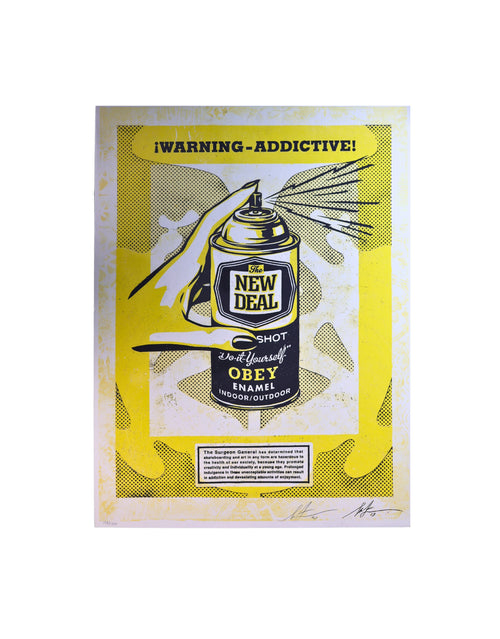
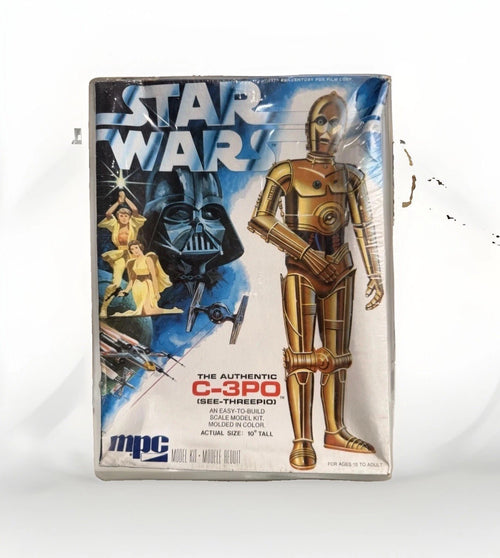
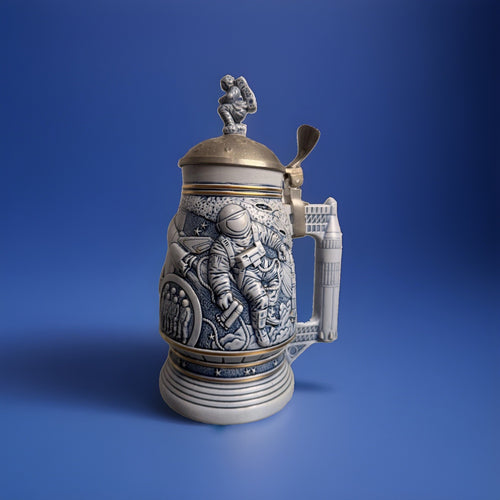
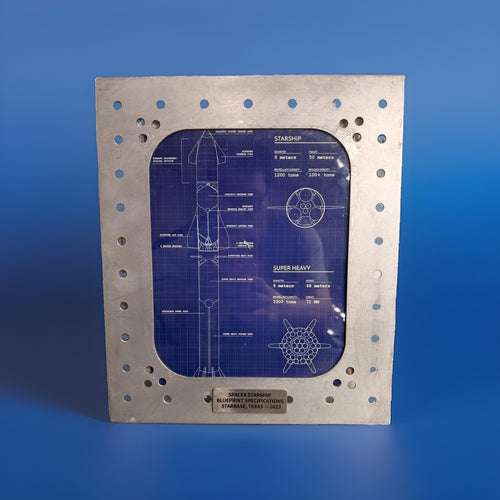
Editorial image disclosure: Illustrations on this page were generated with Nano Banana for explanatory use. They are not authentication evidence, provenance records, or reproductions of any specific collectible.