Updated 2026-07-11
Gauntlet Gallery's policy for preserving physical objects, provenance, condition history, exhibition records, digital archives and cultural context.
How We Preserve Objects, Records, Provenance, Exhibition History and Cultural Context Across Generations
Institutional document: GG-006
Updated: July 11, 2026
This institutional standard is published by Gauntlet Gallery. It is part of the The Gauntlet Curatorial Philosophy, The Gauntlet Research Methodology, The Gauntlet Cataloging Standard, Gauntlet Photography and Presentation Standards, The Gauntlet Authentication Framework, The Gauntlet Historical Preservation Policy, The Gauntlet Collector Experience and The Gauntlet Field Exhibition Philosophy series.
Introduction

Objects survive unevenly.
Some remain protected in museums, archives, estates and private collections.
Others lose their meaning slowly.
A certificate is misplaced.
A frame is replaced.
A signature fades.
An object is separated from its packaging.
A family member inherits a collection without knowing what it contains.
A product page disappears.
A gallery closes.
An artist’s website is redesigned.
An exhibition title is forgotten.
A photograph remains, but no one remembers who is pictured.
A historically important object becomes an unidentified item in a box.
Physical survival alone is not preservation.
An object can remain materially intact while its history disappears.
Gauntlet Gallery believes preservation requires two parallel commitments:
- preserve the physical object,
- preserve the information that makes the object understandable.
The second commitment is often neglected.
Collectors, galleries and dealers may devote substantial attention to acquisition, authentication and sale but far less attention to what happens after the transaction. Documentation is treated as supplemental. Provenance is reduced to a short paragraph. Sold listings disappear. Condition records are not retained. Exhibitions are remembered through scattered social posts. Certificates are separated from objects. Digital links eventually fail.
This creates cultural loss.
An artwork without its edition history is harder to interpret.
A signed object without authentication records becomes harder to transfer responsibly.
A historical artifact without a chain of custody may lose the very claim that made it important.
A gallery exhibition without photographs, labels or a checklist can disappear from public memory even though it shaped the artists and collectors who participated.
Gauntlet’s preservation policy is designed to reduce that loss.
It establishes how the gallery intends to preserve:
- object identity,
- provenance,
- authentication records,
- condition history,
- exhibition records,
- market history,
- artist context,
- digital documentation,
- ownership transitions,
- and the institutional history of Gauntlet Gallery itself.
The policy applies both before and after sale.
It recognizes that every collector is a temporary custodian.
No matter how long an object remains in one collection, ownership is only one chapter.
The gallery’s responsibility is to make that chapter stronger, clearer and easier for the next custodian to understand.
1. Preservation Is More Than Conservation

Conservation concerns the physical stability of an object.
Preservation is broader.
It includes the object’s:
- identity,
- history,
- evidence,
- context,
- condition,
- ownership record,
- documentation,
- and interpretation.
A professionally conserved artwork can still be poorly preserved if its provenance is lost.
A damaged historical document may still be exceptionally well preserved as a record if its history, condition and chain of custody remain intact.
Gauntlet distinguishes among three related ideas.
Conservation
Conservation seeks to stabilize or protect the physical object.
Examples include:
- archival framing,
- humidity control,
- ultraviolet protection,
- cleaning,
- consolidation,
- repair,
- and professional treatment.
Restoration
Restoration seeks to return an object closer to an earlier appearance or function.
Examples include:
- infilling losses,
- retouching paint,
- repairing tears,
- replacing parts,
- repainting surfaces,
- or rebuilding damaged packaging.
Restoration can improve presentation, but it may also alter originality.
Historical Preservation
Historical preservation protects both the object and the record surrounding it.
It includes:
- cataloging,
- condition documentation,
- provenance,
- image archives,
- source records,
- authentication,
- exhibition history,
- restoration disclosure,
- and ownership transfer documentation.
Gauntlet’s policy focuses primarily on historical preservation while supporting responsible conservation.
2. The Collector as Temporary Custodian

Ownership can feel permanent.
In practice, it rarely is.
Objects are:
- sold,
- inherited,
- gifted,
- consigned,
- donated,
- divided among heirs,
- lost,
- damaged,
- rediscovered,
- and reintroduced to the market.
The collector is therefore not the final destination.
The collector is a custodian within a longer chain.
This concept does not diminish ownership.
It gives ownership greater significance.
The collector has the opportunity to improve the object’s future by preserving:
- records,
- packaging,
- certificates,
- condition,
- and context.
A collector who maintains the object’s history creates value that may not be immediately visible.
They make the next transfer more credible.
They reduce uncertainty.
They protect the work from misidentification.
They allow heirs to understand what they have.
They help future researchers reconstruct cultural history.
Gauntlet encourages collectors to see documentation as part of the collectible itself.
The object and the record should travel together.
3. Every Ownership Transfer Creates Provenance

Provenance is not only something inherited from the past.
It is created continuously.
Every transfer adds a new entry.
A purchase invoice, signed receipt, shipping record, condition photograph or registration update may later become part of the object’s chain of custody.
The strongest provenance is cumulative.
It does not depend on one dramatic document.
It is built through consistent records over time.
Transfer Record
A responsible ownership transfer should preserve:
- date,
- seller,
- buyer or buyer designation,
- object identifier,
- object description,
- condition,
- included documentation,
- authentication numbers,
- transaction source,
- and photographs.
Private information may remain confidential while the underlying chain remains documented.
Continuity
The transfer record should connect clearly to the prior record.
This reduces the risk that:
- certificates are mismatched,
- edition numbers are confused,
- documentation is copied from another object,
- or a later seller relies on unsupported assumptions.
Inherited Objects
Inheritance often creates provenance gaps.
A family may know that an object belonged to a parent or grandparent but lack formal records.
Gauntlet encourages families to preserve:
- family statements,
- photographs,
- storage records,
- correspondence,
- insurance schedules,
- and contextual details.
A contemporaneous family record created before memory is lost can become important supporting evidence.
Gifts
Gifts should also be documented.
A simple dated transfer statement can preserve:
- giver,
- recipient,
- object,
- and included records.
4. The Permanent Object Record

Every significant object should have a permanent record that survives beyond the product page.
The record should not disappear when the object sells.
It should remain available for:
- future ownership verification,
- insurance,
- research,
- resale,
- estate administration,
- and institutional reference.
Core Permanent Fields
The permanent record should include, where applicable:
- unique object identifier,
- title,
- creator,
- date,
- object type,
- medium,
- dimensions,
- edition,
- signature,
- authentication,
- provenance,
- condition,
- restoration,
- exhibition history,
- publication history,
- photographs,
- included documents,
- and ownership-transfer history.
Stable URL
The record should use a durable URL.
A temporary ecommerce address may later be removed or redirected.
A permanent object-record system should remain accessible independently of inventory status.
Public and Private Layers
The permanent record may contain two levels.
Public Layer
May include:
- object identity,
- historical context,
- authentication summary,
- images,
- and nonprivate provenance.
Private Layer
May include:
- full ownership names,
- acquisition cost,
- personal addresses,
- unredacted invoices,
- and confidential correspondence.
This structure protects privacy without sacrificing continuity.
5. The Gauntlet Digital Archive

The digital archive is intended to preserve information that would otherwise be vulnerable to deletion, separation or platform failure.
It should not depend on one website, one cloud service or one marketplace.
Archive Categories
The Gauntlet archive may include:
- object records,
- sold records,
- artist records,
- exhibition records,
- authentication records,
- historical sales,
- research sources,
- video,
- photography,
- press coverage,
- internal methodology,
- and institutional documents.
Redundant Storage
Important files should exist in more than one location.
A practical preservation model includes:
- active working storage,
- local backup,
- off-site backup,
- secure cloud backup,
- and periodic archival snapshots.
No single system should represent the only copy.
File Integrity
Files should be monitored for:
- corruption,
- incomplete transfer,
- duplicate confusion,
- and format obsolescence.
Checksums or equivalent integrity tools may be used for important archives.
Open and Durable Formats
Where practical, Gauntlet should preserve records in widely supported formats.
Examples include:
- PDF/A,
- TIFF,
- JPEG,
- CSV,
- JSON,
- TXT,
- and standard video formats.
Proprietary formats may be retained, but they should not be the only version.
Metadata
Files should preserve:
- object identifier,
- title,
- creator,
- date,
- source,
- rights,
- and relationship to the record.
An image without metadata can become disconnected from its subject.
6. Photographing History Before It Changes

Photography freezes condition and context at a specific time.
That makes it one of the most powerful preservation tools available.
Every object changes.
Paper ages.
Frames are replaced.
Packaging deteriorates.
Signatures fade.
Objects are restored.
Certificates are lost.
Ownership labels accumulate.
Photographs preserve evidence of how the object appeared before those changes.
Pre-Acquisition Photography
When possible, preserve seller-supplied or source photographs before the object is altered, reframed or cleaned.
These images may later show:
- prior condition,
- packaging,
- ownership labels,
- or source context.
Intake Photography
Photograph the object as received.
This creates a baseline.
Pre-Sale Photography
Create a complete high-resolution record before transfer.
Post-Restoration Photography
If conservation or restoration occurs, preserve:
- before,
- during,
- and after images.
Packaging Photography
Original packaging should be documented before shipping or disposal.
Context Photography
Objects may also be photographed:
- in exhibitions,
- in collector homes,
- with related material,
- or in historical settings.
Context images can become part of the cultural record.
7. Preserving Condition History

Condition changes over time.
A single condition statement captures only one moment.
For important objects, condition should be treated as a chronology.
Baseline Condition
The first detailed inspection establishes the baseline.
Subsequent Changes
Later records should document:
- new damage,
- fading,
- restoration,
- framing changes,
- cleaning,
- replacement parts,
- packaging deterioration,
- or environmental effects.
Restoration Disclosure
Restoration should remain permanently attached to the object’s record.
A later seller should not be able to represent a restored object as untouched because the visible damage was repaired.
Conservator Reports
Professional reports should be preserved in full where possible.
Routine Monitoring
Long-term collections may benefit from periodic review.
Particularly vulnerable objects include:
- works on paper,
- photographs,
- signatures,
- painted vinyl,
- textiles,
- and objects with adhesives or mixed materials.
8. Conservation Versus Historical Integrity

Conservation decisions can create tension.
Should a damaged object be repaired?
Should original packaging be replaced?
Should faded material be restored?
Should a vintage frame remain if it is not archival?
There is no universal answer.
Gauntlet considers:
- historical importance,
- original material,
- current risk,
- intended use,
- reversibility,
- visual impact,
- and market expectations.
Minimum Intervention
Where possible, preservation should favor minimum necessary intervention.
The goal is often to stabilize rather than recreate.
Reversibility
Conservation methods should be reversible when practical.
Original Material
Original components generally carry historical value.
Replacing them may improve appearance but reduce authenticity.
Functional Objects
For instruments and mechanical objects, the collector must decide whether the priority is:
- preservation,
- display,
- or function.
A repair that restores function may affect originality.
The record should explain the choice.
Packaging
Damaged original packaging should usually be preserved rather than discarded merely because it is unattractive.
Replacement packaging may be added, but it should not be confused with the original.
9. Preserving Exhibition History

Exhibitions are temporary.
Their records should not be.
A live exhibition may exist for one evening, one weekend or several weeks. Once dismantled, the physical relationship among the objects disappears.
Without documentation, the exhibition can vanish almost completely.
Gauntlet intends to preserve each exhibition through a structured archive.
Exhibition Record Fields
The archive should include:
- exhibition title,
- curatorial statement,
- venue,
- address,
- city,
- opening date,
- closing date,
- participating artists,
- object checklist,
- installation photographs,
- wall labels,
- invitations,
- flyers,
- press coverage,
- video,
- attendance information,
- and associated programming.
Object-Level Relationships
Each object should be linked to the exhibition record.
This creates future exhibition provenance.
Installation Views
Installation photographs should show:
- overall layout,
- individual walls,
- object groupings,
- lighting,
- labels,
- and visitor interaction.
Promotional Materials
Preserve:
- printed invitation,
- social graphics,
- email announcement,
- press release,
- and event listing.
Oral History
For important events, preserve short interviews or reflections from:
- artists,
- curators,
- collectors,
- and organizers.
Memory fades quickly.
Recording it early creates a stronger archive.
10. The Gauntlet San Francisco Exhibition Record

Gauntlet Gallery has a documented history as a San Francisco contemporary gallery beginning in 2012.
That history should be treated as an archival responsibility.
The record should distinguish clearly among:
- the original physical-gallery era,
- the transition period,
- the digital rebirth,
- and future live programs.
The objective is not to imply uninterrupted operation or unchanged ownership.
The objective is to preserve the legitimate history accurately.
Original Gallery Archive
The archive should seek to recover:
- exhibition titles,
- dates,
- artist lists,
- invitations,
- photographs,
- reviews,
- video,
- press,
- and known works displayed.
Source Attribution
Each historical claim should be tied to a source.
Unresolved Gaps
Where records are incomplete, the archive should state that the record remains partial.
Community Contributions
Former artists, visitors and collectors may possess:
- flyers,
- photographs,
- receipts,
- installation images,
- and personal recollections.
Gauntlet can invite contributions while verifying and crediting sources.
11. Preserving Pop-Up and Field Exhibition History

Temporary live events in San Francisco, Oakland, Berkeley, Walnut Creek, Silicon Valley, Sacramento and surrounding areas can become an important extension of the Gauntlet archive.
These events should be planned as both experiences and historical records.
Event Themes
A focused event may explore:
- Shepard Fairey and political printmaking,
- KAWS and the convergence of art and design,
- street-art authentication,
- signed music and instrument culture,
- Apollo-era collecting,
- commercial space design,
- or the evolution of modern collector markets.
Documentation Plan
Before each event, define:
- photographer,
- videographer,
- checklist,
- interview plan,
- label archive,
- and file structure.
Permanent Event Page
Each event should receive a permanent archive page.
Visitor Contributions
Where authorized, visitor photographs, questions and recollections may be incorporated.
Event Objects
Objects displayed should receive an exhibition-history entry.
Even a one-night presentation becomes part of provenance when properly recorded.
12. Preserving Artist Histories

Artists’ careers are not documented evenly.
Famous works receive attention.
Early exhibitions, minor releases, regional projects and experimental editions may disappear.
Gauntlet’s artist indexes and release archives can help preserve a more complete record.
Artist Record
A strong artist archive may include:
- biography,
- exhibition chronology,
- release chronology,
- series,
- collaborators,
- publishers,
- printers,
- dimensions,
- editions,
- imagery,
- sources,
- and market observations.
Lesser-Known Works
Preservation should not focus only on the most expensive objects.
Lesser-known works may reveal:
- development,
- experimentation,
- collaboration,
- or transition.
Source Images
Images should be used responsibly and attributed where required.
Corrections
Artist archives should remain open to correction.
Artist and Studio Input
Where possible, artists or studios may be invited to clarify:
- titles,
- dates,
- edition sizes,
- and production methods.
13. Toward Living Catalogues Raisonnés

A catalogue raisonné is traditionally a comprehensive scholarly listing of an artist’s recognized works.
Gauntlet should not claim to create an official catalogue raisonné without the authority, scope and scholarly process required.
However, the platform can build structured release indexes and research archives that move in that direction.
A living digital catalogue can preserve:
- known titles,
- release dates,
- editions,
- dimensions,
- images,
- publishers,
- variants,
- known sales,
- and sources.
Official Versus Independent
The record should state whether it is:
- artist-authorized,
- estate-authorized,
- gallery-maintained,
- or independent research.
Versioning
Changes should preserve revision history.
Unknown Works
Unconfirmed works may be listed separately from established releases.
Community Submissions
Collector submissions may fill gaps but should require evidence.
Long-Term Value
Even an independent release archive can become an important preservation tool when maintained responsibly.
14. Preserving Market History

Market history is part of cultural history.
Prices reveal:
- demand,
- recognition,
- liquidity,
- speculative cycles,
- and changes in collector behavior.
However, market records are fragile.
Marketplace listings disappear.
Best-offer prices are hidden.
Auction databases may require subscriptions.
Private sales are not visible.
Gauntlet’s market archive should preserve data responsibly.
Sale Record Fields
Where available:
- object,
- edition,
- date,
- venue,
- seller type,
- condition,
- authentication,
- framing,
- hammer price,
- premium,
- total price,
- currency,
- and source.
Asking Prices
Asking prices should remain separate from completed sales.
Data Corrections
Records should be corrected when cancellations, duplicates or misidentifications are discovered.
Privacy
Private-sale records may be aggregated or anonymized.
Historical Interpretation
Market data should not be used only to promote appreciation.
It should also record:
- downturns,
- illiquidity,
- volatility,
- and market uncertainty.
A credible archive preserves the full record.
15. Sold Objects Must Not Disappear

Many ecommerce systems remove sold inventory.
This destroys useful history.
Gauntlet’s sold archive should preserve objects after transfer.
Benefits
A sold archive:
- demonstrates handled-object history,
- supports future owners,
- preserves pricing context,
- helps researchers,
- and strengthens institutional continuity.
Public Fields
May include:
- title,
- creator,
- date,
- medium,
- edition,
- authentication,
- condition summary,
- photographs,
- and sale status.
Private Fields
May preserve:
- final price,
- buyer,
- negotiation history,
- and shipping documentation.
Buyer Access
The buyer may receive access to a richer object record than the public page.
Future Transfer
A later owner should be able to reference the Gauntlet record without implying that Gauntlet is the current seller.
16. Preserving Authentication History

Authentication records can change or disappear.
Providers may update databases.
Certificates may be lost.
Labels may deteriorate.
Gauntlet should preserve:
- certificate images,
- verification screenshots,
- verification date,
- provider correspondence,
- certification number,
- and scope of opinion.
Provider Changes
If a provider changes its opinion, the record should preserve:
- original status,
- revised status,
- date,
- and reason.
Expired Links
Public verification pages may change.
A saved screenshot or PDF can preserve the historical verification while still directing users to check the current provider record.
Certificate Separation
Certificates should be stored and transferred with the object.
Digital copies should remain linked to the permanent record.
Label Damage
Photograph authentication labels before shipping.
This helps show their prior condition.
17. Digital Twins and Object Identity

A digital twin is a structured digital representation of a physical object.
It may include:
- high-resolution images,
- measurements,
- unique identifiers,
- authentication,
- condition,
- provenance,
- documents,
- and ownership history.
The digital twin should be detailed enough to distinguish the object from another example.
Unique Characteristics
These may include:
- edition number,
- signature placement,
- serial number,
- surface variation,
- frame label,
- condition marks,
- packaging marks,
- or restoration details.
QR Connection
A QR code may link the physical object to its digital twin.
Tamper Evidence
The physical identifier should resist transfer where practical.
Limits
The digital twin is only as trustworthy as the initial record.
Digitization preserves claims.
It does not independently authenticate them.
18. Blockchain and Long-Term Registries

Blockchain systems can provide useful infrastructure for:
- timestamping,
- record integrity,
- ownership transfers,
- and public verification.
They should be used carefully.
Appropriate Uses
Blockchain may help preserve:
- registration date,
- object identifier,
- certificate hash,
- transfer event,
- and registry history.
Inappropriate Claims
Blockchain should not be described as proving:
- artist authorship,
- signature authenticity,
- historical use,
- or object condition
unless those matters were independently verified first.
Chain Independence
The record should remain understandable even if a particular blockchain platform, wallet or vendor later changes.
Portable Data
Gauntlet should preserve the underlying information outside the chain.
Technology Risk
Digital registries can fail through:
- platform closure,
- lost credentials,
- incompatible standards,
- broken links,
- or dependency on one provider.
Preservation requires redundancy.
19. Long-Term URL and Web Preservation

Web pages are not permanent by default.
A preservation policy should address:
- redirects,
- domain changes,
- deleted products,
- content revisions,
- and archival snapshots.
Stable Slugs
Permanent records should use simple, durable addresses.
Redirect Policy
If a page moves, the prior URL should redirect to the new location.
Archival Snapshots
Important pages may be periodically saved as:
- PDF,
- HTML,
- screenshot,
- or web archive.
Revision Dates
Institutional documents should display:
- version,
- publication date,
- and revision date.
Link Maintenance
Broken external references should be monitored.
Where an original source disappears, an archived link may be substituted when available.
20. Physical Document Preservation

Digital copies are valuable, but original physical documents may also carry evidentiary importance.
These include:
- certificates,
- invoices,
- signed letters,
- gallery labels,
- exhibition invitations,
- photographs,
- contracts,
- and handwritten notes.
Storage
Documents should be stored using appropriate:
- folders,
- sleeves,
- boxes,
- and environmental controls.
Separation
Documents should not be attached to objects using damaging adhesives.
Identification
Each document should be linked to its object identifier.
Digitization
Create high-resolution scans or photographs.
Originals and Copies
The record should distinguish:
- original,
- duplicate original,
- replacement,
- photocopy,
- scan,
- and reproduction.
21. Packaging as Historical Material

Packaging is often discarded.
For modern collectibles, packaging may contain critical information.
It can document:
- manufacturer,
- product name,
- release region,
- copyright,
- serial,
- collaboration,
- edition,
- and original presentation.
Packaging may also become culturally significant in its own right.
Preserve When Practical
Original packaging should remain with the object where possible.
Damaged Packaging
Damage should be documented, not hidden.
Inserts and Accessories
Small inserts are frequently lost.
They should be cataloged individually.
Shipping Cartons
For certain limited releases, original shipping cartons may carry labels or release evidence.
Their importance should be assessed rather than assumed.
22. Oral History

Not all cultural history exists in formal documents.
Artists, collectors, gallery staff and participants may hold important first-hand knowledge.
Oral histories can preserve:
- exhibition memories,
- acquisition stories,
- production details,
- artist relationships,
- and local cultural context.
Recording
Interviews should include:
- date,
- participant,
- interviewer,
- consent,
- subject,
- and transcript where possible.
Memory Limitations
Oral history should be identified as recollection.
Memory can be incomplete or inaccurate.
Corroboration
Where possible, oral accounts should be connected to:
- photographs,
- documents,
- or independent recollections.
Gauntlet History
Former artists, staff, visitors and collectors may help reconstruct the gallery’s early San Francisco history.
23. Estate Planning for Collectors

Collections are frequently placed at risk when the owner dies or becomes unable to manage them.
Heirs may not know:
- what is authentic,
- what is valuable,
- where certificates are,
- which items form sets,
- how objects should be stored,
- or who should be contacted.
Gauntlet encourages collectors to create a collection continuity plan.
Collection Inventory
Maintain:
- object list,
- images,
- estimated values,
- authentication,
- location,
- and insurance information.
Document Location
Identify where:
- certificates,
- invoices,
- passwords,
- registry information,
- and physical records
are stored.
Trusted Contact
Name a person who understands the collection or knows whom to contact.
Instructions
The collector may document preferences for:
- retention,
- sale,
- donation,
- division,
- or consignment.
Regular Updates
Estate records should be updated as objects are acquired or sold.
Sensitive Information
Financial and access information should be protected securely.
24. The Heir’s Collection Problem

An heir often receives objects without the collector’s knowledge.
What was obvious to the collector becomes invisible.
A box may contain:
- artist proofs,
- signed editions,
- ordinary posters,
- certificates,
- and reproductions.
Without a record, heirs may treat them equally.
Gauntlet’s permanent object records can reduce this risk.
An heir should be able to:
- identify the object,
- verify authentication,
- understand condition,
- view provenance,
- and determine whether specialist review is needed.
This is one of the strongest reasons to preserve documentation.
The record may matter most when the original collector is no longer available to explain it.
25. Private Collectors as Cultural Archives

Private collections are often portrayed only as financial assets or personal indulgences.
Many function as informal cultural archives.
Collectors preserve:
- regional art,
- political graphics,
- music history,
- design objects,
- technological material,
- and ephemera
that institutions may overlook.
Early Recognition
Collectors often identify significance before museums do.
Risk
Private archives are vulnerable to:
- dispersal,
- poor storage,
- undocumented sales,
- and inheritance gaps.
Collaboration
Galleries can help collectors preserve:
- inventories,
- stories,
- images,
- and provenance.
Future Scholarship
Researchers may later depend on private records to reconstruct:
- exhibitions,
- editions,
- collaborations,
- and cultural movements.
26. Why Future Museums May Depend on Private Records

Museums do not collect everything in real time.
Budget, institutional priorities, geography and prevailing taste all shape what enters public collections.
Objects connected to:
- street culture,
- commercial design,
- internet culture,
- popular music,
- limited products,
- and emerging technologies
may remain in private hands for decades before institutions fully recognize them.
When that recognition arrives, public institutions may rely on:
- private inventories,
- collector photographs,
- dealer archives,
- invoices,
- packaging,
- and oral histories.
Gauntlet’s archive can therefore serve a broader purpose.
It can help preserve evidence of categories that traditional institutions may document later.
27. Preservation and Resale

Preservation has commercial benefits, but it should not be reduced to them.
A well-preserved record can improve resale by reducing uncertainty.
It can support:
- authentication,
- valuation,
- insurance,
- and buyer confidence.
However, documentation should not be created only to justify a higher price.
The record should remain accurate even when it reveals:
- restoration,
- damage,
- weak liquidity,
- or incomplete provenance.
Preservation strengthens the market when it preserves the full truth.
28. Preservation and Privacy

Historical continuity must be balanced with personal privacy.
Collectors may not want their names, addresses or purchase prices made public.
Gauntlet uses layered access.
Public Record
May include:
- nonprivate provenance,
- object history,
- and verification.
Restricted Record
May include:
- owner identity,
- purchase documentation,
- and private correspondence.
Transfer Authorization
A collector may authorize which information passes to the next owner.
Legal Requirements
Records should be managed in accordance with applicable privacy and data-protection obligations.
29. Institutional Memory

Gauntlet itself must preserve its own decisions and history.
An institution can lose memory when:
- staff changes,
- systems change,
- files are poorly named,
- or knowledge remains in one person’s head.
Operating Documents
Policies such as the Gauntlet Papers should be:
- versioned,
- dated,
- archived,
- and periodically reviewed.
Decision Records
Important attribution, authentication and correction decisions should preserve reasoning.
Exhibition Archive
Every event should be documented.
Acquisition History
Significant acquisitions and collections should be recorded.
Corrections
Institutional errors should remain traceable after correction.
This prevents the same mistake from being repeated.
30. The Gauntlet Preservation Workflow

A standard preservation workflow may include:
Phase One: Intake
- assign identifier,
- photograph as received,
- digitize documents,
- record source,
- establish baseline condition.
Phase Two: Research
- identify object,
- verify authentication,
- build provenance,
- record historical context.
Phase Three: Cataloging
- create complete structured record,
- identify unknowns,
- link source files.
Phase Four: Conservation Review
- identify environmental or structural risks,
- determine whether professional intervention is needed.
Phase Five: Publication
- create public record,
- preserve private evidence,
- establish durable URL.
Phase Six: Pre-Transfer
- update condition,
- photograph object,
- verify included documents,
- create transfer packet.
Phase Seven: Post-Sale Archive
- mark sold,
- preserve final condition and documentation,
- restrict buyer identity,
- maintain permanent record.
Phase Eight: Future Updates
- add exhibition history,
- restoration,
- reauthentication,
- corrections,
- and ownership transfers where authorized.
31. The Gauntlet Preservation Principles

1. Physical Survival Is Not Enough
An object without context is only partially preserved.
2. Every Collector Is a Custodian
Ownership is one chapter in a longer history.
3. Documentation Travels With the Object
Certificates, invoices, packaging and records should remain connected.
4. Every Transfer Creates Provenance
Today’s receipt may become tomorrow’s historical evidence.
5. Sold Objects Remain in the Archive
Commerce should not erase history.
6. Condition Is a Timeline
Changes, restoration and damage should remain permanently documented.
7. Original Material Matters
Replacement and restoration should be disclosed.
8. Exhibitions Must Be Recorded
Temporary events deserve permanent archives.
9. Digital Records Require Redundancy
No single platform should hold the only copy.
10. Stable Identity Is Essential
Every object needs a durable identifier.
11. QR Codes and Blockchain Preserve Records
They do not independently prove the original claims.
12. Packaging Can Be Historical Evidence
It should not be discarded automatically.
13. Oral History Should Be Captured Early
Memory disappears faster than objects.
14. Heirs Need Usable Records
The collection should remain understandable when the collector cannot explain it.
15. Privacy and Preservation Can Coexist
Public and private layers should be separated.
16. Corrections Strengthen the Archive
The record should improve when new evidence appears.
17. Private Collections Matter to Public History
Collectors often preserve what institutions overlook.
18. The Archive Should Outlive the Technology
Data must remain portable.
19. Institutional Memory Must Be Deliberate
Knowledge should not depend on one person.
20. Every Object Should Leave Better Documented
Gauntlet’s involvement should strengthen the historical record.
Conclusion

Objects do not preserve themselves.
Even durable materials can survive while meaning disappears.
The work of preservation therefore extends beyond storage and conservation.
It includes:
- identity,
- evidence,
- context,
- condition,
- provenance,
- exhibition history,
- digital records,
- ownership transitions,
- and memory.
Gauntlet Gallery’s historical preservation policy is built around a simple objective:
Every object should carry more verified history forward than it carried when it arrived.
That means photographing it before change.
Recording what is known.
Preserving what is uncertain.
Keeping certificates connected.
Documenting restoration.
Maintaining sold archives.
Recording exhibitions.
Building artist and release histories.
Creating durable digital records.
Preparing collections for heirs.
And recognizing that private collectors often become custodians of material that future institutions will need.
Preservation is not nostalgia.
It is infrastructure.
It allows a work to remain understandable.
It allows a signature to remain credible.
It allows an artifact to retain its historical claim.
It allows a gallery’s exhibitions to survive beyond the room.
It allows future collectors to inherit knowledge rather than confusion.
A transaction changes ownership.
It should not break history.
A digital platform can expand access.
It should not create disposable records.
A new technology can strengthen provenance.
It should not replace evidence.
The object, the documentation and the story must remain connected.
When they do, collecting becomes more than possession.
It becomes stewardship.
That is the Gauntlet Historical Preservation Policy.
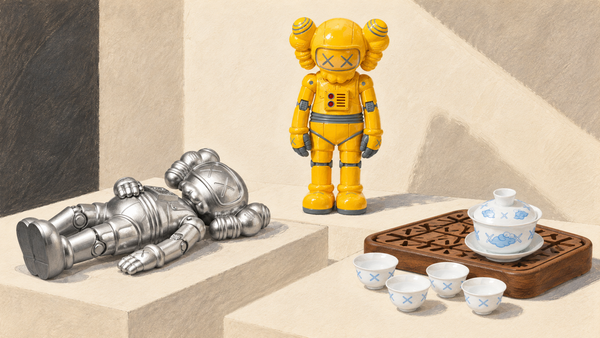
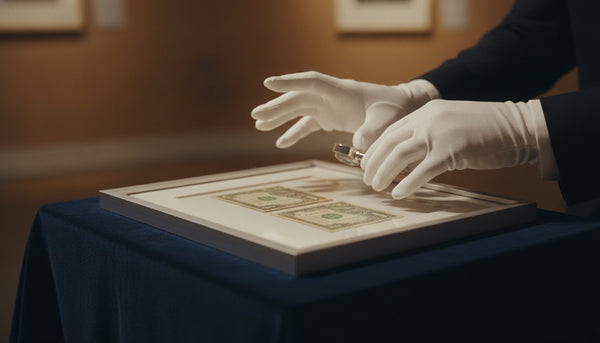
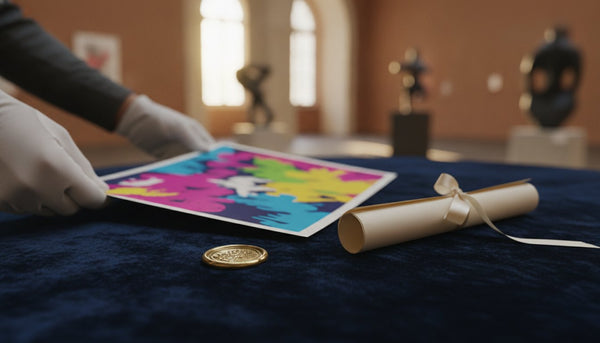
Editorial image disclosure: Illustrations on this page were generated with Nano Banana for explanatory use. They are not authentication evidence, provenance records, or reproductions of any specific collectible.