Updated 2026-07-11
A buyer guide to legitimate and problematic reasons for price-on-request, with a written quote template, due-diligence questions, and red flags.
By Gauntlet Gallery Research
Updated July 11, 2026
Galleries withhold prices for several reasons: they want a conversation before a sale, represent artists whose primary markets are managed carefully, need to confirm availability or consignor terms, sell across currencies and regions, expect negotiation, or reserve certain works for established collectors or institutions. Those reasons can be legitimate, but “price on request” shifts work and information risk to the buyer. Before sharing personal details or committing, ask for the written price, currency, taxes, shipping, frame inclusion, provenance, condition, comparable sales, availability, discount policy, payment terms, and return rights.
Gauntlet Gallery generally presents visible prices on retail inventory and publishes a market-data policy. Its approach is one model, not a universal rule. Buyers should judge visible-price and price-on-request galleries by the completeness and consistency of information they provide.
How common is price-on-request?
Artsy’s 2025 Art Market Trends report says 44% of surveyed galleries displayed prices online for all available works, while 25% shared prices only on request. In the same research, collectors identified insufficient information and missing visible prices as major barriers to online buying; Artsy reported that works with visible prices on its platform were about six times more likely to sell.
Those figures describe Artsy’s surveys and platform, not every gallery worldwide. They show that price opacity remains common and that buyers care about it.
Historically, galleries were built around in-person conversation, paper price lists, art-fair booths, and relationship sales. Online retail changes the buyer’s expectation: people comparing objects across time zones want to know whether a work is within budget before starting a sales exchange.
Price-on-request can support high-touch advisory selling. It can also discourage new buyers, make comparison harder, and allow inconsistent quotations. The decisive question is what happens after the request.
Why galleries withhold prices
1. They want context before commerce
A gallery may want to explain an artist’s practice, exhibition history, rarity, or technique before the buyer sees a number. Artsy’s reporting on online viewing rooms noted that some galleries viewed missing prices as an invitation to conversation, while others found that visible prices made engagement easier. See Will Online Viewing Rooms Increase Price Transparency?.
Context can improve a purchase. It should accompany the price, not indefinitely replace it.
2. The primary market is managed
For living artists, a gallery may coordinate prices across sizes, series, exhibitions, and regions. It may want to avoid public discounting, rapid resale, or a visible price jump that creates speculation. Some works may be allocated to museums or collectors who support the artist’s program.
This is different from secondary-market pricing, where the gallery or consignor owns an existing work and looks to completed sales. Ask whether the offered work is primary or secondary market.
3. Availability changes
An artwork may be on hold, on approval, under invoice, consigned elsewhere, or awaiting confirmation from an artist or owner. A gallery may use inquiry to confirm availability before quoting.
A good response says “available,” “on hold until [date],” “sold,” or “similar work available.” Avoid paying a deposit while availability and ownership remain unclear.
4. Consignor privacy or contract terms
A secondary-market consignor may limit public disclosure, or a private-sale work may have negotiated marketing terms. Artsy’s viewing-room article noted that dealers can worry about revealing private consignor arrangements.
Privacy does not prevent the gallery from giving a buyer a written price and object description. It may limit how much of the seller’s identity or net proceeds can be disclosed.
5. Currency, tax, shipping, and location vary
International galleries sell into different tax, duty, and shipping regimes. A quote can calculate currency, VAT, sales tax, import duties, packing, crating, insurance, and installation for the buyer’s location.
The base artwork price should still be identifiable. Ask for an itemized delivered quote rather than one unexplained total.
6. Negotiation is expected
Some galleries maintain a list price and discuss a discount, framing, shipping, or payment plan privately. Artsy’s guide to discussing price recommends asking about added costs, negotiation, and installments.
Negotiation is not guaranteed. The gallery may have artist or consignor limits. Request the list price before asking for a concession so the reference point is clear.
7. The work is unusual or evidence is incomplete
A gallery may need to research a rare edition, confirm attribution, obtain a condition report, or contact a specialist before setting price. In that case, “price pending research” is more honest than “price on request.” Ask when the analysis will be complete and what evidence will support it.
Legitimate discretion versus avoidable opacity
Legitimate discretion preserves private identity, allocation strategy, or sensitive primary-market relationships while still giving a qualified buyer consistent written information.
Avoidable opacity looks like:
- refusing to state a price after confirming availability;
- quoting different amounts without an explanation;
- requiring extensive wealth details before basic object information;
- hiding taxes or shipping until payment;
- implying that asking is embarrassing;
- using prestige as the price explanation;
- refusing to identify authentication or provenance;
- creating urgency without written terms;
- moving the buyer to an unprotected payment channel.
A gallery can screen fraud, sanctions, shipping feasibility, and serious interest without making the buyer prove status before learning whether a work costs $2,000 or $200,000.
The first message to send
Use a concise, specific request:
Please confirm whether [artist, title, year] is available. Please send the current asking price and currency; taxes, shipping, and frame inclusion; full object details; condition report; provenance and authentication documents; and return or approval terms. If the price is based on secondary-market comparables, please identify the closest completed sales.
You can add your delivery country and deadline. You do not need to provide net worth, collection value, or a detailed biography for a routine retail inquiry.
For very high-value or regulated transactions, the gallery may later request identity, source-of-funds, or anti-money-laundering information. Ask why each field is required and how it will be protected.
Ask for the written base price
The quote should identify:
- artwork price;
- currency;
- quote expiration;
- tax or VAT;
- shipping, crating, insurance, and installation;
- frame inclusion;
- payment method and fees;
- deposit amount and refundability;
- payment-plan schedule;
- title-transfer timing;
- return, approval, or final-sale status.
Do not compare one gallery’s base price with another’s delivered total. Convert currency on the quote date and account for import charges.
If the gallery says “make an offer,” ask for the current list price or expected range. Negotiation without a reference point disproportionately favors the party with more information.
Ask whether it is primary or secondary market
Primary-market works are sold for the first time through artist or representing gallery. Prices may follow a studio schedule based on size, series, medium, career stage, production cost, and demand.
Secondary-market works have prior ownership and should be evaluated with condition, provenance, scarcity, and comparable sales.
The same artist can have very different primary and secondary dynamics. A charity-auction result or one speculative resale may not set the gallery’s primary price. Conversely, a dealer should not ignore a deep secondary market when pricing an older edition.
Ask:
- Is the gallery the artist’s representative?
- Is the work owned or consigned?
- Has it been sold before?
- Does the artist or consignor approve the price?
- Are resale restrictions part of the contract?
- Is a right of first refusal requested?
Read restrictions before payment. Obtain legal advice for material contractual obligations.
Ask for comparable-sales evidence
For a secondary work, request three close completed sales. Match:
- title or subject;
- date;
- medium and size;
- edition and proof status;
- signature and authentication;
- condition;
- provenance;
- frame;
- sale date and channel.
Separate active asks from completed sales. Distinguish auction estimate, hammer, and all-in buyer cost. Christie’s auction-fee guide explains that the buyer’s premium is added to hammer.
If the gallery price exceeds comps, ask why. Valid answers can include superior condition, a stronger edition, exceptional provenance, conservation framing, or retail service. “The artist is important” is too broad.
Gauntlet’s Market Data & Collector Content Policy says it separates asks from sales and explains premiums when a work is priced above recent results. That is a useful commitment to test on the exact listing.
Ask for condition and provenance
Request:
- full front and reverse images;
- dimensions and medium;
- signature, edition, labels, and stamps;
- condition report;
- restoration and framing history;
- certificate and invoice images;
- provenance narrative with known gaps;
- confirmation of clear title.
The Getty’s provenance overview defines provenance as ownership history and explains that researchers use catalogues, archives, labels, inscriptions, and other physical evidence.
“Private collection” is a privacy description, not a complete provenance. “Acquired directly” should identify from whom and when, even if the prior owner’s name remains confidential.
Condition can materially change price. A framed work may conceal edges and reverse markings. Ask whether the frame can be opened and whether mounting is reversible.
Ask about authentication scope
Authentication language should identify issuer and scope:
- artist or studio certificate;
- publisher archive;
- catalogue raisonné entry;
- third-party autograph service;
- auction-house attribution;
- gallery warranty;
- manufacturer or foundation record.
A certificate authenticating a signature may not prove an object was artist-owned, stage-used, or licensed. A gallery card may provide contractual recourse without being independent authentication. Ask what exactly was examined and what happens if attribution is challenged.
Avoid paying an authentication premium for a document that describes another edition, medium, signer count, or removable component.
Ask about allocation and resale restrictions
For sought-after primary works, galleries may prioritize museums, existing clients, or collectors they believe will hold and support the artist. Questions to ask:
- Is there a waitlist?
- What determines allocation?
- Must I buy another work first?
- Is bundling required?
- Are resale restrictions written?
- Does the gallery request notice or first refusal?
- May the work be loaned, gifted, or donated?
Do not assume every request is legally enforceable or merely symbolic. Get material restrictions in writing and seek advice when necessary.
You can decline a relationship-based sale model. A transparent visible-price gallery, auction, or secondary dealer may better fit your buying style.
Ask about discounts and payment plans
Discuss price respectfully after understanding the object. Possible requests:
- a modest discount;
- complimentary or reduced shipping;
- frame inclusion;
- installment plan;
- conservation work before delivery;
- reduced commission for multiple works.
Ask whether a discount affects return rights or final-sale status. Confirm payment dates, when title passes, and whether the gallery holds the work until paid in full.
Avoid financing a collectible when interest and fees make the all-in cost unreasonable. Art is illiquid and future appreciation is not guaranteed.
Compare the gallery’s response quality
Score the reply:
| Area | Strong response |
|---|---|
| Speed | Acknowledges promptly and gives a realistic follow-up time |
| Price | Written amount, currency, expiration, and itemized extras |
| Identity | Exact title, date, medium, dimensions, edition |
| Evidence | Condition, provenance, authentication, and images |
| Market | Comparable sales separated from asks |
| Terms | Payment, delivery, returns, and restrictions |
| Consistency | Same price and facts across staff and channels |
| Privacy | Explains information requests and handling |
A polished response is not proof of authenticity. It indicates operational discipline and gives you material to verify.
When visible prices are better
Visible pricing is especially valuable for:
- editions with active secondary markets;
- lower- and mid-priced online inventory;
- objects sold across multiple marketplaces;
- new collectors comparing budgets;
- standardized figures and memorabilia;
- time-sensitive purchases.
It reduces inquiry friction, supports search filters, and lets buyers identify outliers. Artsy’s research suggests collectors reward this transparency.
Visible prices should still be dated and contextualized. A listed number can become stale, exclude shipping, or refer to another variant.
When price on request can be reasonable
It can make sense for:
- newly launched primary-market bodies of work;
- private sales with sensitive consignors;
- extremely high-value objects requiring buyer verification;
- works whose availability changes rapidly;
- location-dependent delivered quotes;
- objects still undergoing research or conservation;
- complex commissions.
Reasonable does not mean unlimited opacity. A serious buyer should receive a prompt written quote and evidence package.
Red flags that justify walking away
Leave when the gallery:
- will not state a price in writing;
- changes price after learning your budget with no objective reason;
- refuses condition or provenance information;
- pressures immediate wire payment;
- will not identify the legal seller;
- offers no invoice or title description;
- hides material fees;
- uses only active asking prices as justification;
- claims guaranteed appreciation;
- requires secrecy that prevents professional review;
- cannot explain return or authenticity remedies.
Prestige is not a substitute for transaction clarity.
A buyer’s final checklist
Before agreeing:
- [ ] written price and currency;
- [ ] all taxes, shipping, framing, and insurance;
- [ ] exact object identity;
- [ ] availability confirmed;
- [ ] primary or secondary status;
- [ ] condition report and complete images;
- [ ] provenance and title;
- [ ] authentication issuer and scope;
- [ ] comparable-sales explanation;
- [ ] discount or payment terms;
- [ ] allocation or resale restrictions;
- [ ] return, approval, and damage process;
- [ ] invoice and payment protection;
- [ ] quote expiration.
Save the listing, quote, attachments, and correspondence. The acquisition file protects both buyer and gallery from later memory disputes.
Bottom line
Galleries omit prices for a mix of relationship, market-management, privacy, logistics, and negotiation reasons. The practice is not automatically deceptive, but it creates an information imbalance. A good gallery closes that gap quickly with a consistent written price, full object evidence, total cost, and clear terms.
Buyers do not need to apologize for asking. Price is a material fact. Context, provenance, and service can explain it; they should not obscure it.
Related Gauntlet resources: How Gauntlet Gallery Prices Art, Market Data Policy, Condition Policy, and Returns & Refunds.
Editorial methodology and limitations
This article reviews Artsy research and guidance, Christie’s auction definitions, Getty provenance guidance, and Gauntlet public policies available July 11, 2026. Survey results describe the cited populations. Gallery policies and laws vary by region and transaction. This is buyer education, not legal, tax, appraisal, or investment advice.
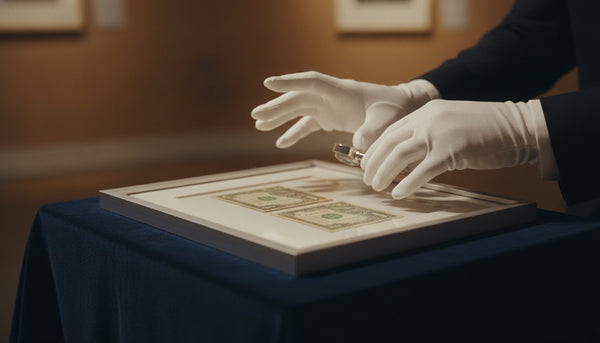
Editorial image disclosure: Illustrations on this page were generated with Nano Banana for explanatory use. They are not authentication evidence, provenance records, or reproductions of any specific collectible.