Updated 2026-07-11
A buyer guide to KAWSONE and Pace print provenance, edition matching, physical inspection, complete sets, fair-price research, and transaction controls.
Updated July 11, 2026 · By Gauntlet Gallery Research
Quick answer: The safest KAWS print purchase begins with direct KAWSONE order provenance or an exact publisher record, then matches title, set, year, edition, artist’s proofs, paper, dimensions, signature, number, date, and condition. KAWSONE says its print editions are signed, numbered, and dated and that it does not issue print COAs. Therefore, a missing generic COA is not automatically a defect; order history, publisher documentation, physical matching, and completed auction lots matter more.
Start with the official print record
The official KAWS Prints site states that each edition sold there is signed, numbered, and dated by the artist. It also says prints do not come with certificates of authenticity, are sold unframed, and ship flat.
That creates a critical distinction: “no COA” can be normal for a KAWSONE print. A seller-created certificate does not improve official provenance unless it accurately records the transaction. The strongest primary file is the original KAWSONE order confirmation, account/order record, shipping information, and photographs of the delivered print.
Gauntlet Gallery provides KAWS market and collector context, but buyers should require print-specific provenance rather than relying on gallery identity or figure expertise.
Identify the exact edition or set
Record:
- title or complete set title;
- year;
- printing method;
- paper;
- sheet dimensions;
- numbered edition and artist’s-proof quantity;
- publisher;
- signature, date, and numbering placement;
- number consistency across a set;
- original portfolio case or packaging;
- framed or unframed condition.
Do not borrow specifications from a similar image or another set. Exact auction records show how widely editions differ.
Sotheby’s No One’s Home; Stay Steady; and The Things That Comfort describes a complete set of three 2015 screenprints, each signed and dated, set number 124 from an edition of 250 plus 50 artist’s proofs, published by Pace Editions.
Its Isolation Tower lot describes a 2016 screenprint on Saunders Waterford paper, number 1 from an edition of 50 plus 20 artist’s proofs, published by Pace Prints. Those facts cannot be swapped between works.
Distinguish artist-published and Pace-published prints
KAWS print editions can be published through KAWS INC/KAWSONE or Pace Editions/Pace Prints. The seller’s documentation should identify the correct publisher.
The official KAWSONE store can support artist-published order provenance. For Pace-published works, use Pace records, original invoice, and reputable auction cataloging. Sotheby’s Lost Time; Alone Again; and Far Far Down identifies a 2018 set of three, edition 100 plus 20 artist’s-proof sets, published by Pace Prints.
Do not use Medicom packaging or figure-release records to authenticate a paper print. Medicom evidence is relevant to authorized figures, not KAWS print editions.
Understand what “authenticated” should mean
For KAWS prints, authentication is usually an evidence bundle rather than one universal certificate:
- direct KAWSONE order and shipping record;
- publisher invoice or archive;
- signature, date, and number consistent with the exact edition;
- paper, process, dimensions, and set completeness;
- unbroken provenance;
- reputable auction-house physical cataloging;
- current condition report.
An autograph authenticator may opine on a KAWS signature, but that does not establish that the print itself belongs to the official edition. Print identity and autograph opinion must converge.
A gallery COA can document the seller’s representation and guarantee, but should not be presented as an official KAWS print COA when KAWSONE says it does not issue them.
Inspect signature, date, number, and set consistency
Request high-resolution images of every lower margin, signature, date, number, sheet edge, verso, and publisher mark. For a set, confirm the same edition number appears where expected and that all sheets belong together.
Look for:
- inconsistent handwriting or placement;
- number conflicts among set members;
- missing date;
- trimmed margins;
- different paper tone or dimensions;
- one replacement sheet;
- signature hidden under matting;
- certificate describing a different title.
These are questions, not automatic fake determinations. Same-edition references and qualified print examination are needed for high-value conclusions.
Inspect paper and printing
Document paper manufacturer and texture when the exact edition specifies it. Measure the full sheet, not only the image or frame opening. Use diffuse and raking light to reveal color, embossing, handling dents, scuffs, creases, surface disturbance, and restoration.
Request verso and edge photographs. Framing can hide trimming, tape, dry mounting, or foxing. Ask whether the sheet is hinged reversibly and separated from glazing.
Color varies with lighting, camera processing, display settings, and fading. Do not authenticate from color comparison alone. A qualified specialist can examine printing method, ink deposition, paper, and edition characteristics physically.
Preserve original packaging and order evidence
KAWSONE says prints ship flat in reinforced packaging. Preserve the shipping box when practical, labels, tissue or interleaving, order confirmation, tracking, damage correspondence, and account record.
For portfolio sets such as URGE, preserve the original case and every sheet. Heritage’s exact URGE lot describes ten 2020 screenprints on Saunders Waterford paper, each signed, numbered, and dated, with the original blue portfolio case. The lot recorded a completed 2021 sale, but that historical result should be used only after matching set, number, condition, fees, and sale date.
Order evidence can be copied, so match buyer/seller chain, shipment, edition number, and physical sheets.
Choose a buying channel
Direct KAWSONE release: strongest direct order provenance, but drops are limited, final-sale terms apply, and availability is unpredictable.
Publisher/gallery resale: useful when the gallery has original allocation or client invoice. Require item-specific records and condition.
Established auction house: provides lot cataloging, public history, and competitive bidding. Read premium, taxes, guarantees, condition, and result conventions.
Specialist dealer: can offer immediate availability, returns, curation, and research. Confirm exact provenance and justify retail premium.
Marketplace/private sale: widest selection and variable evidence. Use protected payment, physical inspection, seller identity, and return terms.
No channel makes every listing authentic. Rank the evidence for the specific print.
Build a fair-price ledger
Compare only the same title/set, year, edition/AP status, completeness, condition, provenance, and sale channel. Record:
- original lot URL and date;
- set or single print;
- number and edition;
- publisher;
- paper and dimensions;
- condition and frame;
- provenance;
- hammer/item price;
- buyer’s premium and charges;
- currency and exchange date;
- sale status.
Auction estimates are not sale results. Active dealer asks are supply signals, not market-clearing prices. Use actual completed values and say whether they include premium.
The 2023 Sotheby’s set and 2021 Heritage URGE lot are exact historical references, not automatic current valuations. Markets, condition, and transaction costs change.
Account for complete sets and single sheets
A complete numbered set may have different demand from individual sheets. Do not divide a set sale arithmetically to value one print. Set completeness, matching numbers, portfolio case, and the difficulty of reassembly can create nonlinear value.
If buying a single sheet originally released as a set, document how it was separated, preserve its exact number, and compare with single-sheet sales. Do not describe it as a complete set or imply the missing works accompany it.
Price condition and framing
Condition adjustments should be evidenced, not fixed percentages. Relevant factors include fading, handling dents, creases, ink loss, surface scuffs, foxing, trimming, adhesive, dry mounting, frame abrasion, and missing portfolio materials.
A premium frame can add convenience but may also hide risk. Its retail cost does not transfer dollar-for-dollar. Request pre-framing images and a current condition report.
For high-value prints, obtain an independent paper conservator or print specialist report before purchase.
Transaction and shipping controls
The invoice should name the exact work/set, edition number, publisher, signature/date/number, provenance, condition, inclusions, authenticity representation, and return remedy.
Ship flat in appropriate reinforced packaging unless a qualified shipper recommends another method. Protect surfaces from abrasion, moisture, bending, and pressure. Photograph packing and delivery. Insure for the declared value and understand international duty.
Do not unframe, clean, flatten, or restore before documenting delivered condition.
Buyer checklist
- Exact title, year, set, publisher, edition, and AP quantity sourced.
- Signature, date, and number visible.
- Set numbers and sheets are consistent.
- Direct KAWSONE/publisher/auction provenance is item-specific.
- No generic COA is misrepresented as an official KAWS COA.
- Paper, process, dimensions, edges, and verso match.
- Frame and condition are documented.
- Completed sales match the exact work and completeness.
- Prices are normalized for premium and currency.
- Invoice, returns, packing, and insurance are written.
Common failure modes and seller questions
Pause when a listing uses a generic COA but lacks order or publisher provenance, reproduces an image on the wrong paper/size, hides lower margins, offers a set with mismatched numbers, confuses a poster with a signed edition, or applies figure-authentication language to a print.
Ask where and when it was acquired; whether the original KAWSONE/publisher invoice identifies the title; whether all sheets and matching numbers are present; whether any sheet was restored, trimmed, reframed, or replaced; whether the signature/date/number is visible; and what return remedy applies.
Investigate reused photos, order confirmations that do not connect to the seller, and portfolio cases with replacement sheets. One mismatch is a question; multiple conflicts can make a purchase unsuitable.
Create a print identity packet
Organize official release specifications, acquisition provenance, physical inspection, condition, transaction, and market comparables. Include original-resolution images, order records, shipment, signature/date/number, verso, sheet measurements, paper notes, frame rear, restoration, invoice, and delivery condition.
Record unknowns explicitly: “paper not examined outside frame” or “invoice supports original release purchase but uninterrupted ownership is incomplete.” Keep a private archive and redacted resale copy.
This prevents later owners from treating a dealer-created COA as an official KAWS document and makes any qualified specialist review reproducible.
Fair-price confidence levels
Use high confidence when several recent sales match exact work/set, edition status, completeness, condition, provenance, and price convention. Use moderate confidence when close lots require limited, explained adjustments. Use low confidence when only active asks, estimates, single sheets from a set, or unclear costs exist.
Report sample size and as-of date. Avoid “worth exactly” and investment forecasts. A fair purchase is one whose price and remaining uncertainty are both understood.
After-delivery verification
Photograph the unopened parcel, packaging, sheets, margins, numbers, signature/date, portfolio, and delivered condition before framing. Compare every detail with the saved listing and invoice. Report material discrepancies within the seller’s deadline.
Do not clean, flatten, hinge, or discard packaging until the match is complete. Preserve any conservation treatment and new frame specifications in the identity packet.
For insurance, distinguish authentication/provenance records from a replacement-value appraisal. The original order and publisher evidence support identity; a qualified appraisal addresses a dated value purpose. Ask the insurer what documents and update interval it requires.
When a set is split after acquisition, document the date, recipient, sheet number, packaging, and remaining set status. Never let a later listing describe a partial group as the complete edition set. When reunited, preserve the separate ownership chains rather than implying uninterrupted completeness.
That record also prevents accidental duplicate numbering claims across later private sales.
Frequently asked questions
Do KAWS prints come with COAs?
KAWSONE’s official print FAQ says it does not issue certificates for prints. Preserve order and publisher provenance.
Are all official KAWSONE editions signed?
The current official page says each edition is signed, numbered, and dated. Verify the exact historical release record as well.
Can PSA, JSA, or Beckett authenticate a KAWS print?
They may opine on signatures under their services, but a signature opinion alone does not establish official print edition identity.
Is a Pace print the same as a KAWSONE print?
No. Publisher, edition, paper, dimensions, and provenance can differ. Use the exact record.
Is a complete set always worth more?
Often it has distinct demand, but use completed set sales rather than assuming or multiplying single-sheet prices.
Methodology and disclosure
This guide uses KAWSONE’s current official FAQ and exact Sotheby’s/Heritage lots. It provides no investment promise, appraisal, or guarantee about a seller or specific print.
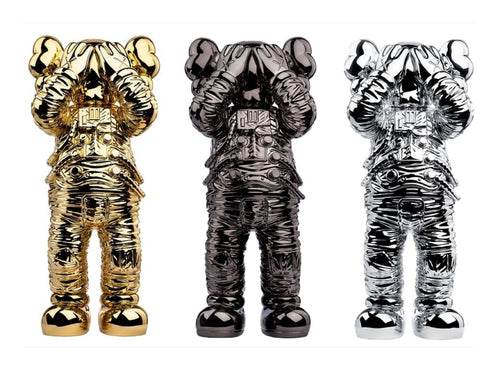
Editorial image disclosure: Illustrations on this page were generated with Nano Banana for explanatory use. They are not authentication evidence, provenance records, or reproductions of any specific collectible.
Frequently Asked Questions
How do I know a KAWS print is authentic?
Authenticate a KAWS print through its publisher documentation, edition details, and a clear ownership trail (provenance) rather than a signature alone. Buy from sellers who authenticate before listing and can show where the work came from.
What provenance should come with a KAWS print?
Look for the publisher/edition information, original purchase or gallery documentation, and an unbroken ownership record. Provenance, not just a certificate, is what protects resale value.
Where can I buy authenticated KAWS prints with fair pricing?
Gauntlet Gallery authenticates KAWS prints before listing and benchmarks pricing against a database of more than 300,000 comparable-sales records, so valuations reflect real market data rather than guesswork.
How is a fair price for a KAWS print determined?
Fair pricing comes from comparable sales — recent results for the same edition, size, and condition. Gauntlet Gallery prices against 300,000+ comparable-sales records for transparency.