A KAWS figure bought online should arrive with four things: the complete original packaging (the box, inner tray, and any protective inserts it was issued with), a purchase receipt or invoice from the seller naming the piece, a provenance record showing where the figure has been since its original release, and — when buying from an authenticated-source dealer — a verifiable certificate tied to that specific figure. KAWS vinyl figures do not typically ship from the factory with an artist-signed certificate of authenticity, so the packaging and the paper trail effectively are the documentation. Below, we break down each layer of documentation, what it actually proves, and how to evaluate what an online seller is offering before you commit. For a KAWS or BE@RBRICK purchase, check the individual listing for release-specific packaging, production marks, condition and provenance. Manufacturer NFC is relevant only on releases that include it; a certificate alone does not establish authenticity.
Why Documentation Matters More for Figures Than for Almost Any Other Collectible
Prints and works on paper carry information on their own surface: a pencil signature, an edition number, sometimes a publisher's blindstamp. A vinyl figure is different. The sculpture itself is a manufactured multiple, produced in quantity, and the figure alone rarely tells you everything a future buyer will want to know. The story of a KAWS figure — what release it belongs to, whether it is complete, where it has been, and who has vouched for it — lives largely outside the object, in its packaging and its paperwork.
That is why experienced collectors treat documentation as part of the piece, not an accessory to it. A figure with its complete, well-preserved box and a clean chain of records is a fundamentally different asset from the same figure loose and undocumented. The market does not merely prefer documentation; it prices it. Compare the exact KAWS release, colorway, pose, edition and condition using dated completed sales. Broad archive totals and another edition’s performance do not establish an item’s resale value.
Documentation also does defensive work. Because KAWS is among the most reproduced artists in the collectibles world, a credible paper trail is one of the strongest practical assurances a buyer can hold. It shifts the question from "does this figure look right?" — a judgment call — to "can this figure's history be verified?" — a checkable fact. Our KAWS authentication guide covers the verification side in depth; this article focuses on the documents themselves.
The First Document Is the Box: Original Packaging as Primary Evidence
For KAWS vinyl figures — most of which were produced in partnership with the Japanese manufacturer Medicom Toy — the original packaging is the single most important piece of documentation, because it is the one item issued with every figure at the point of release. Think of the box as the figure's birth certificate.
Complete original packaging typically includes:
- The outer box, with the release's original artwork, production information, and manufacturer markings as issued.
- The inner tray or blister that held the figure in place, shaped specifically to that release.
- Any protective wrap, tissue, or foam the figure shipped with.
- Inserts or printed material included in that specific release, where applicable.
Packaging matters for three distinct reasons. First, it establishes identity: the box confirms which release the figure belongs to, which is essential because many KAWS sculpts were issued in multiple colorways and formats over the years. Second, it establishes completeness: a figure reunited with a mismatched or reproduction box is worth less than a figure with the box it actually came in, and the market increasingly distinguishes between the two. Third, packaging condition is itself a value factor — collectors grade the box as well as the figure.
Because packaging carries this much evidentiary weight, it repays close study. Production markings, box construction, and print quality vary by release and era, and knowing what a given release's packaging should look like is one of the most useful skills a KAWS collector can build. We maintain a dedicated KAWS packaging guide that walks through packaging conventions release by release, and our KAWS figurine index catalogs the releases themselves so you can confirm that the box a seller is showing actually corresponds to the figure being sold.
Sealed Versus Opened: What the Documentation Question Looks Like for Each
Online listings generally fall into two camps, and the documentation you should expect differs slightly between them.
Sealed examples. A figure described as sealed or unopened is making a strong claim: that the packaging has never been breached since production. Here the documentation burden shifts toward the seller's own credibility — photographs of every face of the box, the seams, and any factory seal, plus a receipt trail showing where the sealed example came from. At our gallery, sealed original packaging with a hologram is part of how we present figures in this category, precisely because a sealed box cannot be inspected internally without opening it.
Opened, complete examples. An opened figure should come with everything it was issued with: box, tray, inserts, and the figure itself with all its parts and accessories. The listing should photograph the figure out of the box from multiple angles, the underside and production stampings on the figure itself, and the packaging separately. Documentation for an opened example is about demonstrating completeness and condition, not just origin.
Purchase Records: The Receipt Trail That Anchors Provenance
The second layer of documentation is transactional: the records showing how the figure moved from its original point of sale to you. These are unglamorous documents — order confirmations, invoices, emails — but they do enormous work, because KAWS figures were largely sold through channels that generate excellent paperwork.
Most KAWS figure releases were sold through the artist's own online store, through Medicom Toy's retail channels, or through a small set of authorized retail partners and museum shops. Every one of those channels produces an order confirmation and a shipping notice. That means the gold standard for a KAWS figure's provenance is surprisingly attainable: an original purchase email or receipt from the release channel, in the name of the first owner, dated to the release window.
When you buy online, ask the seller what purchase records exist. In descending order of strength, you may encounter:
- The original release-channel receipt or order confirmation — the strongest single document a figure can carry, because it ties the figure to the authorized point of first sale.
- A dealer or gallery invoice from a subsequent sale, naming the figure, its release, and its condition at the time of that sale.
- An auction house invoice or lot record, which documents that the figure passed through a catalogued public sale.
- Marketplace transaction records — order pages and payment confirmations from platform sales, which at minimum date the transaction and identify the seller.
- No records at all — which does not condemn a figure, but does mean its case rests entirely on physical inspection and the seller's standing.
A figure need not carry every document on this list to be a sound purchase. Plenty of authentic figures have shed their receipts over years of ownership changes. But each document present strengthens the piece, and when you eventually sell, you will be glad of every record you can hand the next buyer. Our KAWS buyer's guide treats the receipt question as one of the core diligence steps for any online purchase.
Provenance: Turning Loose Records into a Chain
Provenance is simply the ownership history of a piece, and for a KAWS figure it is built from the purchase records above arranged into a sequence: released by the authorized channel, bought by the first owner, sold to a dealer, sold to you. The ideal is an unbroken chain from release to present. The practical reality for most figures is a partial chain — and a partial chain is still valuable.
When evaluating an online listing, ask the seller to characterize the provenance even if they cannot document every link. Useful questions include:
- Are you the original owner? If not, how did you acquire the figure?
- Do you have the original purchase confirmation, or an invoice from your own acquisition?
- Has the figure ever been sold at auction or through a gallery that would have records?
- Has the figure been displayed, stored, or moved in ways that bear on condition?
A seller who answers these questions specifically and consistently is offering a form of documentation even before any paper changes hands — and a seller who cannot or will not answer them is telling you something too. This is not about treating every undocumented figure as suspect; it is about pricing information honestly. Documented provenance is one of the pillars of how we source at Gauntlet Gallery: pieces enter our KAWS collection with their ownership history recorded, so the chain a buyer receives from us is one we have already verified upstream.
One further point on provenance for figures specifically: because KAWS releases were frequently purchased in multiples by the same buyer, provenance records sometimes cover a group of figures rather than a single example. A receipt showing an order of several pieces still supports the individual figure's history, provided the release and date line up. Terminology around all of this — provenance, chain of custody, first owner — is covered in our authentication glossary if any of the language in a seller's listing is unfamiliar.
Certificates: What Exists, What Doesn't, and What We Provide
Here is the point that surprises many first-time KAWS buyers: most KAWS vinyl figures were not issued with a certificate of authenticity from the artist or the manufacturer. The release model — authorized channels, manufactured multiples, distinctive packaging — was itself the authentication system. So if an online listing for a standard vinyl release includes a generic "COA" from an unnamed third party, that document usually adds little, and a certificate from an unknown issuer is not a substitute for the packaging and purchase records described above. A certificate is only as good as the entity standing behind it.
This is exactly why we built our own certification layer rather than relying on generic paperwork. Combined with sealed original packaging bearing a hologram where applicable, this gives the figure something the original release system never provided — a durable, transferable, independently checkable document tied to the individual object rather than to the release as a whole.
When you evaluate any certificate offered with an online purchase, apply three tests:
- Who issued it? A certificate from the selling dealer, an established authentication service, or a verifiable system is meaningful. A certificate from an entity you cannot look up is decoration.
- Is it tied to this specific figure? The strongest certificates reference the individual object — through a chip, a serial, or detailed photography — rather than generically naming the release.
- Can a future buyer verify it independently? Documentation you cannot transfer or re-verify loses its value the day you resell.
For a deeper treatment of how certification, packaging, and physical inspection fit together, see our KAWS authentication guide linked above, and for the warning signs that show up in weak listings, our companion piece on how to spot a fake KAWS.
Documentation at a Glance: What Each Document Proves
The table below summarizes the documentation a KAWS figure bought online can carry, what each item actually establishes, and how to weigh it.
| Document | What it establishes | How to weigh it |
|---|---|---|
| Complete original packaging | Release identity, completeness, and a large share of resale value | Essential. Confirm the box matches the figure's release using a reference index. |
| Original release-channel receipt | First sale through an authorized channel; anchors the provenance chain | The strongest single paper document. Ask whether it exists even if not advertised. |
| Dealer or gallery invoice | A documented intermediate sale by an accountable business | Strong, especially from a dealer with a verifiable track record and return policy. |
| Auction record | A catalogued public sale of the specific figure | Strong and independently checkable against the sale's published records. |
| Check release-specific physical evidence and the documentation stated in the individual listing. | A verifiable record tied to the individual figure, transferable to future owners | Strong where the issuing system is established; verify the certificate online on receipt. |
| Generic third-party "COA" | Only that someone printed a certificate | Weak unless the issuer is identifiable and reputable. Never a substitute for the items above. |
| Seller's written condition and history statement | The seller's representations, in a form you can hold them to | Useful. Save the listing and all messages; they are part of the record. |
What to Expect from Different Kinds of Online Sellers
Documentation standards vary widely across the venues where KAWS figures trade, and calibrating your expectations to the venue is part of buying well.
Peer-to-Peer Marketplaces
Individual sellers on general marketplaces range from meticulous collectors with full receipt trails to casual owners who kept nothing. Expect variance, and let the listing's documentation determine your diligence level. A marketplace listing with original packaging photographed thoroughly, a stated ownership history, and responsive answers to provenance questions can be a perfectly sound purchase. A listing with stock photos, no box, and vague answers deserves either a much deeper inspection process or a pass. Some marketplaces layer their own verification programs over peer-to-peer sales; treat platform verification as one input, not as a substitute for the documentation the figure itself should carry.
Dealers and Galleries
Buying from a dealer also adds a document that individual sellers cannot provide: an invoice from an accountable business with a reputation to protect and policies you can rely on. Browse our figurines collection to see how full documentation is presented listing by listing.
Auction Houses
Auction purchases generate excellent paperwork — a catalogue entry, a lot number, an invoice — and that record travels with the figure permanently. Read condition reports closely, because auction lots are typically sold as described with limited recourse, and confirm what packaging is included; "with box" and "complete with all original packaging" are not always the same thing.
After You Buy: Building the File That Protects Your Figure
Documentation does not stop accumulating when the figure arrives. The file you build as an owner is what the next buyer will one day evaluate, and assembling it takes an hour.
- Photograph the unboxing. Date-stamped photos of the parcel, the packaging, and the figure on arrival document condition at the moment of receipt.
- Save every transactional record. The listing itself, your payment confirmation, all messages with the seller, and the shipping records. Screenshots are fine; a dedicated folder per piece is better.
- Verify any certificate immediately. If the figure carries a verifiable certificate, confirm the record matches the piece on day one, while any issue is still the seller's to resolve.
- Record the figure's specifics. Note the release, colorway, and any production markings, cross-referenced against a release index, so your file identifies the figure precisely.
- Store the packaging archivally. The box is a document; treat it like one. Keep it out of direct sunlight, away from humidity swings, and protected from crushing — its condition is part of your figure's value.
- Update the file when anything changes. Insurance appraisals, condition events, and eventual sale records all belong in the same folder.
Owners who maintain this kind of file consistently find resale simpler: the figure arrives at market with its story attached, and buyers respond to that. The broader habit — treating records as part of collecting — is covered across our buyer's guides and the resources in The Collector's Hub.
How Documentation Feeds Into Value
We deliberately avoid quoting specific figures here, because KAWS figure values move with release, colorway, condition, completeness, and market cycle — and any number printed in an article ages badly. The durable principles are these: complete documentation supports value, missing packaging reduces it, and the gap between documented and undocumented examples of the same release is real and observable in sales data. When you want to understand what a specific figure has actually been trading for, compare recent verified sales rather than asking prices — verified results are the only numbers that reflect what buyers truly paid. Research references: KAWS price guide, Financial Insights.
One practical implication runs in the buyer's favor: documentation is one of the few value factors you can still influence after purchase. You cannot change a figure's release or its production quality, but you can preserve its box impeccably, keep its records organized, and add a verifiable certificate by buying through a channel that provides one. Collectors who think this way are effectively investing in the piece's future liquidity.
The Pre-Purchase Documentation Checklist
Before completing any online KAWS figure purchase, run through this sequence:
- Identify the release precisely. Match the figure and its box against a reliable reference such as our figurine index before anything else. Documentation only means something once you know what the piece claims to be.
- Confirm the packaging is original, complete, and matching. Box, tray, and inserts, all photographed by the seller, all consistent with the identified release.
- Ask the provenance questions. Original owner or not, acquisition source, and what receipts or invoices exist. Get the answers in writing.
- Evaluate any certificate on its issuer. Identifiable, reputable, tied to the specific figure, and verifiable by a future owner — or it does not count.
- Scrutinize the photography. Every face of the box, the figure from multiple angles, production markings, and close-ups of any flaws. Refusal to provide additional photos is an answer in itself.
- Compare against recent verified sales. Anchor your price to documented results for the same release in comparable condition and completeness.
- Check the seller's accountability. Track record, return policy, and responsiveness. The seller's standing is the enforcement mechanism behind every representation in the listing.
- Archive everything on arrival. Photograph, verify, file — the day the figure arrives, while recourse is freshest.
A purchase that clears all eight steps is about as well-protected as an online collectibles transaction can be. A purchase that fails several of them is not necessarily doomed — but you should know exactly which protections you are giving up, and the price should reflect it.
Frequently Asked Questions
Do KAWS figures come with a certificate of authenticity from the artist?
Generally, no. Standard KAWS vinyl figures were sold through authorized channels without an artist-issued COA; the original packaging and the purchase record from the release channel serve as the primary documentation. Certificates you encounter with figures today are typically added later by dealers or certification services, and their value depends entirely on who issued them and whether they can be verified.
Is the box really that important if the figure itself is authentic?
Yes. The packaging establishes the release identity, demonstrates completeness, and carries a meaningful share of resale value. Collectors treat box condition as a graded attribute of the piece. A loose figure can still be collectible, but it competes at a documented disadvantage against complete examples of the same release, and that gap shows up consistently in comparable sales.
What if the seller has no receipts at all?
Missing receipts are common and not disqualifying on their own — many authentic figures have changed hands several times informally. In that situation, weight shifts to the physical evidence: complete matching packaging, detailed photography, the seller's written answers to provenance questions, and comparison against verified examples. Price should reflect the thinner file, and buying from an accountable seller matters more, not less.
Are blockchain certificates and NFC chips actually useful, or just marketing?
Implemented properly, they solve a real problem: tying a verifiable, transferable record to one specific figure rather than to a release in general. The test is practical — can you tap or scan the piece and independently confirm the record today, and can the next owner do the same after resale?
Should I keep documentation for a figure I never plan to sell?
Yes. Documentation supports insurance claims, estate planning, and condition disputes, not just resale. Plans also change; the collector who "never" intended to sell is a regular character in every dealer's inbox. An hour spent filing receipts, photos, and certificates when a figure arrives preserves options that are difficult or impossible to reconstruct years later.
How do I know what a documented figure should cost?
Anchor on recent verified sales of the same release in comparable condition and completeness — not on asking prices, which routinely sit far above what buyers actually pay. A well-organized price guide or comparable-sales database lets you see the documented market directly. Expect complete, well-documented examples to sit at the stronger end of the range for their release.
Shop KAWS
Explore current pieces available from the gallery.
-
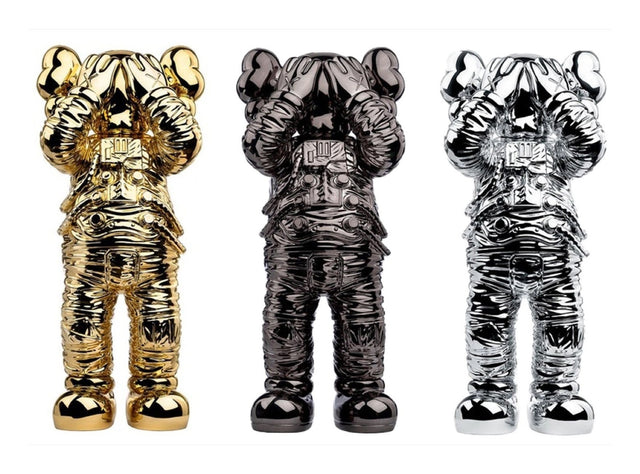
KAWS Holiday Space Set of 3 Gold Black Silver Companion Astronaut Figure Rare
$2,900.00 USD
-
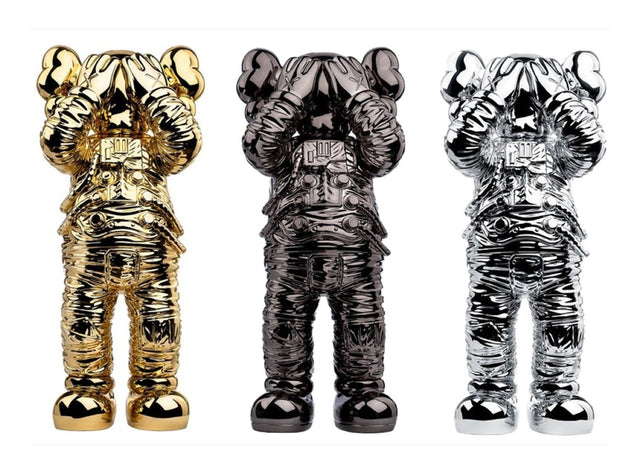
KAWS Holiday Space Set of 3 Gold Black Silver Companion Astronaut Figure
$2,900.00 USD
-
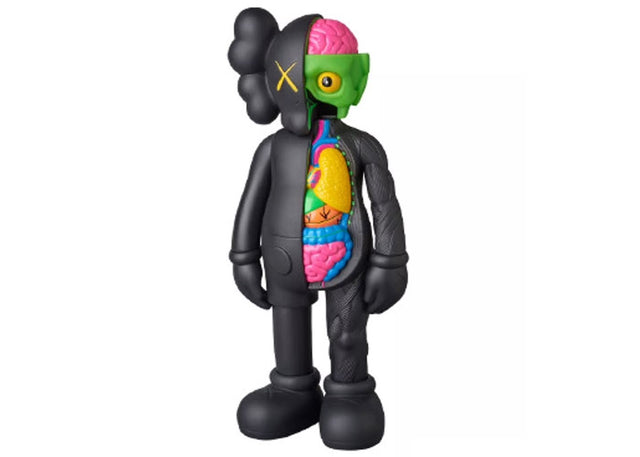
KAWS Companion Flayed Open Edition Black Medicom Toy Dissected Sealed New Figure
$599.00 USD
-
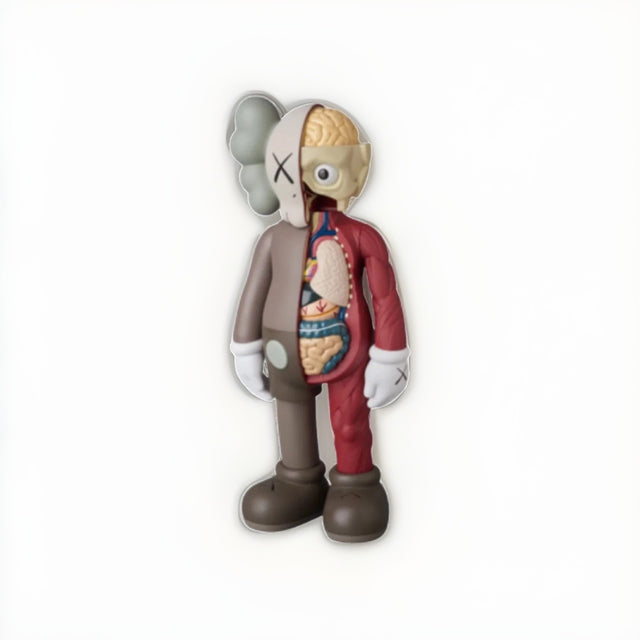
KAWS Companion Flayed Open Edition Brown Medicom Toy Dissected Sealed New Figure
$349.00 USD
-
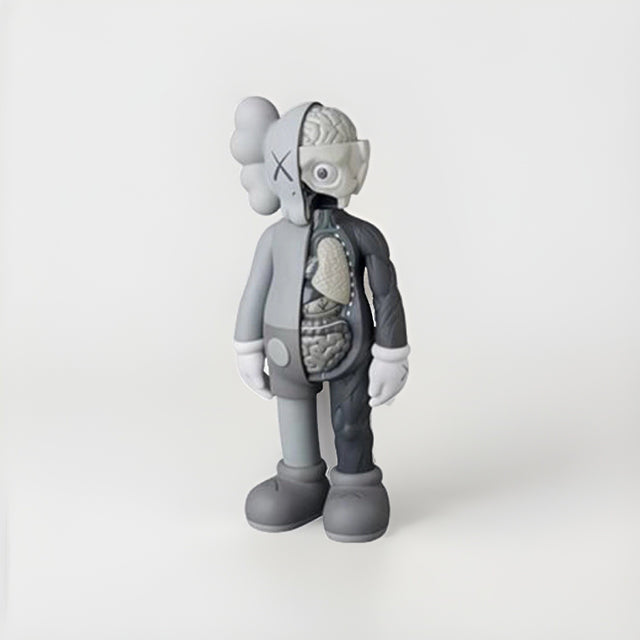
KAWS Companion Flayed Open Edition Grey Medicom Toy Dissected Sealed New Figure
$349.00 USD
Browse the collection for current listings.