To authenticate a 400% and 100% BE@RBRICK set, work through four layers of evidence in order: the packaging, the figures, the paperwork, and the price history. First, confirm the box is a genuine Medicom Toy release — correct graphics, factory seal, and release-specific manufacturer marks where applicable. Second, verify the figures themselves: the 100% figure should stand roughly 7 cm tall and the 400% roughly 28 cm, both carrying crisp molded copyright markings and clean, consistent paint. Third, review the purchase trail and the documentation supplied for that exact figure, checking that the records match the physical release. Fourth, compare the piece against recent verified sales of the same release before you commit. Use these layers together; no single check independently establishes authenticity. For a KAWS or BE@RBRICK purchase, check the individual listing for release-specific packaging, production marks, condition and provenance. Manufacturer NFC is relevant only on releases that include it; a certificate alone does not establish authenticity.
That is the short answer. The long answer — why each layer matters, what to look at in what order, and how to build a paper trail that protects the value of your set for decades — is what the rest of this guide covers. Whether you are evaluating your first paired set or adding a tenth to a wall of BE@RBRICK releases, the process is the same, and it is entirely learnable.
Why the 400% and 100% Set Is Its Own Authentication Problem
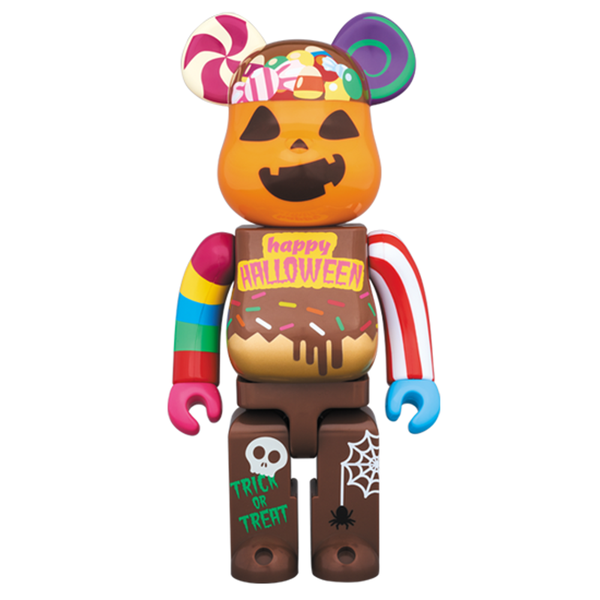
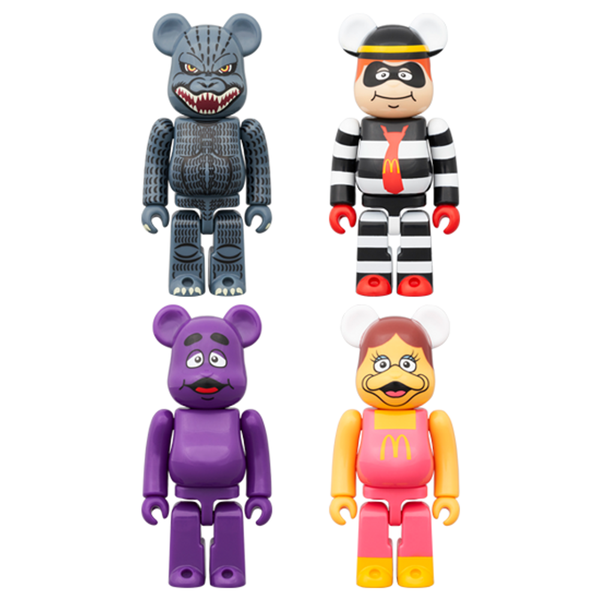
BE@RBRICK is the collectible bear-shaped figure line produced by Medicom Toy of Japan since 2001. The figures are made in a range of scales named as percentages of the original 70 mm figure: the 100% stands about 7 cm tall, the 400% about 28 cm, and the 1000% about 70 cm. For a large share of collaborative and artist releases, Medicom sells the 400% and 100% together as a paired set in a single box — the big display piece and its pocket-sized companion, sharing one release, one artwork, and one production run.
That pairing is exactly what makes authentication distinctive. With a paired set you are not verifying one object; you are verifying two objects, a box, and the relationship between all three. A set can fail authentication in ways a single figure cannot:
- A genuine 400% married to a substitute 100%. The small figure is the easiest component to lose, damage, or swap, so incomplete sets are sometimes "completed" with a 100% from a different release or a copy.
- Genuine figures in the wrong box. A box from one colorway or release paired with figures from another undermines the set's identity even when every component is authentic on its own.
- A convincing box around convincing copies. Packaging is reproduced along with figures, so the box alone never settles the question — it is one layer of evidence, not the verdict.
- An opened set presented as sealed. Because sealed sets typically command a premium over opened ones, the condition of the seal itself becomes part of what you are authenticating.
None of this should scare you off. It should simply shape your method: evaluate the set as a system, not as a single item. Every layer of the process below asks one question — does this component agree with the others, and do all of them agree with the documented release?
Layer One: Start With the Packaging
For designer figures, the box is not an accessory — it is roughly half the collectible. Serious BE@RBRICK collectors treat original packaging as integral to the piece, and the market prices it accordingly. So begin your inspection where the market does.
Confirm the release exists as described
Before you examine a single flap or seal, confirm that the release in front of you is real: that Medicom actually issued this artwork, in this colorway, as a 400% and 100% paired set, in the stated year. Fabricated "releases" — plausible-looking sets that were never produced — are a known phenomenon in the designer-toy world, and no amount of box inspection helps if the release itself is fictional. Cross-reference the set against documented release records; our BE@RBRICK index exists precisely so collectors can check a release's documented details before evaluating a physical example.
Evaluate the box itself
With the release confirmed, look at the box as a printed object:
- Print quality. Genuine Medicom packaging is professionally printed — sharp registration, accurate color, clean typography. Compare the graphics against documented examples of the same release rather than judging from memory; colorways and box designs vary release to release, and the documented example is your baseline.
- Construction. Box structure, inserts, and internal trays should match the format documented for that release. A paired set's packaging is designed to hold both figures; missing or improvised inserts are worth asking about.
- Labels and markings. Medicom packaging carries manufacturer and licensing information. Check that the markings are present, correctly printed, and consistent with the release — misspellings and blurry legal text are classic reproduction giveaways on collectibles of every kind.
- Condition consistency. A box that shows heavy shelf wear around a pristine factory seal, or a "sealed" set whose shrink wrap looks fresher than the box it covers, deserves closer scrutiny. Age should be consistent across the whole package.
The seal and the hologram
A factory-sealed set is the strongest packaging evidence available, because it implies the contents have not been touched since production. Inspect the seal for signs of re-wrapping: uneven seams, doubled layers, or wrap that doesn't match the fold pattern typical of factory work. When we sell sealed sets at Gauntlet Gallery, sealed original packaging carries a hologram as part of our authentication presentation — a tamper-evident marker that ties the physical package to its certificate. If a dealer offers a sealed set, ask what stands behind the seal; a confident seller will have an answer, and the answer tells you a lot about the stock.
One important note: an opened set is not a compromised set. Plenty of superb examples have been displayed and enjoyed. Opened simply means the figures themselves must carry more of the evidentiary weight — which brings us to layer two. For a deeper walkthrough of packaging conventions across designer-figure releases, our packaging guide is a useful companion read.
Layer Two: Examine the Figures Themselves
Whether the set is opened or you are evaluating photographs of the contents, the figures are the heart of the matter. Work from the general to the specific.
Scale and proportion
The sizes are your first sanity check. A 100% BE@RBRICK stands roughly 7 cm (about 2.75 inches); a 400% stands roughly 28 cm (about 11 inches). Measure both. Copies produced from scans or recasts of genuine figures often come out subtly off-scale, and proportion errors — a head slightly too large, limbs slightly off — are easier to spot when you can compare the two figures in the set against each other and against documented photography of the release. The 400% and 100% should read as the same design at two sizes, with the same graphic placement and the same proportions.
Molded markings
Genuine BE@RBRICK figures carry molded copyright and trademark markings referencing Medicom Toy and, on collaborative releases, the relevant licensor. Check that the markings are present, crisply molded, and consistent with documented examples of the release. Shallow, mushy, or misaligned molded text is one of the most common tells on reproduction figures — molds copied from production pieces lose fine detail, and legal text is where that loss shows first. Do not memorize a single "correct" marking layout and apply it universally; markings vary across releases and eras, so the documented example of your release is always the reference.
Surface, paint, and finish
Look at the figure the way a condition grader would:
- Paint edges. Graphic applications on genuine figures are cleanly executed. Ragged edges, bleed, misregistered prints, and orange-peel texture in areas that should be smooth all warrant questions.
- Color accuracy. Compare the colorway to documented photography under neutral light. Reproductions frequently miss subtle tones — a slightly wrong hue across the whole figure is a bigger red flag than a small flaw.
- Joint fit and articulation. BE@RBRICK figures are articulated, and genuine examples move with consistent, deliberate tolerances. Loose, gritty, or creaky joints on an ostensibly new figure suggest production quality Medicom would not ship.
- Weight and material feel. Standard releases are molded in ABS-type plastic, and special editions have used other materials. The figure should feel dense and finished, not hollow and brittle. If a special-material edition is claimed (wood, metal, flocked finishes and the like), verify that variant against the documented release rather than taking the material itself as proof.
Do the two figures agree?
Finally, the set-specific question: do the 400% and 100% belong together? Check that both figures are from the same release and colorway, that their finishes and wear are consistent with a shared history, and that both match the box. A pristine 400% beside a yellowed 100%, or two figures whose whites have aged differently, may indicate a married set. Married sets are not necessarily inauthentic — both figures can be genuine — but the market treats an original paired set differently from an assembled one, and you should know which you are buying. Our how to spot a fake BE@RBRICK guide goes deeper on figure-level inspection.
Layer Three: Verify the Documentation
Physical inspection tells you whether an object is consistent with a genuine release. Documentation tells you whether you can prove it — to yourself today, and to a buyer or insurer years from now. This is the layer where modern authentication has improved most.
Release-Specific Authentication and Documentation
- The blockchain certificate is a permanent, tamper-resistant record of the piece — what it is, when it was certified, and its chain of custody. Unlike a paper certificate, it cannot be quietly altered, reprinted, or photocopied onto a different item. The record outlives any single seller.
- The certificate is matched to the piece. The on-chain record describes the specific item it certifies, so you can check its details against the figure in front of you. This closes the classic loophole of paper COAs, where a genuine-looking certificate floats free of the object it supposedly describes and can be paired with anything.
- Verification is yours to perform. You do not have to take our word for it — the entire point of the system is that the buyer can check the certificate independently, at purchase and at any point afterward. When you eventually sell, your buyer can do the same, which protects your exit as much as your entry.
When you are buying from any source, the question to ask is simple: what verifiable documentation travels with this set? A certificate you can independently check is strong evidence. A generic paper COA from an unnamed issuer is decoration. And an absence of documentation is not fatal — plenty of genuine sets circulate without papers — but it shifts all the weight back onto physical inspection and provenance, and the price should reflect that. Our authentication guide for KAWS and designer figures covers the certificate framework in more detail, and the authentication glossary defines the terms you will encounter along the way.
Provenance: the story that supports the object
Alongside formal certification, gather the ordinary paper trail: original purchase receipts, order confirmations, dealer invoices, prior auction records, even dated photographs of the set in a previous owner's collection. No single document proves authenticity, but a coherent history — this set was bought here, held by this collector, sold through this channel — is powerful corroborating evidence, and gaps in the story are where questions concentrate. When our gallery sources a set, documented provenance is part of what we acquire; when we sell it, that documentation travels with the piece.
Layer Four: Let the Market Check Your Work
The final layer is one collectors skip too often: price context. Authentic paired sets of a given release trade in a band established by recent verified sales. An offer dramatically below that band is not a bargain until you can explain why it is below the band — condition, missing box, missing 100%, or something worse. You can apply the same discipline: before committing to a set, compare it against recent verified sales of the same release and colorway, and treat unexplained discounts as information. The BE@RBRICK price guide and our financial insights hub are built to give collectors exactly this context. Compare the same BE@RBRICK release, size and collaboration using dated completed sales, including packaging, condition and provenance. A format-wide growth rate does not value an individual figure.
Sealed vs. Opened Sets: What Each Requires
Because the sealed/opened distinction changes both the authentication method and the market treatment, it is worth laying the two side by side.
| Factor | Factory-sealed set | Opened / displayed set |
|---|---|---|
| Primary evidence | Packaging integrity, seal condition, hologram on authenticated dealer stock, verifiable certificate | The figures themselves: markings, paint, scale, joint quality, plus box and certificate |
| Key risk | Re-sealed packaging; contents that cannot be inspected directly | Swapped or married components; undisclosed condition issues |
| What to verify first | That the release exists as described and the seal shows no re-wrap signs | That both figures match the release, the box, and each other |
| Documentation weight | Very high — the certificate substitutes for direct inspection of contents | High — corroborates what inspection shows |
| Market treatment | Typically commands a premium over opened examples of the same release | Priced on completeness and condition; complete-with-box examples lead |
| Best suited to | Condition-focused collectors and long-term holders | Display-focused collectors; often better value per release |
Neither format is "safer" in the abstract. A sealed set from an authenticated source with a verifiable certificate is about as secure as this category gets; a sealed set from an unknown seller with no documentation asks you to trust a layer of shrink wrap. Conversely, an opened set lets you inspect everything directly — which is a genuine advantage when you know what to look for.
How We Approach It at Gauntlet Gallery
Our own process mirrors the layers above, because they are simply what rigorous authentication looks like. We source through authenticated channels and established collections rather than anonymous supply. We publish our buyer's guides and maintain the BE@RBRICK buyer's guide specifically so collectors can hold any seller, including us, to a visible standard.
We say this not as a sales pitch but as a benchmark: whoever you buy from, this is a reasonable bar to expect. Authenticated sourcing, documented provenance, independent verifiability, and honest price context are not luxuries in the designer-figure market — they are what separates collecting from gambling.
Caring for the Set After You Buy
Authentication does not end at purchase; the evidence you preserve is the authentication your future buyer will rely on.
- Keep everything. Box, inserts, wrap fragments if you open a sealed set, receipts, and certificates. In this category, completeness is value.
- Control the environment. Keep figures out of direct sunlight and away from heat and humidity swings. White and light-colored plastics are particularly prone to UV yellowing, and uneven yellowing between the 400% and 100% is precisely the kind of inconsistency that raises questions later.
- Document your ownership. Photograph the set on arrival — figures, box, markings, certificate — and store the images with your purchase records. A dated ownership file extends the provenance chain you bought into.
- Keep the certificate live. If your set carries a blockchain certificate, verify it online on arrival and keep the record accessible. It is the single most transferable piece of evidence you own.
- Display thoughtfully. If you open the set for display, handle figures with clean hands, dust with soft dry cloths, and resist solvents or cleaners on printed surfaces.
The Pre-Purchase Checklist
Run every prospective 400% and 100% set through this sequence before money moves:
- Confirm the release. Verify that the artwork, colorway, year, and paired-set format match documented release records.
- Inspect the packaging. Print quality, construction, markings, and consistent aging. On sealed sets, examine the seal for re-wrap signs and ask what stands behind it.
- Measure and inspect both figures (or demand detailed photographs on sealed/remote purchases): correct scale for 100% and 400%, crisp molded markings, clean paint edges, sound joints.
- Check set coherence. Both figures from the same release, consistent aging, both matching the box.
- Demand verifiable documentation.
- Price against verified comps. Compare recent verified sales of the same release; make any discount explain itself.
- Evaluate the seller. Authenticated sourcing, published standards, a real return policy, and willingness to answer detailed questions.
- Walk away freely. There is always another set. The releases you will love in five years are the ones you bought with full confidence today.
If a set clears all eight steps, you are not hoping it is genuine — you have layered, independent evidence that it is. That is the difference method makes. And if you want to see how these standards look in practice, our figurine collection shows every piece with its documentation standard stated up front, and The Collector's Hub gathers the rest of our collector education in one place.
Frequently Asked Questions
Is the 100% figure really that important to the set's value?
Yes. The market treats a 400% and 100% release as a complete unit, and an incomplete set trades at a meaningful discount to a complete one. The 100% is also the component most often lost or swapped, so verifying that it matches the 400% — same release, same colorway, consistent aging — is a core part of authenticating the set rather than an afterthought.
Can I authenticate a sealed set without opening it?
You can build a strong case without breaking the seal: confirm the release against documented records, inspect the box and seal closely for re-wrap signs, and rely on verifiable documentation — ideally a blockchain certificate tied to the specific item. This is exactly why documentation matters most on sealed sets: the certificate does the work your eyes cannot.
What does a blockchain certificate actually add over a paper COA?
Two things: permanence and verifiability. The record cannot be quietly altered or reprinted, and any holder can check the certificate online against the specific item it describes — closing the fundamental weakness of paper COAs, which can be detached and paired with a different object. It also transfers cleanly to the next owner, protecting resale value.
Do markings on the figures prove authenticity by themselves?
No single feature proves authenticity. Molded markings are one strong layer of evidence — they should be present, crisp, and consistent with documented examples of the specific release — but reproductions imitate them with varying success. Authentication is cumulative: packaging, figures, documentation, and price history should all agree before you conclude a set is genuine.
Should I pay more for a factory-sealed set?
Sealed sets typically command a premium because condition is effectively guaranteed and the contents are untouched. Whether the premium is worth it depends on your goals: long-term holders often prefer sealed, display collectors often prefer opened. Either way, compare recent verified sales of the same release in the same state before deciding what a fair price looks like.
Where should I check price history before buying?
Use verified sales of the same release and colorway, in comparable condition and completeness, from recent trading — not asking prices, which can sit unsold indefinitely.
What is the biggest mistake first-time set buyers make?
Treating the box or a paper certificate as the whole answer. Each is one layer of evidence, and each can be reproduced or detached from the item it describes. The buyers who do well verify in layers — release records, packaging, both figures, independent documentation, and comps — and walk away whenever the layers disagree.
Shop BE@RBRICK
Explore current pieces available from the gallery.
-
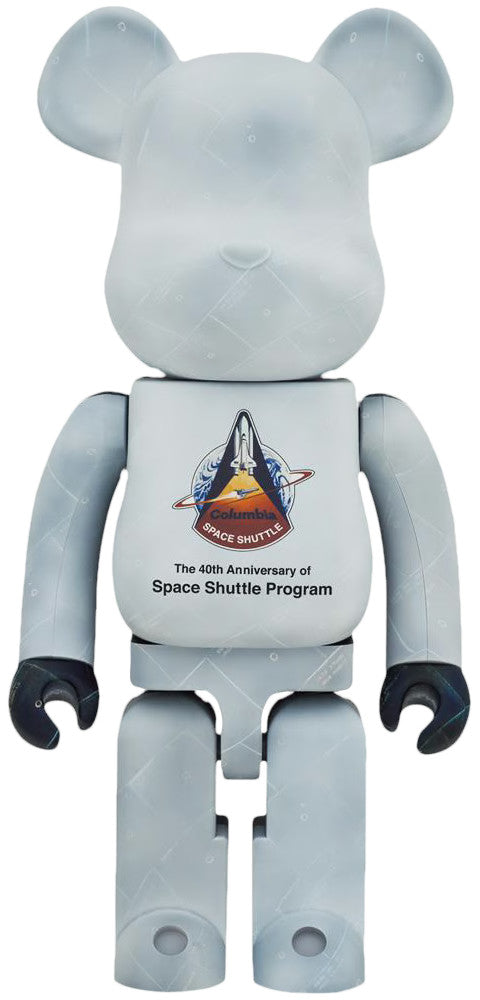
BE@RBRICK NASA Space Shuttle 40th Anniversary 1000% Medicom Toy Bearbrick
$600.00 USD
-
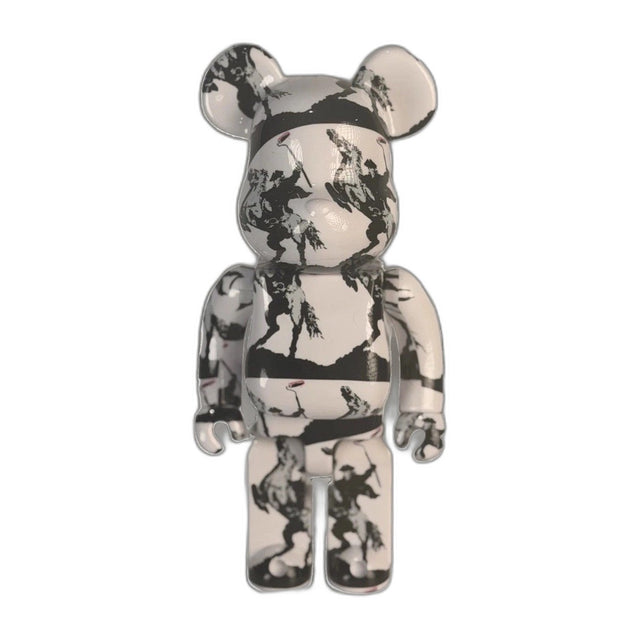
BE@RBRICK Brandalism Sync Banksy Medicom Toy Art Figure du-al.io Authenticated
$199.00 USD
-
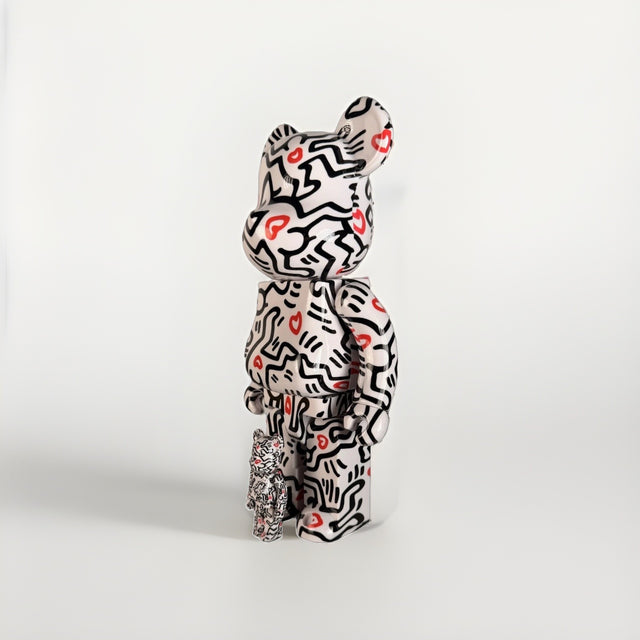
BE@RBRICK Keith Haring 400% + 100% Set Medicom Toy Bearbrick Foundation Art New
$199.00 USD
-
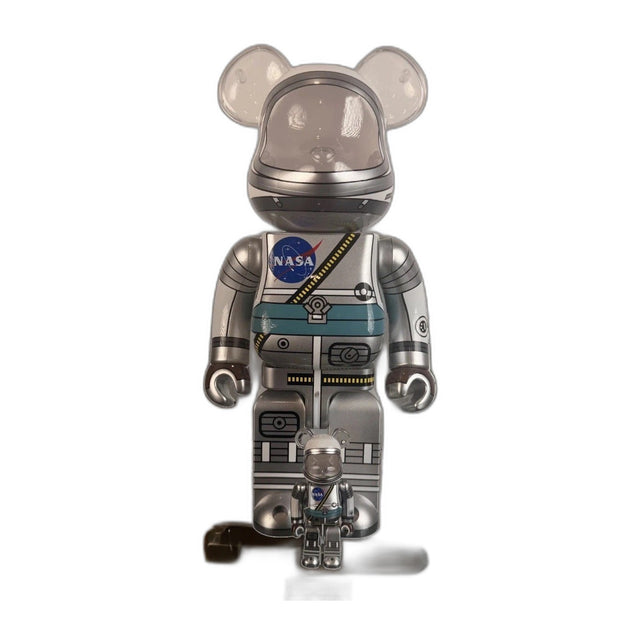
Bearbrick BE@RBRICK Mercury Astronaut 400% 100% Set NASA Medicom Toy Sealed New
$225.00 USD
-
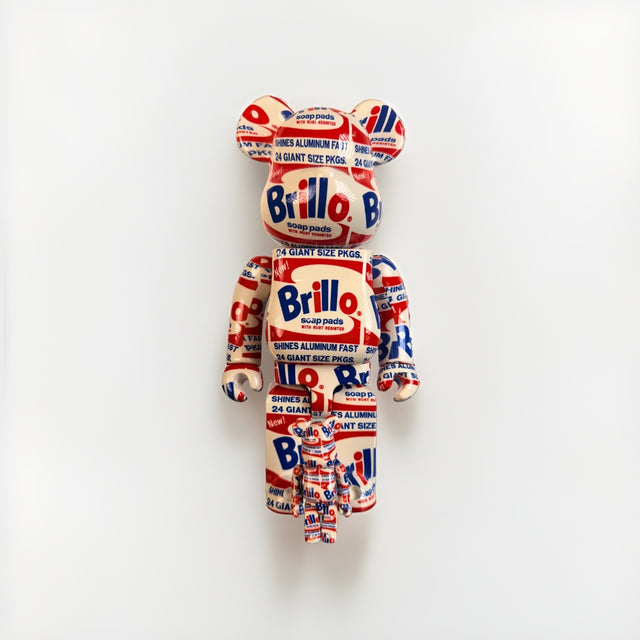
Bearbrick BE@RBRICK Andy Warhol Brillo 400% 100% Set Original 2020 Medicom New
$275.00 USD
Browse the collection for current listings.