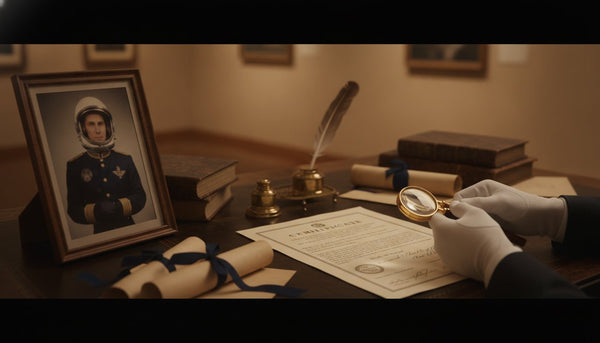
Most contemporary editions are released at a moment and then sold gradually through galleries, websites, and secondary market channels until the edition is exhausted. Death NYC has taken a different structural approach. Each release is a one-day edition: a single dated design produced in a fixed quantity and offered only on the day it is dated. The next day, the next design appears.
For collectors, this is one of the more unusual release models in contemporary editions, and it has shaped the Death NYC market in ways worth understanding before buying.
What a Death NYC edition is
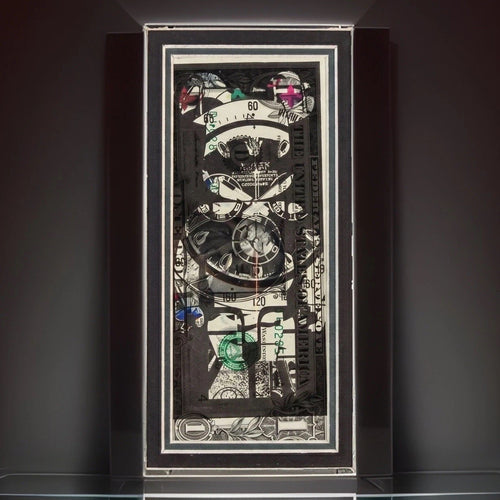
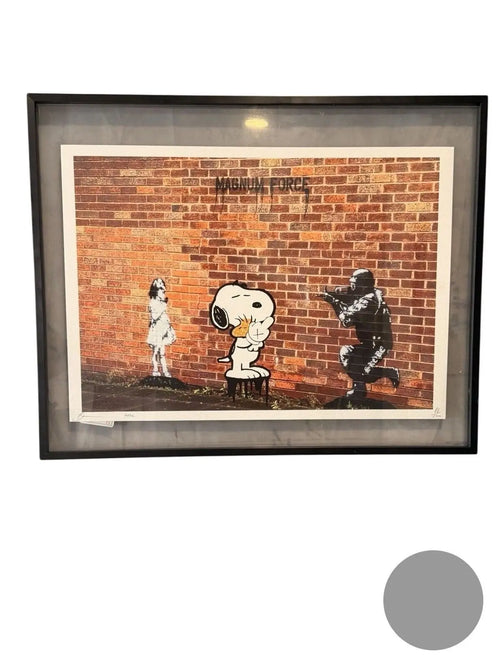
Each Death NYC one-day edition is a signed, numbered, and dated print, typically a pop-culture mashup that appropriates recognizable imagery from fashion advertising, graffiti, and contemporary art and layers it into a single dense composition. The artist operates under the Death NYC name, based in New York, and has released thousands of these dated editions since the program began.
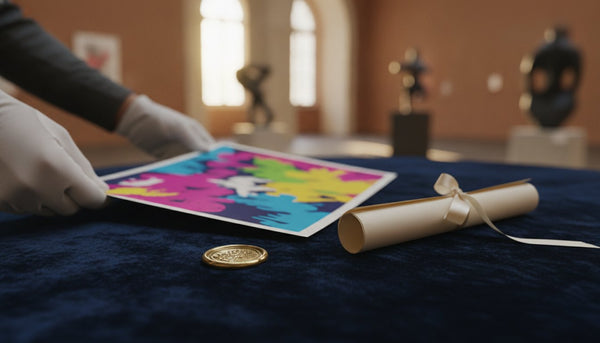
A representative edition might be a 45 by 32 centimeter print on archival paper, produced in an edition of roughly 100, hand-signed, hand-numbered in the margin, dated with the release date, and issued with an accompanying certificate of authenticity that references the edition number and release date.
The release mechanic
The one-day mechanic works roughly as follows:
- A new edition is announced on the release day
- The edition is sold that day through Death NYC’s own channels and authorized retail partners
- The release closes at the end of that day
- Any unsold inventory is, by design, not rolled forward into an open edition. The edition is closed at whatever number sold, up to the stated cap.
This structural choice has several downstream effects. First, it creates automatic scarcity. Second, it means that edition sizes for individual releases are frequently smaller than the stated cap, because not every release sells through in full. Third, it creates a built-in archival discipline: every edition is tied to a specific calendar date, which makes it straightforward to verify authenticity against the artist’s release log.
How the secondary market has developed
Death NYC editions were initially treated by the mainstream art press as collector-grade street art with heavy pop appropriation. Over time, a functioning secondary market has developed with some recognizable patterns:
- Editions from the earliest years of the program are the scarcest, because collector attention was lower and print runs frequently closed under the stated cap
- Editions tied to notable cultural events, major anniversaries, or specific celebrity or brand references have consistently outperformed generic compositions
- Condition matters as much as with any signed work. Creased corners, sun-fade, and tape residue on the verso all meaningfully reduce value
- COAs are essential. A Death NYC without its original dated COA trades at a meaningful discount because the edition number alone is not self-verifying
Public sales on specialist platforms and smaller auction houses provide modest price discovery. Our curators caution that comps can be thinner than for artists with deep Phillips or Christie’s records, which means buyers should size bids conservatively and weight recent sell-through more heavily than listed asking prices.
What to check when buying
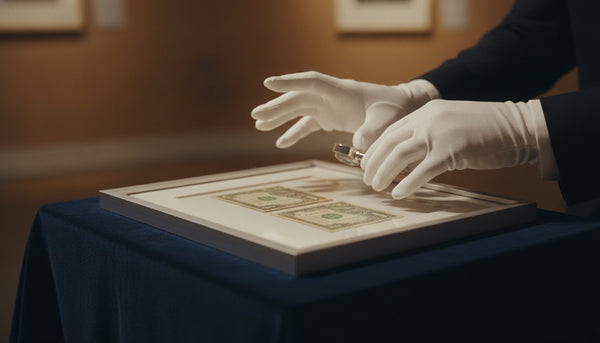
Our curators apply the following checklist to any Death NYC acquisition:
- Date on the print matches the date on the COA exactly
- Edition number in pencil in the margin, matching the COA
- Signature in pencil, consistent with known specimens
- No dry-mounting, no tape residue, no water stains
- Original COA, with the release date, edition number, and title clearly printed
- Seller can produce a verifiable source: gallery invoice, direct Death NYC purchase confirmation, or a chain of custody from a documented original buyer
The most common pitfall is Death NYC prints separated from their COAs. Without the dated certificate, the print is difficult to place in the release schedule, and value is reduced accordingly.
Why the model matters
The one-day edition model is unusual because it forces a choice on the buyer. Either the collector buys on release day or they buy on the secondary market at whatever price has developed. There is no gradual gallery rollout, no late-phase price cut, no hope of a restock. That structural tension is partly what makes Death NYC a functional case study in manufactured scarcity.
For collectors building a position, two approaches tend to work:
- Subscribe to the release calendar and buy selectively on release day, focusing on compositions the collector genuinely wants to own long-term
- Wait and assemble a position on the secondary market, prioritizing condition and COA completeness over edition-size speculation
The collectors who struggle are those who buy broadly on release day without discrimination, accumulate a shallow position across dozens of editions, and then have difficulty placing individual works on resale because the breadth is not matched by depth in any single edition.
How our curators weight Death NYC in a portfolio
In advisory conversations, we typically position Death NYC as a tactical category rather than a core position. The market depth is more limited than a Fairey or KAWS. The long-run returns are harder to model without deeper public comps. But for collectors who like the aesthetic, the one-day edition mechanic produces genuinely scarce individual works that are often undervalued relative to comparable signed-edition contemporary prints.
A reasonable starter position is one or two editions with strong cultural anchoring, clean condition, and intact COAs. Buying five or more thin editions tends not to compound.