The Long Game: How to Clean, Frame, and Store Designer Toys Without Destroying What You Paid For
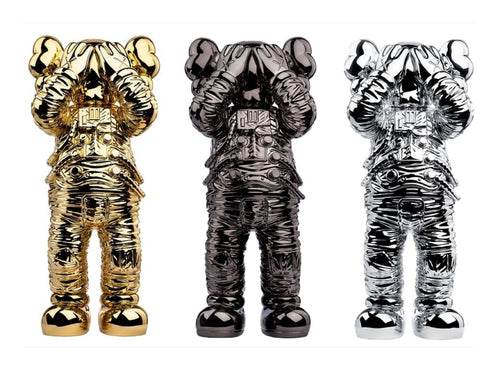
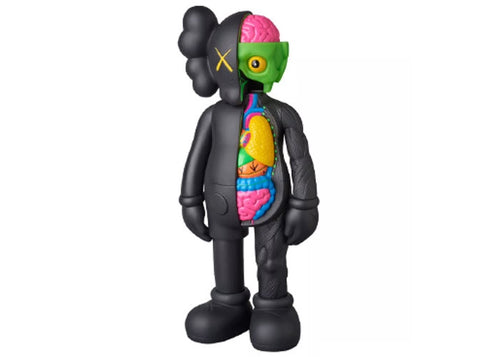
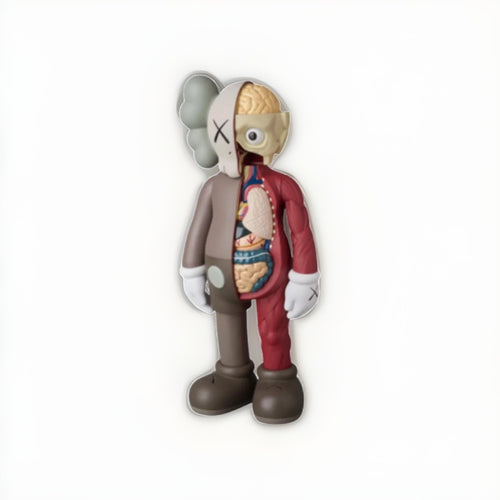
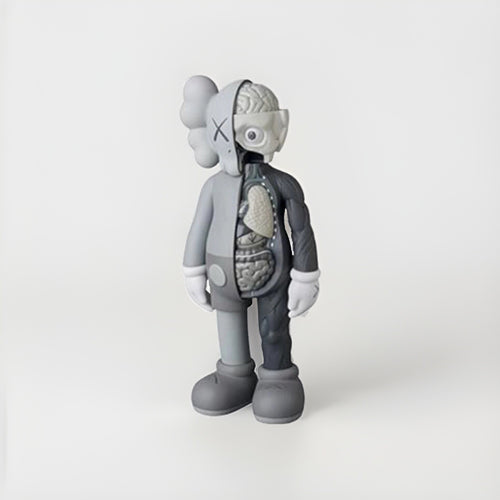
You bought the KAWS Companion. You tracked the BE@RBRICK drop, paid the secondary premium, and got it home safely.
Now what?
Most collectors nail the acquisition and completely fumble the preservation. A figure that looked perfect on arrival starts to yellow, cloud, or crack three years into a hold. Packaging gets soft. Paint migrates. Dust works its way into joints the manufacturer never intended to be opened.
This is where long-term value lives or dies — not in the buy, but in the hold.
We've watched pieces come through the secondary market that were stored wrong for a decade. The damage is real, it's often irreversible, and it absolutely hits realized prices. We've also watched patient, methodical collectors move figures that looked like they came off the production line fifteen years after purchase.
The difference is almost never luck. It's process.
This guide covers the full stack: cleaning, display framing, environmental controls, and the storage decisions that separate a preserved collectible from an expensive mistake. We'll focus heavily on vinyl — KAWS, BE@RBRICK, Medicom, and the wider designer toy ecosystem — because vinyl has specific vulnerabilities that most collectors underestimate until it's too late.
---Understanding What You're Actually Dealing With
Vinyl Is Not Inert
Soft vinyl (sofubi) and hard vinyl behave differently, but they share a fundamental characteristic: they're reactive. The plasticizers that give vinyl its flexibility migrate to the surface over time. UV light accelerates degradation. Heat makes the material swell, warp, and sometimes permanently deform. Cold makes it brittle.
This isn't a flaw in designer toys. It's the nature of the medium. Every vinyl figure ever produced is on a slow clock.
Your job as a long-term holder is to slow that clock as much as possible.
Packaging as Part of the Asset
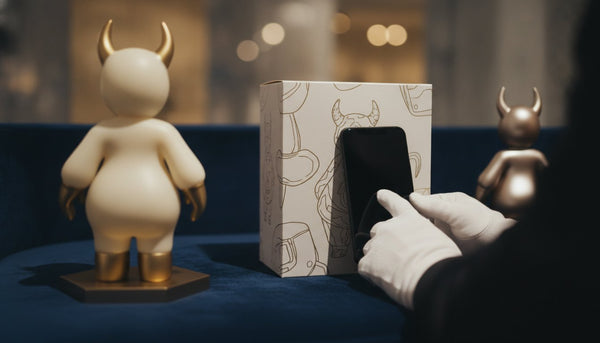
For KAWS figures, BE@RBRICKs, and most high-tier designer toys, the original packaging is not optional — it's integral to the asset. A KAWS Companion in original packaging with intact box, inserts, and any included COA documentation trades at a meaningfully different level than the same figure loose.
For BE@RBRICK specifically: pieces rely on original packaging, hologram seals, and Medicom release records to establish authenticity. Once that packaging is compromised, you've complicated the authentication chain for every future buyer. That's not a recoverable situation.
For the small number of newer releases that carry embedded NFC authentication — such as KAWS:HOLIDAY releases from roughly 2022 onward — the chip is embedded in the piece itself, but the packaging still matters for completeness. Treat it accordingly.
When's the last time you checked whether your box packaging is stored flat, uncompressed, and away from moisture?
---Cleaning: The Part Most Collectors Get Wrong First
The Golden Rule of Vinyl Cleaning
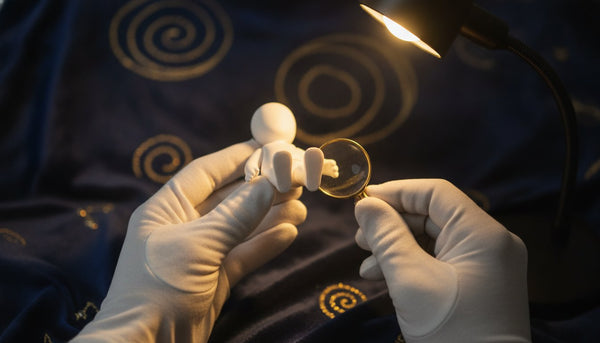
Less is more. Almost every cleaning disaster we've seen happened because someone reached for a product that works on other surfaces and assumed it would work on vinyl.
It won't. Or it will, once, and then you'll see what it actually did six months later.
What to Use
-
Microfiber cloth, dry pass first
- Remove loose dust before introducing any moisture
- Circular motion increases static and attracts more dust — use straight passes instead
- Replace or wash your microfiber cloths regularly; contaminated cloths scratch
-
Distilled water, lightly dampened cloth
- Tap water contains minerals that leave residue on matte finishes
- Dampen the cloth, not the figure — you want controlled moisture transfer, not wet contact
- Dry immediately with a second clean cloth; don't let moisture sit in joints or seams
-
Diluted dish soap, sparingly
- One part dish soap to ten parts distilled water, maximum
- For surface grime that dry cleaning won't address
- Follow with a distilled water wipe and immediate dry pass
What to Never Use
- Isopropyl alcohol: dissolves paint, degrades plasticizers, strips matte coatings permanently
- Glass cleaner (Windex and equivalents): ammonia content is destructive to vinyl surfaces and printed elements
- Magic Eraser / melamine foam: it's an abrasive. It works by physically removing the top layer of material. That layer includes your paint finish.
- Paper towels: wood fiber content scratches soft vinyl. Always cloth.
- Compressed air directly: useful at low pressure and distance, but close-range compressed air can stress paint adhesion and drive particulates into seams rather than removing them
Painted and Limited Edition Surfaces
Figures with hand-applied paint, specialty finishes, or glow-in-the-dark elements require even more restraint. The surface coating on these pieces is often the entire point of the limited variant — and it's the most fragile part of the figure.
For these: dry microfiber only. If dry cleaning isn't sufficient, consider whether the figure should be displayed at all versus being stored in archival conditions.
Is a display piece that's degrading in place actually better than a stored piece that holds its grade?
---Display Framing: Showing the Work Without Wrecking It
UV Glass Is Not Optional at This Level
If you're displaying figures under standard glass or acrylic, you're slowly UV-burning them. Standard glass blocks some UV but not enough. Standard acrylic blocks less.
Museum-grade UV-filtering acrylic — products like Tru Vue Optium or equivalent — blocks 99% of UV radiation while maintaining optical clarity. For pieces at the value tier of a KAWS Companion or a 1000% BE@RBRICK, this is a cost-justified upgrade that most serious collectors make exactly once.
Case Sizing and Airflow
Airtight cases sound like the right answer. They're usually not.
Completely sealed enclosures trap off-gassing byproducts from the vinyl itself, and from any adhesives, foam inserts, or wood backing in the case. That trapped environment accelerates the very degradation you're trying to prevent.
The right display case has:
- UV-filtering front panel (acrylic or glass, museum grade)
- Passive ventilation — small gaps or filtered vent points that allow slow air exchange without dust intrusion
- Acid-free interior surfaces — no raw MDF, no standard foam; use archival foamboard or fabric-covered alternatives
- Appropriate sizing — the case should fit the figure with clearance; a too-tight case that presses on the figure will deform it over a long hold
- Stable base — weighted bottom or wall-anchor system; a falling display case is a total-loss event
Lighting Inside Display Cases
LED lighting is the correct choice — low heat, low UV output relative to incandescent or halogen. But even LEDs produce some UV, and close-proximity lighting generates heat that affects local temperature inside the case.
Position lights outside the case where possible. If internal lighting is required, use LEDs rated for museum or gallery use and maintain as much distance from the figures as the case dimensions allow.
Display Rotation for Serious Collectors
Consider a rotation strategy. Pieces on active display accumulate light exposure and particulate contact that stored pieces don't. For a multi-figure collection, rotating pieces between display and archival storage every six to twelve months distributes that exposure and keeps your entire inventory in better relative condition.
This isn't precious collector behavior. It's asset management.
---Environmental Controls: The Variables That Matter Most
Temperature
Consistent temperature is more important than cool temperature. Thermal cycling — the repeated expansion and contraction that happens when a space warms during the day and cools at night — is one of the most destructive forces acting on vinyl figures and cardboard packaging alike.
Target a stable range, broadly between 65°F and 72°F. Avoid attics, garages, exterior-facing storage rooms, or any space that experiences meaningful temperature swings throughout the day or across seasons.
Humidity
Relative humidity between 45% and 55% is the standard archival target. Below that range, materials dry out and become brittle. Above it, you're creating conditions for mold growth on packaging, paper inserts, and any fabric or felt elements inside display cases.
A calibrated hygrometer costs very little. Not having one when you're holding five-figure inventory is a genuine oversight.
If your storage environment runs high, a quality dehumidifier solves the problem. If it runs low, an ultrasonic humidifier (not a warm-mist unit) in the storage space keeps materials from drying. Either way: monitor, don't guess.
Light Exposure
Natural light is the enemy. Windows in storage or display rooms should have UV-filtering film applied if they can't be blocked. Seasonal variation in daylight hours means your exposure profile changes throughout the year — the figure that sat in safe shadow in December may be hit by direct afternoon sun in June as the sun angle shifts.
Map your light environment across the year before committing to a display position. It takes five minutes and it matters.
Air Quality
Particulates, airborne oils, and chemical pollutants from everyday household products all deposit on vinyl surfaces over time. Cooking, smoking, candles, and aerosol products used in proximity to your collection all contribute to surface degradation.
A HEPA air purifier in the display or storage room is standard practice for serious long-term holds. It's not a luxury item relative to what you've paid for the pieces.
---Long-Term Storage: The Archival Protocol
When to Store vs. Display
Some pieces should never be displayed. Investment-grade examples — the 1000% BE@RBRICKs in original sealed boxes, the KAWS editions that represent genuine monetary positions — are better held in controlled archival storage than exposed in a display environment where you can't fully control every variable.
This is a harder call for collectors who buy because they love the work. There's no wrong answer here. But if the primary thesis is financial — buy, hold, sell at the right moment — archival storage is the conservative and usually correct choice.
Box and Packaging Storage
-
Original orientation matters
- Store boxes in the position they were designed to be stored in; manufacturers engineer the structural integrity of boxes for a specific orientation
- Stacking heavy boxes on top of packaging not designed for vertical compression will degrade the box structure over time
-
Acid-free outer packaging
- Wrap original boxes in acid-free tissue paper before placing in outer storage containers
- Avoid standard polyethylene bags that trap moisture; use polyethylene archival bags specifically rated for long-term storage
-
Rigid outer containers
- Archival-grade boxes (Gaylord Archival or equivalent) provide crush protection that plastic tubs alone don't
- Label containers clearly without using adhesive labels directly on original packaging
-
Silica gel packets for sealed storage
- Include indicating silica gel in any closed storage container to manage moisture
- Replace or recharge packets per manufacturer guidance; expired silica becomes inert and provides no protection
Figure Storage Out of Box
If you're storing the figure separately from its packaging — whether for display rotation or condition reasons — the figure needs individual wrapping in acid-free tissue and placement in a container that doesn't allow it to contact other pieces directly.
Vinyl-on-vinyl contact over extended periods can cause color migration. Two figures that touch in storage long enough can transfer pigment in ways that are not reversible. This is not theoretical; it's a documented failure mode in improperly stored collections.
How many collectors have figures touching each other in storage right now without knowing what's happening to both of them?
Inventory Documentation
Maintain a written or digital inventory with:
- Piece identification (artist, title, edition number, production year)
- Acquisition date and provenance notes
- Condition notes at acquisition and at each inspection
- Storage location
- Authentication documentation reference (certificate details, original COA document location, hologram and packaging condition)
- Photographic record of the figure and packaging at acquisition
This documentation is part of the asset. When a figure moves to a new buyer, a clean provenance chain — including storage history and condition documentation — supports price and accelerates the sale.
---Authentication Documentation: Store It Like the Figure Itself
Physical COAs and Paperwork
For pieces that include physical COA documentation — Death NYC artist-signed COAs with studio gold seal, for instance, where both the artist signature and the seal are required elements — that documentation needs archival storage with the same seriousness as the piece itself.
COA documents stored in standard file folders in humid basements yellow, fade, and lose structural integrity. That degradation has authentication consequences. Keep physical documentation in acid-free sleeves or archival folders, stored in the same controlled environment as the pieces they certify.
Digital and Registry-Based Authentication
For pieces backed by a registry-based certificate such as TrueCOA, the record is maintained externally — but you should maintain your own record of the registration confirmation and any transfer documentation. Screenshots aren't enough; download and archive PDF confirmation where the platform allows it.
Platforms change. Companies sunset. Your offline documentation of an authenticated piece is insurance against a registry that no longer exists when you need it.
---Red Flags
Watch for these. They signal that something is already wrong, or will be soon.
- Surface tackiness on vinyl: plasticizer migration to the surface. The material is breaking down. This is early-stage but accelerating — the figure needs to be moved to a cooler, drier environment immediately and should be assessed for long-term viability as a hold piece.
- Yellowing on clear or white elements: UV damage and/or oxidation. Once yellowing begins, it does not reverse. Assess whether display conditions contributed and correct before storing other pieces in the same location.
- Box corner softening or compression: either humidity damage or improper stacking. Remove from the problem environment and assess for mold before storing with other pieces.
- Paint cracking or flaking at joints: thermal cycling damage, usually from temperature instability. The joint areas flex most with temperature changes; paint that cracks there indicates the figure has experienced conditions outside safe range.
- Odor from stored figures or packaging: off-gassing can indicate accelerated breakdown, or mold presence on packaging materials. Investigate before the issue spreads to adjacent pieces.
- NFC chip failure on scan: for the releases that carry embedded NFC authentication (such as KAWS:HOLIDAY releases from 2022 onward), a failed scan that previously worked correctly needs investigation before the piece is represented for sale. Authentication failures discovered by a buyer, not disclosed by a seller, are the kind of problem that damages relationships and invites disputes.
- Fading on colored elements without obvious UV exposure: can indicate reactive packaging materials or storage containers off-gassing onto the figure. Separate the piece and identify the source.
- Missing or damaged hologram seals on BE@RBRICKs: hologram integrity is part of the authentication chain for these pieces. Damaged or missing holograms require disclosure and will affect buyer confidence and realized price.
Bottom Line
Designer toys at the KAWS and BE@RBRICK level are not toys in any meaningful sense. They're cultural artifacts with real secondary market pricing, authentication dependencies, and physical vulnerabilities that compound over time if ignored.
The collectors who win the long game are not necessarily the ones who bought the best pieces. They're the ones who understood that acquisition is the beginning, not the achievement.
Clean conservatively. Display intelligently. Store rigorously. Document everything.
The condition of your collection at the moment you decide to move a piece is a direct function of every environmental decision you made during the hold. That's not abstract — it shows up in realized prices, in how quickly pieces move, and in the relationships you build or damage with buyers who trust your representations.
Treat preservation as part of the investment thesis. Because it is.
---FAQ
Can I clean a KAWS figure that has surface grime without risking the finish?
Yes, but the method matters enormously. Dry microfiber first, always. If that's not sufficient, a lightly dampened cloth with distilled water handles most grime without risking the surface. Never use alcohol, glass cleaner, or abrasive products. For painted or specialty-finish variants, dry cleaning only — if dry cleaning won't do the job, the risk of a wet approach on that surface isn't worth taking.
Should I remove a BE@RBRICK from its box for display or keep it sealed?
This depends on your primary thesis for holding the piece. For most pieces, the original packaging, hologram seals, and Medicom release record are part of the authentication chain — breaking seal damages that chain in ways that affect future resale. For the few newer releases with embedded NFC authentication (such as KAWS:HOLIDAY from 2022 onward), the authentication is embedded in the figure itself, making the packaging less critical to the authentication process but still relevant to completeness and therefore to price. If display is the priority, display. If financial hold is the priority, keep it sealed and documented.
What's the right humidity level for storing designer toys long-term?
Target 45% to 55% relative humidity, consistently. Below that range, materials dry and become brittle over time. Above it, you're creating risk for mold on packaging and paper inserts. A calibrated hygrometer in your storage space gives you real data; silica gel packets in sealed storage containers help manage micro-environment humidity within those containers.
Is UV-filtering acrylic actually necessary, or is it overkill?
At the value tier of a KAWS Companion or a 1000% BE@RBRICK, museum-grade UV-filtering acrylic is a one-time cost that protects an asset worth multiples more. Standard glass and acrylic allow UV transmission that yellows clear and white elements over time — damage that is not reversible. Frame the question differently: what's the cost of UV acrylic versus the cost of UV damage on a piece at this value level? The math is straightforward.
How should I store the original box separately from the figure if I'm displaying the figure?
Wrap the original box in acid-free tissue paper. Store it in an archival-grade outer box in a controlled environment — same temperature and humidity targets as the figure itself. Keep it in the orientation it was designed for; don't stack heavy items on packaging not built to bear that load. Include indicating silica gel in any sealed storage container and check it periodically. Maintain a photographic record of the packaging condition.
Can vinyl-on-vinyl contact in storage really cause color migration?
Yes. This is a documented issue in improperly stored vinyl collections. Plasticizers in vinyl act as a medium; when two painted vinyl surfaces are in prolonged contact, pigment transfer is possible. The severity depends on the specific vinyl formulations and the colors involved, but the safe approach is to store figures individually, wrapped in acid-free tissue, without direct contact between pieces. Find this out by losing a piece to it, or don't — individual wrapping is simple and cheap relative to the alternative.
What happens to authentication documentation if a verification platform changes or goes offline?
This is a real risk for any registry-based authentication system. The figure itself doesn't change, but if the platform that verifies its record changes its interface or ceases operation, the practical authentication pathway is disrupted. The mitigation is to download and archive any PDF confirmation or registration documentation the platform provides at time of registration, maintain your own records of the authentication chain, and be prepared to present provenance documentation to support authentication in the event the primary registry is unavailable. Offline documentation of an authenticated piece is always the insurance layer against platform-side failures.
How often should I physically inspect figures in long-term storage?
At minimum, twice per year. Inspect for tackiness, yellowing, color migration, and any changes in packaging condition. Check silica gel indicators and replace or recharge as needed. Update your condition documentation with dated notes. Semi-annual inspection catches developing problems before they become irreversible and gives you a condition record that supports provenance documentation when the piece eventually moves. Quarterly inspections are better for high-value pieces where early detection of any issue has the most impact on outcome.