When to Pay for Restoration on a Vintage Print: A Dealer's Honest Guide
You bought the print because of what it is. The image, the edition, the artist's hand in the paper. Now you're staring at a foxing bloom spreading across the lower margin, a diagonal crease through the sky, or a tape stain left by some well-meaning framer who thought masking tape was archival.
The question sitting in front of you is deceptively simple.
Do you spend the money to fix it, or do you live with it?
The answer depends on factors most collectors never think to ask about: the economics of the specific print, the type of damage, the conservator's actual toolkit, and — crucially — what restoration does to authenticity and resale. Get it wrong and you've spent real money to reduce your piece's market value. Get it right and you've rescued something that would have kept deteriorating until it was worthless.
This is the working guide we wish someone had handed us twenty years ago.
First: Understand What "Restoration" Actually Means
The word gets used loosely. In the secondary market, there's a meaningful difference between three things that people routinely conflate.
Conservation
Stabilization. Stopping active damage from getting worse. Deacidifying paper, removing harmful adhesives, flattening under controlled humidity, encapsulating in archival materials. This is almost always worth doing on a piece with real market value. It's defensive. It doesn't change what the work looks like.
Restoration
Active repair of existing damage. Inpainting losses, reducing visible staining, filling tears. This changes what the work looks like. It is the category that requires the hardest decision-making, because the outcome can go in two very different directions depending on the conservator, the piece, and your intentions.
Enhancement
Anything that goes beyond returning the print to its original state. Brightening paper that was always toned. Intensifying colors that have genuinely faded versus colors that were always that way. This is where ethical and market problems begin. A reputable paper conservator will refuse to cross this line. Not everyone operating in this space is reputable.
If someone quotes you for "restoration" without making this distinction, what exactly are they offering to do to your print?
The Economic Test: Run This Before Anything Else
Restoration is a cost-benefit calculation. The math is uncomfortable but it has to happen before you call a conservator.
Here's the basic framework:
- Establish current fair market value in current condition. Not what you paid. Not what you hope it's worth. What it would actually sell for today, damage and all, to a knowledgeable buyer in a real market transaction. Talk to a dealer. Look at comparable auction results. Be honest.
- Estimate post-restoration value. Even a perfect restoration job carries a disclosure obligation in most serious markets. A restored print is not the same as a pristine print. At the high end of the market, disclosed restoration often trades at a discount to unrestored examples, even when the restoration is invisible to the naked eye. At the mid-market level, successful restoration on a visible defect can meaningfully improve saleability if not necessarily top-line price.
- Get a written conservator estimate. Not a verbal ballpark. A written scope of work with itemized costs and a realistic statement about what outcome is achievable. "We can reduce the staining by approximately 70%" is honest. "We'll make it look new" is not.
- Do the arithmetic. If restoration costs more than the value delta between damaged and restored condition, it's a personal decision, not a financial one. You're paying for your own peace of mind. That's legitimate — just be clear about it.
The threshold most experienced dealers use informally: restoration makes economic sense when the cost represents less than 30-40% of the value differential it creates. If a print in current condition is worth X and post-restoration it's worth X plus two thousand, you shouldn't be spending more than six to eight hundred dollars on the work. If the conservator quotes you more than that, you're buying aesthetic satisfaction, not investment protection.
Is there anything wrong with paying for aesthetic satisfaction? Absolutely not. But you should know that's what you're doing.
Damage Types: What Can Actually Be Fixed
Not all damage is equal. A conservator's toolkit is genuinely impressive, but it has limits. Here's how to think about the main categories.
Foxing
Those reddish-brown spots caused by mold, metal impurities, or oxidation in the paper. Often treatable, especially in the margins. In the image area, results vary significantly depending on the print medium — works on paper with intaglio or lithography respond differently than screenprints or photomechanical reproductions. Aqueous treatment (careful application of mild bleaching agents under controlled conditions) can substantially reduce foxing. Complete elimination is often not achievable. A good conservator will show you before/after documentation from comparable treatment cases.
Tape and Adhesive Staining
One of the most common problems in estate collections. Pressure-sensitive tapes — masking tape, Scotch tape, packing tape — leave behind both mechanical damage (tearing on removal) and chemical staining from adhesive residue. The staining is often reversible if the tape hasn't been in place for decades. Staining that has penetrated the paper fibers over a long period is much harder. Solvent-based treatments can reduce residue but may affect the print medium itself, particularly in water-based screenprints. This is a case where choosing a conservator with specific experience in the relevant print medium matters enormously.
Tears and Losses
Structural repairs to torn paper can be done with Japanese tissue and wheat starch paste — materials that are both strong and reversible, the gold standard in conservation. A skilled conservator can make a clean tear essentially invisible under normal viewing conditions. Losses (areas where the paper itself is missing) require fill material and inpainting. In the margin, this is usually low-stakes. In the image area, inpainting is skilled, time-consuming work, and even excellent results may show under raking light or UV examination. Disclose. Always disclose.
Fading
This is the hardest category. Light-faded prints are largely irreversible. A conservator can sometimes consolidate or stabilize fugitive pigments to prevent further loss, but you cannot put color back into paper that has lost it. Anyone who tells you otherwise is either talking about enhancement (see above) or overpromising. Fading is where the economics almost never support intervention. You're paying to stop something that's already stopped (the piece is presumably no longer in the light source that caused the fading), and you cannot recapture what was lost.
Acidic Yellowing and Toning
Often reversible through aqueous deacidification and controlled bleaching. This is one area where conservation investment genuinely pays off, because the result can be dramatic and the treatment is well-established. Original paper whiteness can often be substantially recovered. The caveat: some paper toning is intrinsic to the paper and not the result of acid degradation. An aged laid paper that was always warm-toned is not a conservation problem. Know what you have before you try to "fix" it.
Creases and Distortions
Humidification and controlled flattening under weight is standard practice and often highly effective. Deep creases with broken paper fibers will retain some evidence even after the best treatment. Surface creases in modern papers with a hard size often respond very well. This is one of the lower-risk restoration categories in terms of unintended consequences, provided the print medium itself is water-stable.
How to Choose a Paper Conservator
This is where collectors make the most expensive mistakes. Not by choosing restoration over conservation, but by choosing the wrong person to do it.
- American Institute for Conservation (AIC) membership and credentials. Look for AIC Fellows (FAIC) or Professional Associates (AIC-PA) specializing in works on paper. The AIC directory is searchable at culturalheritage.org. This is your baseline filter, not your entire due diligence.
- Ask specifically about their experience with your print medium. Lithography, screenprint, etching, photogravure, woodblock — these respond differently to every treatment. A conservator with strong credentials in paintings or photographs may not be the right person for a 1960s screenprint. Ask for portfolio examples in your specific medium.
- Demand written treatment proposals before committing. The proposal should include: current condition assessment, proposed treatments, materials to be used, expected outcome range (with realistic caveats), timeline, and cost. If you receive a verbal quote only, walk away.
- Ask about reversibility. Every treatment applied to a work of art should, ideally, be reversible. This is a foundational principle of professional conservation. Ask specifically: "Are the treatments you're proposing reversible, and if not, which ones aren't and why?" The answer tells you a great deal about who you're dealing with.
- Request condition reports before and after. A professional conservator documents their work photographically. You should receive a written and photographic condition report both before treatment begins and after it concludes. This documentation has real value: it becomes part of the provenance record and should accompany any future sale of the piece.
- Understand what they won't do. A conservator who won't tell you the limits of what's achievable is a conservator who wants the job more than they want to be honest with you. The best conservators are often the most conservative in their assessments. They know what can go wrong.
When was the last time you verified a conservator's credentials before handing them a piece worth more than your monthly rent?
Vintage Print Restoration and the Authentication Problem
This is the conversation that doesn't happen often enough.
Restoration changes a print. Even excellent, ethical, fully-disclosed restoration alters the physical object in ways that matter for authentication and condition grading. If you are buying or selling a print in a category where third-party authentication or condition review is part of the transaction — and for any serious print, it should be — restoration history has to be part of the record.
Consider the specific authentication frameworks that govern different market segments:
Warhol and the TrueCOA Framework
With the Warhol Authentication Board dissolved since 2012, the market has shifted toward the TrueCOA framework for works in this category. Restoration history is material information in any TrueCOA process. Undisclosed restoration on a Warhol print is not a minor omission — it's the kind of thing that unravels transactions and reputations. Document everything.
Street Art Multiples
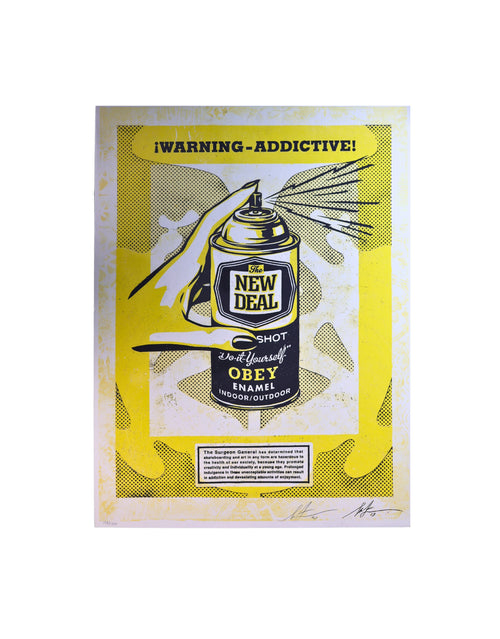
For Banksy prints, Pest Control authentication is the only standard the market accepts. Pest Control does not authenticate condition — they authenticate the work. But condition is priced separately and any restoration should be disclosed to buyers. For Shepard Fairey editions, where there is no artist-issued COA and authentication relies on signature examination, edition numbering, Obey Giant drop records, and provenance chain, restoration that touches the signature area creates immediate complications. Document before and after. Restore only if the conservator can work cleanly around signature areas.
Music and Sports Memorabilia
The three primary grading and authentication houses — Beckett (BAS), JSA, and PSA/DNA — each have specific disclosure requirements around restoration and alteration. PSA in particular has published certification-verification warnings noting that altered items may be returned from encapsulation or have their certification voided. Beckett's grading process for paper items includes physical examination that can detect many forms of restoration. For music memorabilia specifically, Roger Epperson's specialist tier within BAS represents the highest-scrutiny environment in that category. If you're restoring a signed concert poster or lithograph that you intend to submit for grading, talk to the grader before you talk to the conservator.
What happens to a graded, encapsulated piece if restoration is discovered after the fact?
The answer isn't pleasant, which is why the sequence matters: authenticate or grade first (to understand what you actually have), restore if the economics justify it, then re-submit with full disclosure of treatment performed.
The Disclosure Imperative
If you sell a restored print without disclosing the restoration, you are not cutting a corner. You are committing fraud in most jurisdictions and almost certainly violating whatever platform's or auction house's terms of service you're selling under.
This isn't moral grandstanding. It's practical advice. The secondary market for serious prints is smaller and better-connected than most sellers imagine. Condition issues that were concealed have a way of surfacing. Provenance chains get examined. UV lights get pointed at things.
Full disclosure of restoration work, supported by the conservator's before/after documentation, is not a liability. In a transparent market transaction, it's actually a form of protection. You're providing the buyer with documented information about the piece's condition history. That's professional conduct, and buyers who understand the market treat it as such.
The alternative — concealment — creates a deferred liability that tends to compound with time.
When NOT to Restore: The Cases for Leaving It Alone
Sometimes the right answer is to do nothing.
There are three situations where we consistently advise collectors against pursuing restoration:
1. When the Damage Is Part of the Historical Record
A print that passed through a specific collection, was part of a documented exhibition, or carries evidence of a particular history has that evidence embedded in its physical condition. Not every fold or mark is damage in the meaningful sense. A print that was rolled, shipped, and hung in a historically significant context carries that history in ways that "perfect" condition cannot. Before you restore, ask whether you're erasing something that has its own value.
2. When the Print Tier Doesn't Justify the Cost
Not every vintage print deserves or economically supports professional conservation treatment. The secondary market for prints spans an enormous range of values. At the lower end of the market, a professional conservation treatment can cost more than the piece's total fair market value several times over. For prints in this tier, proper storage — archival enclosures, stable temperature and humidity, UV-filtering glazing if framed — is the right answer. Spend money on prevention, not cure.
3. When the Restoration Risk Exceeds the Restoration Benefit
Some damage types are genuinely high-risk to treat. Heavy foxing in a densely printed image area, where bleaching treatment might affect the print medium itself. Tears that run through critical signature areas. Fragile paper that may not tolerate humidification. A good conservator will tell you when the risk-benefit calculus doesn't favor intervention. If they won't, find one who will.
Vintage Print Restoration Cost: What to Expect
Pricing varies significantly by conservator, geographic market, and treatment complexity. We're not going to invent specific numbers. But here's how to think about the cost tiers:
| Treatment Type | Complexity | What Drives Cost |
|---|---|---|
| Condition assessment and report only | Low | Conservator's hourly rate, documentation time |
| Surface cleaning and deacidification | Low to moderate | Paper type, size, condition severity |
| Tape removal and adhesive reduction | Moderate | Tape type, age, extent of penetration |
| Humidification and flattening | Low to moderate | Paper size and weight, degree of distortion |
| Foxing reduction (margins) | Moderate | Extent of foxing, paper stability |
| Foxing reduction (image area) | High | Print medium sensitivity, risk management |
| Tear repair with Japanese tissue | Moderate to high | Tear length, location, paper type |
| Loss fill and inpainting | High | Loss size, location in image, inpainting hours |
The highest costs in vintage print restoration come from inpainting time. Skilled inpainting is slow, meticulous work that is billed at professional hourly rates. A small but visually prominent loss in a critical image area can represent many hours of work. Get an honest estimate of inpainting hours, not just a flat project cost.
Ask also about re-treatment risk. If the first round of treatment achieves partial results, is there a pathway to further improvement, or does a second round increase the risk of damage? This changes the expected cost calculus significantly.
Red Flags
Before you commit to any restoration work, run through this checklist. Each of these is a reason to pause, get a second opinion, or walk away.
- No written treatment proposal. Any professional conservator works from a written scope. Verbal quotes only indicate either inexperience or a desire to avoid accountability for outcomes.
- Guaranteed outcomes. Conservation involves uncertainty. "I'll make this look perfect" is not a professional statement. It's a sales pitch.
- No mention of reversibility. If a conservator can't tell you whether their proposed treatments are reversible, they haven't thought carefully about what they're proposing.
- No condition documentation before treatment begins. If they won't photograph and document the current condition before touching anything, what exactly are they trying not to record?
- No credentials or AIC membership. The field has professional standards. Someone operating outside those standards is taking risks with your property that you don't know about.
- They describe treatment in vague, marketing-friendly language. "We restore artwork to its original beauty" is advertising copy. Professional conservators describe specific treatments with specific materials. Ask for specifics and see what happens.
- They discourage you from disclosing restoration to future buyers. Full stop. This is a serious ethical breach. Walk away from anyone who suggests concealing treatment history.
- The economics don't work and they haven't mentioned it. A conservator who doesn't ask you about the piece's value or your intentions for it cannot be giving you responsible cost-benefit guidance. Some conservators are technically excellent and commercially oblivious. You need both.
- They propose treating fading. As discussed above, faded prints are largely irreversible. Anyone proposing to "restore" faded color is either misunderstanding conservation science or proposing enhancement, not restoration. Clarify immediately.
Bottom Line
Vintage print restoration is a tool, not a default. The right answer isn't always to restore, and it isn't always to leave damage in place. It depends on the print, the damage type, the economics, and what you intend to do with the piece.
Run the economic test first. Identify the damage type and understand honestly what's achievable. Choose a credentialed paper conservator with specific experience in your print medium. Demand written proposals, documentation, and realistic outcome assessments. And disclose everything, every time, to every subsequent buyer.
The market rewards transparency and penalizes concealment. Not always immediately, but reliably over time.
A well-documented conservation treatment, performed by a credentialed professional and disclosed fully, does not diminish a print's market standing. It demonstrates that the piece was cared for by someone who took it seriously.
Isn't that exactly what you'd want to be able to say about how you treated something you valued?
Get the documentation. Make the right call. Pass it on in better condition than you received it.
FAQ: Vintage Print Restoration
Q: Does restoration automatically decrease a print's value?
Not automatically, and not always. The impact depends on the tier of the market, the quality of the restoration, and whether it's disclosed. At the very top of the market — museum-quality, highly documented works — disclosed restoration typically trades at some discount to unrestored comparable examples. In the mid-market, successful restoration of a significant defect can improve both saleability and price. The key variable is disclosure. Undisclosed restoration that is later discovered destroys value far more reliably than any disclosed treatment ever would.
Q: How do I know if a print I'm buying has already been restored?
UV examination (using a long-wave UV lamp in a darkened room) is the standard first step. Restored areas and inpainting often fluoresce differently from the surrounding paper. Raking light examination can reveal surface texture inconsistencies. For important acquisitions, commissioning a condition report from an independent paper conservator before purchase is money well spent. Ask the seller directly, in writing, whether any restoration or conservation treatment has been performed. Their answer, and their willingness to answer, tells you something.
Q: Can foxing be completely eliminated?
In most cases, no. Aqueous reduction treatments can substantially diminish the visual impact of foxing, particularly in margins and less densely printed areas. Complete elimination is rarely achievable, and attempting aggressive bleaching to get closer to "complete" increases the risk of paper damage and print medium disruption. A realistic conservator will describe outcomes in percentage-reduction terms rather than promising elimination. Manage your expectations accordingly.
Q: What's the difference between a paper conservator and a framer who offers restoration services?
This is an important distinction. A credentialed paper conservator holds professional qualifications (typically a graduate degree in conservation or equivalent training), adheres to a professional code of ethics, and is accountable through professional organizations like the AIC. A framer — even an experienced, well-intentioned framer — operates without that training infrastructure and without the same accountability standards. Framers who offer "restoration" are often doing cleaning, minor repair, or mounting work that falls short of professional conservation. For anything beyond basic reframing, seek a credentialed conservator.
Q: How should restoration affect the price I ask when reselling?
Disclose the restoration fully and price accordingly. Research comparable sales of similar prints in both restored and unrestored condition if data is available. In practical terms, a print with disclosed, professionally executed restoration and full documentation of the treatment should price between the unrestored-damaged value and the unrestored-pristine value — closer to which end depends on the quality of the restoration and the significance of the original damage. Attempting to price as if the restoration never happened is both ethically wrong and commercially risky.
Q: My print has been in the family for decades and has no provenance documentation. Does restoration make sense before trying to sell it?
Start with authentication and identification before spending anything on restoration. Know what you have. A print conservator can assess condition, but you need a specialist in the relevant market segment to tell you what the piece is actually worth. Once you know the fair market value and the authentication status, run the economic test described above. For prints with no clear provenance chain, restoration won't solve the provenance problem — it just adds cost. Focus on establishing what the piece is before deciding what to do with its condition.
Q: Is there any type of damage that should always be treated, regardless of cost?
Active biological damage — active mold growth — should always be addressed immediately, regardless of the print's market value, because it is both destructive to the work and a health concern. This is a conservation emergency, not an economic decision. Similarly, unstable flaking or friable media that is actively losing material should be stabilized. These are cases where the cost of not intervening is a certainty, not a probability. Beyond active deterioration, the economic test applies.
Q: What storage conditions should I maintain after conservation treatment to prevent re-damage?
Your conservator will provide specific recommendations, but the general standards for works on paper are: relative humidity between 45-55%, temperature stable between 60-70°F, no fluorescent or UV light exposure (UV-filtering glazing if framed), acid-free enclosures for unframed storage, and horizontal storage for large-format works. The investment you've made in conservation is partially wasted if the piece goes back into conditions that caused the original damage. Ask your conservator for written storage and display guidelines as part of the post-treatment documentation.