Death NYC Edition Sizes: Why Capped at 100 Matters for Resale
Most street art prints flood the market. Death NYC doesn't.
The New York-based artist built a career on scarcity as a structural commitment, not a marketing trick. Every signed edition is capped at 100. Not 250. Not 500. Not "limited" in the vague, technically-true-but-meaningless way that phrase gets used across the broader print market.
One hundred. Full stop.
That number is doing a lot of work for collectors who care about resale. And if you're buying Death NYC right now without understanding why that cap exists, how it's enforced, and what it means when a piece comes back to market, you're leaving real money on the table — or worse, paying real money for something that shouldn't command it.
Let's get into it.
The Edition Structure: How Death NYC Actually Works
Death NYC releases work in signed, numbered editions. The standard run is 100 pieces. Each print is hand-signed by the artist and carries sequential numbering — 1/100 through 100/100.
But the number on the piece is only part of the story.
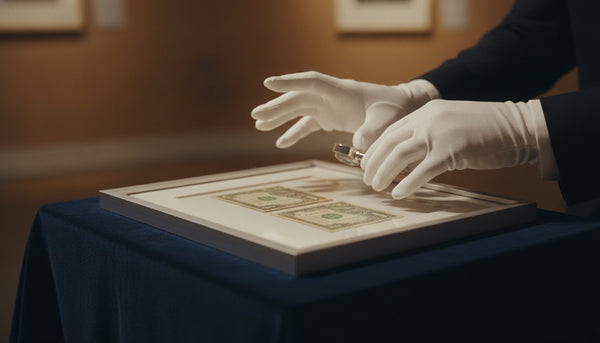
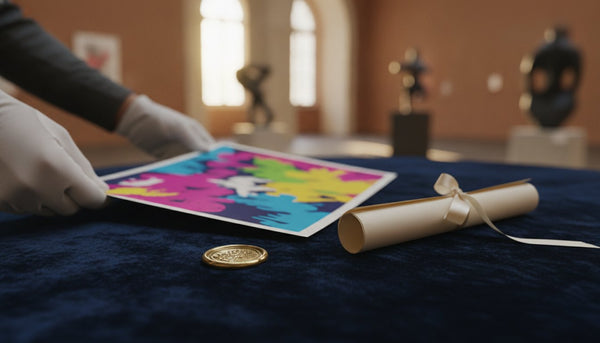
Authentication for Death NYC follows a specific protocol that's non-negotiable in the secondary market. The artist issues a COA signed by the artist directly, accompanied by a studio gold seal. Both are required. A piece arriving with one but not the other is incomplete, and any dealer who tells you otherwise is either uninformed or hoping you are.
This matters enormously for resale. The authentication package isn't ceremonial. It's the paper trail that connects your specific numbered impression to the artist's verified release record. Without it, you're holding a print — not a documented artwork.
Artist-Signed COA + Studio Gold Seal: The Non-Negotiable Pair
The Death NYC studio gold seal functions as a secondary layer of verification tied to the COA. Think of the COA as the declaration and the seal as the witness. Together they create a document that's difficult to convincingly fabricate because both elements need to be present and consistent.
When a Death NYC piece re-enters the market — through auction, private sale, or gallery resale — the first question a serious buyer asks is whether the COA and seal are original and intact. A torn, missing, or suspiciously clean replacement COA is a conversation-stopper in our world.
The COA should travel with the piece. Always. If a seller tells you it was "lost" or "never came with it," treat that the same way you'd treat a car without a title.
Why 100 Is the Number That Changes the Math
Edition size is the single most misunderstood variable in print collecting.
Collectors fixate on artist reputation, subject matter, colorway, and condition. All of those matter. But edition size is the structural floor beneath all of it. It determines how many other potential sellers exist in the world for any given work.
With a Death NYC edition of 100, you're competing with a maximum of 99 other owners when you sell. In practice, the real floating supply is much lower. Some pieces are held in permanent collections. Some are damaged or lost. Some owners simply don't sell. The actual liquid market for any given Death NYC edition at any given moment might be a handful of pieces worldwide.
What does that do to price when demand spikes?
It compresses supply against demand in a way that larger editions simply cannot replicate. A 500-piece edition with similar demand has five times the potential seller competition. The collector psychology is also different — owning 1 of 500 feels different than owning 1 of 100, and that feeling is priced into the secondary market whether we admit it or not.
Comparing Death NYC to the Broader Street Art Print Market
Context helps here.
Across the street art print market, edition sizes vary wildly. Some well-known artists release editions in the hundreds. Open editions — technically unlimited runs — exist at every price tier. Even within the same artist's catalog, you'll find editions ranging from single-digit artist proofs to mass-market releases in the thousands.
Death NYC's commitment to 100 as the standard cap puts the work firmly in the tier where scarcity is genuine and verifiable rather than implied.
For resale purposes, genuine scarcity means:
- Less competition among sellers when you bring a piece to market
- Stronger leverage in private sale negotiations
- Better positioning at auction where comparable sales are limited and each one carries weight
- A floor that holds during market corrections better than larger editions
That last point is underappreciated. When the broader art market softens, the works that hold value longest are the ones where scarcity is structural, not cosmetic. A real cap of 100 is structural.
Edition Numbers Within the 100: Does Position Matter?
This is a question that comes up constantly, and the honest answer is: it depends on the buyer.
In the broader print market, lower numbers — 1/100, 2/100 — carry a psychological premium with certain collectors. Artist proofs (typically marked AP) carry their own premium because they predate the edition run and are often fewer in number.
For Death NYC specifically, no impression within the standard edition is technically superior to another. The ink, substrate, and authentication are consistent across the run. But the market doesn't always behave technically.
Would you pay more for number 1 of 100 versus number 87 of 100?
Some collectors will. That's real. If you're buying for resale and you have the option to acquire a low-number impression at the same price as a mid-run number, take the low number. You're buying optionality. The next buyer might care, even if you don't.
Artist Proofs and Variants
Death NYC occasionally releases variants — colorway differences, substrate changes, or AP designations that sit outside the standard numbered run. These exist in smaller quantities than the 100-piece edition by definition.
APs and variants command attention in the secondary market precisely because they're rarer than the already-rare standard edition. But they also require tighter documentation. The COA for a variant or AP should explicitly describe what the piece is — colorway, substrate, designation — rather than just confirming it's signed.
If the COA on an alleged AP is generic and doesn't specifically identify the variant nature of the piece, that's a documentation gap that will cost you at resale.
Authentication at Point of Purchase: Getting It Right the First Time
The secondary market has a long memory for authentication problems. A piece that enters the resale ecosystem with questionable paperwork doesn't become cleaner over time. It gets harder to sell.
For Death NYC, authentication is binary. You either have the complete package or you don't:
-
Artist-signed COA
- Signature should be consistent with the artist's known hand
- COA should reference the specific work by title, edition size, and impression number
- Should be original document, not a photocopy or scan
-
Studio gold seal
- Affixed to the COA (not the print itself)
- Should be intact, not peeling or repositioned
- Consistent placement and appearance with documented examples
-
The print itself
- Hand-signed by the artist
- Clearly numbered matching the COA
- Condition consistent with claimed provenance
When buying from a gallery, ask to see the COA and seal before purchase. Any gallery worth dealing with will show you without hesitation. If there's reluctance, that's your answer.
When buying at auction, review the authentication documentation in the lot notes. Reputable auction houses will include scans. If the lot notes don't reference both the COA and seal, contact the specialist and ask directly before bidding.
Scarcity vs. Popularity: The Resale Equation
Scarcity alone doesn't drive resale value. This is important.
You can have the rarest print in the world, but if nobody wants it, scarcity is irrelevant. What makes Death NYC's edition cap meaningful for resale is the combination of genuine scarcity and sustained demand.
Death NYC has built a recognizable visual language — pop culture iconography filtered through street art sensibility, placed in unexpected contexts, executed with a consistency that collectors can identify and seek out. That's not an accident. It's the kind of deliberate brand-building that creates lasting collector demand.
Why does that matter for your exit strategy?
Because scarcity is only valuable when someone wants what's scarce. Death NYC's combination of:
- Recognizable aesthetic that photographs and communicates well on social platforms
- Pop culture subjects with ongoing cultural relevance
- Consistent release cadence that keeps the artist in the market conversation
- Hard edition cap that prevents supply from outpacing demand
— creates the conditions where resale is a realistic outcome, not a hope.
Compare this to artists who flood the market with large editions to chase short-term revenue. Those editions often trade below issue price within years because the supply side was never disciplined enough to support secondary market values.
Release Cadence and Market Saturation
Even with a 100-piece cap per edition, an artist who releases constantly can saturate collector attention if not the actual supply. Death NYC manages this through a release cadence that keeps each drop an event rather than background noise.
For the resale collector, the practical implication is this: pay attention to release frequency alongside edition size. An artist releasing 20 editions per year at 100 pieces each is putting 2,000 pieces into the market annually. That's still a relatively tight supply, but it's different from an artist who releases three or four carefully spaced editions per year.
The rarest Death NYC pieces in the secondary market tend to be from older releases where the initial 100 have dispersed into collections and the liquid supply has genuinely contracted. Early editions carry a time-premium that new releases can't have yet.
The Resale Lifecycle: Buying, Holding, Selling
Let's be direct about what the resale lifecycle looks like for a Death NYC print.
Buying
The best entry point is primary market: buying directly from the artist's studio, an authorized gallery, or a verified drop. At this point, documentation is clean, condition is pristine, and you're paying issue price without secondary market premiums.
If you're buying on the secondary market, you're paying someone else's profit margin. That's fine if you missed the primary release, but understand you need stronger appreciation to justify the premium paid.
Buy with documentation. Every time. No exceptions.
Holding
Art is not a liquid asset. Death NYC prints held for short periods — months rather than years — rarely appreciate enough to overcome transaction costs (gallery commissions, auction fees, shipping, insurance). The edition cap of 100 supports long-term appreciation, not short-term flips.
Store properly. Prints should be stored flat or rolled in acid-free materials, away from light and humidity. A Death NYC print with foxing, fading, or physical damage is worth substantially less than the same piece in excellent condition. The 100-piece cap protects your upside; condition protects your floor.
Selling
When bringing a Death NYC piece to market, your options are:
- Gallery resale — galleries specializing in street art will often take consignment on documented Death NYC pieces. Commission rates vary, but expect a meaningful percentage of sale price.
- Auction — appropriate for pieces with strong provenance and condition. Auction creates competitive pricing pressure that can work in your favor with scarce editions. Buyer's premium at auction is paid by the buyer, not you, but it does affect what buyers are willing to bid.
- Private sale — the most efficient route if you have the network. No commissions, direct negotiation, immediate close if both parties agree. Requires trust on both sides and makes authentication documentation even more critical because there's no institutional intermediary.
In all three scenarios, the complete authentication package — COA plus studio gold seal — is the difference between a smooth transaction and a contested one.
Where Fakes and Documentation Fraud Enter the Picture
The street art print market has a counterfeit problem. Anyone who tells you otherwise is selling something.
Operations like FBI Operation Bullpen — which targeted sports memorabilia fraud but established the investigative playbook for authentication fraud broadly — demonstrated that counterfeit documentation can be as sophisticated as the forged artwork itself. The same dynamics apply to the art market. A convincing fake COA paired with a convincing fake print is more dangerous than either alone.
For Death NYC specifically, the studio gold seal serves as a physical security feature that's harder to replicate convincingly than a text-based COA alone. But "harder" is not "impossible," and the market has seen attempts.
PSA certification-verification warnings apply here in spirit: PSA has repeatedly warned collectors that the existence of a certification label doesn't automatically confirm authenticity — the label itself can be misapplied, reassigned, or counterfeited. The same logic applies to any studio seal. A seal that looks right is not a seal that is right. Context matters: does the seal look consistent with verified examples? Is the COA paper stock, printing, and content consistent with legitimate documentation?
If you're buying a high-value Death NYC piece and something feels inconsistent about the documentation, slow down. The urgency a seller creates around closing a deal is never a good reason to skip due diligence.
Red Flags
These are the situations that should stop any Death NYC transaction cold.
- COA without studio gold seal. This is an incomplete authentication package. Not a yellow flag — a red one. The two travel together. Always.
- Studio gold seal without COA. Same problem from the other direction. Neither element alone is sufficient.
- Edition number on COA doesn't match edition number on print. This sounds obvious but mismatched documentation exists in the market. Could be an honest error. Could be deliberate fraud. Either way, it's not your problem to resolve — it's the seller's.
- Print signed but COA missing artist's signature. The COA should be signed. An unsigned COA is not a valid COA for this artist's work.
- Seller can't provide the original COA document. Scans, photos, and photocopies are not substitutes. If the original document isn't available, treat the piece as undocumented.
- Edition size listed differently on COA versus print. If the print says 1/100 but the COA references a different edition size, something is wrong with the documentation chain.
- COA with generic language. A legitimate Death NYC COA is specific: it names the work, the edition size, the impression number. Generic language like "this certifies the authenticity of the enclosed artwork" without specific identifying information is a documentation red flag across the board.
- Seller pressure to close without documentation review. No legitimate seller of a Death NYC print needs you to skip the paperwork. Urgency is a technique, not a reason.
- Price significantly below market with "great provenance story." Provenance stories don't discount real scarcity. If a 1/100 Death NYC print is priced well below what the market supports, the price is telling you something the seller isn't.
- Pieces claiming edition sizes larger than 100 for standard editions. The cap is 100. If someone presents you with a piece claiming to be 150/200 as a "standard edition," that's not a Death NYC standard release. Know what you're looking at.
Bottom Line
Death NYC's 100-piece edition cap isn't a selling point dreamed up by a marketing team. It's a structural commitment that shapes every downstream outcome for collectors — authentication requirements, resale dynamics, price floors, and long-term value.
The cap only works for you if you buy correctly. That means complete authentication: artist-signed COA and studio gold seal, both present, both original, both consistent with documented examples. A print without that package isn't a Death NYC edition in any meaningful resale sense. It's a print.
Buy clean. Document everything. Hold appropriately. And when you sell, let the scarcity work for you.
The 100-piece cap is one of the better structural features in the current street art market. Use it.
Frequently Asked Questions
Q: Why exactly is 100 significant as an edition cap? Couldn't an artist just say any number is "limited"?
They could, and many do. The word "limited" is nearly meaningless without a specific number attached to it. What makes 100 significant is the combination of the specific cap, the artist's consistent adherence to it across releases, and the documentation framework that makes it verifiable. A 100-piece cap that's actually honored produces real secondary market scarcity. A "limited edition" of 500, 1,000, or more produces the feeling of scarcity without the math that supports it at resale. The number matters; the consistency of enforcement matters more.
Q: Is the Death NYC studio gold seal something a buyer can verify independently?
Independent verification of the seal requires familiarity with documented examples from authenticated pieces. There's no public registry or lookup tool equivalent to what Pest Control provides for Banksy, or what the Warhol Authentication Board provided before it dissolved in 2012. What you can do is compare the seal on a prospective purchase against seals on pieces you've verified through reputable galleries or auction house records. Consistency in appearance, placement, and physical characteristics across documented examples is your benchmark. This is one reason buying from reputable dealers matters — their due diligence on existing inventory gives you reference points.
Q: Does buying a lower edition number (like 3/100 versus 67/100) meaningfully affect resale value?
Not in a technically justified way — all impressions in a Death NYC standard edition are equal in the artist's documentation. But the secondary market doesn't always operate on technical merit. Lower numbers carry psychological appeal for certain collector profiles, and that appeal can translate to a modest premium in competitive sale environments. If you have the option to acquire a low-number impression at equivalent cost, it's worth doing. If the low number commands a significant premium at purchase, the math on whether that premium will compound at resale requires more careful consideration.
Q: What happens to resale value if an artist releases more editions over time?
Each new release is its own edition — it doesn't dilute the supply of an earlier release. A piece that was 1/100 when it dropped remains 1/100 permanently. New releases can affect the broader market in two ways: they can either reinforce collector interest in the artist's work (demand-positive) or signal that access to the artist's output is easier than previously thought (demand-neutral to slightly negative for earlier pieces). Death NYC's managed release cadence generally operates as demand-positive, keeping the artist in market conversation without flooding it. The critical variable to watch is whether edition sizes stay consistent. If the cap ever moves significantly upward, that's a structural change worth evaluating for your existing holdings.
Q: Can I get additional third-party authentication for a Death NYC print beyond the studio COA?
You can seek third-party opinions, but the Death NYC authentication framework is artist-issued, not third-party-verified. Unlike music memorabilia — where Beckett (BAS), JSA, and PSA/DNA each provide independent verification — visual art authentication for living street artists generally relies on the artist's own documentation framework or specific authentication bodies where they exist. For Banksy that's Pest Control; for Death NYC it's the artist-issued COA and studio seal. Third-party opinions from respected dealers or specialists can add market confidence but don't substitute for the primary documentation. If anything is uncertain about the studio documentation, get expert eyes on it before purchase rather than hoping third-party validation fixes a documentation problem.
Q: How should I store a Death NYC print to protect resale value?
Condition is a direct input to resale price. A Death NYC print in poor condition is worth substantially less than the same edition number in excellent condition, regardless of the scarcity. Store prints flat or properly rolled in acid-free tissue and tubes. Keep them away from direct light, UV exposure, humidity fluctuations, and heat sources. If framing, use UV-protective glazing and acid-free matting and backing. The print should never touch the glazing. When transporting, use proper flat files or rigid portfolios. The COA and seal should be stored separately from the print — ideally in an archival sleeve or envelope — but kept together as a package. Never store the COA inside the frame behind the print where it's inaccessible and subject to the same environmental risks.
Q: Are Death NYC pieces suitable for auction, or is private sale / gallery resale better?
It depends on the piece and your timeline. Auction creates transparent price discovery and competitive bidding — when two serious buyers want the same scarce piece, auction can produce prices that exceed private sale estimates. The downside is timing: auction calendars are fixed, and the right buyer may or may not be in the room (or online) on sale day. Private sale is faster and commission-free if you have the network, but you're negotiating against one party at a time rather than a competitive field. Gallery consignment sits between the two — broader exposure than a single private negotiation, lower pressure environment than auction, but commission costs and timeline uncertainty. For rare or early Death NYC editions with strong provenance, auction at a house with documented street art category strength is often the highest-ceiling option. For more recent releases or smaller transactions, gallery resale or private sale is usually more practical.
Q: Does Death NYC's edition structure compare favorably to other street art artists at a similar price tier?
Within the street art print category at comparable price points, a hard 100-piece cap with artist-issued COA and physical seal documentation is a strong structural position. Many artists at similar tiers release larger editions, use less rigorous documentation frameworks, or both. Artists with more market history — like Shepard Fairey, whose authentication relies on signature, edition numbering, and Obey Giant drop record rather than a single artist-issued COA — have different but also defensible documentation ecosystems. The Death NYC framework is clean and specific, which the secondary market rewards. The main variable for comparative assessment is demand depth: a tighter edition cap only outperforms in resale if collector demand is consistent over time. By that measure, Death NYC's sustained collector base makes the structural scarcity meaningful rather than theoretical.