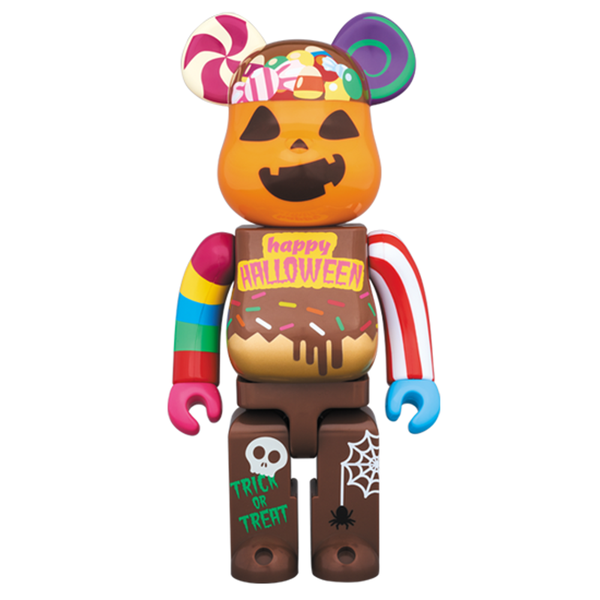
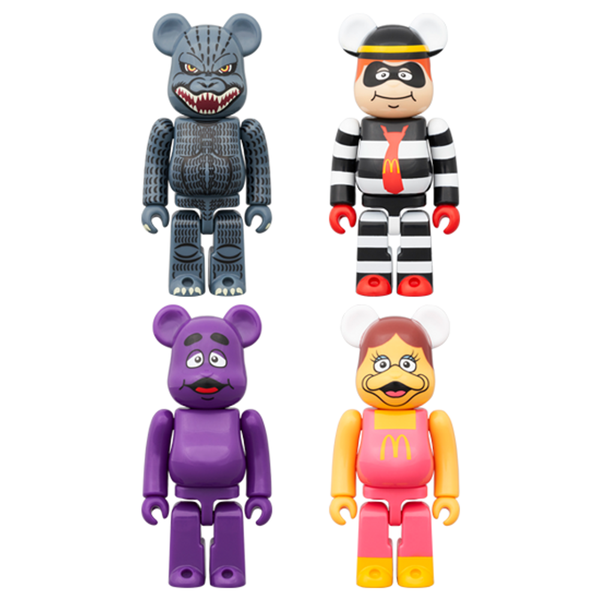
The three core BE@RBRICK sizes scale from a percentage system in which the 100% figure is the base unit: a 100% BE@RBRICK stands approximately 7cm (2.75 inches) tall, a 400% stands approximately 28cm (11 inches), and a 1000% stands approximately 70cm (27.5 inches). In practical terms, the 100% is a palm-sized collectible often sold in blind-box series, the 400% is the display-shelf standard that most collectors treat as the sweet spot between presence and practicality, and the 1000% is a statement piece closer to sculpture than toy, demanding real floor or pedestal space. The three sizes differ not just in height but in packaging, release strategy, collector audience, and how they behave on the secondary market — and understanding those differences is the foundation of collecting BE@RBRICK well.
The Three Sizes at a Glance
Before we go deep, here is the short version. Every BE@RBRICK release is expressed as a percentage of the standard figure. The 100% is the original reference size — small enough to line up a dozen on a single shelf, and the format Medicom Toy uses for its long-running numbered series. The 400% is four times the height of the base figure, which makes it roughly the size of a wine bottle and the most popular format for displaying a single design prominently. The 1000% is ten times the base height — about as tall as a two-year-old child — and is generally produced in smaller quantities, priced accordingly, and treated by collectors as the flagship expression of a design.
| Size | Approx. Height | Typical Role | Typical Packaging |
|---|---|---|---|
| 100% | ~7cm / 2.75in | Entry point; blind-box series; companion piece in sets | Small carded box or blind box |
| 400% | ~28cm / 11in | Core collector format; shelf display standard | Printed window or closed box, often shrink-wrapped |
| 1000% | ~70cm / 27.5in | Flagship statement piece; sculpture-scale display | Large heavy carton, frequently with internal bracing |
Keep that scaling logic in mind — height quadruples from 100% to 400% and grows tenfold from 100% to 1000% — because almost every other difference between the sizes flows from it: material volume, shipping weight, production quantity, price tier, and the way each size is bought and sold. You can see the size formats side by side across the designs currently in our BE@RBRICK collection.
What the Percentage System Actually Means
BE@RBRICK is produced by Medicom Toy, the Japanese collectibles company that introduced the figure in 2001. The bear-shaped design grew out of Medicom's earlier block-figure body, and from the beginning the company expressed every variant as a percentage of the standard figure rather than in centimeters or inches. That decision turned out to be one of the most elegant pieces of product architecture in the designer-toy world: a collector anywhere on earth instantly knows how big a "400%" is without converting units, and the system scales cleanly in both directions.
The 100% figure is the anchor. At roughly 7cm tall, it is the size Medicom uses for its numbered blind-box series, which have been released on a regular cycle for more than two decades and now span dozens of series. Other percentages exist around the core trio — smaller keychain-scale figures and intermediate sizes have appeared over the years — but 100%, 400%, and 1000% are the three formats that define the market, and the three you will encounter most often when buying, selling, or valuing BE@RBRICK.
Two things stay constant across all sizes. First, the silhouette: the same rounded bear head, barrel torso, and simplified limbs, articulated at the head, arms, wrists, waist, and hips. Second, the design itself: when a collaboration releases in multiple sizes, the artwork printed or sculpted onto the figure is the same across formats. What changes is everything around the figure — scale, material presence, packaging, edition strategy, and price. For newcomers to the vocabulary of this world, our collector's glossary covers the terms you will see used throughout this guide.
The 100% BE@RBRICK: The Entry Point and the Engine of the Hobby
The 100% is where most collectors start, and it is also the format that keeps the whole ecosystem running. At about 7cm tall, a 100% figure fits in the palm of your hand. It weighs very little, ships inexpensively, stores in almost no space, and can be displayed in quantity — which matters, because the 100% format is built around variety rather than singular presence.
Blind-box series and the thrill of the pull
Medicom's numbered series are the heartbeat of the 100% format. Each series bundles a themed assortment of designs — typically spanning recurring categories such as basic, pattern, horror, sci-fi, cute, animal, artist, and secret chase figures — sold in sealed blind boxes so the buyer does not know which design is inside. The chase figures, produced at deliberately low ratios within a series, are where much of the secondary-market energy in the 100% world concentrates. A common design from a series may trade for modest sums, while the rare chase from the same series can command a serious premium. Because the sealed box is part of the appeal, unopened blind boxes are themselves a collecting category.
The companion role in sets
The other place you will constantly meet the 100% figure is inside 400% sets. Many collaboration releases are sold as a "400% + 100%" pairing in a single box: the display-scale figure plus its miniature twin. Collectors value keeping these sets intact, and a set that has been split — the 400% sold off, the 100% orphaned — is generally less desirable than a complete pairing with its original packaging. When you evaluate a listing for a set release, confirming that both figures are present and that the box is the original set box is a basic due-diligence step.
Strengths and trade-offs of the 100%
- Low barrier to entry: the most affordable way to own a given design or participate in a series.
- Density of display: dozens of figures fit where a single 1000% would stand.
- Liquidity: the 100% market is broad and active, with high transaction volume.
- Trade-off — presence: a 7cm figure reads as a miniature. Fine details of a design can be harder to appreciate at this scale.
- Trade-off — condition sensitivity: small figures are easy to lose accessories from, easy to scuff in loose storage, and the thin card boxes crease easily.
The 400% BE@RBRICK: The Collector's Standard
If the 100% is the entry point, the 400% is the destination for most serious collectors. At roughly 28cm tall — about the height of a standard sheet of paper — the 400% is large enough to display a design with real impact, yet compact enough to live on a bookshelf, a credenza, or a dedicated display cabinet without dominating a room. It is no accident that when an artist, fashion house, musician, or brand collaborates with Medicom, the 400% is very often the flagship retail format.
Why the 400% became the sweet spot
Three forces converge on this size. First, visual fidelity: at 28cm, printed artwork, sculpted textures, and finish details are all clearly legible from across a room in a way a 100% simply cannot match. Second, practicality: a 400% ships safely in a manageable box, displays without special furniture, and can be handled without a two-person lift. Third, market depth: because the 400% is the most commonly produced collaboration format, it has the deepest pool of buyers and sellers, the richest comparable-sales history, and the most predictable demand. In our own experience as a dealer, when a collector asks for "the" version of a particular design, they almost always mean the 400%.
Materials and special editions
The standard 400% is molded in plastic, but the format is also the canvas for material experiments — editions have appeared in wood, plush, and metallic and translucent finishes, among others. Material editions of the same design are collected as distinct items, and their markets behave independently: a wood edition and a standard edition of the same artwork are not interchangeable comparables. When researching value, always compare like with like — same design, same size, same material, same edition. Our BE@RBRICK price guide walks through how to structure that comparison properly.
Strengths and trade-offs of the 400%
- Display impact without logistics pain: big enough to matter, small enough to manage.
- Deepest market: the most active size tier for collaborations, which supports both buying and eventual resale.
- Set dynamics: frequently sold with a 100% companion, adding a completeness dimension to condition grading.
- Trade-off — box size: original packaging is bulky enough that storing boxes for a large collection requires planning.
- Trade-off — competition: popular 400% releases sell out quickly at retail, pushing many purchases to the secondary market where verification matters most.
The 1000% BE@RBRICK: Sculpture-Scale Statement
The 1000% is a different kind of object altogether. At roughly 70cm tall and substantially heavier than its smaller siblings, a 1000% BE@RBRICK occupies space the way a sculpture does. It does not sit on a bookshelf; it stands on a pedestal, a console, or the floor, and it tends to become the visual anchor of whatever room it inhabits. Collectors who buy at this scale are usually making a deliberate design statement — the 1000% is as much interior architecture as it is a collectible.
Production, price tier, and audience
1000% releases are generally produced in smaller quantities than their 400% counterparts and occupy a higher price tier from the moment of release. The audience is correspondingly narrower but often more committed: interior designers, dedicated designer-toy collectors, and art buyers who might otherwise be considering editioned sculpture. Because supply is tighter and each transaction is larger, the 1000% secondary market moves more slowly than the 400% market — fewer sales, longer holding periods, and more negotiation per transaction. That is not a weakness; it is simply the character of a large-format collectible, and it rewards buyers who research comparables patiently rather than reacting to a single asking price.
Logistics: the hidden dimension of the 1000%
Nothing separates the 1000% from the smaller sizes more than logistics. The original carton for a 1000% is a large, heavy box, frequently with internal bracing, and it is a genuine factor in ownership:
- Shipping: a 1000% often ships as oversized freight. Insist on insured, tracked shipping with adequate packing — double-boxing is standard practice among careful sellers.
- Storage: keeping the original carton is strongly advised for resale value, but the carton itself needs dry, climate-stable storage space.
- Handling: moving a 1000% is a two-hands, sometimes two-person job. Grip the torso, never the arms or head, and never lift by an articulation point.
- Display stability: at this height and weight, tip-over risk is real. Place the figure on a stable, level surface away from foot traffic, and consider museum gel or discreet anchoring in homes with children or pets.
Side-by-Side: How the Sizes Compare in Practice
Here is the full comparison collectors actually use when deciding which format of a design to pursue.
| Dimension | 100% | 400% | 1000% |
|---|---|---|---|
| Height | ~7cm / 2.75in | ~28cm / 11in | ~70cm / 27.5in |
| Scale vs. base | 1× (reference) | 4× height | 10× height |
| Typical release format | Blind-box series; companion in sets | Standalone or 400%+100% set | Standalone flagship |
| Relative supply | Highest | Moderate | Generally lowest |
| Price tier at release | Lowest | Middle | Highest |
| Market liquidity | High volume, fast | Deepest and most active | Slower, larger transactions |
| Display footprint | Shelf rows, cabinets | Shelf or cabinet feature | Floor, pedestal, console |
| Shipping | Trivial | Standard parcel | Oversized, insured freight |
| Condition risks | Creased card boxes, lost pieces | Box wear, sticker damage, sun fade | Carton damage, joint stress, tip-over, fade |
One nuance worth underlining: the same artwork does not carry the same collecting logic across sizes. A design you love as one of forty 100% figures in a series display is a different proposition as a 1000% dominating your living room. Decide what role the piece will play — volume collecting, feature display, or statement sculpture — and let that role choose the size.
Which Size Holds Value Best?
This is the question we hear most often, and the honest answer is that size alone does not determine value — design, collaboration, rarity, condition, and completeness do, and each size tier expresses those factors differently. Compare the same BE@RBRICK release, size and collaboration using dated completed sales, including packaging, condition and provenance. A format-wide growth rate does not value an individual figure.
- 100% figures live or die by rarity within their series. Common pulls trade cheaply and frequently; chase figures and sought-after artist designs concentrate most of the value. Sealed, unopened examples typically command a premium over loose ones.
- 400% figures benefit from the deepest market. Strong collaborations in excellent, complete condition are the most consistently tradable BE@RBRICK asset — there are simply more buyers at this tier than any other. Completeness of 400%+100% sets meaningfully affects results.
- 1000% figures combine tighter supply with a smaller buyer pool. Well-chosen 1000% releases from major collaborations have historically been among the most sought-after objects in the category, but individual results vary widely, and patience is part of the ownership model at this scale.
Rather than anchoring on any single asking price you see online, compare recent verified sales for the exact design, size, material, and condition you are evaluating. Asking prices are marketing; sold prices are data. Our financial insights hub explains how we approach that analysis across categories, and our comps database is the backbone of every valuation we publish.
Authentication Across the Sizes
Every size tier of a popular release attracts imitation, and the practical verification work differs slightly by format — which is why we treat authentication as a size-aware discipline rather than a single checklist.
What to examine at each scale
- 100%: at blind-box scale, packaging is a large share of the evidence. Examine the box printing quality, the series identification, and the figure's paint application and foot markings. Sloppy print registration and soft, mushy sculpt details are the classic warning signs at this size.
- 400%: examine box artwork and construction, shrink-wrap quality where applicable, the crispness of printed graphics on the figure, joint fit and articulation feel, and the markings molded or printed on the figure. For set releases, verify both figures and the set packaging match.
- 1000%: the large carton, internal packing, and the figure's weight, finish, and seam quality all carry information. Large-format fakes exist, and at this transaction size the cost of a mistake is highest — which is exactly why documented provenance matters most here.
Our detailed walkthrough of the physical inspection process, with the specific things legitimate production gets right, is in our guide on how to spot a fake BE@RBRICK.
How our gallery documents authenticity
That documentation travels with the figure: when you eventually sell or pass on the piece, the verification chain goes with it, which is precisely the kind of provenance the secondary market rewards. Questions about how blockchain certification works in practice are answered in our authentication FAQ . For a KAWS or BE@RBRICK purchase, check the individual listing for release-specific packaging, production marks, condition and provenance. Manufacturer NFC is relevant only on releases that include it; a certificate alone does not establish authenticity.
Display, Care, and Storage by Size
BE@RBRICK figures across all sizes share the same enemies — ultraviolet light, heat, humidity swings, dust, and careless handling — but the mitigation differs by scale.
Light and environment
Direct sunlight fades printed graphics and can yellow lighter plastics over time, at every size. Display away from windows, or behind UV-filtering glass. Aim for stable, moderate temperature and humidity: attics, garages, and bathrooms are poor homes for any collectible plastic. White and light-colored figures deserve extra caution, as discoloration is most visible on them.
Size-specific care
- 100%: enclosed display cases solve dust, sunlight, and loss risk simultaneously. Store spare series boxes flat in archival-quality containers. If you keep blind boxes sealed, store them upright and dry — the card stock is the collectible's skin.
- 400%: dust regularly with a soft, dry cloth or a soft brush; avoid solvents and household cleaners on printed surfaces. Keep the original box and any inserts — completeness includes packaging. Rotate articulated joints gently and rarely; repeated posing wears joints and can stress printed surfaces at articulation seams.
- 1000%: everything above, plus structural care. Support the figure's weight properly, keep it clear of traffic paths, and store the original carton flat and dry. If you ever ship the piece, replicate factory-style packing and insure it for a value supported by recent comparable sales.
Records: the collector habit that pays for itself
Whatever size you collect, keep a simple provenance file for each piece: purchase receipt or invoice, the seller's identity, photographs of the figure and packaging at acquisition, and any certificates. A figure with a documented chain of ownership is easier to insure, easier to sell, and more credible to the next buyer. This habit costs minutes and compounds for years — it is the single cheapest value-protection step in the hobby.
How to Choose Your Size: A Practical Framework
When collectors ask us which size to buy, we walk them through four questions:
- What role will the piece play? Volume and variety point to 100%. A featured design on a shelf points to 400%. A room-defining statement points to 1000%.
- What is your space, honestly? Measure before you buy. A 1000% needs roughly 70cm of clear vertical space plus a stable footprint, and its carton needs storage of its own.
- What is your budget across time, not just today? A 400% habit is sustainable for many collectors; the 1000% tier concentrates budget into fewer, larger decisions. Neither is wrong — but know which game you are playing.
- How much does resale matter to you? If eventual liquidity is a priority, the 400% tier's market depth is a genuine advantage. If you are buying a lifetime piece for your home, the 1000%'s slower market matters far less.
Many seasoned collectors end up with a deliberate mix: series runs and chase hunting at 100%, core collaborations at 400%, and one or two 1000% anchors. Browse the current mix of formats in our BE@RBRICK collection and the wider designer figurine collection to calibrate what each scale actually looks like in a curated setting.
Buying Checklist: Any Size, Every Time
Run this checklist before committing to any BE@RBRICK purchase, and weight the items marked by size accordingly:
- Confirm the exact release: design, size percentage, material edition, and whether it was sold standalone or as a set.
- Verify completeness: figure, original box, inserts, and — for sets — the companion figure.
- Inspect condition photos at high resolution: printed surfaces, joints, feet markings, box corners and edges. Request more photos if anything is unclear; a serious seller will provide them.
- Compare recent verified sold prices for the identical release and condition, not asking prices.
- Evaluate the seller: track record, authentication documentation offered, and return terms. Documented provenance and independent verifiability separate professional sources from anonymous ones.
- Size-specific (100%): confirm series and check whether the box is sealed or opened, and whether that matches the listing's claim.
- Size-specific (400%): confirm set completeness and check for sun fade on displayed examples.
- Size-specific (1000%): confirm insured, properly packed shipping before payment, and factor freight into your total cost.
For the complete version of this process — including how to research a release's history and what questions to ask before wiring money for a large piece — see our full BE@RBRICK buyer's guide, and use our BE@RBRICK index to identify releases and their variants. New collectors building broader habits across categories will also find our Collector's Hub a useful home base.
The Bottom Line
The 100%, 400%, and 1000% BE@RBRICK sizes are three expressions of one design language, separated by a simple scaling system with profound practical consequences. The 100% (~7cm) is the accessible, high-variety engine of the hobby; the 400% (~28cm) is the collector's standard, balancing display presence with the deepest market; the 1000% (~70cm) is the sculpture-scale flagship for buyers making a statement. There is no single "best" size — there is only the best size for the role you want the piece to play. Buy the exact release you can verify, from a source that documents what it sells, at a price supported by real comparable sales, and every one of the three sizes can be collected with confidence.
Frequently Asked Questions
How tall is a 400% BE@RBRICK compared to a 100%?
A 400% BE@RBRICK stands approximately 28cm (11 inches) tall — four times the height of the roughly 7cm (2.75 inch) 100% base figure. The percentage in every BE@RBRICK name expresses its scale relative to the 100% standard, so heights can be estimated instantly from the name alone.
Is a 1000% BE@RBRICK a better investment than a 400%?
Not automatically. The 1000% tier combines tighter supply with a smaller pool of buyers, so individual results vary and sales take longer. The 400% tier offers the deepest, most liquid market. In both cases, the specific design, its rarity, condition, and completeness drive value far more than size alone — always compare recent verified sales for the exact release.
Why are 400% and 100% figures often sold together?
Many collaboration releases are packaged as a 400% + 100% set: the display-scale figure with its miniature twin in one box. Collectors value intact sets, so keeping both figures together with the original set packaging supports desirability and resale value. A split set is generally less sought-after than a complete one.
Do all three sizes exist for every BE@RBRICK design?
No. Release strategy varies by collaboration. Some designs appear only in blind-box 100% series, many flagship collaborations release at 400% (with or without a 100% companion), and only a subset of designs receive a 1000% edition. Checking which formats a release actually came in is a basic authentication and valuation step.
How should I ship or store a 1000% BE@RBRICK?
Treat it like sculpture. Keep the original carton and internal packing, store it flat and dry, and when shipping, replicate factory-style packing, double-box where practical, and use insured, tracked freight. Handle the figure by the torso, never by the arms or head, and display it on a stable surface away from traffic and direct sunlight.
What documentation should come with an authenticated BE@RBRICK?
More broadly, expect a receipt or invoice, seller identification, and a documented chain of ownership — provenance that transfers to the next owner.
Shop BE@RBRICK
Explore current pieces available from the gallery.
-
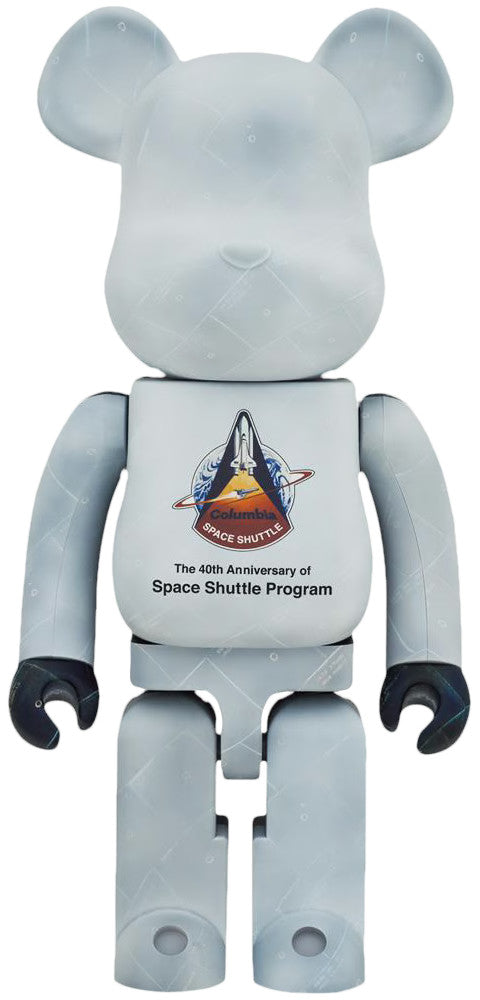
BE@RBRICK NASA Space Shuttle 40th Anniversary 1000% Medicom Toy Bearbrick
$600.00 USD
-
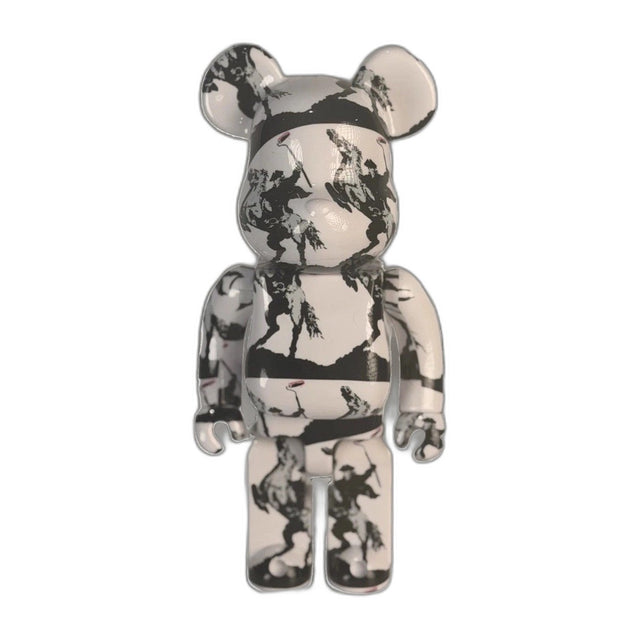
BE@RBRICK Brandalism Sync Banksy Medicom Toy Art Figure du-al.io Authenticated
$199.00 USD
-
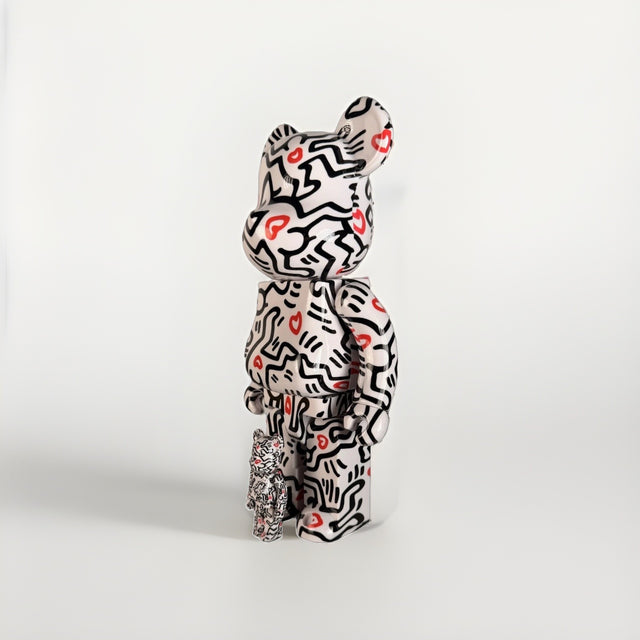
BE@RBRICK Keith Haring 400% + 100% Set Medicom Toy Bearbrick Foundation Art New
$199.00 USD
-
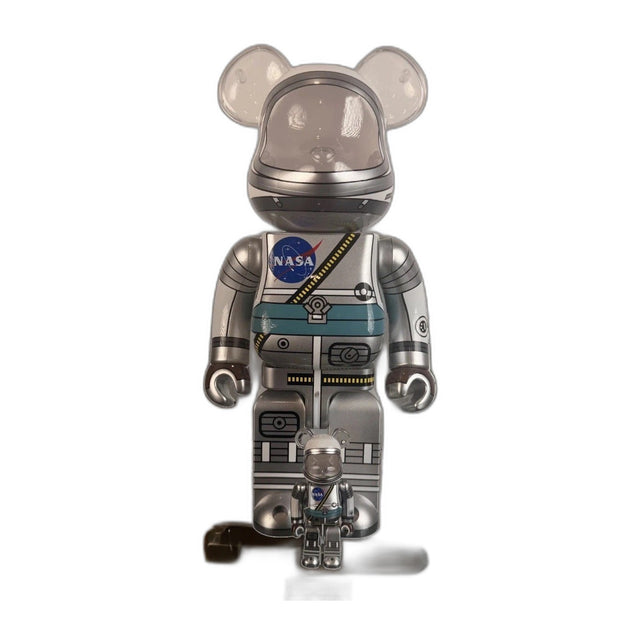
Bearbrick BE@RBRICK Mercury Astronaut 400% 100% Set NASA Medicom Toy Sealed New
$225.00 USD
-
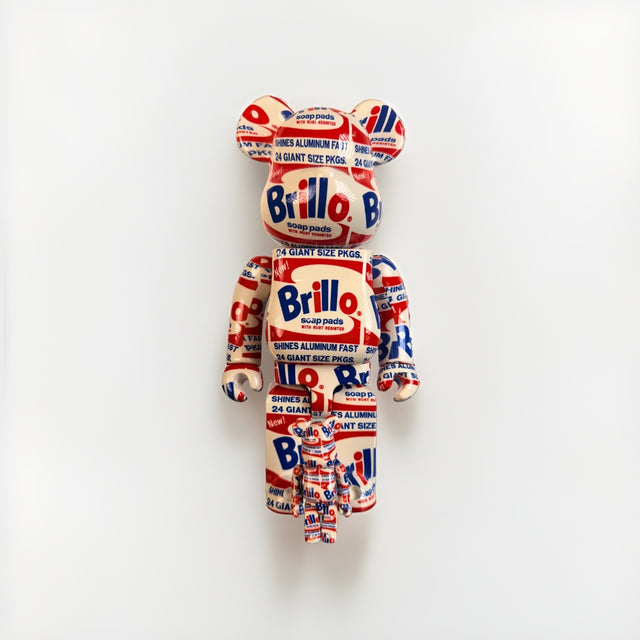
Bearbrick BE@RBRICK Andy Warhol Brillo 400% 100% Set Original 2020 Medicom New
$275.00 USD
Browse the collection for current listings.