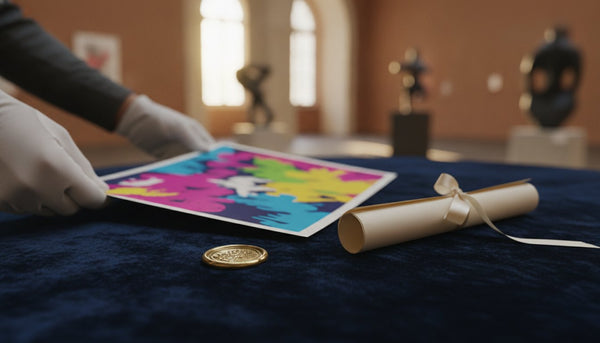
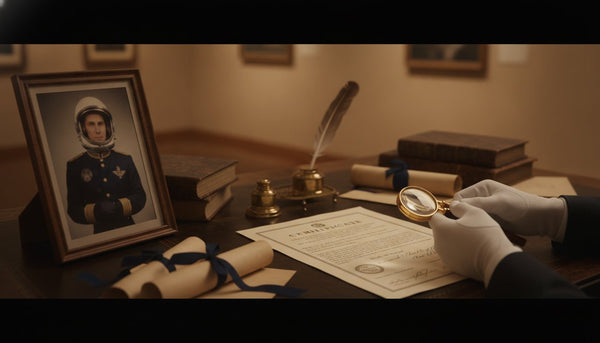
A first collected work does more than fill a wall. It sets the collector’s habits for everything that follows: where they source, how they document, what they are willing to pay above retail, and how patient they learn to be. Our curators have walked hundreds of new collectors through a first purchase, and the pattern is remarkably consistent. The collectors who build serious holdings over five or ten years almost always start the same way.
This piece is a short field guide to that first acquisition.
Start with an artist you already love
The most reliable filter is conviction. If a collector cannot explain in one or two sentences why a given artist matters to them, they are buying a decoration, not a position. A first piece should be something that would hang on a wall for a decade even if its market value went to zero.
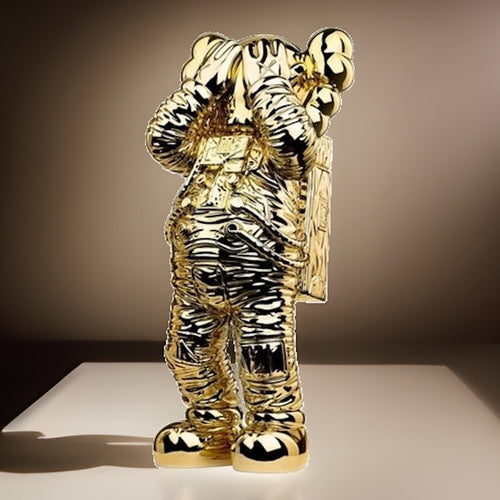
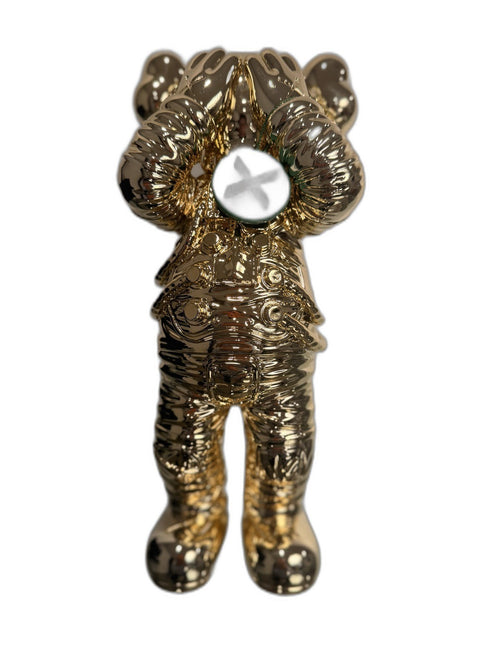
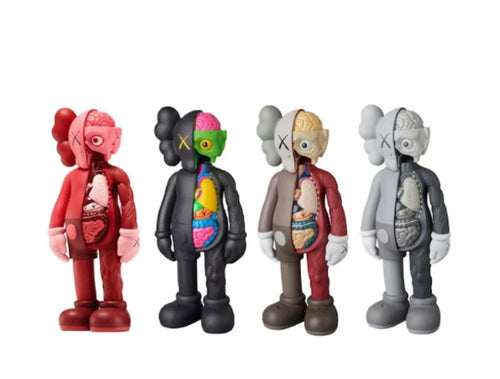
In our advisory practice we often see new collectors anchor on names they have read about in the press, which is fine, but the secondary filter is whether they have spent meaningful time with the artist’s work in person. A Shepard Fairey “Obey Giant” reads very differently in a gallery than it does on a screen. A KAWS COMPANION is a different object at arm’s length than in a magazine.
Edition size matters more than signature
New collectors fixate on signatures. Signatures are table stakes. The variable that actually moves long-term value is edition size.
A Fairey “Peace Goddess” from an edition of 450 will behave differently in the market than a piece from an open edition of several thousand. A Banksy “Girl with Balloon” signed screenprint from the edition of 150 is a fundamentally different asset from the unsigned edition of 600, and both trade at radically different multiples at Christie’s and Phillips. Before a first purchase, our curators ask collectors to learn the edition structure of their target artist cold.
What to buy
For a first piece in the $500 to $3,000 band, a few categories have historically held up well:
- A numbered, signed screenprint from a recognized street-art or contemporary figure with a verifiable edition of 500 or under. Fairey, D*Face, and Faile have deep comps at this level.
- A BE@RBRICK 400% or 1000% in a licensed collaboration with an established brand or artist estate. Edition quantities are public, secondary pricing is transparent on StockX and Phillips.
- A Death NYC one-day edition in pristine condition with its original signed certificate. These reward collectors who buy early and hold.
In every case the criteria are the same: verifiable edition size, intact certificate of authenticity, clean condition, and a seller with reputational accountability.
What to avoid
Our curators flag the same traps again and again:
- Unsigned “giclee reproductions” sold at signed-edition prices. A giclee without edition control is a poster, regardless of frame.
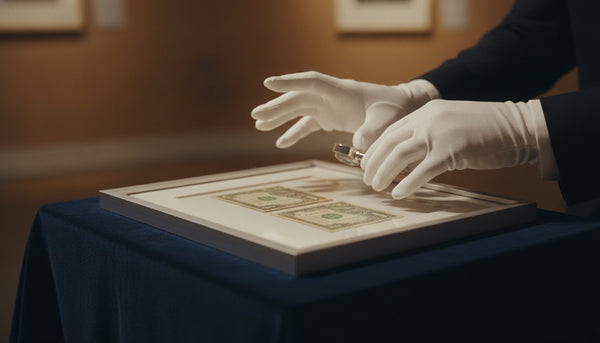
- Pieces with no paper trail. If the seller cannot produce a COA, a gallery receipt, or an auction consignment, assume the work is unverifiable.
- “Rare proofs” with no edition documentation. Artist proofs and printer proofs exist, but they are documented as such. A piece marketed as “AP” with no record from the publisher should be treated as suspect.
- Framed works where the frame obscures the edition number, signature, or margin. An opaque frame is a red flag, not a feature.
- Pieces priced at a steep discount to recent public auction comps with no explanation. A 40 percent discount to the last Phillips result is almost never a gift.
Document on day one
The habits that separate a collection from a pile of purchases begin at the first invoice. Our advisory clients keep a simple ledger: artist, title, year, edition number, purchase date, purchase price, source, condition notes, and scanned COA. That file becomes the backbone of future insurance, resale, and estate planning. Starting it on the first piece is effectively free. Starting it on the tenth piece is painful.
For collectors who plan to hold seriously, we also recommend photographing every work front and back in natural light on day of receipt, and storing those images alongside the COA. If a piece is ever damaged, lost, or questioned, the day-one documentation is the strongest evidence available.
Set a budget you can repeat
A common mistake is overspending on a first piece. A collection is a portfolio, and portfolios need more than one position. Our curators generally suggest that a first acquisition should be sized so the collector can comfortably make a second purchase within twelve months without straining the budget. Collecting is a habit, and habits need reps.