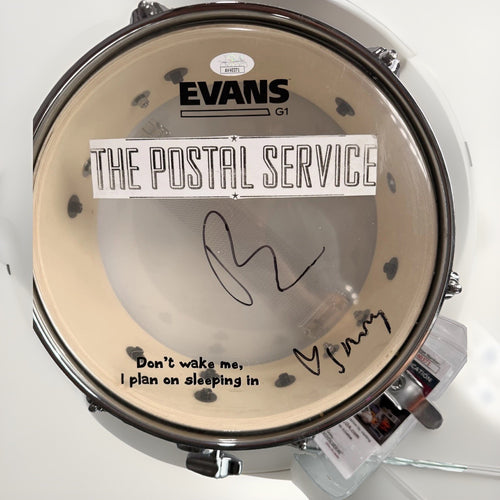
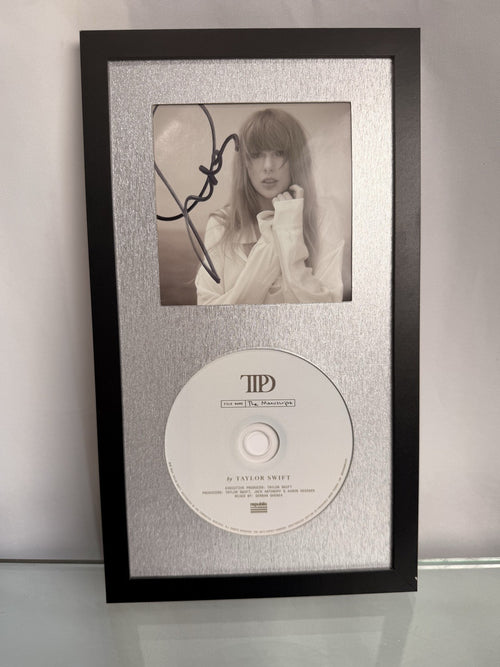
Signed music memorabilia is one of the most frequently forged categories in the collectibles market. A signed vinyl sleeve, a signed guitar, a signed promotional photograph: the underlying object is easy to source, the signature is easy to fake, and the upside for a forger is high. The bodies that police this market are Beckett, JSA, and PSA, and they are not interchangeable.
Our curators get this question often from collectors moving between fine art and signed memorabilia for the first time. The short answer: for signed music, the right authenticator depends on the format and the artist, and any one of the three can be credible if the certificate is genuine and the signature matches their verified reference set.
The three bodies
PSA (Professional Sports Authenticator) is the oldest and largest of the three. Originally focused on sports memorabilia, PSA has built a substantial music division through its autograph authentication service. PSA assigns unique certificate numbers that can be verified on its public registry. It offers encapsulation services, which seal the autograph and certification together in a tamper-evident holder.
JSA (James Spence Authentication) was founded by James Spence, a former PSA/DNA lead authenticator. JSA is regarded by many collectors, particularly in rock and pop music, as the specialist of choice. Its reference database is strong on mid-century through modern music signatures. JSA also issues letters of authenticity (LOAs) and full letters for higher-value pieces, and maintains a public certification lookup.
Beckett Authentication Services (BAS) is the third major player, operating under the same parent as the well-known Beckett price guides. Beckett is often regarded as the stricter of the three, with a reputation for rejecting borderline pieces that the other services might pass. Beckett offers numbered holograms affixed to the signed object, matched to certificates that can be verified through its registry.
What each one is best at
Our curators observe the following reasonable heuristics:
- PSA: broad coverage across music, strong encapsulation service, deep volume of previously authenticated references for most major artists. A reasonable default for most signed music items below the five-figure tier.
- JSA: the strongest reputation among rock and classic music specialists, particularly for deceased artists and vintage signatures. Many specialist auction houses default to JSA authentication.
- Beckett: the strictest of the three, with a reputation for being hard to fool. Highly credible for high-value signatures where the tightest gate is the value-maximizing path.
None of this means the other services are wrong. It means the specific specialty overlap matters.
Sticker vs. LOA vs. encapsulation
Another variable buyers frequently confuse is the format of the authentication itself:
- Sticker or hologram is a numbered physical marker affixed to the signed object, referencing a certificate in the authenticator’s registry. Least expensive, most common.
- LOA (Letter of Authenticity) is a printed letter from the authenticator referencing the object by photograph and signature, including a certificate number. Standard for higher-value pieces.
- Full LOA is the more detailed version with multiple reference comparisons, used for the highest-value items.
- Encapsulation seals the signed object into a rigid holder together with a certificate, typically for signed cards, small photographs, or trading items. This is the most tamper-evident format.
For a collector, the most important question is: does the sticker or certificate number resolve on the authenticator’s public registry to a record that matches the piece in hand?
The forgery problem
Signed music memorabilia forgery is systematic, not occasional. Well-known forgery families have operated for decades, producing convincing autographs at volume and flooding specific channels. The authenticators exist specifically because the forgery problem is too large for any individual buyer or seller to solve alone.
Our curators flag these forgery patterns in particular:
- “Authentic” signatures without any third-party authentication, offered with a seller’s written guarantee. A seller guarantee is worth only as much as the seller’s willingness to refund, which in practice is usually limited.
- Photographs of a celebrity signing an item, offered as authentication. Photographs prove a signing event occurred. They do not prove the specific item offered was the one signed.
- Signatures that reference deceased artists, particularly at prices that seem favorable relative to comps. Deceased artists’ signatures have fixed supply, so sudden discounts are suspect.
- Authentication from bodies other than PSA, JSA, or Beckett, unless the other body is a recognized specialist for the specific artist (some estates run their own authentication programs).
Cross-authentication and when to get it
For any signed music piece above $2,000, our advisory recommendation is to require current-era authentication from one of the three major bodies. For pieces above $10,000, we typically recommend dual authentication: two independent services agreeing on the same signature. The incremental cost is modest, and the resale liquidity of a dual-authenticated piece is materially higher than a singly-authenticated one.
Items to avoid buying without authentication regardless of price:
- Guitars or instruments claimed to be stage-played or signed by deceased musicians
- Signed vinyl for artists whose signatures are widely known to be forged (Beatles, Elvis, Hendrix, Morrison, Cobain are the top forgery targets)
- Pieces marketed as “one of only a few in existence” without supporting documentation
A collector’s playbook
Our short playbook for signed music collectors:
- Before bidding, verify the certificate number on the authenticator’s public registry
- If the seller cannot produce a certificate or the number does not resolve, walk away
- For high-value pieces, require JSA or Beckett in addition to PSA
- For deceased-artist signatures, require provenance in addition to authentication
- Store signed pieces away from UV light, since ink fade permanently degrades both the signature and the authentication value
Signed music can be one of the more rewarding parallel categories for fine art collectors, precisely because the underlying objects are often culturally significant and the market has a mature authentication infrastructure. The infrastructure is only useful if the collector insists on using it.