An Apollo 11 autograph should be accompanied by four layers of documentation: a certification from a recognized third-party authenticator — Beckett, JSA, PSA/DNA, or Zarelli Space Authentication, the marquee specialist for Apollo-era material — a documented provenance trail showing where the signature came from and who has owned it, any original contextual paperwork such as mailing envelopes, event programs, or correspondence that anchors the signing to a real moment, and the seller's own written description with a clear return policy. Of these, the third-party certification carries the most weight in the market, because Apollo 11 signatures sit at the intersection of enormous demand, finite supply, and decades of autopen and secretarial signatures that only trained examiners reliably separate from the real thing. Everything else in this guide builds on that foundation.
Below, we unpack each layer in detail: what the major authentication services actually issue, why provenance matters even when a certificate is present, which original documents add the most value, how documentation expectations differ across signed photos, postal covers, books, and flown-item certificates, and how to organize your own records once the piece is on your wall. Our gallery handles Apollo-era material regularly, and the difference between a well-documented signature and an undocumented one shows up in confidence, liquidity, and price every single time.
Why Apollo 11 Autographs Demand More Documentation Than Almost Anything Else
Apollo 11 — the July 1969 mission that carried Neil Armstrong, Buzz Aldrin, and Michael Collins to the first crewed lunar landing — occupies a unique place in autograph collecting. It is arguably the single most historically significant signature set of the twentieth century, and the market treats it that way. That significance creates three documentation pressures that most autograph categories never face.
The supply problem
Neil Armstrong, famously private, stopped signing autographs for the public in the mid-1990s after learning that his signature was being sold commercially and forged at scale. He died in 2012, permanently capping the supply. Michael Collins signed selectively and passed away in 2021. Buzz Aldrin signed extensively at shows and private signings for decades, but demand for authentic crew-signed material still vastly outstrips what exists. When supply is fixed and demand keeps growing, the incentive to manufacture fakes grows with it — and the market's answer is documentation.
The autopen problem
NASA faced a genuine logistical crisis in the 1960s: astronauts received staggering volumes of fan mail, and the agency wanted every letter answered. The solution was the autopen — a mechanical device that reproduces a signature with a real pen — along with secretarial signatures produced by staff. As a result, an enormous number of period-correct, vintage items bearing "Apollo 11 crew signatures" left NASA offices without any astronaut ever touching them. These are not modern forgeries; they are sixty-year-old artifacts with genuine NASA provenance and inauthentic signatures. Distinguishing autopen patterns from hand-signed examples is exactly the kind of specialized judgment that third-party authentication exists to provide, and it is why documentation matters even for items with impeccable-seeming origins. Our guide to spotting problem space memorabilia covers this landscape in more depth.
The value problem
Crew-signed Apollo 11 pieces trade at levels where buyers reasonably expect institutional-grade paperwork. At those stakes, an undocumented signature — however good it looks — is effectively unsalable to informed collectors. Documentation is not bureaucratic overhead; it is the mechanism that converts a piece of signed paper into a liquid, insurable, transferable asset.
Layer One: Third-Party Authentication — The Non-Negotiable Core
The centerpiece of any Apollo 11 autograph's file should be certification from one of the recognized third-party authentication services. In the space memorabilia field, the names that matter are Beckett Authentication Services, JSA (James Spence Authentication), PSA/DNA, and Zarelli Space Authentication. The first three are the industry-standard trio across the broader autograph world; Zarelli is the space-specialist marquee, particularly respected for Apollo-era and flight-flown material. Our Apollo 11 authentication guide walks through how these services operate; here we focus on the documents they actually produce.
What a third-party certification typically includes
- A certificate or letter of authenticity (COA/LOA) — a formal document stating that the service examined the item and concluded the signature is authentic. Fuller letters describe the item, the signer or signers, and the signature placement.
- A unique certification number — the key that ties the physical document to the service's records. Most major services maintain online verification databases where a certification number can be checked against the item description.
- A tamper-evident label or sticker, on many certified items, affixed to the item or its holder and carrying the matching certification number.
- Encapsulation or slabbing, in some cases, where the item is sealed in a protective holder with an integrated label — common for smaller flat items.
When you buy a certified Apollo 11 autograph, insist on receiving the actual certificate or letter, not just a listing that claims certification exists. Then verify the certification number yourself through the issuing service's own verification system. A certificate that cannot be verified, or whose description does not match the item in front of you, is a red flag worth resolving before money changes hands — forged COAs from prestigious services are a known problem, which is why verification, not the paper itself, is the real safeguard.
Why Zarelli Space Authentication matters for Apollo material
General autograph authentication is a skill; Apollo-era authentication is a sub-specialty. The examiner needs deep familiarity with how each astronaut's signature evolved across decades, with the specific autopen patterns NASA used, with secretarial hands, and with the kinds of items each astronaut actually signed in each era. Zarelli Space Authentication built its reputation precisely on that specialization, which is why serious space collections often pair a Zarelli opinion with certification from Beckett, JSA, or PSA/DNA. For Apollo 11 flight-flown items and crew-signed rarities, a space-specialist opinion is the strongest single document a piece can carry. The space memorabilia authentication guide on our site explains how these opinions complement one another.
Comparing the recognized services
| Service | Scope | Typical documents issued | Role for Apollo 11 material |
|---|---|---|---|
| Beckett Authentication Services | All autograph categories | COA/LOA with certification number; tamper-evident label; online verification | Industry-standard general certification, widely accepted at auction |
| JSA (James Spence Authentication) | All autograph categories | LOA or certificate with number; sticker; online verification database | Industry-standard general certification, widely accepted at auction |
| PSA/DNA | All autograph categories | COA/LOA with certification number; label; encapsulation available for some items | Industry-standard general certification, widely accepted at auction |
| Zarelli Space Authentication | Space memorabilia specialist | Specialist letters of authenticity | The marquee opinion for Apollo-era and flight-flown signatures |
There is no requirement to hold all four. One current, verifiable certification from any of these services puts an Apollo 11 autograph on solid footing; a general-service certificate plus a Zarelli specialist letter is the gold-standard pairing for top-tier pieces.
Layer Two: Provenance — The Story of Where It Came From
A certificate answers "is this signature real?" Provenance answers "where has this item been?" — and for Apollo 11 material, the second question can be nearly as valuable as the first. Documented provenance means a written, ideally evidence-backed chain of custody from the moment of signing (or as close to it as possible) to the present owner. Our authentication glossary defines the key terms, but the practical documents look like this:
- Original purchase receipts or invoices from dealers, galleries, or signing events, showing the item, date, and seller.
- Auction records — catalog pages, lot descriptions, and invoices from prior auction sales. Major-auction history is powerful provenance because the item passed a professional vetting process at each sale.
- Prior certificates and letters from earlier authentications, even from services no longer active. A layered paper trail across decades is persuasive.
- Correspondence — letters from the astronaut, their office, or NASA accompanying the item, or letters from previous owners describing how the item was obtained.
- Consignor and estate documentation — statements from the families or estates of astronauts, NASA employees, or contractors, which are especially relevant for items that descended directly from program personnel.
- Photographic evidence — photos of the signing itself (common for later Aldrin signings at organized events) or period photos showing the item in an earlier owner's collection.
Two points deserve emphasis. First, provenance supports authentication but does not replace it — the autopen problem means an item can trace cleanly back to a NASA mailroom in 1969 and still not be hand-signed. Second, authentication does not replace provenance either: two identical certified signed photos are not equal if one descended from an astronaut's personal secretary and the other surfaced anonymously. The market rewards items that carry both layers, and when we source Apollo-era pieces for our space memorabilia collection, we look for exactly that combination of authenticated signature and documented history.
Layer Three: Original Contextual Documents — The Anchors
Some of the most compelling documentation for an Apollo 11 autograph is material that was created at the same time as the signature, for reasons that had nothing to do with resale. These contextual anchors are hard to fake convincingly as a set, and they transform a signature into a small archive.
Mailing envelopes and transmittal letters
Vintage signed photos obtained by mail often survive with their original NASA or astronaut-office envelopes, postmarked in period. A postmarked envelope establishes a date and origin — though remember that mailed items are precisely the population where autopen and secretarial signatures are most common, so the envelope strengthens the story only after the signature itself passes examination.
Event programs, tickets, and signing paperwork
For signatures obtained in person — banquets, lectures, air shows, organized signings — the accompanying program, admission ticket, or official signing receipt places the collector and the astronaut in the same room. Later-era organized signings commonly issued their own numbered certificates or event stickers; keep every piece of that paperwork with the item.
Insurance covers and crew-signed postal items
Apollo 11 is famous in philatelic circles for its crew-signed postal covers, including the so-called insurance covers the crew signed before the mission as a form of financial protection for their families in an era when conventional life insurance was impractical for lunar astronauts. Covers of this type illustrate how much documentation matters: their significance depends entirely on establishing which signing population a given cover belongs to, which is a matter for specialist examination and documented provenance together. If you are considering a crew-signed cover, treat a space-specialist authentication and a researched provenance narrative as mandatory, and see our Apollo 11 buyer's guide before committing.
Flown-item certifications
Items claimed to have flown aboard Apollo 11 occupy the summit of the market, and the documentation bar rises accordingly. The meaningful documents here are astronaut-signed letters of provenance — statements from a crew member attesting that the item traveled to the Moon or into lunar orbit — along with estate paperwork and auction lot histories. For flown material, the astronaut letter of provenance is itself an autograph document, so it benefits from the same third-party certification as the artifact it describes. Undocumented "flown" claims should be treated as unverified, full stop.
Documentation Expectations by Item Type
Apollo 11 signatures appear on many kinds of objects, and the ideal documentation package shifts slightly with each. The table below summarizes what a well-documented example of each major format typically carries.
| Item type | Core certification | High-value supporting documents | Special considerations |
|---|---|---|---|
| Signed NASA lithograph or photo | Beckett, JSA, PSA/DNA, or Zarelli LOA | Original mailing envelope, prior auction records | Mailed examples are the autopen/secretarial heartland — certification is essential |
| Crew-signed photo (all three signatures) | Full LOA covering all three signatures | Provenance narrative for the signing occasion | Each signature is evaluated individually; mixed authentic/autopen examples exist |
| Signed postal cover | Specialist space authentication plus general-service LOA | Philatelic documentation, postmark analysis, prior sale records | Cover population research matters; insurance-cover claims need documented support |
| Signed book or first-day publication | LOA from a recognized service | Inscription context, dedication details, ownership history | Inscriptions to named individuals can strengthen provenance |
| Signed cut, index card, or album page | LOA; encapsulation common | Documentation of the original item it came from, if any | Minimal context makes third-party certification carry nearly all the weight |
| Flown or claimed-flown artifact | Astronaut letter of provenance plus specialist authentication | Estate paperwork, auction lot history, NASA documentation where it exists | The provenance letter is the asset; certify it like the artifact itself |
The Seller's Own Paperwork: The Fourth Layer
The final layer is the documentation the selling dealer or gallery provides, and it is worth evaluating as carefully as the certificates. A reputable seller of Apollo 11 material should give you, in writing:
- A complete written description of the item, identifying the signer or signers, the object, its condition, and every certification that accompanies it, with certification numbers stated so you can verify them independently.
- A clear authenticity guarantee and return policy. The strongest sellers stand behind authenticity for the life of the item, not a narrow return window.
- An invoice naming the seller — which becomes the newest link in the provenance chain the moment you buy.
- Transfer of every document in the file: certificates, prior receipts, envelopes, letters, auction paperwork. A seller who markets an item's provenance but will not hand over the file is keeping the most valuable part of the piece.
This is the standard we hold ourselves to. Every Apollo-era piece our gallery offers is sourced through authenticated channels, described against its actual paperwork, and delivered with its full document file. Compare like-for-like signed objects or artifacts with matching mission association, signer, condition, authentication and provenance; a category-wide rate or median mixes different objects. Research references: Apollo 11 price guide, Financial Insights hub.
How Documentation Affects Value and Liquidity
Collectors sometimes ask whether paperwork really moves the needle, or whether a "good-looking" signature can stand on its own. The market's answer is unambiguous. Certification from a recognized service is effectively the admission ticket to the serious marketplace: major auction houses, established dealers, and informed private buyers all filter on it. Provenance then acts as a multiplier on top — items with documented histories draw deeper bidding because buyers are purchasing certainty, not just ink.
The reverse is equally true. An uncertified Apollo 11 signature, whatever its actual status, trades at a deep discount because every future buyer must price in the risk and cost of authentication. And a piece whose paperwork has been lost — the certificate misplaced, the envelope discarded, the receipt gone — quietly sheds the premium its documentation once earned. Rather than quoting figures, we suggest comparing recent verified sales of certified versus uncertified examples in our space memorabilia price guide; the pattern is consistent and instructive.
Documentation also does quieter work. It supports insurance scheduling, since insurers want independent evidence of authenticity and value. It simplifies estate planning, because heirs who inherit a documented collection can act on it, while heirs who inherit loose signed photos often cannot. And it protects you at resale, when the roles reverse and you become the seller expected to produce a file.
A Buyer's Documentation Checklist
Before purchasing any Apollo 11 autograph, work through this sequence:
- Identify the certification. Confirm the item carries a COA or LOA from Beckett, JSA, PSA/DNA, or Zarelli Space Authentication. Treat house COAs from unknown sellers as marketing, not authentication.
- Verify it independently. Look up the certification number in the issuing service's own online verification system and confirm the description matches the exact item offered.
- Ask for the provenance file. Request receipts, prior auction records, correspondence, envelopes, and any earlier certificates. Ask the seller directly: "What do you know about where this came from?"
- Match documents to the object. Check that names, dates, item descriptions, and photographs in the paperwork correspond to the physical piece in front of you.
- Scrutinize special claims. "Flown," "insurance cover," or "from the astronaut's personal collection" each require their own documentary support — an astronaut letter of provenance, estate paperwork, or researched philatelic history respectively.
- Confirm the seller's guarantee. Get the authenticity guarantee and return terms in writing on the invoice.
- Benchmark the price against documented comparables. Compare recent verified sales of similarly documented examples rather than asking prices — our price guide library exists for exactly this step.
- Take delivery of everything. The certificates, letters, envelopes, and receipts should arrive with the item. Confirm the full file transfers before closing.
Caring for the Documentation After You Buy
Once an Apollo 11 autograph joins your collection, its paperwork deserves the same conservation mindset as the signature itself.
- Keep originals together and safe. Store certificates, letters, and envelopes in archival sleeves, in a location separate from casual handling — a document box or safe. Never laminate original documents.
- Digitize the entire file. Scan every document, front and back, and photograph the item alongside its tamper-evident label or certification number. Store copies in the cloud so a house fire or flood cannot erase the provenance.
- Create a collection record. A simple inventory entry — item, signer, certification service and number, purchase date, seller, and file location — turns a drawer of papers into a managed collection. Our Collector's Hub has templates and habits for exactly this kind of recordkeeping.
- Never separate item and file. If the piece is framed, note where its documents live; if it is loaned or exhibited, the paperwork's location should be recorded, not guessed.
- Update the chain when circumstances change. New appraisals, insurance schedules, and any re-certification all belong in the file, dated. When you eventually sell or bequeath the piece, the complete, current file is what preserves its market position.
A Note on Unauthenticated Family Finds
A common scenario deserves its own word: the Apollo 11 signature discovered in a parent's or grandparent's papers — a signed photo from a 1969 letter to NASA, a program from a long-ago banquet. These finds are wonderful, and some are genuine. The right response is not to assume the best or the worst but to document what you know while memory is fresh: write down who obtained it, when, and how, gather any surviving envelopes or letters, and then submit the item to one of the recognized services for examination. A family narrative plus a modern certification is a complete documentation package; a family narrative alone, given the volume of period autopen material, is a starting point. Our authentication FAQ covers how submission processes generally work and what to expect.
Frequently Asked Questions
Is a COA alone enough documentation for an Apollo 11 autograph?
A COA from a recognized third-party service — Beckett, JSA, PSA/DNA, or Zarelli Space Authentication — is the essential core, and for many items it is sufficient to buy with confidence once you have verified the certification number. But provenance records, original envelopes or event paperwork, and a written seller guarantee each add real value and protection, so a complete file remains the goal.
What if the item has a COA from a company I have never heard of?
Treat it as unverified. Generic or in-house certificates are common in the space memorabilia market and carry little weight with auction houses or informed buyers. The constructive path is to have the item examined by one of the recognized services; if the signature is genuine, a modern certification restores its full standing.
Do vintage items from NASA sources still need authentication?
Yes — arguably more than anything else. NASA's mailrooms distributed vast quantities of autopen and secretarial signatures on genuine period materials, so authentic vintage provenance and an authentic signature are two separate questions. A period envelope strengthens an item's story only after the signature itself passes specialist examination.
What documentation should a "flown" Apollo 11 item have?
An astronaut-signed letter of provenance attesting to the item's flight, ideally supported by estate paperwork and auction lot history, plus specialist authentication of both the artifact claim and the letter itself. Flown claims without documentation should be treated as unverified regardless of how plausible the object appears.
Does documentation actually change what the autograph is worth?
Substantially. Rather than trusting generalities, compare documented and undocumented examples in recent sale records — the premium documentation earns is visible across the space category.
The throughline of all of this is simple: with Apollo 11 material, you are never buying only a signature — you are buying the evidence that comes with it. Build the habit of judging every piece by its file, keep that file complete once you own it, and lean on specialist authentication whenever a question arises. Do that, and the most historic autographs of the twentieth century can be collected with genuine confidence. When you are ready to look at documented examples, our space memorabilia collection and buyer's guide library are the places to start.
Shop Apollo 11
Explore current pieces available from the gallery.
-
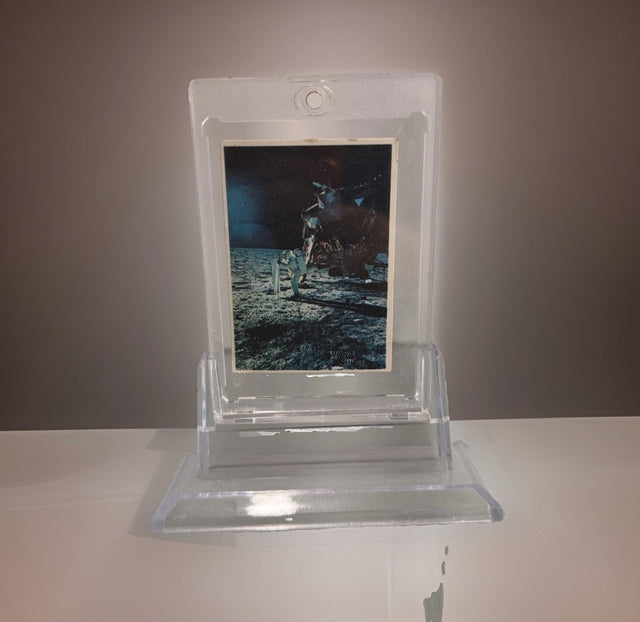
1969 Space Candy Buzz Aldrin Apollo 11 On The Moon Card #19 Taylor-Reed Display
$59.00 USD
-
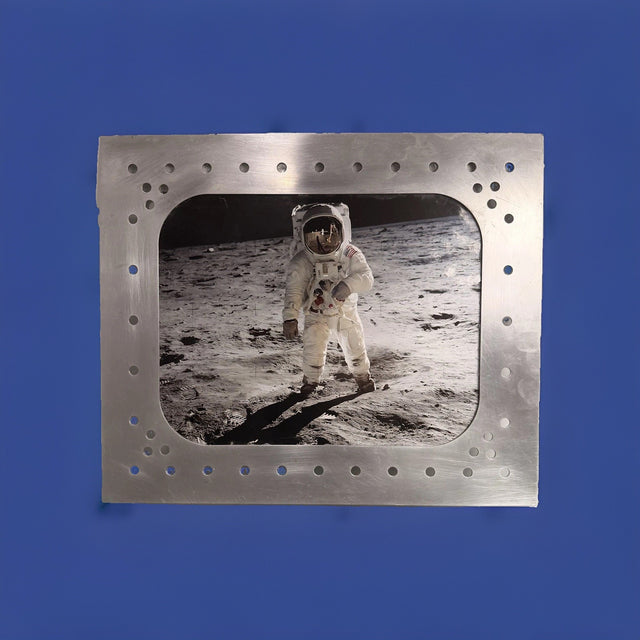
Apollo 11 Astronaut on the Moon NASA Photo Riveted Aluminum Spacecraft Frame
$89.00 USD
-
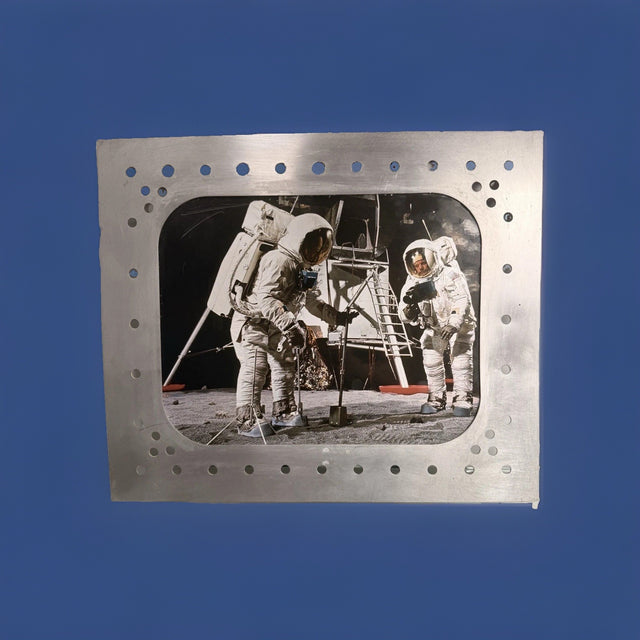
Apollo Astronauts on the Moon NASA Photo Riveted Aluminum Spacecraft Frame
$89.00 USD
-

Gene Kranz Signed Apollo 11 Moon Card PSA/DNA NASA Flight Director Autograph
$150.00 USD
-

Buzz Aldrin Apollo 11 Tranquility Framed Autograph - Zarelli Space COA
$350.00 USD
-
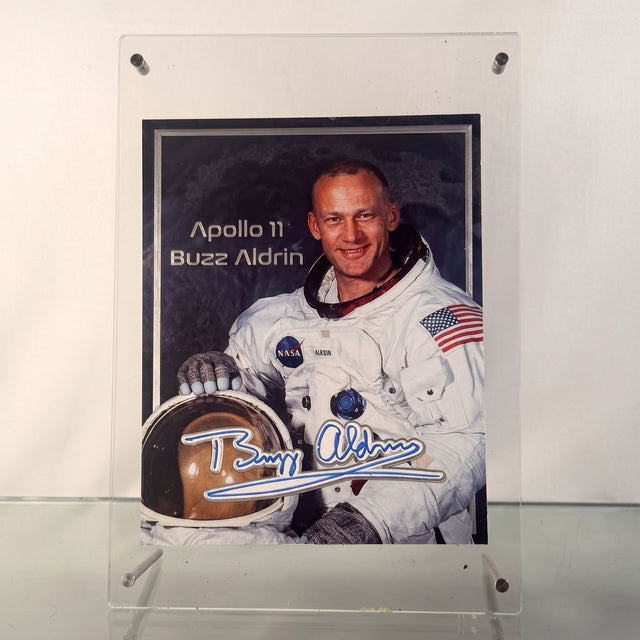
Buzz Aldrin Signed Apollo 11 NASA Double-Sided Photo JSA Authenticated Display
$450.00 USD


Browse the collection for current listings.