Get those five right and the purchase becomes straightforward. Below, we go deep on each one. For a KAWS or BE@RBRICK purchase, check the individual listing for release-specific packaging, production marks, condition and provenance. Manufacturer NFC is relevant only on releases that include it; a certificate alone does not establish authenticity.
What Is the KAWS Holiday Accomplice?
To understand the figure, you need to understand two threads of KAWS's work that converge in it: the Accomplice character and the KAWS:HOLIDAY project.
Accomplice is one of the recurring characters in the universe Brian Donnelly — the artist known as KAWS — has built over more than two decades. Where Companion is the melancholy everyman of the KAWS cast, Accomplice is its rabbit-like counterpart: long ears, rounded body, and the signature X-marked eyes that run through nearly all of the artist's characters. Accomplice first appeared in KAWS's output in the early 2000s as a vinyl figure, and it has resurfaced periodically since, in sculpture, in paintings, and in collectible editions. Because it appears less frequently than Companion, many collectors treat Accomplice releases as notable events within the broader KAWS collecting landscape.
KAWS:HOLIDAY, meanwhile, is the artist's long-running series of monumental traveling installations, produced in collaboration with the creative studio AllRightsReserved. Since the series began in the late 2010s, enormous inflatable and sculptural versions of KAWS characters have appeared reclining, floating, and lounging in landmark locations around the world — harbors, mountains, public plazas, and heritage sites. Each stop on the tour is accompanied by a release of limited collectibles, most prominently a vinyl figure depicting the character in the pose of that stop's installation, typically offered in a small set of colorways.
The KAWS Holiday Accomplice belongs to the chapter of the tour that put Accomplice, rather than Companion, at center stage. The collectible version renders the character in the installation's relaxed pose, produced in painted cast vinyl, boxed with the HOLIDAY release's standard presentation. As with other HOLIDAY figures, the run was sold through the official launch channel in a timed online release, with colorway options and per-order limits that were documented at the time of sale.
That last detail matters more than it might seem. HOLIDAY figures occupy a specific place in the KAWS market: they are official, artist-sanctioned editions, produced in quantities large enough that thousands of collectors could participate, yet released in a short window that created immediate scarcity on the secondary market. Understanding that structure — official but accessible, limited but not rare in the fine-art-edition sense — is the foundation for buying one intelligently.
Where the Holiday Accomplice Sits in the KAWS Market
Not all KAWS collectibles are the same kind of object, and pricing behaves differently across the categories. Broadly, the vinyl side of the market breaks into a few tiers:
- Open Editions: figures produced without a fixed cap during their sale window, widely available at retail during release. These trade actively but rarely carry deep scarcity premiums.
- HOLIDAY and event releases: figures tied to a specific installation or moment. Production quantities are typically undisclosed or large, but the one-time nature of the release and the connection to a landmark public artwork give them a distinct collecting identity.
- Limited numbered editions and collaborations: smaller runs, sometimes numbered, often released through galleries, museums, or brand partnerships. These behave more like traditional editioned artwork.
- Early and vintage figures: the artist's collectibles from the late 1990s and early 2000s, where genuine rarity, fragile packaging, and condition sensitivity dominate valuation.
The Holiday Accomplice sits squarely in the second tier, with a twist: because Accomplice appears far less often than Companion, an Accomplice-led HOLIDAY release draws interest from two collector groups at once — HOLIDAY completists who chase every stop on the tour, and character collectors who specifically want Accomplice in their lineup. Compare the exact KAWS release, colorway, pose, edition and condition using dated completed sales. Broad archive totals and another edition’s performance do not establish an item’s resale value.
A practical implication: when you evaluate a Holiday Accomplice listing, compare it against other HOLIDAY figures and against other Accomplice releases, not against the KAWS market as a whole. A seller quoting the price trajectory of a rare numbered sculpture as justification for a HOLIDAY figure's asking price is comparing across tiers. Our KAWS price guide walks through how these tiers behave differently, and our KAWS figurine index maps releases across the artist's vinyl output so you can place any figure in context before you spend.
Authenticity: The Single Most Important Thing to Get Right
KAWS is one of the most counterfeited artists in the collectibles world. The combination of high demand, recognizable design, and mass-produced vinyl format makes his figures a prime target for unauthorized factories. HOLIDAY figures specifically are counterfeited because they are famous, visually distinctive, and expected to exist in meaningful quantities — a counterfeit blends into a crowded market more easily than a fake of a ten-piece edition would.
The good news is that authentication for this category is very learnable, and buying from an authenticated source removes most of the burden entirely.
What Genuine Examples Have
Authentic HOLIDAY-series figures come with a consistent set of physical attributes. Rather than memorizing a list of counterfeit "tells" — which change as fake factories improve — focus on what the genuine article should have:
- Original sealed packaging. HOLIDAY figures ship in printed boxes with consistent, high-quality printing, correct series branding, and factory sealing. A sealed example with intact packaging is the cleanest starting point for verification.
- Correct factory markings. Genuine KAWS vinyl carries production markings — copyright text, production information, and character detailing — executed with the precision of a major toy manufacturer. Crisp paint edges, even seams, and clean X-eye detailing are hallmarks of authorized production.
- Hologram security features. Official packaging in this category incorporates holographic security elements. Confirm the hologram is present, integrated into the packaging as issued, and consistent with documented examples of the release.
- A coherent purchase history. The figure was sold through a specific official channel in a specific window. A seller who can trace their example to the original release — an order confirmation, an unbroken chain of documented resales — is offering you provenance, not just a product.
We cover the full verification process, with photography guidance and box-by-box inspection steps, in our KAWS authentication guide, and the companion piece on how to spot a fake KAWS addresses the counterfeit side of the equation in detail.
How Our Gallery Authenticates KAWS Figures
Combined with documented provenance from acquisition through sale, this gives a Holiday Accomplice from our gallery a verification trail that survives resale, inheritance, and time.
If you are buying elsewhere, the principle still applies: insist on a verification story, not just assurances. "Trust me, it's real" is not documentation. A photographed sealed box, a traceable purchase history, and a seller with a verifiable track record in the category together form the minimum standard.
The Packaging Question
Because packaging carries so much of the authentication and valuation weight in this category, it deserves its own attention. Collectors debate sealed versus opened endlessly, but the practical facts are simple:
- A sealed figure preserves the maximum number of verifiable attributes and the strongest resale position. It also means you cannot inspect the vinyl itself, which is why the seller's credibility and documentation matter most on sealed examples.
- An opened figure allows full inspection of the vinyl — paint application, markings, seams — but surrenders the sealed premium and puts more weight on the condition of both figure and box.
- A figure without its box is at a permanent disadvantage. The packaging is part of the collectible; replacing it later is effectively impossible in any legitimate way.
Our KAWS packaging guide goes deep on what original boxes, inserts, and seals look like across the artist's releases, and it is worth reading before you evaluate any listing photos.
Condition: What to Inspect and How to Grade What You See
Vinyl figures are durable compared to works on paper, but they are not immune to condition problems, and the market prices condition seriously. Here is what to evaluate, in order of importance.
For Sealed Examples
- Box corners and edges. Crushed corners, creases, and shelf wear are the most common issues. Ask for photographs of all six faces and all corners.
- Seal integrity. Confirm the factory sealing is intact and undisturbed. A resealed box is a red flag that demands explanation.
- Print quality and fading. Boxes stored in sunlight fade. Compare the box's color saturation against documented examples.
- Sticker residue and price tags. Adhesive damage from removed labels lowers the presentation grade.
- Odor and moisture history. Cardboard remembers humidity and smoke. If buying in person, this is worth checking; if remote, ask directly.
For Opened Examples
- Paint application. Inspect edges where colors meet — the eyes, ear detailing, and pose contact points. Factory paint is crisp; scuffs and rubs show as dull or transferred marks.
- Vinyl discoloration. White and light-colored vinyl can yellow with UV exposure over time. View the figure under neutral light and compare surfaces that would have been exposed against protected areas.
- Joint and seam stress. Check any articulated or assembled points for stress marks or looseness.
- Surface contact marks. Figures displayed on shelves can develop contact shine or flat spots at rest points.
- Completeness. The figure, the box, and all original inserts. Every missing component is a permanent deduction.
When you request condition photos, ask for raw, unedited images in daylight-balanced lighting, including close-ups of the areas above. A seller who resists providing them is telling you something.
Colorways and Variants: How to Think About Them
HOLIDAY releases are typically offered in a small set of colorways, and the Holiday Accomplice followed the series pattern. Colorway matters for two reasons: personal preference and market behavior. Some colorways in a given release sell through faster at launch, develop stronger secondary demand, or photograph better in collections — and those preferences show up in realized prices.
Our guidance is to resist folklore here. Claims like "the dark colorway is the rare one" circulate constantly in this market, often with no basis in the actual release documentation. Unless the original sale materials specified different quantities per colorway, treat colorway scarcity claims as unverified. What you can verify is realized-price behavior: compare recent verified sales of each colorway side by side and let the data, not forum lore, tell you whether the market pays a premium. This is precisely the kind of question our comparable-sales database was built to answer, and our financial insights resource shows how we approach market data across the categories we handle.
One more variant note: confirm you are buying the release you think you are buying. KAWS has produced Accomplice in multiple forms over the years, and HOLIDAY figures across different tour stops can look superficially similar in thumbnail photos. Check the box art, the pose, and the series branding against the specific release's documentation before assuming a listing is what its title claims.
Pricing: How to Value a Holiday Accomplice Without Getting Played
We deliberately avoid quoting dollar figures in evergreen guides, because markets move and stale numbers mislead. Instead, here is the durable method we use in the gallery, which you can apply to any listing.
- Anchor on realized prices, not asking prices. Listing prices are marketing. Sold prices are the market. Gather recent verified sales of the same figure, same colorway, same condition tier.
- Match condition and completeness precisely. A sealed example and an opened, boxless example of the same figure are effectively different products. Only compare like with like.
- Weight recency. The KAWS vinyl market cycles with release calendars, exhibition news, and broader collectibles sentiment. Sales from the last few months tell you more than sales from years ago.
- Check volume, not just price. A figure that trades frequently at a stable level is a liquid, transparent market. One outlier sale — high or low — is noise until repeated.
- Account for the venue. Prices realized at auction, on peer-to-peer platforms, and through authenticated dealers reflect different levels of buyer protection. A dealer price that includes authentication, a blockchain certificate, and recourse is not the same product as an as-is peer-to-peer transaction, and the market prices that difference rationally.
For a broader walkthrough of how we value the artist's editions and figures, see the KAWS price guide linked above.
Sealed vs. Opened vs. Displayed: A Practical Comparison
The right choice depends on why you are buying. This table summarizes the trade-offs:
| Factor | Sealed in Box | Opened, Complete | Opened, Box Absent |
|---|---|---|---|
| Authentication basis | Packaging, hologram, provenance, seller credibility | Full inspection of figure plus packaging evidence | Figure inspection only — weakest position |
| Resale strength | Strongest; broadest buyer pool | Solid if condition is excellent | Materially reduced; many collectors pass entirely |
| Display enjoyment | Box display only | Full display of the figure | Full display of the figure |
| Condition risk | Box wear is the main variable | Figure and box both need grading | Figure condition carries everything |
| Best for | Investment-minded collectors | Collectors who want to live with the piece | Budget entry, with eyes open |
There is no wrong answer, but there is a wrong mismatch: paying a sealed-tier price for an opened example, or buying sealed when what you actually want is a figure on your shelf. Decide your purpose first, then shop within the right tier.
Where to Buy — and the Trade-offs of Each Channel
Once a HOLIDAY release's original sale window closes, everything is secondary market. Your realistic options:
- Authenticated dealers and galleries. Highest confidence, documented provenance, certificates, and recourse if anything is wrong. You pay for that assurance, and for most collectors it is the right trade.
- Major auction platforms. Reasonable authentication standards on the established houses, competitive dynamics that can cut both ways on price, plus buyer's premiums and shipping variables.
- Peer-to-peer marketplaces. The widest selection and sometimes the best raw prices, but authentication is substantially your responsibility. This is where the counterfeit risk concentrates, and where the inspection skills above earn their keep.
- Collector communities and private sales. Can be excellent when reputation systems are strong, but documentation discipline varies enormously.
Whatever the channel, the constant is documentation. A fair price with strong documentation beats a bargain with none, every time — because the undocumented bargain quietly transfers all of the risk to you, and that risk resurfaces the day you try to sell.
Care, Storage, and Record-Keeping After You Buy
A Holiday Accomplice is easy to care for, but the small disciplines below protect both the object and its value.
Physical Care
- Keep it out of direct sunlight. UV exposure is the primary enemy of both painted vinyl and printed packaging. Display away from windows, or behind UV-filtering glass if the room is bright.
- Control temperature and humidity. Stable, moderate conditions prevent vinyl warping and box degradation. Attics, garages, and basements are the classic mistakes.
- Dust with care. A soft microfiber cloth or gentle air blower. No solvents, no household cleaners — they can dull or lift factory paint.
- Store the box properly even if you display the figure. Flat, dry, supported, and away from light. The box is a significant share of the collectible's long-term value.
- Handle with clean, dry hands. Skin oils accumulate on vinyl over years. Some collectors keep cotton gloves with their collection; at minimum, wash and dry hands before handling.
The Provenance File
Start a simple record the day the figure arrives, and maintain it:
- Purchase invoice or order confirmation, with date, seller, and price.
- Photographs of the figure and packaging at acquisition, including close-ups of markings and the hologram.
- Any prior provenance documents the seller provided.
- A running note of anything relevant afterward: insurance appraisals, condition events, storage changes.
This file costs you an hour now and pays for itself the day you sell, insure, or bequeath the piece. Buyers pay more, and negotiate less, when the paperwork is complete. For definitions of the provenance and authentication terms you'll encounter along the way, our collector glossary is a useful companion.
The Pre-Purchase Checklist
Run through this before committing to any Holiday Accomplice purchase:
- Identify the exact release. Confirm series, pose, and colorway against the original release documentation — not just the listing title.
- Verify the seller. Track record in the category, review history, and willingness to answer detailed questions. Authenticated dealers should offer certificates and recourse.
- Demand complete photography. All box faces, corners, seals, hologram, and — if opened — the figure's paint, markings, and rest points.
- Check the authentication story.
- Confirm completeness. Figure, box, and all original inserts as issued.
- Pull comparables. Recent verified sold prices for the same colorway and condition tier — not asking prices.
- Price the venue's protection. Weigh price against what the channel actually guarantees if something is wrong.
- Plan logistics. Insured, tracked shipping with adequate packing; vinyl survives transit well, but boxes crush.
- Get terms in writing. Return policy, authenticity guarantee, and condition representations.
- Sleep on outliers. A price dramatically below the comparable range is a question, not a gift. Ask it before you pay.
How We Approach KAWS at Gauntlet Gallery
Our position in this market is simple: we sell authenticated pieces with documented provenance, priced against verified data. We publish our research openly — the KAWS buyer's guide , the authentication and packaging guides linked throughout this article, and the broader library at our buyer's guides hub — because informed buyers are better clients and a better market.
If you are earlier in your collecting journey, The Collector's Hub gathers our guides, glossaries, and market resources in one place. And if a Holiday Accomplice is the piece you are after, browse our current KAWS collection — or reach out; sourcing specific figures through authenticated channels is a core part of what we do.
Frequently Asked Questions
Is the KAWS Holiday Accomplice a limited edition?
HOLIDAY-series figures are official releases sold in a one-time window through the tour's official channel, typically with per-order limits. Exact production quantities are generally not published, so treat specific edition-size claims skeptically unless they trace to the original release documentation. The practical scarcity comes from the closed sale window: once the release ended, supply was fixed, and everything since is secondary market.
How do I know if a Holiday Accomplice is real?
Verify the positives: sealed original packaging with the correct printing and hologram security features, precise factory paint and markings on the figure, and a purchase history that traces to the original release or through documented resales. When any of these elements is missing, the burden of proof shifts to the seller.
Should I keep it sealed or open it?
Sealed preserves the strongest resale position and the fullest set of verifiable attributes; opening lets you inspect and enjoy the figure itself. Neither is wrong — the mistake is paying sealed-tier prices for opened examples or vice versa. Decide whether you are buying to display or to hold, and buy within the matching condition tier.
Does the colorway affect value?
Sometimes — but verify it with sold-price data rather than collector folklore. Unless the original release documented different quantities per colorway, scarcity claims are speculation. Realized prices across recent verified sales are the reliable signal, and comparing colorways side by side in the sold data will tell you quickly whether the market pays a premium for one over another.
What is the biggest mistake first-time buyers make?
Anchoring on asking prices and skipping documentation. Listing prices are aspirations; verified sold prices are the market. And an undocumented figure — no provenance, no certificate, incomplete packaging — transfers all of the authenticity and resale risk to you, a cost that never shows up in the purchase price but always shows up at resale.
Is a KAWS HOLIDAY figure a good investment?
We treat KAWS vinyl first as collecting, second as investing. HOLIDAY figures benefit from official status, global recognition, and active trading liquidity, and Accomplice releases add character-driven demand. But collectibles markets cycle. Buy authenticated, buy in the best condition you can afford, keep records, and check current verified comparables before purchase — those habits protect value in every market environment.
Shop KAWS
Explore current pieces available from the gallery.
-
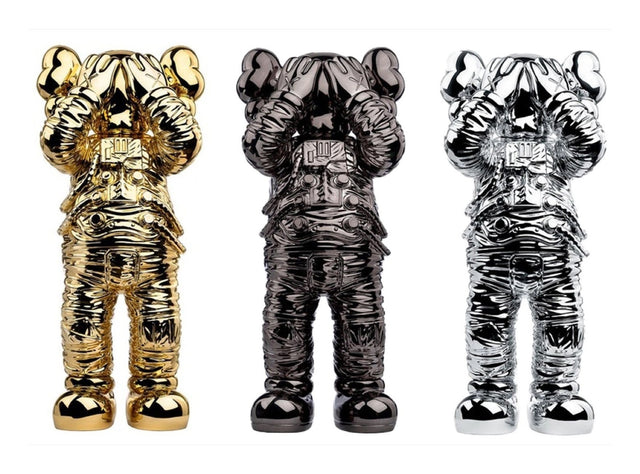
KAWS Holiday Space Set of 3 Gold Black Silver Companion Astronaut Figure Rare
$2,900.00 USD
-
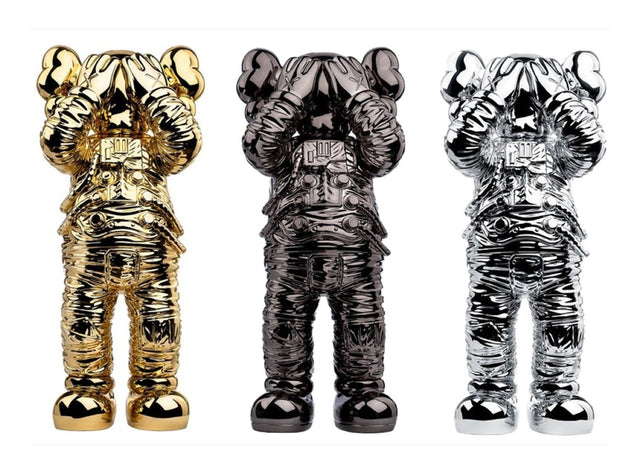
KAWS Holiday Space Set of 3 Gold Black Silver Companion Astronaut Figure
$2,900.00 USD
-
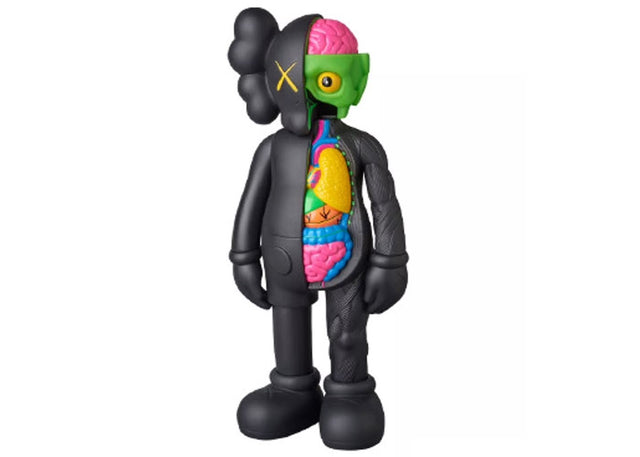
KAWS Companion Flayed Open Edition Black Medicom Toy Dissected Sealed New Figure
$599.00 USD
-
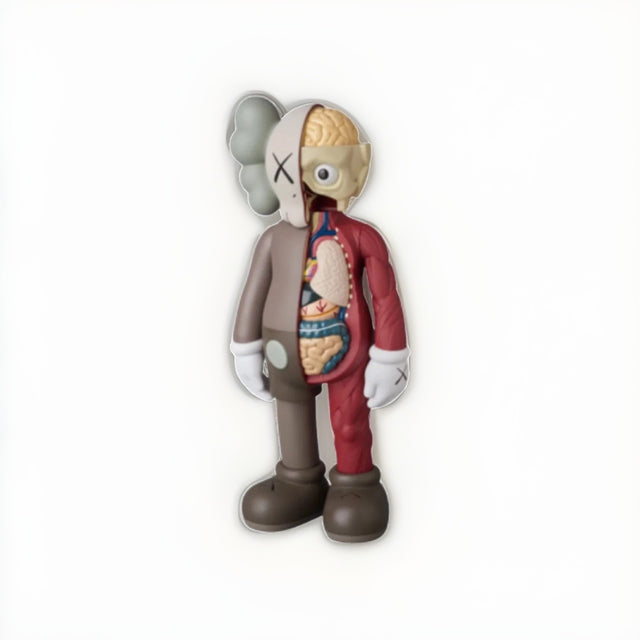
KAWS Companion Flayed Open Edition Brown Medicom Toy Dissected Sealed New Figure
$349.00 USD
-
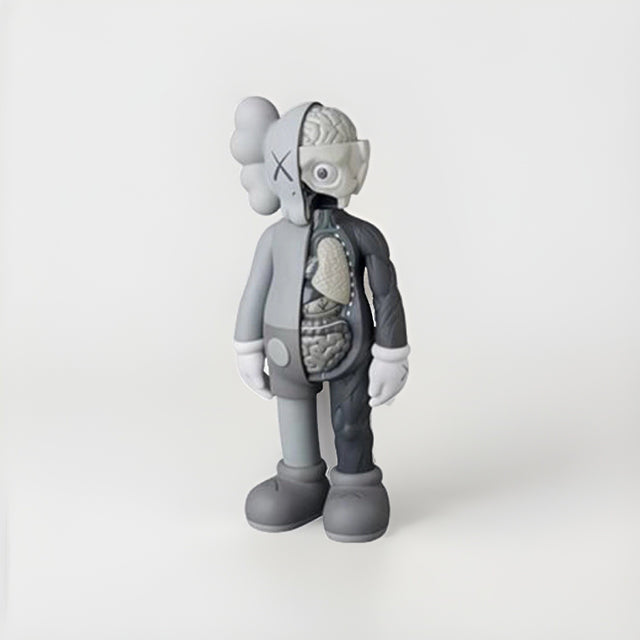
KAWS Companion Flayed Open Edition Grey Medicom Toy Dissected Sealed New Figure
$349.00 USD
Browse the collection for current listings.