

Featured image: AI-generated interior concept using product reference photography. Scale, setting, framing, and placement are illustrative.
Deciding to display or preserve: The Invader Rubik's Cube dilemma
The choice to display a collectible, especially one with significant packaging, often starts with a fundamental question: should the object be revealed, or should its pristine, unopened state be maintained? This is a frequent dilemma for designers and collectors, particularly with items like the Space Invader x Rubik's Cube “RubikCubiste”. This limited-edition cube, created for an exhibition at MIMA, Brussels, comes in an illustrated kraft box. The cube itself, featuring Invader’s signature pixelated icon and RubikCubism palette, is a tactile object designed for interaction. Yet, the box also holds a part of its story, linking it directly to the exhibition’s narrative. This initial decision profoundly influences how the object is perceived, its long-term care, and its ultimate presentation within a space.
For some collectibles, packaging is integral to the item's identity and provenance. For others, it is merely a protective shell. With the Invader Rubik's Cube, the box is a simple kraft design, but it prominently displays the iconic Space Invader to the top face and edition text to the base. This makes it more than just generic protection; it's part of the artifact. Displaying the cube itself allows its distinct green, red, and grey faces, along with the central Invader graphic, to engage directly with the room's palette and textures. Keeping it boxed, however, preserves its 'mint' condition and the full context of its release. This foundational choice sets the stage for all subsequent styling decisions when placing a single, significant object on a console.
The strategic value of empty surface
In interior design, empty space is not an absence but a deliberate presence. When styling a console table with a single collectible, the surrounding void becomes as important as the object itself. Rather than viewing an empty surface as an opportunity to add more, consider it a canvas that allows the chosen piece to breathe and command attention. This approach prevents visual clutter, enabling the eye to focus on the collectible's form, texture, and inherent narrative. A console often functions as a transitional piece, placed in an entryway, hallway, or behind a sofa, making it an ideal location for a focal point that can be appreciated from multiple vantage points.
For instance, placing the Invader Rubik's Cube, whether boxed or unboxed, on a console with ample clear space around it immediately elevates its status from a mere trinket to a curated art object. The simplicity of its 3x3 form, with its pixelated motif, gains presence when not competing with other items. This minimalist strategy is particularly effective for objects that possess a strong graphic quality or a unique silhouette. The negative space acts as a frame, enhancing the object's distinctiveness and encouraging closer inspection. It creates an intentional pause in the visual flow of a room, drawing attention to a singular point of interest. This deliberate restraint communicates confidence in the object's intrinsic appeal, rather than relying on an assemblage of items to create impact. The console becomes a plinth, its surface a stage, and the empty space a spotlight.
Composing from the doorway and the sofa
Effective console styling demands consideration from various viewing angles. A collectible positioned on a console table must be compelling not only up close but also from a distance, such as when entering a room or viewing it from a sofa across the space. This means thinking about the object's silhouette, its color contrast against the wall and console, and how it interacts with ambient light. The goal is to create a visual anchor that draws the eye without overwhelming the overall room composition.
When approaching from a doorway, the initial impression is often a distant glimpse. For a relatively small object like the Invader Rubik's Cube, its graphic nature and distinct colors (red, green, grey, black) make it stand out even from afar. If displayed unboxed, its cubic form is immediately recognizable, perhaps prompting curiosity. If displayed in its original illustrated kraft box, the box itself becomes the primary visual element from a distance, with the Invader icon on top providing a subtle hint of its contents. The console's height and depth relative to the doorway are crucial here. A console that is too low might hide the object, while one that is too deep might make it feel lost. Aim for a height that places the object comfortably within the line of sight for someone entering the room.
From the perspective of a sofa, the console often serves as a backdrop or a subtle foreground element. Here, the object's scale in relation to the sofa and any adjacent artwork or furniture becomes more critical. The Invader Rubik's Cube, being a compact cube, would likely require a console that isn't excessively wide or deep, or it risks appearing insignificant. Placing it slightly off-center, rather than dead center, can create a more dynamic composition, especially if there's a wall-mounted artwork above the console. The choice of console material also plays a role. A sleek, minimalist console in a contrasting material (e.g., a dark metal console against a light wall) can provide a strong visual base for the collectible, allowing it to pop. The goal is a balanced, intentional display that invites interaction from all angles, making the single collectible a quiet but powerful statement within the room's broader design.
Ensuring safe and stable supports
The practicalities of displaying a collectible extend beyond aesthetics to include safety and stability. A console table, by its nature, is often in a high-traffic area, whether in an entryway where coats are dropped or a living room where drinks might be placed. Therefore, the support for a valuable object must be robust and secure. This means assessing the console itself for wobbles or uneven surfaces, and considering the use of appropriate bases or risers if the object is particularly small or prone to tipping.
For the Invader Rubik's Cube, its compact, solid form makes it relatively stable. However, if displayed unboxed, its functional nature might tempt someone to pick it up and manipulate it, especially if children are present. This highlights a key consideration: the level of interaction desired for the piece. If the goal is purely visual appreciation without handling, a clear acrylic display case or a museum wax dot on the base can provide both protection and stability. If the box is part of the display, as it might be for this particular Invader piece, ensure the box itself is stable and not prone to sliding. A non-slip mat beneath the box or the cube can prevent accidental shifts. For more delicate or irregularly shaped collectibles, custom-fabricated pedestals or stands might be necessary to ensure they are presented securely and at the optimal viewing height.
Consider also the material of the console surface. Highly polished or slippery surfaces might require more attention to stability. A textured wood or stone surface generally provides more grip. If the console is in an area susceptible to vibrations (e.g., near a door that slams, or a speaker), these factors must be accounted for. The weight and distribution of the collectible on the console also play a role. A heavy object on a lightweight, cantilevered console could create an imbalance. While the Invader Rubik's Cube is light, larger or heavier collectibles demand a console with adequate structural integrity. Ultimately, the support system should be unobtrusive, allowing the collectible to shine while providing peace of mind regarding its safety.
Optimizing viewing distance for small objects
Small collectibles present a unique challenge and opportunity for display. Unlike large paintings or sculptures, which can be appreciated from across a room, a small object like the Invader Rubik's Cube or the KAWS Companion (Flayed) Open Edition demands a closer, more intimate viewing experience. The design strategy must facilitate this proximity without making the object feel insignificant in a larger space. This often means placing it where viewers are naturally inclined to pause and observe.
A console table in an entryway or hallway is ideal because it encourages a brief stop. Here, the object can be viewed from a few feet away, allowing its details – the pixelated Invader, or the intricate 'flayed' anatomy of the KAWS Companion – to be fully appreciated. If the console is in a living room, placing it near a path of travel or adjacent to seating areas can ensure it receives attention. The height of the console is paramount; the top surface should be at a comfortable standing eye level, or slightly below, to encourage leaning in for a closer look. For a seated viewing experience, the object might need to be slightly elevated on a subtle plinth or riser so it is not obscured by the console's edge.
Lighting also plays a critical role in optimizing the viewing of small objects. A focused spotlight, either from above or a small accent lamp placed on the console itself, can highlight the collectible's form and texture, drawing the eye and creating a sense of importance. Without proper lighting, a small object can recede into the background, especially in a dimly lit room. The goal is to create an environment where the viewer feels invited to engage with the object on its own terms, appreciating its scale and craftsmanship without feeling rushed. This deliberate approach to viewing distance transforms a small collectible from a minor detail into a significant focal point, rewarding closer inspection with a richer aesthetic experience.
Hypothetical Project: The Minimalist Entryway Console
Consider a minimalist urban apartment entryway, approximately 8 feet wide and 10 feet long, with a single wall dedicated to a console. The client desires a striking yet understated focal point that reflects their appreciation for contemporary art and design. The chosen console is a sleek, black powder-coated steel piece, 48 inches long, 12 inches deep, and 32 inches high (planning assumptions). The walls are painted in a soft, off-white hue, and the flooring is polished concrete. The challenge is to feature a single collectible without it feeling lost or isolated in the clean, expansive space.
The chosen collectible is the KAWS Companion (Flayed) Open Edition in Grey. This vinyl figure, approximately 11 inches tall, presents a compelling visual narrative with its half-intact, half-dissected form. Its grey colorway provides a subtle contrast against the off-white wall and the black console, while its distinct silhouette ensures it commands attention. The client has opted to keep the figure sealed in its original blister packaging, preferring to preserve its 'new' condition and the industrial aesthetic of the factory seal. This means the display must accommodate the blister pack's dimensions and protect it.
To address this, the KAWS Companion is placed slightly off-center on the console, about 18 inches from one end. This asymmetrical placement creates a dynamic visual tension, preventing a static, predictable arrangement. To elevate the figure slightly and protect the blister pack from potential scratches on the steel surface, a custom-cut, clear acrylic plinth, 1 inch high and precisely sized to the blister pack's footprint, is used. This plinth virtually disappears, allowing the KAWS figure to appear as if floating slightly above the console surface. This elevation also brings the figure to a more comfortable viewing height for someone standing in the entryway.
No other objects are placed on the console. The surrounding empty space is intentionally left clear, allowing the KAWS Companion to be the sole focus. From the doorway, the figure's iconic silhouette and the stark contrast of its grey form against the light wall are immediately apparent. As one approaches, the intricate details of the 'flayed' anatomy become visible through the clear blister, inviting closer inspection. A recessed ceiling spotlight directly above the console provides focused illumination, enhancing the figure's sculptural qualities and creating subtle shadows that add depth. This singular, deliberate placement transforms the console into a minimalist pedestal, celebrating the KAWS Companion as a significant art object within the contemporary entryway.
What to move elsewhere: The art of subtraction
When committing to displaying a single collectible on a console, the most important design principle becomes subtraction. This means actively deciding what not to place on the console, rather than what to add. The temptation to fill empty space with complementary items – books, small plants, trays for keys, or other decorative objects – must be resisted if the goal is to truly highlight one piece. Every additional item, no matter how carefully chosen, dilutes the impact of the primary collectible.
Consider the common console table inhabitants: mail, keys, wallets, charging cables, remote controls, or even a stack of unread magazines. These everyday items, while functional, are visual noise when placed alongside a curated collectible. They detract from its aesthetic value and transform the console from a display surface into a utilitarian catch-all. Therefore, a crucial step in this styling approach is to designate alternative homes for these necessities. A small, decorative box or tray placed discreetly within a nearby drawer, or a wall-mounted key hook out of sight, can manage clutter without compromising the console's clean presentation.
Even seemingly appropriate decorative elements, such as a small vase of flowers or a stack of art books, can compete for attention. While a carefully chosen floral arrangement might complement a larger display, for a single object, it introduces another focal point and potentially overwhelms the smaller collectible. The same applies to books; their spines and covers create visual texture and color that can distract from the nuanced details of a solitary piece. The art of subtraction is about creating a visual hierarchy where the collectible is the undisputed star. This requires discipline and a clear vision for the console's role in the room – not as a storage solution or a general decorative surface, but as a dedicated stage for a single, significant object. By removing all extraneous elements, the collectible is given the space it needs to tell its own story, unimpeded.
Alternatives for fragile or unopened collectibles
Not all collectibles are meant for direct, open display. Fragile objects, items with delicate finishes, or those whose value is intrinsically tied to their unopened, 'mint' condition, require alternative presentation strategies. The decision to keep an item sealed, like the KAWS Companion (Flayed) in its blister pack, or the Invader Rubik's Cube in its original kraft box, is a valid one that impacts display choices significantly. The goal is to protect the object while still allowing it to be appreciated.
For items that must remain in their original packaging, the packaging itself becomes part of the display. The Space Invader x Rubik's Cube, for example, has a simple but identifiable kraft box with the Invader icon. Displaying this box on a console presents the object as a 'new in box' collectible, a distinct aesthetic in itself. For items in blister packs, like the KAWS Companion (Flayed), the clear plastic allows the object to be seen while providing a protective barrier. In both cases, the packaging tells a story of preservation and authenticity. To enhance this, consider custom-cut acrylic display cases that fit snugly around the original packaging, offering an additional layer of protection from dust, accidental bumps, and environmental fluctuations.
For truly fragile objects that are unboxed, or for those where direct exposure is a concern, a museum-quality vitrine or display dome is often the best solution. These enclosures protect against dust, humidity changes, and physical contact, while still allowing for 360-degree viewing. They can be custom-made to fit the console and the object perfectly, often incorporating UV-filtering acrylic to mitigate light exposure risks, though no frame or case can prevent all fading. The choice of material for these enclosures is important: opt for optical-grade acrylic or glass that won't distort the view or yellow over time. The base of such a vitrine can be integrated into the console's design or stand alone as a complementary element. These protective measures are not merely functional; they elevate the object's perceived value and underscore its importance, transforming the console into a dedicated pedestal for a treasured piece. It is about finding a balance between accessibility and preservation, ensuring the collectible can be admired safely for years to come.
The quiet power of a singular statement
In a world often saturated with visual information and the impulse to fill every available surface, the deliberate act of displaying a single collectible on a console table carries a quiet but profound power. It is a statement of confidence, an exercise in restraint, and a testament to the intrinsic value of the chosen object. This approach challenges the conventional wisdom of grouping and layering, instead championing the idea that less can indeed be more, especially when that 'less' is carefully considered and thoughtfully presented.
The journey begins with the object itself. Take, for instance, the Space Invader x Rubik's Cube “RubikCubiste”. Its nature as a functional cube, yet also a limited-edition art object from a museum exhibition, presents a fascinating duality. Displaying it unboxed allows its vibrant, pixelated surfaces to engage directly with the viewer, inviting a tactile, playful interaction – though one might choose to secure it to prevent casual handling. The grey, green, and red color palette, along with the iconic Invader graphic, offers a distinct visual anchor. If the decision is to preserve its 'mint' condition within its original illustrated kraft box, the box itself becomes the object of display, a piece of provenance that tells its own story. The choice between presenting the cube or its packaging is the first layer of intentionality, shaping how the object is perceived and interacted with.
Regardless of whether the object is boxed or unboxed, the console then transforms into a dedicated stage. This is not just about placing an item; it is about composing a scene. The empty space around the collectible is not a void to be filled, but a deliberate expanse that amplifies the object's presence. It grants the piece visual breathing room, allowing its form, texture, and narrative to emerge without competition. Imagine the KAWS Companion (Flayed) Open Edition in Grey, a striking figure with its exposed anatomy, placed on a minimalist console. Its intricate details, the interplay of its intact and dissected halves, would be lost amidst a cluster of other items. But alone, it commands attention, inviting a closer, more contemplative gaze. The grey colorway, subtle yet impactful, gains depth and nuance when it is the sole focus against a neutral backdrop.
This approach also forces a critical evaluation of the object’s context. How does it interact with the wall behind it? Does the console’s material and finish complement or detract from the collectible? Is the lighting sufficient to highlight its best features without creating harsh shadows or glare? These are not trivial questions but fundamental design considerations that elevate a simple placement into a curated statement. The object, once merely an item, becomes a focal point, a conversation starter, and a quiet anchor in the room’s design.
Ultimately, the value of empty space around a single collectible on a console lies in its ability to amplify. It amplifies the object's aesthetic qualities, its narrative, and its significance within the broader design scheme. It communicates a sense of purpose and refinement, suggesting that every element in the room has been thoughtfully chosen and intentionally placed. For designers, this means guiding clients towards a less-is-more philosophy that prioritizes impact over accumulation. For collectors, it means honoring their prized possessions with a display that truly showcases their unique appeal.
Consider your next console styling project. Instead of reaching for multiple accessories, select one truly compelling object. Observe how it transforms the space, how its presence is magnified by the surrounding quiet. This singular focus creates an undeniable visual impact, a moment of pause and appreciation in the flow of a room. Browse our current selection of unique collectibles, and envision how a powerful piece can redefine your console's aesthetic. Confirm final framed dimensions, current availability, and condition before specifying.
Available at Gauntlet Gallery
Explore current pieces available from the gallery.
-

1963 Farquhar Earth in Space Transparent Celestial Globe 16" Compass VTG
$699.00 USD
-

1967 Beatles Richard Avedon STERN Original Posters Set of 4 Linen Backed Copy
$999.00 USD
-
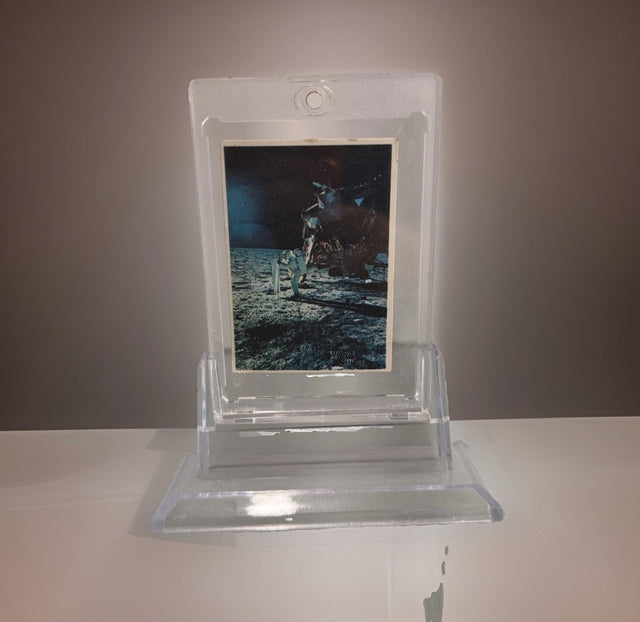
1969 Space Candy Buzz Aldrin Apollo 11 On The Moon Card #19 Taylor-Reed Display
$59.00 USD
-

1980 Polo Player Green Pink Chalk Pastel Bears Andy Warhol Signature AS-IS
$399.00 USD
-

After Andy Warhol Moon Landing Line Drawing 5/50 w/ Astronaut Autographs As-Is
$175.00 USD
-

After John Lennon "I Do" Framed Print, Marked A/P Unverified
$99.00 USD


Browse the collection for current listings.