

Featured image: AI-generated interior concept using product reference photography. Scale, setting, framing, and placement are illustrative.
Designing Library Shelves for Collectible Sculpture
The traditional library often conjures images of quiet contemplation, filled with ordered knowledge. For many designers, however, the library also serves as a prime location for displaying art and collectibles. The true design challenge lies in moving beyond simply placing a sculpture on an existing shelf. Instead, the shelving itself must be conceived around the unique demands of these objects, acting as an extension of their presence. This requires a thoughtful approach to depth, material, lighting, and the crucial interplay between books and the art they share space with.
When a client possesses a significant collectible, such as the KAWS Companion Flayed Open Edition Black Medicom Toy or the BE@RBRICK Andy Warhol Brillo 400% 100% Set, these pieces are not mere decorative elements. They are focal points demanding appropriate presentation, often influencing the very structure of their surroundings. Their scale, material, and visual impact necessitate a departure from generic shelving, pushing designers to consider bespoke approaches that enhance visibility while providing secure, long-term display. The goal is to create a harmonious blend where both literature and art thrive, each elevating the other without compromise. This essay explores specific considerations for designing library shelves that truly support and showcase collectible sculpture, transforming a functional space into a curated exhibition.
Understanding the Object's Footprint and Visual Presence
Before any design work begins, a precise understanding of the collectible’s physical attributes is paramount. This extends beyond simple dimensions to assessing the object’s footprint, its overall visual weight, and any unique features that might influence its display. For instance, the KAWS Companion Flayed Open Edition Black, at approximately 11 inches (27.9 cm) tall, presents a distinct silhouette. Its split form, revealing vibrant internal anatomy against a matte black exterior, is its defining characteristic. This intricate detail demands unhindered visibility, meaning it should never be partially obscured by books or other items. The object’s base, while stable, should be considered in relation to the shelf’s depth and material. A wider base requires a deeper shelf, preventing the piece from appearing precariously perched or easily dislodged.
Similarly, the BE@RBRICK Andy Warhol Brillo 400% & 100% Set, with its 400% figure standing at approximately 11 inches (28 cm), carries a different visual weight. The hydro-dipped Brillo box pattern, unique to each figure, is a key aesthetic element that needs to be appreciated from multiple angles. Its blockier form, while stable, still benefits from ample surrounding space. The interplay of its graphic surface with surrounding books can be either a delightful contrast or a jarring distraction, depending on how the shelf is designed. The depth of the shelf must accommodate not just the object’s base, but also provide enough clearance for it to breathe visually. A common mistake is to specify shelves that are too shallow, forcing the object to sit at the very edge, which is both aesthetically poor and a potential safety hazard. The visible surface area of the object, particularly its most detailed or visually interesting aspects, should be fully accessible to the viewer. This often means placing it at eye level or slightly above, within a section of the shelving dedicated to its display, rather than tucked away or crammed between volumes.
Selecting Optimal Shelf Depth and Materials for Collectibles
The choice of shelf depth is perhaps the single most critical decision when integrating collectible sculpture into a library. Standard bookshelves typically range from 8 to 12 inches deep, which can be insufficient for many display pieces. For objects like the KAWS Companion or the 400% BE@RBRICK, an ideal shelf depth should be at least 14 to 16 inches. This provides a comfortable margin around the object, allowing it to be viewed without obstruction and preventing it from feeling cramped. A deeper shelf also creates a sense of gravitas for the object, establishing it as a focal point rather than an afterthought.
When considering materials, durability and aesthetic integration are key. Solid wood, such as walnut, oak, or cherry, offers warmth and a classic library aesthetic, while providing excellent structural support. For a more contemporary feel, powder-coated steel or reinforced glass can be effective. If using wood, ensure the finish is stable and non-reactive, avoiding materials that might off-gas chemicals. For glass shelves, specify tempered glass of sufficient thickness (e.g., 3/8 inch or 1/2 inch) to prevent bowing or breakage, especially if supporting heavier items or multiple pieces. The material should also complement the object itself. The matte black finish of the KAWS Companion might be beautifully contrasted by a light oak shelf or subtly echoed by a dark walnut. The vibrant, graphic nature of the Brillo BE@RBRICK could pop against a neutral background or be enhanced by a shelf that picks up one of its primary colors. Avoid overly reflective surfaces directly beneath the object, as these can create distracting glare. Instead, opt for finishes that absorb or diffuse light, allowing the sculpture to command attention. The shelf edge treatment also plays a role; a clean, crisp edge can frame the object, while a softer, rounded edge can create a more inviting feel.
Structural Integrity: Support and Weight Verification for Custom Shelving
While collectibles like the KAWS Companion and BE@RBRICK figures are not excessively heavy, their weight, combined with the weight of surrounding books, must be accounted for in the structural design of the shelving. A common oversight is to assume that any shelf can bear the load. For custom library shelving, especially with deeper shelves, robust support is essential. For wooden shelves, consider a thickness of at least 1 inch for spans up to 36 inches. For wider spans, or if using thinner materials, additional vertical supports or steel reinforcement rods embedded within the shelf itself may be necessary. Cantilevered shelves, while visually appealing, require significantly more structural planning and robust wall anchoring.
Always verify the weight of the specific collectible with the client or by consulting product specifications. For instance, the KAWS Companion is a vinyl figure, likely weighing a few pounds. The BE@RBRICK Andy Warhol Brillo 400% & 100% Set, made of ABS & PVC plastic, also falls into this category of manageable weight. However, when combined with a full complement of books, the cumulative load on a single shelf section can quickly become substantial. For a typical planning assumption, consider that books average around 20-30 pounds per linear foot. A 3-foot shelf, 16 inches deep, holding books and a collectible, could easily support 60-90 pounds, plus the weight of the shelf itself. Therefore, the uprights and shelf pins or cleats must be designed to withstand this load with a significant safety factor. For built-in shelving, ensure that the design integrates directly into wall studs or blocking. For freestanding units, a wide, stable base and anti-tip hardware are crucial. When briefing a millworker or cabinetmaker, provide precise dimensions for the objects and an estimated total weight for each shelf. Request a detailed drawing of the joinery and support system, including material specifications for all load-bearing components. This proactive approach ensures that the shelving is not only aesthetically pleasing but also structurally sound and safe for the long term. Never compromise on structural integrity for the sake of a minimalist aesthetic; there are always ways to integrate robust support discreetly.
Visibility and Lighting Strategies for Sculptural Display
Maximizing the visibility of collectible sculpture within a library setting is paramount. This involves careful consideration of placement, surrounding elements, and targeted lighting. The goal is to draw the eye to the sculpture without making it appear isolated or out of place. For pieces like the KAWS Companion, with its intricate dissected details, direct, focused lighting can highlight its unique features. Small, recessed LED puck lights or adjustable track lighting integrated into the top of the shelf unit can provide this. The color temperature of the light should be carefully chosen; a neutral white (around 3000K-3500K) typically renders colors accurately without imparting an artificial cast. Avoid harsh, cool white light (above 4000K) which can feel clinical, or overly warm light (below 2700K) which can distort colors and create a yellowish tint.
The direction of the light is also critical. A light source positioned slightly in front and above the object will create subtle shadows that enhance its three-dimensionality, while minimizing glare. For objects with glossy surfaces, careful angling can prevent harsh reflections. For the hydro-dipped BE@RBRICK, with its all-over graphic, even, diffused lighting might be more appropriate to showcase the pattern without creating hot spots. Consider integrated LED strip lighting along the front edge of the shelf above the object, or even within the shelf itself, if the material allows for it. Ambient room lighting also plays a role. Ensure that the general illumination of the library space supports the appreciation of the collectibles. Avoid placing highly reflective objects directly opposite windows where direct sunlight could cause glare or, more importantly, expose the collectibles to harmful UV radiation and heat. While vinyl figures are generally more robust than paper-based art, prolonged exposure to direct sunlight can still cause material degradation or color fading over time. Position the shelving away from direct, unfiltered sunlight, and consider window treatments that offer UV protection, such as sheer blinds or films, if direct sun exposure is unavoidable. The height of the shelf is another factor. Placing the primary collectible at or slightly above average eye level (around 55-65 inches from the floor) ensures it is easily seen and appreciated without needing to stoop or strain. This strategic placement elevates the object to a place of prominence, signaling its importance within the curated space.
Hypothetical Project: Modernist Study with Integrated Collectibles
Imagine a client with a modernist study, featuring clean lines, a muted color palette of grays, whites, and natural wood, and a significant collection of contemporary art and design books. The challenge is to integrate two key collectibles: the KAWS Companion Flayed Open Edition Black Medicom Toy and the BE@RBRICK Andy Warhol Brillo 400% 100% Set, into the primary library wall. The existing wall is 12 feet wide and 9 feet high.
Design Decisions and Reasoning:
- Centralized Display Niche: Instead of scattering the collectibles, a dedicated central section of the library wall will be designed as a display niche. This niche will be 48 inches wide and 18 inches deep, contrasting with the surrounding book-only shelves which will be 12 inches deep. This increased depth immediately signals the importance of the objects within.
- Material Contrast: The main library shelving will be constructed from rift-sawn white oak with a natural matte finish, providing a warm, textural backdrop for the books. Within the central niche, the back panel will be clad in a dark gray linen-textured wallpaper, providing a subtle contrast that makes the objects pop without being overly stark. The shelves within the niche will be solid white oak, matching the surrounding cabinetry, but with a slightly thicker profile (1.25 inches) to visually reinforce their load-bearing capability.
- Strategic Placement and Lighting: The KAWS Companion will be placed on a shelf within the niche at 60 inches from the floor, positioning it at eye level. Above this shelf, a single recessed LED spotlight (3000K, 25-degree beam angle) will be installed in the top panel of the niche, angled to illuminate the KAWS figure directly, highlighting its intricate internal details. The BE@RBRICK set will be placed on the shelf immediately below, at 48 inches from the floor, allowing both the 400% and 100% figures to be viewed together. This shelf will have an integrated, discreet LED strip light along its front edge, providing even, diffused illumination across the Brillo pattern.
- Dust Protection: The entire central niche will be fitted with two frameless, soft-close glass doors. These doors will have minimal hardware, maintaining the modernist aesthetic while providing essential dust protection. The glass will be museum-quality, with a high UV-filtering capability, offering an additional layer of protection against ambient light.
- Book Arrangement: On the shelves immediately adjacent to the niche, books will be arranged with deliberate negative space around the collectibles. No books will be placed directly next to the KAWS or BE@RBRICK figures, ensuring their bases are not obscured. The books on these adjacent shelves will be primarily art and design monographs, reinforcing the thematic connection.
This detailed approach ensures that the collectibles are not merely placed but are intentionally integrated, becoming central elements of the study's design while protecting their integrity and enhancing their visual impact.
Preventing Obscurity: Why Books Should Not Obscure a Base
A common pitfall in library display is allowing books to encroach upon, or even completely obscure, the base of a collectible sculpture. This seemingly minor detail has significant aesthetic and practical consequences. Aesthetically, obscuring the base diminishes the sculpture’s presence. The base is an integral part of the object’s design, providing a visual anchor and defining its relationship to the surface it rests upon. When hidden, the sculpture can appear to float awkwardly or, worse, look like an afterthought simply wedged into a space. For pieces like the KAWS Companion or the BE@RBRICK, the base is part of the overall form, and its integrity should be respected.
Practically, allowing books to press against a sculpture’s base introduces several risks. First, it can create instability. Books, especially when tightly packed, can exert pressure that, over time, might shift the object or even cause it to tip if its center of gravity is high. Second, it impedes proper cleaning. Dust and debris can accumulate in the tight spaces between books and the sculpture, becoming difficult to remove without disturbing the arrangement. Third, it can damage the object. The edges of books, particularly those with rough covers or sharp corners, can scratch or abrade the finish of the sculpture’s base or lower sections. This is especially true for softer materials or painted surfaces. To avoid this, a deliberate buffer zone around the sculpture is essential. This can be achieved by:
- Dedicated Clearances: Designate a specific clear area around each collectible. For a figure like the KAWS Companion, allow at least 3-4 inches of clear space on all sides and behind the object.
- Bookends as Visual Dividers: Use elegant, minimalist bookends to clearly delineate the boundary between the sculpture’s display zone and the adjacent books. These can be chosen to complement the sculpture or the overall library aesthetic.
- Strategic Arrangement: Instead of packing books tightly, arrange them with a more open, curated feel around the collectible. This might mean dedicating an an entire section of a shelf to a single prominent object, with books placed only on the shelves above or below, or in adjacent bays.
By respecting the sculpture’s base and providing ample breathing room, designers ensure the object is presented with dignity, protected from incidental damage, and fully appreciated as a distinct artistic statement within the library environment.
Joinery Briefing and Weight Verification for Custom Shelving
When commissioning custom library shelving to house significant collectibles, a detailed briefing on joinery and a clear understanding of weight requirements are non-negotiable. Generic specifications from a millworker or cabinetmaker may suffice for standard bookshelves, but collectibles demand a higher level of precision and structural integrity. The joinery method directly impacts the strength and longevity of the shelves. For example, a simple butt joint with screws might be adequate for light loads, but for deeper shelves supporting substantial books and collectibles, more robust joinery is advisable. Dovetail joints, mortise and tenon joints, or dado and rabbet joints offer superior strength and resistance to racking and sagging. When briefing a millworker, specify the preferred joinery methods for all load-bearing connections:
Shelf-to-Upright Connections: How will the shelves be secured to the vertical supports? Adjustable shelf pins are common, but for fixed shelves holding heavy items, consider cleats or dadoes routed directly into the uprights for maximum stability.
Carcass Construction: For built-in units, how will the individual cabinet boxes be joined to each other and secured to the wall? Plywood construction with dado and rabbet joints, reinforced with screws and glue, provides a strong foundation.
Face Frames: If the design includes face frames, how will they be joined to the carcass? Mortise and tenon or dowel joints offer clean aesthetics and strong connections.
Beyond joinery, reiterate the weight verification. Provide the millworker with the estimated maximum load per linear foot for shelves holding books, and the specific weights of the collectibles. Ask for a detailed drawing that illustrates the internal construction, including the size and spacing of any reinforcement elements (e.g., steel rods within long wooden shelves). Request a sample of the materials to be used, especially for load-bearing components like shelf pins or brackets, to verify their quality and gauge. Do not assume that a visually appealing design automatically translates to structural soundness. A skilled millworker will appreciate the detailed input and be able to translate these requirements into a robust and elegant solution. This proactive communication prevents costly redesigns or, worse, structural failures down the line. It gives the client usable shelves and a practical way to display a changing collection, with supports and clearances chosen for the actual objects.
Considering the Collection's Future: Flexibility and Evolution
Designing library shelving for collectible sculpture requires anticipating how a client's acquisitions evolve over time. Fully bespoke, static niches tailored to single objects limit future reconfigurability. A modular approach balances structural permanence with adaptability. Keep primary display zones flexible by specifying adjustable adjacent shelves to accommodate changing object densities alongside variable book heights. Figure anchors like the KAWS Companion Flayed Open Edition Black Medicom Toy and the BE@RBRICK Andy Warhol Brillo 400% 100% Set feature ~11-inch heights that integrate naturally into standard shelf spans, but secondary acquisitions may require varied visual breathing room.
Integrate adaptable lighting infrastructure during initial millwork installation. Track-based low-voltage LED micro-fixtures allow adjustments to beam angles, dimming levels, and fixture locations without rebuilding cabinet interiors. Route low-voltage wiring channels behind false backs or within dadoed side panels to hide power sources, keeping cable runs invisible. Installing concealed junction points or low-profile receptacles inside shelf bays prepares the millwork for future illuminated plinths or powered displays without relying on surface-mounted extension cords.
Material selection directly affects long-term stability and aesthetics. Solid hardwoods, architectural metals, and high-density substrates resist sagging under load while aging predictably. When drafting joinery briefs, specify shelf spans and structural support hardware based on verified dead loads rather than generic aesthetic assumptions. Floating shelves housing central sculptures require concealed steel blind supports anchored directly into wall studs, while cabinet carcass joinery should utilize deep dadoes or blind mortise-and-tenon connections to prevent racking.
Account for routine maintenance and visual clarity. Ensure clear vertical clearance above figures to facilitate micro-fiber dusting without risking accidental impact. Flanking books must be restrained by dedicated bookends or inset dividers to prevent volumes from leaning against or obscuring the bases of the sculptures, preserving full visibility of the works and protecting fragile vinyl finishes.
Available at Gauntlet Gallery
Explore current pieces available from the gallery.
-

1963 Farquhar Earth in Space Transparent Celestial Globe 16" Compass VTG
$699.00 USD
-

1967 Beatles Richard Avedon STERN Original Posters Set of 4 Linen Backed Copy
$999.00 USD
-
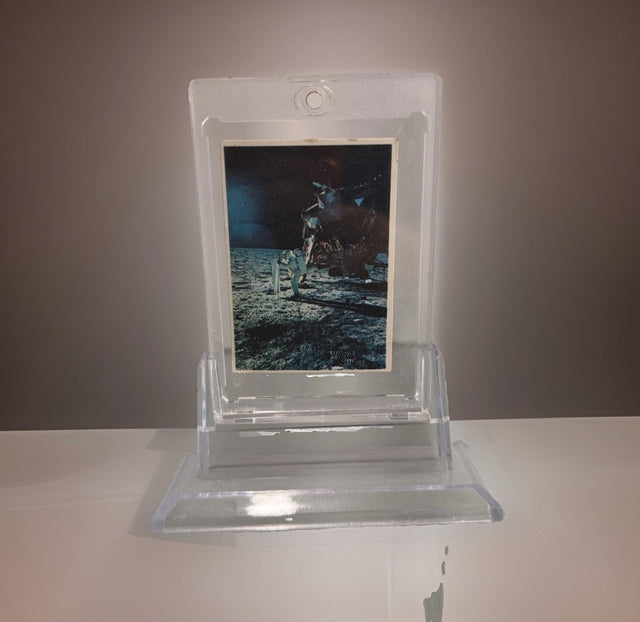
1969 Space Candy Buzz Aldrin Apollo 11 On The Moon Card #19 Taylor-Reed Display
$59.00 USD
-

1980 Polo Player Green Pink Chalk Pastel Bears Andy Warhol Signature AS-IS
$399.00 USD
-

After Andy Warhol Moon Landing Line Drawing 5/50 w/ Astronaut Autographs As-Is
$175.00 USD
-

After John Lennon "I Do" Framed Print, Marked A/P Unverified
$99.00 USD


Browse the collection for current listings.