

Featured image: AI-generated interior concept using product reference photography. Scale, setting, framing, and placement are illustrative.
Designing a personal dressing room offers a unique opportunity to blend functionality with a deeply curated aesthetic. Unlike more public areas of a home, a dressing room allows for bolder, more intimate expressions of personality, reflecting individual taste in fashion, art, and personal history. The challenge lies in creating a space that is both highly practical for daily routines and visually inspiring, a sanctuary where one can prepare for the day or evening in comfort and style. This often means balancing the need for extensive storage, thoughtful lighting, and well-placed mirrors with the desire for art that speaks to the occupant. The chosen art, whether a single statement piece or a thoughtfully arranged collection, can anchor the room's identity, providing a focal point that ties together disparate elements of the design. When considering pop art, especially pieces like those by Death NYC featuring iconic figures, the potential for a playful yet sophisticated atmosphere is immense. It's about making a deliberate choice to infuse energy and narrative into a room that might otherwise feel purely utilitarian, transforming it into a cherished part of the home.
The integration of vibrant pop art into a dressing room requires a strategic approach. Such art often features strong colors and recognizable imagery, demanding a backdrop that allows it to shine without overwhelming the space. This is where a restrained material palette becomes crucial. By selecting finishes and furnishings that are elegant and understated, the art is given room to breathe, becoming the undisputed star of the room. Think about how a monochrome or neutral scheme, perhaps with subtle textures, can enhance the visual impact of a piece like the Death NYC Audrey Hepburn LV Murakami Flowers. This artwork, with its striking black-and-white portrait against a riot of colorful, smiling flowers, exemplifies the kind of dynamic contrast that can define a room. The black frame and mat of this piece already provide a strong anchor, making it easier to integrate into a carefully planned environment. It’s a delicate balance: providing enough visual interest to feel rich and layered, while maintaining a sense of calm and order essential for a functional dressing space. The goal is to create a collected feel, where each item, from a vintage accessory to a contemporary artwork, feels intentionally placed and contributes to a cohesive, personal narrative.
Understanding the functional hierarchy of a dressing room
Before any aesthetic decisions, a dressing room must first fulfill its primary function: organizing and facilitating the daily ritual of getting dressed. This means establishing a clear hierarchy of needs and allocating space accordingly. The most critical elements are storage, mirrors, and lighting, and their placement dictates the flow and usability of the room. Closed storage, such as wardrobes, drawers, and cabinets, should take precedence for clothing, shoes, and accessories. This keeps clutter out of sight, maintaining a serene and tidy environment, which is especially important in a space where one is often evaluating appearance. Open shelving can be reserved for display items, perhaps a curated selection of handbags, hats, or decorative objects, but these should be few and immaculately arranged. The main mirror, ideally full-length, needs to be positioned with ample, balanced lighting to provide an accurate reflection without harsh shadows. Secondary mirrors, such as a vanity mirror for makeup or a smaller, decorative mirror, can complement the primary one. Once these functional anchors are in place, the remaining wall space and surfaces can be considered for art and personal touches. This systematic approach ensures that the room remains practical, even as it becomes increasingly personalized with art and decor.
Worked Example: Planning a 10x12 Foot Dressing Room
Considering a hypothetical dressing room with planning assumptions of 10 feet by 12 feet, the layout might begin with a wall of custom built-in wardrobes along one 12-foot length. This maximizes storage for clothing and accessories, keeping them neatly concealed behind flush panels. Opposite this, along the other 12-foot wall, a large, floor-to-ceiling mirror could be installed, flanked by linear LED lighting strips to provide even illumination. This setup creates an expansive feel and offers a clear, well-lit view for dressing. One of the 10-foot walls could house a vanity table with a smaller, illuminated mirror and a comfortable stool, providing a dedicated space for grooming and makeup. The remaining 10-foot wall then becomes the prime location for art. Here, the Death NYC Audrey Hepburn LV Murakami Flowers print, with its vibrant colors and engaging subject, would make a powerful statement. Its visual energy would animate the wall, drawing the eye and adding a layer of personality without interfering with the room's core functions. The surrounding space could be kept relatively clear, perhaps with a small, elegant bench or a decorative plant, to allow the artwork to command attention. This hierarchical planning ensures that art enhances, rather than competes with, the room's essential purpose.
Leveraging color and contrast for visual impact
The strategic use of color and contrast is fundamental in a dressing room, particularly when incorporating bold pop art. The goal is to create a cohesive yet dynamic environment where the art is celebrated. For a piece like the Death NYC Audrey Hepburn LV Murakami Flowers, which features a striking black-and-white figure against a backdrop of intensely colorful flowers, a neutral or monochrome base palette for the room itself is often the most effective approach. Imagine walls painted in a soft gray, a warm off-white, or even a deep charcoal. This provides a sophisticated, understated canvas that allows the artwork's vibrant reds, blues, yellows, and greens to truly pop. The black frame and mat of the artwork already provide a strong contrast, which can be echoed in other elements of the room, such as matte black hardware on wardrobes, a black leather stool at the vanity, or dark wood accents. The key is to let the artwork introduce the primary burst of color, rather than scattering too many competing hues throughout the space. This approach creates a sense of intentionality and focus, highlighting the art as a deliberate design choice rather than an afterthought. The interplay of the artwork's internal contrasts, the classic elegance of Hepburn against the playful Murakami-inspired flowers, is amplified by the room's restrained backdrop, creating a visually rich experience.
Consider the psychological impact of color in a dressing room. While vibrant colors can be energizing, an overly saturated environment might feel chaotic or distracting when one is trying on outfits. By confining the most intense colors primarily to the artwork, the room maintains a sense of calm and clarity. The subtle introduction of accent colors, perhaps drawn directly from the artwork's palette, can further tie the room together. For instance, if the Death NYC print features prominent reds and blues, a small decorative pillow on a bench or a delicate vase in one of these shades could create a subtle echo. However, these accents should be minimal and carefully placed. The overall effect should be one of sophisticated restraint, where the eye is naturally drawn to the artwork as the main source of visual excitement. This strategy not only enhances the pop art but also ensures the dressing room remains a peaceful and functional space. It allows for a balance between the playful, expressive nature of pop art and the practical, often serene, requirements of a personal grooming area. The visual weight of the art is respected and given the space it needs to make its full impact, making the dressing room feel both collected and contemporary.
The role of mirrors and their placement
Mirrors are indispensable in a dressing room, serving both practical and aesthetic purposes. Functionally, they are crucial for evaluating outfits, applying makeup, and ensuring a polished appearance. Aesthetically, they can expand a small space, bounce light, and even act as decorative elements. The primary mirror in a dressing room should always be full-length, allowing for a head-to-toe view. Its placement is paramount. Ideally, it should be on a wall free from direct, harsh sunlight, which can create misleading shadows and glare. Positioning it opposite a window with diffused light, or against a wall with carefully installed artificial lighting, is often the best solution. The goal is even, shadow-free illumination that accurately reflects colors and textures. Beyond the main mirror, a vanity mirror, often smaller and sometimes magnified, is essential for close-up grooming. This mirror benefits from dedicated task lighting, such as sconces or an illuminated ring, to ensure precision.
From a design perspective, mirrors can also be used to reflect and amplify the room's chosen art. Imagine a full-length mirror positioned to capture a reflection of the Death NYC Audrey Hepburn LV Murakami Flowers print. This effectively doubles the visual impact of the artwork, integrating it more deeply into the room's overall experience. However, careful consideration must be given to what else the mirror reflects. Avoid positioning it to reflect clutter or an unflattering view. Instead, aim for reflections of elegant storage, curated display items, or even a glimpse of an adjacent, well-designed space. The frames of mirrors can also contribute to the room's aesthetic. A simple, minimalist frame might complement the clean lines of modern storage, while an ornate frame could add a touch of vintage glamour, depending on the overall design intent. In a dressing room focused on a collected feel, a mix of mirror styles could even work, provided there's a unifying element like material or finish. Ultimately, mirrors are not just reflective surfaces; they are active participants in the design, shaping perceptions of space, light, and the art within it.
Managing daylight, glare, and preservation for paper art
Daylight is a double-edged sword in a dressing room. While natural light is ideal for assessing clothing colors and makeup application, it poses significant risks to paper-based artworks like the Death NYC prints. Direct sunlight, especially, contains UV rays that can cause irreversible fading and degradation of inks and paper over time. Even indirect sunlight or prolonged exposure to ambient daylight can contribute to damage. Therefore, managing daylight is crucial for the preservation of any valuable paper art. The first line of defense is strategic placement: avoid hanging artworks on walls directly opposite or adjacent to large windows that receive strong, unfiltered sunlight. If such placement is unavoidable due to layout constraints, robust window treatments are essential. Blackout blinds or heavy drapes can block light entirely when the room is not in use, and sheer curtains or blinds can filter light during the day, reducing the intensity of UV exposure.
Beyond window treatments, the framing itself plays a vital role. The Death NYC Audrey Hepburn LV Murakami Flowers print, for instance, comes framed. A professional frame with museum-quality acrylic or glass that offers a high degree of UV filtering is always recommended for paper art. While no framing material can entirely prevent fading, UV-filtering options significantly mitigate the risk. This is a practical tradeoff: the slight reduction in light transmission is a small price to pay for protecting the artwork's longevity. Glare is another consideration. Mirrors, polished surfaces, and even artwork glass can create distracting reflections, particularly in a brightly lit room. Anti-reflective glass or acrylic can minimize this, ensuring the artwork is always clearly visible. Furthermore, stable environmental conditions are key. Dressing rooms, especially those near bathrooms, can experience fluctuations in humidity and temperature. Paper art should be kept away from sources of steam, excessive heat, or dampness, as these can cause warping, mold, and other forms of damage. Maintaining a consistent, moderate temperature and humidity level is ideal for preserving the integrity of the artwork and its paper support. It's a holistic approach to environmental control that ensures the art remains vibrant for years to come.
The importance of closed storage and material choices
In a dressing room, closed storage is not merely about tidiness; it's a fundamental design principle that underpins both aesthetics and functionality. Wardrobes, drawers, and cabinets keep clothing, accessories, and personal items out of sight, preventing visual clutter that can undermine a carefully curated space. This is particularly important when introducing vibrant art. A room filled with visible garments, shoe boxes, and sundry items will inevitably detract from the impact of a statement piece like the Death NYC Audrey Hepburn LV Murakami Flowers. Closed storage provides a clean, uninterrupted backdrop, allowing the eye to focus on the art and other intentional design elements. Custom built-ins are often the most effective solution, maximizing every inch of space and creating a seamless, architectural look. When designing these units, consider internal organization systems, adjustable shelves, hanging rods, and drawer dividers, to ensure everything has its place and is easily accessible. The exterior of the storage should align with the room's overall material palette, reinforcing the sense of restrained elegance.
Material choices for these storage units and other furnishings are critical. For a dressing room featuring bold pop art, a refined and understated material palette works best. Think about materials that offer texture and depth without competing with the artwork's color. Matte lacquered finishes in neutral tones (grays, whites, muted taupes) provide a sleek, modern look. Natural wood veneers, such as rift-sawn oak or walnut, can introduce warmth and organic texture, especially when paired with minimalist hardware. Stone or quartz countertops for a vanity add a touch of luxury and durability. Fabrics for seating, such as linen, wool, or a subtle velvet, can provide comfort and visual interest without being overly patterned or brightly colored. The goal is to create a sense of quiet luxury, where the quality of materials is evident, but their presence is supportive rather than dominant. This approach allows the Death NYC Audrey Hepburn LV Murakami Flowers print to serve as the main injection of color and personality, making the dressing room feel both sophisticated and uniquely personal. The contrast between the vibrant art and the serene, well-ordered environment created by thoughtful material choices is what truly elevates the space.
Integrating smaller, complementary artworks
While a large statement piece can anchor a dressing room, smaller, complementary artworks can add depth and a sense of a truly collected space. These smaller pieces should echo the themes, colors, or mood of the main artwork without competing with it. For a dressing room centered around the Death NYC Audrey Hepburn LV Murakami Flowers, the Death NYC Audrey Hepburn Dollar Bill Art Set of 2 offers an ideal complement. These two unframed pieces, featuring Audrey Hepburn portraits on dollar bills with distinct color accents (turquoise and colorful collage; orange, pink, and black with LV-style motifs), continue the pop art aesthetic and the iconic subject matter. Because they are smaller and unframed, they offer flexibility in display. They could be framed individually in minimalist frames that match the larger piece, or even displayed in a subtle floating frame to emphasize their unique medium. They are perfect for a smaller wall space, perhaps above a vanity, within a built-in shelving unit, or even as part of a small gallery wall that thoughtfully incorporates personal mementos and other small objects.
When integrating these smaller works, consider their scale relative to their surroundings. The dollar bill artworks, being inherently smaller, should not be lost on a vast, empty wall. They thrive in more intimate settings where they can be appreciated up close. Grouping them together, perhaps vertically or horizontally, can give them more presence. The choice of framing for these unframed pieces is also important. To maintain a cohesive look with the main artwork, a simple black or white frame with a mat would work well, allowing the vibrant elements of the dollar bills to stand out. Alternatively, a clear acrylic box frame could highlight their unique nature as altered currency. The key is to ensure that their display enhances their impact without detracting from the primary artwork. These smaller pieces serve to reinforce the room's narrative, adding layers of interest and demonstrating a consistent curatorial vision. They provide an opportunity to extend the pop art theme into different areas of the room, creating a more immersive and personalized experience, while still respecting the functional requirements of a dressing room. This thoughtful layering of art, from bold statements to subtle complements, is what truly defines a collected and sophisticated space.
Keeping paper art safe from steam and cosmetic products
Dressing rooms adjacent to bathrooms present specific environmental hazards for works on paper. Moisture, steam, volatile organic compounds from perfumes, and airborne overspray from hairsprays can cause paper warping, ink degradation, staining, and mold growth. Mitigating these risks requires establishing a strict spatial hierarchy prior to final placement. Paper art must remain separated from direct moisture sources like steam vents or humidifiers, maintaining a clear distance from sinks, vanities, and shower thresholds where aerosols or splashes occur.
Proper framing provides the primary barrier against atmospheric fluctuations. While the Death NYC Audrey Hepburn LV Murakami Flowers print arrives framed, unframed paper pieces such as the Death NYC Audrey Hepburn Dollar Bill Art Set of 2 require custom conservation framing. Specify acid-free, archival mats and backing boards to prevent paper burn and discoloration over time. Encapsulating the print within a tightly fitted frame package mitigates ambient humidity shifts. Acrylic glazing is preferable to standard glass in dressing areas because it reduces weight and eliminates shatter risks in high-traffic zones.
Integrating graphic street art within a residential dressing room requires balancing strong pop imagery against restrained architecture. The central Death NYC Audrey Hepburn LV Murakami Flowers composition juxtaposes mid-century Hollywood iconography with vibrant street-art motifs. To establish visual hierarchy, position a large-scale piece as the primary visual anchor on a clean vertical field, keeping surrounding millwork monochromatic and flat-paneled. Sleek closed cabinetry prevents visual clutter, allowing the artwork's saturated palette to serve as the dominant color accent.
Smaller works demand a different display strategy based on viewing distance. The Death NYC Audrey Hepburn Dollar Bill Art Set of 2 features intricate detail on currency paper, making it suited for close-up engagement. Place these smaller pieces within quiet zones, such as framed within built-in shelving, mounted near a seating area, or positioned along an entry transition where viewing distance is naturally short. Coordinating tactile finishes, neutral joinery, and controlled architectural lighting ensures that high-contrast art remains a deliberate centerpiece rather than an aggressive distraction.
Shop Pop art
Explore current pieces available from the gallery.
-

Andy Warhol The Beatles 1980 Vintage Poster Framed Pop Art Times Books Stokes
$349.00 USD
-

After Roy Lichtenstein I Love Liberty Framed Pop Art Print
$75.00 USD
-

Shepard Fairey Warhol Collages (Silver)
$225.00 USD
-

Shepard Fairey Keith Haring Signed Numbered Screen Print OBEY Portrait /450
$699.00 USD
-

Shepard Fairey Keith Haring Signed Numbered FRAMED Print 2020 Obey Giant 23/450
$395.00 USD
-
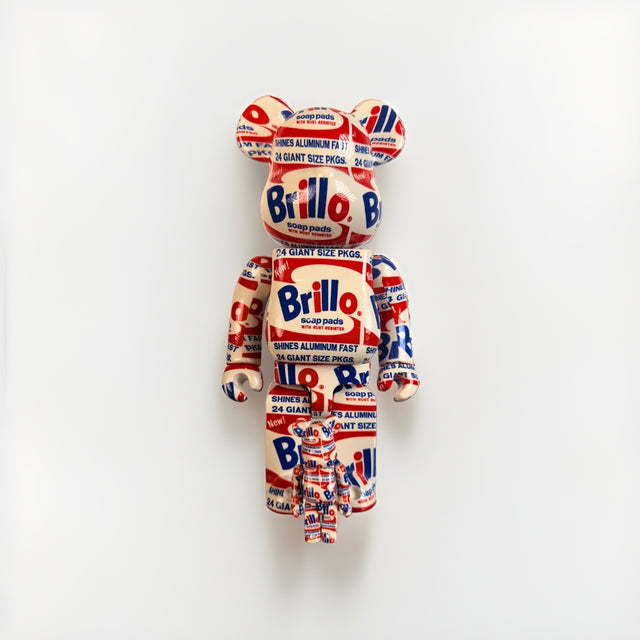
Bearbrick BE@RBRICK Andy Warhol Brillo 400% 100% Set Original 2020 Medicom New
$275.00 USD


Browse the collection for current listings.