Direct answer
Assess an Invader work’s condition by examining the exact medium and construction rather than relying on a single grade. Ask for actual-item photographs of the front, sides and back; identify the support, mount, framing and included material; note every chip, crack, crease, scratch, fade, replacement, repair, loss or instability; and record what the seller knows versus what they cannot confirm. Condition and authenticity are separate questions: a work may be well preserved but under-documented, or well documented but physically compromised.
The best condition report is specific, visual and limited to what can be observed. It does not promise that no unseen issue exists, and it does not use broad labels such as “mint” to erase a repair or unknown history. For a valuable, fragile or ambiguous work, consider a qualified conservator or specialist examination before completing the purchase.
Table of contents
- Condition is not authentication
- Build a report around the exact format
- Photographing a work before you judge it
- Mosaic and tile-based works
- Screenprints and paper editions
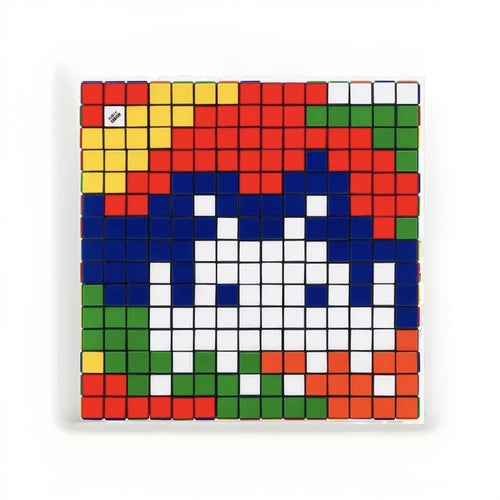
- Rubikcubism and cube-based panels
- Frames, backs, mounts and installation history
- Restoration, replacement and disclosure
- How to use a condition report in a purchase decision
- Related guides, FAQs and source notes
Condition is not authentication
A condition report describes physical state. It does not determine who made a work, whether a release claim is correct, whether a number is valid, whether a certificate is sufficient, or whether the object is legally or ethically marketable. Those are separate research questions. Mixing them creates bad decisions in both directions.
For example, a clean-looking tile panel may have no obvious physical issue in its photographs, yet its release context or provenance may remain unclear. Conversely, a well-documented print can have a serious crease, exposure issue, later mounting or restoration. The right buyer asks two parallel questions: Is the record credible? and What is the physical state of this particular object? Neither answer replaces the other.
This distinction is especially important with Invader because the name appears across different materials and formats. A condition practice that makes sense for a paper edition will not tell you enough about a tile panel. A cube-based work may have mechanical or attachment issues that do not occur in either. Start with the object, not the artist’s name.
For evidence and counterfeit-risk context, read How to Spot a Fake Invader: The Ultimate Authentication Guide. For material and process context around mosaic works, see The Complete Guide to Invader’s Mosaic Craft: Tiles, Materials, and the 8-Bit Aesthetic. This guide is deliberately narrower: it helps you describe condition accurately before you buy, sell, insure or ship a work.
Build a report around the exact format
Before you inspect anything, create an identity header for your report. It should include the title or description used by the seller, stated date, format, dimensions, medium as described, frame/case dimensions, visible edition or marking information, photographs reviewed, seller, date of inspection and any documents examined. This header prevents a generic condition note from drifting between similar-looking works.
Then select the appropriate branch: mosaic or tile-based work; screenprint or paper edition; Rubikcubism/cube-based work; or a mixed-format object. A work can have more than one branch. A framed print needs a paper review and a frame/mount review. A kit may need a component-by-component report in addition to the condition of the outer case.
| Format | Core condition risks | Minimum photographs to request | Specialist help may be useful when |
|---|---|---|---|
| Tile-based mosaic or panel | Chips, cracks, missing/replaced tiles, unstable backing, grout/adhesive changes, mount damage | Front, raking light, sides, rear, closeups of every issue | The work is heavy, cracked, repaired, detached or structurally unclear |
| Screenprint or paper edition | Creases, handling marks, edge loss, fading, foxing, stains, prior mounting, moisture distortion | Front, raking light, margins, corners, verso, framed/unframed details | Paper is discolored, wavy, framed with unknown materials or condition is contested |
| Rubikcubism/cube-based panel | Cracked/loose/mismatched components, altered rotation, support warp, hardware instability, adhesive or mount changes | Front, raking light, sides, rear, closeups of components and hardware | A component is loose, replaced, cracked, the work is heavy, or shipping/installation is complex |
| Kit or multi-component edition | Missing elements, packaging wear, mixed condition across components, replaced presentation material | Every component, outer case, closures, insert surfaces, marks and group shot | The configuration cannot be confirmed or the package has been resealed/repacked |
The aim is not to score every work into a universal grade. It is to create a record a future reader can understand without adopting your conclusion blindly.
Photographing a work before you judge it
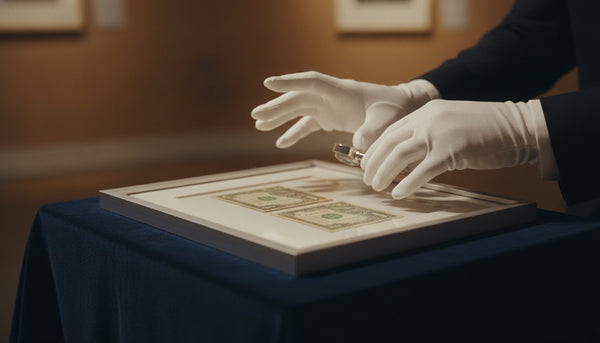
Ask for actual-item photographs in neutral, even lighting. A single polished front image can be useful for composition, but it rarely answers enough about condition. Request a straight-on front view, raking-light views, side profiles, the back/verso, edges/corners, all marks and labels, frame or mount, hardware, packaging and every disclosed issue.
Why raking light matters
Raking light is light directed across a surface at a shallow angle. It can help reveal dents, scratches, undulations, texture change, handling marks, lifting material and repairs that a flat front image may hide. It does not prove the absence of all problems. Use it as one perspective, alongside clear overall and detail images.
Keep image files tied to the condition record
Save images with date, seller/source and view: front-neutral, verso, lower-right-raking, hardware, box-corner. If an issue is visible, add a corresponding entry in the report. Avoid writing “see photos” with no location, because a later buyer may not know which image you meant.
If you inspect a work in person, take notes in the same sequence. Do not press on tile, rotate cube components, remove backing, lift a work from its frame, clean a surface or test adhesion unless you are qualified and authorized to do so. An inspection should not create the condition issue it is meant to reveal.
Mosaic and tile-based works
A tile-based work is a physical construction, not only an image. The condition review should consider the visible tiles, gaps, grout or adhesive where applicable, underlying support, edge treatment, rear, mount and all signs of movement or restoration.
Surface and tile review
Look for chips, cracks, crazing, scratches, abrasion, discoloration, uneven sheen, staining, loss of glaze or finish, and tiles that sit at a different depth or angle than neighboring elements. Examine color consistency but avoid assuming that any tonal difference is a replacement; lighting, production variation, age and photography can all affect appearance. The observation should come before the conclusion.
Record the location of each issue in plain terms: “one small chip along the top edge, third tile from left,” is more useful than “minor wear.” If a tile is missing or repaired, identify whether the seller knows when or why. A repair can be professionally executed and still be material to condition and disclosure.
Support and stability
Ask for side and rear images. They may show backing boards, hanging systems, joints, warping, cracks, label placement, previous mounting, remnants of installation, adhesive spread, screws or other structural information. Do not assume that a work’s back is unimportant because it is not meant to be viewed. It may contain key condition evidence.
Pay attention to signs that a work has shifted, flexed or been exposed to moisture. Bulging, separation, lifting, crumbling material, oxidized hardware, stains or odor may justify an in-person inspection or conservator input. A seller’s statement that the work “hangs fine” is not a substitute for an evaluation of the support.
Restoration and replacement tiles
The word “restoration” should not be used as an accusation. It is a category of condition history. Ask whether any material has been replaced, consolidated, re-adhered, re-grouted, re-backed, cleaned, reframed or otherwise treated. If the seller does not know, write “no restoration history was supplied” rather than “unrestored.”
If a seller says a tile is original, ask what supports that statement. A repair can sometimes be visible in photos; sometimes it cannot. The goal is accurate disclosure, not a false test of expertise from a screen.
Screenprints and paper editions
Paper has different vulnerabilities from tile or cube-based work. A pristine-looking image can still be affected by handling, light, prior mounting, humidity, storage pressure and acidic framing materials. Review the image area, margins, corners, reverse, paper plane and any signature/numbering area separately.
Image and paper surface
Request neutral front photos and raking-light detail. Look for scratches, rubs, ink loss, offsetting, fingerprints, smudges, stains, spotting, foxing, moisture marks, color change, tape residue and surface abrasion. A print can have normal production texture; avoid calling a feature damage unless the evidence supports it.
Margins, edges and corners
Margins are often where handling and framing history appear. Inspect them for creases, soft corners, tears, pinholes, hinge remnants, trimming, abrasions and discoloration. If the work is framed, ask whether you can see images of the work outside the frame or, at minimum, the visible edges and reverse. Do not encourage a seller to unframe fragile work casually. If the image cannot be obtained safely, record the limitation.
Verso and mounting history
The verso can reveal labels, inscriptions, tape, hinges, mount burns, backing residue, framing materials or past exposure. It can also be clean. Neither state alone answers authenticity or value. It is part of the condition story.
Describe mounting carefully. “Float mounted,” “hinged,” “dry mounted,” “mounted to board,” and “not examined outside frame” are not interchangeable phrases. If you do not know the mounting method, say so. A conservator can advise on preservation questions where the method or impact is unclear.
For broader paper-care context, see Conservation and Care for Signed Prints. That guide supports preservation planning; it does not replace work-specific condition inspection.
Rubikcubism and cube-based panels
Cube-based work needs both a surface review and a construction review. An arrangement can look visually complete while containing loose, cracked, substituted, misaligned or altered elements. It may also be physically sound despite small signs of age. Avoid interpreting a close image without the wider panel and mounting context.
What to inspect
Look for loose or immobile components; cracks, chips or shine differences; rotated faces that depart from the intended composition; color mismatch; dust in joints; signs of adhesive; missing or replaced components; panel warp; frame pressure; unsteady mount; and changes to hardware. Request front, side and rear images, plus a closeup of any issue and a photograph that shows the depth of the work.
Do not turn a component to see whether it moves. The construction may use fixed, stabilized or fragile elements, and casual handling could do damage. A qualified specialist can advise if mechanical condition or conservation is a central issue.
Shipping and installation condition
The condition report should also guide logistics. If a work has depth, weight or unstable components, its packing and installation are condition issues, not merely transport details. Ask how it has been stored and hung, whether hardware is original or later-added, and whether the seller has packing photographs or a crate history.
For a buyer-focused purchase workflow that sits beside this condition report, read How to Buy Invader Rubikcubism: Originals, Panels, Editions and Condition. That article focuses on identification and documentation; this one helps you document the physical state you find.
Frames, backs, mounts and installation history
Frames can protect a work or conceal information. A frame may be original to a release, later added by a dealer, or simply included by a prior owner. Its dimensions, material, condition and relationship to the work should be noted separately. The same applies to glazing, mats, spacers, backing boards, mounts and hardware.
Ask:
- Is the frame included in the sale?
- Is it represented as original to the release, and what supports that statement?
- Has the work been examined outside the frame?
- What glazing and backing materials are present, if known?
- Does the frame exert pressure on the work or have visible damage?
- Is the hanging hardware stable and appropriate for the object’s weight?
- Has the work been previously mounted, installed, transported or restored?
For tile and cube-based works, the rear and installation hardware can be especially important. For paper, poor framing materials can create long-term risk even when current images look acceptable. Preserve the answers with the rest of your condition file.
Restoration, replacement and disclosure
Condition is not a binary between “untouched” and “ruined.” Many works have ordinary handling history, professional reframing, prior conservation, replacements or repairs. The key question is whether the work is described accurately enough for a buyer to understand what is there.
Use three levels of language:
- Observed: What you can see in photos or inspection: “a small chip,” “a crease,” “later hardware,” “uneven sheen.”
- Disclosed history: What the seller reports or documents: “seller reports reframing in 2024,” “conservation invoice supplied.”
- Unknown: What has not been established: “no restoration records supplied,” “verso not examined outside frame.”
Avoid leapfrogging from observation to a broad conclusion. “No repair exists” is a much stronger claim than “no repair was disclosed.” The gap between those statements is where a good condition report earns trust.
How to use a condition report in a purchase decision
Once the report is complete, do not reduce it to a single grade. Use it to decide whether the work fits your standards, your budget, your intended display environment and your ability to manage any future care or resale disclosure.
A decision checklist
- Does the report identify the exact format and object?
- Are the front, sides, rear, marks and important details photographed?
- Are condition issues described by location and type?
- Are frame, mount, packaging and paperwork handled separately from the work?
- Are repairs, replacements, restoration and unknowns disclosed accurately?
- Does the condition story fit the seller’s description and the acquisition record?
- Is the transport and installation plan proportionate to the object’s needs?
- Would you be comfortable passing this same report to a future buyer?
If the answer to a key question is no, ask for more information or pass. A lower price does not turn an unknown into a known. It merely changes the amount of money attached to the uncertainty.
This approach also helps when you eventually sell. The forthcoming How to Sell or Consign an Invader Print, Kit or Panel explains how to turn your condition file into a transparent seller packet without overstating the record.
Make the report useful over time
Date the report and identify who prepared it. If your knowledge comes from a seller’s statement, write that rather than presenting it as an independent observation. If you later have the work framed, conserved, moved, installed, lent, inspected or re-photographed, add a short dated entry instead of overwriting the earlier record. A condition file should show a sequence: what was observed before purchase, what arrived, what changed, and what work was performed.
This is particularly helpful with materials that can be affected by environment or handling. A future buyer does not need you to claim that nothing has changed since the work was acquired. They need to understand the evidence available at each stage. A simple record of installation photos, framing invoices, conservation reports, storage changes and shipping events may be more valuable than a new blanket condition grade.
Keep original images in their highest available resolution and store a backed-up copy of the report with purchase documents. Avoid using a social-media post as your only condition archive: crops, compression, editing and disappearing links can make a meaningful record hard to retrieve. The object deserves a better file than a caption.
The discipline also transfers to collectible objects whose risks are different but equally physical. For a figure, a buyer may need to distinguish factory variation from UV fade, joint wear, damaged packaging or later alteration. The forthcoming BE@RBRICK Condition Grading Before You Buy: Factory Flaws, UV Fade, Joint Wear & Box Damage provides that parallel workflow. It should inform how you document a condition issue, not encourage generic condition conclusions across unrelated media.
Related guides
- How to Spot a Fake Invader: The Ultimate Authentication Guide — keep evidence and physical condition as separate research tracks.
- The Complete Guide to Invader’s Mosaic Craft: Tiles, Materials, and the 8-Bit Aesthetic — medium context for tile-based work.
- Conservation and Care for Signed Prints — general paper-care context.
- BE@RBRICK Condition Grading Before You Buy: Factory Flaws, UV Fade, Joint Wear & Box Damage — a parallel condition workflow for a different collectible medium.
- How to Buy Invader Rubikcubism: Originals, Panels, Editions and Condition — identify the format before applying this condition report.
FAQs
Can a condition report authenticate an Invader work?
No. A condition report describes physical state. Authentication and provenance require separate evidence and research.
What photographs should I request for a tile panel?
Request straight-on front, raking-light front, side profiles, rear, edges, hanging hardware, all marks/labels, closeups of every chip or crack, and any framing or packing material included in the sale.
Does a small chip make a mosaic work a bad purchase?
Not automatically. Its impact depends on location, severity, structural stability, documentation, personal standards and the rest of the offer. The important point is to describe and price the condition honestly.
How can I tell whether a print was mounted?
Ask for verso images or a condition report that identifies mounting method. If the work remains framed and cannot be examined safely, record that limitation rather than assuming it is unmounted.
Should I rotate a cube component to test a Rubikcubism panel?
No. Do not handle or manipulate a work in a way that could create damage. Request images, a professional review, or seller disclosure about construction and stability instead.
What if the seller says “mint” but will not show the back?
Treat the missing information as a real limitation. Ask for the necessary images or decide whether the uncertainty fits your standards. A broad condition label is not a substitute for evidence.
Source notes and limitations
This guide is a condition-report framework, not a conservation assessment, appraisal, authentication opinion, installation specification or insurance recommendation. Material behavior, sale terms, shipping conditions and professional requirements vary by object and location. Consult a qualified conservator, specialist art handler, insurer, installer or adviser when the work’s condition, construction or value justifies it.
The article intentionally avoids universal condition grades and does not state that any feature proves or disproves authenticity. Record what you observe, what has been disclosed and what remains unknown for the exact work in question.