Direct answer
Buy an Invader Invasion Kit only after you identify the exact kit, compare the offered contents against reliable release-specific evidence, and document the condition of both the objects and the packaging. A sealed box can be appealing, but “sealed” is a condition description—not proof of contents, provenance, or authenticity. An opened kit can be the better purchase when clear photographs, a coherent ownership trail, and documented components make it easier to understand exactly what is being offered.
The practical order is simple: establish the exact release; ask for actual-item photographs; account for every included component; assess physical condition; review seller history and the paper trail; then compare the total cost and return terms. Do not use an edition number, a generic certificate, a familiar-looking box, or a search result as a substitute for release-specific research.
Table of contents
- What this guide covers
- Why Invasion Kits need a different buying method
- Start with identification, not the asking price
- Sealed versus opened: what each condition can and cannot tell you
- How to check contents and completeness
- Condition reporting for box, printed material and objects
- Provenance, documentation and authentication limits
- A buyer’s workflow before you commit
- Shipping, storage and insurance after purchase
- Related guides, FAQs and source notes
What this guide covers
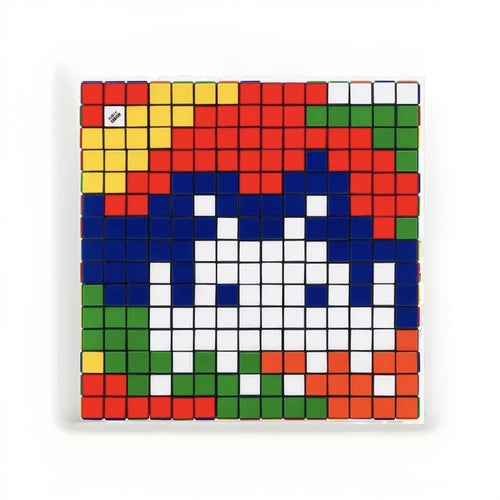
An Invasion Kit is not a generic category of Invader merchandise. It is a specific edition format with its own release context, components, packaging, condition risks and market vocabulary. Those details make kits interesting to collectors, but they also make loose claims unusually easy to repeat. A listing can call a kit “complete,” “sealed,” “rare,” “official,” “mint,” or “from the artist” while giving a buyer almost nothing useful to verify.
This guide is designed to replace that shorthand with a repeatable method. It applies whether you are looking at a kit offered privately, through a dealer, at auction, or in an estate context. It does not attempt to create a universal checklist of contents for every release. Individual kits may have different configurations, and a responsible buyer should compare the exact offered kit to release-specific material rather than assume that one box, label, or prior listing defines the entire series.
It also does not treat any one document as conclusive. The job is to make the evidence mutually reinforcing: the edition details should fit the physical object, the condition report should fit the photographs, and the ownership story should fit the source material. When those elements conflict, pause instead of explaining the conflict away.
For a broader overview of documented Invader editions, begin with Every Official Invader Print, Panel & Rubikcubism Release: A Collector’s Archive. For the wider purchase framework across prints and tile works, see Invader Tile Art: Buying Authenticated Works by the Paris Street Artist. This article goes deeper on one narrow question: how to evaluate a kit as the exact, multi-component object in front of you.
Why Invasion Kits need a different buying method
A single print is usually assessed through a comparatively familiar set of facts: title, date, medium, dimensions, edition information, signature or markings, condition, provenance and sale terms. A kit adds another layer. It may contain several printed, sculptural, documentary or presentation elements. The outer packaging can matter to collectors. Original inserts can be lost. A component may be substituted, damaged, loose, or simply photographed poorly enough that no conclusion is possible.
That does not make kits inherently riskier than a single work. It means that the buyer needs to think in layers.
First, there is identity: Which exact kit is this? A title used casually in a listing may not be enough. Capture the edition designation, any date or release reference, the offered number where applicable, dimensions, box type, and the physical marks visible in photographs.
Second, there is configuration: What does this particular release contain? The reliable answer may come from a publisher page, artist-controlled record, an established catalogue, a contemporaneous exhibition or dealer record, or other material that can be traced to the release. A seller’s description is useful, but it is still a seller’s description.
Third, there is state: What survived, and in what condition? This is where “sealed” and “complete” are often used too broadly. A closed package may prevent a full contents audit. An opened package may reveal everything but also show handling, wear, replacements, or loss.
Fourth, there is history: How did the kit reach the current seller? The most useful history is ordinary rather than theatrical: a dated invoice, a dealer sale record, a credible prior auction, correspondence that identifies the exact work, or a clear chain from the release to the present owner. A dramatic story without supporting records should not carry more weight than it deserves.
The right mental model is not “find one magic marker.” It is “build a record that makes sense as a whole.” That discipline will also help if you later store, insure, consign, or sell the kit.
Start with identification, not the asking price
The asking price is easy to see, which is precisely why it can take over the research process too early. Set it aside at first. Your initial goal is a one-page identity record for the exact kit in the listing.
Record the following before you compare any sale result:
- The exact title or release name as presented, including punctuation and variants.
- The release year, if the listing provides one, and the source of that date.
- The edition designation and visible numbering, without assuming that a number alone proves the edition.
- The format: box, case, portfolio, panel, folder, printed material, object, or mixed set.
- All dimensions supplied by the seller and whether they refer to the outer package or an internal component.
- Every visible mark: signature, stamp, label, publisher information, barcode-like mark, embossed element, handwritten notation, or inventory label.
- The exact files or images used to support the listing, especially front, rear, edges, corners, closures and every internal component.
The first question is not “Does it resemble other kits online?” It is “Can I describe this physical offer precisely enough that another person could tell what I researched?” If the answer is no, ask for more information before moving forward.
Build an evidence folder from the beginning
Save the listing URL, seller description, all supplied photographs, the date you viewed them, relevant correspondence and copies of the return or sale terms. Use neutral filenames: seller-front-box-2026-08-06.jpg is more useful than real-kit.jpg. This keeps a research file separate from a conclusion.
That habit matters because listings change. Photographs can be replaced, descriptions can be edited, and works can move between platforms. A dated record helps you compare what you were offered with what arrives, and it makes later insurance or consignment conversations much easier.
Match the object to primary or near-primary records
Look for records closest to the release. Depending on the work, useful sources may include an artist or publisher archive, an established gallery record, a catalogued exhibition, a reputable auction catalogue with detailed images, or a prior sale record that can itself be traced. The further a source sits from the original release, the more carefully you should distinguish description from proof.
Be particularly cautious with image aggregators, social-media reposts, marketplace templates and uncredited “edition databases.” They can help you discover search terms, but they are not a substitute for a source you can evaluate. If you cannot find adequate release-specific information, do not fill the gap with certainty. Treat the missing information as a decision factor.
Sealed versus opened: what each condition can and cannot tell you
Collectors often prefer sealed material because untouched packaging can be scarce and because it can preserve the presentation experience. That preference is understandable. It becomes unhelpful when “sealed” quietly starts to mean “complete,” “undamaged,” “authentic,” or “better value in every circumstance.” Those are separate claims.
| Listing state | What it can support | What it cannot establish on its own | Questions to ask |
|---|---|---|---|
| Factory-style sealed or unopened | The package appears not to have been opened since the current seal was applied | Exact contents, condition of internal objects, provenance, or whether a seal is original | What close photographs show the seal? Is there any history of ownership or purchase? What is the inspection and return policy? |
| Opened but documented | Direct review of components, numbers, marks and physical condition | That no component was ever changed before the current owner acquired it | Can every component be photographed individually? Is there a release-specific contents record? |
| Opened and partly documented | Some physical information, but gaps remain | Completeness, original configuration or absence of restoration | Which components are missing from the photo set? Is the box or insert original to the offered kit? |
| Repacked, resealed or unclear | Very little beyond the current presentation | Original seal status, untouched contents or release configuration | Why was it repacked? Who did it, when, and what evidence supports that explanation? |
An opened kit with detailed, high-resolution photographs can be easier to assess than a sealed one with only a single front image. That is not a rule that opened is “better.” It is a reminder that information quality should shape your decision.
Examine the seal as a condition feature, not a verdict
If a listing emphasizes a seal, ask for images of every closure, corner and surface. Note whether the material shows age-consistent handling, tears, compression, residue, new adhesive, or a secondary sleeve. A photograph cannot definitively establish every aspect of the package’s history, but it can show whether the seller is giving you enough information to assess the claim.
If you buy an unopened kit, make the trade-off explicit in your own notes: you are accepting uncertainty about the internal state in exchange for the value you place on a closed presentation. That is a personal collecting decision, not a universal condition hierarchy.
Do not open a kit merely to create certainty
A buyer sometimes imagines that opening a package after delivery is the cleanest solution. It may not be. Opening can alter presentation condition, remove a condition category the market recognizes, and create a dispute about what was present when the package changed hands. If you are considering an unopened kit, resolve inspection terms before purchase. Ask what happens if there is delivery damage, an evident mismatch, or a component issue discovered only upon permitted inspection.
How to check contents and completeness
“Complete” should mean that the seller can identify the offered components and compare them with a release-specific source. It should not mean “the box feels full,” “the seller bought it complete,” or “it resembles another listing.” Your checklist must be written for the exact release, not copied from a different kit.
Create a component ledger
Make a simple table with one row per expected or offered element. Do not write “all inserts” if the release record names several things. Break the package down enough that omissions become visible.
| Component | Evidence it belongs to this release | Present in actual-item photos? | Condition notes | Open question |
|---|---|---|---|---|
| Outer box, case or portfolio | Release record, dimensions, construction | Yes / no | Corners, closure, fade, scuffs | Is it original to this set? |
| Main artwork or object | Title, material, physical marks, edition record | Yes / no | Surface, edges, handling | Does number or marking match source? |
| Printed inserts | Release-specific catalogue or original documentation | Yes / no | Fold lines, foxing, tears | Are all expected sheets shown? |
| Certificate or document, if supplied | Issuer and work match need review | Yes / no | Completeness, handwriting, alterations | What exactly does it document? |
| Protective materials | Match only when release-specific record supports it | Yes / no | Replacements, wear | Is it original or a later archival addition? |
The ledger performs two jobs. It prevents you from confusing “photographed” with “verified,” and it creates a transparent record for future buyers. If an element cannot be confirmed, write unconfirmed rather than forcing it into yes or no.
Ask for actual-item photographs, not reference imagery
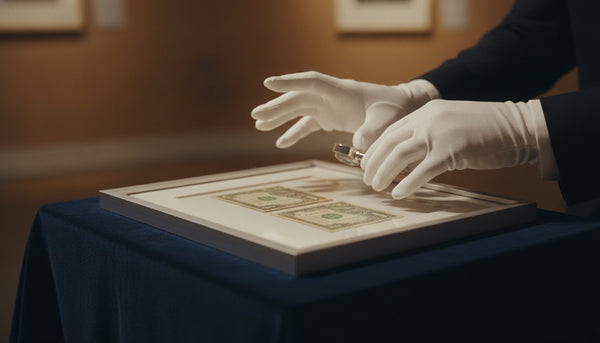
Reference imagery can be useful context, but it does not show the offered object. Ask for images of the exact kit under even light: front and rear of the outer package; all sides; each closure; all corners; every internal component; closeups of numbers, marks and condition issues; and a scale reference when dimensions are unclear.
Request one or two contextual shots showing the components together as offered. This can help assess whether the images describe one physical set rather than a mixture of photos gathered from elsewhere. It is not forensic proof. It is one reasonable part of a transparent presentation.
Treat certificates and numbers with care
A certificate can record useful details, but its value depends on who issued it, whether it identifies the exact work, whether it follows the item through the ownership chain and whether the surrounding evidence is coherent. A document that says only “Invader” or a broad title may be less useful than a dated invoice with photographs of the exact package.
Likewise, an edition number is not a shortcut to completeness. A number can be a real attribute of an object while the offered set remains incomplete, altered, or poorly documented. Describe the number accurately; do not turn it into a conclusion it cannot support.
For the broader question of evidence and red flags, read How to Spot a Fake Invader: The Ultimate Authentication Guide. This kit guide is narrower: it asks whether the multi-component package is identified and disclosed honestly.
Condition reporting for box, printed material and objects
Condition is more than a single grade. A credible report separates the outer presentation, internal material and work-specific condition. A pristine-looking outer box does not erase a problem inside; a lightly worn box does not necessarily diminish an otherwise well-preserved kit in the same way for every collector. Describe, do not generalize.
Outer package
Inspect corners, seams, closures, hinges, magnetic strips, hardware, labels, shrink material, slipcases and any surface printing. Note compression, abrasions, shelf wear, splits, tears, staining, residue, sun fade, odor and repairs. If the material is paper-covered board, look for lifting or bubbling. If it is a plastic or acrylic container, look for stress lines, cracks and clouding.
Printed matter
For printed sheets, cards, booklets or maps, assess edge wear, creases, scratches, dents, finger marks, moisture wave, staining, foxing, fading, adhesive residue and evidence of prior mounting. Ask whether any work was framed, hinged, rolled, stored near light or exposed to variable humidity. Do not assume a flat photograph shows a flat object; request angled light images when surface condition matters.
Sculptural or tile-based components
Look for chips, cracks, loose material, scratches, glue residue, altered mounts, replacement tiles, unstable backing, paint or glaze differences and previous restoration. An owner may not know whether a repair occurred, which is another useful data point—not an accusation. A responsible report can say “no restoration was disclosed” rather than “no restoration exists.”
Condition language that earns trust
Useful condition language is specific: “two shallow abrasions at the lower-right edge of the outer box; one small crease on the accompanying card; no internal component is shown in raking light.” Weak language is global: “perfect,” “museum quality,” “mint,” or “flawless” without supporting information.
If you need a framework for physical inspection across Invader formats, this cluster’s forthcoming Invader Condition Report: Mosaic, Screenprint & Rubikcubism Checks Before You Buy expands the condition questions by medium. It is not a substitute for a conservator when a high-value or ambiguous work is involved.
Provenance, documentation and authentication limits
The most useful provenance is a sequence of ordinary, dateable records that describe the same physical kit. Ideally, that may include an original invoice or gallery receipt, correspondence identifying the kit, clear photographs over time, prior auction or dealer records, a consignment agreement, shipping documentation and insurance schedules. No single item needs to do all of the work. Together, records should form a story that does not require elaborate explanation.
What to ask a seller
Ask when and from whom the seller acquired the kit, whether they have an invoice or receipt, whether the kit has been displayed or stored in a particular environment, whether any component was replaced or separated, whether it has been sold before, and what documentation transfers to you. Phrase questions as a request for information, not a cross-examination. A knowledgeable, straightforward seller should be able to distinguish what they know from what they do not.
What not to over-read
Do not treat a dealer name, a resale platform, a famous prior owner, a social-media post, or a typed description as a complete provenance chain. Equally, do not reject a well-documented ordinary ownership story because it lacks glamour. Quality comes from specificity, continuity and the relationship of the paperwork to the exact kit.
There is no shortcut around uncertainty. If provenance or release documentation remains thin, price the uncertainty into your decision or keep looking. It is better to pass on an offer than to build a collection record around an assumption you cannot later explain.
A buyer’s workflow before you commit
Use this sequence whether you are new to Invader editions or adding a specific kit to an established collection.
- Write the exact item record. Capture title, format, offered number, dimensions, components, condition language, seller and date.
- Find independent release context. Start with artist, publisher, gallery, catalogue or credible contemporaneous records. Identify what is confirmed and what is still unknown.
- Request actual-item images. Ask for photographs that make the individual components, marks and condition visible.
- Build the component ledger. Compare the offered components against the best release-specific information available. Mark unknowns honestly.
- Read sale terms before negotiating. Confirm total price, buyer’s premium where applicable, payment method, shipping method, inspection timing, insurance and return terms.
- Set a decision threshold. Decide in advance which missing facts you can accept and which are deal-breakers. This helps you avoid making research standards looser after you become emotionally attached to an object.
- Preserve your file after purchase. Save invoice, delivery confirmation, condition images, correspondence and your component ledger together.
This is the same discipline that helps with other release-driven collectibles. If you are researching a purchase made through a drop, preorder or lottery system, see the forthcoming BE@RBRICK Drops, Preorders & Lotteries: A Collector’s Release-Day Playbook. The objects differ, but release records and actual-item documentation remain the foundation.
If the choice is between an Invasion Kit and a cube-based panel, do not carry a kit’s completeness standard across to a materially different work. The forthcoming How to Buy Invader Rubikcubism: Originals, Panels, Editions and Condition applies the same evidence-first approach to construction, support, mounted components and transport. Use the two guides together only when you are comparing formats—not to treat one format’s paperwork or condition language as proof for the other.
Shipping, storage and insurance after purchase
The research does not end when a seller accepts your offer. Before shipment, agree on how the kit will be packed and insured. Multi-component sets should be protected so that internal material cannot shift, rub or press into the outer presentation. Ask the seller to photograph the packed condition when appropriate, especially if the purchase is significant or the package is fragile.
On arrival, photograph the unopened shipping carton, label, outer packaging, packing layers and contents as you unpack. Do this promptly and calmly. Your record is most useful when it shows sequence rather than only a final damage photograph. If there is an issue, preserve the packaging and use the seller’s stated process instead of discarding material before a claim can be reviewed.
For storage, avoid predictable risks: direct daylight, hot radiators, damp basements, attics with dramatic temperature swings, pressure from stacked objects and unsupported vertical storage for heavy or unstable components. Keep the kit’s paperwork with a digital backup, but do not store the only original records in an environment that risks the same damage as the work.
Insurance conversations work best when you can provide the exact title or description, images, acquisition record, condition report, current location and any appraisal or specialist advice appropriate to the insurer’s requirements. Coverage terms vary, so confirm them directly rather than assuming a homeowner or collector policy treats a multi-component edition in a particular way.
The mistakes that create avoidable regret
The most common mistake is treating a kit as a trophy purchase instead of a research object. The more desirable the edition feels, the easier it is to rationalize missing photos, vague provenance, unclear terms, or a seller’s request to move quickly. Slow down when a listing creates urgency.
Another mistake is using price results without comparing the object. A past sale may have included a different release, a different condition state, different components, a different market context, or undisclosed terms. Use historic transactions as questions to investigate, not a numerical verdict.
Finally, do not confuse ownership of a kit with permission to make claims about its origin, condition or completeness. If you sell later, the best approach is to pass forward the same clarity you wanted as a buyer: actual-item photographs, a component ledger, condition notes, the documents you received, and a precise account of what remains unknown.
Related guides
- Every Official Invader Print, Panel & Rubikcubism Release: A Collector’s Archive — use it to locate the right release context before comparing components.
- Invader Tile Art: Buying Authenticated Works by the Paris Street Artist — a broader buying framework for Invader works beyond kits.
- How to Spot a Fake Invader: The Ultimate Authentication Guide — evidence discipline and counterfeit-risk context.
- How to Buy Invader Rubikcubism: Originals, Panels, Timed Editions & Condition — the next format-specific guide in this cluster.
- BE@RBRICK Drops, Preorders & Lotteries: A Collector’s Release-Day Playbook — comparable release-process research for designer collectibles.
FAQs
Are sealed Invader Invasion Kits always worth more?
No. A sealed presentation may be desirable to some buyers, but value depends on the exact release, condition, documentation, market context, contents uncertainty and the terms of sale. Sealed is not a universal synonym for complete or authentic.
How can I tell whether an Invader Invasion Kit is complete?
Identify the exact release, find the best available release-specific contents record, request actual-item photographs of every component, and make a written ledger. If a component cannot be confirmed, record it as unconfirmed rather than assuming it is present.
Does an edition number prove an Invasion Kit is authentic?
No. An edition number is one descriptive attribute. Assess it alongside physical details, release-specific documentation, provenance, seller disclosure and condition. No individual marker should replace the wider evidence record.
Should I open a sealed kit after I buy it?
That depends on the purchase terms, your collecting priorities and the condition risk you are willing to accept. Resolve inspection and return terms before you buy. Opening can change presentation condition and can complicate a later dispute.
What photographs should I request before buying?
Ask for clear images of the front, back, sides, corners and closures of the package; each internal component; all markings and edition details; every disclosed condition issue; and a contextual image of the offered set together.
Can a certificate alone prove a kit is complete?
No. A certificate may be useful documentation, but it should be assessed for issuer, specificity and relationship to the exact kit. Completeness still requires a component-level review.
Source notes and limitations
This is a method guide, not an artist catalogue raisonné or a substitute for a qualified specialist, conservator, insurer, lawyer, appraiser, auction house or authenticator. Release configurations, availability, pricing, condition, taxes, shipping requirements and sale terms can change. Before purchasing, verify the exact offered work against current artist-, publisher-, gallery-, auction- or dealer-provided records and the seller’s written terms.
The guide intentionally avoids assigning a universal component list, price, authenticity conclusion or condition hierarchy to all Invasion Kits. Those conclusions must be tied to the individual release and the specific object being offered.