

This is Gauntlet Gallery’s working archive of official Invader editions — 84 documented releases spanning 2000 to 2026, organized by year, series, medium, publisher and scarcity. It is a curated, verifiable catalogue of the artist’s published multiples, not a claim to catalogue every object Invader has ever made. Treat it as a living reference that will grow as new drops and documentation surface.
Browse the full catalogue: explore all 84 works in The Invader Index — every official print, panel, Rubikcubism work and sculpture, each with its own detail page.
Invader is one of the very few street artists whose editioned output can be read almost like a ledger. The wall mosaics are, by design, uncounted and uncatalogued — the artist himself tracks them through the FlashInvaders app rather than through any gallery inventory. But his prints, sculptures, ceramics and Rubikcubism panels move through a defined set of publishers, at defined edition sizes, at defined retail prices. That structure is what this archive documents. Below you will find the same 84 records sliced six different ways — chronologically, by series, by medium, by publisher, by scarcity, and by edition-size and price tier — each with analyst commentary on what a collector should actually notice when the numbers are laid side by side.
A word on why an archive like this matters more for Invader than for most artists. Because the mosaics live outdoors and cannot be owned, the editions are the only way most collectors will ever hold an Invader. That makes the edition catalogue the load-bearing structure of the entire collectible market — and it makes the differences between editions (which publisher, which year, which edition size, which medium) unusually consequential. Two works that both say “Invader, limited edition” on the label can be separated by a factor of a hundred in edition size and by two decades of market development. This archive exists to make those distinctions legible.
Three companion pieces sit alongside this archive, and this article is the reference layer beneath all three. If you want the biography and cultural context, start with Who Is Invader? A Complete Guide. If your priority is protecting yourself in the secondary market, read How to Spot a Fake Invader: Authentication Guide. And if you are weighing an acquisition as a financial decision, Investing in Invader: Market Performance & Rarity covers auction performance and rarity economics in depth. Where those articles interpret, this one catalogues.
How to Read This Archive

Every row in the tables below is drawn from our documented catalogue of 84 official editions. Each record carries eight verified fields: name, year, medium, edition designation, edition size, dimensions, retail price at issue (MSRP), and publisher. We also tag each work with an internal era (a thematic grouping such as “Rubik Cubism” or “City Invasions”) and a scarcity band (Rare, Very Scarce, Scarce, or Common) derived from edition size and observed market availability.
A few honest caveats before the data. The retail prices shown are original issue prices in the currency the publisher used at the time — euros, pounds sterling, US dollars or Japanese yen — and we have deliberately not converted them to a single currency or inflation-adjusted them, because doing so would imply a precision the source data does not support. Where a field reads “Unknown” or “Not specified,” it means we have not verified that value to our standard, not that the work lacks one. And most importantly: MSRP is the issue price, not today’s value. For anything resembling current market pricing, secondary-market data varies widely by condition, edition and venue, and we point you to Investing in Invader: Market Performance & Rarity rather than printing a number we cannot stand behind.
One more reading note about the “edition” field. Invader’s edition designations are inconsistent by modern standards: some works are labelled by colourway (“Red,” “Blue,” “Gold”), some by a simple “First Edition” or “Signed,” and the HENI works by the phrase “Timed Edition.” These labels are not interchangeable with edition size. A work can be a “First Edition” of 300 or of 25. Always read the edition size column, not the edition name, when you are gauging scarcity.
The Archive by Year (2000–2026)
Read chronologically, the archive tells a clean three-act story. The first act (2000–2005) is the “Invasion Kit” era, when Invader’s editioned output was mostly self-published assembly kits and early screen prints through his own Space Shop, priced for fans rather than for collectors. The second act (2006–2015) is the gallery-and-print-house era, when Pictures On Walls, Lazarides and a rotating cast of international galleries turned him into a bona fide print market. The third act (2017–2026) is the HENI era, when the London publisher HENI Editions formalized his print program into large, high-production “timed edition” drops that reset both the scale and the price of an Invader multiple.
| Year | Work | Medium | Edition Size | Publisher | Issue Price (MSRP) |
|---|---|---|---|---|---|
| 2000 | Invasion Kit #01 (Albinos) (First Edition) | Sculpture | 350 | Space Shop | Unknown |
| 2003 | Invasion Kit #02 (Octopus) (First Edition) | Sculpture | 150 | Space Shop | Unknown |
| 2004 | Invasion Kit #03 (Hollywodee) (First Edition) | Sculpture | 150 | Space Shop | Unknown |
| 2004 | Invasion Map Los Angeles (#12) (Signed Edition) | Offset Lithograph | 100 | Stolen Space | USD $80.00 |
| 2005 | Invasion Kit #04 (Rubik Kit) (First edition) | Not specified | 150 | Space Shop | Unknown |
| 2005 | Matrix Skate Deck | Skate Deck | 100 | Mekanism Skateboards | EUR €80.00 |
| 2005 | Rubik Space | Screen Print | 100 | Space Shop | GBP £80.00 |
| 2006 | Albino Invader (Unsigned) | Screen Print | 100 | Pictures On Walls | GBP £50.00 |
| 2006 | Homeworks (Signed) | Screen Print | 100 | Pictures On Walls | GBP £100.00 |
| 2006 | Invasion Kit #05 (Atari 2600) (First Edition) | Sculpture | 150 | Space Shop | EUR €75.00 |
| 2006 | Rubik Cubism (First Edition) | Screen Print | 75 | Space Shop | EUR €150.00 |
| 2006 | Rubik Kubrick I - Alex (Unsigned) | Screen Print | 300 | Pictures On Walls | GBP £75.00 |
| 2007 | Invasion Kit #06 (The Runner) (Unsigned) | Sculpture | 150 | Space Shop | EUR €100.00 |
| 2007 | Invasion Kit #07 (Union Space) (Unsigned) | Sculpture | 150 | Space Shop | EUR €100.00 |
| 2007 | Prisoners (First Edition) | Giclee Print | 100 | State Of Play Zine | GBP £100.00 |
| 2007 | Rubik Kubrick II (Unsigned) | Screen Print | 300 | Pictures On Walls | Unknown |
| 2007 | Rubik Scream II | Screen Print | 50 | Space Shop | EUR €150.00 |
| 2007 | Space File (Red) | Screen Print | 30 | Space Shop | EUR €250.00 |
| 2008 | Binary Bug (First Edition) | Screen Print | 100 | Wooster Collective | USD $165.00 |
| 2008 | Binary Code (Black) | Screen Print | 50 | Space Shop | EUR €200.00 |
| 2008 | Invasion Kit #08 (Third Eye) (Unsigned) | Sculpture | 150 | Space Shop | EUR €100.00 |
| 2008 | Invasion Kit #09 (Hypnotic Vienna) (Unsigned) | Sculpture | 150 | Space Shop | EUR €150.00 |
| 2009 | Boys Don't Cry | Screen Print | 40 | Space Shop | EUR €200.00 |
| 2009 | Hello My Game Is (Red) | Screen Print | 25 | Space Shop | EUR €180.00 |
| 2009 | Invasion (Silver) | Screen Print | 50 | Pictures On Walls | GBP £140.00 |
| 2009 | Invasion Kit #10 (Paris) (Unsigned) | Sculpture | 150 | Space Shop | EUR €180.00 |
| 2009 | Invasion Kit #11 (Blue) (Signed) | Sculpture | 30 | Space Shop | EUR €300.00 |
| 2009 | Rubik Abbey Road | Screen Print | 50 | Jonathan LeVine Gallery | USD $300.00 |
| 2009 | Space Vibes (Red) | Screen Print | 30 | Shop At Lazarides | GBP £225.00 |
| 2010 | 6 Cubes (Blue & Yellow) | Not specified | 20 | Shop At Lazarides | GBP £225.00 |
| 2010 | Home (Lego White) | Screen Print | 25 | Pictures On Walls | GBP £325.00 |
| 2010 | Invaderoma - Mosaic Book Cover (First Edition) | Sculpture | Book (Monograph) | 60 | Space Shop | EUR €450.00 |
| 2010 | Invasion Kit #12 (Home) (Unsigned) | Not specified | 150 | Space Shop | EUR €180.00 |
| 2010 | Invasion Kit #13 (Made In Japan) (Unsigned) | Sculpture | 150 | Space Shop | EUR €200.00 |
| 2010 | Mosaico E Muratura (Red) | Not specified | 30 | Space Shop | EUR €180.00 |
| 2010 | Pronto Intervento (Red) | Not specified | 30 | Space Shop | EUR €180.00 |
| 2011 | Invaded Hypnosis | Not specified | 50 | Lazarides Editions | GBP £280.00 |
| 2011 | Invaded Scream | Not specified | 50 | Lazarides Editions | GBP £280.00 |
| 2011 | Invasion Map Paris v2.0 (#20) | Not specified | 100 | Space Shop | EUR €200.00 |
| 2011 | Invasion Map Sao Paulo (#21) | Not specified | 100 | Space Shop | EUR €180.00 |
| 2011 | Oh... Alright | Not specified | 150 | Pictures On Walls | GBP £250.00 |
| 2011 | Space Waffle | Not specified | 100 | Lazarides Editions | GBP £300.00 |
| 2011 | Sticker Sheet | Not specified | 60 | Space Shop | EUR €140.00 |
| 2012 | Invasion Kit #14 (3D Vision) | Sculpture | 200 | Space Shop | EUR €350.00 |
| 2012 | Invasion Map Brussels (#22) | Not specified | 50 | Space Shop | EUR €250.00 |
| 2012 | Warning Invader (Silver) | Not specified | 50 | Pictures On Walls | GBP £425.00 |
| 2013 | Art4Space | Screen Print | 50 | Space Shop | EUR €350.00 |
| 2013 | Invasion Kit #15 (Glow In The Space) | Sculpture | 200 | Space Shop | EUR €750.00 |
| 2013 | Space One (Red) | Screen Print | 100 | Pictures On Walls | GBP £275.00 |
| 2014 | Aladdin Sane (Gold) | Screen Print | Foil Block | 30 | Pictures On Walls | GBP £900.00 |
| 2014 | Astro Boy (First Edition) | Screen Print | 50 | Gallery Target | JPY ¥54,000.00 |
| 2014 | Invasion Kit #16 (Flashinvaders) | Sculpture | 250 | Space Shop | EUR €750.00 |
| 2014 | Les Toits Du Palace (First Edition) | Screen Print | 75 | La Souris Deglinguee | EUR €250.00 |
| 2014 | Low Res Mona Lisa | Screen Print | 50 | Gallery Target | JPY ¥54,000.00 |
| 2014 | Marlboro | Screen Print | 200 | Art Alliance | USD $300.00 |
| 2014 | Sea Of Slime | Screen Print | 50 | Gallery Target | JPY ¥54,000.00 |
| 2014 | Still Life With Pocari Can | Screen Print | 50 | Gallery Target | JPY ¥54,000.00 |
| 2015 | Camel | Screen Print | 100 | Space Shop | EUR €500.00 |
| 2015 | Explosion | Screen Print | 50 | HOCA (Hong Kong Contemporary Art) | Unknown |
| 2015 | Kung Fu Club (First Edition) | Screen Print | 50 | HOCA (Hong Kong Contemporary Art) | Unknown |
| 2015 | Scooter | Offset Lithograph | 88 | HOCA (Hong Kong Contemporary Art) | Unknown |
| 2017 | IK For MSF | Sculpture | 25 | Over The Influence | Unknown |
| 2017 | L.E.D. | Screen Print | 100 | Lazarides Editions | GBP £1,265.00 |
| 2017 | Repetition Variation Evolution (First Edition) | Screen Print | 150 | Space Shop | EUR €1,200.00 |
| 2018 | Hollyweed (Red Edition) | Screen Print | 100 | Over The Influence | USD $1,500.00 |
| 2018 | Invasion Kit #18 (LA 2018) | Sculpture | 300 | Space Shop | EUR €2,400.00 |
| 2018 | Sunset (Glow In The Dark) | Screen Print | 100 | Over The Influence | USD $1,500.00 |
| 2018 | Versailles (Blue) | Screen Print | 100 | Over The Influence | USD $1,642.00 |
| 2019 | Half Little Big Space | Lithograph | 100 | Galerie Itinerrance | EUR €600.00 |
| 2019 | LA_56, Los Angeles, 2002 (First Edition) | Screen Print | 300 | Obey Clothing | EUR €50.00 |
| 2019 | Little Big Space (First Edition) | Lithograph | 100 | Galerie Itinerrance | EUR €600.00 |
| 2021 | Alert : System Infected (Red (2021 Edition)) | Screen Print | 60 | MGLC Ljubljana | EUR €1,500.00 |
| 2021 | Invasion Map Djerba | Offset Lithograph | 100 | Galerie Itinerrance | EUR €1,000.00 |
| 2022 | 3D Little Big Space | Sculpture | 5000 | MusArt | USD $500.00 |
| 2023 | Invaded Cube (Timed Edition) | Giclee Print | 459 | HENI Editions | USD $3,000.00 |
| 2023 | Rubik Camouflage (Timed Edition) | Giclee Print | 812 | HENI Editions | USD $3,000.00 |
| 2023 | Rubik Country Life (Timed Edition) | Giclee Print | 431 | HENI Editions | USD $3,000.00 |
| 2023 | Rubik Shot Red Marilyn (Timed Edition) | Giclee Print | 774 | HENI Editions | USD $3,000.00 |
| 2024 | Camo M (3C-M1) | Screen Print | 100 | HENI Editions | USD $2,500.00 |
| 2024 | Camo S (3C-M1) | Screen Print | 200 | HENI Editions | USD $1,500.00 |
| 2024 | Camo Space Tiles | Ceramic | — | Space Shop | EUR €200.00 |
| 2025 | InvadHirst (Timed Edition) | Screen Print | 1194 | HENI Editions | USD $3,000.00 |
| 2025 | Positive Space / Negative Space (Red / Cream) | Screen Print | 250 | HENI Editions | USD $1,000.00 |
| 2026 | Invaded Blossom (Timed Edition) | Giclee Print | 592 | HENI Editions | USD $3,000.00 |
What the collector should notice. The chronology is lumpy, and the lumps are informative. Prolific years — 2009, 2010, 2011 and 2014 each carry seven or eight documented editions — correspond to periods of heavy gallery activity with multiple publisher relationships running in parallel. The gaps (there are no documented editions in this catalogue for 2001, 2002, 2016 or 2020) are not necessarily fallow years for the artist; they are years where our documented editioned output is thin, often because Invader was focused on wall invasions, museum shows or Rubikcubism originals rather than prints. Also notice the price escalation baked into the timeline: an Invasion Kit or early screen print in the mid-2000s issued for double-digit pounds or euros, while the HENI-era timed editions from 2023 onward issue at USD $3,000. That is not merely inflation — it is a repositioning of the Invader edition from souvenir to collectible.
The three eras in more detail
Act one (2000–2005) — the self-published foundation. The archive opens with Invasion Kit #01 (Albinos) in 2000, an edition of 350 assembly sculptures, and proceeds through the early Rubik prints and the first Invasion Maps. This is the cheapest and, in some ways, the most quietly important stretch of the catalogue: these are the works that establish Invader’s core vocabulary before any major gallery is involved. Because they were priced as fan objects and produced in the era before Invader’s auction breakout, surviving examples in good condition — particularly the low-numbered Invasion Kits and the 2005 Rubik Space print — carry outsized historical weight relative to their tiny issue prices.
Act two (2006–2015) — the print-house decade. This is the catalogue’s densest stretch and the period that made Invader a print market rather than a souvenir stand. Pictures On Walls (POW), the same London house that published the defining Banksy editions of the era, put out foundational works like the 2006 Rubik Kubrick I, Albino Invader, Homeworks and, later, Space One and Oh… Alright. Steve Lazarides’ imprints (Lazarides Editions and Shop At Lazarides) added Space Vibes, 6 Cubes, Invaded Scream, Invaded Hypnosis and Space Waffle. Meanwhile an international spread of galleries — Jonathan LeVine in New York, Gallery Target in Tokyo, HOCA in Hong Kong, Galerie Itinerrance in Paris — produced city- and culture-specific editions. The 2014 cohort alone (eight documented editions) shows how globally distributed the program had become, running from a Tokyo pop-icon quartet to a French rooftop screen print to a Bowie foil block through POW.
Act three (2017–2026) — the HENI consolidation. Starting with L.E.D. in 2017 and accelerating from 2023, HENI Editions became the center of gravity for new Invader prints. The HENI model — large-format, Diasec-mounted, application-based “timed editions” — is a different product from the gallery screen prints that preceded it. It is more expensive at issue (USD $1,000–$3,000), larger in format (up to 120 x 96 cm), and produced in demand-set quantities that can run past a thousand. The most recent record in this archive, Invaded Blossom (2026), a Damien Hirst collaboration, is emblematic of the current era: a blue-chip co-signature, a four-figure issue price, and a several-hundred-strong edition set by a drop window rather than a pre-declared cap.
The Archive by Series & Category

Invader’s catalogue does not organize itself into tidy named series the way a numbered print portfolio would. Instead it clusters thematically. We group the 84 records into six thematic eras, and separately note the publisher-defined series (Rubikcubism, Camouflage, the Invasion Kits) that cut across them.
| Thematic Era | Documented Editions | What It Covers |
|---|---|---|
| Aliens & Pixels | 22 | The core 8-bit vocabulary — the invader figure itself, binary motifs, glow-in-the-dark aliens. |
| Space Invaders & Mosaics | 20 | Works foregrounding the mosaic/tile process, including the Invasion Kit assembly editions. |
| Pop Icons | 16 | Appropriations of Warhol, Bowie, Munch, cigarette branding and other pop-culture touchstones. |
| Rubik Cubism | 12 | The Rubik’s-Cube-based works — both original panels and their editioned print translations. |
| City Invasions | 12 | Invasion Maps and city-specific editions tied to a particular urban campaign. |
| Camouflage | 2 | The 2023–2024 HENI series hiding the invader within camouflage patterns. |
On top of the thematic eras, the catalogue’s formal metadata sorts works into a handful of subject categories. The overwhelming majority — 63 of 84 — are tagged Collaborations and pop culture, reflecting how much of Invader’s editioned work is either an explicit collaboration (with Shepard Fairey, Damien Hirst and others) or an appropriation of pop iconography. Fourteen records are uncategorized (typically pure invader/pixel motifs that resist a topical label), three sit under OBEY iconography (the works most directly in conversation with Fairey’s visual language, including Hello My Game Is, Pronto Intervento and Mosaico E Muratura), and single-digit clusters cover Environment and climate (Home and its kit), Nature and floral symbolism (Sunset), and Peace and anti-war (Warning Invader).
What the collector should notice. The dominance of the pop-culture and collaboration tag is not an accident of labelling — it is the essence of how Invader builds meaning. His strongest editions almost always borrow a second layer of recognition: a Warhol Marilyn, a Munch Scream, a Bowie lightning bolt, a Beatles crossing. That borrowed recognition is a double-edged sword for collectors. It makes the work instantly legible and broadens its appeal beyond street-art specialists, which supports demand. But it also means the strongest works sit at the intersection of two fandoms, and their desirability tracks the enduring pull of the appropriated icon as much as Invader’s own market.
The HENI Editions Series (2017–2026)
The most consequential series for present-day collectors is HENI’s. Beginning with L.E.D. in 2017 and accelerating from 2023, HENI Editions built Invader’s modern print program around large-format “timed editions,” where the edition size is set by demand during a fixed application window rather than pre-declared. According to HENI, the 2023 Rubikcubism drop — four Diasec-mounted giclée panels at 100 x 100 cm — had its edition sizes fixed by the number of orders placed during a ten-day window that opened on 2 February 2023 and closed on 12 February (HENI Editions, heni.com). That mechanism explains the oddly specific edition sizes you see in this archive: 459 for Invaded Cube, 812 for Rubik Camouflage, 431 for Rubik Country Life, 774 for Rubik Shot Red Marilyn. Those are not round numbers because they were never meant to be — each is a headcount of buyers.
HENI has extended the same model to newer bodies of work. The 2023–2024 Camouflage series hides the invader figure within camouflage patterns across multiple sizes (this archive documents Camo S at an edition of 200 and Camo M at 100, plus a Camo Space Tiles ceramic through Space Shop), and the ongoing Damien Hirst collaborations — InvadHirst (2025, edition of 1,194) and Invaded Blossom (2026, edition of 592) — pair Invader with one of the most recognizable names in contemporary art at a four-figure issue price.
| HENI Edition | Year | Medium | Edition Size | Issue Price |
|---|---|---|---|---|
| Invaded Cube (Timed Edition) | 2023 | Giclee Print | 459 | USD $3,000.00 |
| Rubik Camouflage (Timed Edition) | 2023 | Giclee Print | 812 | USD $3,000.00 |
| Rubik Country Life (Timed Edition) | 2023 | Giclee Print | 431 | USD $3,000.00 |
| Rubik Shot Red Marilyn (Timed Edition) | 2023 | Giclee Print | 774 | USD $3,000.00 |
| Camo S (3C-M1) | 2024 | Screen Print | 200 | USD $1,500.00 |
| Camo M (3C-M1) | 2024 | Screen Print | 100 | USD $2,500.00 |
| InvadHirst (Timed Edition) | 2025 | Screen Print | 1194 | USD $3,000.00 |
| Positive Space / Negative Space (Red / Cream) | 2025 | Screen Print | 250 | USD $1,000.00 |
| Invaded Blossom (Timed Edition) | 2026 | Giclee Print | 592 | USD $3,000.00 |
What the collector should notice. The HENI works are the most liquid and best-documented Invader editions in circulation, which cuts two ways. Provenance and authentication are cleaner — a critical advantage covered in How to Spot a Fake Invader: Authentication Guide — but the larger, demand-set edition sizes mean scarcity does more of the price work here than the artist’s name alone. A HENI timed edition with an edition size of 431 and one of 1,194 are not the same asset even at an identical issue price. When you evaluate a HENI Invader, the edition size is the first number to check, because within this cohort it varies by nearly a factor of three.
Rubikcubism: The Series in Depth
Because there is no standalone Rubikcubism article in this series, this archive treats it as the definitive section on the subject. Rubikcubism is the term Invader coined — a portmanteau nodding simultaneously to Ernő Rubik, inventor of the Rubik’s Cube, and to the Cubism of Braque and Picasso — for works built entirely from unsolved, colour-arranged Rubik’s Cubes used as pixels. He began the practice in 2004 (Wikipedia; HENI Editions), and it has since become his most critically and commercially significant body of indoor work.
The conceptual joke is precise. A Space Invaders mosaic already reduces an image to a low-resolution grid of coloured squares. A Rubik’s Cube is itself a 3×3 grid of coloured squares with a famously limited palette — six colours. By constraining himself to that palette and that grid, Invader imposes an even harsher resolution than his ceramic tiles allow, forcing recognizable images (Munch’s Scream, the Mona Lisa, the Beatles’ Abbey Road crossing, Kubrick’s Alex) to emerge from what looks, up close, like a wall of abandoned puzzles. The originals — large panels of hundreds or thousands of cubes — are what drive his auction records. Editioned prints translate those panels into flat multiples that ordinary collectors can actually own.
| Rubikcubism Release | Year | Medium | Edition Size | Publisher | Scarcity | Issue Price |
|---|---|---|---|---|---|---|
| Invasion Kit #04 (Rubik Kit) (First edition) | 2005 | — | 150 | Space Shop | Scarce | Unknown |
| Rubik Space | 2005 | Screen Print | 100 | Space Shop | Scarce | GBP £80.00 |
| Rubik Kubrick I - Alex (Unsigned) | 2006 | Screen Print | 300 | Pictures On Walls | Scarce | GBP £75.00 |
| Rubik Cubism (First Edition) | 2006 | Screen Print | 75 | Space Shop | Rare | EUR €150.00 |
| Rubik Kubrick II (Unsigned) | 2007 | Screen Print | 300 | Pictures On Walls | Common | Unknown |
| Rubik Scream II | 2007 | Screen Print | 50 | Space Shop | Scarce | EUR €150.00 |
| Rubik Abbey Road | 2009 | Screen Print | 50 | Jonathan LeVine Gallery | Scarce | USD $300.00 |
| 6 Cubes (Blue & Yellow) | 2010 | — | 20 | Shop At Lazarides | Rare | GBP £225.00 |
| Invaded Cube (Timed Edition) | 2023 | Giclee Print | 459 | HENI Editions | Scarce | USD $3,000.00 |
| Rubik Camouflage (Timed Edition) | 2023 | Giclee Print | 812 | HENI Editions | Common | USD $3,000.00 |
| Rubik Country Life (Timed Edition) | 2023 | Giclee Print | 431 | HENI Editions | Scarce | USD $3,000.00 |
| Rubik Shot Red Marilyn (Timed Edition) | 2023 | Giclee Print | 774 | HENI Editions | Common | USD $3,000.00 |
This archive documents twelve Rubikcubism editions, and they split cleanly into two generations. The first generation (2005–2009) is small, cheap and rare by modern standards: Rubik Space (2005, edition of 100, issued at £80 through Space Shop), the two Rubik Kubrick screen prints referencing A Clockwork Orange, Rubik Scream II, Rubik Abbey Road (through Jonathan LeVine in New York), and the foundational Rubik Cubism (First Edition) of 2006 — an edition of just 75 that we band as Rare. The second generation is the HENI timed-edition cohort of 2023 (Invaded Cube, Rubik Camouflage, Rubik Country Life, Rubik Shot Red Marilyn), issued at USD $3,000 apiece in 100 x 100 cm giclée. Sitting between them is the 2010 6 Cubes (Blue & Yellow) through Shop At Lazarides, an edition of just 20 that is among the rarest items in the entire archive.
The gap between those two generations is the single most important thing a Rubikcubism collector should internalize. An early Rubik Space or Rubik Cubism print is a scarce, historically foundational object issued in double- or low-triple-digit numbers; a 2023 HENI Rubik print is a far larger, far more liquid, far more expensive-at-issue object. They occupy different rungs of the same ladder, and a collector who conflates them will misjudge both scarcity and relative value.
It is also worth understanding how the Rubikcubism originals anchor the whole category. According to MyArtBroker, Rubik Space as an original panel sold for roughly £445,000 at Artcurial in Paris in 2020; Rubik Mona Lisa realized around £402,000 the same year; Rubik Dalai-Lama reached roughly £401,000 in 2021; and 400 Chinese Cubes made around £320,000 at Christie’s Paris in 2021. Those seven-figure-adjacent results are for the unique cube panels, not the prints in this archive — but they are the reason the editioned Rubik prints carry the cultural gravity they do. The print is an affordable window onto a body of work whose apex is genuinely blue-chip.
Rubikcubism is where Invader stops being a street artist you photograph and becomes an artist you collect. The cubes are the bridge between the wall and the gallery wall.
For the collector, the Rubikcubism editions reward a clear-eyed reading of three variables at once: generation (early Space Shop versus modern HENI), edition size (from 20 for 6 Cubes to 812 for Rubik Camouflage), and the recognizability of the appropriated image. A tightly editioned early print of an iconic image is a different proposition from a large modern print of a secondary one, even within the same named series.
The Invasion Kits: A Series Within the Series
Running underneath the print catalogue is the longest-lived Invader edition of all: the numbered Invasion Kit series of assembly sculptures. This archive documents kits from #01 (Albinos, 2000, edition of 350) through #18 (LA 2018), plus thematic variants like the Rubik Kit (#04), the Atari 2600 kit (#05), the Home kit (#12) and the FlashInvaders kit (#16). They are the artist’s most accessible physical editions — do-it-yourself mosaic tiles the buyer assembles — and their long, numbered run makes them a completist’s target. Early low-numbered kits are the scarce ones; issue prices climbed from roughly €75–€100 for the earliest kits to €2,400 for the 2018 LA kit and even a rare €-unlisted MSF charity variant (#17) with an edition of just 25.
Collector caution on the kits. Because they are assembled from components, condition and completeness are the entire ballgame. A kit missing tiles, adhesive or original packaging is materially compromised, and because many kits share a visual family, correct identification of the specific numbered edition matters. This is precisely the kind of three-dimensional edition where authentication leans on packaging, numbering and paperwork rather than a signature in the corner — the methodology laid out in How to Spot a Fake Invader: Authentication Guide.
The Archive by Medium
Medium is the axis most collectors underweight and shouldn’t. Invader’s editions are not all prints — a meaningful share are three-dimensional objects, which behave differently in terms of condition risk, display and resale.
| Medium | Documented Editions |
|---|---|
| Screen Print | 38 |
| Sculpture | 17 |
| Giclee Print | 6 |
| Offset Lithograph | 3 |
| Lithograph | 2 |
| Ceramic | 1 |
| Skate Deck | 1 |
| Screen Print | Foil Block | 1 |
| Sculpture | Book (Monograph) | 1 |
| Not specified | 14 |
What the collector should notice. Screen prints dominate the catalogue at 38 of 84 records — they are the backbone of the print market and the medium most collectors picture when they think “an Invader.” But the second-largest medium is sculpture at 17 records, almost all of them Invasion Kits, plus one-offs like the 2022 3D Little Big Space (an edition of 5,000 — by far the largest in this archive) and the MSF charity kit (an edition of just 25). Giclée prints (six records) are almost entirely the modern HENI Rubik and pop editions. Then there is a scattering of genuinely unusual media that reward attention: a single 2005 Matrix Skate Deck through Mekanism Skateboards, the 2024 Camo Space Tiles ceramic, a foil-block Aladdin Sane tribute to Bowie through POW, and an Invaderoma mosaic that doubles as a book cover. The fourteen “Not specified” rows are mostly earlier works where our medium verification is incomplete — treat those as an open research item, not a data claim.
The practical implications of medium are real and often overlooked. A flat screen print stores and ships easily, has well-understood condition criteria (paper tone, handling creases, light-fastness of inks), and slots into a standard frame. A sculpture or assembly kit carries condition and completeness risk a print does not — missing components, cracked tiles, incomplete or damaged packaging — and its authentication leans heavily on packaging, numbering and any accompanying certificate. A skate deck is somewhere in between: desirable partly because it is an unusual object, but vulnerable to the wear that makes decks hard to keep mint. And the niche media — the ceramic, the foil block, the book-cover mosaic — are the kind of edition that appeals to completists precisely because they are outliers, but they can be harder to value simply because comparable sales are thin. Medium, in short, is not a footnote; it changes how you store, insure, authenticate and eventually sell the work.
The Archive by Publisher

Publisher is the field that best predicts an edition’s documentation quality, and therefore its resale friction. Nineteen distinct publishers appear across the 84 records, but the distribution is heavily concentrated.
| Publisher | Editions | Role |
|---|---|---|
| Space Shop | 35 | Invader’s own imprint — the source for most Invasion Kits and early self-published editions. |
| Pictures On Walls | 10 | The influential London print house (POW) that published a generation of urban-art editions. |
| HENI Editions | 9 | The modern London publisher behind the large-format timed-edition program (2017–present). |
| Over The Influence | 4 | Hong Kong / Los Angeles gallery behind several 2017–2018 editions. |
| Lazarides Editions | 4 | Steve Lazarides’ imprint; publisher of key 2011–2017 works. |
| Gallery Target | 4 | Tokyo gallery behind the 2014 Japanese pop-icon screen-print cohort. |
| Galerie Itinerrance | 3 | Paris gallery long associated with Invader; Little Big Space and Djerba map. |
| HOCA (Hong Kong Contemporary Art) | 3 | Hong Kong foundation behind the 2015 Explosion, Scooter and Kung Fu Club editions. |
| Shop At Lazarides | 2 | Lazarides retail imprint; 6 Cubes and Space Vibes. |
| MusArt | 1 | Gallery or partner publisher for a specific edition or campaign. |
| MGLC Ljubljana | 1 | Gallery or partner publisher for a specific edition or campaign. |
| Obey Clothing | 1 | Gallery or partner publisher for a specific edition or campaign. |
| Art Alliance | 1 | Gallery or partner publisher for a specific edition or campaign. |
| La Souris Deglinguee | 1 | Gallery or partner publisher for a specific edition or campaign. |
| Jonathan LeVine Gallery | 1 | Gallery or partner publisher for a specific edition or campaign. |
| Wooster Collective | 1 | Gallery or partner publisher for a specific edition or campaign. |
| State Of Play Zine | 1 | Gallery or partner publisher for a specific edition or campaign. |
| Mekanism Skateboards | 1 | Gallery or partner publisher for a specific edition or campaign. |
| Stolen Space | 1 | Gallery or partner publisher for a specific edition or campaign. |
What the collector should notice. Three publishers account for more than half the archive: Space Shop (35), Pictures On Walls (10) and HENI Editions (9). Space Shop is Invader’s own channel — it is where the Invasion Kits and many early screen prints originated, which means Space Shop provenance is authentic-by-source but also the area where the widest range of prices, sizes and formats lives. Pictures On Walls (POW) was the definitive London urban-art print house of the 2000s, and a POW-published Invader carries the same institutional credibility that a POW Banksy does. HENI is the modern equivalent, with the cleanest paperwork of all. The long tail — single editions through Jonathan LeVine Gallery, Wooster Collective, Stolen Space, MGLC Ljubljana, a skateboard maker, a zine, even Obey Clothing — documents how internationally scattered Invader’s collaborations have been.
Why does publisher matter so much for resale? Because in a market where forgery is a live risk (again, see How to Spot a Fake Invader: Authentication Guide), a recognized publisher with an established paper trail is a form of built-in provenance. A buyer at resale can anchor to a known drop, a known edition size and, often, a known certificate format. An obscure one-off from a defunct gallery, by contrast, forces the buyer to do more of the authentication work themselves, and that friction shows up as a discount or a slower sale. This is not a knock on the smaller publishers — several produced genuinely rare and desirable works — but it is a reason to weight documentation heavily when you are choosing between comparable pieces. The geographic spread of the publisher list is itself a useful map of Invader’s career: Paris (Itinerrance, La Souris Deglinguee), London (POW, Lazarides, HENI), Tokyo (Gallery Target), Hong Kong (HOCA, Over The Influence), New York (Jonathan LeVine, Wooster Collective) and Ljubljana all appear, mirroring the cities he was physically invading at the time.
The Archive by Scarcity
We band each edition into one of four scarcity tiers based on edition size and observed availability. This is our internal read, not a market grade — but it is a useful first filter, and the shape of the distribution is instructive.
| Scarcity Band | Editions | What It Means |
|---|---|---|
| Rare | 8 | The tightest band — smallest editions and/or thinnest availability. |
| Very Scarce | 13 | Small editions, limited secondary supply. |
| Scarce | 56 | The catalogue’s workhorse band — genuinely limited but findable. |
| Common | 7 | Larger editions or higher current availability. |
What the collector should notice. The distribution is a classic scarcity pyramid, and it is steeper than most people assume. Only eight of the 84 documented editions land in the Rare band — among them the 2006 Rubik Cubism first edition of 75, the MSF charity kit of 25, the Bowie Aladdin Sane foil block of 30, Space Waffle, Home (Lego White), Invaderoma, 6 Cubes (edition of 20), and the 2021 Alert: System Infected of 60. Thirteen more are Very Scarce, including several 30-run screen prints like Space Vibes and Space File, the Pronto Intervento and Mosaico E Muratura OBEY-adjacent pieces, and Art4Space. That means roughly a quarter of the catalogue sits in genuinely tight supply, while the plurality — 56 records, two-thirds of the archive — are Scarce: limited, but not unicorns. Just seven editions are Common, and those are mostly the large modern HENI runs, the LA_56 Obey Clothing collaboration and the 5,000-piece 3D Little Big Space.
The lesson is that “limited edition” is doing a lot of work in Invader’s catalogue. Edition sizes in this archive range from 20 to 5,000 — a 250-fold spread — so the scarcity band, not the mere fact of being editioned, is what separates the collectible tiers. A disciplined collector reads scarcity together with two other things: the desirability of the image and the quality of the documentation. A Rare-banded work with an iconic image and a clean publisher trail is a fundamentally different asset from a Common-banded work of a secondary image, even when both wear the same “Invader, signed and numbered” label. Scarcity is where this archive most directly hands off to the rarity economics discussed in Investing in Invader: Market Performance & Rarity.
The Archive by Edition Size & Price Tier

Two final lenses close out the archive: how large the editions are, and how they were priced at issue. Both are proxies — imperfect ones — for where a work sits in the collectible hierarchy, and reading them together is more informative than reading either alone.
By Edition Size
| Edition Size Range | Documented Editions |
|---|---|
| 1–50 (tightest) | 26 |
| 51–100 | 26 |
| 101–200 | 17 |
| 201–500 | 9 |
| 501+ (largest) | 5 |
| Unspecified | 1 |
What the collector should notice. The archive skews small. The largest clusters of editions sit at or below 100 impressions, and a substantial group is 50 or fewer — the 2014 Gallery Target Japanese screen prints (Astro Boy, Low Res Mona Lisa, Sea of Slime, Still Life with Pocari Can) were each editions of 50, and several early screen prints ran to 20, 25 or 30. At the other end, only a handful of editions exceed 500, and those are almost entirely the modern demand-set HENI drops (Rubik Camouflage at 812, Rubik Shot Red Marilyn at 774, InvadHirst at 1,194, Invaded Blossom at 592) plus the 5,000-run 3D Little Big Space sculpture. If you index purely on physical scarcity, the pre-HENI screen prints and the small-run collaborations are where the tightest supply lives — but remember that small supply only translates to value where demand exists, which is why edition size must be read alongside image desirability rather than in isolation.
By Issue-Price Tier
Because the catalogue mixes euros, pounds, dollars and yen, we bucket issue prices loosely and by currency rather than forcing a single-currency conversion that the data cannot support. The pattern that matters is directional. The catalogue’s cheapest editions issued for well under €/£/$100 — the 2004 LA Invasion Map at USD $80, the 2006 Albino Invader at £50, the 2005 Rubik Space at £80, the 2006 Rubik Kubrick I at £75, and the Fairey collaboration LA_56 at €50 through Obey Clothing. A broad middle tier of gallery screen prints issued in the low-to-mid hundreds (the €140–€350 range covers a large share of the 2008–2013 output). And the modern HENI timed editions sit in a class of their own at USD $1,000–$3,000, with the giclée Rubik and pop editions clustered at exactly USD $3,000.
What the collector should notice. Issue price at time of release tells you what the publisher believed the market would bear, not what the work is worth now. The most instructive comparison in the whole archive is between a foundational early edition that issued for double-digit pounds and a modern HENI edition that issued for four figures: the roughly forty-fold gap in issue price encodes fifteen-plus years of Invader’s market maturing from a fan-driven street-art following into an established contemporary print market. For any current valuation, resist the temptation to extrapolate from issue price — a cheap issue price does not mean a cheap work today, and an expensive issue price does not guarantee appreciation. Secondary-market results vary by work, condition, colourway and venue, and the disciplined place to study them is Investing in Invader: Market Performance & Rarity.
A Note on Current Market Value
This archive intentionally stops at issue price. We do not print “current value” figures against individual editions, because honest secondary-market pricing depends on condition, colourway, signature status and the specific venue of sale, and it moves. What we can responsibly say — with citations — is where the ceiling of the Invader market sits, because that context frames everything below it.
At the top of the market are the unique works, not the editions. Invader’s auction record is Tk_119 (an Astro Boy mosaic, 2014), which sold for roughly £945,000 — about USD $1.22 million — at Sotheby’s New York in 2019 (MyArtBroker; Sotheby’s). His Rubikcubism originals occupy the tier just below: Rubik Space realized approximately £445,000 and Rubik Mona Lisa approximately £402,000, both at Artcurial in Paris in 2020, with Rubik Dalai-Lama at roughly £401,000 in 2021 and 400 Chinese Cubes around £320,000 at Christie’s Paris in 2021 (MyArtBroker). These are the unique panels and mosaics; the editioned prints in this archive trade for a small fraction of those sums.
The takeaway for anyone using this archive to shop: the editions catalogued here are the accessible layer of a market whose apex runs into seven figures. That apex is what gives the editions their cultural and financial gravity — but the relationship between a $3,000-issue timed edition and a £945,000 original is one of association, not proportion. An edition is not a small slice of the original’s value; it is a different asset that benefits from the halo. For the disciplined version of that analysis — realized results, rarity economics and how edition size interacts with price — read Investing in Invader: Market Performance & Rarity, and before you buy anything, work through the authentication checklist in How to Spot a Fake Invader: Authentication Guide.
A Living Archive
Two honest framings to close. First, scope: these 84 records are our documented catalogue of official Invader editions — prints, sculptures, ceramics, kits and skate decks issued by identifiable publishers. They are not, and do not claim to be, every object Invader has ever made. The wall mosaics number in the thousands (the artist’s own FlashInvaders app tracks more than four thousand across dozens of cities, according to the app’s own figures), and unique gallery works, uncatalogued colourway variants and future drops all sit outside this table. When you see a claim that a catalogue captures “every” Invader, treat it with the skepticism it deserves — the honest version is always a documented subset.
Second, growth: this is a living archive. As new HENI drops release, as older editions are better documented, and as our verification standard clears additional fields currently marked “Unknown” or “Not specified,” the catalogue will expand and sharpen. We would rather show you an honest 84 with a handful of blanks than an impressive-looking number padded with values we cannot stand behind. Treat this as a reference that improves over time, cross-checked against the sibling guides — Who Is Invader? A Complete Guide, How to Spot a Fake Invader: Authentication Guide, and Investing in Invader: Market Performance & Rarity — rather than a closed ledger. If you are building a serious Invader collection, use the six lenses above together: a work’s year situates it in the artist’s development, its series and image carry the meaning, its medium sets the handling and authentication rules, its publisher supplies the provenance, and its edition size and scarcity band set the supply against which demand is measured. No single field tells you enough; the discipline is in reading them as a set.
This article is educational and editorial in nature and does not constitute investment, financial or authentication advice. Gauntlet Gallery makes no representation or warranty regarding the authenticity, condition, edition status or value of any specific work referenced here. Edition sizes, retail prices and publisher details are drawn from our documented catalogue of official editions and may contain errors or omissions; auction figures are attributed to third-party sources and were accurate as reported at the time of sale. Always verify independently and consult qualified professionals before buying or selling.
Shop Invader
Explore current pieces available from the gallery.
-

Space Invader x Rubik's Cube RubikCubiste MIMA 2022 Limited Edition Boxed
$185.00 USD
-
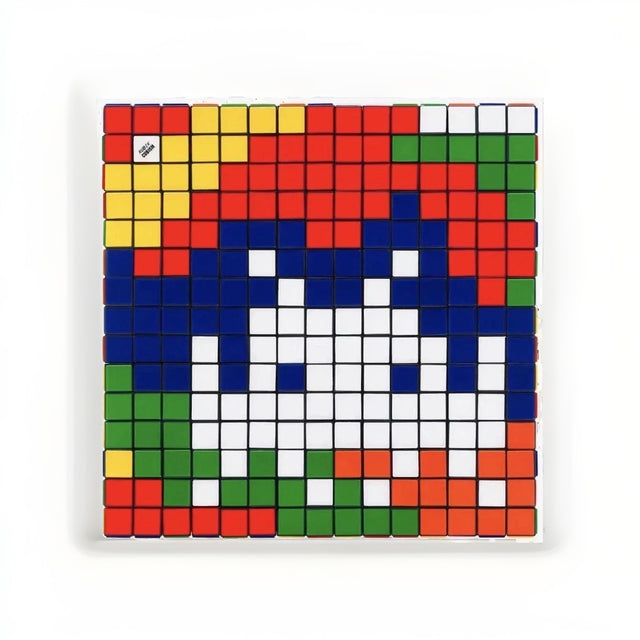
Invader Rubik Camouflage HENI Signed & Numbered 196/812 Giclee Panel 2023
$3,999.00 USD

Browse the collection for current listings.