To authenticate a Buzz Aldrin signed photo, submit it to one of the recognized third-party autograph authentication services — Beckett Authentication Services, JSA (James Spence Authentication), or PSA/DNA — and, for Apollo-era space material specifically, consider Zarelli Space Authentication, the specialist most collectors regard as the marquee opinion for astronaut autographs. These services compare your signature against large exemplar databases built from decades of Aldrin's documented signings, rule out autopen and secretarial signatures, and issue a certificate or letter you can verify online. Pair that third-party opinion with documented provenance — where the photo came from, ideally traceable to an official signing, reputable dealer, or established collection — and you have the two pillars every serious space collector relies on: expert verification plus a paper trail.
That is the short answer. The longer answer — why Buzz Aldrin material is actually one of the friendlier corners of the autograph world for new collectors, how each authentication service works, what non-genuine signatures you are ruling out, and how to build provenance that protects your investment for decades — is what the rest of this guide covers. At Gauntlet Gallery we handle authenticated space memorabilia regularly, and the good news we can share up front is this: authenticating a Buzz Aldrin photo is a solvable problem with a well-marked path.
Why Buzz Aldrin Autographs Are a Good Place to Start in Space Collecting
Buzz Aldrin, lunar module pilot of Apollo 11 and the second human being to walk on the Moon in July 1969, occupies a unique position in autograph collecting. Unlike some Apollo-era figures whose signatures are genuinely scarce, Aldrin signed at many official, organized signings over the decades — at autograph shows, space memorabilia events, book tours, and structured private signings. This is well documented and it matters enormously for authentication, for two reasons.
First, it means authentic examples are relatively available. A collector who wants a genuine Buzz Aldrin signed photo is not chasing a phantom; verified examples pass through the market regularly, and the major authentication services have examined thousands of them. Compare that with his crewmate Neil Armstrong, who famously stopped signing autographs in the mid-1990s after learning his signatures were being sold — Armstrong material is far scarcer, and the authentication stakes correspondingly higher. Aldrin's long, public signing career gives authenticators an unusually rich exemplar record spanning many years, ink types, and signing contexts.
Second, the prevalence of official signings means many Aldrin photos come with built-in provenance. Photos signed at organized events were often accompanied by event tickets, numbered stickers or holograms from the signing organizer, dated receipts, or witness photographs. When that paperwork survives with the photo, authentication becomes dramatically more straightforward. Even when it does not, the third-party services can still evaluate the signature itself on its merits.
None of this means every Aldrin signed photo on the market is genuine — popular astronauts attract forgers precisely because demand is strong. It means the tools for sorting genuine from not-genuine are mature, accessible, and reliable. Our space memorabilia authentication guide covers the category broadly; here we go deep on the Aldrin-specific workflow.
Understanding Buzz Aldrin's Signing History
Context is the authenticator's best friend, so it helps to understand the broad arc of Aldrin's signing career before you evaluate any individual photo.
The NASA years and the mail-request era
During and immediately after the Apollo program, astronauts received enormous volumes of mail requesting autographs. It is well documented that NASA and the astronaut office handled much of this correspondence with autopen machines — mechanical devices that reproduce a stored signature — and with secretarial signatures, where staff signed on the astronaut's behalf. A great many "astronaut signed" photos from this era that surface in family collections trace back to these mail requests. They are genuine period artifacts, but they are not hand-signed by the astronaut, and every major authentication service screens for them as a matter of routine. If your photo came from a relative's mail request in the early 1970s, do not assume the worst — but do treat third-party review as essential, because this is exactly the population where autopen examples concentrate.
The public signing decades
In the decades after leaving NASA, Aldrin — who legally adopted the name Buzz Aldrin, formalizing the childhood nickname — became one of the most publicly visible Apollo astronauts. He wrote books, appeared at space and autograph conventions, and participated in organized signings over many years. Photos signed in this era often carry inscriptions alongside the signature — a recipient's name, an "Apollo 11" notation, or similar — and may bear the holograms or numbered stickers of the companies that organized the signings. Authenticators know these signing programs well, and material traceable to them is generally the easiest to verify.
What this means for your photo
Because Aldrin signed across so many years and settings, his signature — like anyone's — shows natural variation over time. This is normal and expected; professional authenticators account for it by maintaining exemplars from across his career rather than comparing your photo against a single reference. It also means you should be cautious about internet folk wisdom claiming one specific letter shape "proves" authenticity or forgery. Signature evaluation is a holistic, comparative discipline best left to examiners with deep exemplar files. Your job as a collector is not to become a forensic document examiner; it is to get your photo in front of one, and to assemble the provenance that supports their opinion.
The Authentication Services That Matter for Space Material
For signed space memorabilia, the industry standard is third-party authentication from Beckett, JSA, or PSA/DNA, supplemented for Apollo-era material by Zarelli Space Authentication. These are the four names we work with at Gauntlet Gallery, and the four names you will see cited by major auction houses and established dealers throughout the space category.
| Service | What it is | Strength for a Buzz Aldrin photo | What you receive |
|---|---|---|---|
| Beckett Authentication Services (BAS) | Major third-party autograph authenticator across all categories | Broad exemplar databases, widely recognized by auction houses and marketplaces | Certificate or letter of authenticity with a verifiable certification number |
| JSA (James Spence Authentication) | Long-established autograph authentication firm | Deep experience with historical and celebrity signatures, including astronauts | Certification with online verification; letter options for significant pieces |
| PSA/DNA | Autograph arm of one of the largest collectibles authentication companies | Wide market acceptance; commonly required by major selling platforms | Certification number verifiable through the company's database |
| Zarelli Space Authentication | Specialist devoted specifically to space and astronaut autographs | The marquee specialist opinion for Apollo-era material; particularly focused on autopen and secretarial detection in astronaut signatures | Specialist letter of authenticity for space material |
A few practical notes on using these services well:
- Any one of the trio is sufficient for market acceptance. A Buzz Aldrin photo certified by Beckett, JSA, or PSA/DNA will be accepted by essentially every reputable marketplace, auction house, and dealer. You do not need all three.
- Zarelli adds specialist weight. For Apollo-era items, especially higher-value pieces or anything with a complicated history, the space-specialist opinion is the one advanced collectors ask about. Many serious pieces carry both a generalist certification and a Zarelli letter.
- Verify every certificate online. Each service maintains a public database where you can enter the certification number and confirm it matches the item described. A certificate that cannot be verified, or that describes a different item, is a red flag regardless of how official it looks. Our authentication glossary defines the certificate types and terms you will encounter.
- Pre-certified beats raw. When buying, a photo already certified by one of these services removes most of the risk before money changes hands. When selling or insuring, certification is what converts "family story" into "documented asset."
What You Are Ruling Out: The Four Categories of Non-Genuine Signatures
Authentication is partly a process of elimination. For astronaut material, the non-genuine population falls into four well-understood categories, and knowing them helps you understand what the services are actually checking.
1. Autopen signatures
The autopen is a machine that mechanically reproduces a stored signature pattern. NASA-era astronaut offices used them extensively for mail requests, so autopen "signatures" of Apollo astronauts, Aldrin included, exist in quantity. Because an autopen draws from a fixed template, examples from the same template are essentially identical to one another — a sameness no human hand produces. Professional authenticators maintain records of known autopen patterns and screen against them as a first step. This is a technical comparison best done by the services; the takeaway for you is simply that mail-era material needs professional review before you rely on it.
2. Secretarial signatures
Staff members sometimes signed photos on astronauts' behalf during the high-volume years. These are hand-signed, so they lack the mechanical sameness of autopens, but they are not the astronaut's hand. Detecting them is classic comparative signature analysis — again, the province of the professional services and their exemplar files.
3. Preprinted and reproduced signatures
Some photos carry a signature that is part of the printed image itself — a facsimile printed along with the photograph, common on publicity and giveaway items. Under magnification, a printed signature sits flat within the image with no ink on top of the surface, whereas a real signature is applied over the photographic emulsion and interacts with it. This is one check a careful owner can do at home with a loupe: examine whether the signature sits on the surface or in it. When in doubt, let the authenticators make the call.
4. Outright forgeries
Popular astronauts attract forgers, and forged Aldrin photos do circulate, typically accompanied by meaningless certificates from unknown "authentication" outfits. This is why the identity of the certifier matters as much as the existence of a certificate. A COA is only as good as the reputation and verifiability of the organization behind it. Stick to the recognized services above, and read our guide on how to spot problem space memorabilia for the broader warning signs — sellers who block authentication questions, certificates from entities with no track record, and prices dramatically below the verified market.
How to Authenticate Your Buzz Aldrin Photo, Step by Step
Here is the practical workflow we recommend, whether you inherited a photo, bought one raw, or are evaluating one before purchase.
- Document what you have, untouched. Photograph the item front and back in good light before doing anything else. Capture the signature, any inscriptions, any stickers or holograms, and any stamps or notations on the reverse. Do not clean, flatten, trim, or otherwise "improve" the photo — originality is value, and well-intentioned restoration destroys evidence.
- Assemble the story. Write down everything known about the photo's history: who acquired it, when, where, from whom, and any surviving paperwork — receipts, event tickets, signing-program certificates, correspondence, even a dated snapshot of the signing itself. Provenance does not replace authentication, but it powerfully supports it, and authenticators do consider credible documentation.
- Do the sensible home checks. With a loupe or macro photo, confirm the signature is actual ink on the surface rather than part of the printed image. Note the writing instrument and how the signature sits on the photo. You are not authenticating — you are triaging, and screening out obvious facsimiles before paying submission fees.
- Check any existing certificate. If the photo already carries a COA, identify the issuer and verify the certification number in the issuer's online database. A verified Beckett, JSA, or PSA/DNA certification that matches the item largely completes your job. An unverifiable certificate from an unknown issuer should be treated as decoration, not evidence.
- Submit to a recognized service. Choose Beckett, JSA, or PSA/DNA — all three publish submission instructions on their sites and accept mail-in submissions; many autograph shows also host on-site authentication booths where opinions can be rendered in person. Describe the item accurately and include copies (never originals) of your provenance documents.
- Consider the specialist layer. For a photo you believe is significant — an early signing, an unusual format, or a piece with Apollo-flown associations — a Zarelli Space Authentication letter adds the specialist endorsement that advanced space collectors look for. Our Apollo 11 authentication guide walks through when the extra layer earns its keep.
- File everything. When the certification comes back, store the certificate with your provenance file, record the certification number somewhere separate from the physical item, and photograph the certified item again. You have now converted an anecdote into a documented collectible.
Provenance: The Second Pillar
Third-party certification answers "is this signature genuine?" Provenance answers "where has this item been?" — and for long-term value, insurability, and eventual resale, you want both.
Strong provenance for a Buzz Aldrin signed photo typically includes some combination of the following, in roughly descending order of weight:
- Documentation tying the photo to a specific organized signing — a numbered hologram or sticker from the signing company, a dated receipt, or the event program.
- A photograph of the item being signed, or of the original owner with Aldrin at the event.
- An unbroken ownership chain through reputable dealers or established collections, with invoices at each step.
- Dated correspondence or shipping materials contemporaneous with acquisition.
- A credible written account from the original recipient, signed and dated.
Notice what is absent from this list: the seller's verbal assurance. Stories are where provenance starts, not where it ends. At Gauntlet Gallery, documented provenance is a core part of how we source — every piece in our space memorabilia collection comes with its authentication and history stated plainly, because we believe the paper trail is inseparable from the piece. When you buy anywhere, hold the seller to that same standard; a reputable dealer will welcome the question. The authentication FAQ covers the most common provenance questions we hear from collectors.
The Photo Itself Matters Too
Collectors sometimes focus so hard on the signature that they forget the object under it. Two points are worth your attention.
Format and image
Aldrin signed a wide range of photographic formats over the years: NASA lithographs (mass-produced presentation prints the agency distributed in quantity), commercial glossy prints of famous mission imagery, and later reprints produced for signings. All can carry a perfectly genuine signature. The distinction matters for value, not authenticity — a genuine signature on a vintage NASA lithograph and the same signature on a modern reprint are both authentic autographs, but the market treats the underlying objects differently. The iconic Apollo 11 imagery — including the famous visor portrait of Aldrin standing on the lunar surface — was reproduced across many formats and generations of printing, so identifying what generation of print you hold is a separate, worthwhile exercise. Our Apollo 11 buyer's guide covers the common formats collectors encounter.
Condition
Authentication services evaluate the signature; the market evaluates everything. Surface condition, corner wear, fading of the signature ink, and whether inscriptions are seen as additions or distractions all influence how a certified photo trades. When comparing pieces, compare like with like — same image, similar format, similar condition, same certification standard. For a structured view of how the space category trades, see our space memorabilia price guide and the market analyses on our Financial Insights hub. Compare like-for-like signed objects or artifacts with matching mission association, signer, condition, authentication and provenance; a category-wide rate or median mixes different objects.
The Gauntlet Gallery Approach
Our standard for signed space material is straightforward and worth adopting as your own baseline. We look for third-party certification from Beckett, JSA, or PSA/DNA — the industry-standard trio — with Zarelli Space Authentication as the marquee specialist layer for Apollo-era pieces. We insist on documented provenance and state it openly.
We take this approach because authentication, done right, is not an obstacle to collecting — it is what makes confident collecting possible. A certified, documented Buzz Aldrin photo is a liquid, insurable, transferable asset. An uncertified one is a question mark. The cost and effort of moving from the second category to the first is modest, and for a figure as historically significant as Aldrin, it is almost always effort well spent.
Caring for and Documenting Your Photo After Authentication
Once your photo is certified, protect both the object and its paperwork.
- Storage: Keep the photo in an archival, acid-free sleeve or mat. Avoid PVC plastics, rubber bands, paper clips, and adhesive of any kind touching the photo.
- Display: If framing, use UV-filtering glazing and archival, acid-free matting, and hang away from direct sunlight and humidity swings. Signature inks can fade under prolonged light exposure, and fading is irreversible.
- Never trim or mount permanently. Dry-mounting, trimming borders, or laminating destroys collector value even when it "looks nicer."
- Keep the certificate separate but linked. Store the COA and provenance file safely apart from the framed piece, with the certification number recorded in your inventory. If you ever sell, the complete file transfers with the photo — that continuity is part of the value you are building.
- Insure with documentation. Certification plus comparable-sales evidence is exactly what insurers and appraisers want to see. Update valuations periodically against recent verified sales rather than old purchase prices.
Good record-keeping is also a gift to the hobby: every well-documented photo that passes to the next collector with its full file intact strengthens the overall provenance fabric of the space category. The habits are simple; the compounding benefit is real. Our Collector's Hub gathers our care, documentation, and collecting resources in one place.
Buyer's Checklist: Evaluating a Buzz Aldrin Signed Photo Before You Buy
Screen any prospective purchase against this list. A piece that clears all of it is a piece you can buy with confidence.
- Certification from Beckett, JSA, or PSA/DNA — and for significant Apollo-era pieces, ideally a Zarelli Space Authentication letter as well.
- Certification number verified by you, personally, in the issuing service's online database, matching the item described.
- Provenance stated in writing: where the photo came from and how the seller acquired it.
- Clear, high-resolution images of the front, back, signature, and any stickers or holograms — provided without hesitation.
- The signature is actual ink on the surface, not a printed facsimile (relevant mainly for raw items).
- The photo format identified honestly — vintage lithograph, period glossy, or modern reprint.
- Condition described completely, including inscription details, fading, and surface wear.
- Price sanity-checked against recent verified sales of comparable certified examples, not against other asking prices.
- A seller who answers authentication questions openly. Reluctance to discuss authentication is itself an answer.
- Return terms stated in writing, including what happens if a recognized service later declines the signature.
If you are earlier in your collecting journey, our buyer's guides hub applies this same disciplined framework across every category we handle.
Frequently Asked Questions
Which authentication service is best for a Buzz Aldrin autograph?
Any of the industry-standard trio — Beckett, JSA, or PSA/DNA — is fully accepted by the market. For Apollo-era space material, Zarelli Space Authentication is the specialist many advanced collectors consider the marquee opinion, and significant pieces often carry both a generalist certification and a Zarelli letter. There is no wrong choice among the recognized names; the wrong choice is an unrecognized one.
Are Buzz Aldrin autographs rare?
Genuine examples are relatively available compared with many Apollo-era figures, because Aldrin participated in many official signings, shows, and book events over the decades. That availability is good news: it means collectors can be selective, insist on certification and provenance, and compare multiple examples before buying. Scarcity varies by format and era, and the market rewards well-documented pieces.
Could my vintage Aldrin photo be an autopen?
If the photo traces to a mail request from the NASA era, autopen or secretarial signing is a realistic possibility — astronaut offices are well documented to have used both for high-volume correspondence. Only professional comparison against known autopen patterns settles the question, so submit the photo to a recognized service before relying on it. Plenty of mail-era submissions do come back genuine.
Does an inscription make a signed photo worth less?
Inscriptions — a recipient's name or a mission notation — are common on photos from organized signings. Some collectors prefer clean signatures; others value inscriptions as evidence of a documented signing context. The market effect varies by piece, so compare recent verified sales of similar inscribed and uninscribed examples rather than assuming a penalty.
What if my photo already has a COA from a company I have never heard of?
Treat it as unproven. A certificate is only as strong as the organization behind it, and unknown issuers with no verifiable track record add no evidentiary weight. The constructive path is to disregard the mystery COA and submit the photo to Beckett, JSA, PSA/DNA, or Zarelli for a recognized opinion — the photo itself may well be genuine.
How should I store a signed photo before and after authentication?
Use an archival, acid-free sleeve, keep the photo away from sunlight, humidity, and PVC plastics, and never trim, laminate, or permanently mount it. Preserve every scrap of paperwork — receipts, event materials, prior certificates — because provenance documentation supports authentication and adds long-term value. After certification, store the certificate separately and record its number in your records.
Is it worth authenticating a photo I do not plan to sell?
Yes. Certification establishes what you own, supports insurance coverage, prevents heirs from unknowingly discarding or underselling a genuine piece, and settles the question while provenance details are still fresh and documentable. Authentication costs are modest relative to the certainty gained, and a documented piece is worth more to everyone who ever handles it — including you.
Shop Space memorabilia
Explore current pieces available from the gallery.
-
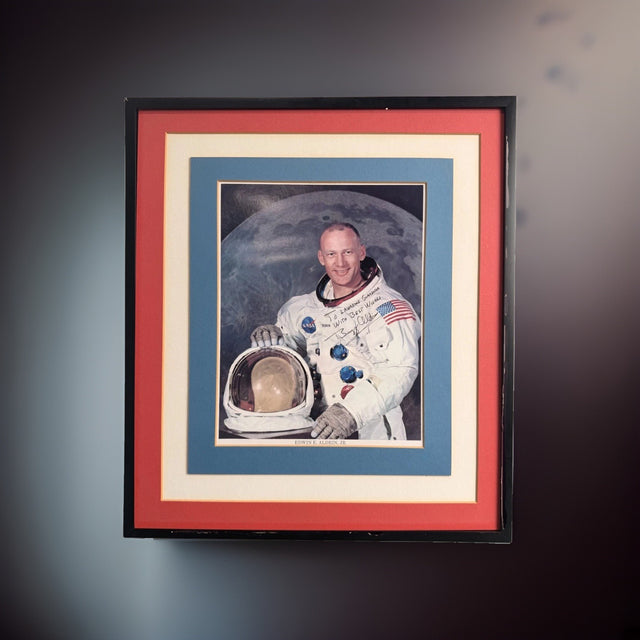
Buzz Aldrin Signed NASA 8x10 Color Photo Personalized Framed JSA LOA
$899.00 USD
-
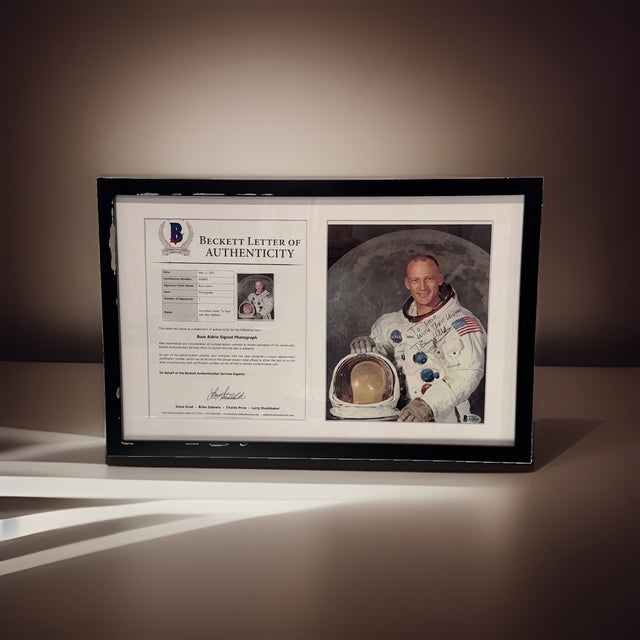
Buzz Aldrin Signed Inscribed Astronaut Photo Framed Beckett LOA A42843
$999.00 USD
-
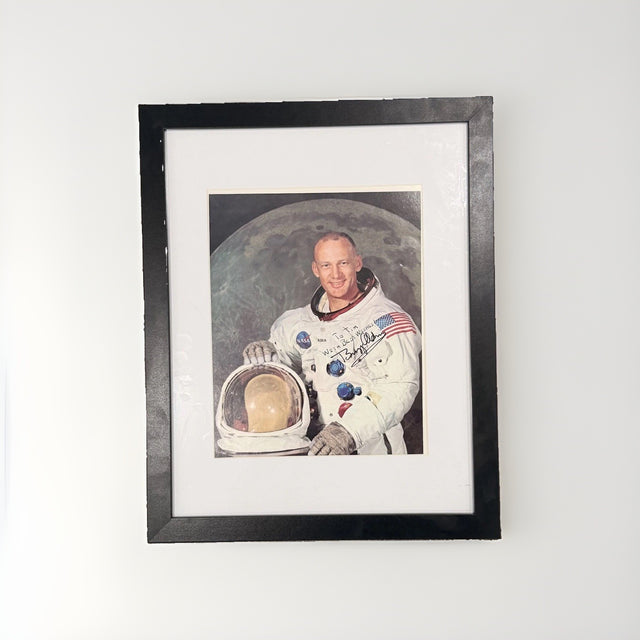
Buzz Aldrin Signed NASA Astronaut Portrait Inscribed To Tim Framed
$850.00 USD
-
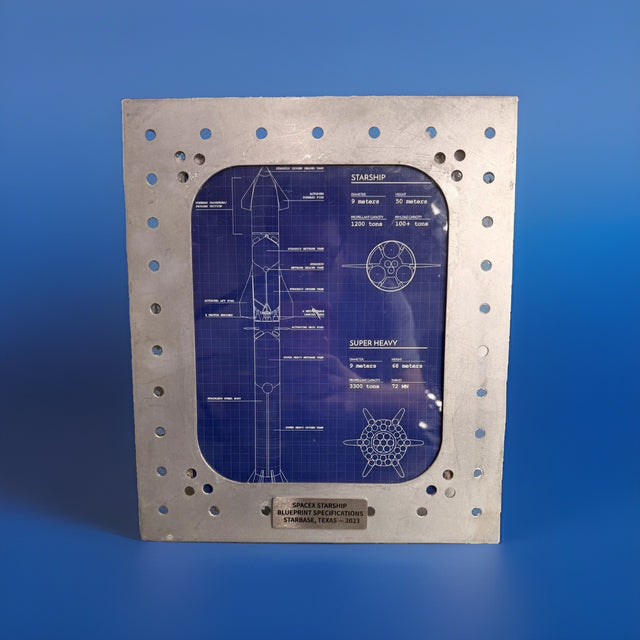
SpaceX Starship Super Heavy Blueprint Metal Display Panel Spacecraft Frame
$59.00 USD
-
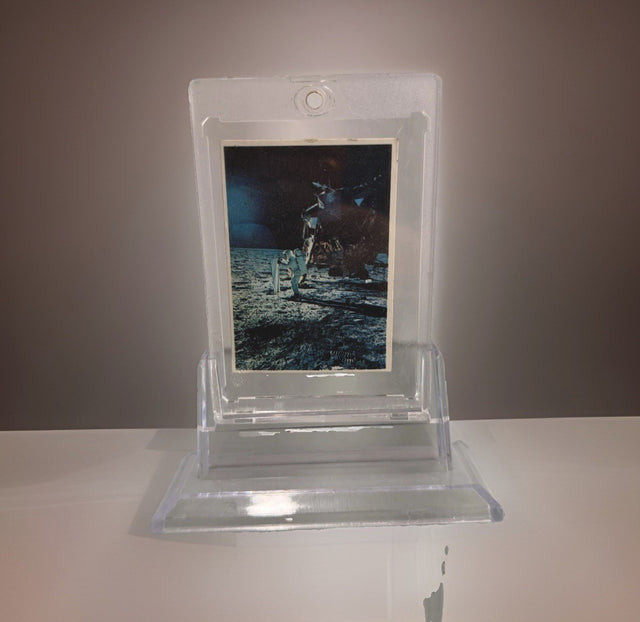
1969 Space Candy Buzz Aldrin Apollo 11 On The Moon Card #19 Taylor-Reed Display
$59.00 USD
-
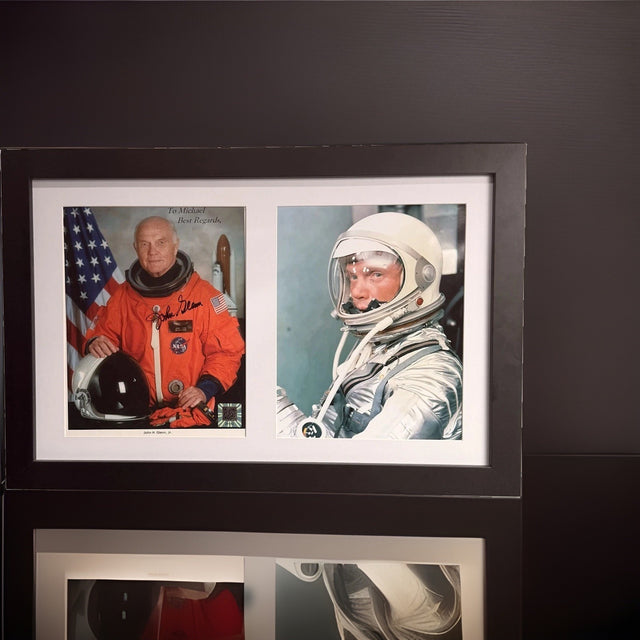
John Glenn Signed Autographed NASA Photo Display JSA Mercury Astronaut Framed
$199.00 USD
Browse the collection for current listings.