DEATH NYC luxury-brand mashup prints — the works that collide high-fashion iconography like monogram canvases, couture shopping bags, and designer motifs with pop characters and art-history references — are the artist's signature theme and, in our experience, the most instantly recognizable and most frequently collected corner of the catalog. Compared with DEATH NYC's other recurring themes — anime and manga tributes, fine-art remixes, music and celebrity portraits, and comic-strip characters — the luxury mashups tend to enjoy the broadest crossover demand because they speak simultaneously to street-art collectors, fashion enthusiasts, and pop-culture fans. Other themes trade on deeper niche loyalty: anime mashups draw devoted character collectors, while fine-art remixes appeal to buyers who love the dialogue with Hokusai or the old masters. The "best" theme is ultimately the one that matches your collecting goals — and every theme shares the same authentication standard: a COA signed by the artist plus the metal official gold seal affixed to each piece.
That is the short answer. The long answer is more interesting, because DEATH NYC's themes are not just decorative categories — they map to genuinely different collector audiences, different display personalities, and different long-term collecting strategies. In this guide, our gallery breaks down how the luxury-brand mashups actually compare with the rest of the catalog, theme by theme, and how to choose intelligently among them.
Who Is DEATH NYC, and Why Do Themes Matter So Much?
DEATH NYC is a New York-based pop and street artist known for a remarkably prolific output of limited-edition prints. The artist's working method is essentially remix culture in print form: take familiar visual icons — a luxury monogram, a beloved cartoon character, a canonical artwork, a celebrity portrait — and collide them into a single, punchy composition, typically finished with the artist's distinctive "DEATH" branding and signature. Releases are issued in small, numbered editions, signed and dated by the artist, and accompanied by documentation from the studio.
Because the output is so prolific, the catalog naturally organizes itself into recurring themes. Collectors quickly discover that they are not really shopping "DEATH NYC" as a monolith — they are shopping within thematic families, each with its own visual language and its own audience:
- Luxury-brand mashups — designer monograms, fashion-house motifs, couture shopping bags, and high-fashion visual codes remixed with pop characters and cultural icons.
- Anime and manga tributes — compositions built around iconic Japanese animation and manga characters, often paired with fashion or street-culture elements.
- Fine-art remixes — riffs on canonical art history, most famously Hokusai's Great Wave, along with nods to old masters and modern-art landmarks.
- Comic-strip and cartoon characters — Western comic icons reimagined through a street-art lens.
- Music and celebrity portraits — musicians, cultural figures, and pop icons rendered in the artist's graphic style.
Understanding these families matters for three practical reasons. First, they display differently — a luxury mashup reads very differently on a wall than a serene Great Wave remix. Second, they trade differently — demand depth varies meaningfully by theme, which affects how easy a print is to buy well and to sell later. Third, they collect differently — some themes reward focused sets, while others reward selective cherry-picking. Our DEATH NYC buyer's guide covers the fundamentals of the catalog; this article goes deeper on the thematic comparison itself.
What Defines the Luxury-Brand Mashup Theme
The luxury mashups are the works most people picture when they hear the artist's name. The formula is deceptively simple: take the visual grammar of high fashion — a monogram pattern, a quilted texture, a designer shopping bag, a recognizable brand palette — and puncture its exclusivity by pairing it with something playful, irreverent, or unexpectedly tender. A cartoon character lounging against a monogram backdrop. A pop icon carrying couture. Art history dressed in fashion-house colors.
This is a well-established tradition in contemporary art. Appropriation of commercial and luxury iconography runs from Warhol's consumer products through the street-art generation's remixing of corporate logos. DEATH NYC's contribution is speed and volume: the artist treats luxury branding as a living vocabulary, responding to fashion culture almost in real time through a steady cadence of small-edition releases.
Several qualities distinguish the luxury mashups within the catalog:
- Instant legibility. Luxury visual codes are among the most recognized images on earth. A guest who has never heard of DEATH NYC will still immediately "get" a luxury mashup on your wall. No other theme in the catalog communicates this quickly.
- Crossover audience. These prints appeal simultaneously to street-art collectors, fashion and sneaker-culture enthusiasts, and interior designers seeking statement pieces. That breadth of demand is the theme's defining market characteristic.
- Cultural commentary. The best luxury mashups are not just decoration — they are jokes, critiques, and love letters about consumer desire, aspiration, and status. The tension between "high" luxury and "low" pop is the engine of the work.
- Fashion-cycle energy. Because the theme rides fashion culture, interest in specific motifs can ebb and flow with the broader cultural conversation around the brands referenced — a dynamic the other themes largely avoid.
The Other Themes, One by One
Anime and Manga Tributes
The anime family is arguably the luxury mashups' strongest internal competitor. These prints channel the enormous global affection for Japanese animation and manga characters, often layering fashion elements into the composition so that the two themes blur — many of the catalog's most beloved works are simultaneously anime tributes and luxury mashups.
Compared with the pure luxury theme, anime works trade on character loyalty rather than brand recognition. An anime collector often wants a specific character, and wants it badly — which creates concentrated, passionate demand for particular images rather than broad demand across the theme. For sellers, this means the right anime print can find an eager buyer very quickly; for buyers, it means the most iconic character images are the ones that get competed over. Anime-themed works also skew toward a younger, globally distributed collector base, which we view as a structural positive for long-term interest in the theme.
Fine-Art Remixes
The fine-art remixes — above all the many variations riffing on Hokusai's Great Wave off Kanagawa — are the catalog's most "gallery-friendly" theme. They photograph beautifully, they display comfortably alongside traditional art, and they give collectors a conversation piece that bridges street art and art history. Where the luxury mashups are loud, the fine-art remixes are witty in a quieter register: the joke is the anachronism, the beloved masterpiece invaded by modern pop culture.
Demand for this theme is steady rather than explosive. These are the prints that appeal to collectors who might not otherwise buy street art at all — a meaningful expansion of the potential audience, but one that expresses itself as consistent interest rather than bidding frenzies. If your collecting goal is a wall that feels curated and art-literate, the fine-art remixes are frequently the right entry point.
Comic-Strip and Cartoon Characters
Western cartoon and comic-strip characters form another durable family. The emotional register here is nostalgia — these images tap childhood memory in a way the luxury works do not. Character-driven prints in this family behave much like the anime works: demand concentrates on the most iconic characters and the most charming compositions, and collectors often pursue them alongside other character-based collectibles such as designer art figurines. The overlap between DEATH NYC character prints and the vinyl-figure collecting world is real, and it broadens the buyer pool for the best images in this theme.
Music and Celebrity Portraits
The music and celebrity works trade on fandom. A portrait of a legendary musician or cultural icon reaches an audience that may care more about the subject than the artist — record collectors, film fans, and memorabilia buyers who arrive from outside the art market entirely. This gives the theme unusually wide but shallow demand: many potential buyers, each attached to a specific subject. As with music memorabilia generally, the strength of a specific piece tracks the enduring cultural weight of the person depicted. Collectors who already collect in adjacent categories — say, signed music memorabilia — often find these prints a natural, affordable-relative-to-category complement to their existing collections.
Theme-by-Theme Comparison Table
Compare the exact image, edition, medium and presentation with dated completed sales, distinguishing hand-sprayed originals from editioned prints. Future resale value is uncertain.
| Theme | Primary audience | Demand profile | Display personality | Best suited to |
|---|---|---|---|---|
| Luxury-brand mashups | Street-art + fashion + design crossover | Broadest and deepest; the signature theme | Bold, statement-making, instantly legible | First purchases; high-impact walls; broad resale audience |
| Anime / manga | Character collectors, younger global buyers | Concentrated and passionate on iconic characters | Playful, colorful, culture-fluent | Character-focused collections; crossover with figure collecting |
| Fine-art remixes | Traditional art buyers entering street art | Steady, consistent, less volatile | Sophisticated, gallery-friendly | Curated interiors; collectors bridging genres |
| Comic / cartoon characters | Nostalgia buyers, toy and figure collectors | Concentrated on the most iconic characters | Warm, nostalgic, approachable | Personal-connection purchases; character sets |
| Music / celebrity | Fans and memorabilia collectors | Wide but subject-dependent | Iconic, portrait-driven | Fandom-driven collecting; memorabilia crossover |
Two caveats belong alongside any table like this. First, the themes overlap constantly — a huge share of the catalog's most desirable prints are hybrids, an anime character on a luxury backdrop or a fine-art remix carrying a designer bag, and hybrids often capture demand from both parent themes at once. Second, within every theme, the specific image matters far more than the category.
How the Themes Compare on Market Behavior
We deliberately avoid quoting price points in an article like this, because the DEATH NYC market moves with releases, seasons, and the broader print market. What we can describe with confidence is structure — the shape of demand we see when we run theme-level queries across verified sales in our comps database.
Liquidity: how quickly a print finds its buyer
Luxury mashups generally enjoy the smoothest liquidity because the buyer pool is widest. When a well-chosen luxury piece comes to market at a sensible level, multiple collector types are candidates to buy it. Anime and cartoon-character prints can be even faster for the most iconic characters — but slower for secondary characters, because the demand is concentrated rather than distributed. Fine-art remixes move at a steadier, less spiky pace. Celebrity works depend heavily on the subject's cultural moment.
Volatility: how much sentiment swings
The luxury theme carries a modest amount of fashion-cycle exposure — enthusiasm for specific motifs tracks the cultural conversation around fashion itself. Character themes carry franchise exposure: anniversaries, films, and revivals of a character's franchise can lift interest in related prints. Fine-art remixes are the most insulated from these cycles, since Hokusai is not subject to seasonal reappraisal. None of this rises to the level of a trading thesis — these are art purchases first — but collectors comparing themes deserve to know the dynamics. For a broader framework on reading print-market data responsibly, see our Financial Insights hub and the DEATH NYC price guide, and always compare recent verified sales for the specific image you are considering rather than relying on theme-level generalizations.
Entry point: where new collectors start
DEATH NYC occupies one of the friendliest entry points in the whole limited-edition print world: small signed editions from a globally recognized name, at accessible levels relative to the blue-chip street artists the work converses with. That is true across all themes. In practice, we see first-time buyers gravitate to luxury mashups (maximum recognizability) and anime hybrids (maximum personal attachment), while experienced print collectors adding a DEATH NYC to a broader wall often choose a fine-art remix for how gracefully it hangs alongside other work. Browse the current selection in our DEATH NYC collection to see how the themes read side by side.
Authentication: The Same Standard Across Every Theme
Here is one comparison where the themes do not differ, and it is the most important one. Every authentic DEATH NYC print — luxury mashup, anime tribute, fine-art remix, or portrait — should carry the same documentation: a certificate of authenticity signed by the artist, together with the metal official gold seal affixed to each piece. This pairing is the backbone of confidence in the category, and it is refreshingly straightforward compared with artists whose authentication landscape is fragmented or contested.
Because the artist's editions are small and the releases frequent, the practical authentication questions for a buyer are less about connoisseurship and more about discipline:
- Confirm the COA is present and signed, and that it corresponds to the actual print in hand — title, edition details, and date should agree with the work itself.
- Confirm the gold seal. The metal official gold seal affixed to the piece is a physical, tactile element — verify it is actually there, not merely pictured.
- Check the signature, numbering, and date on the print against the edition documentation. When in doubt about an edition detail, check the documentation rather than assuming.
- Buy from sellers who document provenance. A dealer who can show you where the piece came from, alongside intact COA and seal, removes nearly all of the category's practical risk.
For a full walkthrough of what to examine, our DEATH NYC authentication guide covers each element in detail, and our companion piece on how to spot a fake DEATH NYC addresses the specific shortcuts that unauthorized copies tend to take. The encouraging headline: because the legitimate documentation standard is clear and consistent, a careful buyer armed with a checklist is very well protected in this category.
The Gauntlet Gallery Perspective
Our gallery approaches DEATH NYC the same way we approach every artist we handle: authenticated sourcing first, data second, taste always. Every DEATH NYC print we offer comes with its artist-signed COA and gold seal verified, with documented provenance from acquisition to sale.
That data perspective shapes how we advise collectors comparing themes:
- Buy the image, not the category. Theme-level trends are real but secondary. The specific composition's strength — its wit, balance, and iconography — is what drives long-term desirability.
- Hybrids are underrated. Prints that fuse two themes (character + luxury, fine art + fashion) frequently enjoy the widest sustained interest because they inherit both audiences.
- Condition and documentation compound. In a category with small editions and active trading, the copy with pristine condition, intact seal, signed COA, and clean provenance is always the copy that finds the next buyer easily.
- Let comps discipline enthusiasm. Before paying up for any theme, compare recent verified sales of the same or closely similar images. Our team does this for every acquisition, and collectors can explore the same thinking through our buyer's guides hub.
Care, Provenance, and Records: Protecting Whichever Theme You Choose
DEATH NYC prints are works on paper, and the collecting disciplines are identical regardless of theme:
- Framing: use UV-filtering glazing and acid-free, archival mounting. Never dry-mount a limited-edition print; the work should remain reversible.
- Light: keep prints out of direct sunlight. Vivid inks are precisely what you are protecting, especially on the color-saturated luxury and anime works.
- Environment: stable, moderate humidity and temperature; avoid bathrooms, kitchens, and exterior walls prone to condensation.
- The COA and seal are part of the asset. Store the certificate safely, photograph the seal and signature, and keep purchase records together. When you eventually sell, the completeness of this package materially affects buyer confidence.
- Provenance file: keep the invoice, the seller's identity, and any correspondence. A print with a clean, documented chain of ownership is simply worth more to the next careful buyer — a principle that holds across every category our gallery handles.
New collectors sometimes underestimate how much of "collecting well" is recordkeeping. Our Collector's Hub gathers our best guidance on building and maintaining a collection, and the collector glossary defines the edition and documentation terms you will encounter along the way.
Building a Collection Across Themes
Once collectors own two or three DEATH NYC prints, a strategic question emerges: specialize in one theme, or curate across several? Both approaches work; they just produce different collections and different experiences.
The specialist approach
Specialists pick one thematic family and go deep. A wall of luxury mashups reads as a coherent statement about fashion and consumer culture; a run of anime hybrids becomes a character gallery with real emotional throughline; a group of fine-art remixes turns into a witty conversation with art history. Specializing has practical advantages, too. You develop genuine connoisseurship within your lane — you learn which compositions are strongest, how condition typically presents, and what recent verified sales look like for your corner of the catalog. When a strong example surfaces, you recognize it faster than a generalist would. The trade-off is concentration: your collection's fortunes track a single theme's audience.
The curator approach
Curators buy the single best image they can find in each theme — one definitive luxury mashup, one iconic character piece, one fine-art remix — assembling a survey of the artist's range rather than a deep dive into one register. This produces a more varied wall and spreads thematic exposure naturally. It also mirrors how our gallery thinks about inventory: we would rather hold one excellent example from each family than five ordinary examples from one. The trade-off is that breadth without discipline can drift into accumulation; the curator approach only works when every individual selection would justify itself alone.
Either way, sequence deliberately
Our practical advice for both camps is the same. Buy your first print for love, your second for balance, and every one after that with comps in hand. Revisit the catalog's hybrids often, since they let a specialist stretch without leaving their lane and let a curator cover two themes with one wall slot. And keep your documentation file growing with the collection — a set of prints with uniformly complete COAs, seals, and provenance records is worth more than the same prints assembled carelessly, both to you and to whoever collects them next.
Buying Checklist: Choosing Between Themes
- Define your goal. Statement wall? Choose a luxury mashup. Personal attachment? Follow your character. Bridging a traditional collection? Start with a fine-art remix.
- Shortlist images, not themes. Pull three to five specific prints you love, across themes if necessary, and compare them as individual works.
- Verify the documentation package: artist-signed COA, metal gold seal affixed to the piece, signature, numbering, and date consistent with the edition documentation.
- Check condition honestly: corners, edges, surface, and any handling marks. Works on paper reward strictness here.
- Run the comps. Compare recent verified sales for the same image or its closest siblings before agreeing on a level — our price guide explains how to read them.
- Buy from a documented source. Authenticated sourcing with provenance is the single biggest risk-reducer in this category.
- Plan the framing before the print arrives. Archival materials from day one; the cost is small relative to what it protects.
Frequently Asked Questions
Are luxury-brand mashups the most collected DEATH NYC theme?
In our experience, yes — they are the artist's signature and enjoy the broadest crossover demand, drawing street-art collectors, fashion enthusiasts, and design-minded buyers at once. But "most collected" does not automatically mean "best for you." Character themes inspire deeper devotion among their fans, and fine-art remixes attract collectors the luxury works never reach.
Do all DEATH NYC themes carry the same authentication?
Yes. Regardless of theme, an authentic print should come with a certificate of authenticity signed by the artist and the metal official gold seal affixed to the piece, alongside the signature, numbering, and dating on the work itself. The standard does not vary by subject matter, which makes verification pleasantly consistent across the catalog.
Is one theme a better long-term hold than another?
No theme carries a guarantee, and we advise against buying any art print purely as an investment. Structurally, luxury mashups have the widest audience, character works the most passionate one, and fine-art remixes the steadiest one. The strength of the specific image, its condition, and its documentation matter more than the theme label. Compare recent verified sales before any significant purchase.
What about the hybrid prints that mix themes?
Hybrids — an anime character against a designer monogram, a Great Wave remix carrying couture — are among the most sought-after works in the catalog precisely because they inherit two audiences at once. When a hybrid image is well composed, it often represents the best of both thematic worlds, and we frequently steer first-time buyers toward them.
Where should a first-time DEATH NYC buyer start?
Start with the image you genuinely love, verify the full documentation package, and buy from a source that documents provenance. Read our buyer's guide and authentication guide first, browse the current collection to compare themes side by side, and check recent verified sales for the specific print before committing.
Shop Death NYC
Explore current pieces available from the gallery.
-
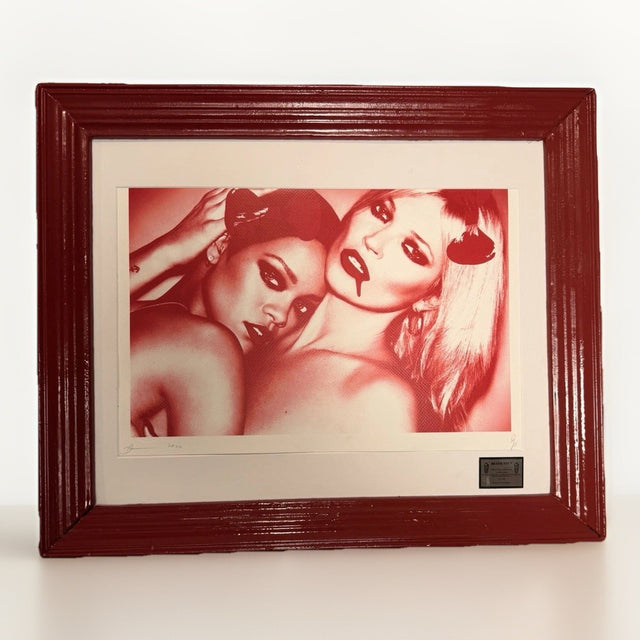
Death NYC — Kate Moss Rihanna Red Drip 2020 A/P Artist Proof Framed
$91.88 USD
-
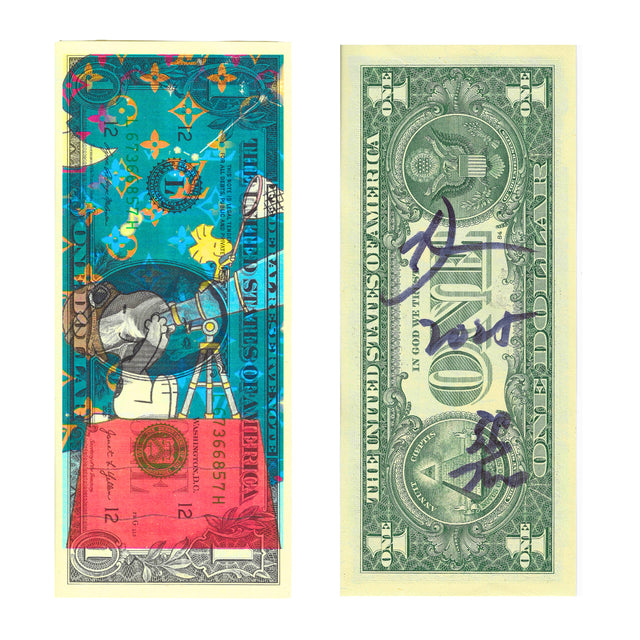
Death NYC Snoopy Woodstock Telescope LV Dollar Bill Art Signed Numbered COA
$55.00 USD
-
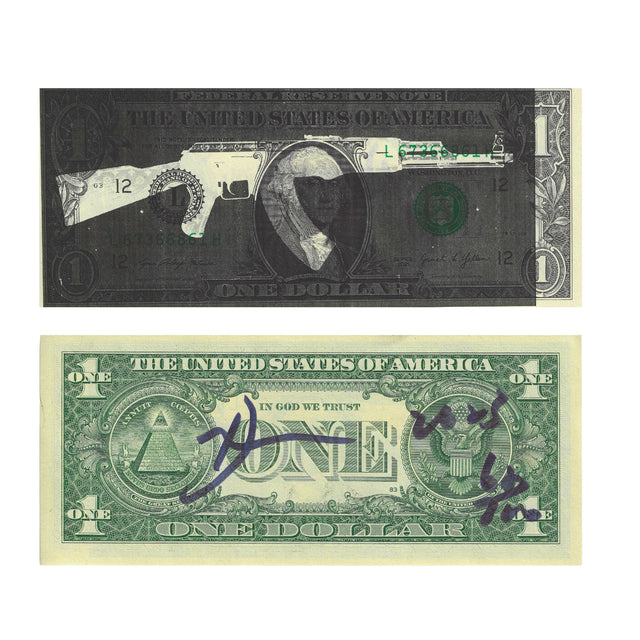
Death NYC Gun Dollar Bill Art Signed Numbered COA Black White Pop Street Art
$50.00 USD
-
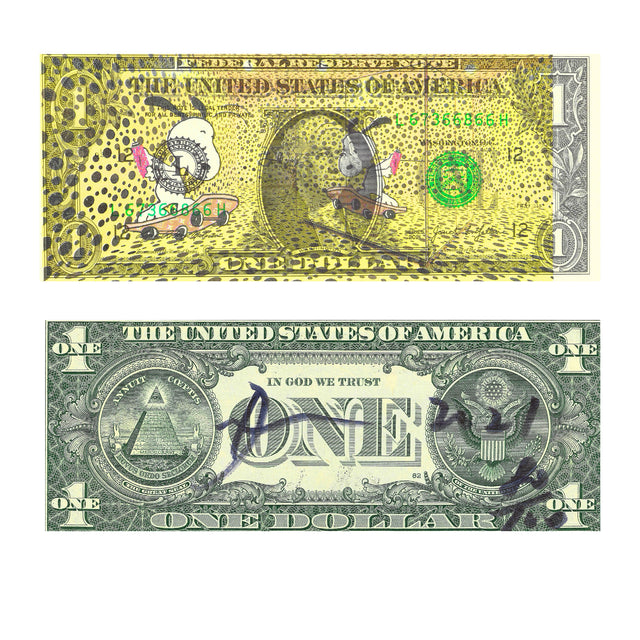
Death NYC Snoopy Skateboard Dollar Bill Art Signed Numbered COA Pop Street Art
$75.00 USD
-
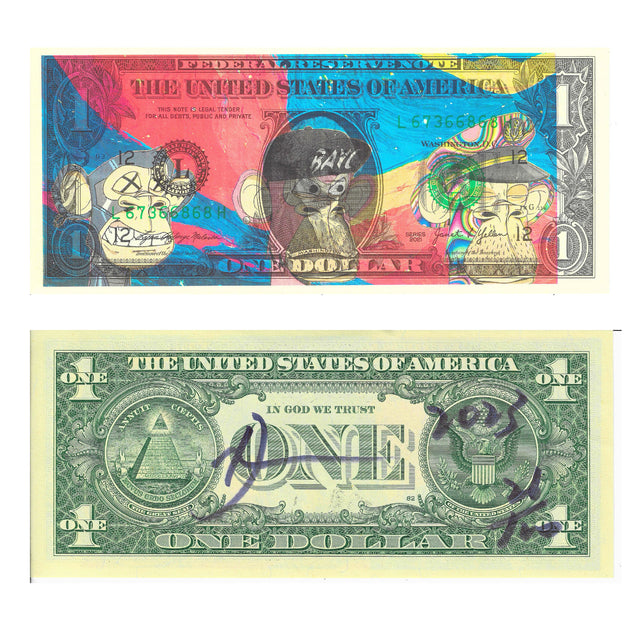
Death NYC Bored Ape Dollar Bill Art Signed Numbered COA Pop Street Art
$40.00 USD
-
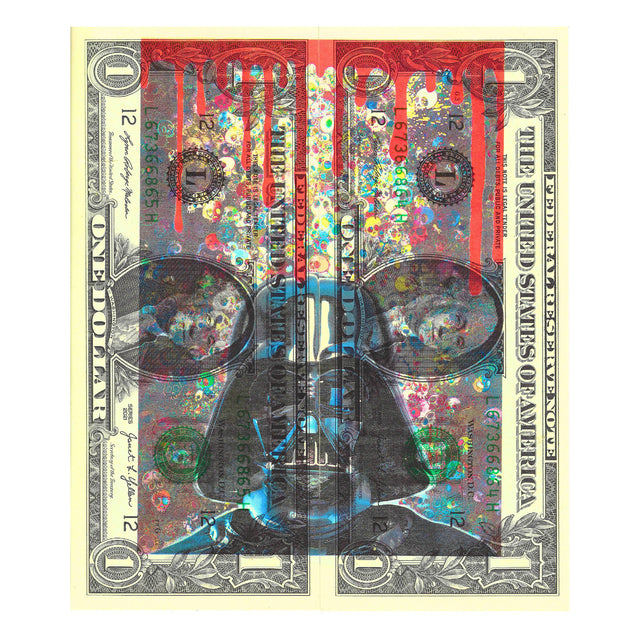
Death NYC Darth Vader Star Wars Dollar Bill Art Signed Two Bills COA Unframed
$100.00 USD
Browse the collection for current listings.