Yes, it can be safe to buy a KAWS figure on eBay — but only if you do the verification work yourself. eBay is one of the largest secondary markets for KAWS vinyl figures, and the majority of established sellers there are legitimate. The risk is that the platform also hosts counterfeit listings, and the burden of telling them apart falls almost entirely on the buyer. A safe eBay purchase means vetting the seller's history, demanding detailed photos of the figure, its markings, and its sealed packaging, comparing the price against recent verified sales, and confirming the return policy before you bid. If you would rather not carry that burden alone, buying from an authenticated dealer who documents provenance shifts the verification work — and the accountability — onto the seller.
That is the short answer. The long answer is worth your time, because the difference between a confident eBay purchase and a costly mistake usually comes down to ten minutes of disciplined checking that most buyers skip. In this guide, we will walk through how the KAWS secondary market actually works, what makes eBay both the most liquid and the most demanding place to buy, exactly what to check before you commit, how to sanity-check a price, and what your alternatives look like. Compare the exact KAWS release, colorway, pose, edition and condition using dated completed sales. Broad archive totals and another edition’s performance do not establish an item’s resale value.
Why KAWS figures attract both collectors and counterfeiters
KAWS — the studio name of American artist Brian Donnelly — occupies a rare position in contemporary art. His work bridges street art, fine art, and collectible design, and his vinyl figures made that bridge physical: museum-grade sculptural ideas produced as editioned objects that a broad audience could actually own. Since the late 1990s, KAWS figures have been released through official channels and select retail partners, often selling out almost instantly and moving straight to the secondary market at a premium.
That combination — enormous demand, limited official supply, and a resale market willing to pay multiples of retail — is precisely the environment where counterfeiters thrive. Fake KAWS figures have become progressively more sophisticated over the years. Early fakes were easy to spot: wrong colors, sloppy paint, flimsy boxes. Modern counterfeits can be convincing at a glance, which is why glance-level buying is the single biggest mistake an eBay bidder can make.
It is worth stating clearly: this is not a reason to avoid collecting KAWS. It is a reason to collect with a method. Every mature collecting category — watches, sports cards, rare sneakers, fine prints — has a counterfeit problem proportional to its popularity, and every mature category has developed reliable verification habits in response. The KAWS market is no different. Collectors who learn the verification habits buy confidently on eBay every day. Our KAWS buyer's guide covers the collecting fundamentals in depth if you are earlier in that journey.
What "safe" actually means on eBay
When collectors ask whether eBay is safe, they are usually compressing three separate questions into one:
- Will I receive the item at all? On this front, eBay is genuinely strong. Payment protections and eBay's money-back guarantee framework mean outright non-delivery scams are rare and usually recoverable. Read the current terms of buyer protection directly on eBay before you rely on them, since programs and coverage evolve.
- Will the item be authentic? This is the real question, and here the platform can only help you so much. eBay hosts millions of sellers; it cannot physically inspect every vinyl figure listed. Some categories on eBay benefit from authentication programs, but you should never assume a specific listing is covered — check the listing itself, and treat authentication as your job unless the listing explicitly says otherwise.
- Will the item match the description and condition claims? Condition disputes — undisclosed box damage, sun-fading, missing accessories, opened items sold as sealed — are far more common than outright fakes, and they are where vague listings hurt buyers most.
A "safe" eBay purchase is one where you have satisfied yourself on all three questions before paying, not one where you hope the platform will make you whole afterward. Dispute processes exist and they work, but they cost time, and they resolve transactions — they do not un-buy you a bad experience.
Vetting the seller: your first and best filter
Before you look closely at the figure, look closely at the person selling it. Seller vetting eliminates most risk before you have spent a minute studying paint applications.
Feedback quality, not just quantity
A high feedback score is a starting point, not a conclusion. What matters is the composition of that feedback:
- Category relevance. A seller with years of positive feedback selling designer collectibles, art toys, and prints is a fundamentally different risk profile than a seller with thousands of transactions in unrelated categories who suddenly lists a sought-after KAWS figure. Counterfeit operations frequently piggyback on accounts with generic feedback histories.
- Recent negatives and neutrals. Read them. A single unreasonable buyer is noise; repeated complaints about authenticity, condition misrepresentation, or slow shipping is signal.
- Account age. Brand-new accounts listing high-demand figures at attractive prices deserve heightened scrutiny. Legitimate new sellers exist, but the burden of proof rises.
The seller's other listings
Click through to the seller's store. A specialist who lists a coherent collection — figures, prints, related artists, consistent photography — reads very differently from an account listing one hyped figure among phone cases. Also note quantity: if a seller has multiple units of a figure that was difficult to obtain at release, ask yourself how. Sometimes the answer is legitimate (a reseller who hit multiple drops); sometimes it is not. Quantity available is a data point, not a verdict, but it should prompt questions.
Communication before commitment
Message the seller before bidding. Ask where the figure was acquired, whether the original receipt or order confirmation is available, and whether they will provide additional photos of specific areas. A legitimate seller answers these questions easily, because a legitimate seller has the answers. Evasive, defensive, or copy-paste responses tell you what you need to know. This single habit — asking one provenance question before you buy — filters out a remarkable share of problem listings.
Reading the listing: photos, packaging, and description
Once the seller passes your filter, the listing itself becomes the evidence file. Here is what a trustworthy KAWS figure listing should give you, and what to request if it does not.
The photos you should insist on
- Multiple angles of the actual figure — front, back, sides, and base. Stock photos or images lifted from official release announcements are an immediate red flag; you are buying a specific object, and you deserve photographs of that specific object.
- Close-ups of markings. Authentic production figures carry manufacturer and copyright markings, typically on the underside or base. You want sharp, well-lit photos of these markings so you can compare them against known-genuine reference examples.
- The complete packaging. The box matters enormously in this category — its printing quality, construction, and seals are part of the authentication picture and a major component of collector value. Ask for every face of the box, the interior tray if opened, and close-ups of any seals or stickers. Our KAWS packaging guide walks through what original packaging looks like across release types and why collectors scrutinize it so heavily.
- Condition-specific shots. Corners, edges, and surfaces where wear shows first. If the listing claims "mint," the photos should prove it.
Sealed versus opened — and what each demands
Sealed figures command a premium and simplify condition assessment, but sealed also means you cannot inspect the figure itself before purchase, which places even more weight on packaging verification and seller trust. Opened figures let you (or the seller's camera) examine the object directly — paint quality, joint fit, markings — but introduce condition questions and the possibility of swapped contents. Neither is inherently safer; each shifts where your scrutiny goes. For sealed purchases, packaging and provenance carry the load. For opened purchases, detailed figure photography carries it.
Description red flags — and green flags
Be cautious with listings that hedge on authenticity: phrases along the lines of "purchased as authentic," "no returns, sold as-is," or careful wording that describes the figure's appearance without ever asserting what it is. Sellers who are confident in an item's authenticity say so plainly and accept returns. Conversely, green flags include: the seller stating where and when the piece was acquired, original receipts or order confirmations mentioned in the listing, clear return terms, and language that demonstrates the seller actually knows the release they are selling.
For a deeper treatment of the physical inspection side — what to examine on the figure and box once it is in hand — see our dedicated guide on how to spot a fake KAWS. We deliberately keep that material in one place and keep this article focused on the buying process itself.
Price sanity checks: the market is your lie detector
Price is the most underused authentication tool on eBay. Counterfeit listings survive because buyers want to believe in bargains. The corrective is simple: never evaluate a price in isolation.
Before bidding, establish what the figure has actually been selling for. Use eBay's own sold-listings filter to see completed sales rather than asking prices — asking prices tell you what sellers hope, sold prices tell you what buyers paid. Look at multiple recent sales, note the spread, and pay attention to whether the high-priced sales were sealed examples with documentation while the low outliers were opened, damaged, or thinly documented. Our KAWS price guide and Financial Insights hub explain how we think about comparable sales and market context for this category.
Then apply the discount test. If a figure consistently trades in a certain range and a listing offers it dramatically below that range, there is a reason — and it is rarely a generous seller. Legitimate below-market sales happen (estate liquidations, sellers who want speed over price), but they cluster among established sellers with documented items, not among new accounts with stock photos. A deep discount plus any other red flag is a walk-away signal. You will never regret the bargain you skipped; collectors remember the fake they bought for decades.
Comparing your options: eBay versus the alternatives
eBay is one channel among several, and the right choice depends on what you are optimizing for. Here is an honest comparison from a dealer who sells across channels ourselves:
| Channel | Strengths | Trade-offs | Who carries authentication burden |
|---|---|---|---|
| eBay (general listings) | Largest selection, competitive prices, buyer-protection framework, sold-price transparency | Authentication is largely on you; listing quality varies widely; condition disputes possible | Buyer |
| Established eBay specialist sellers | Category expertise, consistent photography, track record you can audit via feedback | Smaller inventories; premiums over anonymous listings | Shared |
| Authenticated dealer / gallery | Verified sourcing, documented provenance, certificates, accountability, curated condition standards | Narrower selection than an open marketplace; dealer margin in the price | Seller |
| Auction houses | Vetted consignments, condition reports, provenance research | Buyer's premiums, sale-date scheduling, less flexibility | Shared (review condition reports carefully) |
| Peer-to-peer (forums, social media) | Sometimes the best prices; direct collector relationships | Minimal structural protection; entirely trust-based | Buyer, entirely |
Note that these channels are not mutually exclusive over a collecting life. Many of our collectors buy on eBay for common releases where the price of a mistake is low, and buy documented pieces from galleries when the figure is significant enough that provenance will matter at resale. That is a rational allocation of risk, and we would rather you think in those terms than in absolutes.
How we handle it: the authenticated-dealer standard
Since collectors regularly ask what "buying authenticated" actually means in this category, here is our own standard as a concrete example. Sealed figures come in their original packaging with hologram sealing intact, and we document the provenance chain — where the piece came from and how it reached us — as part of the sale. For a KAWS or BE@RBRICK purchase, check the individual listing for release-specific packaging, production marks, condition and provenance. Manufacturer NFC is relevant only on releases that include it; a certificate alone does not establish authenticity.
We describe this not because it is the only valid standard, but because it gives you a benchmark. Whatever channel you buy through, you can ask: who verified this piece, what evidence travels with it, and who is accountable if that verification is wrong? On eBay, the honest answer is usually "you, the photos, and the dispute process." From an authenticated dealer, the answer should be "the dealer, the documentation, and the dealer's reputation." Both are workable answers — but you should know which one you are getting before you pay. You can browse our current KAWS collection to see how that documentation standard looks in practice, and our KAWS authentication guide explains each layer of the process.
Special considerations for auction-format listings
Fixed-price listings give you time; auctions compress your judgment into a deadline, and compressed judgment is where mistakes happen. If you bid in auction-format listings, do your entire verification process before you place your first bid, not in the closing minutes. Decide your maximum based on the sold-comparable research described above, set it, and let the auction end without you if bidding exceeds it. The pieces come around again — the KAWS secondary market is deep, and there will be another example of almost any figure you are chasing. Auction fever is responsible for as many collector regrets as counterfeits are; the same discipline protects you from both.
Also understand exactly what you are bidding on. Read the full description, not just the title and first photo. Confirm whether accessories, inner trays, outer shippers, or receipts described in the photos are actually included. When a listing is ambiguous, ask before bidding; a bid is a commitment, and "I assumed it was included" resolves in nobody's favor.
After you buy: inspection, records, and care
Safety does not end at checkout. What you do in the first days after delivery determines whether any problem is fixable, and what you do afterward determines the piece's long-term value.
Inspect immediately and document everything
- Photograph the parcel before opening, then document the unboxing. If a dispute arises, timestamped photos of the item exactly as received are your strongest evidence.
- Compare what arrived against the listing photos, detail by detail — figure, markings, box, seals, accessories.
- If anything is wrong, contact the seller promptly and keep all communication on-platform. Buyer protections have time windows; do not sit on a concern.
Build the provenance file
Save the listing (screenshots, not just bookmarks — listings disappear), the payment record, all messages with the seller, and any receipts or documentation included. Store these with your records for the piece. This file is what transforms "a figure I bought on eBay" into "a documented example with a traceable chain of ownership" — and when you eventually sell, that difference shows up in both buyer confidence and price. Documented provenance is one of the quiet advantages dealer-sold pieces carry; there is no reason your eBay purchases cannot carry it too, if you build the file yourself from day one.
Care and storage
Vinyl figures and their packaging are sensitive to sunlight and temperature swings. Keep pieces out of direct sun to prevent fading and discoloration, avoid damp or hot storage environments, and if you display an opened figure, keep the complete packaging stored flat and safe — the box is a meaningful part of the collectible. Handle figures with clean hands and dust them gently. None of this is burdensome, and all of it compounds: the well-kept example is always the one the next buyer wants.
The complete eBay buying checklist
Here is the whole method in one place. Run through it for every purchase until it becomes reflex:
- Identify the exact release. Know precisely which figure, colorway, and release you are buying before you evaluate any listing. Our KAWS figurine index catalogs releases so you can anchor on the correct reference before comparing listings.
- Vet the seller: feedback composition, category relevance, account age, other listings, recent negatives.
- Ask a provenance question and judge the quality of the answer.
- Demand real photos: the actual item, all angles, markings close-ups, complete packaging, condition areas.
- Verify against references: compare markings and packaging against known-genuine examples and our spot-a-fake guide.
- Check sold prices, not asking prices. Multiple recent comparables, like-for-like on sealed status and condition. Treat steep discounts as questions to answer, not luck.
- Read the return policy and the full description. Confirm what is included.
- Set your maximum before bidding and hold it.
- On arrival: document, inspect, compare, and act fast if anything is off.
- Build the provenance file and store the piece properly.
A buyer who runs this checklist has transformed eBay from a gamble into a market. The listings that fail the checklist filter themselves out; what remains is the large, legitimate majority of the KAWS secondary market, priced transparently and protected by platform policy. That is a perfectly good place to collect.
So — should you buy on eBay, or somewhere else?
Buy on eBay when you are confident in your own verification, when the release is common enough that comparables are plentiful, and when the seller's history and documentation hold up under the checklist. Consider an authenticated dealer when the piece is significant, when you want the authentication burden and its accountability to sit with the seller, when documented provenance matters to your longer-term plans for the piece, or simply when you value your time more than the spread. Many collectors do both, deliberately, and we think that is exactly right.
Whichever route you take on a given piece, invest in your own knowledge first — it is the one form of buyer protection that works on every platform. Our buyer's guides and Collector's Hub exist for precisely that reason, and our authentication FAQ answers the most common documentation questions collectors bring us. The KAWS market rewards informed buyers generously; the entire point of this guide is to make you one of them.
Frequently asked questions
How common are fake KAWS figures on eBay?
Counterfeits are a persistent presence in high-demand listings, though the majority of established sellers are legitimate. The practical takeaway is not a percentage — it is that fakes cluster around exactly the listings a checklist catches: new accounts, stock photos, vague descriptions, and prices meaningfully below recent sold comparables. Buyers who vet sellers and demand real photographs avoid the overwhelming majority of problem listings.
Does eBay authenticate KAWS figures before they ship?
Do not assume so. eBay operates authentication programs in certain categories, but coverage varies and changes, and most collectible figure listings ship directly from seller to buyer with no physical inspection. Check the individual listing for any stated authentication coverage, and treat verification as your responsibility unless the listing explicitly and specifically says otherwise.
Is it safer to buy a sealed or an opened figure?
Neither is categorically safer — they shift where your scrutiny goes. Sealed examples protect condition and command premiums but prevent direct inspection of the figure, so packaging verification and seller trust matter most. Opened examples allow direct examination of the figure and its markings but raise condition questions. Match your verification approach to the format rather than assuming one format protects you.
What should I do if I suspect the figure I received is fake?
Act quickly and document everything: photograph the item and packaging as received, compare against known-genuine references, and open a case through eBay's resolution process within the protection window. Keep all communication on-platform. Buyer protections generally favor buyers with prompt, well-documented claims — the collectors who lose disputes are usually the ones who waited weeks or negotiated off-platform.
Why do identical-looking KAWS figures sell for very different prices?
Because they are rarely identical in the ways that matter: sealed versus opened, condition of figure and box, completeness of accessories and packaging, and strength of documentation all move price substantially. When you compare sold listings, compare like for like. A sealed, documented example and a loose figure with a worn box are different products, and the market prices them that way.
What documentation should come with a KAWS figure from a dealer?
Expect the dealer to state their authentication standard plainly. Whatever dealer you use, the questions are the same: who verified the piece, what evidence travels with it, and who is accountable if the verification is wrong.
Are eBay auction listings riskier than Buy It Now listings?
The listings are not inherently riskier, but the format compresses judgment and invites impulsive bidding. Complete your entire verification — seller vetting, photo review, sold-price research — before placing any bid, set a maximum grounded in recent comparables, and let the auction go if bidding exceeds it. Most auction regrets come from abandoned discipline, not from the auction format itself.
Shop KAWS
Explore current pieces available from the gallery.
-
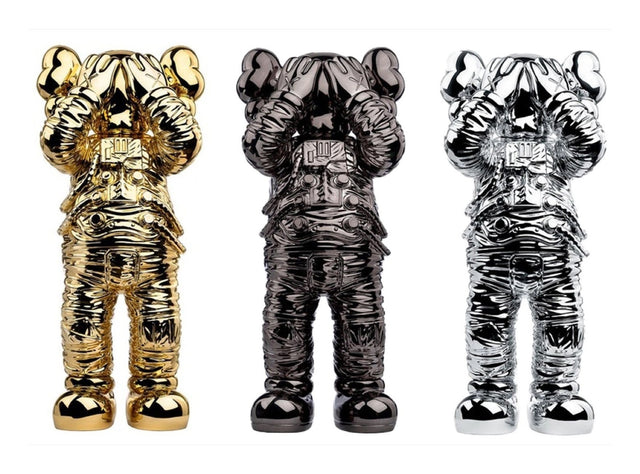
KAWS Holiday Space Set of 3 Gold Black Silver Companion Astronaut Figure Rare
$2,900.00 USD
-
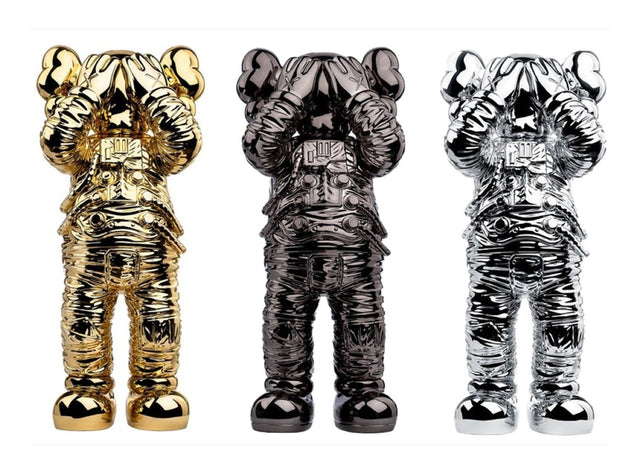
KAWS Holiday Space Set of 3 Gold Black Silver Companion Astronaut Figure
$2,900.00 USD
-
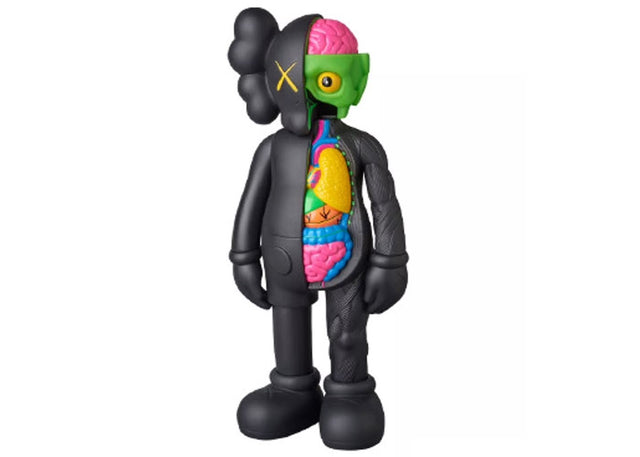
KAWS Companion Flayed Open Edition Black Medicom Toy Dissected Sealed New Figure
$599.00 USD
-
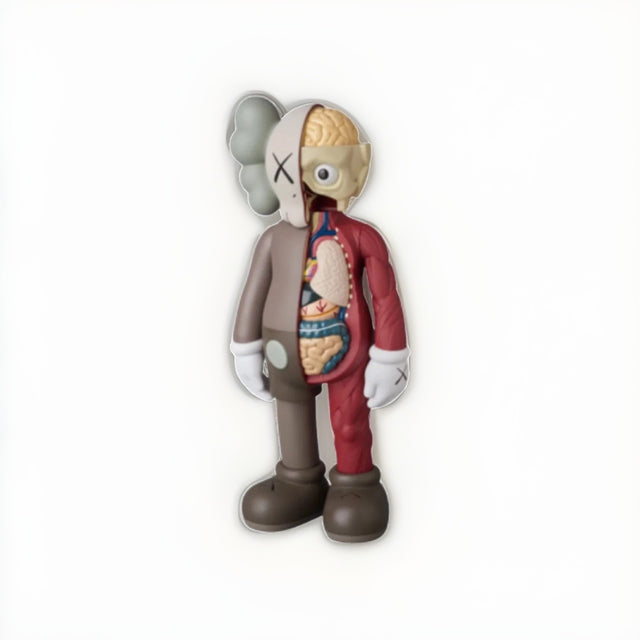
KAWS Companion Flayed Open Edition Brown Medicom Toy Dissected Sealed New Figure
$349.00 USD
-
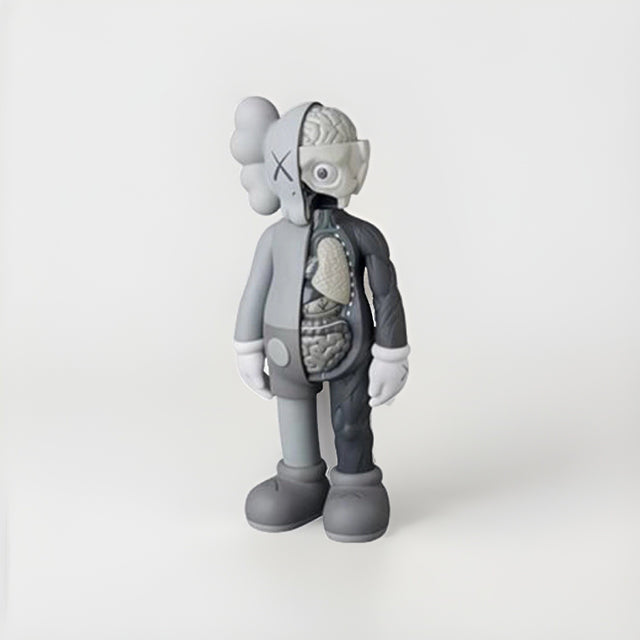
KAWS Companion Flayed Open Edition Grey Medicom Toy Dissected Sealed New Figure
$349.00 USD
Browse the collection for current listings.