To authenticate a KAWS Companion (Blush) 2017 figure, work through five layers of evidence in order: the original packaging and its seals, the production markings stamped or printed on the figure itself, the physical quality of the sculpt and paint compared against verified examples, the documented ownership history, and finally the credibility of the seller and any certification attached to the piece. No single check is conclusive on its own — authentication is the process of stacking independent confirmations until doubt disappears. This guide walks through each layer in detail so you can evaluate any Companion (Blush) with confidence, whether you are buying from us or anywhere else. For a KAWS or BE@RBRICK purchase, check the individual listing for release-specific packaging, production marks, condition and provenance. Manufacturer NFC is relevant only on releases that include it; a certificate alone does not establish authenticity.
What the Companion (Blush) 2017 Is — and Why That Shapes How You Verify It
The Companion (Blush) belongs to KAWS's open edition program: vinyl Companion figures released in specific colorways and sold at retail rather than produced as small numbered runs. Open editions occupy a distinctive place in the KAWS market. They were made to be accessible, which means a meaningful number of them exist in collectors' hands — and it also means they became one of the most heavily replicated categories in the entire designer-toy world. Counterfeiters follow demand, and few contemporary artists generate demand like KAWS.
That production context matters for authentication in three practical ways. First, because open editions are typically unnumbered, you cannot rely on an edition number or a signed certificate from the artist as your anchor — those simply are not part of how these figures were issued. Verification instead leans on the physical object, its packaging, and its paper trail. Second, because many genuine examples exist, there is a deep pool of verified reference material: photographs of confirmed authentic figures, documented retail purchases, and comparable sales records. Genuine scarcity of reference material is a counterfeiter's friend; abundance of it is yours. Third, the price point of open editions made them an entry point for new collectors — exactly the buyers counterfeiters target, because first-time purchasers are the least likely to have handled an authentic example before.
The good news is that none of this makes authentication difficult. It makes it systematic. A collector who knows what layers to check, and checks them in order, is very hard to fool. Our KAWS authentication guide covers the artist's broader output; this article applies that framework specifically to the Companion (Blush) and to open edition vinyl generally.
The Five-Layer Authentication Framework
Think of authentication as a funnel. Each layer filters out a class of fakes. Crude counterfeits fail at layer one. Better ones fail at layer two or three. The rare sophisticated replica fails at layer four or five — provenance and certification — which is why those final layers matter most for high-confidence purchases.
Layer 1: Original Packaging and Seals
Start with the box, because for sealed examples the box is most of the story. KAWS open edition figures shipped in purpose-designed retail packaging, and that packaging is itself a manufactured product with consistent materials, printing quality, and construction. When you examine a Companion (Blush) box, you are looking for the overall coherence of a professionally produced object: crisp, evenly registered printing; clean die-cuts and folds; cardstock of consistent weight and finish; and interior fittings that hold the figure precisely, because they were engineered for that exact sculpt.
Counterfeit packaging has improved over the years, but it is still where most fakes betray themselves. Reproduced boxes are usually copied from photographs rather than from original print files, and the difference shows under close inspection — soft or slightly blurred graphics, colors that drift from the authentic palette, misaligned printing on edges and flaps, flimsier board, or interior trays that fit the figure loosely. If you have access to a verified authentic box, side-by-side comparison is the single most efficient check you can perform. If you do not, our KAWS packaging guide documents what genuine packaging construction looks like across the figurine catalog, and our how to spot a fake KAWS guide catalogs the packaging shortcuts counterfeiters most commonly take.
A sealed figure raises a specific question: do you open it? Sealed examples generally command a premium precisely because the packaging is intact, but a seal also prevents you from inspecting the figure itself. This is where the seller's verification process becomes critical. A responsible dealer verifies before sealing or sells pieces whose seals can be assessed as original — factory-consistent shrink wrap or closures without signs of re-wrapping, such as uneven tension, doubled layers, heat marks in unusual places, or tape residue under the wrap.
Layer 2: Production Markings on the Figure
If the figure is out of its box — or you are buying one that is — turn it over. KAWS vinyl figures carry production markings on the underside, typically including copyright information and manufacturer attribution. These markings are applied during manufacturing and are consistent across a production run in their placement, depth, typeface, and clarity.
The right way to use base markings is comparative, not from memory. Do not try to recall what the text "should" say; instead, photograph the underside of the figure you are evaluating and compare it directly against photographs of verified authentic examples of the same release. You are comparing four things: the exact wording and arrangement of the text, the crispness of the lettering, the position of the markings relative to the sculpt, and the way the markings are rendered — molded, stamped, or printed — because counterfeiters frequently substitute a cheaper application method that reads as subtly wrong in raking light.
Be honest about the limits of this layer. Markings are one of the easier elements for a sophisticated counterfeiter to replicate, because they are small, well photographed, and two-dimensional. A correct-looking base does not authenticate a figure; an incorrect one, however, is close to disqualifying. That asymmetry is true of most individual checks, and it is why the funnel has five layers rather than one.
Layer 3: Sculpt, Proportions, Paint, and Finish
This is the layer where handling experience pays off most, and where the physical economics of counterfeiting work in your favor. Authentic KAWS figures are produced with industrial tooling built from the artist's actual sculpt data. Counterfeits are almost always produced by casting or re-sculpting from a purchased original — a process that introduces small but real distortions. Copies of copies lose fidelity.
Evaluate the figure in this order:
- Silhouette and proportions. Stand the figure up and look at it from several angles, then compare against photographs of verified examples shot from similar angles. Recast figures often show slight overall shrinkage or subtly altered proportions — limbs marginally thicker or thinner, head-to-body ratio a touch off, stance not quite matching. Individually these are hard to articulate; side by side they are often obvious.
- Surface finish. Genuine production vinyl has a consistent, deliberate surface — the sheen level is uniform where it should be uniform, and transitions between finishes are clean. Counterfeits frequently show orange-peel texture, uneven gloss, or a waxy or oily feel that authentic vinyl lacks.
- Paint application and color. The Blush colorway lives or dies on its color fidelity. Compare the tone against verified photography under neutral lighting, keeping in mind that your screen and the photographer's lighting both introduce variance — which is why color alone should never convict or acquit a figure. More reliable are the paint edges: authentic figures show clean masking lines, consistent coverage, and crisp detail work, especially around the eyes and other signature elements. Sloppy edges, overspray, thin coverage that shows the vinyl beneath, or paint pooling in recesses are all warning signs.
- Seams and joints. Examine where parts of the figure meet. Production figures are assembled to consistent tolerances; recasts often show wider or irregular seams, rough seam lines, or joints that rotate with different resistance than an authentic example.
- Weight and material feel. Vinyl formulation affects heft and rigidity. If you have handled authentic open edition Companions, a fake often simply feels wrong — too light, too heavy, too rigid, too soft. This is subjective and should never stand alone, but experienced hands catch fakes this way regularly.
None of these checks require insider knowledge. They require reference material and patience. The comparison discipline — always evaluating against verified examples rather than against memory or intuition — is the habit that separates collectors who get burned from collectors who do not. Our KAWS figurine index exists partly for this reason: it documents the release landscape so you can identify exactly which figure you are evaluating and find the right comparison targets.
Layer 4: Provenance — the Paper Trail
Physical inspection tells you whether the object is consistent with authentic production. Provenance tells you where it has been, and a strong ownership history is the hardest thing for a counterfeiter to fabricate convincingly.
For an open edition figure, the gold standard provenance is a direct line to original retail purchase: an order confirmation or receipt from the original point of sale, in the original buyer's name, that can be connected to the specific figure in front of you. From there, each change of hands ideally leaves a record — an invoice, a marketplace transaction record, a dealer's sale documentation. Ask every seller the same simple question: where did this come from? A seller who can answer with documents is offering you evidence. A seller who answers with a story is offering you a story.
Evaluate provenance documents with the same skepticism you apply to the figure. Receipts can be forged and, more commonly, real receipts can be paired with fake figures — a genuine purchase record for one figure recycled to sell a counterfeit. So look for continuity: does the timeline make sense, do the documents reference details (dates, prices, order numbers) that hang together, and does the current owner's account match the paper? Provenance is persuasive when it is specific and interlocking, weak when it is vague and detachable from the object.
This is also where documented dealer sourcing earns its keep. When our gallery acquires KAWS pieces, the acquisition source and supporting documentation are recorded at intake, and that documented provenance transfers to the buyer at sale. You inherit the paper trail rather than starting one from scratch. For the vocabulary of provenance — what terms like chain of ownership actually mean in practice — our authentication glossary is a useful companion.
Layer 5: Certification and the Seller
The final layer is the one that converts your own inspection into transferable confidence: independent certification, and the accountability of whoever is selling you the figure.
Sealed pieces additionally carry hologram-sealed original packaging. The point of this system is not ceremony; it is that authentication performed once, rigorously, should not have to be re-performed by every future owner. When you eventually sell the figure, the certificate travels with it, and your buyer verifies in seconds what would otherwise take them hours.
Certification aside, weigh the seller. A dealer with a public reputation, a documented verification process, a return policy, and a track record in the category is staking their business on every sale. An anonymous marketplace seller with stock photos and no history is staking nothing. Price behavior is part of this evaluation too: an open edition Companion offered dramatically below the level of recent verified sales is not a bargain, it is a signal. Rather than anchoring on any single asking price, compare against actual completed sales — our KAWS price guide and the market data in our Financial Insights hub are built from verified comparable sales for exactly this purpose.
The Five Layers at a Glance
| Layer | What You're Checking | What It Catches | Limitation |
|---|---|---|---|
| 1. Packaging & seals | Print quality, construction, fit, seal integrity | Most crude and mid-grade fakes | Boxes can be reproduced; real boxes can house fake figures |
| 2. Production markings | Underside text, placement, application method vs. verified examples | Fakes with wrong, missing, or poorly rendered markings | Easiest element for good counterfeiters to copy |
| 3. Sculpt, paint & finish | Proportions, surface, paint edges, seams, feel vs. verified examples | Recasts and re-sculpts, which degrade fidelity | Requires reference photos or handling experience |
| 4. Provenance | Receipts, ownership chain, interlocking documentation | Figures with no legitimate origin story | Documents can be forged or recycled; verify continuity |
| 5. Certification & seller | Check release-specific physical evidence and the documentation stated in the individual listing. | Everything the first four layers missed | Only as good as the verifier behind it — vet the issuer |
Read the table vertically and one theme emerges: every layer has a limitation, and every limitation is covered by another layer. That redundancy is the design. A counterfeit that survives one check almost never survives five.
Common Mistakes When Authenticating Open Edition KAWS Figures
Avoiding them costs nothing. Compare the exact KAWS release, colorway, pose, edition and condition using dated completed sales. Broad archive totals and another edition’s performance do not establish an item’s resale value.
- Expecting a signed COA from the artist. Open edition figures were retail products; they did not ship with artist-signed certificates. A seller producing an official-looking "KAWS certificate of authenticity" for an open edition figure is a reason for more suspicion, not less. Legitimate certification for these pieces comes from the verifying dealer or service, not the studio.
- Treating a single good sign as proof. "The box looks right" or "the base stamp matches" is one filter passed, not a verdict. Sophisticated fakes are engineered to pass the one or two checks casual buyers perform.
- Authenticating from memory. Almost nobody accurately remembers the precise proportions, color, or marking layout of a figure. Always compare against verified reference photographs, side by side, detail by detail.
- Letting price do the thinking. A high price does not make a figure genuine, and counterfeiters know that pricing fakes near market level makes them more believable. Price is a data point about the seller's positioning, not about the object.
- Ignoring the seller's history in the category. A seller with years of documented KAWS sales and a standing reputation has both the expertise and the incentive to sell genuine pieces. A seller who appeared last month does not.
- Skipping condition while checking authenticity. The two questions are different. A figure can be perfectly authentic and still misrepresented on condition — sun-faded vinyl, paint rubs, a replaced box. Inspect for both at once; our KAWS buyer's guide covers the condition side in depth.
How Gauntlet Gallery Verifies a Companion (Blush)
We are a dealer, and our authentication position is straightforward: we sell from authenticated sourcing, we document what we verify, and we put a durable certificate behind it. Concretely, a KAWS figure that enters our inventory goes through the same five layers described above — packaging and seal assessment, marking comparison, physical inspection against verified references, and provenance documentation at intake — before it is listed.
The comps database is the quieter half of the system. That matters for authentication as much as for pricing: market context flags anomalies. When a listing's story does not match how the release actually behaves in the market, that discrepancy is often the first visible symptom of a problem with the piece itself.
You can browse our current verified inventory in the KAWS collection and the wider figurines collection, and every piece carries its documentation with it.
Care, Records, and Protecting the Authentication You've Done
Authentication is not only a moment at purchase; it is an asset you maintain. The work you or your dealer did to verify a Companion (Blush) is worth real money at resale — but only if it survives in documented form.
Photograph at acquisition, in good light, before the piece goes on the shelf. If the figure is sealed, resist opening it without a reason: an intact, verified seal is part of both the value and the authentication record, and it cannot be restored once broken.
Store the figure away from direct sunlight and away from heat sources — vinyl and printed packaging both fade and degrade with UV exposure and temperature swings. Keep the box even if you display the figure out of it; an authentic figure separated from its packaging loses both value and a full layer of its verifiability. And when you eventually sell, transfer the entire file to your buyer. For a broader treatment of collection record-keeping, the resources in The Collector's Hub go further into cataloging and insurance documentation.
Pre-Purchase Checklist: KAWS Companion (Blush) 2017
Run this sequence before money moves. Every "no" is a question to resolve before proceeding, not necessarily a dealbreaker — but three or more unresolved questions is a walk-away.
- Identify the exact release. Confirm the listing matches the Companion (Blush) 2017 open edition specifically — not a different colorway, size, or year — using a documented reference source.
- Demand original, current photographs. Full figure from multiple angles, close-ups of paint edges and seams, the underside markings, and all six faces of the box. Refuse stock photos.
- Compare against verified examples. Check proportions, color, markings, and packaging printing against reference photography of confirmed authentic pieces — side by side, not from memory.
- Assess the seal (if sealed). Look for factory-consistent wrap and closures; ask directly whether the piece has been opened or re-sealed, and get the answer in writing.
- Ask for provenance. Original retail confirmation, prior invoices, or dealer documentation. Evaluate whether the documents interlock with each other and with the seller's account.
- Check the certification. Can you validate it independently — for instance, online — rather than taking a printed document at face value?
- Vet the seller. Track record in KAWS specifically, return policy, willingness to answer detailed questions. Evasiveness on any inspection request is itself an answer.
- Sanity-check the price against verified sales. Compare with recent completed transactions for the same release, not with other asking prices. A dramatic discount from verified sale levels is a red flag, not a win.
- Confirm condition separately. Fading, paint rubs, box wear, missing inserts — authenticity and condition are separate questions; settle both.
- Document the transaction. Keep the invoice, the certificate, the photos, and the correspondence. Your future resale depends on the file you build today.
If a listing clears all ten steps, you have done more diligence than the overwhelming majority of buyers in this market — and more than any counterfeiter is prepared to survive. Answers to the questions that most often come up mid-checklist live in our authentication FAQ.
Frequently Asked Questions
Do KAWS open edition Companions come with a certificate of authenticity?
Not from the artist or studio — open edition figures were sold as retail products without signed certificates or edition numbering. Legitimate certification for these pieces comes from the verifying seller. Treat any seller offering an "official KAWS COA" for an open edition figure with added caution.
Is a sealed Companion (Blush) safer to buy than an opened one?
Only if the seal itself is verified. An intact factory seal is strong evidence, but it also prevents direct inspection of the figure, so everything rides on whether the seal is original. Buy sealed pieces from sellers who document their seal verification, and examine the wrap for signs of re-sealing such as uneven tension, doubled layers, or adhesive residue. An opened figure from a documented source with strong provenance can be a more verifiable purchase than an unverified sealed one.
Can I authenticate a KAWS figure from listing photos alone?
You can screen from photos, but rarely conclude. Good photographs let you compare proportions, paint edges, underside markings, and packaging printing against verified examples, and many fakes fail at that stage. What photos cannot establish is weight, material feel, seam quality, and seal integrity — and photos themselves can be borrowed from authentic listings. Use photo screening to eliminate bad candidates, then rely on provenance, certification, and seller accountability before purchasing.
What is the single strongest indicator that a Companion figure is fake?
There is no single indicator — and treating any one sign as decisive is the most common buyer error. The strongest practical signal is convergence: a figure that fails multiple independent checks, such as soft packaging print quality plus imprecise paint edges plus a seller with no provenance and no track record. Conversely, authenticity is established by stacking confirmations across packaging, markings, physical quality, provenance, and certification, not by any one passed test.
What documentation should accompany this figure?
It makes verification durable and transferable. The certificate records the verified item on a blockchain, where the record cannot be quietly altered, and anyone holding the piece can verify the certificate online. That means the authentication performed at sale does not depend on trusting a piece of paper — and when you resell, your buyer can verify the certification in seconds, which protects your exit value.
Why are open edition KAWS figures faked so often if they were widely available?
Because demand outlived retail availability. Open editions sold out at retail and now trade on the secondary market, where sustained demand and a steady flow of first-time buyers create ideal conditions for counterfeiters. Wide original availability actually helps authentication, though: a deep pool of verified authentic examples and completed sales exists for comparison, so a disciplined buyer has abundant reference material that fakes must survive — and usually cannot.
Should I compare the price against other current listings to judge authenticity?
No — compare against verified completed sales. Asking prices prove nothing: counterfeiters price near market level to look legitimate, and unrealistic listings distort the picture in both directions. Completed, verified transactions show what the release actually trades for. A figure offered far below verified sale levels warrants more scrutiny, not a faster checkout.
Shop KAWS
Explore current pieces available from the gallery.
-
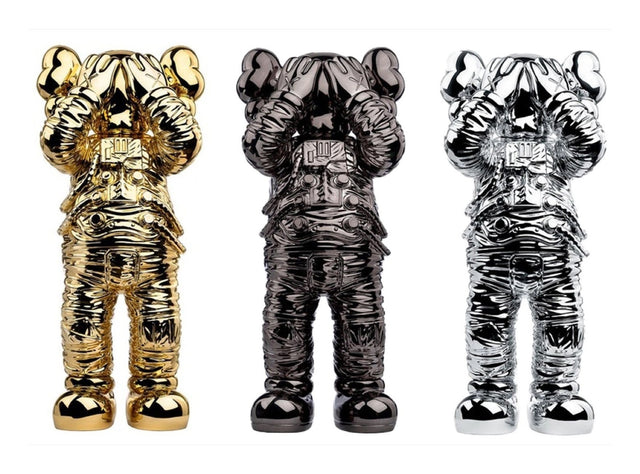
KAWS Holiday Space Set of 3 Gold Black Silver Companion Astronaut Figure Rare
$2,900.00 USD
-
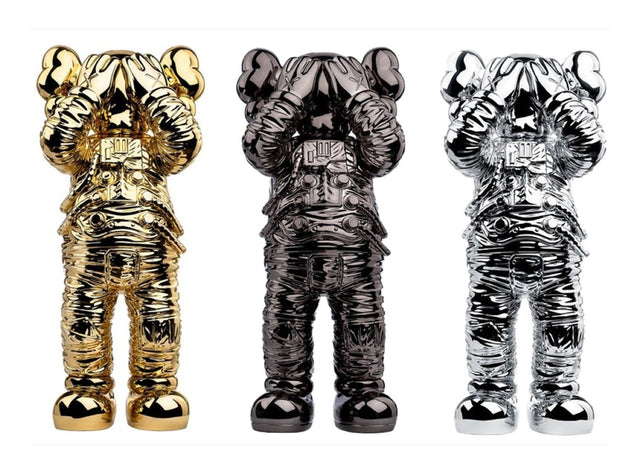
KAWS Holiday Space Set of 3 Gold Black Silver Companion Astronaut Figure
$2,900.00 USD
-
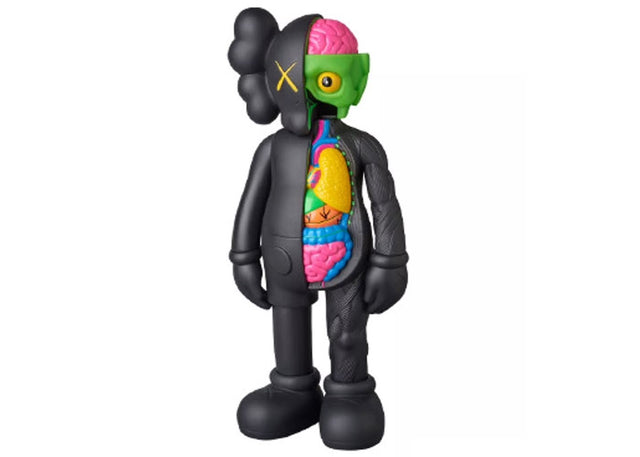
KAWS Companion Flayed Open Edition Black Medicom Toy Dissected Sealed New Figure
$599.00 USD
-
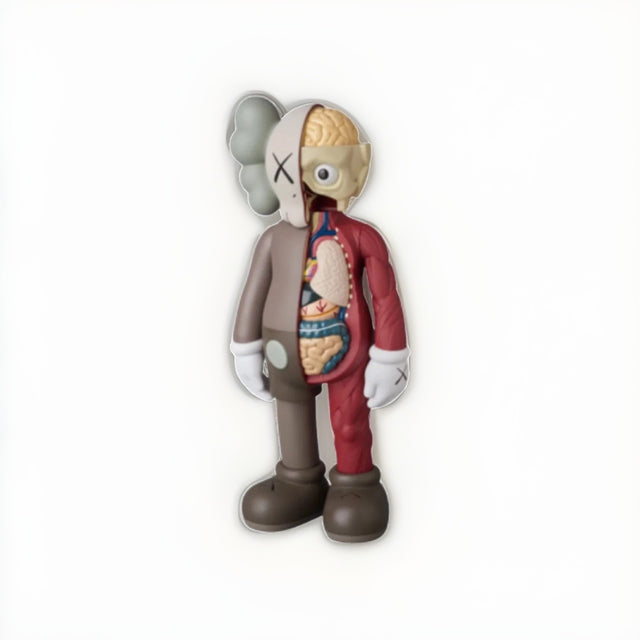
KAWS Companion Flayed Open Edition Brown Medicom Toy Dissected Sealed New Figure
$349.00 USD
-
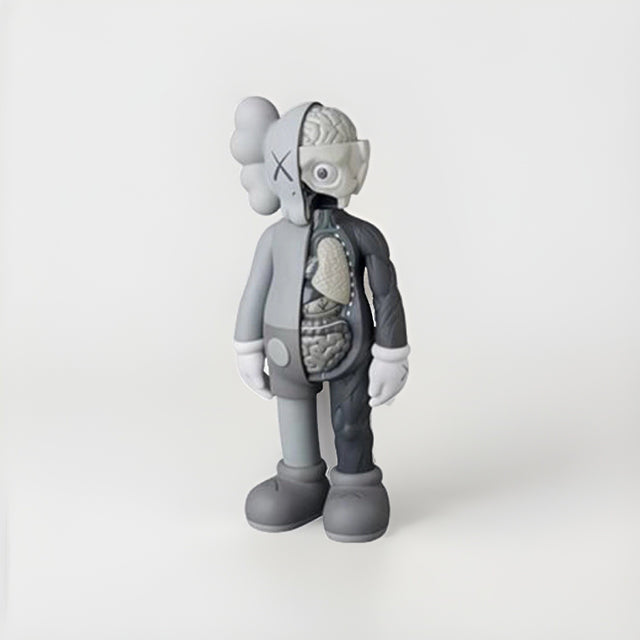
KAWS Companion Flayed Open Edition Grey Medicom Toy Dissected Sealed New Figure
$349.00 USD
Browse the collection for current listings.