The difference between a KAWS Companion open edition and a limited edition comes down to production quantity, numbering, and how the figure was released. An open edition Companion is produced without a fixed cap — the studio and its production partners make enough figures to meet demand during a release window, and individual pieces are not numbered. A limited edition Companion is produced in a fixed, finite quantity that is never repeated; pieces are often numbered or otherwise tied to a documented run, and once the edition sells out, no more are made. Both are authentic KAWS works when sourced correctly, but they occupy different tiers of scarcity, and that scarcity difference shapes collectibility, long-term demand, and the way careful collectors document and authenticate each type.
That is the short answer. The longer answer — the one that actually helps you buy well — requires understanding how KAWS releases work, what "open" really means in practice, how to identify which type you are holding, and why authentication and provenance matter for both. As a dealer specializing in authenticated designer collectibles, our gallery handles both open and limited edition KAWS figures regularly, and we have built this guide around the questions collectors actually ask us. Let's go deep.
How KAWS Companion Editions Work: The Background
The Companion is the signature character of Brian Donnelly, the American artist known as KAWS. The figure — a cartoon-inflected form with gloved hands and X-ed out eyes — first appeared as a vinyl collectible in 1999, at a time when the designer toy movement was taking shape between New York, Tokyo, and Hong Kong. That earliest Companion release was a small production run, and it established a pattern that has defined KAWS collecting ever since: the artist releases sculptural editions of his characters through controlled drops, and collectors compete for them.
Through the 2000s, KAWS released figures under his OriginalFake label, a collaboration with the Japanese toy manufacturer Medicom Toy, anchored by a store in Tokyo that operated until 2013. OriginalFake-era releases were characteristically limited: fixed production runs, often tied to specific colorways, collaborations, or events, and frequently sold out immediately. These releases built the foundation of the modern KAWS secondary market and remain some of the most sought-after pieces in the category.
In the mid-2010s, the release model expanded. Alongside his gallery and museum practice, KAWS began issuing open edition figures — Companions and related characters produced in larger, uncapped quantities and sold through his own KAWSONE platform and select museum shops and retail partners. Open editions accompanied major public moments, including the artist's large-scale exhibition projects and his traveling Holiday installations, and they were explicitly designed to make owning an authentic KAWS sculpture accessible to a much wider audience.
So today, the KAWS Companion universe contains both models side by side. Understanding which model produced the figure in front of you is the single most useful piece of context you can have as a buyer. Our KAWS Figurine Index catalogs releases across both categories, and it is a good companion — no pun intended — to this guide.
What Is an Open Edition KAWS Companion?
An open edition is a release without a predetermined production cap. When KAWS announces an open edition Companion, the figure is typically offered for sale during a defined ordering window or at a set retail price while stocks are produced, and the quantity manufactured reflects demand rather than an artificial ceiling. The word "open" refers to the edition size, not to an indefinite production life — most open editions are still tied to a specific release moment and eventually stop being produced.
Key characteristics of open editions
- No individual numbering. Open edition figures are not numbered. You will not find an "X/500" style marking, because there is no fixed denominator. Instead, authentic figures carry production stamps — typically the artist's name, a copyright year, and manufacturer markings — molded or printed on the underside of the feet or base.
- Wider availability at release. Open editions are generally sold at accessible retail price points through official channels, and many collectors were able to buy them directly at launch. This is by design: the open edition program is how KAWS extended ownership of his sculptural work beyond the auction and gallery audience.
- Consistent, recognizable colorways. Open edition Companions and related figures commonly appear in a small family of core colorways — muted tones such as grey, black, and brown are recurring examples — though specific palettes vary by release. Check the release documentation for the exact figure you are considering.
- Standardized packaging. Open editions ship in printed retail boxes designed for the release. The box, inner tray, and any inserts are part of the collectible, and complete packaging meaningfully supports both desirability and authentication.
- Larger surviving population. Because more were made, more exist in the market today. That means more choice, more condition variance, and — importantly — more counterfeits targeting the category, which we address below.
A common misconception is that "open edition" means "not a real KAWS." That is wrong. Open editions are authorized, artist-sanctioned works produced under KAWS's direction with his manufacturing partners. They are the entry point into the artist's sculptural output, and a well-kept open edition figure with complete packaging is a legitimate, collectible artwork. Our KAWS Buyer's Guide covers where open editions sit within a broader collecting strategy.
What Is a Limited Edition KAWS Companion?
A limited edition is a release with a fixed, finite production quantity, set before or at the time of release and never expanded afterward. Limited editions are the historical norm for KAWS vinyl work — the OriginalFake era ran almost entirely on this model — and they continue today through special releases, collaborations, and event-tied drops.
Key characteristics of limited editions
- A fixed, documented run. The defining feature. Whether the quantity was published at release or established through release records, the edition is capped. Edition sizes vary enormously across KAWS's output — from very small runs to editions in the thousands — so always check the documentation for the specific release rather than assuming.
- Numbering or run identification. Many limited releases are individually numbered; others are identified by their release records, packaging, and production markings rather than a printed number. The presence or absence of a number is release-specific, which is why matching a figure against a reliable reference such as our figurine index matters.
- Drop-based or lottery-based sales. Limited releases typically sell through timed drops, raffles, or event exclusives, and demand routinely exceeds supply. Most collectors acquire limited editions on the secondary market rather than at retail.
- Collaboration and event context. Many limited Companions exist because of a specific collaboration, exhibition, or moment. That context is part of the piece's story and its documentation trail.
- Scarcity-driven demand. With supply permanently capped and demand renewable, well-documented limited editions in strong condition are structurally scarcer than open editions — the fundamental driver of their secondary-market behavior.
Open Edition vs. Limited Edition: Side-by-Side
| Attribute | Open Edition Companion | Limited Edition Companion |
|---|---|---|
| Production quantity | Uncapped; made to meet demand during the release window | Fixed and finite; never repeated |
| Numbering | Not numbered; identified by production stamps and packaging | Often numbered or tied to a documented run |
| How it was sold | Retail release via KAWSONE, museum shops, select partners | Timed drops, lotteries, event or collaboration exclusives |
| Availability today | Broad secondary supply; easier to find in top condition | Scarce; condition and completeness vary widely |
| Typical buyer | New collectors, display-focused buyers, fans of the character | Established collectors, completionists, provenance-focused buyers |
| Counterfeit pressure | High — high-volume releases are heavily faked | High — valuable releases attract sophisticated fakes |
| Documentation focus | Complete packaging, purchase records, production stamps | All of the above plus edition records and provenance chain |
Notice that counterfeit pressure is high in both rows. This is a point we make often: fakes follow demand, not edition type. Open editions get faked because the volume of buyers is enormous; limited editions get faked because individual pieces justify the counterfeiter's effort. Either way, verification is not optional. Our guide on how to spot a fake KAWS walks through the practical inspection process in detail.
How to Tell Which One You're Holding
Suppose a Companion is in front of you — in hand, or in a listing — and you need to determine whether it is an open edition or a limited edition. Here is the process we use in the gallery.
1. Identify the exact release first
Edition status is a property of the release, not something you can always read off the figure alone. Start by identifying the specific release: character pose, colorway, scale, and packaging design together narrow it to a specific drop. Cross-reference against a structured catalog — our KAWS Figurine Index exists for exactly this step — and the answer to "open or limited" usually falls out of the identification itself, because each release's edition model is part of its documented record.
2. Read the underfoot stamps and markings
Authentic KAWS vinyl carries production markings, typically on the underside of the feet or base: the artist's name, a copyright year, and manufacturer information. These markings tell you when the figure was produced and who made it, which helps place it within a known release. What the stamps generally will not do is announce "open edition" or "limited edition" in so many words — again, that determination comes from matching the figure to its release record. Be wary of any figure whose markings do not match the documented pattern for its claimed release; consult our KAWS authentication guide, linked below, for how markings fit into a full verification.
3. Examine the packaging
Packaging is one of the most information-rich parts of a KAWS figure. Box artwork, printing quality, labeling, inner trays, and seals are all release-specific, and packaging is also where many counterfeits fail first. A complete, correct, well-preserved box strengthens both the identification and the value of the piece. We wrote an entire deep-dive on this — the KAWS Packaging Guide — because in this category the box is not an accessory; it is evidence.
4. Check for numbering and edition documentation
If the figure or its packaging carries an individual number, you are almost certainly looking at a limited release — but absence of a number does not automatically mean open edition, because not every limited release was individually numbered. This asymmetry is why step one matters most: identify the release, then let the release record tell you the edition model.
5. Trace the paper trail
Original purchase confirmations, receipts from official channels, and prior sale records all help establish both what the figure is and where it has been. For limited editions especially, a coherent provenance chain separates a confidently collectible piece from a question mark. Our collector glossary defines the provenance terminology you will encounter along the way.
What the Difference Means for Value
Collectors usually ask the edition question because they are really asking a value question. Here is the honest, structural answer — without inventing numbers.
Scarcity works in the limited edition's favor. A capped run with renewable demand tends, over time, to concentrate value in the best-documented, best-condition examples. Limited OriginalFake-era releases and small-run collaborations are the pieces you see setting the tone at the top of the KAWS vinyl market.
Open editions are not value-inert. Because open editions were widely available at retail, their secondary prices start from a broader base — but demand for KAWS's most iconic open releases has repeatedly outrun the supply that surfaced for resale, and sealed, complete, well-kept examples routinely trade above their original retail context. Condition, completeness, and colorway drive real dispersion within a single open release.
Condition and completeness compress or amplify everything. For both edition types, the market pays for the complete package: figure, box, inserts, and documentation, all in strong condition. A limited edition with a damaged figure and no box can underperform a pristine sealed open edition. Edition status sets the ceiling; condition and documentation determine where under that ceiling a specific piece sits.
Verify against real transactions, not asking prices. Listings tell you what sellers hope; sales tell you what buyers did. When you evaluate a specific Companion, compare recent verified sales for that exact release, colorway, and condition tier — our KAWS Price Guide and the broader Financial Insights hub are built to support exactly that discipline. Compare the exact KAWS release, colorway, pose, edition and condition using dated completed sales. Broad archive totals and another edition’s performance do not establish an item’s resale value.
Authentication: Why Provenance Matters for Both
Everything above assumes the figure is genuine. In the KAWS category, that assumption has to be earned, because counterfeit production is industrial in scale and improving in quality. The constructive way to think about this is not fear but process: authentic figures have consistent, checkable characteristics, and a disciplined verification routine catches the overwhelming majority of problems before money moves.
Here is how we handle it. Where a figure is sealed, the original packaging with its hologram remains intact — sealed original packaging is itself a meaningful layer of assurance in this category. This combination — physical inspection, documented provenance, and a tamper-resistant digital certificate — is our standard for both open and limited editions, because we treat a collector buying an accessible open edition with the same seriousness as one buying a rare collaboration piece. For a KAWS or BE@RBRICK purchase, check the individual listing for release-specific packaging, production marks, condition and provenance. Manufacturer NFC is relevant only on releases that include it; a certificate alone does not establish authenticity.
If you are buying elsewhere, apply the same structure yourself:
- Identify the release precisely before evaluating anything else.
- Inspect markings, packaging, paint application, and materials against known-good references.
- Demand a provenance story that makes sense — where it was bought, when, and from whom.
- Compare the asking price against verified comparable sales, and treat a deal that seems too good as information.
- Prefer sellers who stand behind authenticity with documentation you can verify independently.
Our KAWS Authentication Guide expands each of these steps, and the authentication FAQ answers the most common process questions collectors send us.
Which Should You Buy? A Collector's Framework
There is no universally correct answer — there is a correct answer for your goals. We suggest thinking in three profiles.
The display collector
If you want an authentic KAWS sculpture to live with — on a shelf, in an office, as the anchor of a room — an open edition is often the rational choice. You get the artist's actual design language, produced under his direction, at the most accessible tier of his sculptural output. Prioritize condition and completeness, keep the box, and buy verified.
The building collector
If you are assembling a KAWS collection with an eye toward depth, a common path is to start with open editions to learn the category — handling authentic figures teaches you more than any article can — and then move selectively into limited releases as your knowledge and network mature. The open editions you buy carefully now remain legitimate holdings later; nothing about this path is wasted.
The scarcity-focused collector
If your priority is owning what few others can, limited editions are your territory: capped runs, documented provenance, and the discipline of buying only complete, verified examples. Here, documentation quality is not a nice-to-have — it is most of the game. Budget your patience along with your capital, and lean on verified comps for every decision.
Whichever profile fits, browse with edition status in mind. Our KAWS collection spans both edition types, and the wider figurines collection includes adjacent designer pieces — including BE@RBRICK collaborations, which follow a related but distinct edition system covered in our BE@RBRICK buyer's guide.
Care, Storage, and Record-Keeping
Edition status determines what you bought; stewardship determines what you will one day sell. A few practices we recommend to every figurine collector:
- Keep everything. Box, inner tray, inserts, outer shipping carton if it is release-specific, and every receipt or confirmation email. Completeness is a value attribute you control.
- Control light and heat. Vinyl and printed packaging both dislike direct sunlight and temperature swings. Display away from windows and heat sources; ultraviolet exposure is the quiet enemy of colorways.
- Handle deliberately. Clean hands or gloves, support the figure's body rather than its limbs, and avoid repeated repositioning of articulated joints.
- Decide the sealed question once. For open editions especially, a sealed example carries assurance value. If you open it, do it carefully, keep all materials, and photograph the process — those photos become part of your documentation.
- Maintain a collection record. A simple log of what you own, where and when you acquired it, what you paid, and what documentation accompanies it. When you eventually sell or insure, this record does the heavy lifting.
- Store documentation separately from the piece. Certificates and receipts kept inside the box can transfer ink or moisture over years; archive them flat, nearby, and cross-referenced.
The Buying Checklist
Print this, or keep it open on your phone. Before buying any KAWS Companion, open or limited:
- Identify the exact release — character, pose, colorway, scale — and confirm it against a structured reference like our figurine index.
- Confirm the edition model for that release: open or limited, numbered or not, and what the release record documents.
- Inspect the figure: underfoot stamps, paint edges, seams, material quality, and joint articulation, against known-authentic references.
- Inspect the packaging: correct box art, print quality, labels, tray, and seals for that specific release.
- Ask for provenance: original purchase evidence, prior sale records, or verifiable dealer documentation.
- Check verified comps for the same release, colorway, and condition tier — recent sales, not asking prices.
- Evaluate the seller: track record, authentication standard, return terms, and willingness to answer detailed questions.
- Slow down at red flags: prices far below verified comps, vague provenance, stock photos, or resistance to additional images.
- Document your purchase immediately: save every confirmation, photograph the piece and packaging on arrival, and add it to your collection record.
For the broader version of this process across categories, the Collector's Hub collects everything in one place.
Frequently Asked Questions
Are open edition KAWS Companions individually numbered?
No. Open editions are not individually numbered because there is no fixed edition size to number against. Authentic open edition figures are identified instead by their production stamps — artist name, copyright year, and manufacturer markings — together with release-specific packaging. If a seller shows you a "numbered" figure from a release documented as an open edition, that mismatch is a reason to investigate further before buying.
Is an open edition Companion a "real" KAWS?
Yes. Open editions are authorized works produced under the artist's direction with his manufacturing partners and sold through official channels. "Open" describes the edition size, not the legitimacy. The relevant risk in this category is not that open editions are somehow unofficial — it is counterfeits imitating them, which is why verification against known-authentic references matters at every price level.
Do limited edition Companions always have a printed edition number?
No. Many limited releases are individually numbered, but some are identified by their documented run, packaging, and production markings rather than a printed number. This is why identifying the exact release comes first: the release record tells you what identification features an authentic example should have, including whether numbering is expected.
Which holds value better, an open edition or a limited edition?
Structurally, limited editions benefit from permanently capped supply, and the strongest long-term demand in KAWS vinyl has concentrated in scarce, well-documented releases. But condition, completeness, colorway, and provenance drive large differences within both categories, so a pristine, sealed, documented open edition can be a better holding than a rough, incomplete limited one. Always evaluate the specific piece against recent verified sales rather than relying on edition type alone.
Does the box really matter for an open edition figure?
Yes, significantly. Packaging is release-specific evidence that supports identification and authentication, and complete examples are consistently more desirable than loose figures. For open editions, where many identical figures exist, completeness and condition are among the main ways one example distinguishes itself from another. Keep the box, tray, and inserts in good condition even after display.
How can I check what my KAWS Companion is worth?
Identify the exact release and colorway, assess condition and completeness honestly, and then compare against recent verified sales of the same release in similar condition — actual transactions, not asking prices. Structured resources like a dedicated price guide and a large comparable-sales database make this far more reliable than browsing marketplace listings, where asking prices routinely diverge from what buyers actually pay.
How does Gauntlet Gallery authenticate the KAWS figures it sells?
For a figure under consideration, compare its photographed production marks, packaging and condition with release-specific references.
Shop KAWS
Explore current pieces available from the gallery.
-
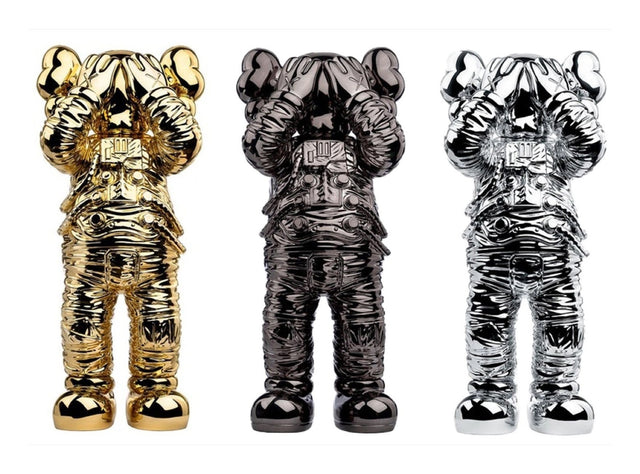
KAWS Holiday Space Set of 3 Gold Black Silver Companion Astronaut Figure Rare
$2,900.00 USD
-
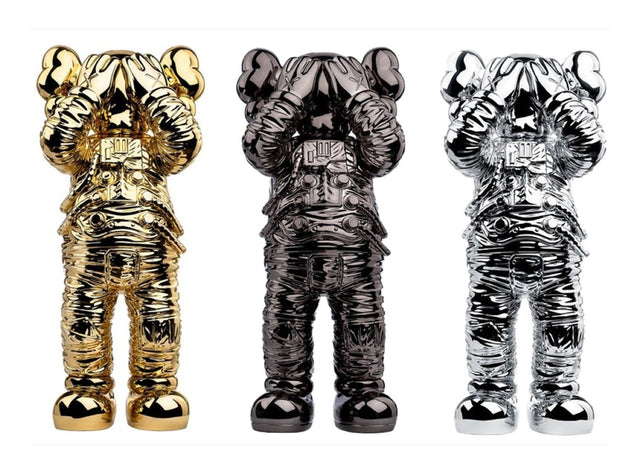
KAWS Holiday Space Set of 3 Gold Black Silver Companion Astronaut Figure
$2,900.00 USD
-
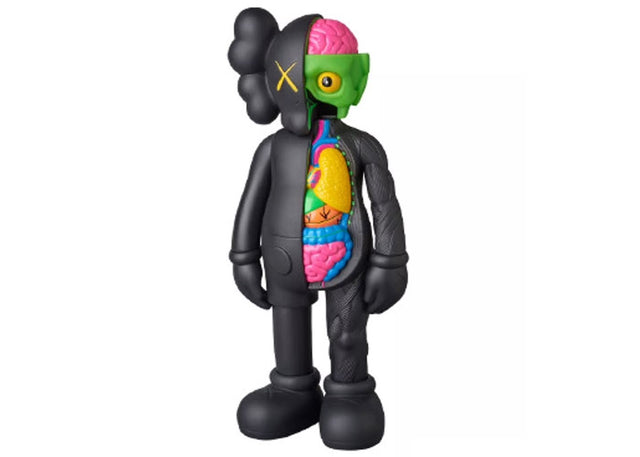
KAWS Companion Flayed Open Edition Black Medicom Toy Dissected Sealed New Figure
$599.00 USD
-
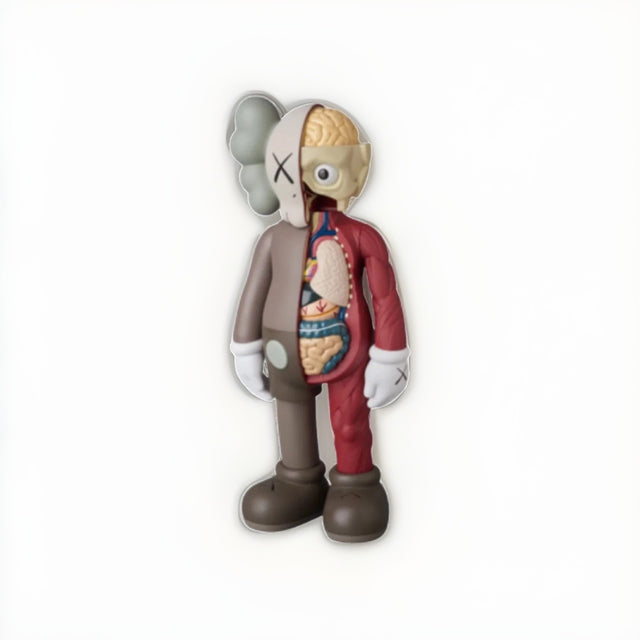
KAWS Companion Flayed Open Edition Brown Medicom Toy Dissected Sealed New Figure
$349.00 USD
-
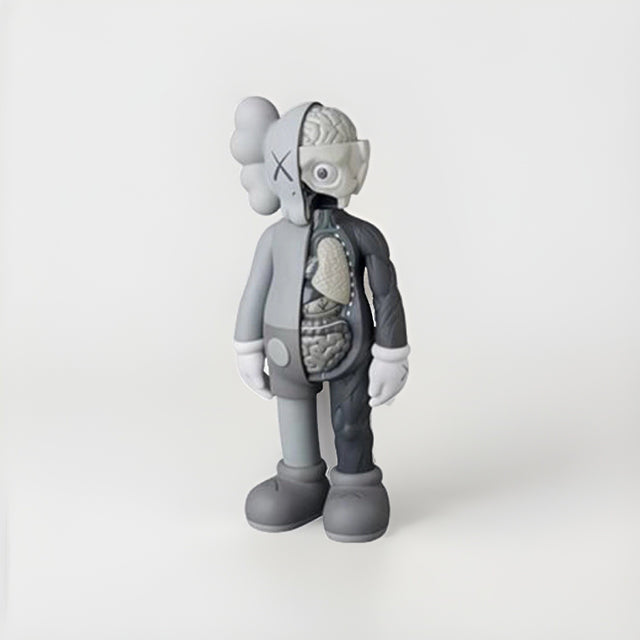
KAWS Companion Flayed Open Edition Grey Medicom Toy Dissected Sealed New Figure
$349.00 USD
Browse the collection for current listings.