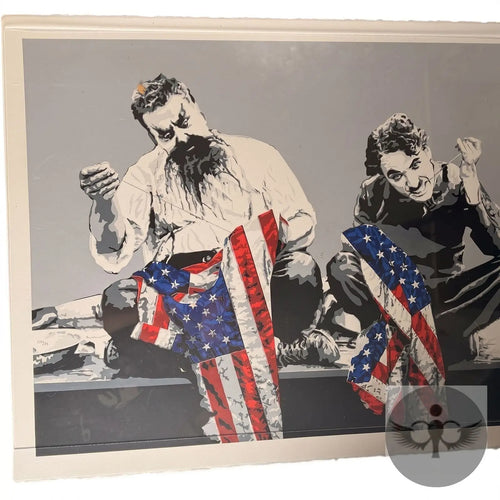
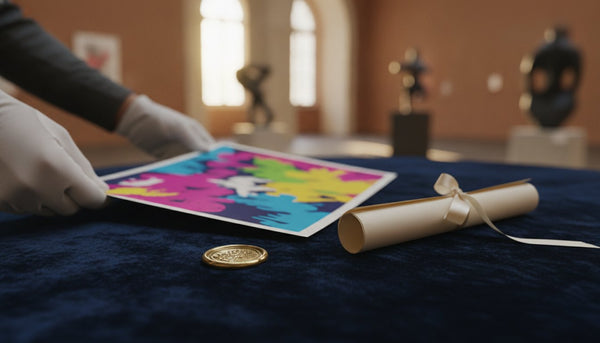
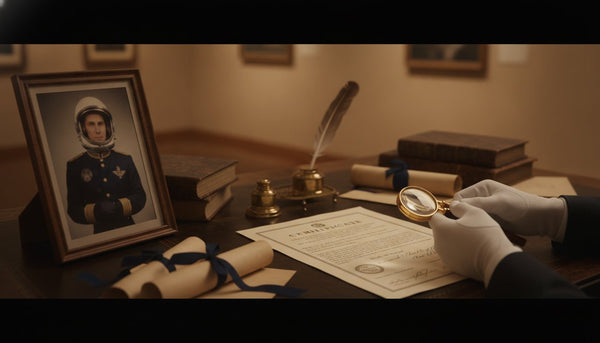
Every major living artist has an authentication problem. Banksy’s is the most peculiar.
The artist operates behind a pseudonym. He has never publicly confirmed his legal identity. He does not sign the bulk of his street works. His studio prints have been widely counterfeited for over two decades. And yet, somehow, a Banksy signed screenprint can trade at a major auction house for a six or seven-figure result with no ambiguity about authenticity. The mechanism that makes this possible is Pest Control.
What Pest Control is
Pest Control Office, typically shortened to Pest Control, is the authentication body that exclusively handles Banksy works. It is the only entity whose judgment is accepted by Christie’s, Phillips, Sotheby’s, and every serious secondary-market dealer. A work without a Pest Control certificate, regardless of its provenance story, is unsellable at the top of the market. A work with one, in intact condition, is effectively bankable.
Pest Control’s position is near-monopolistic by design. It handles authentication for studio editions and a narrow subset of unique works. It does not authenticate street works, graffiti removed from walls, or most so-called “Banksy” objects in circulation outside the artist’s authorized print program.
The tear-away tag system
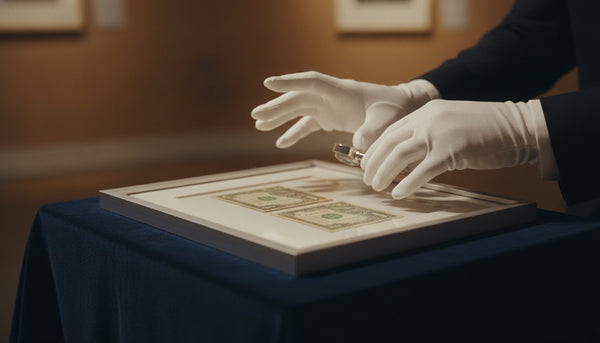
The most unusual operational detail of Pest Control is its certificate format. A Pest Control COA includes a tear-away half-note: a torn portion of a physical banknote, typically a fake one of Banksy’s own design, with a specific serial that matches the retained half held by Pest Control. The matched halves together form the proof of authentication.
When a work changes hands, the tear-away tag travels with the work. A serious buyer inspecting a Banksy print will expect to see:
- The full Pest Control certificate, with printed details of the work including edition number, title, and year
- The original tear-away tag, matched and intact, not photocopied, not reprinted
- The original work with edition numbering and, where applicable, pencil signature in the artist’s hand
- Clear chain of custody from the original purchaser through every subsequent transaction
A Banksy sold without its tear-away tag is worth materially less than the same work with the tag, even if the printed certificate is present. Auction houses routinely list tag status in their catalogue descriptions for a reason.
Why no other COA counts
New collectors frequently encounter Banksy works offered with a “gallery certificate,” a “certificate of provenance,” an “original sales receipt,” or an “independent authenticator’s letter.” None of these are substitutes for a Pest Control COA. The reason is simple: Banksy’s market has agreed on a single authentication body, and any other document is secondary evidence at best.
Our curators treat the absence of a Pest Control certificate as disqualifying for an investment-grade Banksy purchase. That is not a stylistic choice. It is the standard every top-tier resale channel applies.
How to submit a work for authentication
Pest Control accepts authentication requests through a documented process on its website. The process generally involves:
- Submitting high-resolution photographs of the work, front and back
- Providing any existing provenance documents, including original purchase receipts, gallery invoices, and prior COAs
- A submission fee, which is non-refundable whether the work is authenticated or not
- A review period that can take weeks to months
Authentication outcomes are binary. The work is either confirmed as genuine and issued a certificate with a tear-away tag, or it is rejected. Rejected works are not “probably fakes.” They are unsellable in every major venue.
The forgery landscape
Banksy is one of the most counterfeited artists in the world. Our curators routinely see:
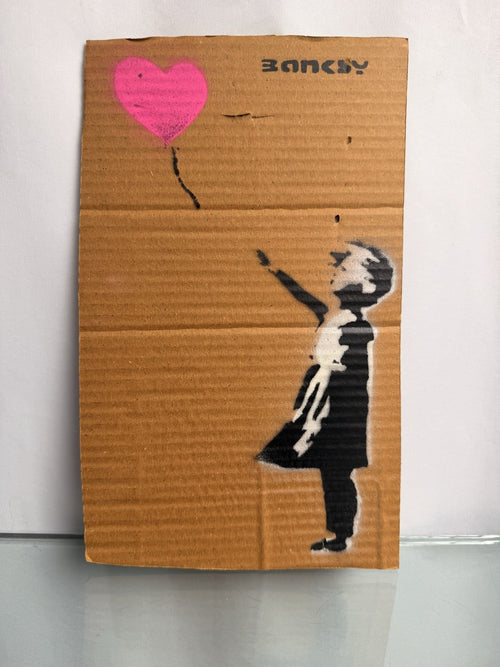
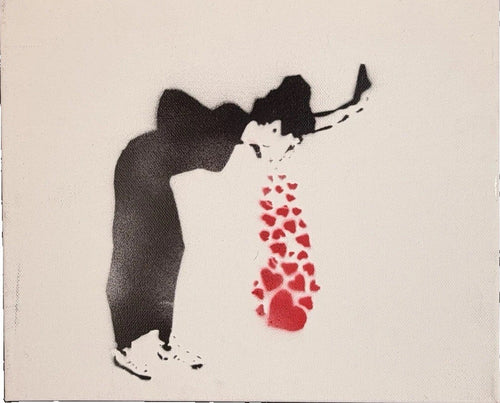
- High-quality digital reproductions of “Girl with Balloon” and “Love is in the Air” passed as signed prints
- Works with fabricated gallery invoices and forged Pest Control certificates
- Legitimately authenticated works separated from their original tags, with replacement documents
- Wall fragments marketed as authentic Banksy street works. Unless expressly issued a certificate by Pest Control, these are not authenticated regardless of their origin story.
For collectors, the implication is clear: never pay Banksy prices without Pest Control paperwork matching the physical work in hand.
A few public benchmarks
Banksy’s market has delivered some of the most-discussed results in contemporary art:
- “Girl with Balloon” (re-titled “Love is in the Bin”) self-destructed partially during its sale at Sotheby’s in October 2018. The partially shredded work resold in October 2021 for GBP 18.5 million.
- “Devolved Parliament” sold at Sotheby’s London in October 2019 for GBP 9.9 million.
- Multiple studio editions of “Girl with Balloon,” “Flower Thrower,” and “Barcode” have realized six-figure results at Phillips and Christie’s.
Each of these works traded with Pest Control authentication intact. That is not a coincidence.
What collectors should do
Our advisory practice applies three rules on Banksy acquisitions:
- No Pest Control, no purchase. The one exception is works being acquired specifically for the purpose of submitting to Pest Control, and that is a speculative bet with full rejection risk priced in.
- Always inspect the tear-away tag in person, or require a high-resolution photograph before wiring funds. Tags are easier to fake in JPEGs than in hand.
- Treat provenance as continuous. Gaps in chain of custody reduce value. Unbroken chains from a named gallery or original purchaser are materially more valuable.
Banksy is one of the few artists whose authentication system is functionally identity-proof because the authenticator, not the artist, is the anchor. For collectors, that oddity is a feature.