Before buying signed astronaut memorabilia online, inspect five things in this order: the signature itself (ink flow, pressure variation, and consistency with known exemplars), the authentication behind it (certificates from Beckett, JSA, PSA/DNA, or Zarelli Space Authentication carry real weight; generic COAs do not), the provenance chain (who owned it, when, and what paperwork proves it), the item's physical condition (paper quality, toning, ink stability, and any restoration), and the seller's track record (return policy, detailed photos, and willingness to answer questions). Astronaut autographs are one of the most rewarding collecting categories in existence, but they are also a field where autopen machines, secretarial signatures, and pre-printed facsimiles circulated for decades — so a disciplined inspection routine is what separates confident collectors from disappointed ones.
In this guide, we walk through each of those five inspection areas in depth, explain the vocabulary you will encounter in listings, and give you a practical checklist you can run on any online offer — whether it is a signed Apollo crew photo, a flown-cover, a signed book, or a piece of hardware with an astronaut's signature on the display plaque. Our gallery handles space memorabilia daily, and everything below reflects the same inspection discipline we apply before a piece ever reaches our own shelves.
Why astronaut autographs demand more scrutiny than most signed collectibles
Astronauts occupy an unusual place in autograph history. During the Mercury, Gemini, and Apollo programs, NASA received enormous volumes of autograph requests from the public — far more than any crew member could answer by hand. The agency's practical solution created three categories of "signatures" that still circulate today and that every buyer needs to understand:
- Autopen signatures. NASA used mechanical signing machines to respond to mail requests. An autopen replicates a stored signature pattern with a real pen, so the result has genuine ink on genuine paper — which is exactly why it fools so many first-time buyers. Autopen signatures are historically interesting artifacts in their own right, but they are not hand-signed autographs and should never be priced as such.
- Secretarial signatures. Staff members sometimes signed photos on an astronaut's behalf. These are hand-signed — just not by the astronaut — and they can be convincingly fluid because a practiced secretary signed the same name thousands of times.
- Pre-printed facsimiles. Many NASA lithographs were printed with a signature already reproduced in the image. Under magnification, a printed signature shows the same dot pattern or uniform ink layer as the rest of the photograph.
None of this is a reason to avoid the category. It is a reason to inspect methodically. The great news for collectors is that the space field has developed some of the best authentication infrastructure in all of memorabilia, with specialist expertise that most collecting categories can only envy. Once you know what to look for — and what paperwork actually means something — buying signed astronaut material online becomes a repeatable, confident process. Our space memorabilia authentication guide covers the certification landscape in detail, and this article gives you the hands-on inspection routine that pairs with it.
Inspection area 1: the signature itself
Ink flow and pressure variation
A hand-signed autograph shows natural variation in pressure. Look closely at high-resolution listing photos — zoom in as far as the images allow. A genuine signature typically shows heavier ink where the pen pressed down at the start of strokes, lighter passages where the hand moved quickly, and tapered exits where the pen lifted. Autopen signatures, by contrast, tend to show unnaturally even pressure from start to finish, and often display telltale characteristics: abrupt, blunt stroke endings where the machine lifted the pen straight up; tiny tremors or shakiness in what should be smooth curves; and occasionally a small dot of pooled ink at the beginning or end where the pen rested in place before the mechanism engaged.
Consistency with known exemplars
Every frequently signing astronaut has a well-documented signature evolution. Signatures change over a lifetime — a crew member's flight-era signature often differs meaningfully from the same person's signature at an autograph show decades later. Before buying, compare the offered signature against authenticated exemplars from the same approximate period. Third-party authenticators maintain exemplar databases precisely for this purpose, which is one reason their certification matters so much in this category. If a listing claims a flight-era signing date but the signature matches the astronaut's much later style, that mismatch is worth questioning — not necessarily as evidence of forgery, but as a sign the story attached to the item may be embellished.
Placement and medium
Consider where and with what the item was signed. Vintage signatures on period NASA lithographs were commonly signed in the pens of their era; a modern-looking ink type on a supposedly period-signed piece deserves a closer look. Also examine how the signature sits on the surface: ink from a real pen sits on top of a photographic emulsion differently than a printed facsimile, which is embedded in the image layer itself. If the seller's photos are too small to evaluate any of this, ask for better photos before you do anything else. A reputable seller will provide them without hesitation; reluctance to photograph a signature up close is itself an answer.
Inspection area 2: the authentication behind the item
This is the single most important paperwork question in the space category: who says it is real, and are they qualified to say so?
In signed space memorabilia, the certifications that carry genuine market weight come from the industry-standard third-party authenticators — Beckett Authentication Services, JSA (James Spence Authentication), and PSA/DNA — plus the category's marquee specialist, Zarelli Space Authentication, which focuses exclusively on space material and is especially respected for Apollo-era items and flight-flown claims. When one of these firms has examined a signature and issued certification, you are buying with a professional opinion behind you, backed by exemplar databases and published authentication standards. That is the paperwork our gallery looks for when sourcing signed astronaut pieces, and it is the paperwork we recommend every online buyer prioritize.
By contrast, treat these with appropriate skepticism:
- Generic in-house COAs. A certificate is only as credible as the party issuing it. A COA printed by an anonymous seller certifies nothing except that the seller owns a printer. This does not mean the item is bad — it means the COA adds no independent verification, and you should evaluate the item as if the certificate did not exist.
- Certificates from unknown authentication companies. The autograph world has seen many entities issue official-looking certificates without recognized expertise. If you have never heard of the certifier, research them before treating the paperwork as meaningful. The recognized names in this category are the ones listed above.
- "Guaranteed authentic" language with no certification at all. A guarantee is a return policy, not an authentication. It has value — but only as consumer protection, and only if the seller honors it.
When examining certification in a listing, verify the details rather than just noting the logo. Reputable authenticators issue numbered certificates, and most provide online verification databases where you can enter the certificate number and confirm it matches the item described. Confirm that the certificate number in the photos checks out, that the item description in the database matches the item in the listing, and that the sticker or cert has not obviously been transferred from another piece. Our authentication glossary defines the terms you will encounter — slabbed, witnessed, cert number, LOA versus COA — and our authentication FAQ answers the most common questions collectors ask about how third-party review actually works.
Inspection area 3: the provenance chain
Provenance — the documented history of an item's ownership — matters enormously in space collecting, and it matters most for the category's crown jewels: flight-flown items and crew-signed pieces with a story attached.
What good provenance looks like
The strongest provenance in this field traces back to an astronaut or an astronaut's family, often through documented estate sales or signed letters of provenance from the astronaut. Apollo-era crews famously signed postal covers before their missions as a form of life insurance for their families — the well-known "insurance covers" — and crew members were permitted to carry small personal items on missions in their personal preference kits. Items with that kind of history typically come with paperwork: a letter from the astronaut attesting the item flew, auction records from a documented sale, or estate documentation. When a listing makes a flight-flown claim, the provenance paperwork is the product; the object alone cannot testify that it left Earth.
Questions to ask about provenance
- Where did the seller get it? A specific, checkable answer ("purchased at a documented auction in a named sale") is worth far more than a vague one ("from an old collection").
- Is the chain continuous? Gaps are common and not automatically disqualifying, but the further back the documented chain reaches, the stronger the piece.
- Does the paperwork travel with the item? Confirm that original letters, receipts, and certificates are included in the sale — not just photographed for the listing.
- Does the story hold together? Cross-check dates, mission details, and signing circumstances. A story that contradicts the historical record is a warning regardless of how good the signature looks.
At our gallery, documented provenance is a sourcing requirement, not a bonus feature — and we keep the acquisition records for every piece we sell so the chain continues with the new owner. We encourage every collector to adopt the same standard: when you buy, file the listing screenshots, the payment record, the certificate, and any correspondence with the seller. You are not just buying an object; you are becoming a custodian of its history, and your records become the next link in the chain when you eventually sell or bequeath the piece.
Inspection area 4: the physical item and its condition
Condition inspection online means extracting maximum information from photographs and descriptions. Here is what to evaluate for the most common formats of signed astronaut material:
Signed photographs and NASA lithographs
- Identify the format. Is it an original-era glossy photograph, a NASA-issued lithograph, or a modern reprint signed later? All three can be legitimately signed; they are simply different collectibles, and the listing should be honest about which one it is.
- Look for toning, fading, and silvering. Period photographic paper ages. Even toning is normal; harsh stains, water damage, and heavy fading affect both display quality and long-term stability.
- Check the ink's condition. Some inks fade dramatically with light exposure. A signature that has faded to a ghost is a materially different asset than a bold, dark example — inspect photos taken in good light and ask whether the images have been contrast-enhanced.
- Examine corners and edges. Pinholes, creases, and mounting residue are common on items that hung in offices and dens for decades. They are part of many pieces' honest history, but they should be disclosed and priced in.
Signed covers and philatelic items
- Verify the postmark details against the mission timeline where a cover claims event-date cancellation.
- Check for toning and foxing on the envelope paper, and confirm the signature does not cross a heavily toned area in a way that suggests recent addition to an old cover.
Signed books
- Confirm which printing the book is and whether the signature is on a bound-in page versus a tipped-in leaf; both exist legitimately, but they are different things and should be described accurately.
- Bookplates signed by the astronaut and later affixed are a recognized format — again, fine, but the listing should say so.
Hardware, models, and flown-material displays
- For any item incorporating claimed flown material, the provenance paperwork carries essentially all of the evidentiary weight — inspect it with the same rigor you would apply to the signature.
- For signed models and display pieces, examine how and where the signature was applied and whether the surface has been clear-coated, which affects both appearance and conservation.
Inspection area 5: the seller and the listing
The final inspection area is the human one. Online, you are not just evaluating an object — you are evaluating the person or business presenting it.
| Signal | What confidence looks like | What warrants caution |
|---|---|---|
| Photography | Multiple high-resolution images, including close-ups of the signature, certificate numbers, and any flaws | One small photo, stock images, or refusal to provide additional angles on request |
| Authentication | Certification from Beckett, JSA, PSA/DNA, or Zarelli Space Authentication, with verifiable cert numbers | Generic COAs, unknown certifiers, or "authenticated by the seller" |
| Description | Precise format identification, condition disclosure, and specific provenance details | Vague superlatives, no condition notes, "rare" and "museum quality" doing the work of facts |
| Return policy | Clear written returns, including a stated policy if a recognized authenticator later declines the signature | All sales final on a four-figure autograph purchase |
| Track record | Established history selling space material specifically, with reviews or references | Brand-new accounts listing multiple high-value crew-signed items at once |
| Responsiveness | Prompt, specific answers to questions about provenance and condition | Evasive answers, pressure tactics, or urgency manufactured around a "private sale" |
One more seller-side principle: price coherence. If a piece is offered dramatically below what comparable authenticated examples have actually sold for, the discount itself is information. Rather than guessing at values, compare the listing against recent verified sales of the same astronaut, format, and certification level. You can explore how we think about market data on our Financial Insights hub, and the space memorabilia price guide walks through the factors that drive value in this category, from mission significance to signature boldness to certification. Compare like-for-like signed objects or artifacts with matching mission association, signer, condition, authentication and provenance; a category-wide rate or median mixes different objects.
Special considerations by astronaut and era
Apollo 11 and the most-requested names
The most historically significant names attract the most reproduction attempts, and they also carry unique signing histories that affect the market. Some astronauts signed generously for decades at shows and through the mail; others became famously reluctant signers, and at least one — most notably Neil Armstrong — eventually stopped signing for the public altogether, which makes authenticated examples of the scarcer signers disproportionately significant. Because scarcity concentrates both value and reproduction risk on the same names, certification from a recognized authenticator moves from "recommended" to "effectively mandatory" for the marquee signatures. If you are focused on the first lunar landing crew, our dedicated Apollo 11 buyer's guide and Apollo 11 authentication guide go deeper on that mission's specific formats and signing history, and the Apollo 11 price guide covers how the market treats crew-signed pieces versus single signatures.
Vintage signatures versus show-era signatures
Understand what era of signature you are buying. A mission-period signature on a period item is one collectible; a signature obtained at an autograph show decades later is another. Both are genuinely hand-signed and both are collected enthusiastically — show-era signatures are often the most accessible entry point into the category, frequently obtained under witnessed conditions that make authentication straightforward. The inspection point is simply that the listing's story should match the physical evidence: signature style of the claimed era, appropriate ink and medium, and a plausible acquisition narrative.
Inscriptions, personalizations, and dedications
"To John — best wishes" inscriptions generally trade differently than clean signatures, but personalized examples have two quiet advantages for careful buyers: they were usually obtained in person by the named recipient, which strengthens the authenticity story, and they often represent honest value for collectors who care more about the signature than resale optics. Inspect inscribed pieces the same way — the inscription's handwriting should match the signature's, in the same ink, from the same signing moment.
How we approach it at Gauntlet Gallery
Our approach to signed space material rests on three pillars, and we describe them here because they map directly onto what you should demand from any seller. First, authenticated sourcing : signed astronaut pieces we offer carry third-party certification from the recognized names in this category — Beckett, JSA, PSA/DNA, and Zarelli Space Authentication for space-specialist review — because we believe the buyer should never have to take a dealer's word alone. Second, documented provenance : we record where each piece came from and pass that documentation to the buyer, extending the chain rather than breaking it. Whether you buy from us or elsewhere, holding every seller to those three standards will serve you well. Our buyer's guides hub applies the same framework across every category we handle.
Caring for signed astronaut memorabilia after purchase
Inspection does not end at delivery. When the piece arrives, do three things immediately:
- Verify against the listing. Confirm the item, certificate numbers, and included paperwork match exactly what was photographed. Do this within the return window, and photograph the unboxing if the item is significant.
- Stabilize the environment. Ink and period photographic paper are light-sensitive. Display framed pieces with UV-filtering glazing away from direct sunlight, keep humidity moderate and stable, and store unframed items flat in archival-quality sleeves and boxes — never in ordinary PVC plastics, which can damage inks and emulsions over time.
- Build the record file. Save the listing, payment records, certificates, and correspondence together, physically or digitally. This file is your provenance contribution and materially helps future value.
Handle unframed signed photos by the edges, ideally with clean cotton gloves, and resist any urge to "clean" a vintage item — surface grime is a conservator's decision, not a household one. If a piece needs conservation, use a professional who works with photographic materials.
The complete pre-purchase checklist
Run this list on any online listing before you commit:
- Identify exactly what the item is: original photo, NASA lithograph, later reprint, cover, book, or hardware display.
- Zoom into the signature: look for pressure variation, natural stroke endings, and ink sitting on top of the surface rather than printed within it.
- Compare against authenticated exemplars from the claimed signing era.
- Confirm third-party certification from Beckett, JSA, PSA/DNA, or Zarelli Space Authentication — and verify the certificate number in the authenticator's database.
- Read the provenance story and test it: specific, checkable, internally consistent, and consistent with the historical record.
- Assess condition from photos: toning, fading, creases, mounting damage, and the boldness of the signature itself.
- For flight-flown claims, weigh the paperwork as the primary asset — no documentation, no premium.
- Evaluate the seller: photography quality, description precision, return policy, track record, and responsiveness.
- Compare the price against recent verified sales of comparable authenticated examples, not against other asking prices.
- Ask at least one substantive question before buying and judge the answer's specificity.
If a listing passes all ten, you are buying the way professionals buy. If it fails on authentication or provenance for a significant piece, walk away — in this category there is almost always another example, and patience is the cheapest form of insurance a collector can own. For the mirror-image skill set — recognizing the specific reproduction and misrepresentation patterns that circulate in this category — see our guide on how to spot problem space memorabilia, which applies the same evidence-first method to the reproduction patterns specific to this field.
Where signed astronaut memorabilia fits in a collection
A closing perspective from the dealer's side of the table: signed space material is one of the most historically resonant categories a collector can enter. These are artifacts touched by the small group of human beings who left the planet — and unlike many collecting fields, the supply of flight-era material is permanently fixed while the audience for space history keeps growing with every new lunar program headline. The collectors who do best in this category share a common profile: they buy authenticated examples, they keep meticulous records, they favor pieces with stories they can verify, and they buy what genuinely moves them rather than chasing speculation. Whether your entry point is a certified crew photo, a show-signed book, or an Apollo-era cover, the inspection discipline in this guide is the foundation everything else builds on. When you are ready to go deeper, our Collector's Hub gathers our full library of guides, glossaries, and market resources in one place.
Frequently asked questions
How can I tell an autopen signature from a hand-signed astronaut autograph?
Look for uniform pen pressure from start to finish, shaky or trembling lines in what should be smooth curves, abrupt blunt stroke endings, and small ink dots where the pen rested before the machine engaged. Hand signatures show natural pressure variation and tapered strokes. When in doubt, compare against authenticated exemplars or rely on third-party certification from a recognized authenticator.
Which authentication companies matter for signed space memorabilia?
The industry-standard third-party authenticators are Beckett Authentication Services, JSA, and PSA/DNA, joined by the category specialist Zarelli Space Authentication, which is particularly respected for Apollo-era material and flight-flown claims. Certificates from these firms carry verifiable numbers you can check in online databases. Generic seller-issued COAs add no independent verification.
Are NASA lithographs with signatures worth collecting?
Yes — hand-signed NASA lithographs are a core, legitimate format in this category. The inspection point is distinguishing a genuine hand signature from the pre-printed facsimile signatures that appear on many lithographs, and from autopen responses mailed by NASA. Magnified photos reveal whether ink sits on top of the surface or is printed within the image.
What does "flight-flown" mean and how is it proven?
Flight-flown means the item physically traveled to space, often in an astronaut's personal preference kit. Because the object itself cannot prove it flew, the provenance paperwork is decisive: letters from the astronaut, documented auction history, or estate records. Never pay a flown premium for an item without documentation supporting the claim.
Is a personalized astronaut autograph less collectible?
Personalized inscriptions generally trade below clean signatures, but they offer real advantages: they were usually obtained in person, strengthening the authenticity story, and they often represent honest value. Inspect them the same way — the inscription and signature should share the same handwriting, ink, and signing moment.
What should a good online listing for a signed astronaut photo include?
High-resolution images including signature close-ups, precise identification of the format and era, honest condition disclosure, recognized third-party certification with a verifiable number, specific provenance information, and a clear return policy. Sellers who provide all of this — and answer questions specifically — are the ones professionals buy from.
How do I know if the price on a signed space item is fair?
Compare it against recent verified sales of the same astronaut, format, condition tier, and certification level — actual transactions, not asking prices. Dramatic discounts against the verified-sale record are information, not luck. Dealer resources, auction archives, and comparable-sales databases are the tools; a price guide for the category helps you understand which factors drive the differences.
Shop Space memorabilia
Explore current pieces available from the gallery.
-
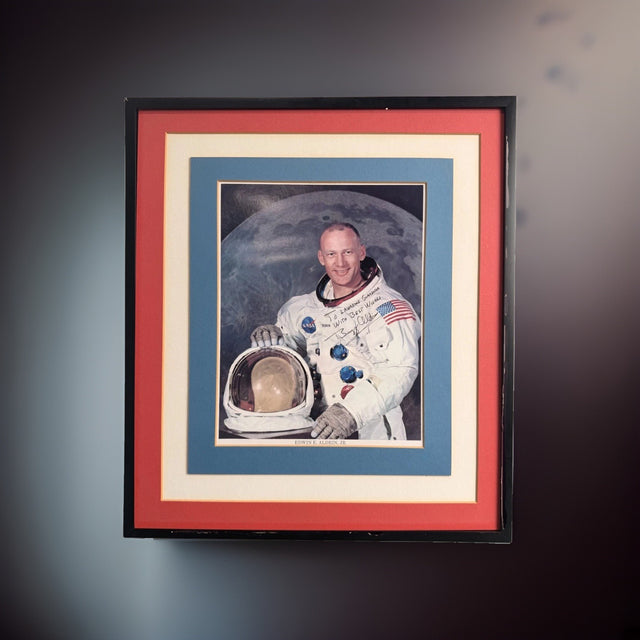
Buzz Aldrin Signed NASA 8x10 Color Photo Personalized Framed JSA LOA
$899.00 USD
-
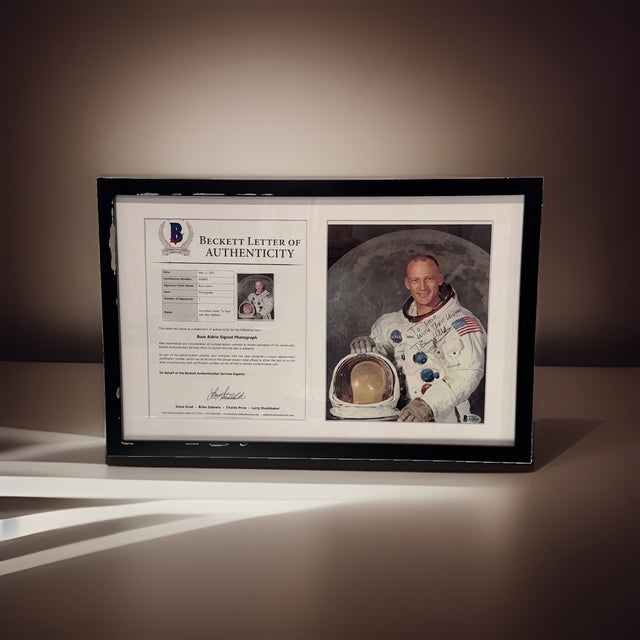
Buzz Aldrin Signed Inscribed Astronaut Photo Framed Beckett LOA A42843
$999.00 USD
-
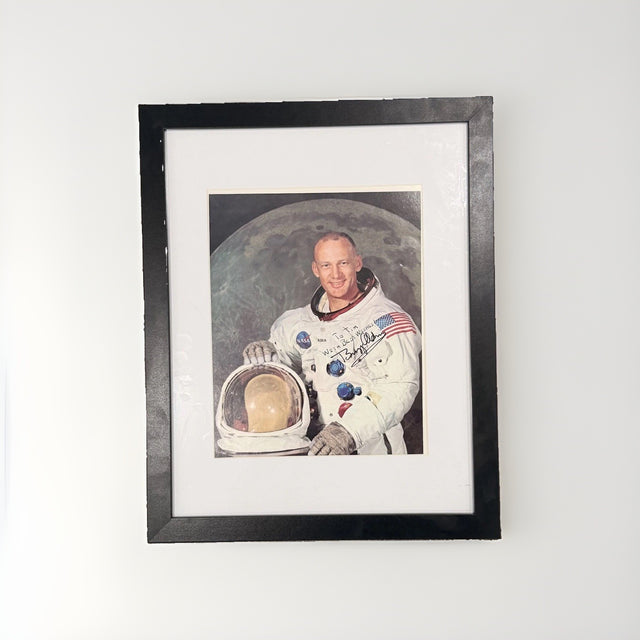
Buzz Aldrin Signed NASA Astronaut Portrait Inscribed To Tim Framed
$850.00 USD
-
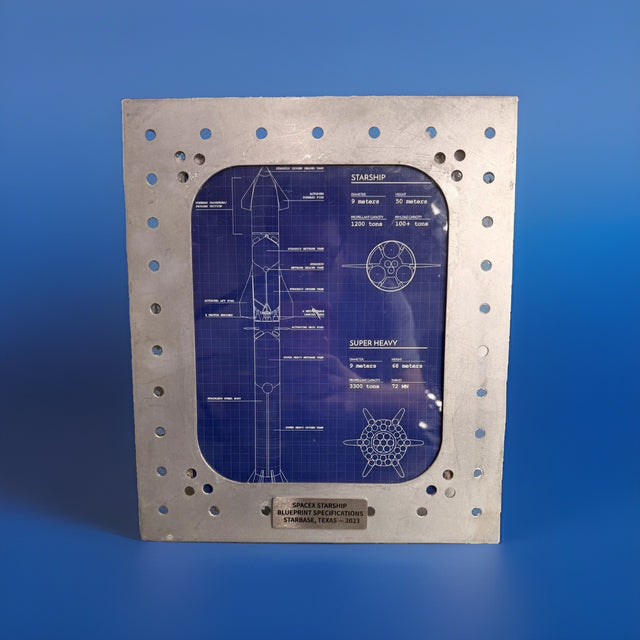
SpaceX Starship Super Heavy Blueprint Metal Display Panel Spacecraft Frame
$59.00 USD
-
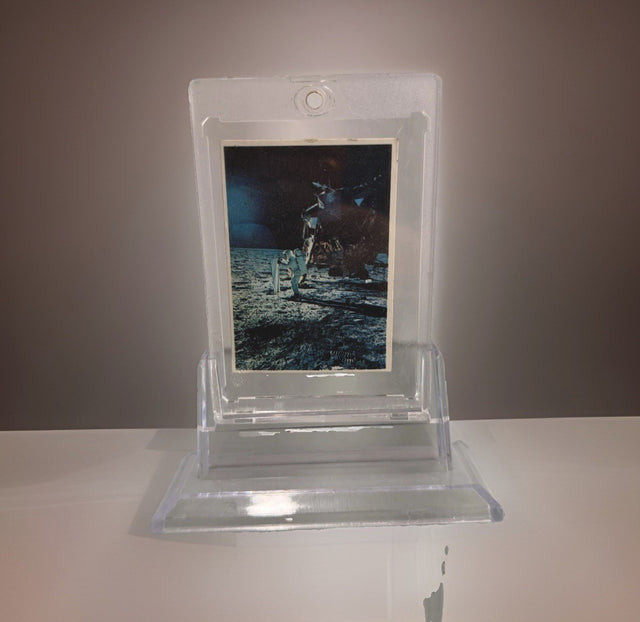
1969 Space Candy Buzz Aldrin Apollo 11 On The Moon Card #19 Taylor-Reed Display
$59.00 USD
-
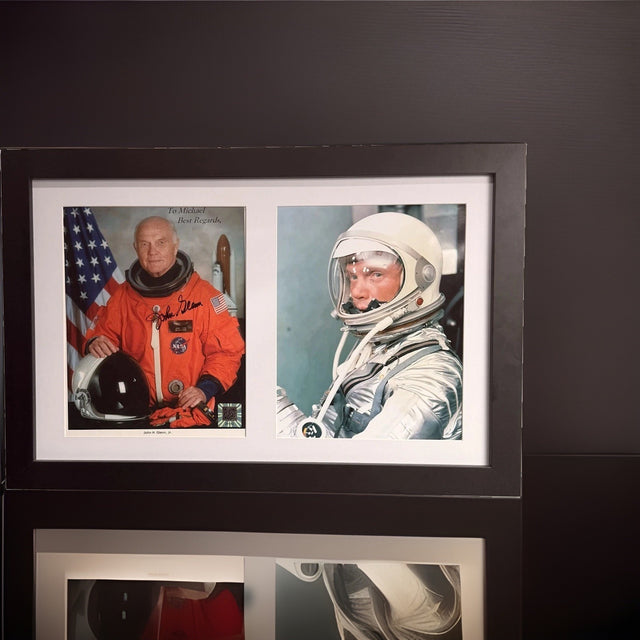
John Glenn Signed Autographed NASA Photo Display JSA Mercury Astronaut Framed
$199.00 USD
Browse the collection for current listings.