KAWS Companion vs BFF vs Chum vs Accomplice: Identify & Value Each
To tell if a KAWS figure is real, work from the outside in: verify the packaging and Medicom or OriginalFake markings first, then confirm the sculpt, colorway, and foot-stamp against a known-authentic reference for that exact release, and finally trace provenance back to a legitimate source. Authentic KAWS vinyl carries consistent factory markings, a clean high-resolution box, and a serial or copyright stamp on the underside of a foot; a figure that fails any one of these while the others look plausible should be treated as suspect until a specialist or a program like TrueCOA confirms it. The single most common mistake buyers make is trying to authenticate a “KAWS figure” in the abstract — you cannot. You authenticate a specific character in a specific release, because a Companion, a BFF, a Chum, and an Accomplice each have their own sculpt, their own production history, and their own set of tells.
This guide breaks down the major KAWS character families — Companion, BFF, Chum, Accomplice, and the related cast — so you can identify which one you are holding, understand roughly where each sits in the market, and know what to check before you buy. It is written for collectors who want to be right rather than fast. For the step-by-step markings checklist, pair this with our KAWS authentication guide and the KAWS packaging guide.
Why the Character Matters Before Authenticity
KAWS (Brian Donnelly) built a visual language out of a small cast of recurring characters, each defined by a silhouette and a set of design cues rather than by a name printed on the toy. Counterfeiters exploit the fact that most buyers recognize “the X-eyed guy” but cannot name the character or place the release. When you can identify the character precisely — and know which factory produced it, in which era, and at what size — you narrow the field of what an authentic example should look like. That is the foundation of every real authentication.
It also matters because the characters are not interchangeable in the market. A collector who wants an Accomplice is rarely satisfied by a Companion, and a rare Chum colorway answers a different demand than an Open Edition BFF plush. Pricing, scarcity, and counterfeit risk all attach to the character-plus-release, not to “KAWS” as a category. So the discipline that follows — naming the character, fixing the era, then verifying every layer — is not academic. It is the difference between paying a fair price for the thing you actually want and overpaying for a lookalike, a wrong colorway, or a convincing fake.
Two production eras dominate the vinyl market. The OriginalFake era (roughly 2006–2013, tied to KAWS’s own OriginalFake brand and store) and the Medicom Toy era that runs alongside and beyond it. Markings, box design, and stamps differ between them, which is why we treat era as a first-order variable. For the full comparison, see how authentication differs between OriginalFake and Medicom-era releases. The rest of this article assumes you have identified the era; here we focus on identifying the character.
Companion: The Flagship Character
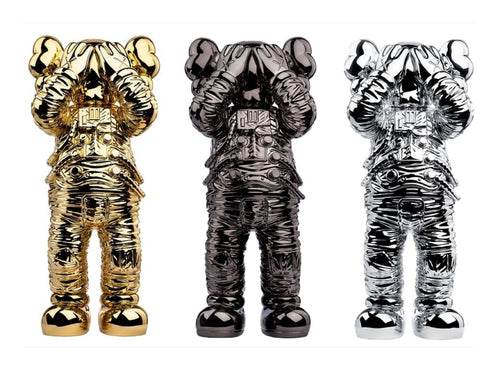
The Companion is the anchor of the KAWS universe — a Mickey-Mouse-derived figure with a rounded head, two X’s for eyes, gloved hands, and the familiar cartoon-body proportions. When people picture “a KAWS figure,” they usually picture a Companion. It is the most reproduced character across vinyl, wood, plush, and monumental sculpture, and consequently the most faked.
How to identify a Companion
- Silhouette: upright humanoid body, large round head, distinct ears, four-fingered gloved hands. The posture varies by release (standing, seated, hands over face in the “shame” pose), but the core anatomy is consistent.
- Signature poses: the “Resting Place,” the hands-over-eyes gesture, and the seated “Together” and “Along the Way” multi-figure arrangements are all Companion-based.
- Common colorways: the classic trio of grey, brown, and black recurs across many editions, with seasonal and collaboration colorways (Open Edition browns/greys/blacks, holiday tones, and collaboration palettes) layered on top.
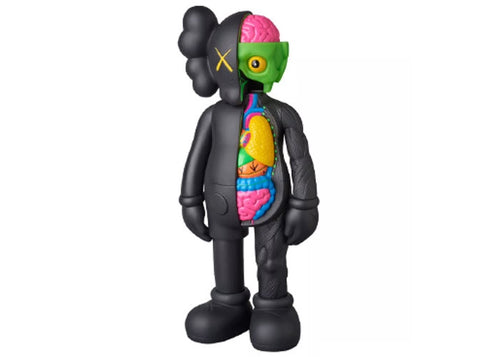
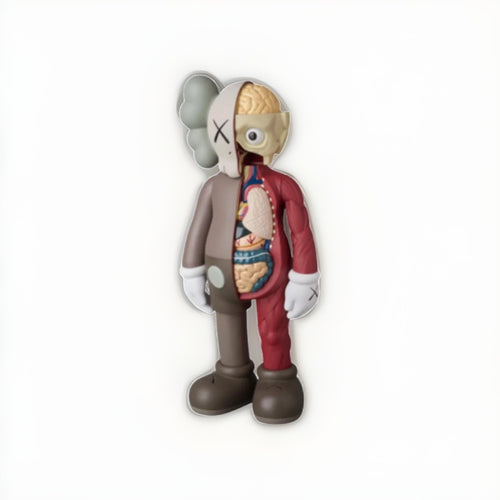
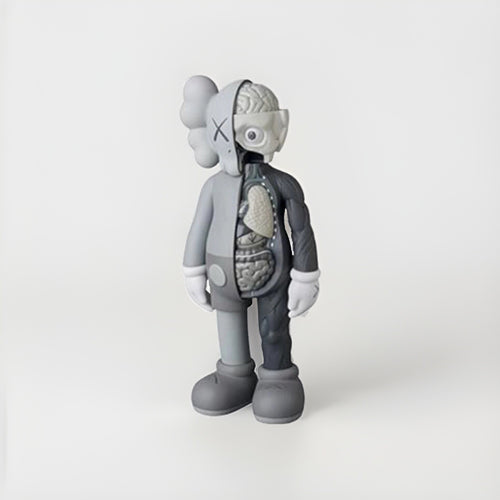
Because the Companion spans everything from mass-market Open Edition vinyl to limited flocked and dissected variants, its value range is the widest of any character. Widely produced Open Edition Companions occupy the accessible end of the market, while early flocked, dissected, or bronze Companions sit far higher. Anatomy such as the Dissected Companion — where the outer skin is removed to reveal internal organs — is its own collecting sub-category; see what collectors check first on Separated and Dissected figures.
Companion counterfeit patterns to watch
The Companion’s popularity has made it the most heavily faked KAWS character, and the fakes have grown more convincing over time. Early bootlegs were crude — wrong proportions, garish paint, obviously copied boxes. Today’s better counterfeits get the silhouette close, which is why the fine-grained checks matter. On an authentic Companion, the X-eyes are cleanly rendered with sharp, even lines; the ears sit at the correct angle and thickness for the release; and the gloved hands have crisp, symmetrical fingers. Recast fakes — made by molding a genuine figure — tend to lose fine detail, so the surface can look slightly soft or “melted,” seams can be thicker, and the figure may be marginally smaller than genuine because vinyl shrinks when recast. Paint on fakes is frequently the giveaway: streaky coverage, the wrong shade of grey or brown, or a sheen that is too glossy or too matte for the release. Because so many Companions exist, you will almost always be able to find verified reference photos of the exact edition — use them.
BFF: The Furry Companion
BFF is a taller, slimmer character introduced in the mid-2010s, most recognizable for its flocked (fuzzy) surface and elongated body. Where the Companion reads as a cartoon everyman, BFF reads as a soft, plush-adjacent creature — though it exists in smooth vinyl and plush forms too. BFF became strongly associated with major museum and retail moments and with the UNIQLO collaborations that put KAWS on millions of T-shirts.
How to identify a BFF
- Proportions: noticeably taller and leaner than a Companion, with longer limbs and a smaller head-to-body ratio.
- Surface: the defining vinyl versions are flocked. Run a fingertip across an authentic flocked BFF and the fibers feel dense and evenly applied; patchy, sparse, or crumbly flocking is a warning sign.
- Colorways: pink, blue, black, and green are among the recurring BFF tones across plush and vinyl.
BFF plush versions (including large-format plush) are among the most widely distributed KAWS products, which keeps entry prices lower, while limited vinyl and early flocked BFFs command more. The character’s ubiquity is exactly why counterfeit BFF plush is common — check stitching, tag construction, and flocking quality against a verified example before buying.
On plush BFFs specifically, the sewn-in tags are a primary authentication surface. Genuine tags carry correct branding, clean printing, accurate wash and material information, and consistent stitching where they attach to the body. Counterfeit plush often shows crooked or fraying tag stitching, blurry or misspelled tag text, and flocking or fabric that mats or sheds. Proportions matter too: a genuine BFF holds its slim, elongated shape, whereas fakes can be squat, over-stuffed, or lopsided. Because the UNIQLO and museum-linked BFF plush sold in enormous numbers, sealed, tagged examples in clean condition are the safest buys, and the ones most worth verifying carefully given how many copies circulate.
Chum: The Michelin-Man Cousin
Chum is a KAWS reinterpretation of the Michelin Man (Bibendum) silhouette — a stacked, tire-ring body topped with the familiar X-eyed head. It is one of the earlier characters and has a devoted following precisely because it is less mass-produced than the Companion. Chum appears in vinyl figures and in KAWS’s prints and paintings.
How to identify a Chum
- Body: rounded, segmented “stacked ring” torso and limbs derived from the Michelin figure, distinctly chunkier than a Companion.
- Head: the same X-eyed KAWS head, which is the giveaway that a Michelin-shaped figure is a Chum rather than an unrelated toy.
- Editions: Chum vinyl releases tend to be smaller in number than Open Edition Companions, so genuine examples are scarcer and provenance matters more.
Because Chum runs are smaller, values for authentic vinyl Chums generally sit above comparable Open Edition Companions, and desirable colorways can move sharply. Scarcity also means fewer reference photos circulate, so buy Chums from sources that can document the release and, ideally, back it with third-party verification.
Accomplice: The Bunny-Eared Character
Accomplice is the rabbit-inspired member of the cast — a Companion-like body topped with long bunny ears and the X-eyed face. It debuted in the mid-2000s and its early vinyl releases (notably the pink and black colorways) are cornerstone pieces for KAWS collectors. Accomplice sits closer to the “art toy” end of the spectrum than the mass-market end.
How to identify an Accomplice
- Ears: the two long upright ears are the unmistakable identifier; no other core KAWS character has them.
- Body & pose: a slim, upright figure often shown with hands to its face, echoing the Companion’s gestural vocabulary.
- Colorways: the pink and black releases are the most referenced; verify the exact shade and finish against a documented example.
Accomplice’s smaller original editions and its status among early KAWS collectors put authentic examples at the higher end of the vinyl market. That desirability makes it a counterfeit target, so treat any “bargain” Accomplice with heightened suspicion and demand provenance.
Why early Accomplice and Chum releases reward research
Chum and Accomplice occupy a specific place in KAWS collecting: they are recognizable enough to be desirable, but produced in small enough numbers that reliable reference material is thinner than for the Companion. That combination is precisely where buyers get hurt, because there are fewer verified photos to compare against and more room for a plausible-looking fake or a mislabeled colorway to pass. When you evaluate a Chum or an Accomplice, insist on documentation of the specific release — era, colorway, size, and any collaboration — and cross-check the box, stamp, and finish against a known example rather than a generic KAWS image. If a seller cannot produce that detail for a character this scarce, treat the gap as a reason to walk away rather than a discount to celebrate. Scarcer characters are also where third-party or house-standard verification earns its keep, because the physical tells alone leave more ambiguity than they do on a mass-market Companion.
The Wider Cast: Chompers, Bendy, Sesame Street & Collaborations
Beyond the four flagship characters, KAWS has produced a broader cast and many collaboration figures. Chompers (a set-teeth character), Bendy (a sinuous snake-like figure), and reworkings of licensed characters — KAWS x Sesame Street (Elmo, Cookie Monster, Big Bird), KAWS x Peanuts (Snoopy), KAWS x The Simpsons (the “Kimpsons”), and Astro Boy — all use the same X-eyed and stitched-detail visual grammar applied to another form. When you meet an unfamiliar KAWS figure, first identify the underlying character or licensed source, then research that specific release. Collaboration figures each carry their own packaging and markings, so never assume a Companion’s tells apply to a Sesame Street plush.
Character Identification Table
| Character | Defining silhouette | Key identifier | Typical production scale | Relative value tier* |
|---|---|---|---|---|
| Companion | Mickey-derived cartoon body, round head, gloved hands | Two X eyes, four-fingered gloves; widest range of poses | Very high (Open Editions) to very limited (flocked/dissected) | Entry to high |
| BFF | Tall, slim, elongated body | Flocked/fuzzy surface; smaller head-to-body ratio | High (plush & UNIQLO) to limited (vinyl) | Entry to mid |
| Chum | Stacked Michelin-Man ring body | Chunky segmented torso + X-eyed head | Smaller vinyl editions | Mid to high |
| Accomplice | Slim upright body with long bunny ears | Two upright rabbit ears; pink/black colorways | Small early editions | High |
| Chompers / Bendy / Collabs | Varies by source character | Licensed form + KAWS X eyes and stitching | Varies widely | Varies |
*Tiers are directional and relative to one another, not fixed prices. Actual value depends on the specific release, colorway, size, condition, and packaging. Always confirm with current comparable sales.
Authenticating Any KAWS Character: The Universal Checks
Whatever the character, the authentication logic is the same. Identify the release, then verify it against a known-authentic reference across four layers:
- Packaging. Authentic KAWS boxes use crisp, high-resolution printing, correct fonts, accurate branding (OriginalFake or Medicom Toy depending on era), and consistent color. Blurry graphics, off-register printing, thin cardboard, and misspellings are red flags. Our KAWS packaging guide catalogs box types by era; for the counterfeit patterns specifically, read the fake KAWS packaging tells.
- Markings & foot stamp. Genuine vinyl carries a copyright/date stamp and manufacturer markings, commonly on the underside of a foot. The exact wording and format vary by release and era, so match the stamp to a verified example of that same figure — not to a different release. The box, foot-stamp and Medicom markings checklist walks through this in detail.
- Sculpt, seams & paint. Authentic figures have clean seams, even paint, correct sheen, and accurate proportions. Fakes often show sloppy seam lines, thin or streaky paint, wrong colors, and soft or “melted” detail from copied molds.
- Provenance. A documented chain back to a legitimate retailer, drop, or reputable dealer is worth more than any single physical tell. Where a piece carries house-standard verification — Gauntlet backs applicable KAWS pieces with TrueCOA — that adds a durable, checkable record.
No honest guide can hand you a universal “secret mark” that proves any KAWS is real; anyone who claims one is selling certainty they don’t have. Authentication is the convergence of multiple consistent signals for a specific release. When signals conflict, stop and get a specialist opinion.
How Value Is Set Across the Characters
Value in KAWS vinyl is driven by five levers that apply regardless of character: edition size (Open Edition versus limited), size/format (small vinyl versus large-format versus bronze), colorway desirability, condition, and completeness (sealed with box and any inserts). A sealed, mint Open Edition Companion and a beaten, box-less example of the same release can sit at very different price points. For the mechanics of how a release is described — colorways, sizes, and edition details — see reading a KAWS release.
Character does shape the baseline: Open Edition Companions and BFF plush are the most accessible entry points, while smaller-run characters like Chum and Accomplice, and limited Companion variants like the flocked and dissected pieces, occupy higher tiers. But a common character in a rare configuration can outrun a scarce character in an ordinary one — which is why you price the release, not the character name. Browse authenticated inventory in the KAWS collection, and use the KAWS figurine index to place a given release within KAWS’s wider output.
Condition and completeness: the multipliers
For vinyl and plush that trade largely on their collectible status, condition and completeness are multipliers, not footnotes. The market broadly recognizes a hierarchy: sealed and unopened commands the most, followed by opened-but-mint with the original box and all inserts, then displayed examples with minor wear, and finally figures with damage or missing packaging. On vinyl, watch for sun-fading (grey and brown Companions are especially prone to shifting tone), scuffs on high points, paint rubs, dents from drops, and yellowing on white or light figures. On plush, look for matting, staining, odor, and tag condition. The box is not optional at the high end — a mint figure without its box can lose a meaningful share of value versus the same figure boxed, because serious buyers want the complete package and the box is itself an authentication surface. Inserts, header cards, and any collaboration-specific extras should be present and correct for the release. When you compare prices, compare like for like: a sealed example and a loose one are effectively different products.
Reading comparable sales the right way
Because KAWS releases are numerous and visually similar, the biggest pricing error is comparing the wrong things. Match your comparable sales to the exact character, release, colorway, size, and condition — a grey Open Edition Companion is not a comp for a brown flocked one, and a sealed piece is not a comp for a loose one. Favor completed, verified sales over asking prices, weight recent sales more heavily than old ones, and discard outliers driven by a single motivated bidder. For scarcer characters like Chum and Accomplice, expect fewer data points and wider spreads, which is another reason provenance and verification carry more weight at the top of the market. The discipline is the same one a dealer uses: identify the release precisely, then let a clean set of matched comps — not a headline auction number for a different piece — set the range.
Buying Safely Without Getting Burned
Because desirable characters attract sophisticated fakes, where and how you buy matters as much as what you buy. Prefer sellers who show the actual item (not stock photos), the box and stamp, and can speak to provenance. Be wary of prices well below market, vague “authentic guaranteed” claims with no documentation, and refusal to provide additional photos. For a full protocol on secondary-market purchases, read how to buy KAWS on the secondary market without getting burned.
Gauntlet Gallery’s position is straightforward: buy authenticated, documented pieces from sources that stand behind them. Our KAWS buyer’s guide lays out what to demand from a seller, and our collector trust hub explains the authentication and provenance standards we apply across every category, including house-standard verification via TrueCOA. Getting the character right is step one; getting the paperwork right is what protects your money.
Quick Reference: Naming the Character in Ten Seconds
- Round cartoon body, gloved hands, many poses? Companion.
- Tall, slim, and fuzzy/flocked? BFF.
- Stacked tire-ring Michelin body? Chum.
- Long bunny ears? Accomplice.
- A familiar licensed character wearing X eyes and stitching? A collaboration figure — research that specific drop.
Once you can name the character, everything else — the correct box, the right stamp, the plausible colorway, the sane price — becomes checkable. That is how a serious collector tells real from fake: not with a single glance, but by confirming that a specific character, in a specific release, matches every layer of the record it should.