KAWS OriginalFake vs Medicom-Era Releases: How Authentication Differs
To tell if a KAWS figure is real, work from three anchors that hold true across every era: the packaging, the sculpted and stamped markings on the figure itself, and the provenance that ties the piece to a legitimate release. What changes between the earlier OriginalFake period and the later Medicom Toy / All Rights Reserved era is the form those anchors take — the box design, the retail channel, the stamp conventions, and the paperwork you should expect. If a figure's packaging, base stamp, finish, and documented history all agree with a known release, it is almost certainly authentic; if any one of them contradicts the others, treat the piece as suspect until proven otherwise. This guide explains how those checks shift across KAWS's release history so you can read a figure in the correct context rather than applying one-size-fits-all rules.
KAWS (Brian Donnelly) has produced vinyl and other three-dimensional figures for more than two decades, and the market for them is large, liquid, and heavily counterfeited. Because fakes are frequently built to imitate a specific release, the single most important skill a collector can develop is knowing what a given era's genuine article should look like — and what would be anachronistic or out of place. For a running visual reference of releases, our KAWS figurine index catalogs the characters, colorways, and formats that recur across these years.
Two eras, one authentication mindset
It helps to think of KAWS's figure output in two broad, overlapping chapters. This is a collector's shorthand, not an official taxonomy — the transitions were gradual and some releases blur the lines — but it maps cleanly onto how you should authenticate.
The OriginalFake era refers loosely to releases associated with OriginalFake, the brand and Tokyo retail concept KAWS operated in partnership with Medicom Toy during roughly the mid-2000s to the early 2010s. Figures from this chapter often carried OriginalFake branding on the box, were sold through a defined boutique and stockist network, and reflect the design language of that store's identity. Many of the most sought-after early Companion, Chum, Accomplice, and Bendy releases sit here.
The Medicom-era / All Rights Reserved chapter covers the broader and ongoing period in which KAWS figures are produced and distributed with Medicom Toy and released under KAWS's own studio identity, frequently branded "KAWS: ALL RIGHTS RESERVED." This includes museum-and-exhibition tie-in figures, large-scale open or timed editions, holiday and companion drops, and a wide range of collaborations. Packaging conventions, retail channels (including the artist's own online store and partnered institutions), and documentation are more standardized and, importantly, more contemporary in feel.
Across both, the mindset is identical: authenticate the whole, not a single feature. Counterfeiters can copy a logo or a stamp in isolation; they struggle to make the box, the vinyl finish, the base markings, the retail story, and the paperwork all agree at once.
How the checks differ, era by era
The table below summarizes where the emphasis shifts. Use it as a framework, then confirm against a known-genuine example of the exact release you are examining. When you cannot confirm a detail with confidence, default to caution and lean on documentation — a point we return to below.
| Authentication anchor | OriginalFake era (earlier) | Medicom / All Rights Reserved era (later) |
|---|---|---|
| Box branding | Often carries OriginalFake identity and period-appropriate graphics; reflects the boutique's design language. | Frequently branded "KAWS: ALL RIGHTS RESERVED" and/or co-branded with Medicom Toy or an exhibiting institution. |
| Retail channel | Boutique / stockist network tied to the OriginalFake concept and select partners. | Artist's own web store, museum shops, exhibition venues, and authorized retail partners. |
| Base / foot stamp | Sculpted signature-style KAWS stamp with year and production attribution; conventions vary by release. | Similar stamped attribution and year, generally consistent within a given drop; verify against that specific release. |
| Finish & casting | Period vinyl finishes; crisp seams and clean paint for the era's standards. | Modern production tolerances; consistent color, clean masking, and tight registration expected. |
| Documentation | Often none from the maker; provenance and dealer standing carry the weight. | Often none from the maker either — but Gauntlet backs applicable pieces with TrueCOA. |
| Most useful tell | Does the box + era design language match a documented OriginalFake release? | Does the co-branding, channel, and stamp match the known Medicom/ARR drop? |
Reading the packaging in the right era
Packaging is usually the fastest way to place a figure in the correct chapter, and mis-placed packaging is one of the most common tells of a problem. An OriginalFake-era box that mimics later "ALL RIGHTS RESERVED" branding — or a supposedly recent release housed in graphics that belong to the earlier boutique period — is an immediate red flag. The goal is congruity: the box, its logos, the font treatments, the barcode and stickering, and the window or blister style should all belong to the same moment in KAWS's history as the figure inside.
Within either era, look at print quality with a critical eye. Genuine boxes tend to show clean, well-registered printing, crisp edges, and appropriate cardboard weight and coating. Counterfeit boxes frequently betray themselves through slightly soft or fuzzy printing, off colors, incorrect fonts, misaligned panels, or a barcode that does not match the release. Because these details are release-specific, the most reliable move is to compare against a confirmed genuine example of the same drop rather than a general impression of "how KAWS boxes look." Our companion piece on fake KAWS packaging tells — shrink-wrap, print quality & inserts goes deep on the packaging-specific signals that separate a real box from a convincing copy, and our KAWS packaging guide catalogs how boxes and inserts are constructed.
Shrink-wrap deserves its own caution. A factory-sealed appearance is reassuring but not proof: counterfeit operations re-shrink boxes routinely, and a fresh wrap can hide a swapped or fake figure. Treat sealed condition as one data point among many, never as a certificate. If a "sealed" price premium is being charged, the burden of proof on the seller's provenance goes up, not down.
The figure itself: stamps, sculpt, and finish
Once the box is placed in the right era, turn to the figure. KAWS figures generally carry a sculpted, signature-style stamp — commonly on the base or foot — that includes an attribution to KAWS and a production year, with the specific wording and manufacturer attribution varying by release. The presence of a stamp is not, by itself, authentication; counterfeiters reproduce stamps. What matters is whether the stamp's content, placement, depth, and typography match the known conventions for that exact release and era. A year that does not fit the release, a manufacturer attribution that is anachronistic, or a stamp that looks printed or shallow rather than cleanly molded into the vinyl are all warning signs.
Finish and casting quality tell you a great deal. Across both eras, genuine figures show consistent color, clean paint masking with minimal bleed, tight seams, and correct proportions. Fakes frequently miss on subtle proportions, show muddy or off-hue color, exhibit sloppy paint edges, or have visible casting flaws that a legitimate release would have rejected. Because production standards evolved over the years, calibrate your expectations to the era: hold a later Medicom/ARR piece to modern tolerances, and judge an earlier OriginalFake piece against the standards of its time. For a structured, checkbox approach to the base stamp and Medicom markings, our KAWS box, foot stamp & Medicom markings checklist walks the physical inspection step by step, and the broader KAWS authentication guide assembles the full method in one place.
Weight, material, and the "feel" test
Experienced collectors often notice weight and material feel before they can articulate why. Genuine KAWS vinyl has a characteristic density and surface quality; many counterfeits feel too light, too hollow, or use a plastic that sounds and feels wrong. This is a soft signal — hard to convey in text and easy to misjudge without direct comparison — but combined with the harder evidence of box, stamp, and provenance, it can tip a borderline case. When possible, handle a known-genuine example of the same release so your baseline is accurate rather than imagined.
Color registration and the details fakes get wrong
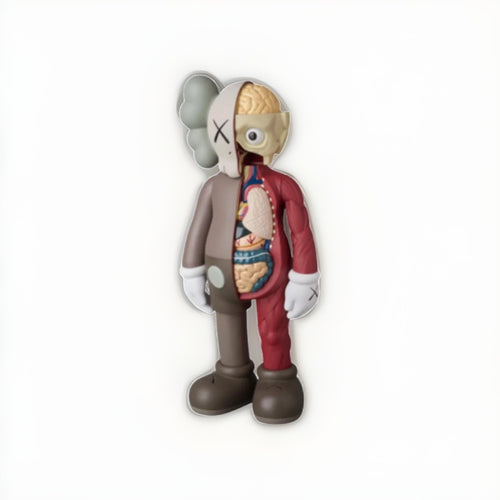
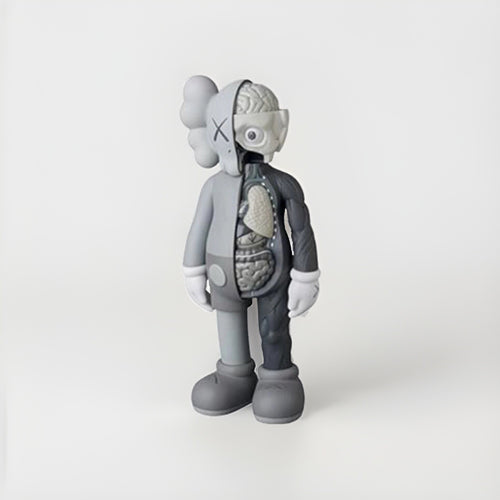
A recurring weakness in counterfeit KAWS figures is color. Genuine releases use deliberate, consistent palettes with clean transitions between painted zones; the paint sits where the design intends, with sharp masking and no drift from one unit to the next. Fakes commonly get the hue slightly wrong — a companion that should read a specific grey or brown comes out muddy or too warm — or they show masking that bleeds across a seam. The famous crossed-out "X" eyes and the sculpted hands are areas where casting sharpness matters: on a genuine figure those elements are crisp and correctly proportioned, while copies frequently soften the edges or misjudge the spacing. None of these is a standalone verdict, but a figure that misses on several of them at once, in ways a legitimate production run would have rejected, is telling you something.
Why provenance matters more, not less, as editions grew
Here is the point most beginners miss: KAWS figures generally do not ship with a maker-issued certificate of authenticity. That was true of many OriginalFake releases and remains true of many Medicom/ALL RIGHTS RESERVED pieces. There is no manufacturer "COA" that magically resolves a KAWS figure's authenticity, and any seller waving a supposed factory certificate should raise your suspicion rather than lower it. This is exactly why provenance — the documented chain of where a piece came from — carries so much weight.
Provenance answers questions a stamp cannot: Which release is this? Was it acquired through a legitimate channel? Who has owned it, and does the paper trail hold together? A figure with a credible acquisition history from an authorized channel, consistent condition documentation, and a reputable dealer standing behind it is far safer than an identical-looking figure with no story. As editions grew larger and the money at stake increased across the Medicom era, the incentive to counterfeit rose in lockstep — which makes documentation more valuable, not less. Our primer on the collector's trust hub lays out how provenance, authentication, and dealer accountability fit together, and it is the backbone of how a serious gallery reduces risk for buyers.
This is where Gauntlet Gallery's house standard comes in. Rather than lean on a nonexistent factory certificate, we back applicable KAWS and BE@RBRICK pieces with TrueCOA: a verifiable blockchain certificate tied to the specific object, so a buyer can confirm the record online rather than trust a printed slip. TrueCOA is our program — the house standard we stand behind — not a universal industry body, and it does not replace inspecting the figure. It complements physical authentication with a durable, checkable record of the piece. If you want to understand the mechanics of tag-and-ledger verification generally, our sibling article on NFC tags & blockchain COAs for collectibles explains how the verification actually works.
A practical, era-aware inspection sequence
Put the pieces together into a repeatable routine. The order matters, because early steps place the figure in its era and later steps confirm it against that context.
- Identify the release. Which character, colorway, size, and drop is this claimed to be? Pin down the era — OriginalFake or Medicom/ARR — before anything else. If the seller cannot say precisely what it is, that is itself a signal.
- Place the packaging in that era. Confirm the box branding, graphics, fonts, barcode, and window/blister style are congruent with the claimed release. Anachronisms are disqualifying.
- Inspect print and construction. Check print registration, color, cardboard weight, and insert fit against a known-genuine example of the same drop.
- Read the base stamp. Verify the KAWS attribution, year, and manufacturer wording match the era's convention, and that the stamp is cleanly molded — not printed, shallow, or misplaced.
- Judge the figure's finish. Assess color, paint masking, seams, proportions, weight, and material feel against the standards appropriate to the era.
- Demand provenance. Ask for acquisition history and channel. Weigh dealer reputation. Prefer pieces backed by verifiable documentation such as TrueCOA.
- Resolve contradictions before buying. If any anchor disagrees with the others, stop. A convincing box does not cure a wrong stamp; a real-looking stamp does not cure a suspect box.
If you intend to buy on the open market rather than from a vetted dealer, read our guide on how to buy KAWS on the secondary market without getting burned before you commit funds — it covers escrow-minded practices, seller vetting, and the questions that flush out problems early.
Common mistakes across both eras
Several errors recur often enough to name directly. First, trusting a single feature. A correct-looking stamp or an intact seal proves nothing on its own; authentication is the agreement of many features. Second, applying the wrong era's rules. Judging an OriginalFake-period figure by later production standards — or vice versa — produces false positives and false negatives alike. Third, over-valuing shrink-wrap. Re-wrapping is trivial for counterfeiters, so sealed condition raises, not lowers, the need for provenance. Fourth, accepting a "factory COA." KAWS figures generally do not come with maker certificates; a seller who produces one may be misrepresenting the piece. Fifth, skipping provenance because the figure "looks right." Looking right is the entire objective of a good fake — the paper trail is what a fake cannot easily manufacture.
Where these figures sit in a collection
Both eras produce collectible, liquid pieces, and neither is inherently "better" — they are different chapters with different scarcity dynamics. Earlier OriginalFake releases carry historical weight and, in many cases, tighter supply; later Medicom/ARR releases span a broad range from limited exhibition tie-ins to larger open editions. What protects your value in either case is the same discipline: buy authenticated pieces with documented provenance, keep the packaging and paperwork intact, and prefer channels that stand behind what they sell. You can browse authenticated inventory in our KAWS collection, and if you are still choosing a lane, our KAWS buyer's guide lays out characters, formats, and what to prioritize as a first purchase.
The through-line is simple. The tools of authentication shift as you move from the OriginalFake boutique era to the Medicom and All Rights Reserved period — different boxes, different channels, different co-branding — but the logic never changes. Read the figure in its correct era, insist that every anchor agrees, and let verifiable documentation carry the weight that a nonexistent factory certificate never can. Do that consistently, and "how to tell if a KAWS figure is real" stops being a guessing game and becomes a checklist.