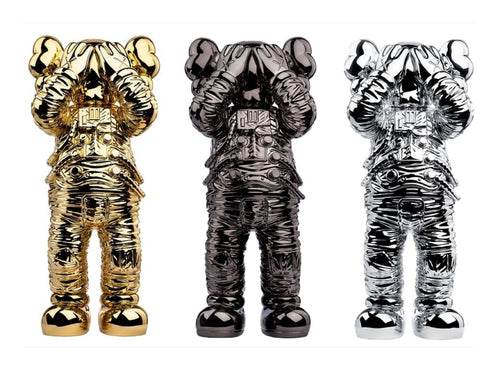
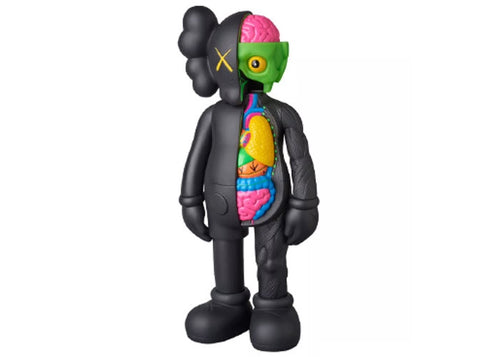
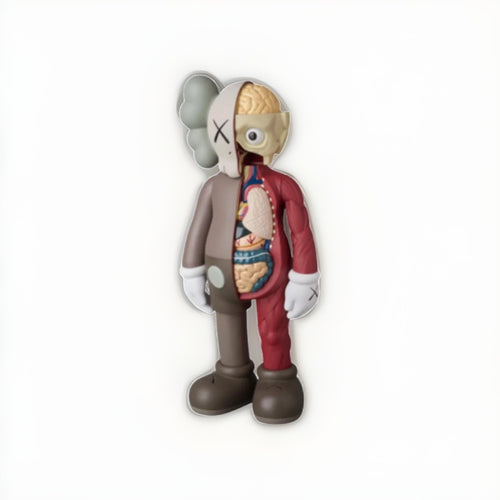
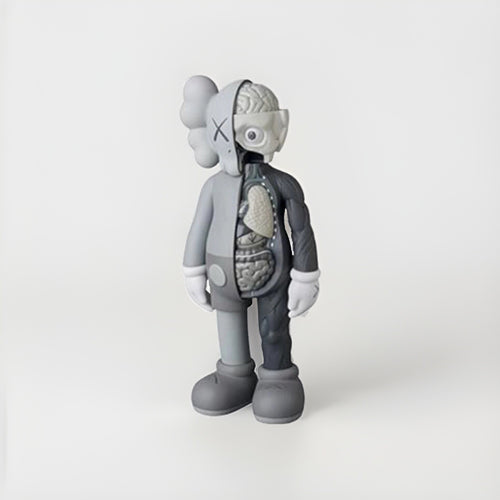
KAWS Box, Foot Stamp & Medicom Markings: The Authentication Checklist
To tell if a KAWS figure is real, work through four independent layers of evidence in this order: the box and packaging, the foot stamp and molded markings on the figure itself, the accompanying paperwork or seal, and the seller's provenance. No single detail authenticates a KAWS piece on its own — counterfeiters copy any one tell in isolation — but genuine releases are internally consistent across all four. A real figure has crisp molding, correct copyright and manufacturer text on the underside of the foot, packaging that matches the specific release, and a paper trail you can trace back to a reputable source. At Gauntlet Gallery, we back applicable KAWS and BE@RBRICK pieces with TrueCOA certification so the physical object and its record stay linked.
This guide is a working checklist, not a database of secret codes. We deliberately avoid publishing exact stamp text or edition figures that we cannot verify for every release, because counterfeiters read the same guides you do, and a wrong "fact" repeated online becomes a forger's shopping list. Instead we teach you what genuine KAWS production looks and feels like, where fakes consistently break down, and how to route a questionable piece to proper verification before money changes hands. Whether you are buying a Companion, a BFF, a Small Lie, or a KAWS BE@RBRICK, the same discipline applies.
Why KAWS Figures Are Faked So Heavily
KAWS — the studio name of American artist Brian Donnelly — sits at the intersection of fine art and designer toys, which is exactly the zone where counterfeiting thrives. His vinyl and resin figures are produced in limited runs, sell out on release, and appreciate quickly on the secondary market. A figure that retailed for a few hundred dollars can trade for several multiples of that within months, and iconic pieces climb far higher. High demand, limited supply, recognizable silhouettes, and a global resale market are the four ingredients fakers need. The result is a flood of "KAWS-style" figures ranging from crude knockoffs to alarmingly good replicas that copy the box art, the color, and even the foot text.
Complicating matters, KAWS releases have come through different production and distribution arrangements over the years — the early OriginalFake era, later Medicom Toy productions, museum and gallery editions, and brand collaborations. Each has its own packaging conventions and markings. A tell that is correct for one release can be a red flag on another. That is why the checklist approach beats memorizing a single "authentic" template. If you want the deeper history of how these eras differ, see our companion piece on how KAWS OriginalFake and Medicom-era authentication differ.
The Four-Layer Authentication Checklist
Run every piece through all four layers. Genuine figures pass all four and are consistent across them. Fakes usually pass one or two convincingly and fall apart on the rest. Treat a failure on any layer as a reason to slow down and verify, not necessarily as proof of a fake — damage, missing paperwork, and honest reboxing happen — but the burden shifts to the seller to explain it.
| Layer | What to inspect | Genuine signal | Common fake failure |
|---|---|---|---|
| 1. Box & packaging | Print quality, colors, box structure, window blister, inserts, barcode | Sharp printing, correct proportions, snug blister tray, clean seams | Fuzzy or off-color print, flimsy card, loose or wrong-shaped blister, misaligned graphics |
| 2. Foot stamp & molded marks | Underside of foot/base, copyright line, maker text, molding crispness | Evenly molded raised/recessed text, consistent font, no smearing | Blurry, shallow, or misspelled text; wrong font weight; sanded-off marks |
| 3. Figure quality | Paint, seams, weight, vinyl/resin finish, color accuracy | Even paint, tight seams, correct heft, factory-smooth finish | Paint slop, visible seam lines, too light/heavy, tacky or brittle material |
| 4. Provenance & paperwork | Receipt, seller history, any COA/seal, matching release details | Traceable chain to a reputable source; details align with the release | No history, vague answers, mismatched release info, "COA" with no issuer |
Layer 1 — The Box and Packaging
Packaging is the first thing a buyer sees and often the first place a fake reveals itself, because reproducing high-quality printing and precise die-cut boxes is expensive. Start with print resolution. Genuine KAWS boxes use crisp, high-resolution printing with clean edges on text and graphics. Under magnification, authentic printing looks solid; many counterfeits show a coarse dot pattern, banding, or fuzzy edges where the artwork was scanned and re-printed from a lower-quality source. Compare the color against verified reference photos of the same release — fakes frequently drift toward the wrong hue or a duller, washed-out palette.
Next, examine the physical box. Authentic packaging uses substantial cardstock that holds its shape, with clean folds and tight seams. A window box should have a clear, well-fitted plastic window and a blister tray that cradles the figure snugly without excessive rattle. Flimsy card, sloppy glue, a warped window, or a blister that does not match the figure's contours are warning signs. Look at the barcode, any product code, and printed release information: on genuine pieces these are legible and correctly placed. We cover packaging tells in depth — including shrink-wrap and insert behavior — in fake KAWS packaging tells: shrink-wrap, print quality & inserts, and the broader Medicom conventions in our KAWS packaging guide.
A note on sealed vs. opened
Sealed, unopened packaging carries a premium and reduces some risk, but "sealed" is not a guarantee of authenticity — counterfeiters shrink-wrap fakes too, and a re-sealed box can hide a swapped figure. Conversely, an opened box does not make a genuine figure fake. Judge the packaging on its own merits (print, structure, inserts) and never let a shrink-wrap layer substitute for inspecting the actual figure and its markings when you have the opportunity.
Layer 2 — The Foot Stamp and Molded Markings
The underside of the foot (on standing figures) or the base is where KAWS figures typically carry their molded identification: a copyright line crediting the artist, and manufacturer or production text. This is one of the most information-dense authentication points, and also one of the most commonly botched by counterfeiters, so inspect it carefully — but inspect it for quality and consistency, not against a memorized string of characters.
What you are checking:
- Molding crispness. Genuine text is cleanly molded — raised or recessed uniformly, with sharp, well-formed characters. Fakes frequently show shallow, blurry, doubled, or smeared text where a mold was copied from an existing figure rather than cut from original artwork.
- Font and spacing. The typeface, letter weight, and spacing on authentic pieces are consistent and deliberate. Counterfeits often use a subtly wrong font, uneven spacing, or characters that are too thick or thin.
- Spelling and content. Misspellings, garbled copyright symbols, or nonsense characters are immediate red flags. Legitimate production does not ship with typos in the credit line.
- Evidence of tampering. Sanded, filed, or re-stamped areas on the foot suggest someone altered a fake to mimic genuine markings — or removed markings that would expose it.
Crucially, correct-looking foot text is necessary but not sufficient. Good counterfeits reproduce the underside markings convincingly. Always read the foot stamp alongside the packaging, the figure's build quality, and its provenance. If the foot text looks right but the paint is sloppy and the box is fuzzy, you still have a problem. We keep verified release-level detail in the KAWS figurine index, which is the safest place to confirm what a specific release should look like rather than trusting a stranger's listing.
Layer 3 — The Figure Itself: Paint, Seams, Weight, and Finish
Once past the box and the foot, evaluate the object as a manufactured product. KAWS figures are produced to a high standard, and build quality is a reliable discriminator because it is hard to fake cheaply at scale.
- Paint application. Genuine figures have clean, even paint with crisp boundaries between colors. Look for slop, overspray, bleeding between color fields, thin spots, or an uneven finish — hallmarks of low-cost reproduction.
- Seams and molding. Vinyl figures have seams, but on authentic pieces they are tight and well-finished. Prominent, rough, or misaligned seam lines, flashing (excess material at mold edges), or warping indicate inferior tooling.
- Weight and material. Each release has a characteristic heft and material feel. A figure that feels conspicuously too light, too heavy, hollow where it should be solid, or made of a tacky or brittle plastic is suspect. Compare against a known-good example of the same release when possible.
- Color accuracy. Colorways are specific. A "black" that is really charcoal, or a pink that skews orange, points to a copy printed or tinted from bad reference. If the figure comes in a colorway that was never officially produced, that alone is disqualifying.
Understanding how colorways, sizes, and editions are defined makes these comparisons far easier. For that framework, see our guide to reading a BE@RBRICK's series stamp, foot print & packaging — the discipline of matching stamp, foot, and box against the specific release transfers directly to KAWS.
Layer 4 — Provenance and Paperwork
Provenance — the documented history of who has owned and handled a piece — is the layer that ties the physical evidence together and the one counterfeiters can least easily fabricate. A genuine figure bought from a reputable retailer or the artist's official channels comes with a traceable origin: an order confirmation, a receipt, a dealer's records, or a clear resale chain. When a seller can show where a piece came from and the details align with the release, your confidence should rise sharply.
Be precise about what "COA" means here, because this is where buyers get misled. Medicom and the KAWS studio do not issue a universal manufacturer "certificate of authenticity" for every figure the way some assume; authenticity for designer toys rests primarily on correct packaging, markings, and provenance. So a listing that leans entirely on a generic, unsourced "COA" printed by the seller is telling you very little. A certificate is only as trustworthy as its issuer and its verifiability.
This is exactly the gap Gauntlet's authentication program is built to close. For applicable KAWS and BE@RBRICK pieces we issue TrueCOA certification that binds the certificate to the specific object — you can verify the record online against our documentation. That is a verifiable house standard, not a claim that any manufacturer body authenticates KAWS. If you are weighing how much a certificate should count in a purchase decision, our KAWS authentication guide walks through what a trustworthy authentication chain looks like.
The Full Pre-Purchase Checklist
Before you pay, confirm every item below. Treat any "no" as a stop-and-verify, not a green light you can rationalize away.
- Is the box print sharp, correctly colored, and free of banding or fuzziness?
- Does the box structure feel substantial, with a snug blister and clean seams?
- Do the barcode, product code, and printed release details match the specific release?
- Is the foot/base text cleanly molded, correctly spelled, and in the right font?
- Is there any sign of sanding, filing, or re-stamping on the markings?
- Is the paint clean and even, with crisp color boundaries and no slop?
- Are the seams tight, with no heavy flashing or warping?
- Does the figure's weight, material, and colorway match a known-good example?
- Can the seller document provenance — receipt, order history, or a clear resale chain?
- If a certificate is offered, does it name a credible issuer and can you verify it (e.g., TrueCOA, verifiable online)?
- Do all four layers agree, or does one contradict the others?
Where Fakes Most Often Break Down
Across thousands of designer-toy inspections, the same weaknesses recur. Counterfeiters can copy a silhouette and a color, but reproducing an entire release to spec — box printing, blister tooling, molded foot text, paint discipline, and correct material — is expensive and slow. So most fakes fail on the details that require original tooling or high-end printing.
| Red flag | What it usually means |
|---|---|
| Coarse, fuzzy, or banded box printing | Artwork was scanned and re-printed from a copy |
| Blurry or misspelled foot text | Mold was cast from an existing figure, not original art |
| Paint slop and heavy seam lines | Low-cost tooling and finishing |
| Wrong or "impossible" colorway | Copy tinted from bad reference, or a release that never existed |
| Price far below market for a hot release | Too-good-to-be-true is the oldest tell there is |
| Seller can't or won't discuss provenance | No traceable origin to defend the piece |
| Generic, unsourced "COA" | A certificate with no credible issuer proves nothing |
Price deserves special mention. A large discount on a figure that is otherwise selling briskly at a much higher number is not a bargain hiding in plain sight — it is the single most common lure in this market. Genuine sellers price to the market because they can. If the deal seems impossible, treat the figure as guilty until the four layers prove it innocent.
Buying Safely: Route Around the Risk
The most reliable way to avoid a fake is to buy where authentication is already done for you. Purchasing from the artist's official channels or an established, reputable dealer collapses most of the risk before it reaches you. When you buy on the open secondary market, you inherit the full burden of the four-layer checklist — and the consequences of getting it wrong.
Gauntlet Gallery's model is to do the authentication up front. Applicable KAWS pieces in our KAWS collection are inspected against release-level references and, where applicable, carry TrueCOA certification, so the checklist above is already satisfied when the piece reaches you. For a broader orientation to buying KAWS well — editions, colorways, what holds value, and what to avoid — start with our KAWS buyer's guide. And because authentication is really about trust in the whole transaction, our collector trust hub lays out how we stand behind every piece.
Common Scenarios and How to Handle Them
"The box looks perfect but I can't inspect the figure."
A convincing box is the easiest layer to fake to a photo. Insist on clear, well-lit images of the actual figure — including the underside of the foot — and of any paperwork. If a seller resists showing the foot markings, that reluctance is itself information.
"It comes with a certificate of authenticity."
Ask who issued it and how you can verify it. A certificate from a credible, verifiable program (like TrueCOA, which you can verify online) is meaningful; a generic printed card from an unknown source is not. The presence of a "COA" never overrides failures in the physical evidence.
"It's a KAWS collaboration piece, not a standalone figure."
Collaborations and brand editions follow their own packaging and marking conventions, so authenticate against that specific release rather than a general template. Cross-reference the release in the KAWS figurine index and, when in doubt, route it to formal verification.
"It's a KAWS BE@RBRICK."
KAWS BE@RBRICKs are produced through Medicom and carry BE@RBRICK-specific markings in addition to KAWS artwork. Apply the same four layers, and lean on our dedicated walkthrough of how to read a BE@RBRICK stamp, footprint, and packaging.
How to Inspect a Piece Step by Step
Knowing what to look for is only half the work; a disciplined inspection routine is what actually catches fakes. Whether you are examining a figure in hand or judging a piece from a seller's photos, follow the same sequence so nothing gets skipped. The goal is to build evidence layer by layer and to notice the moment two layers stop agreeing.
- Photograph everything in good light. Neutral, even lighting kills the ambiguity that fakers rely on. Shoot the whole box, all printed panels, the barcode, the blister and inserts, the figure from multiple angles, and — non-negotiable — the underside of the foot or base. If you are buying remotely, request exactly these shots and treat vague or evasive photography as a warning in itself.
- Compare against a verified reference. Pull up the specific release in the KAWS figurine index or another trusted source and match colorway, size, packaging, and markings to that release — not to a generic idea of "a KAWS figure." Many fakes are internally plausible but wrong for the release they claim to be.
- Inspect the print under magnification. A jeweler's loupe or a phone macro lens reveals whether box artwork is solid genuine printing or a coarse, dotty re-scan. Do the same for the foot text, looking for clean molding versus blur, doubling, or smearing.
- Handle the figure. Feel the weight, flex nothing, and run a fingertip along the seams. Factory-finished seams are tight; fakes often reveal themselves through flashing, roughness, or a material that feels tacky, brittle, or hollow.
- Interrogate the provenance last. With the physical evidence gathered, ask the seller where the piece came from and how they can prove it. Now the paperwork either corroborates a picture you have already built, or it contradicts it. Contradiction is your signal to stop.
This routine takes minutes and saves far more than it costs. The buyers who get burned are almost always the ones who let excitement over a hot release short-circuit the sequence — they see a perfect box in a photo and stop looking. The discipline is precisely in refusing to stop until all four layers agree.
Condition, Restoration, and What They Do to Value
Authentication answers "is it real?" but serious collectors also ask "what condition is it in?" — and the two questions interact. A genuine figure with a crushed box, sun-faded paint, or a cracked blister is still genuine, but its value can drop sharply. More importantly, restoration and repackaging can muddy the authentication picture. A repainted figure, a swapped foot, or a reproduction box married to a genuine figure are all things a careful inspection should surface.
When you assess condition, separate the box grade from the figure grade and note them independently, because the market prices them separately. Shelf wear, dents, price stickers, and yellowing on the box matter to completists; paint chips, scuffs, discoloration, and repairs on the figure matter to everyone. Be especially wary of any figure that shows evidence of repainting or re-stamping — those are not just condition issues, they are authentication issues, because they are exactly what a forger does to upgrade a fake or disguise a swap. If something on the figure looks freshly touched up, treat it as a reason to demand provenance and, ideally, formal verification before buying.
Why the House Standard Matters
Everything in this checklist is doable by a diligent buyer — but doing it well, every time, on every piece, is exactly the work most people do not have the reference library or the reps to perform reliably. That is the entire premise behind a dealer authentication program. When a gallery inspects a piece against release-level references, documents it, and binds a verifiable certificate to the physical object, it converts a risky private-market transaction into a trustworthy one. You are not asked to become an expert on every KAWS release; you are asked to trust a standard that is verifiable and stands behind the piece.
Gauntlet's implementation of that standard is TrueCOA. The certificate records the specific piece and our documentation of it; you can confirm online that the object in your hands matches the record. It is deliberately not framed as an industry-wide ruling or a manufacturer guarantee — no such universal body exists for KAWS — but as an accountable house standard. For collectors, the practical benefit is simple: the four-layer checklist has already been run, and there is a verifiable record to prove it. To see how we present that trust across everything we sell, visit the collector trust hub.
The Bottom Line
Telling a real KAWS figure from a fake is not about knowing one secret mark — it is about demanding consistency across four independent layers: packaging, foot stamp and molded markings, figure build quality, and provenance. Genuine figures agree with themselves across all four. Fakes almost always break down on at least one, usually the details that require original tooling or high-end printing. Read the box, read the foot, weigh the figure, and follow the paper trail — then let any contradiction stop the purchase.
When you would rather not carry that burden yourself, buy where the work is already done. Gauntlet Gallery authenticates applicable KAWS and BE@RBRICK pieces with TrueCOA, and our team is happy to walk a specific piece through the checklist with you. Browse the authenticated KAWS collection, and use the KAWS authentication guide as your reference whenever a figure needs a second look.