

Featured image: AI-generated interior concept using product reference photography. Scale, setting, framing, and placement are illustrative.
The entryway is more than a transitional space; it is the first impression a home makes, a preamble to the design narrative within. Too often, however, entryways are treated as utilitarian zones, overlooked in favor of more prominent living areas. This neglect is a missed opportunity, particularly when considering art. A well-chosen piece, strategically placed, can set an immediate tone, offering a glimpse into the homeowner's aesthetic and personality. The challenge lies in making that art moment work not just from inside the home, but crucially, from the perspective of someone approaching and entering through the front door. This involves a careful consideration of sightlines, traffic flow, and the practicalities of a high-traffic area. The goal is to create an impactful visual that is both welcoming and durable, establishing a sense of arrival that resonates from the initial glance.
Consider the dynamics of a typical entrance: the swing of the door, the immediate approach, the diagonal sightline from the threshold, and the potential for bags or coats to brush against walls. These are not minor details; they are fundamental constraints that shape the success of any entryway art installation. A piece that is too large might be obscured by an open door, while one that is too small could be lost in the visual clutter of keys, mail, and daily accessories. The choice of artwork, its scale, framing, and exact hanging position all contribute to whether it becomes a focal point or an afterthought. We will explore these considerations, using specific examples to illustrate how to navigate the practical challenges of this critical space and ensure the art truly shines from the moment the front door begins to open.
Understanding the Architectural Constraints of the Entryway
Before any art selection begins, a thorough assessment of the entryway's physical attributes is paramount. This goes beyond simply measuring wall space. The most significant architectural constraint is often the door itself. Does it swing inward, outward, to the left, or to the right? An inward-swinging door, especially one with a wide arc, can completely obscure a piece of art placed immediately adjacent to the hinge side. If the door opens against a wall, that wall is effectively eliminated as a primary art display area for anything beyond a very narrow vertical piece. Conversely, the wall opposite the door's swing path often presents the clearest, most direct sightline upon entry.
Another critical factor is the immediate approach. Is there a direct, straight-on path from the front door, or does the entrance lead into a narrow hallway that forces a diagonal entry? Diagonal sightlines require art placement that can be appreciated from an angle, often meaning a slightly higher or lower placement than one might initially assume for a direct frontal view. Width of the hallway is equally important. In a narrow hall, a deeply framed piece or one with prominent sculptural elements might protrude too much, creating a collision hazard for residents or guests carrying bags, groceries, or children. Wall-mounted switch plates, thermostats, and intercom systems also dictate available space, often fragmenting what appears to be a continuous wall into smaller, less ideal sections for art. These fixed elements cannot be moved easily, so art must be planned around them, not in spite of them. Ignoring these practicalities leads to awkward placements or, worse, damaged artwork. The goal is to integrate the art seamlessly into the existing architecture, making it feel like an intentional part of the space rather than an afterthought.
The Critical Role of Sightlines From the Threshold
The entryway's primary function is to transition people from outside to inside. For art to make an impact, it must be visible and compelling from the moment someone crosses the threshold, or ideally, even before. This means thinking about the sightline not just from the center of the room, but from the exact point where a person stands with one foot in and one foot out. Often, this initial view is a diagonal one, requiring the art to capture attention quickly and effectively. A common mistake is to place art too high, assuming eye-level for a standing adult in the middle of the room. However, from the threshold, especially if there's a slight step up or down, or if the viewer is momentarily focused on closing the door, that 'eye-level' shifts.
Consider a hypothetical entryway: a 4-foot wide hall leading directly from the front door, with the door swinging inward to the right. The ideal wall for art would be the one immediately to the left upon entering. A piece like Cleon Peterson's A Perfect Trade White Screen Print, with its commanding presence and strong graphic lines, could be highly effective here. Its monochrome palette would stand out against a contrasting wall color, or blend elegantly with a neutral tone, allowing its form to dominate. The key is its vertical orientation and substantial size, which allows it to command attention without being overwhelming in a narrower space. From the threshold, its bold figures would immediately draw the eye, establishing an assertive mood. This impact is achieved because the piece is designed to be seen in its entirety or at least a significant portion, from that initial, often fleeting, glance. The visual weight and graphic simplicity of the Peterson print make it suitable for this kind of immediate, high-impact viewing, where complex details might be missed.
Selecting Art: Scale, Subject, and Medium for Entryways
When selecting art for an entryway, scale is arguably the most important factor, followed closely by subject matter and medium. The art must be large enough to hold its own in a space that can feel expansive or confining, yet not so large that it overwhelms or becomes a physical obstruction. For a typical residential entryway, a single, substantial piece often makes a stronger statement than a gallery wall, which can sometimes appear busy or cluttered in a transitional space. The Cleon Peterson A Perfect Trade White Screen Print, for instance, with its bold, large-scale figures, is an excellent candidate. Its stark black and white palette and graphic intensity ensure it reads clearly and powerfully from a distance, making an immediate visual impact without requiring close inspection to be appreciated.
Subject matter in an entryway can set the tone for the entire home. While personal preference always reigns, consider the emotional resonance. Do you want something calming, energetic, intriguing, or thought-provoking? Peterson's work, known for its commentary on power and conflict, offers a potent and sophisticated statement. The monochrome nature of this particular print, however, lends it a timeless quality that can integrate into various design schemes, from minimalist to industrial to contemporary. It's a piece that invites contemplation without being overtly decorative, signaling a home where art is taken seriously.
Medium also plays a role. Prints on paper, like the Peterson screen print, require protection. Framing with UV-filtering glazing is essential in an entryway, where natural light can often be direct and intense, even if only for short periods. While UV filtering reduces the risk of fading, it does not eliminate it entirely, so direct, prolonged sunlight, especially from south-facing windows or doors, should be avoided. The robust nature of a screen print on heavy art paper, once properly framed, is generally durable enough for an entryway, provided it's not in a location prone to direct physical contact. For comparison, a smaller, framed piece like the Death NYC Alice & White Rabbit Watch-Themed Framed Pop Art Print, while charming, might struggle to command the same immediate presence in a larger entryway. Its smaller scale and more intricate details would likely require a closer viewing distance to be fully appreciated, which is often not the luxury afforded by a quick pass through a busy entry. However, in a very compact entryway or a narrow hall with limited wall space, its contained size and existing frame could be a practical solution, offering a pop of color and narrative without overwhelming the space.
Practicalities of Placement: Door Swing, Bag Drop, and Wear
The practicalities of an entryway extend beyond mere aesthetics; they encompass the daily realities of human traffic and function. One of the most common oversights is failing to account for the door swing. An inward-swinging door, particularly a wide one, can easily obscure or even strike a piece of art if it's placed too close to the hinge side. Before committing to a location, physically open the door to its fullest extent and observe the clearance. The wall directly opposite the door's opening path is often the safest and most prominent location, as it avoids obstruction and is usually the first wall seen upon entry.
Another significant factor is the 'bag drop' zone. Entryways are where coats are shed, bags are set down, and mail is often temporarily placed. This means the lower half of the wall, up to about three feet, is often subject to accidental bumps, scrapes, and splashes. Artwork, especially framed prints, should ideally be positioned above this zone of potential contact. This often means hanging the art slightly higher than one might in a living room, where the primary viewing is from a seated position. For a standing viewer in an entryway, a higher placement can still feel natural and prevent damage. The bottom edge of the frame should ideally be at least 40-48 inches from the floor, depending on the overall height of the piece and the ceiling height. This keeps it above most common bag-drop heights and prevents scuffs from shoes or pet leashes.
Finally, consider general wear and tear. Entryways are high-traffic areas, meaning dust, dirt, and even moisture can accumulate. Framed art with glazing offers a layer of protection, but regular, gentle cleaning of the frame and glass is advisable. For a piece like the Cleon Peterson screen print, its robust paper and strong graphic lines make it relatively resilient visually to the minor imperfections that might occur over time on a frame or mat. The key is proactive planning: identify potential collision points, ensure adequate clearance, and position the art to minimize incidental contact, transforming a potential hazard into a durable, welcoming focal point.
Using a Paper Template for Site Review and Final Positioning
The best way to visualize and finalize the placement of art in an entryway, especially for a significant piece, is to create a full-scale paper template. This simple, inexpensive step can prevent costly mistakes and ensure the art truly works in its intended spot. Cut a piece of butcher paper or kraft paper to the exact outer dimensions of the framed artwork. For a piece like the Cleon Peterson A Perfect Trade White Screen Print, which would be framed, measure the anticipated final framed dimensions, not just the print itself. Tape the paper template to the wall using painter's tape, which is easily removable and won't damage paint.
Now, step back and observe. Open and close the front door completely. Does the template clear the door swing? Walk into the entryway from different angles, just as a guest would. How does it look from the threshold? From the top of the stairs, if applicable? Does it align well with any adjacent furniture, such as a console table or bench? Pay attention to the relationship between the art and fixed architectural elements like light switches, outlets, or door frames. The template allows you to adjust the height and horizontal position repeatedly without making any holes in the wall. You can even mark the proposed hanging hardware points on the template to ensure they land on studs or in appropriate positions for wall anchors.
Contrast this with a smaller piece, such as the Death NYC Alice & White Rabbit Watch-Themed Framed Pop Art Print. While its pre-framed nature simplifies some decisions, the template is still invaluable. A smaller piece might require more precise placement to avoid being dwarfed or looking out of place. It might work better in a smaller vertical section of wall between two doors, or above a compact entryway bench, where its scale is more appropriate. The template helps confirm that even a smaller piece holds its own and contributes meaningfully to the overall design, rather than getting lost in the visual field. This iterative process of placing, observing, and adjusting the template ensures that the final hanging position is not just aesthetically pleasing but functionally sound, accounting for all the unique dynamics of your specific entryway.
Considering Lighting and Environmental Factors
Lighting in an entryway plays a dual role: it illuminates the space for practical use and highlights the art. Natural light, while desirable, can also be a significant challenge for artwork. Entryways often have direct sunlight streaming in through the front door's sidelights, transoms, or even the door itself if it has glass panels. As mentioned, UV-filtering glazing is a crucial safeguard for paper-based art like screen prints, but it is not a complete shield against fading. Positioning the art away from direct, prolonged sun exposure remains the best practice. If the proposed wall receives direct sunlight, choose a better protected position for the paper work. Window treatments can reduce exposure, but a sheer curtain or solar film does not make direct sun harmless.
Artificial lighting also requires thoughtful planning. Overhead recessed lighting can provide general illumination, but for art, dedicated picture lights or adjustable track lighting can make a dramatic difference. A well-aimed spotlight can bring out the texture and depth of a print, making it pop. For a stark, graphic piece like the Cleon Peterson print, controlled lighting can enhance its dramatic impact, emphasizing the contrast between the black figures and the white background. The goal is to illuminate the art evenly, avoiding harsh shadows or glare that can obscure the image or create unwanted reflections on the glazing.
Beyond light, environmental factors like temperature and humidity fluctuations are more pronounced in entryways than in interior rooms. The constant opening and closing of the door expose the space to outside air, which can be hotter, colder, or more humid. While a good frame and mat provide a buffer, extreme fluctuations can still affect paper. Avoid placing art directly next to heat sources like radiators or cold drafts from poorly sealed doors. Maintaining a relatively stable indoor environment is always beneficial for the longevity of paper artwork. These considerations, while not always immediately apparent, contribute significantly to the preservation and long-term enjoyment of your chosen entryway art.
Integrating Art with Entryway Furniture and Accessories
The entryway is rarely just a blank wall; it often includes functional furniture and accessories that must coexist harmoniously with the chosen artwork. A console table, a bench, a mirror, or even a coat rack can either enhance or detract from the art moment. The key is to create a balanced composition where each element supports the others without competing for attention. If a console table is present, the art should be hung so its bottom edge is roughly 6-10 inches above the tabletop, creating a cohesive visual unit. This often means the art will be higher than standard 'eye-level' in a living room, but it works well for a standing viewer in a transitional space and keeps it above potential clutter on the console.
For a piece like the Cleon Peterson A Perfect Trade White Screen Print, its strong verticality and bold imagery allow it to anchor a wall even without extensive furniture below. If a narrow bench is placed beneath it, the print's height and scale would prevent it from feeling dwarfed. The monochrome palette of the print also offers versatility; it can complement a minimalist console or provide a striking contrast to a richly textured wooden bench or a colorful rug. The art should be the focal point, with furniture serving to ground the space and provide utility without overshadowing the visual statement.
Consider also the accessories: a decorative bowl for keys, a small plant, or a stack of books. These smaller items should be chosen to complement the art's aesthetic rather than introduce visual noise. For example, with the Peterson print, sculptural, minimalist accessories in black, white, or natural wood would reinforce its contemporary, graphic sensibility. If a mirror is also desired in the entryway, consider placing it on an adjacent wall or ensuring it doesn't directly reflect the art in a way that creates glare or visual confusion. The goal is to curate a welcoming and functional entryway that feels intentional, where every element contributes to a cohesive and impactful first impression, with the art at its heart.
Crafting a Memorable First Impression: The Entryway as a Design Statement
The entryway is the first chapter of a home's design story, and the art chosen for this space is the opening sentence. It sets the tone, hints at the aesthetic sensibilities within, and provides a crucial emotional cue for anyone stepping through the front door. Too often, this critical area is treated as a utilitarian pass-through, a place for keys and mail, rather than an opportunity for a powerful design statement. However, by carefully considering the unique challenges and opportunities of the entryway, designers can transform it into a memorable moment that resonates deeply with visitors and residents alike.
The choice of a bold, impactful piece, such as the Cleon Peterson A Perfect Trade White Screen Print, exemplifies this approach. Its striking black and white composition and powerful figures command immediate attention, signaling a sophisticated and considered approach to art collecting. From the moment the front door swings open, the viewer is confronted with a piece that is both aesthetically compelling and intellectually engaging. This is not merely decoration; it is a declaration. The print's scale ensures it holds its own in a space that can feel both expansive and constrained, while its graphic clarity ensures it reads effectively even in a fleeting glance. The visual weight of the Peterson piece, its strong lines and dramatic contrast, make it an ideal anchor for an entryway wall, drawing the eye and establishing a sense of gravitas and style.
In contrast, a smaller, more detailed piece like the Death NYC Alice & White Rabbit Watch-Themed Framed Pop Art Print, while charming and vibrant, might struggle to achieve the same immediate impact in a larger, more open entryway. Its narrative complexity and colorful details are best appreciated at a closer viewing distance, which the rapid transition of an entryway often doesn't allow. However, for a compact entryway, a narrow hallway, or as part of a smaller, curated vignette above a console, this piece could provide a delightful pop of personality and color, offering a more intimate welcome. The choice ultimately depends on the specific spatial dynamics and the desired emotional impact. The crucial point is that the art should be intentional, not an afterthought. It should be positioned to maximize visibility from the front door, accounting for door swing, traffic patterns, and potential wear and tear. A paper template is an indispensable tool for this site-specific planning, allowing for precise adjustments before any commitment is made to hanging hardware. Environmental factors, such as natural light and temperature fluctuations, also demand attention, necessitating protective framing and careful placement to ensure the longevity of the artwork.
Ultimately, a well-designed entryway with thoughtfully placed art does more than just impress; it creates a sense of arrival. It signals that this is a home where details matter, where beauty is valued, and where guests are welcomed into a space with a distinct personality. It transforms a functional necessity into an aesthetic opportunity, turning the act of entering into an experience. By prioritizing both practical considerations and artistic impact, designers can ensure that the entryway art moment works not only from within the home but, most importantly, from the very first glimpse through the front door. Consider how a piece like the Cleon Peterson screen print could define your next entryway project. Review its details and imagine its presence in a space designed for impact.
Available at Gauntlet Gallery
Explore current pieces available from the gallery.
-

1963 Farquhar Earth in Space Transparent Celestial Globe 16" Compass VTG
$699.00 USD
-

1967 Beatles Richard Avedon STERN Original Posters Set of 4 Linen Backed Copy
$999.00 USD
-
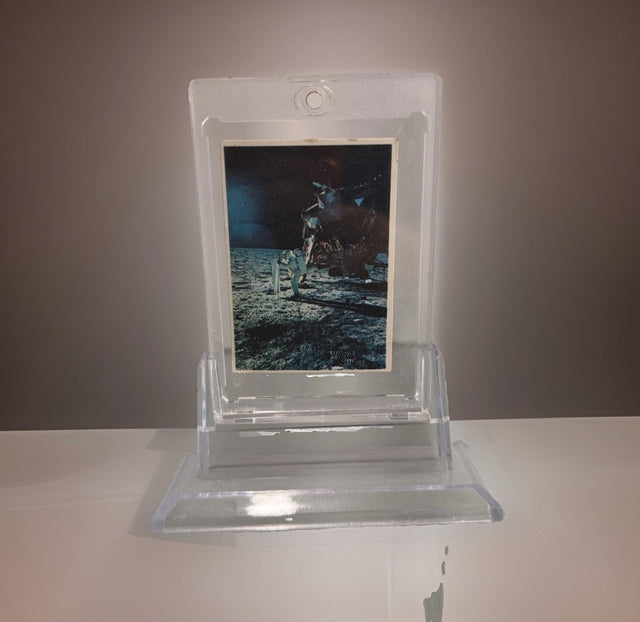
1969 Space Candy Buzz Aldrin Apollo 11 On The Moon Card #19 Taylor-Reed Display
$59.00 USD
-

1980 Polo Player Green Pink Chalk Pastel Bears Andy Warhol Signature AS-IS
$399.00 USD
-

After Andy Warhol Moon Landing Line Drawing 5/50 w/ Astronaut Autographs As-Is
$175.00 USD
-

After John Lennon "I Do" Framed Print, Marked A/P Unverified
$99.00 USD


Browse the collection for current listings.