Apollo 11 crew autographs are among the most desired and most forged signatures in the entire collecting hobby. Neil Armstrong stopped signing in 1994, Michael Collins passed in 2021, and only Buzz Aldrin remains to sign in person. In that vacuum, forgeries, autopen signatures, and secretarial “proxy” signatures flood the market. This guide explains how to buy authentic Apollo 11 signatures backed by verified documentation from a space specialist and the mainstream third-party authenticators — and how to spot the traps before you spend a dollar.
Why Apollo 11 autographs are among the most forged in the hobby

Few signatures combine historical weight and scarcity the way an Apollo 11 crew autograph does. The first crewed lunar landing is one of the most consequential events of the twentieth century, and the men who made it are a closed set of three. When demand is enormous and genuine supply is fixed and shrinking, forgery becomes inevitable.
The problem is acute for Neil Armstrong. Armstrong stopped signing autographs around 1994 after he discovered his signature was reaching four figures at auction and that a growing volume of forgeries was circulating under his name. Longtime dealers have estimated that a large share of the “Armstrong” autographs on the open market are not authentic — one prominent dealer quoted by Smithsonian magazine estimated roughly half of the Armstrong signatures he encountered were forgeries. Space authenticator Steve Zarelli was reportedly instrumental in uncovering a large Armstrong forgery ring, which tells you how organized the fraud can be.
Prices reflect that scarcity. Armstrong material has long been described as among the most valuable autographs of any living or deceased public figure, and values rose further after his death in 2012. The practical takeaway for a buyer is simple: in this category, the certificate is not paperwork — it is the product. Never buy the signature; buy the documented signature.
The three crew and their signing realities
Each Apollo 11 astronaut has a distinct signing history, and understanding those differences is the first line of defense against a bad purchase.
Neil Armstrong (1930–2012)
Armstrong is the hardest and riskiest of the three. His 1994 cutoff means any genuine Armstrong signature predates that year, and the pre-1994 window is exactly where autopen and secretarial signatures proliferate. NASA routinely mailed out autopenned signatures, distributed them to staff, and even handed autopenned photos to the astronauts themselves to give away in person. Because Armstrong is so heavily targeted, a documented, specialist-authenticated example is essentially mandatory.
Buzz Aldrin (b. 1930)
Aldrin is the last surviving member of the crew and has remained an active public figure and signer, often through paid signing sessions and appearances. That makes authentic in-person Aldrin material comparatively more available than Armstrong — but it does not make it forgery-proof. Aldrin autopen patterns and secretarial signatures exist, and his commercial signing history means the market is large enough to attract counterfeiters. Documentation still matters.
Michael Collins (1930–2021)
Collins, the command module pilot who orbited the Moon alone, died in April 2021. His signature was generally more attainable than Armstrong’s during his lifetime, but with his passing the supply is now fixed. As with the others, autopen and secretarial examples circulate, so a verified genuine Collins signature is worth the diligence.
What “verified documentation” actually means

“Comes with a COA” is one of the most abused phrases in collecting. A certificate is only as credible as the party who issued it. There is a hard line between two very different things:
- A third-party Letter of Authenticity (LOA/COA) issued by an independent authentication firm that has no financial stake in the sale. This is a genuine opinion of authenticity from a recognized authority, typically backed by a serial-numbered, tamper-evident hologram and an online lookup database.
- A seller’s in-house COA — a certificate printed by the dealer or auction listing that is selling the item. It attests to nothing more than the seller’s own say-so. For a forger, printing a nice-looking in-house certificate costs pennies.
Verified documentation, in the sense that protects your money, means an independent third-party LOA — ideally from a space specialist for Apollo material — paired with credible provenance. An in-house certificate is not verification; at best it is a starting point that still needs independent confirmation.
The authenticators that matter — and why space material needs a specialist
Space memorabilia is authenticated by a specialist plus general third-party authentication (TPA). The category-defining specialist is Zarelli Space Authentication (Steve Zarelli), who focuses specifically on astronaut, cosmonaut, and aviation autographs. The mainstream third-party authenticators — PSA/DNA, JSA (James Spence Authentication), and Beckett (BAS) — also authenticate autographs across categories and are widely respected.
Why lean on a specialist for space? Astronaut autographs carry category-specific risks that a generalist may not fully weigh: known NASA autopen matrices, documented secretarial-signing periods, and crew-signed assembly practices where each astronaut’s office added a signature. Zarelli was established in 2011, is a UACC-approved authenticator, and has been retained by leading auction houses and authentication companies for astronaut and aviation material. A Zarelli LOA is printed on heavy archival paper with a color photo of the item, an embossed seal, and a numbered tamper-proof hologram, and is hand-signed.
None of this diminishes PSA/DNA, JSA, or Beckett — they are the backbone of the broader autograph market and a general TPA LOA adds real, database-verifiable protection. The strongest position for high-value Apollo 11 material is a space-specialist opinion supported by a mainstream TPA, plus provenance.
| Authenticator | Role in space material | What you get |
|---|---|---|
| Zarelli Space Authentication | Space/astronaut specialist — the preferred opinion for Apollo material | Archival LOA, embossed seal, numbered tamper-proof hologram, hand-signed |
| PSA/DNA | General TPA, widely recognized across collecting | Serial-numbered LOA and tamper-evident label, online verification |
| JSA (James Spence Authentication) | General TPA | Hologram and full LOA options, online lookup |
| Beckett (BAS) | General TPA | LOA with tamper-evident sticker, online verification |
Never accept an unfamiliar “authenticator” you cannot independently verify. If a name is not one of the recognized firms above, treat the documentation as if it does not exist.
Detecting autopen and secretarial signatures
Autopen and secretarial signatures are not forgeries in the criminal sense — they were produced or sent by NASA offices — but they are not the astronaut’s hand, and they are worth a tiny fraction of an authentic signature. Confusing them for the real thing is one of the most common and costly mistakes in space collecting.
An autopen works from a fixed signature template, or matrix. Because each astronaut’s machine used only a limited number of set patterns, specialists can often match a suspect signature to a known autopen matrix — a near-exact overlay is a red flag, because no human signs identically twice. Preprinted (facsimile) signatures are printed onto the photo itself; they typically lack the pen indentation of a real signature and can show a difference in sheen or finish where the “ink” meets similarly colored areas of the image.
A critical myth to unlearn: on a multi-signed crew piece, different ink colors or pen types between the signatures do not prove authenticity. Because each astronaut typically had his own autopen machine, crew-signed items could be assembled office to office, with each machine adding its signature in whatever pen was loaded. Variation in ink is not evidence of a genuine hand. There was also a documented period around 1969–1970 when proxy (secretarial) signatures were sent out from NASA. This is precisely the analysis a space specialist is trained to perform — and precisely why you should not rely on your own eye for a four- or five-figure purchase.
Provenance and its role

Provenance is the documented ownership and origin history of an item — where it came from, who owned it, and how it reached the market. Strong provenance does not replace authentication, but it powerfully reinforces it. An in-person signing photo with a dated event ticket, a letter from the original recipient, a reputable auction-house lot history, or a chain of known collectors all raise confidence and resale value.
Weak or absent provenance is not automatically disqualifying — plenty of genuine pieces surface with thin histories — but when provenance is absent, the third-party authentication has to carry the full load. For Apollo 11 material, the ideal is both: a specialist LOA and a credible origin story. Keep every document, hologram, receipt, and email in a single file with the piece; that paper trail is part of what you will sell later.
Individually-signed vs crew-signed pieces
You will encounter two broad formats: single-signed items (one astronaut) and crew-signed items (all three signatures on one photo or cover). Crew-signed Apollo 11 pieces are especially coveted — and especially scrutinized — because they multiply both desirability and risk.
On a crew photo, every signature must clear the bar independently. A forger or an autopen only needs one weak signature for the whole piece to be problematic, and as noted above, mixed inks are not reassurance. When you buy crew-signed material, you want documentation that addresses all three signatures, ideally from a space specialist who understands how genuine crew pieces were and were not assembled. If a listing shows a crew photo with a single vague certificate and no specialist opinion, slow down.
Flown vs unflown context
You may see the terms “flown” and “unflown.” Flown material physically traveled to space (or to the Moon) and commands enormous premiums, but it introduces a separate and more demanding provenance burden — flown status must be documented through mission records and chain of custody, not merely asserted. Most signed Apollo 11 photographs and covers a collector will encounter are unflown items signed on Earth. That is completely normal and legitimate; just be clear about which you are buying, and treat any “flown” claim as a much higher evidentiary bar requiring its own documentation.
Common scams and red flags

Most bad purchases share a recognizable profile. Use the table below as a quick gut check before you buy.
| Red flags (walk away or verify hard) | Green flags (proceed with diligence) |
|---|---|
| “COA” is the seller’s own in-house certificate only | Independent third-party LOA you can verify online |
| Authenticator name you cannot find or verify | Zarelli, PSA/DNA, JSA, or Beckett — verifiable by serial number |
| Armstrong signature dated after 1994 | Armstrong material consistent with a pre-1994 signing window |
| Signature overlays perfectly on a known example | Natural human variation; specialist-reviewed for autopen matrices |
| “Different pens prove it’s real” on a crew piece | Each of the three signatures independently authenticated |
| Price far below market with urgency pressure | Price consistent with documented comparable sales |
| No provenance and no willingness to provide any | Documented origin: signing event, prior owner, or auction history |
| Seller resists independent authentication | Seller welcomes or offers a return-for-authentication window |
The single most common scam is the impressive-looking in-house certificate attached to an autopen or outright forgery. The second is the “too good to be true” price designed to make you act before you think. Both are defeated by the same discipline: verify the documentation independently before money moves.
A concrete buyer’s checklist
Run every prospective Apollo 11 purchase through this list. If you cannot check a box, treat it as a reason to pause.
- Independent LOA present. Is there a third-party Letter of Authenticity — not just a seller’s in-house COA?
- Specialist involved for space. For Apollo material, is there a Zarelli Space Authentication opinion, ideally alongside a general TPA (PSA/DNA, JSA, or Beckett)?
- Serial verified. Have you looked up the certificate’s serial number or hologram in the issuer’s online database?
- Autopen ruled out. Has the signature been evaluated against known autopen matrices and secretarial patterns?
- Armstrong date sanity check. If Armstrong is involved, is the signing context consistent with a pre-1994 window?
- Crew piece fully covered. On a crew-signed item, does the documentation address all three signatures?
- Provenance documented. Is there any origin history — signing event, prior owner, auction lot, or letter?
- Flown vs unflown clarified. Is the item correctly described, with flown claims separately documented?
- Return path. Can you return the item if independent authentication disagrees?
- Documents retained. Will you receive and keep the LOA, hologram, and receipts as a permanent file?
How to buy with confidence
Confidence in this category is not a feeling — it is a process. Buy from sellers who lead with independent, verifiable documentation and welcome scrutiny. Prioritize a space-specialist opinion for Apollo 11 material, confirm it with a mainstream TPA where possible, and insist on being able to verify the certificate’s serial number yourself. Treat provenance as reinforcement, not a substitute, and keep every document with the piece.
If you want to go deeper, our related editorial guides cover the specifics: the Armstrong 1994 cutoff and what it means for authenticity, why space material benefits from Zarelli alongside general TPA, a focused guide to signed Apollo 11 photographs of the crew, a look at Apollo 11 collectibles beyond the photograph, and a broader space memorabilia value guide. When you are ready to browse curated, documented pieces, explore our space memorabilia collection.
Apollo 11 is a once-in-history achievement, and owning a genuine, well-documented crew signature is a real privilege. Slow down, demand verified documentation, lean on a specialist, and the same rarity that attracts forgers becomes the reason your authenticated piece holds its meaning and its value.
Editorial & educational disclaimer: This article is provided for educational and informational purposes only and is not investment, financial, or authentication advice. Gauntlet Gallery is not affiliated with NASA, the Apollo 11 crew or their estates, or any authentication company named here. Authentication opinions are opinions, and no guarantee is made regarding any specific item. Always obtain independent third-party authentication and conduct your own due diligence before purchasing.
Frequently Asked Questions
How do I verify an Apollo 11 autograph?
Verify Apollo 11 autographs through specialist space-authentication and documented provenance. Gauntlet Gallery pairs documented provenance with Zarelli Space Authentication for space-flown and astronaut-signed material.
What documentation should an Apollo 11 autograph include?
Expect a specialist space-authentication opinion (such as Zarelli), documented provenance, and a clear ownership history — not just a generic certificate.
Where can I buy authenticated Apollo 11 memorabilia online?
Compare like-for-like signed objects or artifacts with matching mission association, signer, condition, authentication and provenance; a category-wide rate or median mixes different objects.
How is Apollo 11 memorabilia priced?
Compare the same signer, mission association, object type, inscription, condition and authentication evidence in dated completed sales. An astronaut-wide average does not value a particular object.
Shop Apollo 11
Explore current pieces available from the gallery.
-
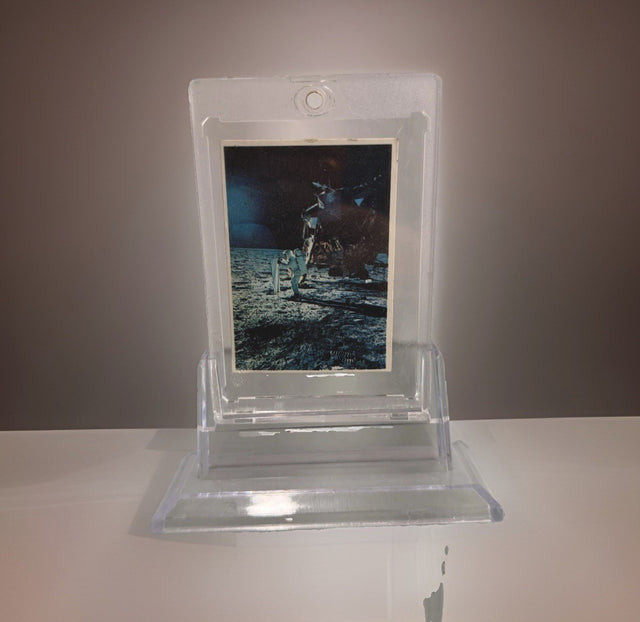
1969 Space Candy Buzz Aldrin Apollo 11 On The Moon Card #19 Taylor-Reed Display
$59.00 USD
-
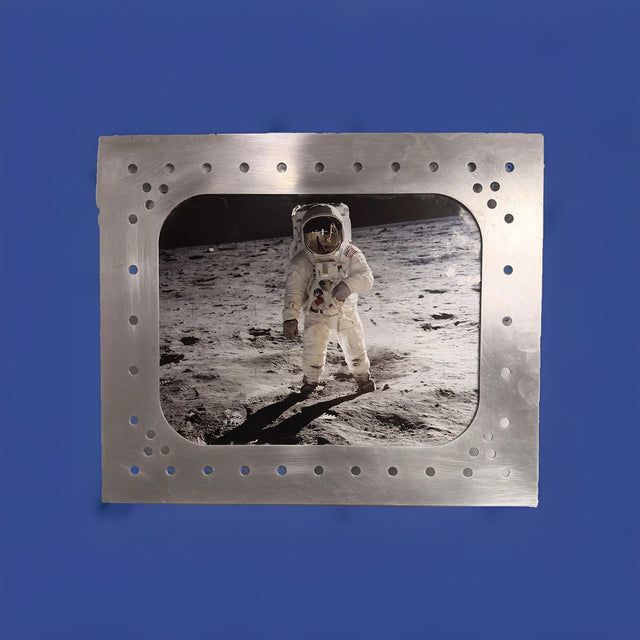
Apollo 11 Astronaut on the Moon NASA Photo Riveted Aluminum Spacecraft Frame
$89.00 USD
-
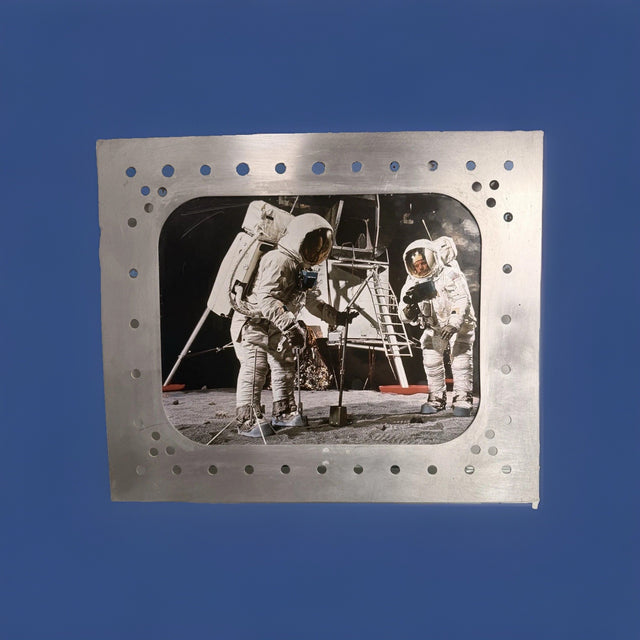
Apollo Astronauts on the Moon NASA Photo Riveted Aluminum Spacecraft Frame
$89.00 USD
-

Gene Kranz Signed Apollo 11 Moon Card PSA/DNA NASA Flight Director Autograph
$150.00 USD
-

Buzz Aldrin Apollo 11 Tranquility Framed Autograph - Zarelli Space COA
$350.00 USD
-
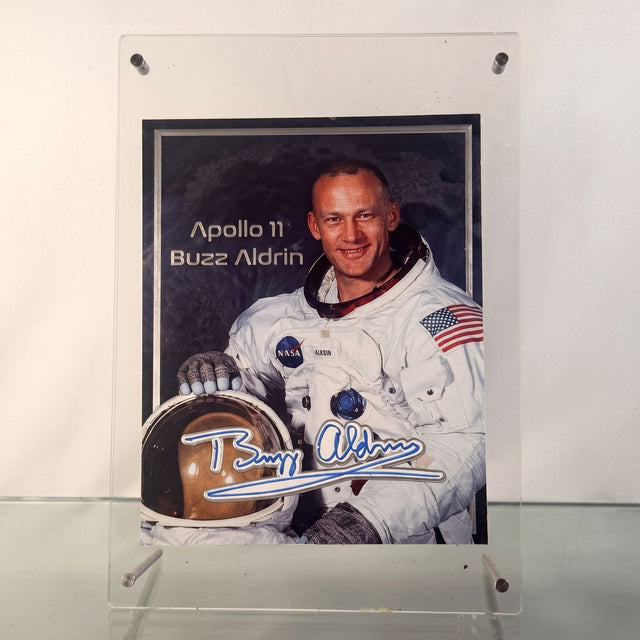
Buzz Aldrin Signed Apollo 11 NASA Double-Sided Photo JSA Authenticated Display
$450.00 USD


Browse the collection for current listings.