The Apollo 11 collectible market is not a single market

The signed crew photograph dominates the public imagination of Apollo 11 collecting. But the photograph is one node in a much larger market. Apollo 11 collecting is actually five distinct sub-markets layered on top of one another. Each has its own economics. Each has its own forgery patterns. Each has its own documentary chain.
Robbins medallions are the most-collected Apollo 11 artifact by raw unit count, with a tightly defined edition and serial numbers that map directly to verification. Philatelic covers carry a narrative density unmatched in the space-collectibles world. Flown items sit at the top of the trophy hierarchy and require the most demanding documentary chain in the entire field. Mission hardware occupies a strange regulatory middle ground. And training and pre-launch materials round out the entry tier.
The collectors who win across all five categories share one habit: they refuse to treat the categories as interchangeable. A Robbins medallion is authenticated differently than a flown flag. A philatelic cover is provenanced differently than a training manual.
Robbins Medallions: The Most Collected Apollo 11 Artifact
The Robbins Company of Attleboro, Massachusetts struck a sterling silver commemorative medallion for every crewed Apollo mission. Within the space-collectibles community the Robbins medallion has become the single most actively traded mission artifact — partly because of the format's portability, partly because of the closed and verifiable edition, and partly because the Robbins economy operates on serial numbers in a way almost no other category does.
For Apollo 11, the Robbins medallions were struck in sterling silver in a tightly defined edition. Each medallion carries a serial number stamped into the rim or reverse, and that serial number maps to a known issuance range tied specifically to the Apollo 11 mission. The obverse design depicts the mission insignia — the eagle landing on the lunar surface with the Earth in the background — and the reverse carries the crew names and mission dates.
The most important distinction in this category is between flown and unflown Robbins medallions. A subset of each mission's strike physically traveled aboard the spacecraft, typically in the crew's personal preference kits. The premium is large but only applies when the flown status is documented. A serial number alone does not prove flown status; the flown subset must be tied to crew letters of provenance and contemporaneous documentation.
Authentication on a Robbins medallion runs along four lines simultaneously. First, serial number verification against the published Apollo 11 range. Second, weight and dimensions matching the documented strike specifications. Third, period-correct strike marks. And fourth — non-negotiable for any Gauntlet Gallery acquisition — pairing with Steve Zarelli's specialist letter authenticating the artifact's space-program provenance alongside a general TPA opinion from BAS, JSA, or PSA where applicable.
Philatelic Covers and the Insurance Cover Story

A philatelic cover, in the context of space collecting, is a stamped and postmarked envelope — usually carrying a mission-themed cachet on the front — that has been signed by one or more members of the crew. There are launch-day covers postmarked at Kennedy Space Center on July 16, 1969, recovery-day covers postmarked on the USS Hornet or at relevant naval stations on July 24, 1969, and a wide range of cachet variants.
The insurance cover story is one of the most human moments in the entire Apollo program. The Apollo 11 crew were uninsurable in any conventional sense — no carrier would underwrite a life policy on three men about to attempt the first crewed lunar landing. So in the weeks before launch, the astronauts signed a quantity of philatelic covers that were entrusted to a friend and held in escrow. If the crew did not return, the covers were to be distributed to their families and sold to provide financial support. The crew returned, the covers were eventually released into circulation, and they now constitute one of the most narratively dense collectible categories in the space market.
Authentication operates on three converging axes: the signature itself must be verified through Zarelli plus BAS/JSA/PSA, the postmark must be examined for period correctness, and the provenance chain must trace back to a credible original recipient. The counterfeit patterns are unusually sophisticated: fake postmarks, signature transplants, and "found in collection" provenance.
Flown Flags, Patches, and Personal Items
The flown-artifact category is the top of the Apollo 11 trophy hierarchy and the most demanding to authenticate. The category includes small American flags carried in the Lunar Module, mission patches, state flags, Boy Scout patches, religious medallions, currency, and the personal items each astronaut carried in their PPK (Personal Preference Kit).
The threshold question for every flown artifact is the cargo documentation. NASA maintained flight manifests for every Apollo mission. An artifact claiming flown status must trace to a documented manifest entry — not to a story, not to a claim, not to a frame inscription.
On top of the manifest sits the astronaut letter of provenance. This is where the most important distinction in the entire space-collectibles field lives: the distinction between a contemporaneous letter written by the astronaut during their lifetime and a retrospective letter attributed to the astronaut after their death. Buzz Aldrin remains the only Apollo 11 moonwalker still living. Letters of provenance attributed to Neil Armstrong (died 2012) or Michael Collins (died 2021) dated after their deaths require extreme scrutiny.
There is a flown-tier hierarchy. Lunar surface flown sits at the apex. Lunar Module flown sits one tier down. Command and Service Module (CSM) flown sits another tier down. The authentication chain for a flown artifact requires every link simultaneously: Zarelli specialist opinion, general TPA letter, cargo documentation, contemporaneous astronaut letter, and continuous ownership chain. Any missing link is disqualifying.
Mission Hardware and Components
Apollo 11 mission hardware is the category where authentication intersects most directly with NASA's contemporaneous regulatory regime. Most of the spacecraft hardware did not come back. The Command Module Columbia is preserved at the Smithsonian. The Lunar Module Eagle's descent stage remained on the lunar surface; its ascent stage was jettisoned in lunar orbit. The Saturn V's first and second stages fell into the Atlantic.
What did reach the legitimate secondary market is more circumscribed: training models, simulator components from Houston and Cape Kennedy training facilities, mission documents, ground support equipment fragments, period-correct technical drawings. None of these are flown artifacts. All require their own authentication chain. The legal and regulatory layer matters: NASA's contemporaneous ownership claims, the evolving Apollo memorabilia regulations, the legal distinctions around what astronauts could legitimately keep.
Training and Pre-Launch Materials

Below the flown and hardware tiers sits a substantial and historically important category: training manuals, procedural checklists, simulator components, crew patches from training, signed pre-launch documents. This is the entry tier for serious Apollo 11 collecting. A training manual handled by Armstrong during his preparation, with documented provenance to a NASA training facility, carries genuine historical weight. The authentication requirements remain rigorous: provenance to NASA personnel, period-correct printing, and signatures requiring the same paired authentication standard.
Lunar Module Goodwill Messages and the Plaques
Two artifacts associated with Apollo 11 generate persistent confusion and deserve direct treatment. The plaque mounted on the descent stage of the Lunar Module Eagle — "Here men from the planet Earth first set foot upon the Moon. July 1969 A.D. We came in peace for all mankind." And the silicon disc deposited on the lunar surface bearing goodwill messages from world leaders.
Both artifacts remained on the Moon. Anything in the marketplace claiming to be either of these artifacts is a replica. Gauntlet Gallery treats any claim to authenticity on these specific artifacts as automatically disqualifying. The originals are not on Earth.
Comparison Table
| Artifact Type | Required Authentication | Typical Provenance Chain | Counterfeit Risk Tier |
|---|---|---|---|
| Robbins Medallion (Unflown) | Serial range verification + Zarelli + weight/strike check | Robbins distribution records or NASA personnel retention | Moderate |
| Robbins Medallion (Flown) | Serial range + Zarelli + flown documentation + astronaut letter | Crew PPK manifest + contemporaneous astronaut letter | High |
| Philatelic Cover (Insurance) | Zarelli + BAS/JSA/PSA + escrow provenance chain | Crew family or documented escrow recipient | Very High |
| Flown Flag/Patch (LM or CSM) | Zarelli + BAS/JSA/PSA + cargo manifest + contemporaneous astronaut letter | Manifest + astronaut letter + continuous chain | Very High |
| Lunar Surface Flown Item | Full chain + lunar surface designation | Manifest + astronaut letter + surface designation | Extreme |
| Mission Hardware | NASA inventory documentation + regulatory clearance | NASA release paperwork or documented personnel retention | Moderate to High |
| Training Material | Provenance to NASA personnel/facility + period-correct verification | Training facility or crew support personnel | Moderate |
| LM Plaque / Goodwill Disc | Not authenticable — originals remained on the Moon | All examples are replicas | Categorical (replicas only) |
Where Each Sits in a Collection

A Robbins medallion offers portability and represents a category with closed and verifiable supply. A philatelic cover, particularly an insurance cover with documented escrow provenance, delivers narrative density unmatched in the field. A flown flag or patch provides trophy value. A signed photograph delivers visual impact. A training manual or pre-launch document anchors a collection in the operational reality of the program. A position built across all five categories represents the mission.
Common Mistakes Across Categories
- Treating any "flown" claim as equally authenticated. Without manifest documentation, a contemporaneous astronaut letter, and a continuous ownership chain, a flown claim is a story.
- Buying Robbins medallions without serial verification. The serial number is the first and easiest authentication step.
- Paying flown premiums for unflown Robbins. The unflown-to-flown spread is the most frequent target for fabrication.
- Accepting astronaut letters dated after the astronaut's death. Armstrong died in 2012, Collins in 2021. Letters attributed to them dated after are almost certainly forged or misattributed.
- Confusing replicas with originals on hardware. The plaque is on the Moon. The silicon disc is on the Moon.
How Gauntlet Gallery Sources Apollo 11 Collectibles Across Formats
Gauntlet Gallery applies a single sourcing standard across every Apollo 11 category. Every signature requires Steve Zarelli's specialist letter paired with a general TPA opinion from BAS, JSA, or PSA. Every flown artifact additionally requires cargo documentation tying the artifact to the mission manifest, a contemporaneous astronaut letter of provenance, and a continuous ownership chain. Every Robbins medallion requires serial-range verification. Every philatelic cover requires postmark verification alongside signature authentication. Every hardware artifact requires NASA inventory documentation and the relevant regulatory clearance trail.
Building an Apollo 11 Position
The first acquisition should be the artifact that anchors the collector's relationship to the mission. For some collectors that is the signed crew photograph. For others it is a Robbins medallion, where the portability and tight authentication make it the cleanest entry point. For collectors drawn to narrative, an insurance cover with documented escrow provenance carries more story per dollar than almost any other artifact in the broader space-collectibles field.
Long-term, the asymmetric upside in Apollo 11 collecting comes from the closed nature of the supply. There will never be another Apollo 11 mission. There will never be another set of flown artifacts from the first lunar landing. The supply was fixed in July 1969. The collectors who build positions inside the paired-authentication standard are not just buying objects. They are taking custody of a closed and historically anchored asset class. The signed photograph remains a worthy purchase. But the collectors who treat the photograph as the entire market are missing four of the five rooms in the house.
Shop Apollo 11
Explore current pieces available from the gallery.
-
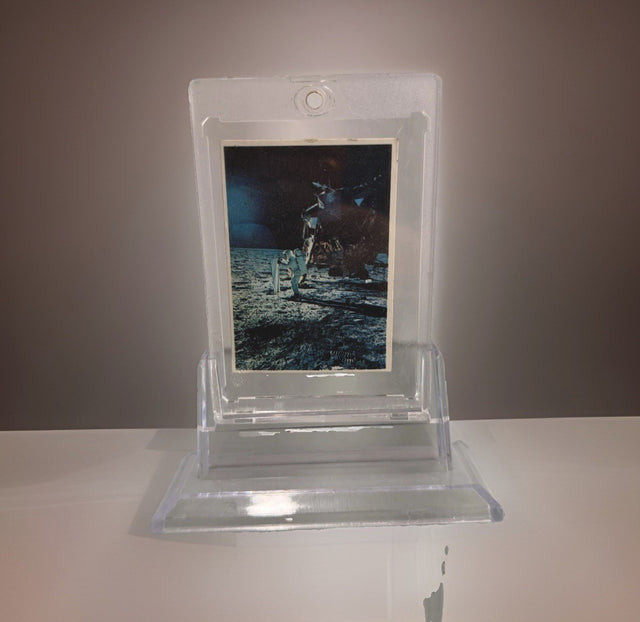
1969 Space Candy Buzz Aldrin Apollo 11 On The Moon Card #19 Taylor-Reed Display
$59.00 USD
-
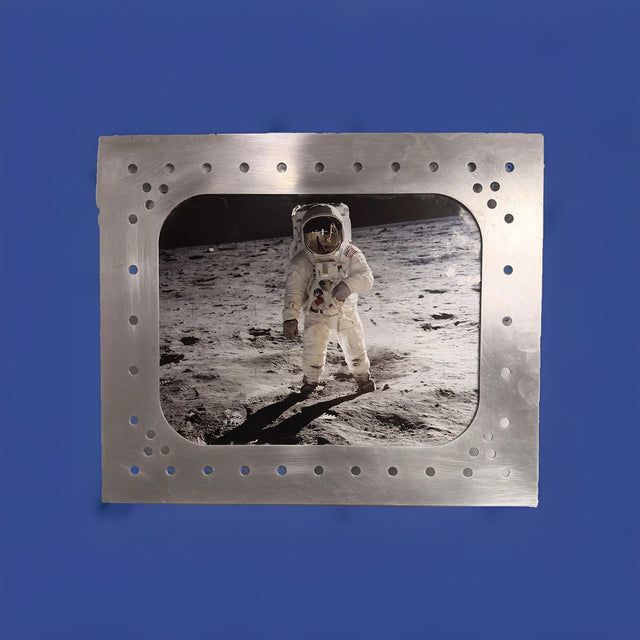
Apollo 11 Astronaut on the Moon NASA Photo Riveted Aluminum Spacecraft Frame
$89.00 USD
-
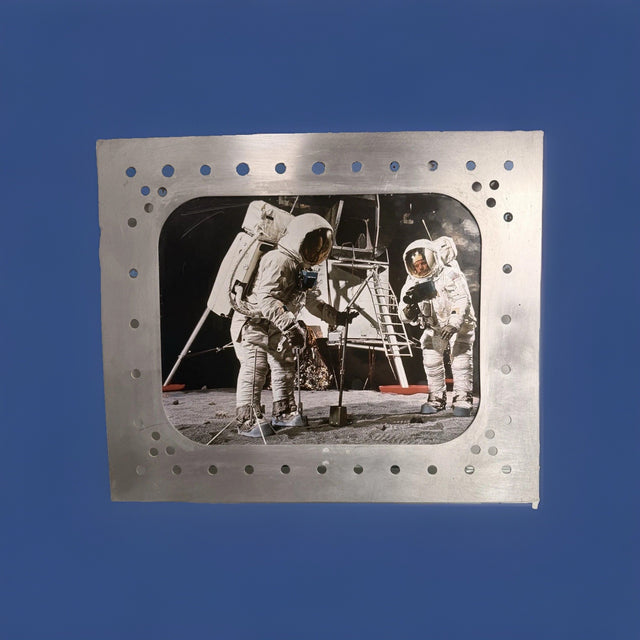
Apollo Astronauts on the Moon NASA Photo Riveted Aluminum Spacecraft Frame
$89.00 USD
-

Gene Kranz Signed Apollo 11 Moon Card PSA/DNA NASA Flight Director Autograph
$150.00 USD
-

Buzz Aldrin Apollo 11 Tranquility Framed Autograph - Zarelli Space COA
$350.00 USD
-
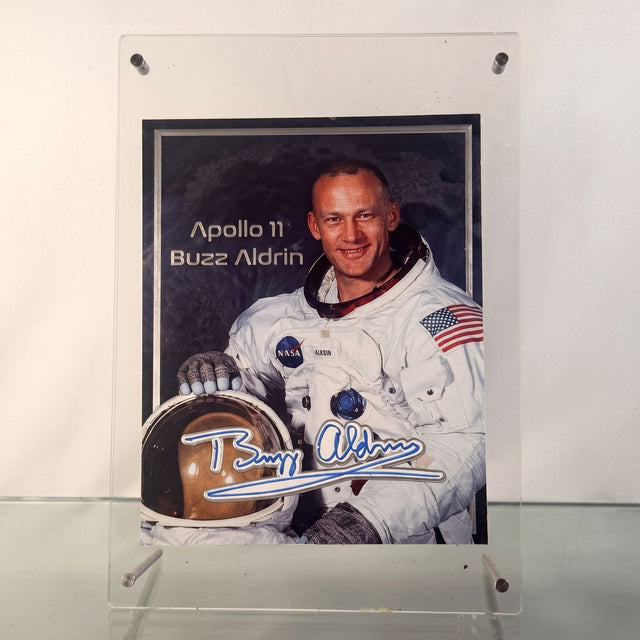
Buzz Aldrin Signed Apollo 11 NASA Double-Sided Photo JSA Authenticated Display
$450.00 USD


Browse the collection for current listings.