Hype gets attention.
Provenance creates confidence.
That difference matters more than almost anything in collecting.
A collectible can be beautiful, rare-looking, viral, expensive, framed, signed, and surrounded by dramatic seller language, and still be a bad purchase if the history behind it is weak. A piece can also look quiet, modest, or under-marketed but carry serious collector value because its ownership chain, documentation, authentication, and condition history are clear.
Hype says, "Everyone wants this."
Provenance says, "Here is what this is, where it came from, who owned it, how it was documented, and why the story can be trusted."
Collectors should care about the second one more.
The Getty Provenance Index describes its work as providing information on the ownership and market histories of artworks, with resources such as dealer stock books, sales catalogues, archival inventories, and public collection records. That research infrastructure exists because ownership history matters.
That same idea applies beyond traditional art.
For Gauntlet Gallery collectors, provenance matters across signed music memorabilia, Shepard Fairey prints, KAWS figures, BE@RBRICKs, astronaut autographs, Apollo artifacts, Death NYC works, Banksy and Dismaland material, and other cultural objects.
Because in every collectible category, the same question eventually appears:
Can the story be proven?
Provenance Is the Object's Biography

A collectible does not begin when it appears in a listing.
It has a life before that.
- Who made it?
- Who released it?
- Who bought it first?
- Where was it sold?
- Was it signed?
- Was it authenticated?
- Was it exhibited?
- Was it framed?
- Was it stored properly?
- Was it resold?
- Was it repaired?
- Was it documented?
- Was it stolen?
- Was it misattributed?
- Was it altered?
- Was it carried into space, played on stage, issued by an artist, or purchased from a primary release?
That history is provenance.
Provenance research traces the ownership history of an object from creation to the present. Gaps can happen because records are lost, destroyed, informal, private, or never created in the first place.
Not every gap is fatal. But every gap should be understood.
A missing receipt from a $200 print release may not be a crisis. A missing chain of custody for a six-figure Apollo-flown object is a very different problem.
The higher the claim, the stronger the provenance needs to be.
Hype Is Loud. Provenance Is Quiet.
Hype usually arrives dressed as urgency.
- Rare.
- Sold out.
- Investment grade.
- Private collection.
- Only one available.
- Celebrity owned.
- Estate find.
- Museum quality.
- Won't last.
- Undervalued.
- Going to the moon.
Provenance is less theatrical.
It looks like receipts, invoices, certificates, edition records, auction history, artist documentation, gallery labels, archival photographs, transfer records, estate letters, authentication numbers, shipping records, and old catalogues.
Hype wants you to move quickly.
Provenance gives you permission to slow down.
A serious buyer should always ask: what evidence survives after the sales pitch is removed?
If the answer is not much, the hype is doing too much of the work.
Provenance vs. Authentication vs. COA
Collectors often mix up three related ideas: provenance, authentication, and certificates.
They are connected, but they are not the same.
Authentication
Authentication is an opinion or determination that an object, signature, edition, or claimed attribute is genuine.
For example:
- A Beckett letter authenticating a musician's signature.
- A Zarelli review supporting an astronaut autograph.
- A publisher-issued digital COA tied to a Shepard Fairey print.
- A manufacturer or platform verification for a designer figure.
Authentication asks: is this real?
COA
A Certificate of Authenticity is a document or digital record that states what has been authenticated and by whom.
A COA is evidence. It is not automatically proof of everything in a listing.
- A COA may authenticate the signature but not the object's history.
- It may authenticate a print but not the frame.
- It may authenticate an astronaut autograph but not flown status.
- It may authenticate a figure but not prove it was never opened or displayed.
A COA asks: who is standing behind this claim?
Provenance
Provenance is the ownership and documentation history.
It asks: where did this come from, and how did it get here?
The strongest collectibles usually have all three working together:
- Authentication confirms the object or signature.
- The COA documents that authentication.
- Provenance explains the object's history.
When those line up, buyer confidence rises. When they conflict, the buyer should slow down.
Read our COA guide for collectors.
Why Provenance Affects Value
Provenance affects value because it reduces uncertainty.
A buyer is not only paying for the object. The buyer is paying for confidence.
Strong provenance can help confirm:
- Authenticity
- Legal title
- Edition history
- Artist or signer connection
- Object type
- Condition history
- Prior ownership
- Exhibition history
- Market comparability
- Insurance value
- Resale credibility
- Cultural importance
Weak provenance creates questions:
- Is it real?
- Was it altered?
- Was it stolen?
- Was it signed later?
- Was it misdescribed?
- Was the COA swapped?
- Was the object framed badly?
- Was it part of the original edition?
- Was it actually flown, stage-used, artist-issued, or merely associated?
In collectibles, every unanswered question becomes a discount.
Sometimes the discount is small. Sometimes it is the whole value.
The Provenance Strength Ladder
Not all provenance is equal.
Here is a practical way to rank it.
Tier 1: Primary Provenance
This is the strongest.
Examples:
- Artist studio invoice
- Obey Giant order receipt
- KAWSONE receipt
- Medicom Toy or authorized retailer purchase record
- Gallery invoice from the original release
- Astronaut-signed flown-status letter
- NASA documentation
- Publisher certificate
- Estate documentation
- Direct-from-artist sale record
- Publisher-issued transferable digital certificate from the original release
Primary provenance connects the object directly to the source.
This is the cleanest paper trail.
Tier 2: Reputable Secondary Provenance
This is still strong.
Examples:
- Major auction-house sale record
- Recognized gallery resale invoice
- Specialist dealer invoice
- Prior collection record
- Published catalogue entry
- Exhibition catalogue
- Specialist authentication letter
- Known collector provenance
- Art Loss Register search certificate where appropriate
Secondary provenance can be excellent when the seller, auction house, or dealer is credible.
The key is whether future buyers will recognize and respect the source.
Tier 3: Supporting Provenance
This helps but usually is not enough by itself.
Examples:
- Photographs of the object in a previous collection
- Old framing labels
- Shipping labels
- Collector correspondence
- Condition reports
- Insurance schedules
- Email receipts
- Social media posts from a release
- Archival screenshots
- Prior listing records
Supporting provenance can help connect dots.
It usually should not carry the entire claim alone.
Tier 4: Weak Provenance
This is where buyers need caution.
Examples:
- Private collection with no name
- Estate find with no paperwork
- Obtained backstage with no proof
- Bought years ago with no receipt
- From a NASA employee with no documentation
- Gift from artist with no correspondence
- Comes with COA from an unknown issuer
- Rare with no release data
Weak provenance is not always false.
It is just weak.
The price should reflect that.
Tier 5: Anti-Provenance
These are warning signs.
Examples:
- Seller refuses to provide documentation
- Certificate does not match the object
- Certification number belongs to a different item
- Object type conflicts with the story
- Timeline does not make sense
- Seller changes the story
- Major claim with no evidence
- Known fakes using the same backstory
- Modern material attached to a deceased artist claim
- Storage unit discovery used to explain a miracle find
Anti-provenance does not just fail to help.
It actively creates risk.
The Basquiat Lesson: Fake Provenance Can Be the Product

False provenance is not a side problem.
Sometimes it is the fraud.
In 2023, public reporting on the Orlando Museum of Art fake Basquiat case described former auctioneer Michael Barzman admitting that he created fake works attributed to Jean-Michel Basquiat and agreeing to plead guilty to making false statements to the FBI. The Associated Press later summarized the case as originating from the 2022 FBI seizure of forged Basquiat artworks and noted Barzman's admission.
That case is a collector's warning flare.
The fake story helped move the fake art.
A forged object often needs a believable biography. Found in a storage unit, from a private estate, acquired decades ago, and held in a collection for years are useful stories because they explain why the market has never seen the object before.
That does not mean every storage-unit or estate story is false.
It means the story needs evidence.
The more extraordinary the discovery, the more ordinary the paperwork should be: names, dates, receipts, photographs, correspondence, invoices, prior records, and independent expert review.
A miracle story without receipts is not provenance.
It is theater.
Provenance and Legal Title
Provenance is not only about authenticity.
It is also about ownership.
A real object can still be a bad purchase if title is unclear. Stolen, looted, disputed, or illegally exported objects can create serious problems for collectors, dealers, museums, and insurers.
The FBI's Art Crime page states that art and cultural property crime, including theft, fraud, looting, and trafficking, leads to billions of dollars in losses every year. The FBI also says its Art Crime Team has recovered more than 20,000 items valued at over $1 billion since the team's creation in 2004.
Use dated completed sales for the same artist, release, format and condition, recording the venue, currency and fees. Asking prices and broad archive totals do not establish a realized sale price or future return. Research references: Art Loss Register.
For most Gauntlet Gallery categories, legal-title risk is not the same as buying antiquities or Old Master paintings. A Shepard Fairey print, KAWS figure, signed guitar, or astronaut photo usually has a more modern documentation chain.
But title still matters.
- A stolen guitar can be real.
- A stolen print can be real.
- A stolen designer figure can be real.
- A stolen NASA artifact can be real.
- A disputed estate item can be real.
Real does not always mean safely ownable.
That is why provenance matters more than hype.
Provenance Is Category-Specific
The right provenance depends on the object.
A collector should not use the same evidence standard for every category.
Shepard Fairey Prints
Strong provenance may include:
- Obey Giant order receipt
- Gallery invoice
- digital COA
- Edition number
- Artist signature
- Release archive match
- Correct dimensions
- Publisher documentation
- Prior auction record
- Condition history
For Fairey, the key questions are: is this the correct title, year, edition, medium, size, signature, and release source?
A seller saying rare Obey print is not enough.
Browse authenticated Shepard Fairey prints.
Signed Music Memorabilia
Strong provenance may include:
- Beckett, JSA, or PSA/DNA authentication
- Full Letter of Authenticity
- Signing photo
- Event documentation
- Artist-store receipt
- Tour connection
- Dealer invoice
- Estate paperwork
- Clear seller guarantee
- Certification number matching the exact object
For signed music, the autograph is often the value driver. The provenance should explain where the signature came from and why the authentication can be trusted.
A signed guitar with no credible signature history is a wall decoration with ambition.
Explore authenticated signed music memorabilia.
KAWS and BE@RBRICK Designer Figures
Strong provenance may include:
- KAWSONE receipt
- Medicom Toy release record
- Authorized retailer invoice
- Museum store receipt
- Original box
- Outer shipper
- QR, serial, or hologram where applicable
- Correct dimensions
- Packaging match
- Prior auction or gallery record
- Condition documentation
For designer toys, packaging is part of provenance.
A figure without a box may still be authentic, but the ownership package is weaker.
Browse authenticated designer figures.
Space Memorabilia
Strong provenance may include:
- Zarelli authentication
- JSA, PSA/DNA, or Beckett autograph authentication
- Astronaut letter
- NASA documentation
- Mission association
- Flown-status documentation
- Crew or estate provenance
- Auction record
- Personal Preference Kit or Official Flight Kit references where applicable
- Chain-of-custody records
For space collectibles, the word flown must be proven separately from the autograph.
A signed astronaut photo is not the same as a mission-flown object.
Explore authenticated space memorabilia.
Death NYC and Pop-Culture Editions
Strong provenance may include:
- Artist-issued COA
- Edition number
- Gold seal or publisher mark where applicable
- Gallery invoice
- Correct image and format
- Condition photos
- Prior sale record
For editioned pop art, the buyer needs to confirm the edition structure and make sure the COA belongs to the exact work.
Banksy and Dismaland Material
Strong provenance may include:
- Official Dismaland receipt or release documentation
- Pest Control certificate for Banksy works where applicable
- Event proof
- Original packaging
- Ticket, wristband, receipt, or acquisition record
- Photographs from the original owner
- Recognized gallery or auction record
Banksy-related collecting is especially provenance-sensitive because Banksy style and Banksy associated are not the same as Banksy-authenticated.
Precision matters.
Provenance Helps Separate Scarcity From Marketing
Scarcity is one of the most abused words in collecting.
A seller may call something rare because they cannot find another one listed today. That is not the same as documented scarcity.
Real scarcity is supported by evidence:
- Edition size
- Release quantity
- Artist statement
- Publisher record
- Production number
- Known archive
- Auction history
- Museum record
- Sold-out primary release
- Serial number
- Mission manifest
- Known signer rarity
- Documented survivor count
Fake scarcity sounds like:
- Very rare.
- Hard to find.
- Only one online.
- Private collection.
- Never seen another.
- Collectors know.
- Investment piece.
A serious collector should ask: rare compared to what?
Rare in the seller's closet is not rare in the market.
Provenance Makes Market Comps More Accurate
Collectors often compare prices using sold listings, auction results, and marketplace history.
That only works if the objects are truly comparable.
A Shepard Fairey print with Obey receipt and digital COA is not the same as an unverified print with no paper trail. A signed guitar with a full Beckett LOA is not the same as a signed guitar with a seller-issued certificate. A BE@RBRICK with original box and retailer receipt is not the same as a loose figure with no packaging. A flown Apollo item with astronaut letter is not the same as an Apollo-era commemorative item.
Gauntlet's market-data policy says comparable sales should be filtered by comparable edition, condition, and documentation level, and that asking prices are not the same as completed sales. It also notes that documentation levels differ across comparables, which limits how market data should be interpreted.
That is the correct approach.
Provenance affects comparability.
If the documentation is different, the comp is different.
Provenance Can Travel With the Object, or Disappear

A collectible's paper trail should travel with it.
That sounds obvious. It is not always done.
- Collectors separate COAs from objects.
- Receipts get deleted.
- Boxes get thrown away.
- Digital certificates are not transferred.
- Auction invoices are lost.
- Framing labels are discarded.
- Shipping emails vanish.
- Estate documentation gets separated.
- Signing photos stay on an old phone.
Then, years later, the object comes back to market with a weaker story.
This is avoidable.
A collector should preserve:
- Original invoice
- COA
- Authentication letter
- Certification number
- Release receipt
- Auction receipt
- Shipping record
- Condition report
- Framing receipt
- Artist or gallery correspondence
- Digital certificate transfer record
- Original box and packaging
- Prior listing screenshots
- Photographs of the object when acquired
Think of provenance like a passport.
If the object travels without it, future border crossings get harder.
Digital Provenance: Helpful, Not Magical
Digital provenance can be useful when it is tied to a real object and transferable ownership record.
Blockchain certificates, QR-linked records, and digital authentication platforms can help document ownership, issuance, and transfers.
But digital provenance is not magic.
A digital certificate only matters if:
- It was issued by a credible source.
- It describes the exact object.
- It can be verified.
- It can be transferred.
- It matches the physical item.
- The physical item has not been swapped.
- The seller can prove control of the certificate.
Digital provenance solves some old problems. It does not solve buyer discipline.
The collector still needs to inspect the object, verify the certificate, and confirm the chain.
A blockchain record attached to the wrong object is just a very modern way to be wrong.
Provenance Red Flags
Slow down when you see:
- No receipt.
- No invoice.
- No certificate.
- No prior ownership history.
- No close-up photos.
- No back photos.
- No edition documentation.
- No authentication number.
- No seller guarantee.
- No explanation of acquisition.
- No return policy.
- No matching object description.
- No answer when asked where it came from.
Be especially careful with:
- Private collection with no name.
- Estate find with no paperwork.
- Gift from artist with no proof.
- Backstage signed with no photo or event connection.
- NASA employee collection with no chain.
- Rare prototype with no release record.
- Original Banksy without Pest Control where Pest Control would be expected.
- Flown artifact with only autograph authentication.
- KAWS style marketed as KAWS.
- Shepard Fairey 1/1 screen print with no credible explanation.
- Certificate included from an unknown company.
A seller who has real provenance usually wants to show it.
A seller who avoids documentation is asking you to buy fog.
Fog is hard to resell.
Green Flags: What Good Provenance Looks Like
Good provenance feels boring in the best way.
It is specific, checkable, and consistent.
Look for:
- Named source.
- Dates.
- Invoices.
- Receipts.
- Edition records.
- Matching certificate numbers.
- Transferable digital certificate.
- Photographs of the exact object.
- Condition notes.
- Auction lot history.
- Gallery labels.
- Artist or publisher records.
- Recognized authenticator documentation.
- Original packaging.
- Prior collection records.
- Clear chain from source to current seller.
The best provenance does not need drama.
It just needs to answer questions.
Provenance and Condition Work Together
Provenance can also explain condition.
A print stored flat since release is different from one that was framed in a sunny room for fifteen years. A signed guitar stored in stable collection storage is different from one displayed in a smoky bar. A BE@RBRICK kept sealed in its original shipper is different from one displayed loose near a window. A NASA photo kept in an archive is different from one taped into a scrapbook.
Condition history is part of provenance.
Useful condition-related provenance includes:
- Framing receipt
- Conservation report
- Storage history
- Display history
- Original packaging
- Flat-file storage records
- Prior condition report
- Auction condition notes
- Shipping and insurance records
- Photographs from prior ownership
When provenance and condition support each other, buyer confidence improves.
When they conflict, ask questions.
A seller claiming mint since release should be able to explain storage.
Mint does not happen by accident.
Provenance and Storytelling Are Not the Same

Collectors love stories.
That is healthy. Collecting without story is just inventory management with better lighting.
But storytelling and provenance are not the same.
A story can explain why an object matters.
Provenance explains why the story should be believed.
Bad listings use story as a substitute for evidence. Good listings use story supported by evidence.
For example:
Weak story: This guitar was signed backstage by a rock legend.
Better story: This guitar was signed backstage at a 2004 tour stop, accompanied by a dated event pass, signing photograph, original owner letter, and Beckett LOA.
Weak story: This print came from a private collector.
Better story: This print was purchased from Obey Giant in 2014, stored flat, and is accompanied by the original order confirmation, matching edition number photos, and digital COA where applicable.
Weak story: This patch flew on an Apollo mission.
Better story: This patch is accompanied by an astronaut-signed letter identifying the mission, object, and carried status, with prior auction record and matching display documentation.
Evidence does not make a story less romantic.
It makes it safer to believe.
How Gauntlet Gallery Uses Provenance
Gauntlet Gallery's model is built around reducing buyer uncertainty before a piece is listed.
Provenance is not only a back-office detail. It is part of the product.
A buyer should understand:
- What the object is.
- Who made it or signed it.
- How it is authenticated.
- What documentation comes with it.
- What condition it is in.
- How it compares to the market.
- Why it belongs in the collection.
Gauntlet's public policies emphasize documentation, condition standards, market context, and clear authentication language. The goal is not to turn every listing into a legal brief. The goal is to show buyers the chain behind the object.
View Gauntlet's curation process, review the condition policy, or browse authenticated collectibles.
Provenance gives the object credibility.
Story gives it meaning.
The best listings need both.
The Collector's Provenance Checklist
Before buying a collectible, ask:
- What exactly is the object?
- Who made it, signed it, issued it, or released it?
- Where did the current seller get it?
- Is there a receipt, invoice, auction record, or primary-source document?
- Is there a COA or authentication letter?
- Who issued the COA?
- Can the certificate number be verified?
- Does the certificate match the exact object?
- Are the title, year, medium, dimensions, edition, and signature consistent?
- Is there evidence of prior ownership?
- Is there any legal-title concern?
- Was the item framed, restored, altered, or repaired?
- Is the condition history clear?
- Does the provenance support every claim in the listing?
- Is any part of the story vague, dramatic, or unsupported?
- Would another serious buyer trust this documentation later?
- Would an auction house, insurer, or gallery understand the chain?
- Does the price reflect the documentation level?
The final question is the practical one.
Weak provenance is not always a dealbreaker. But it should never be priced like strong provenance.
The Seller's Provenance Checklist
A serious seller should provide:
- Clear source history.
- Photos of the exact object.
- Front and back images.
- COA or authentication photos.
- Certification number.
- Receipt or invoice where available.
- Edition number and size.
- Condition notes.
- Frame or packaging details.
- Known restoration or alteration history.
- Original box for designer figures where applicable.
- Digital certificate transfer instructions where applicable.
- Flown-status documentation for space artifacts where claimed.
- Clear return or authenticity policy.
The seller does not need to write a dissertation.
But they should provide enough information for a buyer to make an informed decision.
Good provenance is not clutter.
It is the bridge between interest and trust.
When Weak Provenance Is Acceptable
Not every purchase needs museum-grade documentation.
Weak provenance may be acceptable when:
- The item is low cost.
- The buyer wants it for personal display.
- The object is decorative rather than investment-grade.
- The claim is modest.
- The seller clearly discloses the limitation.
- The price reflects the risk.
- The buyer understands resale may be harder.
For example, buying an inexpensive unsigned exhibition poster with limited documentation is one thing. Buying a claimed mission-flown Apollo artifact with weak documentation is another.
Risk should scale with price and claim.
The bigger the story, the better the evidence needs to be.
When to Walk Away
Walk away when:
- The seller cannot explain the source.
- The paperwork does not match the item.
- The story changes.
- The seller pressures you to move fast.
- The price seems too good for the claim.
- The seller refuses additional photos.
- The authenticator is unknown or unverifiable.
- The object type conflicts with the timeline.
- The provenance relies entirely on trust me.
- The claim is major but the documentation is minor.
The market is full of other objects.
A bad provenance problem can follow a collectible for years.
Do not adopt someone else's unanswered questions unless the price is honest and the risk is deliberate.
Bottom Line
Hype can make a collectible move quickly.
Provenance is what helps it hold value.
The strongest collectors do not buy only what is loud, trending, scarce-looking, or surrounded by urgency. They buy objects with evidence: clear origin, credible authentication, matching documentation, clean title, condition history, and a story that survives scrutiny.
That does not make collecting less emotional.
It makes the emotion safer.
Buy the piece that gets your attention.
Buy the artist, musician, astronaut, designer, mission, or cultural moment that means something to you.
But before you buy the hype, ask for the paper trail.
Because in collecting, the story is powerful.
The proof is what makes it collectible.
FAQ
What does provenance mean in collectibles?
Provenance is the ownership and documentation history of an object. It can include receipts, invoices, auction records, gallery labels, certificates, prior ownership history, artist documentation, estate records, photographs, and other evidence showing where the object came from and how it moved through the market.
Why is provenance important?
Provenance helps support authenticity, legal title, condition history, market value, resale confidence, and buyer trust. Strong provenance reduces uncertainty. Weak provenance creates risk.
Is provenance the same as authentication?
No. Authentication asks whether the object or signature is genuine. Provenance explains the object's ownership and documentation history. A strong collectible often has both.
Is a COA provenance?
A COA can be part of provenance, but it is not the entire provenance. A COA documents an authentication claim. Provenance is broader and may include receipts, invoices, prior ownership, release records, auction history, and chain of custody.
What is strong provenance for art prints?
Strong provenance for art prints may include an artist or publisher receipt, gallery invoice, a publisher-issued digital certificate, edition documentation, correct dimensions, release archive match, prior auction record, and condition history.
What is strong provenance for signed music memorabilia?
Strong provenance for signed music memorabilia may include Beckett, JSA, or PSA/DNA authentication, a full Letter of Authenticity, signing photos, event documentation, artist-store receipts, dealer invoices, or estate documentation.
What is strong provenance for space memorabilia?
Strong provenance for space memorabilia may include Zarelli authentication, astronaut letters, NASA documentation, mission association, flown-status records, estate provenance, auction history, and chain-of-custody documentation.
Can fake provenance exist?
Yes. False provenance can be used to sell forged or misrepresented objects. The fake Basquiat case involving works seized from the Orlando Museum of Art is a public example of how a false backstory can help support a forgery.
Does weak provenance mean an item is fake?
Not always. Weak provenance means the buyer has less evidence. The item may still be authentic, but the price should reflect the added uncertainty.
How does Gauntlet Gallery handle provenance?
Gauntlet Gallery presents collectibles with provenance documentation, recognized third-party certification where applicable, condition context, and buyer-facing documentation so collectors can evaluate the chain behind the object.
Available at Gauntlet Gallery
Explore current pieces available from the gallery.
-

1963 Farquhar Earth in Space Transparent Celestial Globe 16" Compass VTG
$699.00 USD
-

1967 Beatles Richard Avedon STERN Original Posters Set of 4 Linen Backed Copy
$999.00 USD
-
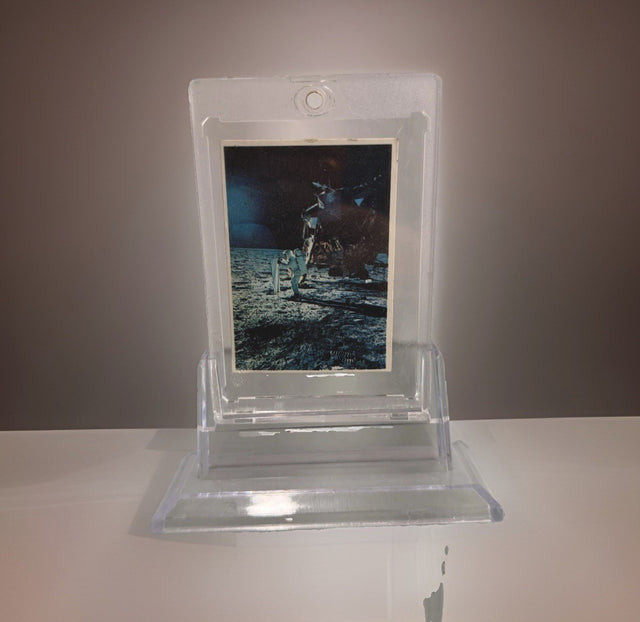
1969 Space Candy Buzz Aldrin Apollo 11 On The Moon Card #19 Taylor-Reed Display
$59.00 USD
-

1980 Polo Player Green Pink Chalk Pastel Bears Andy Warhol Signature AS-IS
$399.00 USD
-

After Andy Warhol Moon Landing Line Drawing 5/50 w/ Astronaut Autographs As-Is
$175.00 USD
-

After John Lennon "I Do" Framed Print, Marked A/P Unverified
$99.00 USD


Browse the collection for current listings.